What We Deserve

Photo by Terrye Turpin

I didn’t miss having a dryer until I bought my washing machine. For the two years after my divorce I made do with the community laundry room at the apartment complex where I lived. It seemed a little self-indulgent to complain about the lack of a washer and dryer when there were women dodging land mines instead of worrying whether they would lose a sock to one of their neighbors. Carrying my laundry up and down the stairs and back and forth the fifty yards to the laundry room was good exercise. If it was a cold and rainy day, at least I didn’t have to carry my clothes down to the river to beat them on a rock.

In the middle of my life, when I thought my laundry future set, divorce thrust me back to a college dorm room status. I left a bad marriage with what I could carry in my arms, plus the futon from the upstairs game room. Possibly the last person over 50 to sleep on a futon, I tried to keep my material possessions down to the bare minimum, in case I ever needed to make another quick escape. Back then, I envied the homeless people standing on the corner, tied down to nothing but a backpack and a small, brown paper bag of booze.

“You need a dryer,” my boyfriend, Andrew, said one Sunday morning. We lounged in bed, by this time I had replaced the futon with a full-sized mattress supported on a wooden frame. When Andrew spent the night, we would wake tangled in the middle of the covers, each of us fighting for our share of the space.

Andrew and I met online, matched up by a mutual affection for cheese, Scrabble, and hiking. On our second date I asked him to assemble an IKEA dresser for me, and to my surprise he returned for a third date after that.

“I’ll get a dryer soon,” I replied. The new washer was less than one week old, and I was still adjusting to the idea that my belongings would no longer fit in the back of my car.

“Look, here’s one on Craig’s list, and it has a picture,” Andrew persisted as he held out his phone toward me. “You deserve clean, dry laundry,” he said. He seemed earnest, but I wondered if he’d grown tired of dodging the damp clothes slung over the shower rod.

The dryer in the picture looked functional, and the price was right. Andrew read the phone number off, and I called about the dryer. A man answered the phone in a drowsy Sunday morning voice, accepted my offer of $50 for the dryer, and gave me directions to his house.

When we arrived at the address, I noticed a large storage pod, the size and shape of a railroad boxcar, stacked on the drive way. I wondered if the dryer came from some abandoned unit. Were the people in the house divorcing and dividing up their possessions? I hoped not. I didn’t want to wind up with a vengeful dryer, one that would burst into flames from spite, or chew up my underwear and spit them out like a cat hacking up hairballs.

We made our way past several rusty metal filing cabinets lined up on the sidewalk and toward the open garage door. As Andrew texted that we had arrived, a tall man in flip flops walked out to meet us. A barefoot woman I guessed to be his wife, stepped up behind him.

“Sorry about the mess, we’re moving,” the man said. He motioned at stacks of boxes in the garage. “The dryer’s right in here, if you want to look at it.”

I followed the woman inside to the laundry room. “I can turn it on,” she said as she moved towels to a laundry basket on the floor. She turned the dial on the top of the machine and the dryer responded with a quiet hum and a little quiver as the drum inside tumbled around. I smiled and nodded that she could turn off the machine. As I counted out the money, and her husband and Andrew got ready to load up the dryer, a young girl with the same brown hair as the woman strolled over to us. A small black cat huddled in her arms, a cast on one of its legs.

“What happened?” I said, as I reached out and touched the kitty.

“We don’t know. My husband found her one night on his way home from work. Someone had run over her, or thrown her out of a car I guess.”

“Does she have a name?” I asked.

“That’s Maybe,” the woman told me. “As in, ‘Maybe we can afford the vet bills!’”

This must be a happy dryer, taking care of the clothing for a family that took in and cared for stray cats with broken legs. I imagined the machine tossing my clothes in its warm embrace as Andrew shut the hatch on my SUV, and dryer loaded, we headed back to my apartment.

Later that night I washed a load of clothes, put the wet items in the dryer, and went to the living room. I settled down on my futon with the book I had been reading and listened to the gentle thump of the dryer. The scent of lavender fabric softener drifted through the apartment, a reminder this was what we all deserve- a comfortable place to sit, clean, dry clothes, and someone to help us carry it all upstairs.

© 2019 Terrye Turpin
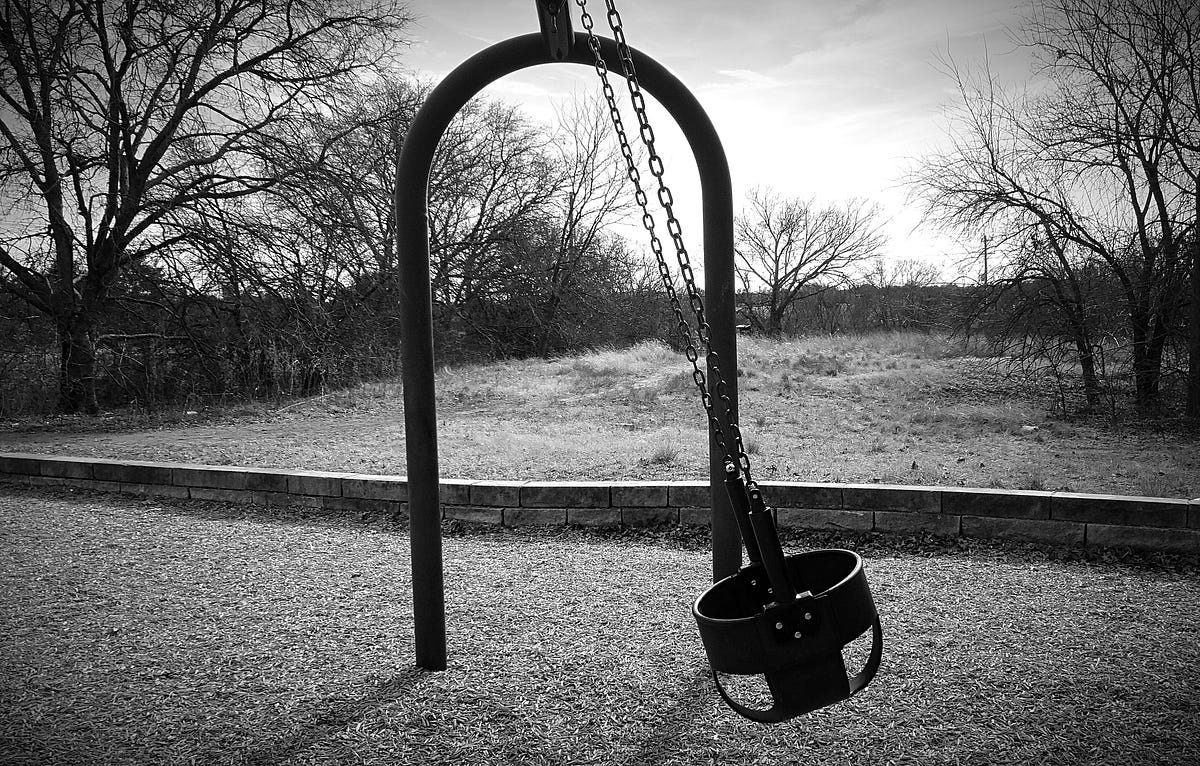
The Playground

Photo by Terrye Turpin

Sound of my winter in B&W

The Chicken Dance

Photo by Terrye Turpin

I’d been sick with a cold, and in case I didn’t recover in time for the weekend, Andrew and I cancelled the camping trip we had planned. Back then we were still in the early stages of dating when broken plans required a spectacular replacement. He asked me what I wanted to do instead of spending the night shivering in the woods, and I offered up a polka band.

“Brave Combo!” I said, as I hooked my thumbs in my armpits and flapped my arms up and down.

“What is that?” he asked. “Do you still have a fever?”

“Chicken dance!” I said. “Don’t tell me you’ve never done the chicken dance?”

“I’m afraid I’m not much of a dancer,” he answered.

I explained that the famous polka band Brave Combo would be performing in a nearby town, Grand Prairie, during the street festival that weekend. When I added “You can sit out the dancing if you want,” Andrew agreed the festival would be a fine alternative.

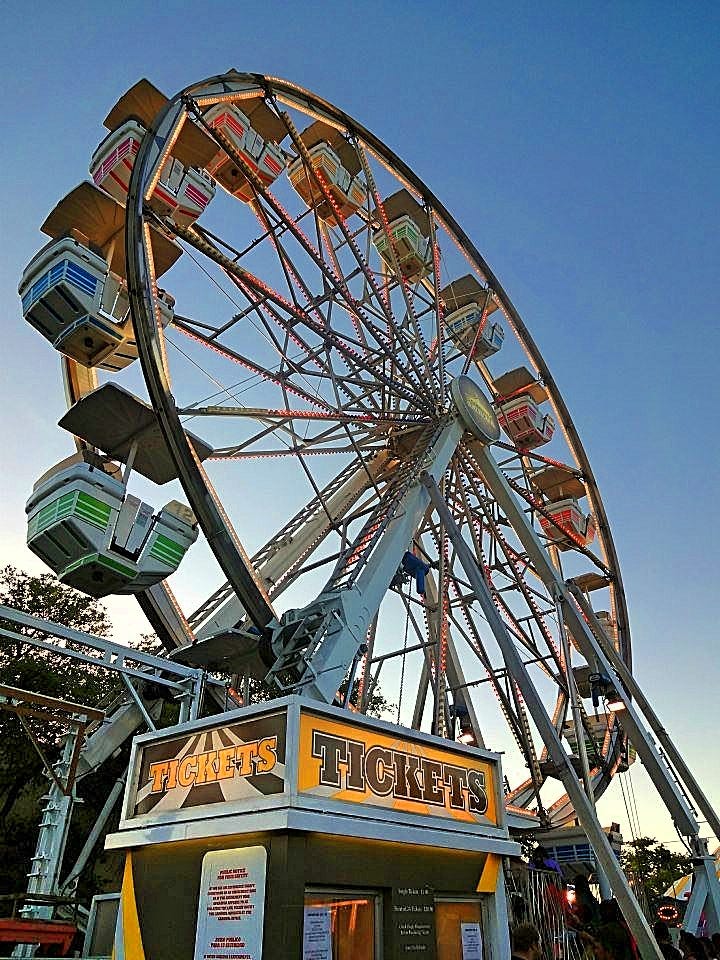
We arrived at the main street and located the stage where the band would perform later that evening. Drawn by the drowsily rotating Ferris Wheel and the sugar scent of cotton candy we ambled over to the carnival games. We stopped at one game that offered the chance to win a goldfish or a hermit crab. Dozens of glass bowls and cups sparkled on a plywood tabletop while the game operator, a grandmotherly looking woman wearing a canvas apron, bounced a white ping pong ball on the railing surrounding the playing area. Occasionally she flipped the ball over the table where it bounced through the bowls until, with a last jitter, it came to rest like a round egg in a crystal nest.

“Hermit crabs!” Andrew leaned over the tank on display at the front of the game booth where dozens of the crustaceans, housed in neon bright painted shells, crawled over each other. Several of them seemed to be waving at us, their tiny claws raised in a happy salute, so I put down five dollars for a basket of ping pong balls and we went to work. Five dollars later we had landed one ball in a glass bowl, earning us a coupon we could redeem for a plastic baggie of water with a live goldfish.

“If you want to keep trying, you can trade four goldfish for a hermit crab,” the helpful operator of this game suggested.

“Should we try for a hermit crab?” Andrew asked.

“I should probably tell you about my history with hermit crabs,” I replied.

Photo by Andrew Shaw

When I was twelve years old, my family spent a long summer weekend in Corpus Christi. The three of us, my mom, my dad, and me — spent those lazy days strolling the beach, picking up shells and storing them in a five-gallon bucket, the sort you could pick up at the hardware store and might have once held paint. At the end of the weekend we snapped on the lid and the five-gallon bucket rode home to Dallas in the trunk of the car where it stayed throughout the four hundred and fifty-mile, seven hour drive in hot summer heat. At home at the end of our journey my dad opened the trunk, and we discovered the shells were inhabited by hermit crabs. Once alive, they were now well steamed.

We had to air out the trunk of that car for weeks, and it took me ten years to be able to look at a plate of seafood. I still feel a twinge of guilt whenever I walk past the lobster tank at Central Market.

When I finished the story, Andrew sighed, and we gave our goldfish coupon to an excited child and her not so enthusiastic mother. As we walked away, I hummed my own version of the chicken dance song–“I don’t wanna be a chicken, I don’t wanna be a duck. Please don’t lock me in the trunk, nana nana nana na.”

We shared a snack of popcorn and made our way toward a booth with rows of multi-colored balloons arranged as a backdrop behind a low wooden counter.

“Darts!” I stepped up, eager to play. I love a game where there might be a risk of physical injury in exchange for the chance to win something.

“A guaranteed prize every time!” The man behind the counter shouted as we arrived. One of his eyes tilted downward, and I wondered if this could be a dart related injury. But he held out to us soft vinyl balls, not sharp pointy darts.

“No darts?” I asked.

“No,” the man replied, “But we got this nail behind the balloon, so all’s you got to do is hit it.”

He stepped over and slapped the nearest balloon, which obligingly popped and revealed the sharp, rusty nail behind it. Rusty nails made a fine trade-off for darts, so I nudged Andrew and he offered up a five-dollar bill to the operator.

“Oh! You don’t pay until you win.” The man shook his head and stepped back as though Andrew were handing him a snake. Two throws later we had popped one balloon and scored a toy stuffed goldfish the size of my palm. I shrugged and turned to walk away.

“Wait!” The operator held out another three balls to Andrew. “Keep throwing, and if you don’t hit anything you don’t have to pay.” The man shrugged, his wayward eye winking. “You only pay if you win.”

While I counted on my fingers the cost of the balls so far, Andrew tossed and hit two more balloons. The carnival operator held up his hand. He looked around as though about to impart a government secret.

“Okay, you hit one more balloon and you win the medium sized prize.”

I clapped until the man continued, “And you’ll owe me twenty dollars.”

I tried to decide whether to take my stuffed goldfish and run, and while I hesitated Andrew threw the last ball, popped a balloon, and earned himself the prize of handing over a $20 bill for a stuffed toy made by third world child labor.

Andrew, a good sport, just looked slightly pained while he paid the man and I picked out my prize. The giant fluorescent yellow bananas required a forty-dollar commitment. I wavered between the glittery cobra with jiggly eyes, and the stuffed toy lemurs with bright, fuzzy tails.

“I’ll take the white lemur with the orange striped tail,” I said.

Over the calliope of carnival music, I could hear the strums and toots that signaled the band warming up, so I suggested we go by the car and put the lemur up for safe keeping. His little stuffed paws seemed to grasp my hand in trust and the black stitching making up his mouth smiled up at me like Mona Lisa. I patted his soft fluffy tail and settled him onto the back seat of the car. The glimmer of carnival lights reflected in his big orange plastic eyes as they twinkled back at me.

“I really like this lemur,” I told Andrew.

“I should hope so,” he replied.

“You think he’ll be okay here in the car?”

“Oh, I don’t know, I’d hate for someone to see him and break a window to get in. Better put him down on the floorboard.”

“But not in the trunk,” I replied.

“Oh no, never in the trunk.”

I moved the overpriced but not undervalued lemur to the floorboard. Andrew and I held hands as we joined the revelry near the stage. The saxophone called, and the trumpets joined in while Andrew took a seat at the picnic tables set up around one edge of the parking lot. I smiled and waved as I joined a ring of strangers and danced the chicken dance under the lights from the Ferris wheel.

©2019 Terrye Turpin

Photo by Terrye Turpin