I belong to a Facebook group called We Pretend it’s Still the 1970s. The rules are simple – post personal photos from that decade and comment on them as though whatever is pictured has just happened. No past tense, no mentioning the future. It’s an exercise in time travel that is both humorous and poignant.
I have yet to post anything on the page, but I’m a loyal lurker. The images remind me that I lived through that era. Scrolling through Olan Mills family portraits, prom snapshots, and polaroid pics of smiling girls with that Farrah Fawcett shag haircut – I can indulge in happy memories uncluttered by the anxious reality of my teenage years.
The past seems so far away, as though the events of the 1970s happened to a different person, not me. In a way, that’s true. I’m far from that teenager now, but sometimes I come across things that bring the memories back so vividly that I can touch them and feel their weight.
We’ve been organizing our household, trying to clear some of the clutter and decide which items are worth keeping, donating, or selling. As I sorted through decades of sewing supplies, I set aside anything I wanted to keep. I’ll hang onto the thread – wooden spools either inherited or bought at antique stores and plastic spools sporting the small green Walmart price stickers from before the age of UPC tags. There are at least two dozen spools of turquoise blue thread that Mom bought on clearance. It was a really good deal.
Me and my mom circa 1970s – I’m wearing a dress I made
My mother taught me to sew. First by hand with needle and thread, and then on her classic black Singer sewing machine. A junior high school home economics class rounded out my seamstress education. Throughout the 1970s I sewed dresses, skirts, peasant tops and anything else that could be whipped up over a weekend.
I don’t sew much now, although I do still own a sewing machine. Recently I took up quilting and I’ll hand stitch together the pieces while I’m watching television. It’s a relaxing hobby and it gives me an excuse to hold onto the boxes of thread. Eventually I might even use the turquoise color that my mother found so lovely. I think she would have liked that I found some use for it.
Not the life she imagined but the life made for her
Mannequin in a Wichita Falls antique store – Photo by the author
Andrew and I have recently taken on the task of clearing out his mother’s storage unit. Roby no longer has need or use for the cartons of fine china, boxes of shoes and purses, racks of designer clothing, or bags of vintage dresses. Over the past four years we’ve managed to sell off or donate most of the bulkier items – the dressers and chairs, the dining room table. There’s still a lot left. Enough to fill a small U-Haul. Our goal is to move enough of it out that we can set up a lower priced, smaller unit close to our house and save her the expense of renting the space.
Until then, we’ve turned our living room into a sort of staging area, bringing over car loads of clothing and sorting through it for anything that might be worth selling. We discovered that Roby’s collection of vintage 1970s to 1980s Diane Freis dresses have become popular again. Imagine the sort of outfits worn by the actresses on the set of Dynasty, Designing Women, or Dallas. Think shoulder pads, wild colors, and lots and lots of polyester. To better display these dresses, I ordered a mannequin on Amazon. Andrew named her Molly Mannequin, but I call her Dolly.
Molly Dolly wearing a Diane Freis 100% Silk dress – Photo by the author
Dolly is easy to dress – pop off her head, slip her arms out of their sockets, and drape the dress over her torso. The first set of photos we put up on Ebay featured her smooth, bald head. Andrew suggested she wear a hat, but I didn’t have one that matched the outfits. Except for this one.
Dolly – Photo by the author
The hat, in my opinion, gave her a confused, wistful look. As though she couldn’t believe she had landed here.
Dolly – Photo by the author
In the second box of clothing we discovered an acrylic wig. This was better, it gave Dolly a more life-like appearance. The wig had seen better days. It also looked like it had seen some really bad days. Frizzled strands stuck up across the surface of the artificial hair, giving Dolly an urchin look. It fit, however, with the bohemian vibe of many of the dresses. I remembered a trick recommended to smooth out the fake tresses on dolls and I soaked Dolly’s hairpiece in fabric softener. It worked, but she still didn’t seem happy, despite having smooth locks.
Dolly in a sequined Diane Freis dress – Photo by the author
Something about the racks of frilly clothing and the dressing and undressing of Dolly felt familiar. The clothes were unlike anything I would choose to wear. My wardrobe is made of t-shirts with catchy slogans and sweatpants with elastic waistbands. In another life, however, I could imagine strolling through a garden party or dancing under disco lights. Maybe plotting my revenge on J.R. Ewing or Blake Carrington.
Dolly – Photo by the author
Flipping through the rack, the soft ruffled skirts brushing against my hands – I couldn’t help but smile at some of the whimsical patterns. How fun it would be to dress in one of these. I understood the attraction, the desire to own them all. At last I realized why this felt so familiar. Hadn’t I done the same thing as a young girl?
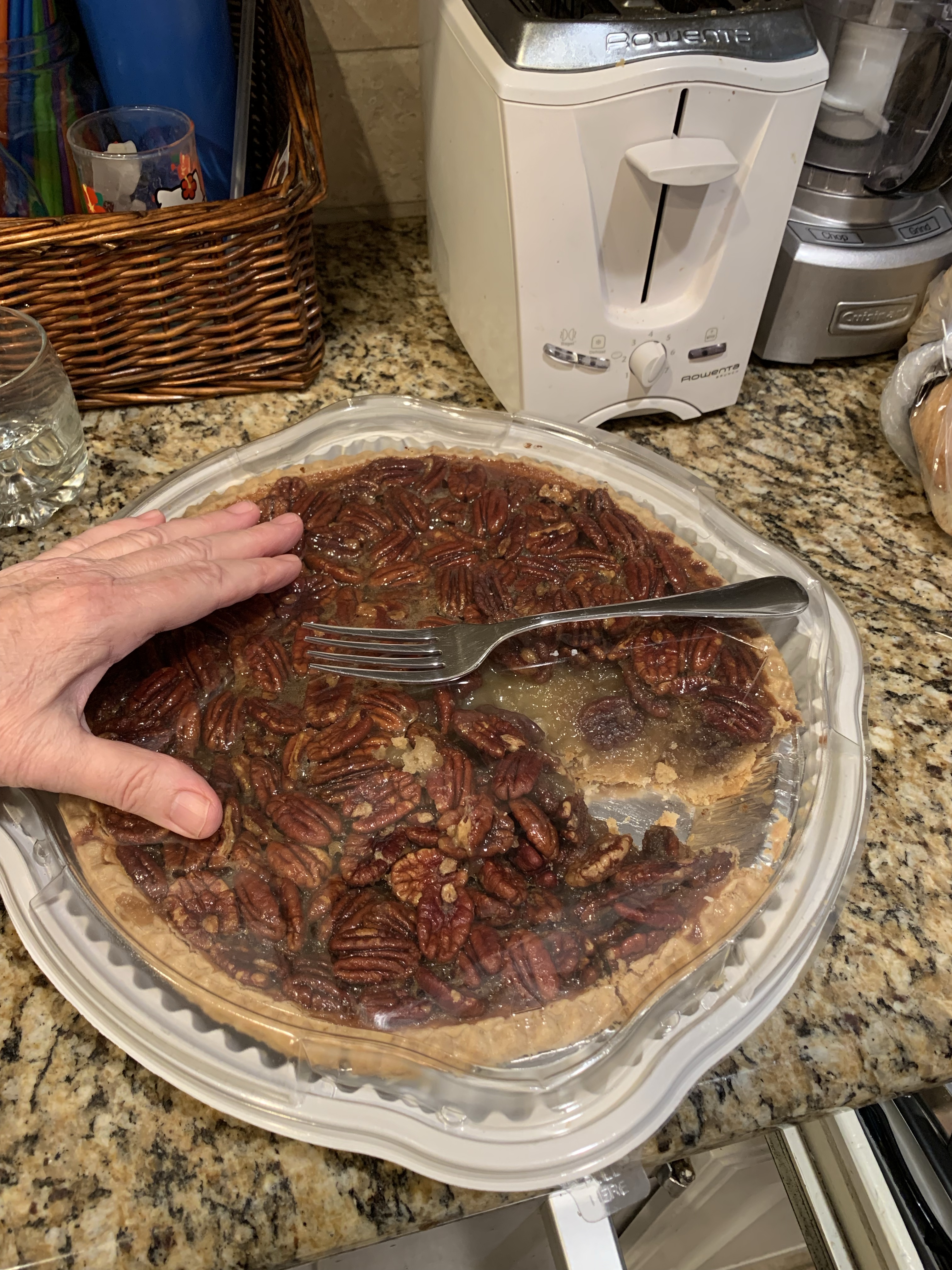
I love pecan pie. Yesterday, our realtor gifted his clients with Thanksgiving pies. We bought our house two years ago, in the middle of a crazy market, when investors were slinging cash like the Monopoly banker. Without his expertise, we wouldn’t have been able to find a place to call home. For that, we are grateful to Kreg Hall. The pie is a bonus. A large bonus, as I am the only one in our household who likes or can eat pecan pie. To make it last, I’ll freeze portions and enjoy it during the winter months. Each time I sit down with coffee and a slice of pecan pie, warm from the microwave, I’ll lift a fork in gratitude for the blessings we have and the good people in our life.
Below is a post from 2017. I wanted to share it again, I hope you enjoy reading it.
Join Hands, Give Thanks
I lived through two decades before I discovered that there were people in the world who made dressing with stale bread cubes instead of fresh cornbread. My oldest sister’s second husband, the nice one, was from somewhere up North. New York, I think. He had dark, pomaded hair swept up and back and he smiled and spoke with an accent I had only ever heard on television. He made a bread stuffing with oysters. I forgave him because it was delicious, each mouthful a feast of earthy black pepper mixed with the salty ocean taste of oysters. Home from college, my mother volunteered me to drive the two of us up to Malakoff, Texas, where my sister and her new husband had retired to life by the lake. In those days before GPS, I got lost following my sister’s handwritten directions. We arrived late, but to a feast still warm and laid out on their Formica topped kitchen island. I wish I had asked him for the recipe for that oyster dressing.
My mother made her dish the Southern way, with cornbread. She used white corn meal, soft as sand, with a bit of flour, scooped up and sprinkled in like snow. Baking soda and baking powder for leavening, for we all need incentive to rise. Buttermilk to mix, salt and bacon drippings for flavor, then all poured into her largest cast iron skillet, warmed on the stove so the crust will brown first. It came out like a pale yellow moon and filled the kitchen with the warm, sweet scent of corn. For the dressing she mixed in celery, onions, broth, and enough sage to repel evil spirits.
When I was young, we traveled to my grandmother’s house for Thanksgiving. Not over the river or through the woods, but past the lake and along Highway 380 the 15 miles to the town of Farmersville. My mother brought her cornbread dressing and a pie or two as her contribution to the meal. I held the warm pan of dressing on my lap where I sat in the slick vinyl backseat of our 1970 Oldsmobile and tried not to drool on the foil covering the pan. My grandmother’s wood frame house had a tiny living room decorated with an autographed photograph of a famous televangelist, before the fall. She sent him money and prayed for healing by laying her hands on her Chroma color television while he preached. The children, including anyone under the age of 18, were banished to the back porch. We fought over metal folding chairs and balanced our plates of food on our knees while we fended off the horde of feral cats living in my grandmother’s yard. The cats were only slightly outnumbered by my cousins.
Some years we visited my father’s family, where my aunts made their dressing and gravy seasoned with the chunks of turkey heart, liver, and gizzard that came packaged and concealed inside a store bought turkey. The first time I cooked a turkey I didn’t realize there was this hidden prize inside. I found them after, steamed and tucked under the skin at the front of the turkey, where his neck would have been if it weren’t shoved up into the body cavity. The neck was roasted too, because I didn’t know there was a second, secret scrap part buried inside my turkey.
My first husband was from Missouri, and the bread stuffing his mother made was moist, but thick, and had to be scooped out in chunks. My father-in-law, an honest, hard-working mechanic and assistant Boy Scout leader, led the prayer each year, insisting that we all stand before the table and join hands. You haven’t really experienced Thanksgiving gratitude until you’ve had to convince a squirming toddler to stay still during a ten minute blessing while the aroma of roasted meat and cinnamon spiced pumpkin wafts over you in a moist cloud of steam you can taste.
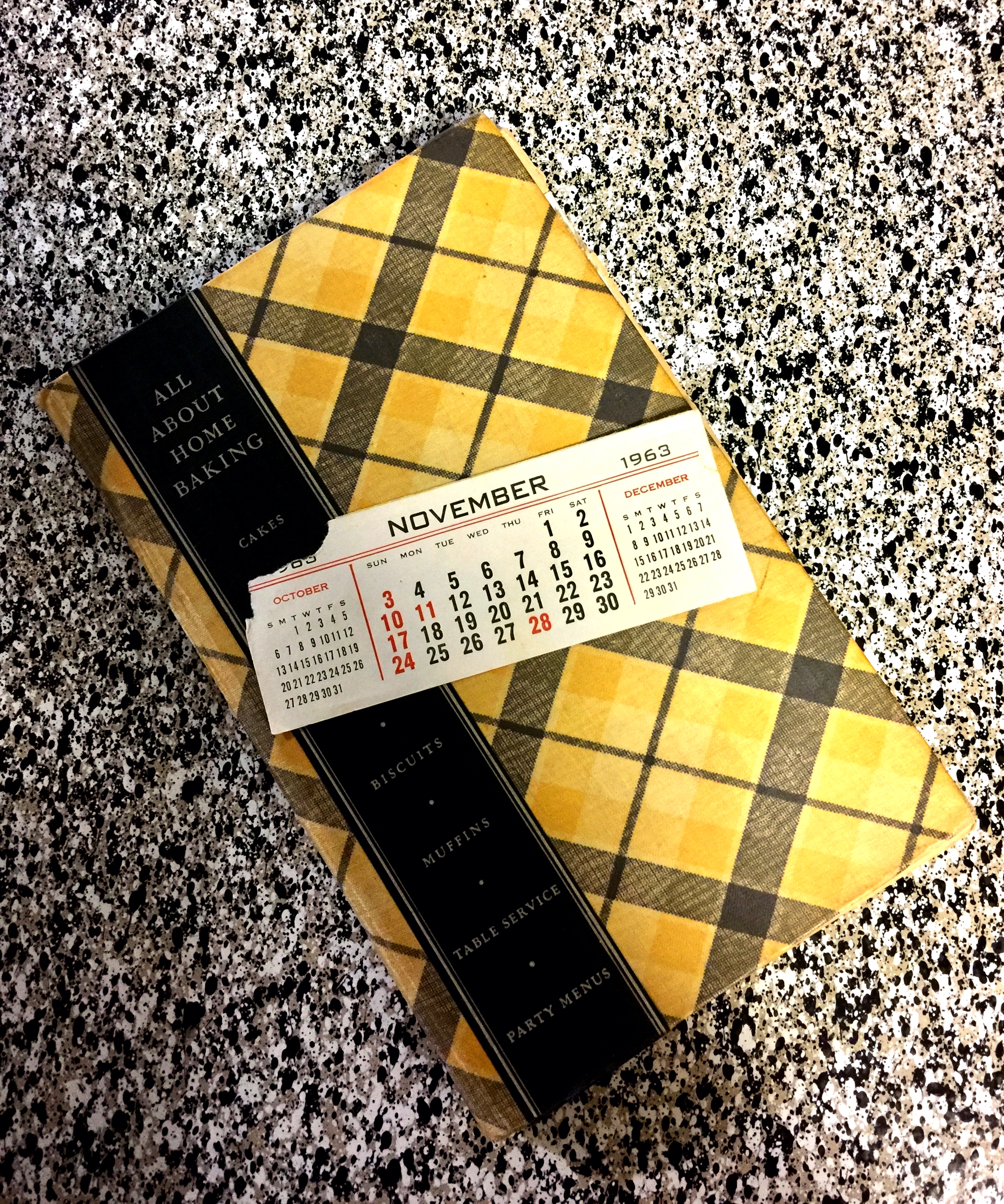
My mother stopped cooking a turkey for Thanksgiving after my parents divorced, when it was just the two of us left at home. She would roast a chicken instead, and make her cornbread dressing. I never saw her consult a cookbook. She cooked from memory, measuring out ingredients to taste except when she was making a pie or a cake. After she moved into a nursing home, I found a cookbook tucked away in a box she had stored in her laundry room. The book, All About Home Baking, had penciled notes in the margins and tucked inside the front cover, scraps of lined paper with recipes written in her delicate, looping cursive. Brittle, yellowed pages from a 1963 calendar fluttered out like falling leaves when I turned the pages of the book.
I roast a turkey every year, even when there are just one or two guests and my vegetarian husband at the table. This year I’m cooking both turkey and a ham. I’ll make cranberry relish from fresh cranberries and oranges and add so much sugar that it passes for jam. We’ll have pumpkin pie and a minced meat pie like my mother used to make, even though no one but me will eat it. It is a deliberate luxury on my part to have a whole pie to myself. My husband, Andrew, will mash potatoes so they come out just the way he likes them, a little bit creamy and with a few tiny lumps. When he leaves the kitchen I will sneak in more butter and salt to the dish.
I don’t cook my mother’s cornbread dressing. I’ve fallen from grace and into the boxed, instant variety but at least it’s the cornbread version. I’ll make traditional green bean casserole with crispy fried onions on top and a spinach rice casserole from a recipe my aunt gave to me. I don’t put marshmallows on the yams, instead I’ll serve them with a pecan streusel topping like my ex-husband’s mother, my first mother-in-law, made.
The guests at the table, the cooks in the kitchen, and the fellowship changes, just as the feast stays the same. I touch my past as my hand stirs the pot, preps the bird, and kneads the bread. I bow my head in silent thanks and join hands with all, even those who are absent from the table. Join hands, bow heads and give thanks. Give thanks for the love we are all about to receive.
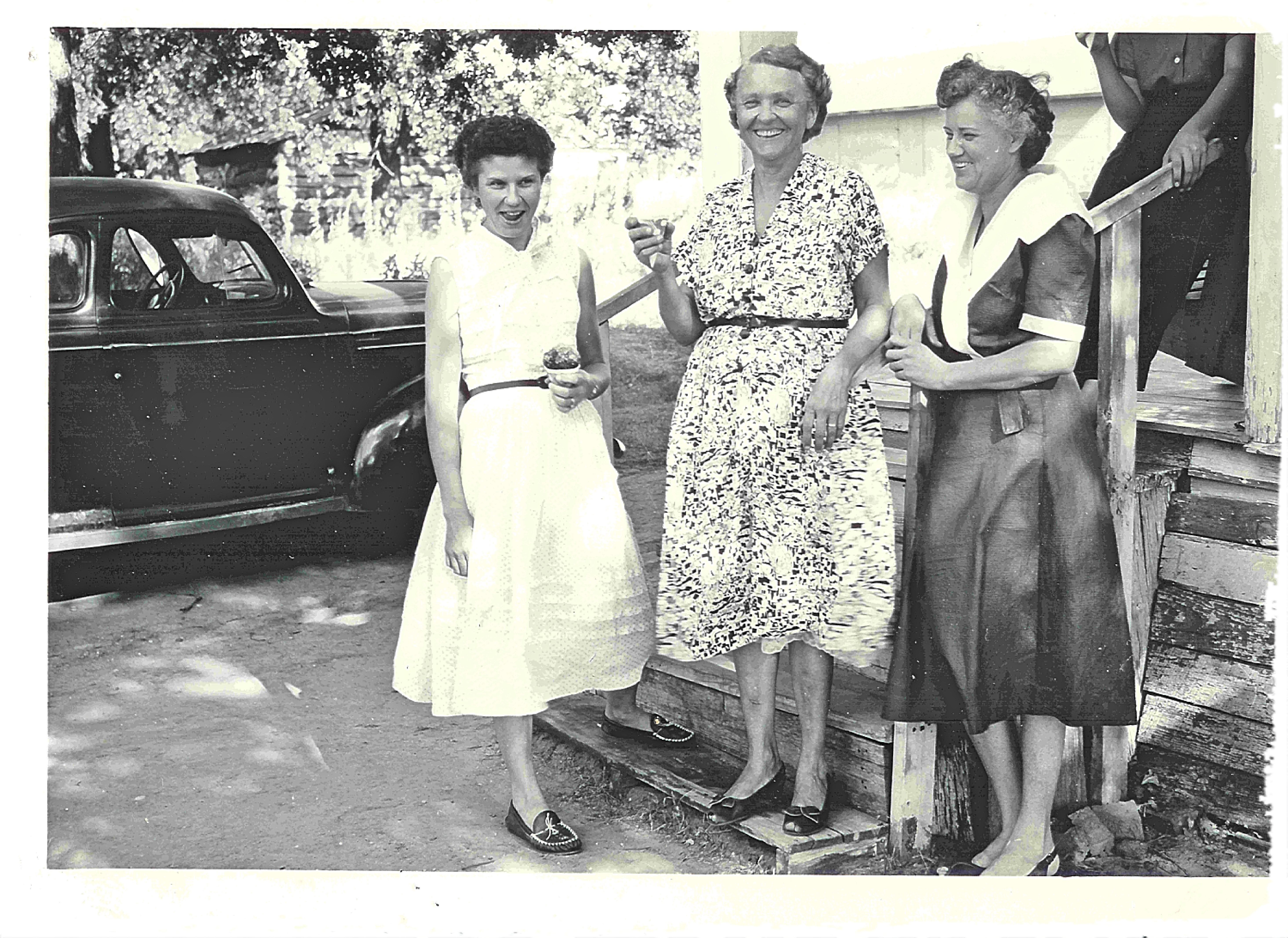
From the left: My mom, my maternal grandmother, and my aunt
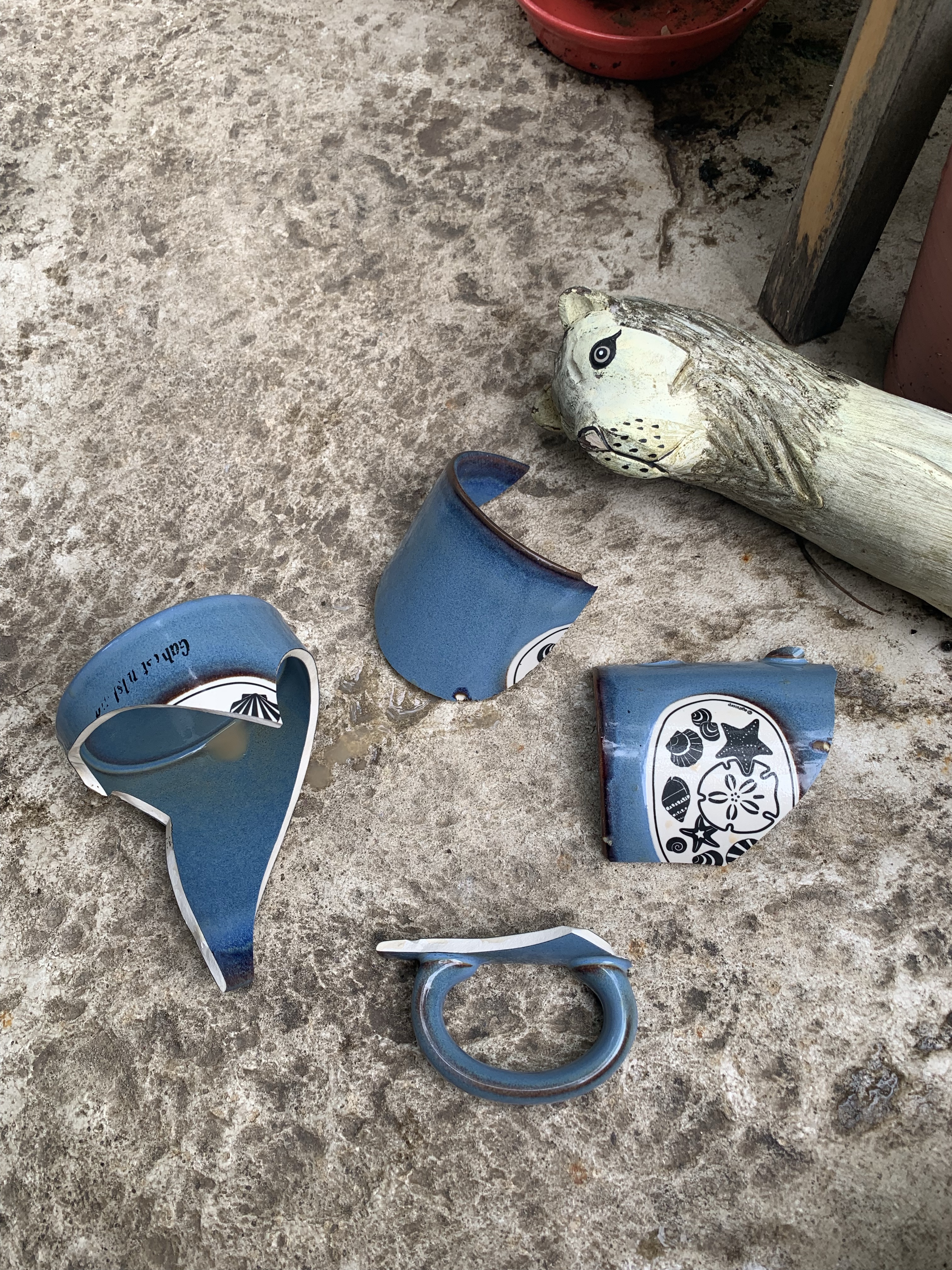
My memories are fragile as porcelain. I long to hold on to every second, recall and relive each happy moment before they slip and shatter, like my coffee mug this morning. Andrew and I were enjoying the view from our back porch, when I went to toss a peanut to a visiting squirrel. My right hand lobbed the treat, and my left hand joined in the motion, throwing instead my Galveston souvenir coffee mug to a confused and startled squirrel. The mug tumbled from my grip and broke into pieces on the concrete.
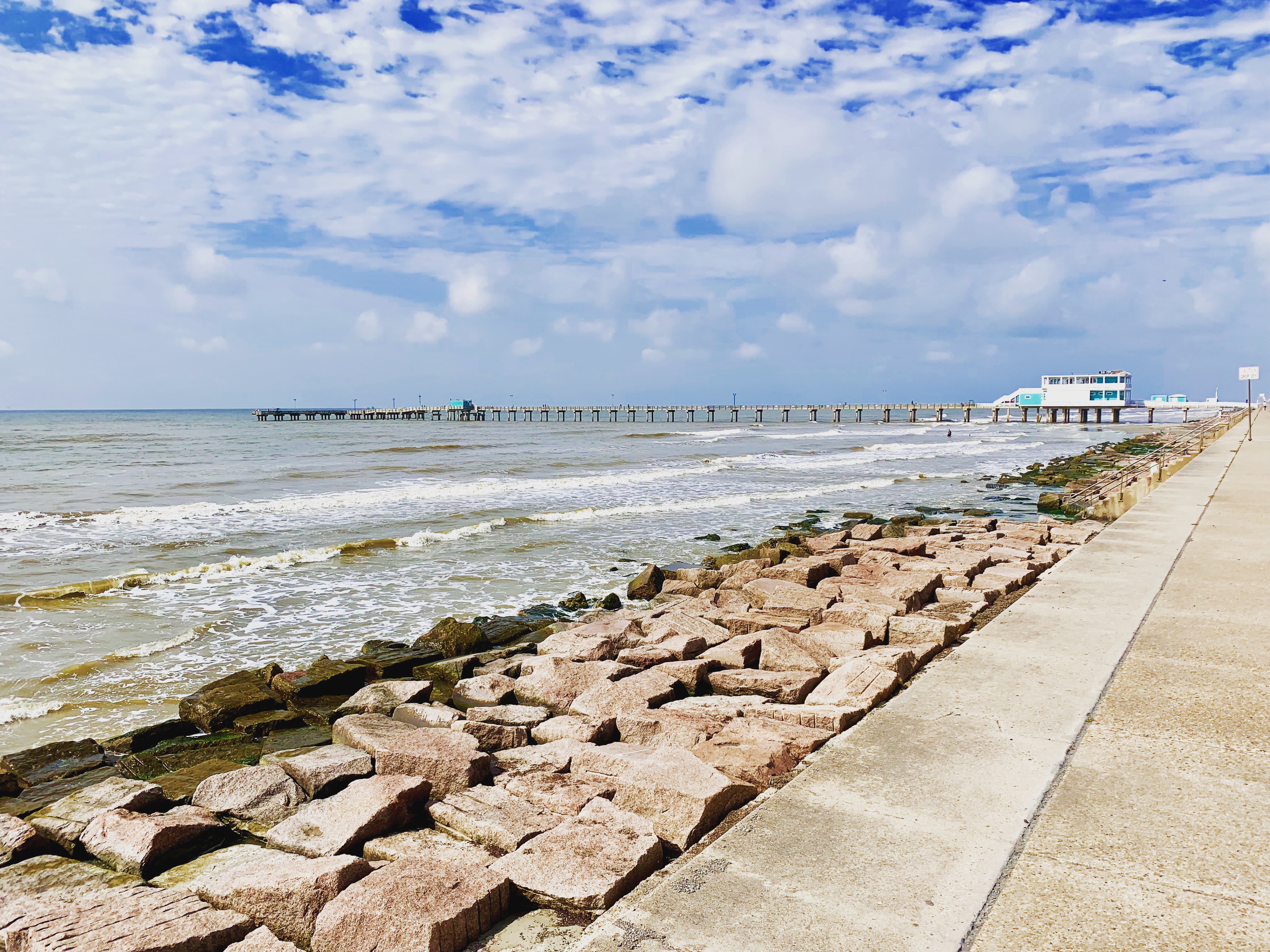
Photo by the author – Galveston Seawall
We visited Galveston after we married and before Covid. I can’t recall the year unless I look it up. Never good at remembering dates, I rely more and more on my phone, calendars, sticky notes. The desk in my office holds a rainbow of colored squares. I keep lists – groceries to buy, books to read, movies to watch, places to visit. This method works until I can’t decide whether “Luce” is a book, movie, or shorthand for lettuce.
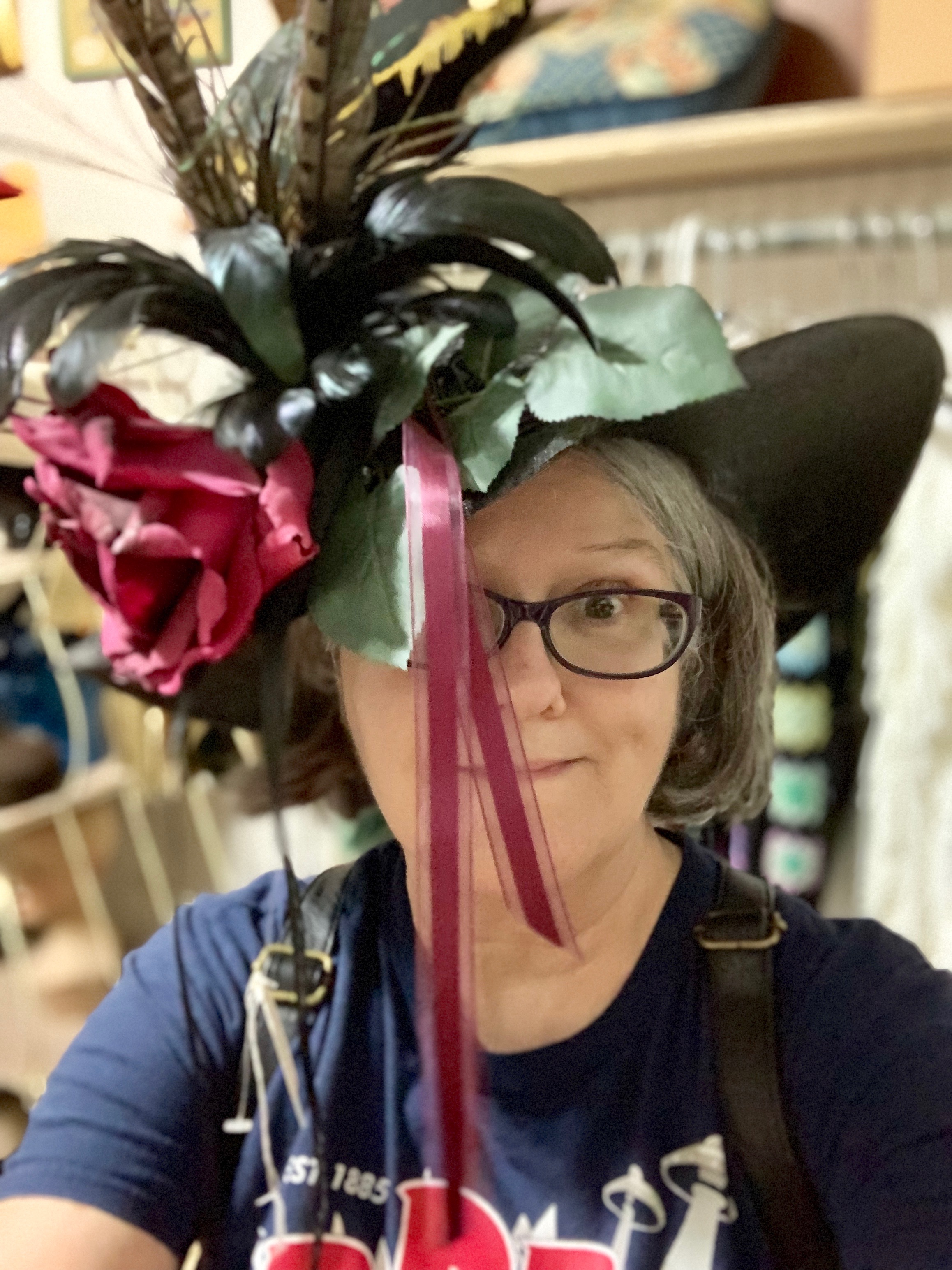
The author – trying on a hat at a shop in Galveston
“I’ll buy you another mug,” my husband said. “I bet I can find one on eBay.”
“No. It won’t be the same.” How to explain that the kitchsy souvenir held not just my morning coffee, but memories of strolling along the seawall. “We will have to go back to Galveston.”
I pushed the broken bits aside. No more physical remembrance, but I could look at the pictures we took on that trip if I wanted to recall the way the golden hour lit up the historic cemetery we toured.
Photo by the author – the Broadway Cemetery in Galveston
I have begun a journal detailing each trip we take – the towns we visit, shops where we find the best bargains, fun things we did and might want to do again. I don’t trust my mind to hold the details. There is so much already stuffed there. Why do I recall the register code to ring up a chicken chimichanga, twenty-eight years after I last waited tables at El Chico? It’s 808. The phone number at my childhood home was 542-0549. I can’t tell someone my current work number unless I have my business card at hand.
Do I remember how to drive to a friend’s house, what store carries the salsa that I like best, how many pints are in a quart? Absolutely not. But I do know that the dad from The Brady Bunch was an architect, and Darrin Stephens on the tv show Bewitched worked for an advertising firm.
We made plans to visit Galveston again, this time in cooler weather. I’ll record the trip in my journal, and note the places we go. We’ll wander through The Strand and visit the souvenir shops on the seawall. I’ll look for a replacement for my coffee mug, but this time I’ll buy two, in case I decide to chunk one at a squirrel.
I wandered into the dark room at the museum and stepped through into another dimension. Sound surrounded me – soft voices lifting in song and sweet notes issuing from musical instruments. The experience of viewing The Visitors, a video art installation by Ragnar Kjartansson, haunted me long after I’d left the Dallas Museum of Art.
The piece features nine screens, eight of them showing individual musicians in separate rooms of the same house, performing the same song. They shot the ninth screen on the front porch of that house, the Rokeby mansion in New York, a historic site once owned by the Astor family.
I wandered up and down the room housing the exhibit, pausing at each projection to marvel at the beauty of the setting. The rooms in the video, with their gently fading wallpaper and antique furniture, reflected a vision of loss and regret that echoed in the lyrics of the song. Later I discovered the words were based on the poem Feminine Ways, written by Ásdís Sif Gunnarsdóttir, Kjartansson’s ex-wife.
The music built and swelled, rising in a crescendo then falling to whisper quiet. Standing in front of each of the life-sized screens, I felt like a voyeur, viewing ghosts instead of recordings. In one scene, a man sits on the edge of a bed, electric guitar in his lap. Behind him on the bed we see a woman’s bare back, the curve of her shoulder lifted into the lamplight. As I paused at each screen—the cello, the accordion, the pianos, the guitars—I felt as though I were the ghost, wandering through an afterlife of such intimate moments.
Art touches our soul, reminding us we are fragile and alone. At the end of the video the musicians gather in one room. They sing around the piano, the words this time joyful. One artist pops a bottle of champagne in celebration, another lights a cigar. The troupe strolls out across a broad green lawn, singing. I am left with that last image – of individual lives come together to create something beautiful.
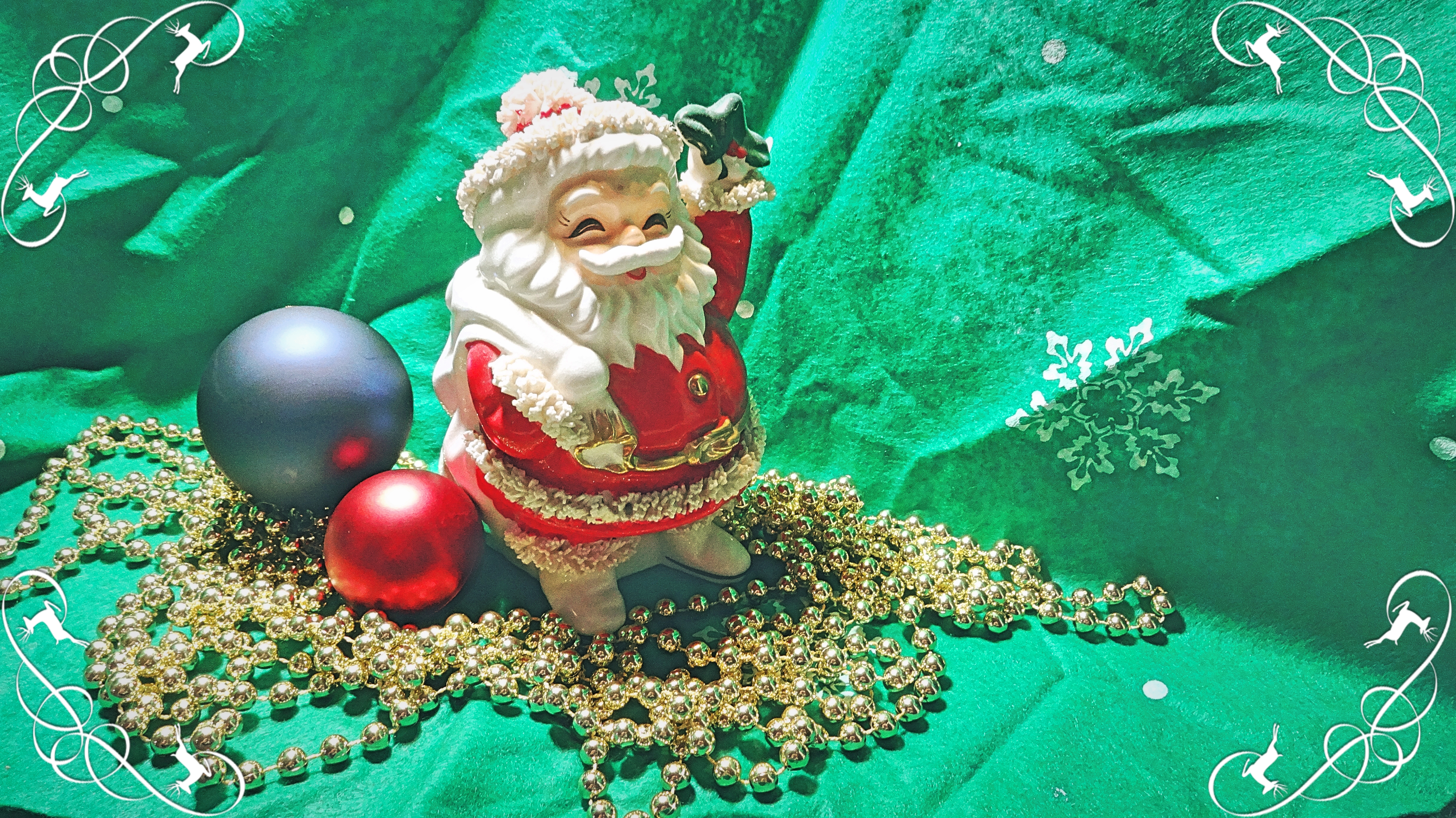
It’s Christmas Eve, and I’m looking for Santa. Not the jolly elf in red pajamas, my Santa is a six-inch tall ceramic bank. He’s just like the one my mom had, the one she saved quarters in all year to have money for Christmas. Mine doesn’t have quarters. It came without the rubber stopper at the bottom, and any money I stashed there would fall out like it does from my wallet when Bath and Body Works has their 2-for-1 sale.
Birthday presents were purchased with S&H Green Stamps. We did all our grocery shopping on Wednesdays, double stamp day at the Piggly Wiggly grocery store. The cashier would hand out a strip of the little green trading stamps, the number of stamps calculated based on the dollar amount of groceries purchased. I got to keep and redeem at the Green Stamp store any books where I had licked and stuck the stamps on the pages. I remember them tasting like spearmint, this may or may not be true.
I bought my Santa bank at an antique store in Jefferson, Texas, spurred on by a desire to replace each iconic artifact from my childhood. You know you’ve reached a certain age when every toy you ever owned is now “vintage” and “collectible.”
Every year in December my mom would bring out the bank, and I’d help her drop the coins into dusty paper wrappers. She’d pull out the stopper and pour out the quarters, a pile of clinking silver on the tabletop. Always quarters, and never dimes, nickels, or those useless bitter pennies.
I knew my parents bought my presents, but I also believed in Santa – the one with the flying reindeer. How can you believe in something and yet know it isn’t true? Have you ever looked at a triple chocolate cake and said to yourself, “I’ll just have one bite?”
I had a stocking every Christmas, and Santa always left one orange, one apple, several peppermint canes, and a handful of nuts. I’d have presents too, bought with those carefully wrapped quarters. The years went by, the name “Santa” on the gift tag replaced by “Mom” or “Dad”. We still stayed up late to watch the television newscasters predict the path of the jolly elf’s journey.
My mother loved stories, she’d act out the tales of Br’er Rabbit and recite what she remembered of Tom Sawyer’s adventures. She loved Santa and the Tooth Fairy equally. I believe she got as much of a thrill placing the gifts under the tree and the quarters under my pillow as I got joy in receiving them.
I finally located my Santa bank on top of the book shelf in our dining room. His face is familiar, and when I pick him up, I can imagine the heft he’d have filled with coins. My parents filled my childhood with the wonder of a magic elf who’d visit the good boys and girls on Christmas Eve. I wasn’t disappointed to learn the truth, because the best gift they gave me was the gift of imagination.
When I was seven years old, my parents lost me at the State Fair of Texas. Their last sight of me, I’d slipped into a crowd of folks shuffling into a garish tent on the midway. I imagine them watching as I stood in line, my hair done up in twin pony-tails in the style we called “dog ears” and my sweaty little fist clutching the ticket to the freak show.
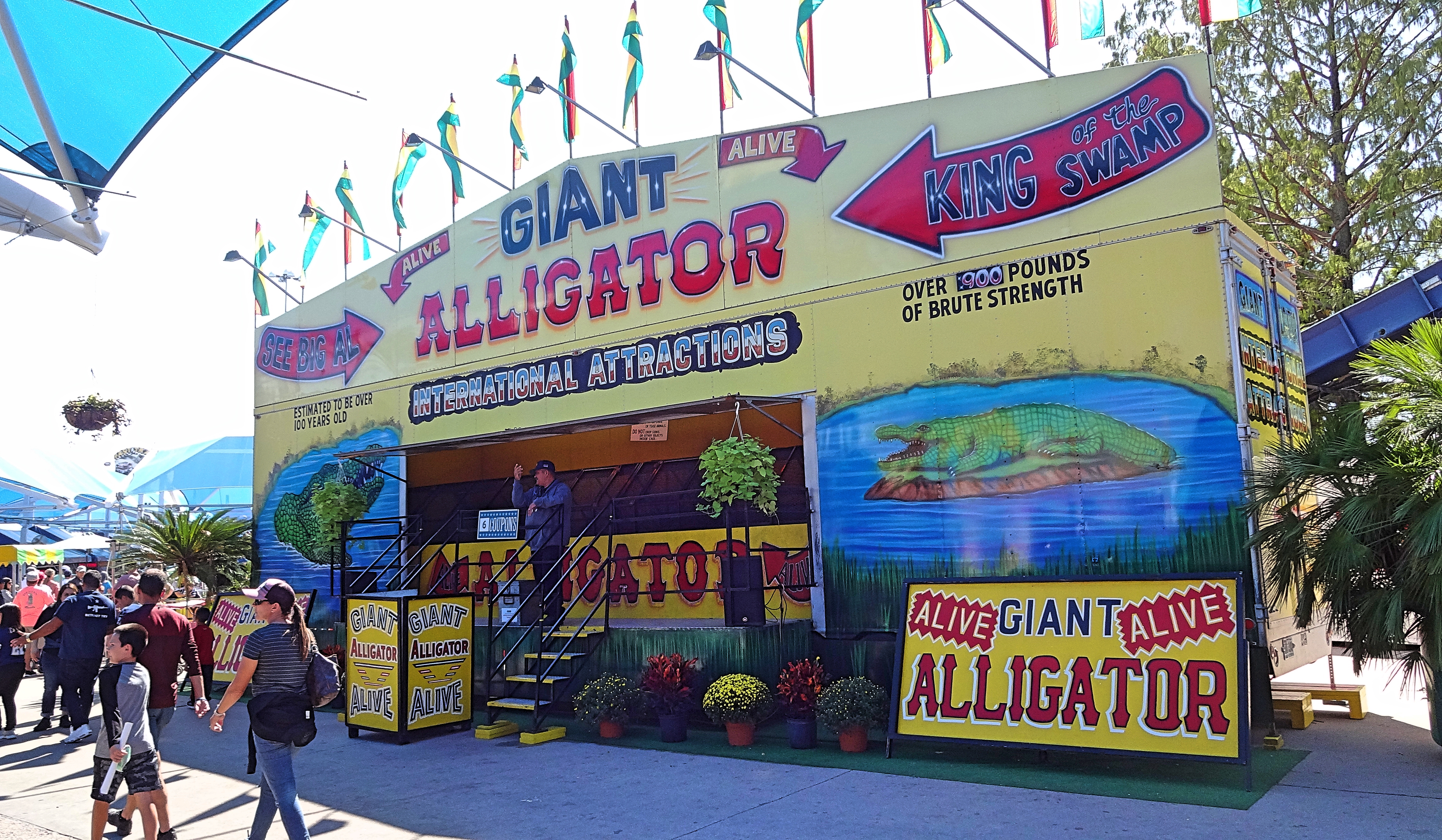
You’d be hard pressed to find a decent freak show now. This was 1967, when no one thought it unusual or awkward to put people on display. We have the internet for that now, but in the 60s you had to show up in person. I didn’t know what to expect from the sideshow. A bright splash of colored posters flapped against the outside of the tent and promised many miracles. An alligator boy, a sword swallower, the pincushion man, the world’s ugliest woman—they all waited inside.
The last one on this list drew me in. I’d started wearing glasses, a homely set in thick tan plastic that magnified my eyes to the size of saucers. Coupled with the elastic waisted pants and polyester tops mom dressed me in, from a distance I resembled a short, middle-aged housewife. Add in my under-bite, square jaw, and the nose I grew into, and you’ll get the picture. I couldn’t wait to spot the world’s ugliest woman.
Once inside the tent I fidgeted through the first part of the show. The only audience member shorter than five feet, I faced a solid fence of adult backsides. I hopped up and down, afraid I’d miss the one act I’d wanted to see. I caught the flash of metal as the sword swallower flourished his props, and from the collective sighs and gasps as the other performers took the stage, I understood they had displayed wonderful things.
At last the slick sideshow barker announced we could all move into a curtained off area to the side of the stage. “Only one additional dollar, folks,” he said, “and you will witness a site certain to frighten children!” The barkers gaze skimmed the crowd, measuring the size of our wallets. “Any patrons with weak hearts might want to skip the act.” I dug the last of my allowance from my pocket.
Half the crowd jostled through the curtains to arrive in a roped off space the size of my living room at home. I pushed my way to the front, determined not to miss a bit of the show. We faced a wooden platform, taller than I was, and barely large enough to support the plain kitchen chair placed in the center. Another set of curtains covered the back of this makeshift stage.
“Presenting the world famous…”
I don’t remember the woman’s name, the color or length of her hair, I couldn’t guess her age. The curtains at the back of the platform parted to allow her passage onto the platform where she settled on the little chair and dropped the robe that covered her body.
There must be some mistake, I remember thinking. This was not the World’s Ugliest Woman. Extraordinary designs—red dragons, blue and yellow birds, circles and flowers and bright flourishes covered every inch of her. I supposed the parts hidden behind her bikini top and shorts were also inked. When she smiled the tattoos moved along her face, as though they held a separate life from hers. She perched on the chair, smiling down at us, her supplicants. I wondered what she thought of me, so plain, so ordinary, without a single story drawn upon my skin.
I didn’t notice the others slipping out from the tent as I stood there, entranced until the sideshow barker, with a gentle nudge, told us, “Thanks for visiting folks.”
Released onto the fairgrounds, I wandered out into the sunlight to find my mother and father standing on either side of a uniformed policeman.
“Where were you?” My mother snatched my arm, dragging me away from the dark shadow of the sideshow tent as though it might suck me back in.
For answer I waved behind us, as a new stream of fair goers exited from the front of the tent. This was where most of the group I’d been a part of had left the show, strolling out past my waiting parents. I’d appeared almost twenty minutes later, from the back of the tent.
“Never again!” My mother vowed.
That was my first, last, and only visit to the freak show. Years passed and they replaced the freak show with exhibits of bizarre animals. The two-headed turtle, the world’s largest snake, the sheep with six legs—none of them had the alluring charm of the World’s Ugliest Woman. There was a brief time when the midway claimed to have a girl without a body, but we all knew that floating head trick was done with mirrors.
I went to the fair this year with my husband, Andrew, on a Sunday, a day when the crowds shuffled shoulder to shoulder past booths selling sheets, candles, cookware, and beef jerky. The air smelled of cotton candy, stale beer, and manure from the livestock barn. We left the carnival music of the midway fading and ducked behind a row of food stalls. With Andrew’s help I perched atop a concrete retaining wall, above the crowd as they streamed past. I wore a t-shirt with the smiling face of Big-Tex, the 55-foot statue greeting the crowd at the fairgrounds. His cheeks stuffed with fair food matched mine as I enjoyed my meal. I nodded to those passersby who met my gaze, and waved to the onlookers, the audience at the show.
My mother, grandmother, and aunt in Farmersville in the 1950s
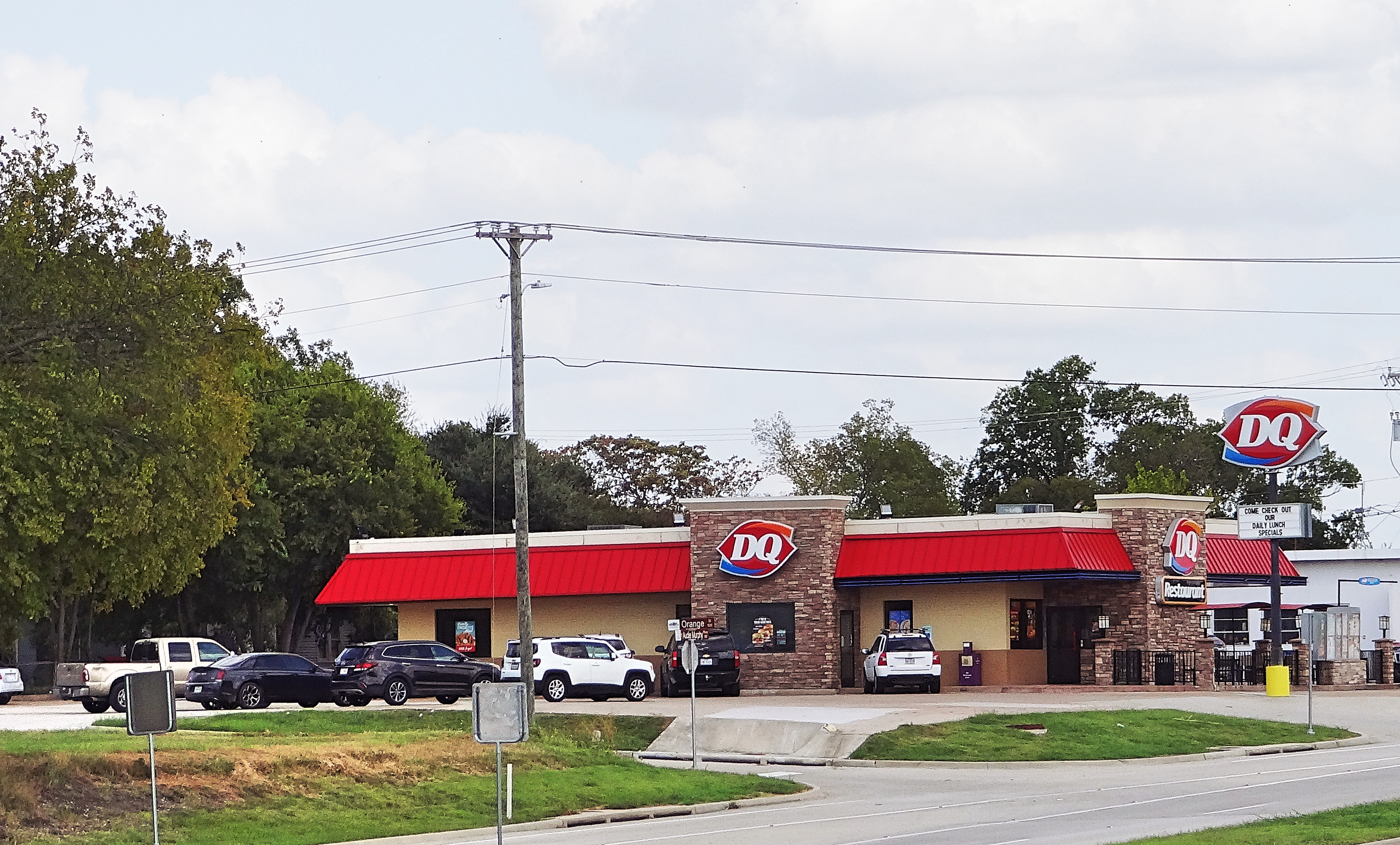
The places we visit are never as perfect as they are in our memory. My grandmother’s house in Farmersville, Texas no longer exists. A remodeled version of the Dairy Queen I visited as a barefoot child sits beside the highway and still serves up chocolate dipped cones and cheeseburgers. You can see the Dairy Queen from the overpass where I used to stand with my cousin and spit on the cars passing below.
Dairy Queen – Photo by the author
My husband and I drove up to Farmersville on the weekend, a short day trip from our home. Over bridges spanning the lake, past trailer parks and fireworks stands to the little town that was once the Onion Capitol of North Texas.
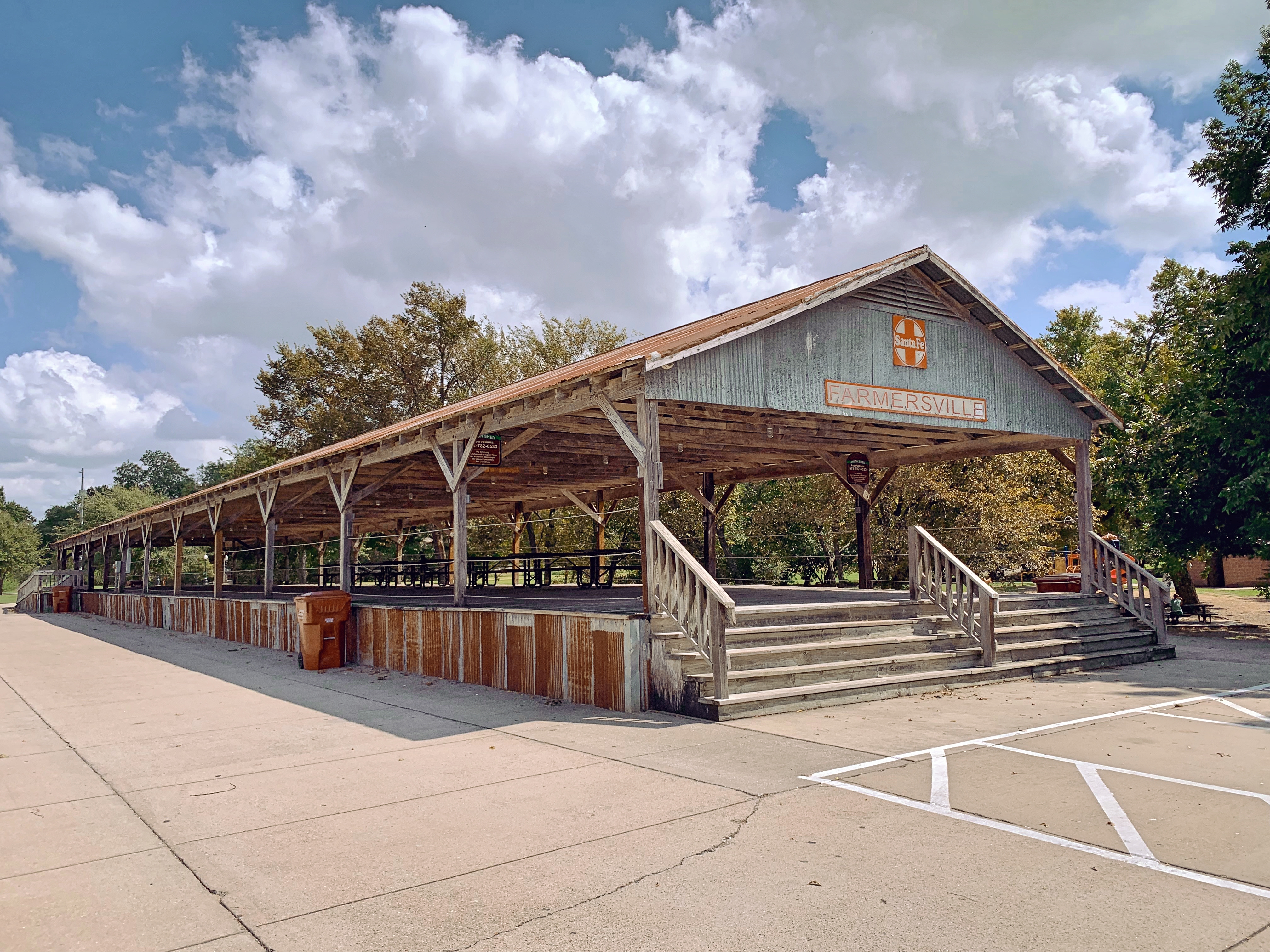
The Onion Shed in Farmersville, Texas – Photo by the author
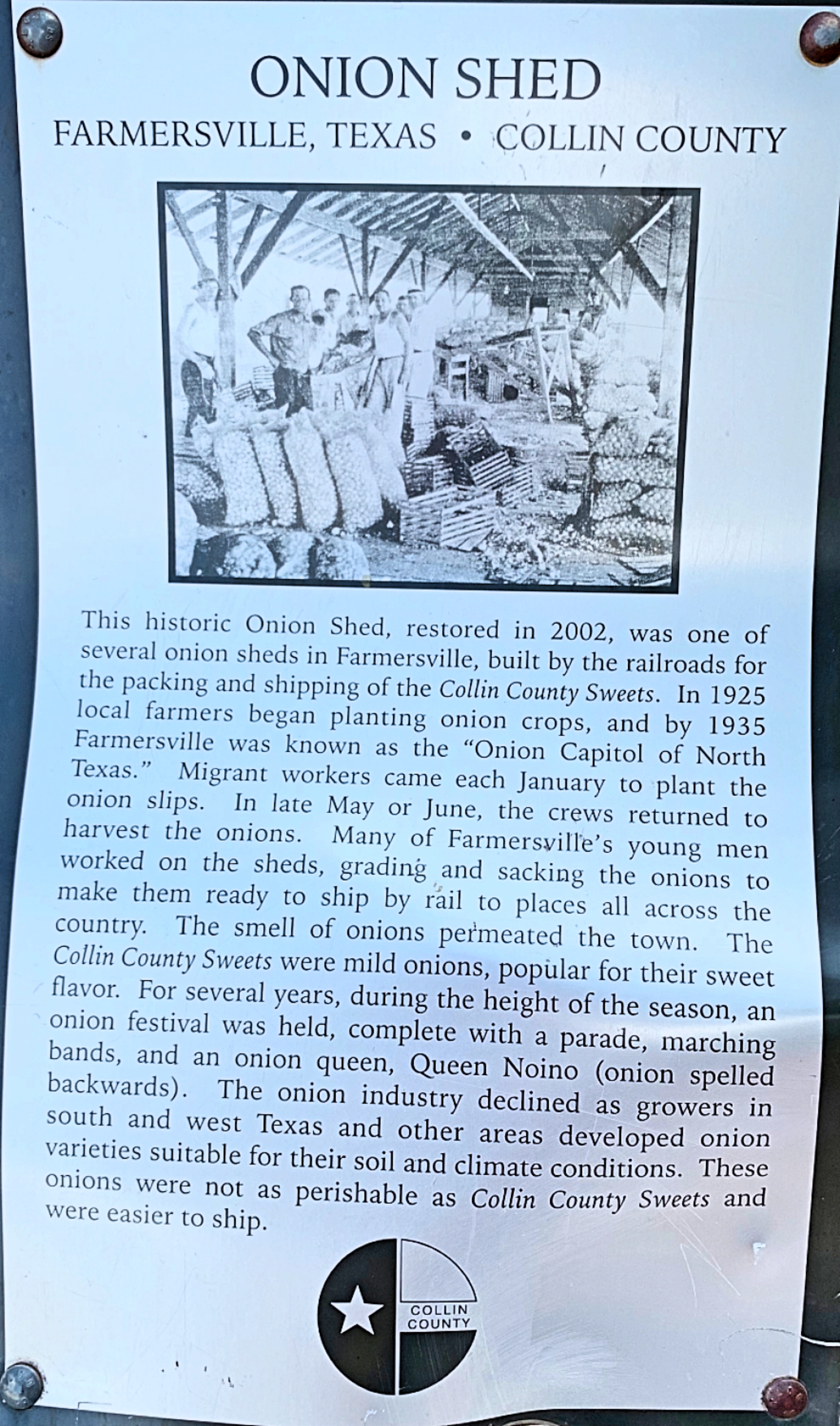
The Onion Shed sits near the town square. In the 1960s I helped my mother and grandmother fill burlap sacks with discarded onions, the rejects spilled and tossed onto the grass from the railway cars where the Collin County Sweets were loaded for shipment. No longer filled with the round yellow bulbs, you can find a flea market there on the first Saturday of each month.
The plaque at the Onion Shed
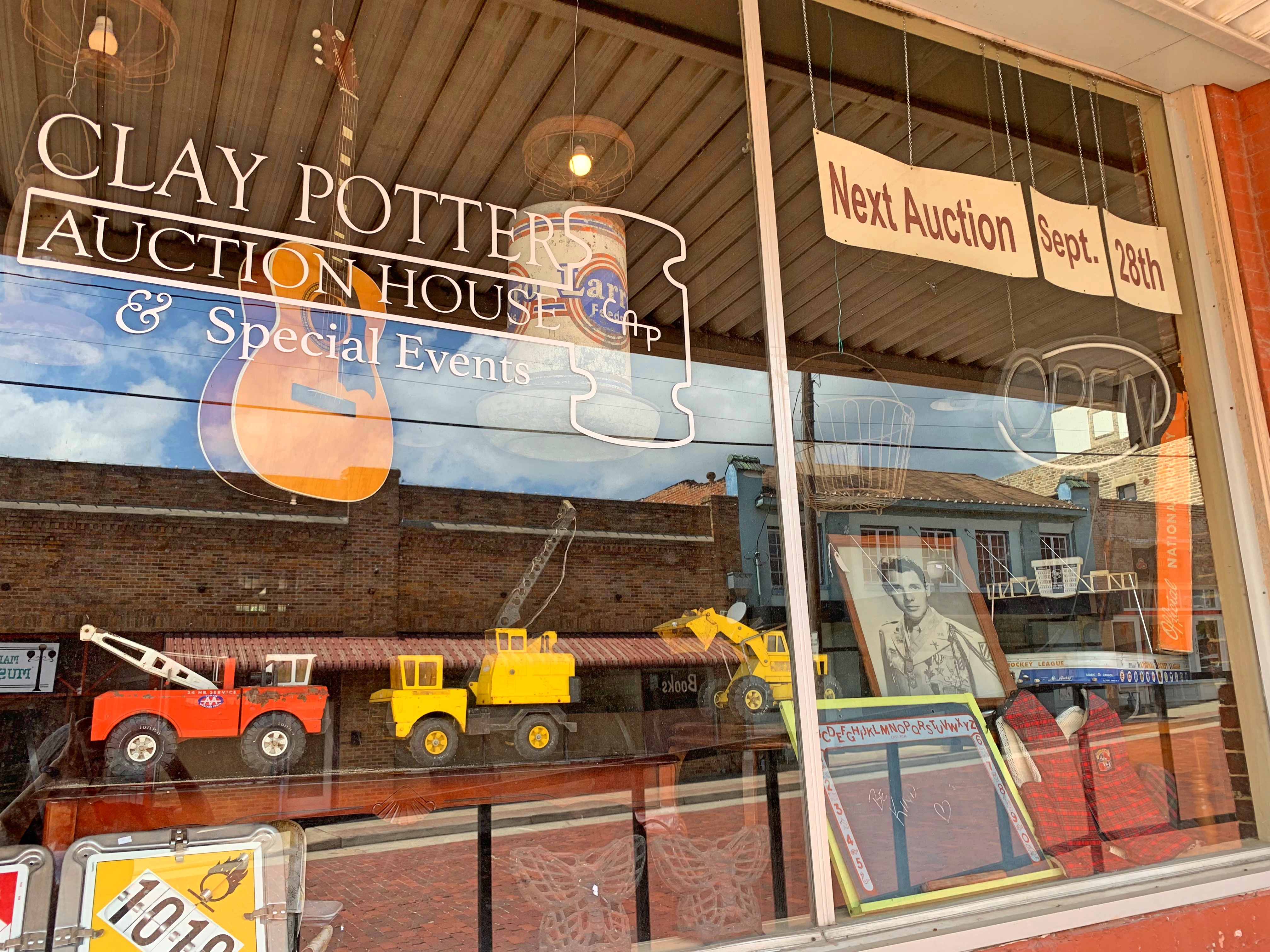
A portrait of Audie Murphy among the items for sale at the Clay Potter Auction House
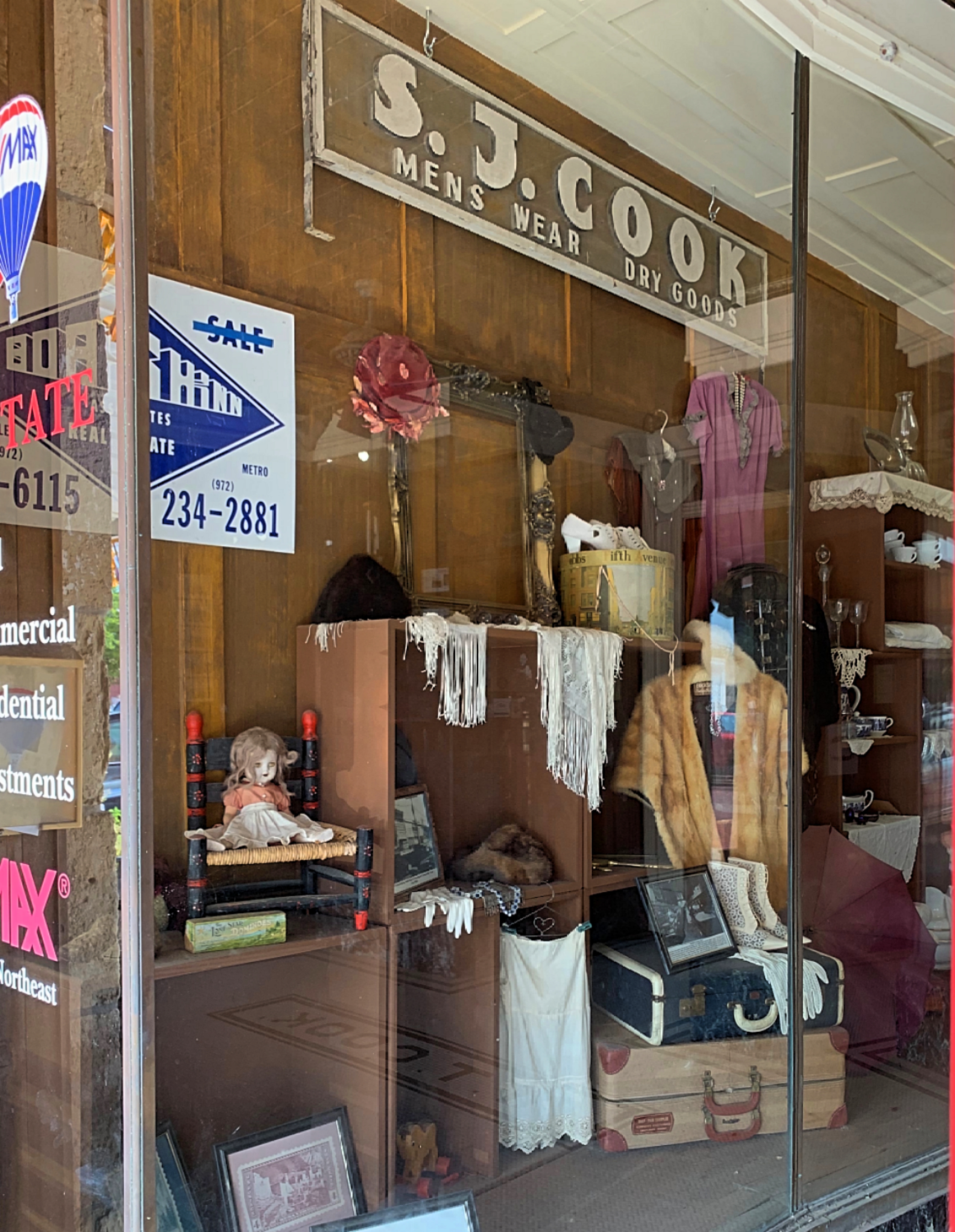
We wandered through antique stores on the town square. I am always surprised to find the toys like those from my own childhood, stacked on dusty shelves and labeled “vintage.”
There were no toys in my grandmother Mattie’s wood frame house. A print of Jesus knocking at the door and a framed copy of the TV Guide with Johnny Carson on the cover decorated her living room wall. If I slipped from my mother’s view I would have just enough time to explore Mattie’s bedroom. I could hide under the fuzzy chenille bedspread and peak out through the fringe skirting the bottom where it brushed the floor. Visiting children were turned out into the yard, chased from the house by apron-wearing women too busy with cooking and serving to put up with our foolishness.
Window display – Photo by the author
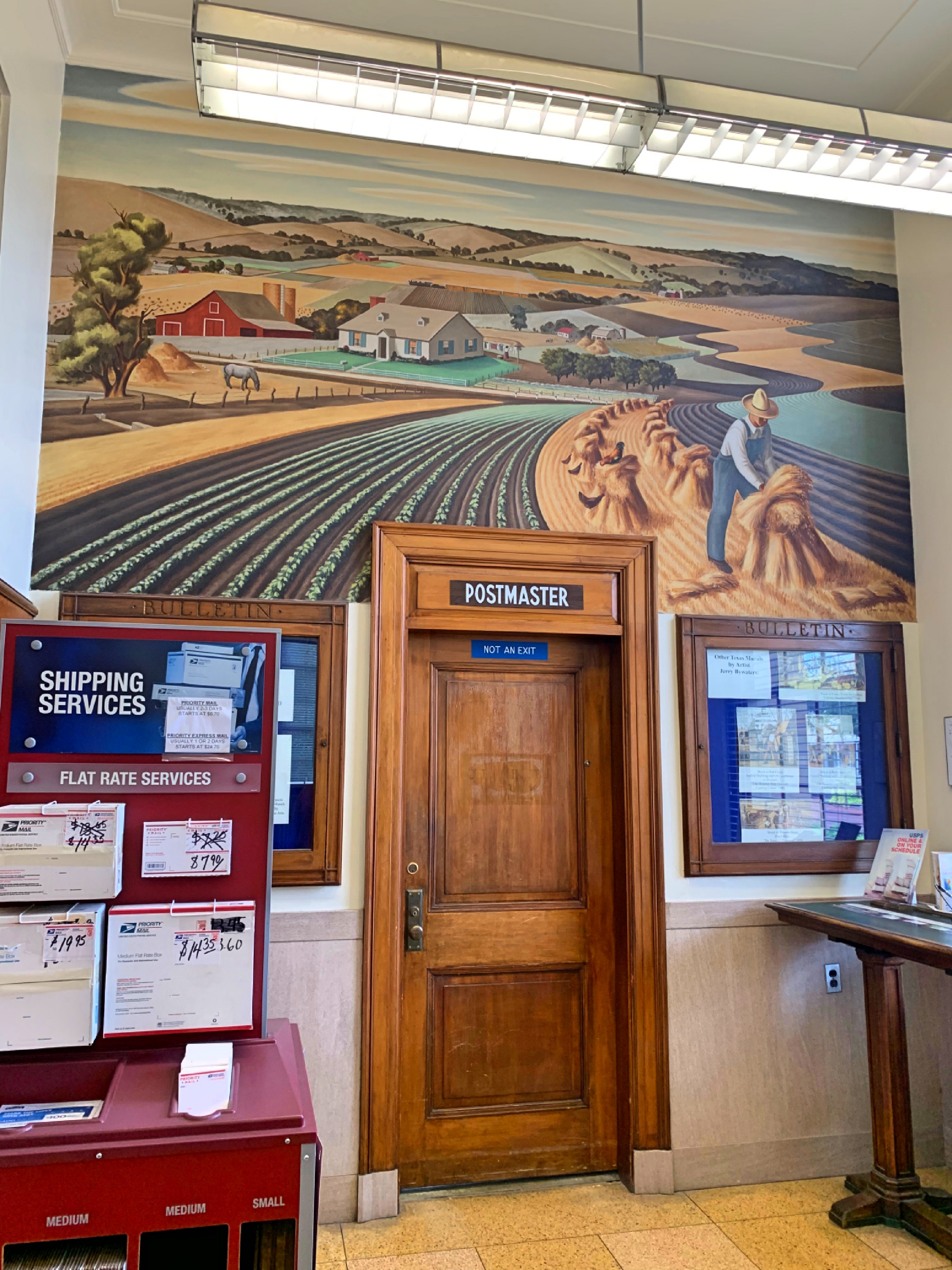
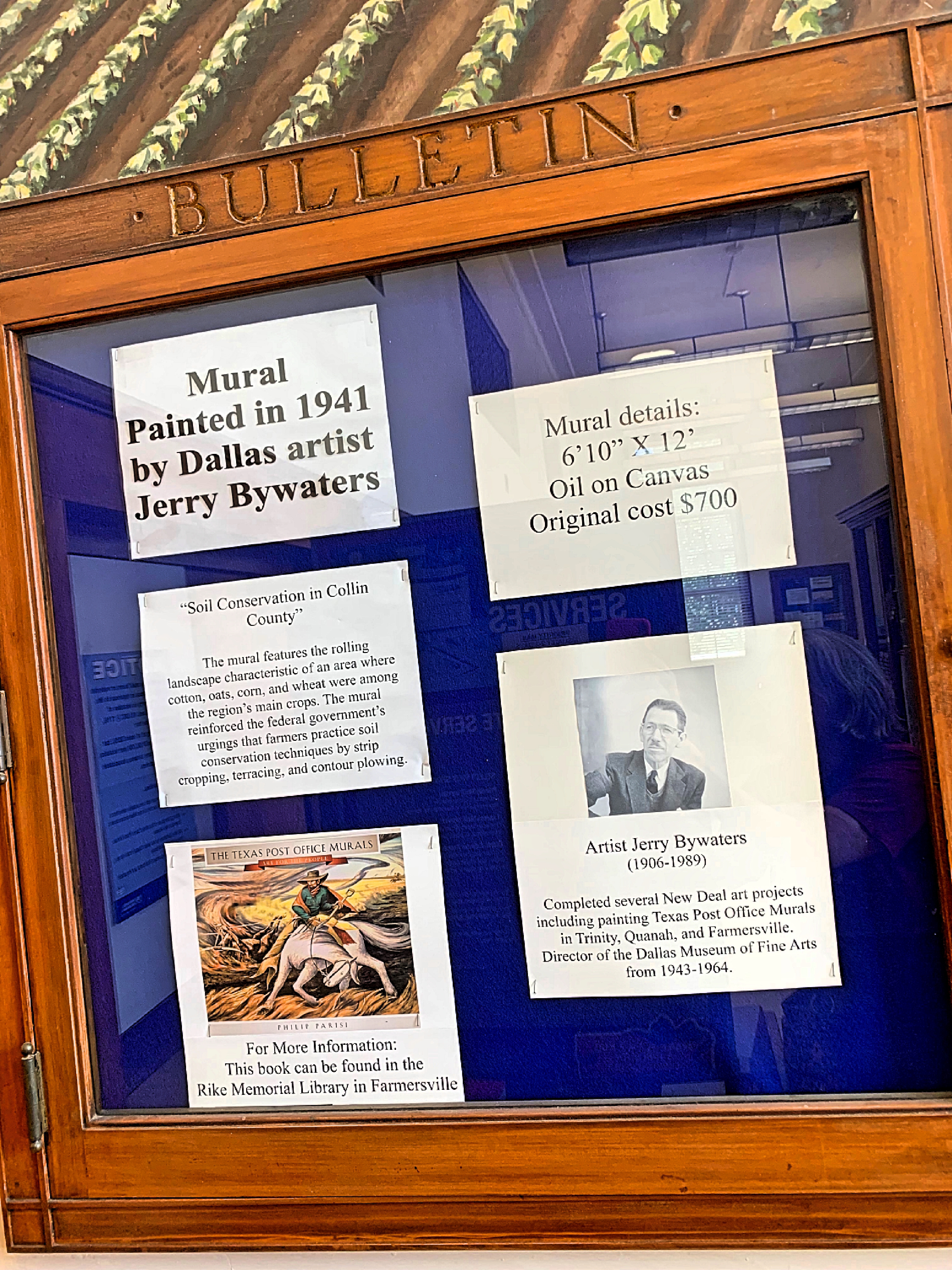
Small towns often have treasures tucked away, to be uncovered by those with time and patience to wander. The post office sports a mural painted in 1941 as part of the Works Progress Administration (WPA).
WPA mural in the Farmersville Post Office – Photo by the author
A short walk to downtown from Mattie’s house, over the railroad tracks and to the pecan tree shaded park, and I could find the snow cone stand there in summer. Crushed ice in a paper cone that dissolved as the treat itself melted to slush in the heat. But I could drink the last of it, my hands, lips, clothes stained red, purple, blue, green.
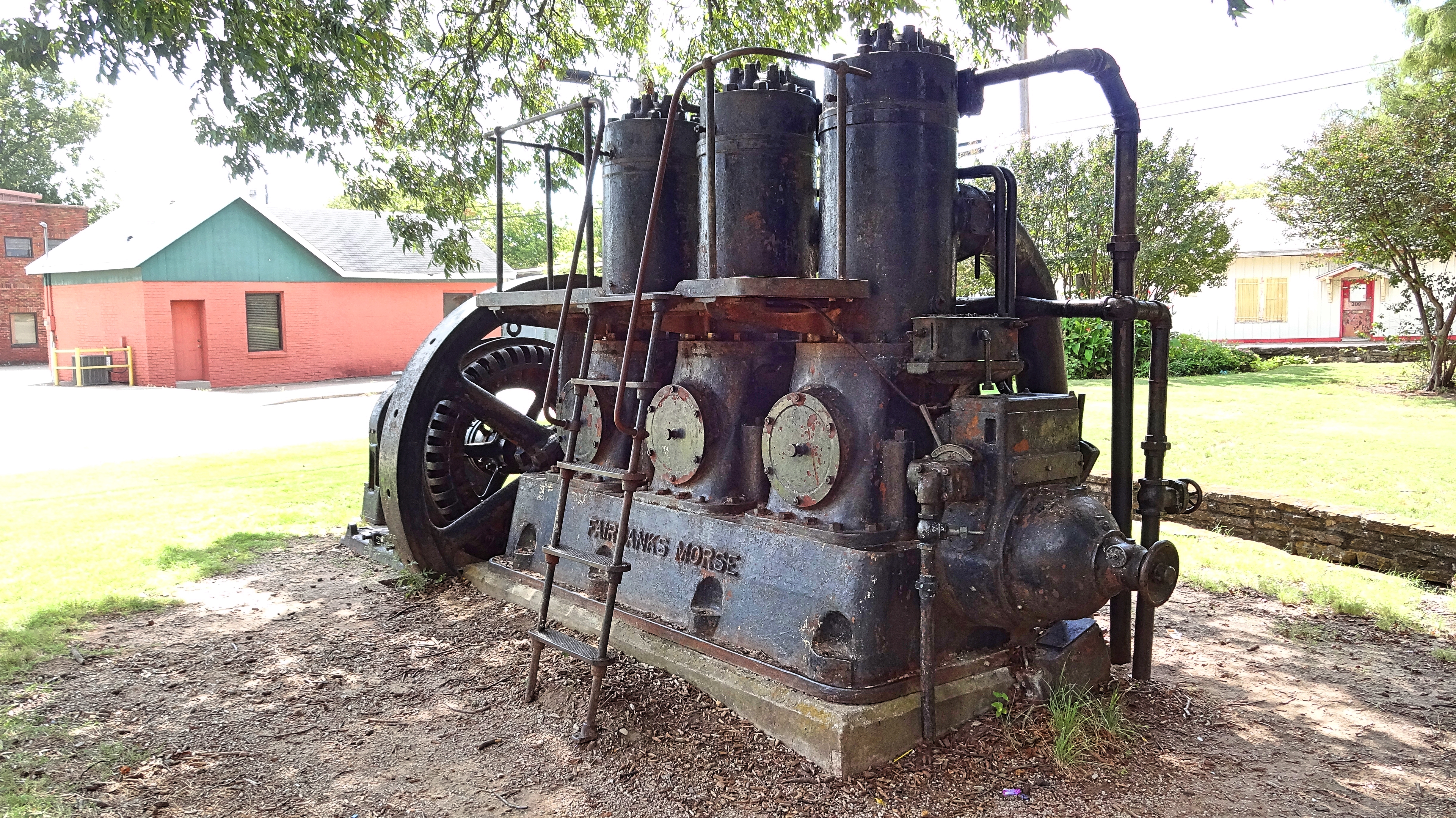
Old Electricity Generator in the city park – Photo by the author
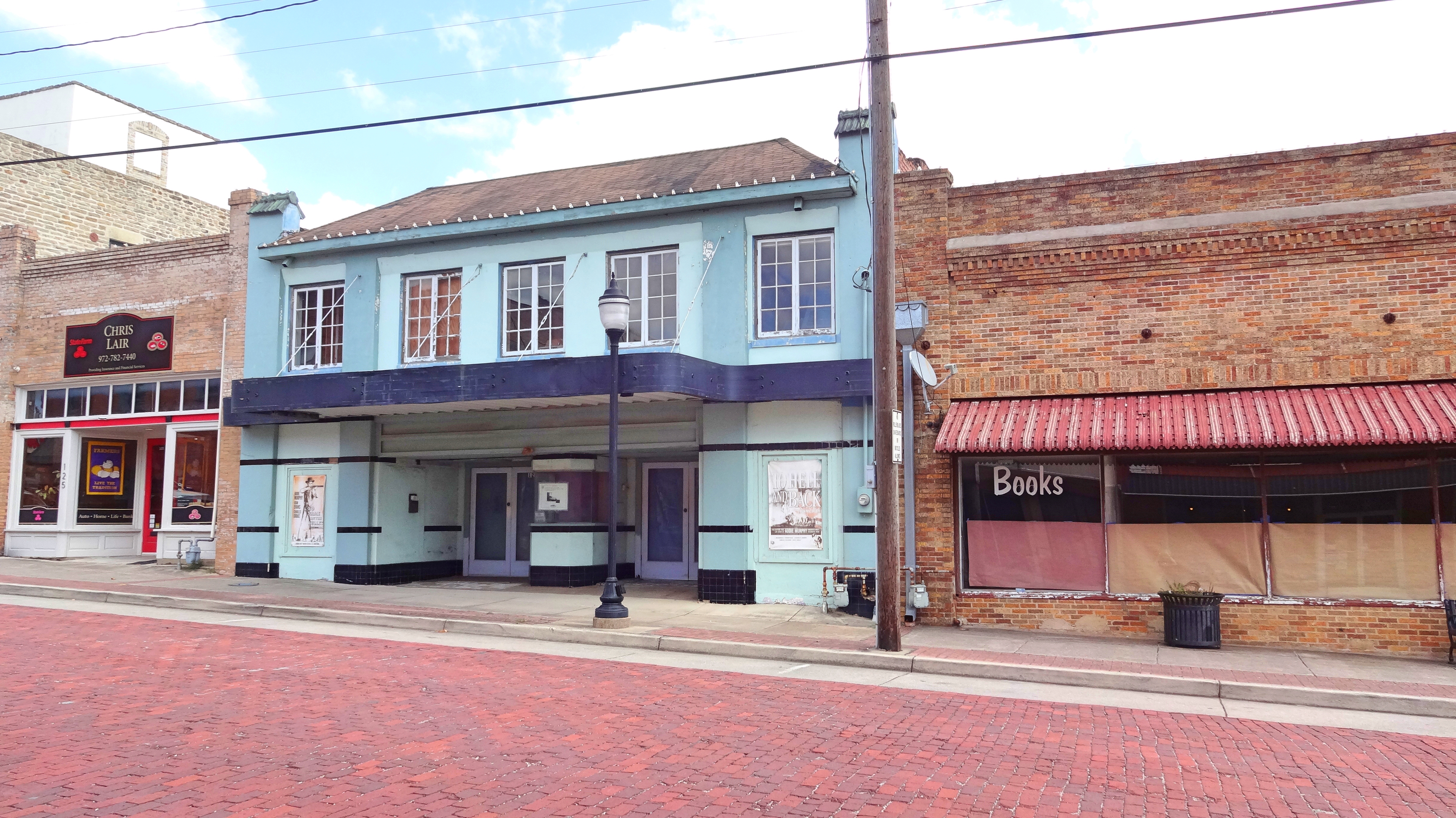
There were no snow cones for sale on the day we visited, but I bought a Dr. Pepper from one of the stores. Andrew and I sat and shared the drink on a bench near the old movie theater downtown.
The movie theater in downtown Farmersville, Texas – Photo by the author
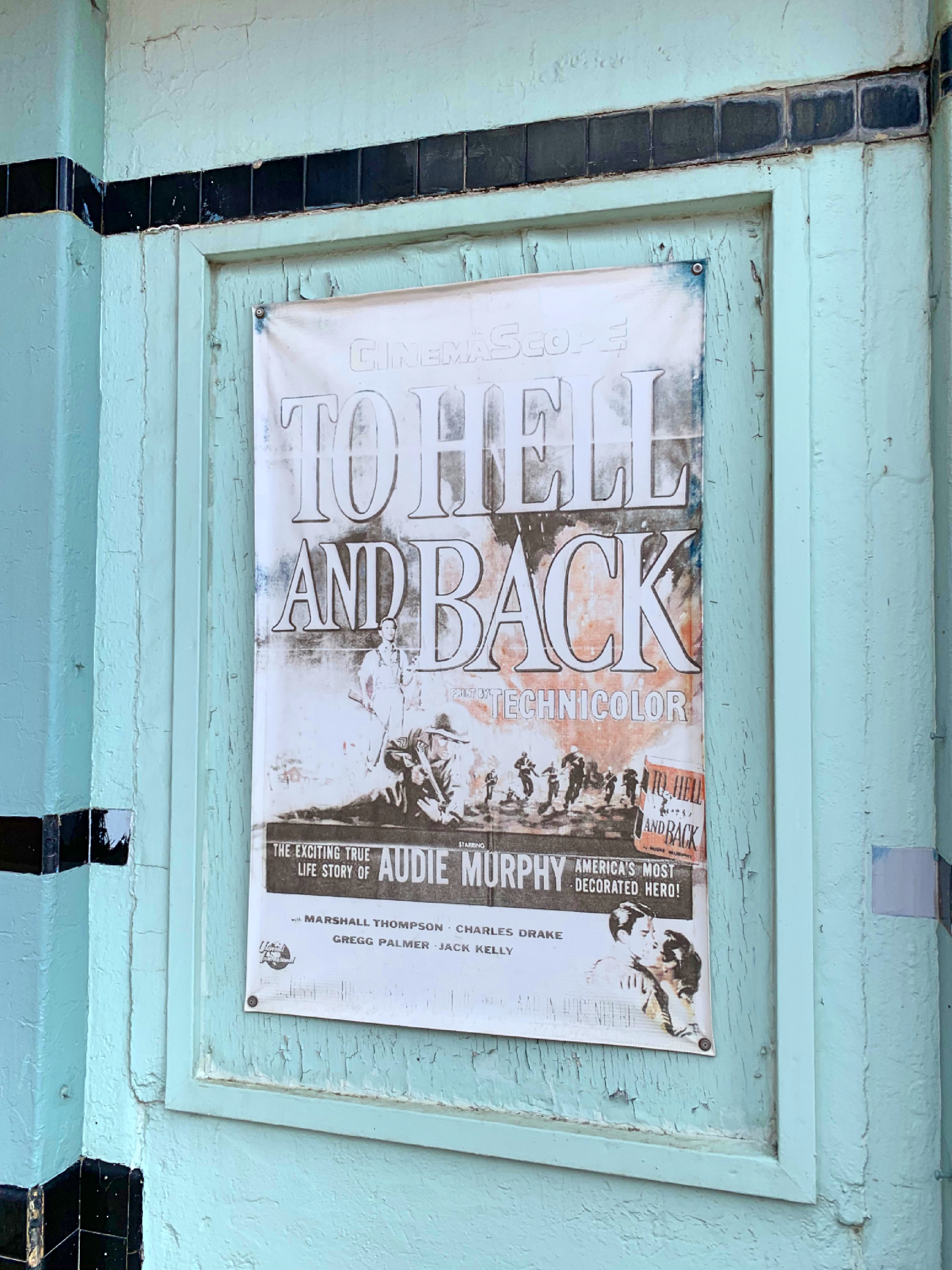
Closed for years, posters from films starring the hometown hero, Audie Murphy, hang on the front. I imagine my mother there on a Saturday night, palms slick with butter from the popcorn.
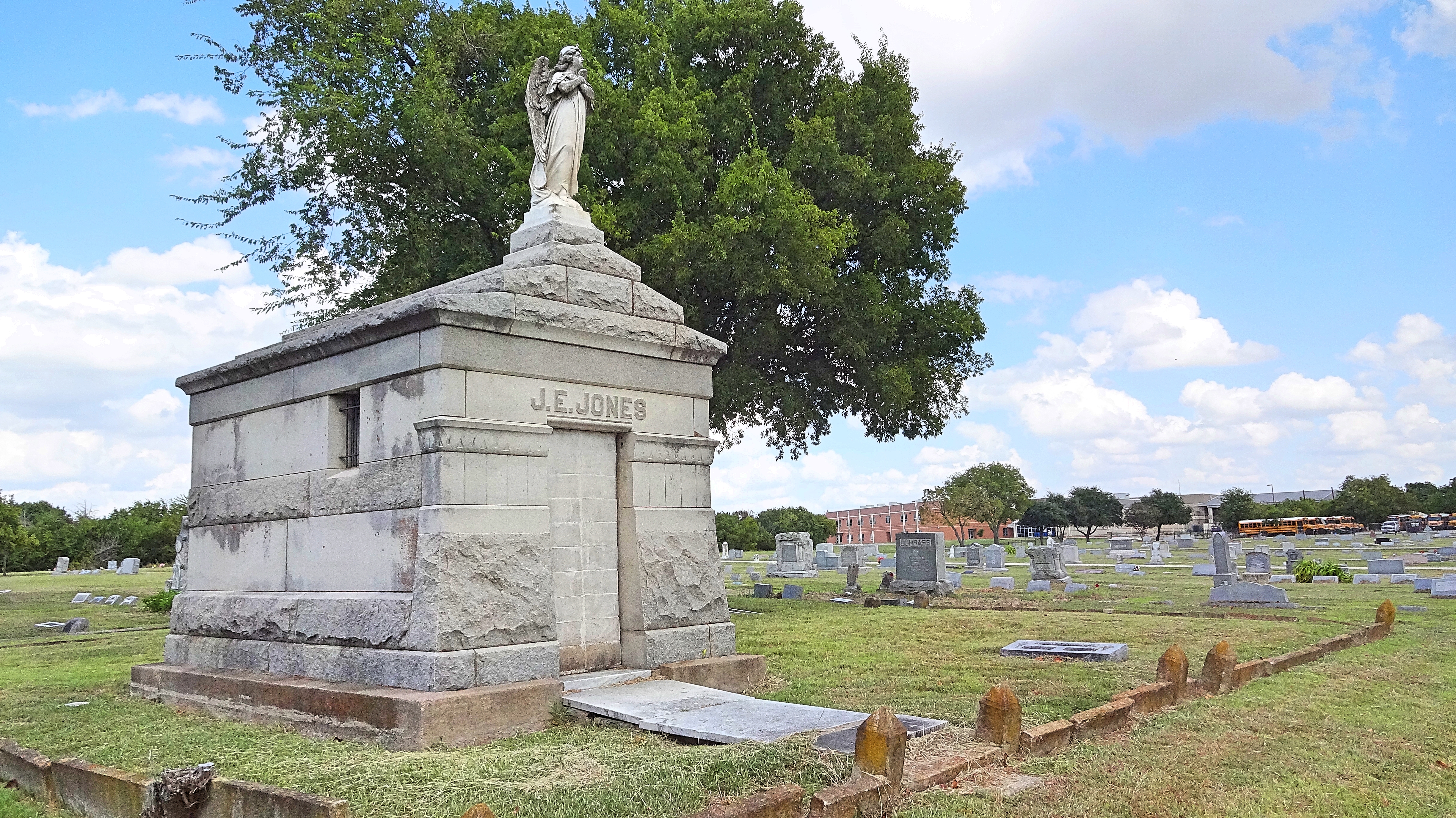
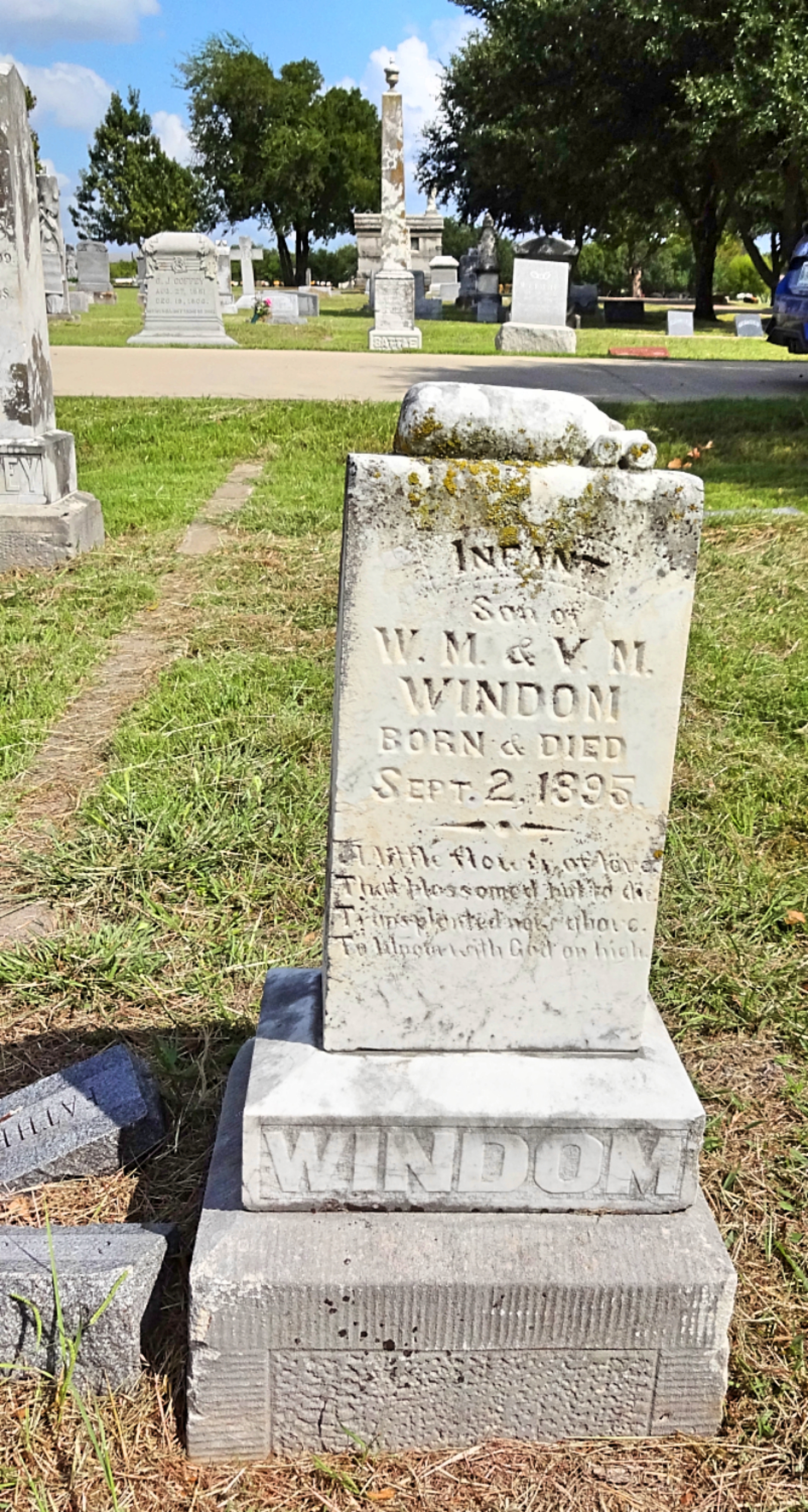
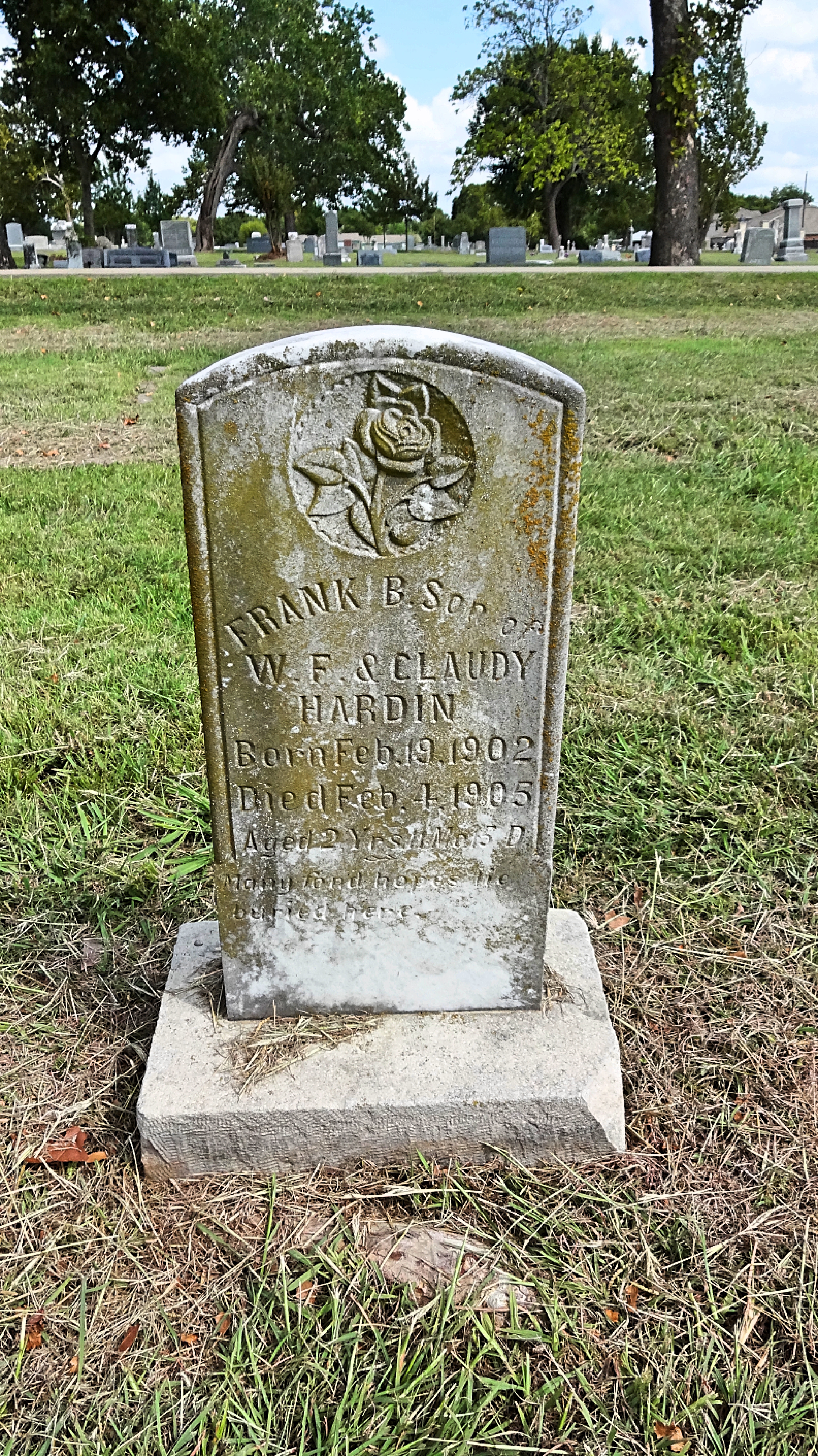
We ended our visit with a stop at the Odd Fellows Cemetery. My grandparents, Grover Cleveland Cullum and Mattie Elizabeth Watson Cullum, are buried there, as are their parents. We searched for their graves but couldn’t locate them. I hadn’t been there in years and the day was too hot for much effort. The one place in town that hadn’t changed but I couldn’t rely on my memory to find the family plot.
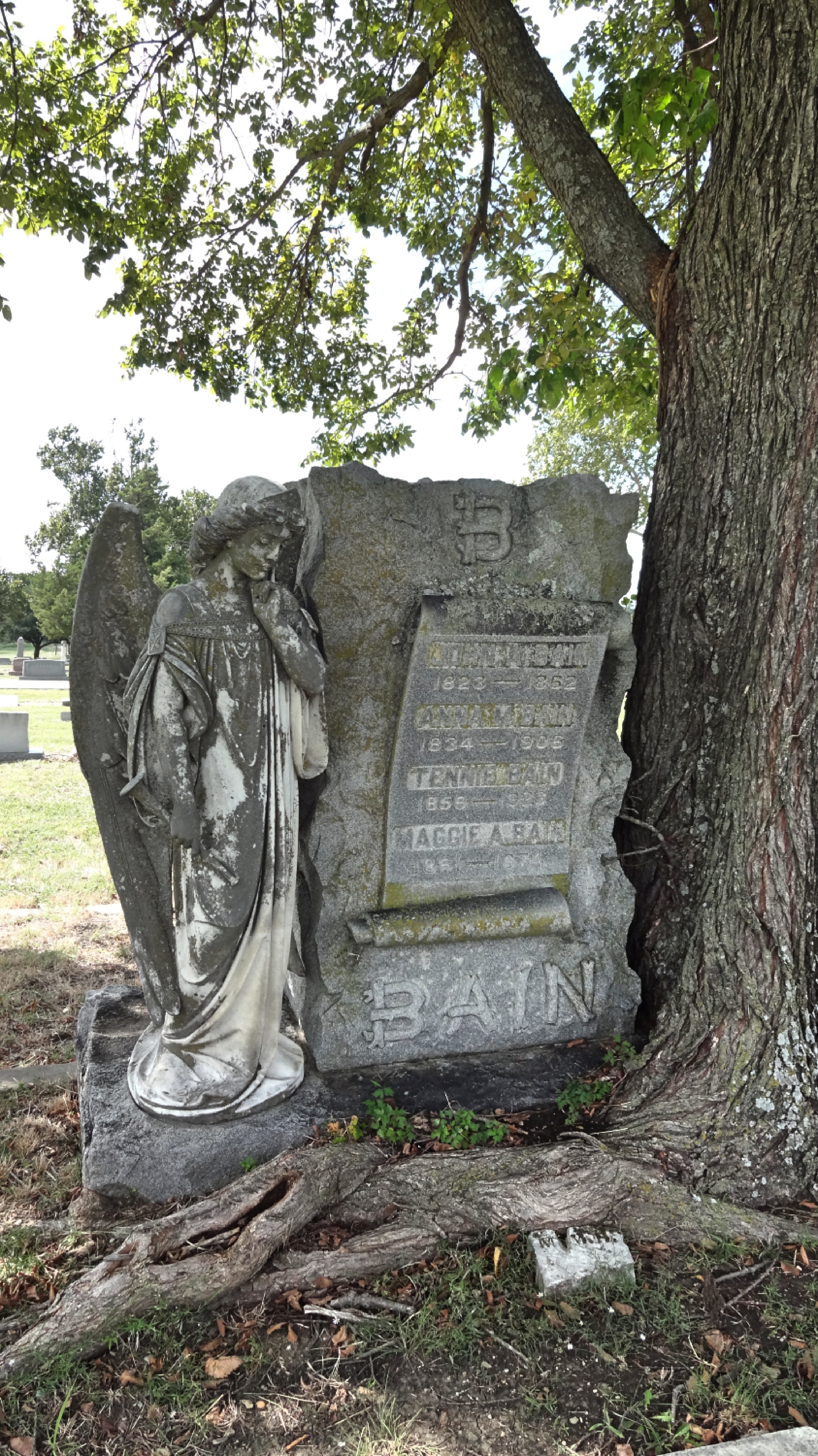
We did see some interesting gravestones.
Farmersville 100F Cemetery/Odd Fellows Cemetary
“Some of these people were alive during the Civil War,” Andrew commented.
“Yes,” I said.
Tired and sweaty, we climbed into our air conditioned Honda and headed home. Past the shops downtown, the onion shed, the park, the railroad crossing, stopping at last near the overpass so I could hop out and snap a photo of the Dairy Queen. Then onto the highway and home, leaving behind the layers of memory. My mouth, dust dry as I lean over a metal guardrail, the low mournful train whistle in the dusk, the sharp scrape of sidewalk on bare feet, the candy syrup from a grape snow cone, icy cold contrast to a dog summer day. The scent of sweet onions, yellow and round as baseballs, hidden like Easter Eggs in the soft green grass.
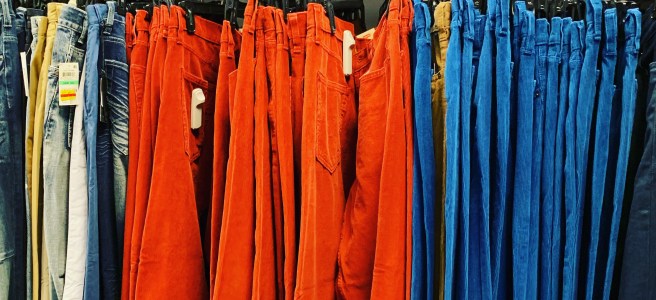
Andrew and I were wandering through the clearance section in men’s clothing at Macy’s when we spotted them. A row of corduroy pants in vivid orange and royal blue.
“No one wants the whistle britches,” Andrew commented.
“Do you think they have my size?” I asked. I love a bargain.
“Please, no.”
Andrew does not like to draw attention, and it’s hard to be discreet when you’re dressed in colors loud as caution flags. Plus, everyone would hear the swish-swish of your legs, making it impossible to sneak up on anyone.
I had an entire corduroy outfit in Ninth Grade. The brown pants and matching tunic were hand sewn by a seamstress my mother worked for, cleaning her house. They worked out an exchange, my mother scrubbed and in return the seamstress fashioned my freshman year wardrobe. I don’t remember the rest of the clothing from that year, but the brown corduroy set was extraordinary. I must have resembled a large teddy bear swooshing down the hallways of my high school. Either that, or a giant, rustling paper bag.
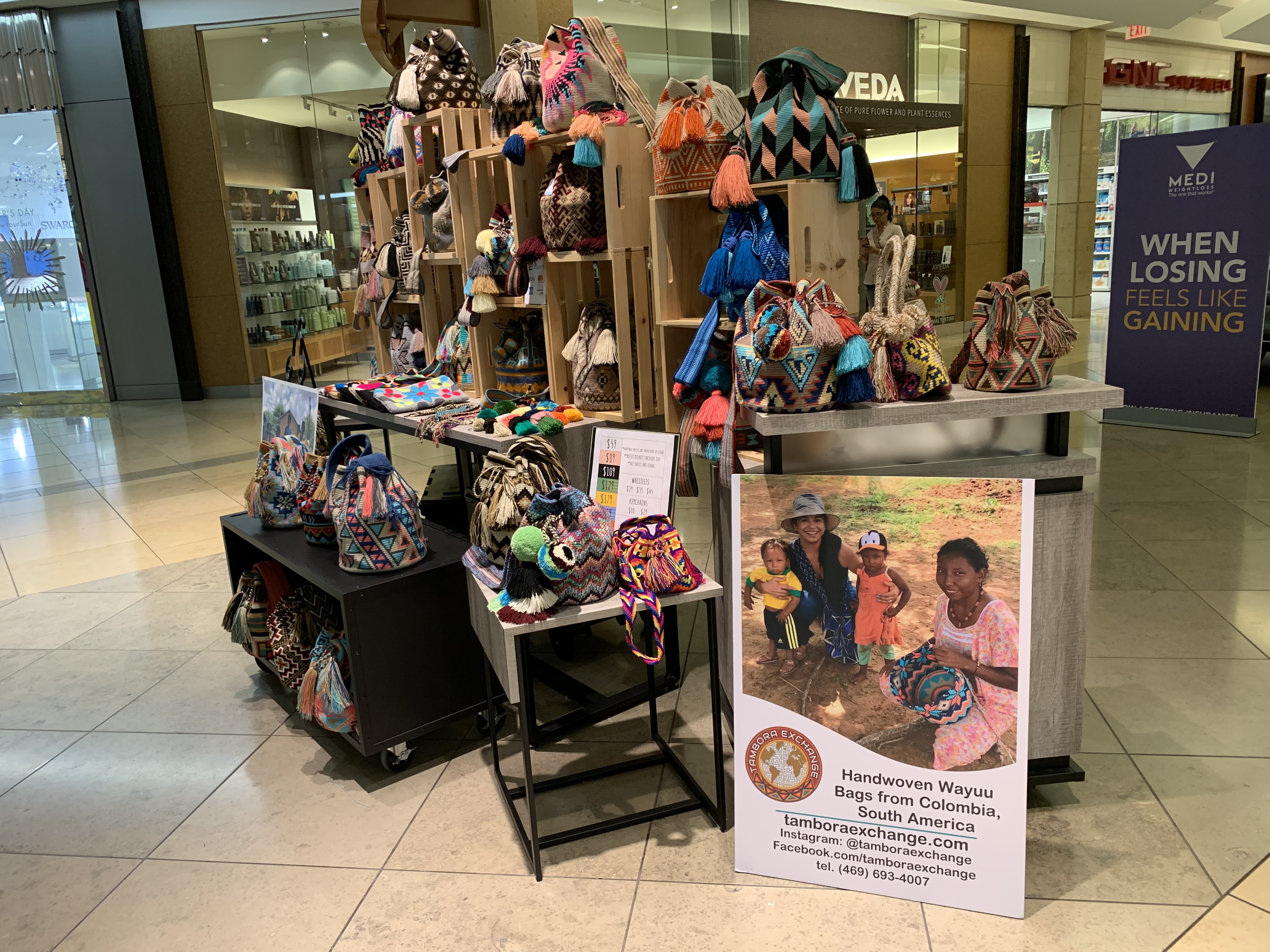
I bought a purse at the mall, from one of those pop-up kiosks. An unusual transaction for me, as I usually race-walk past those shops before I’m attacked with a salt scrub or an offer to clean my glasses.
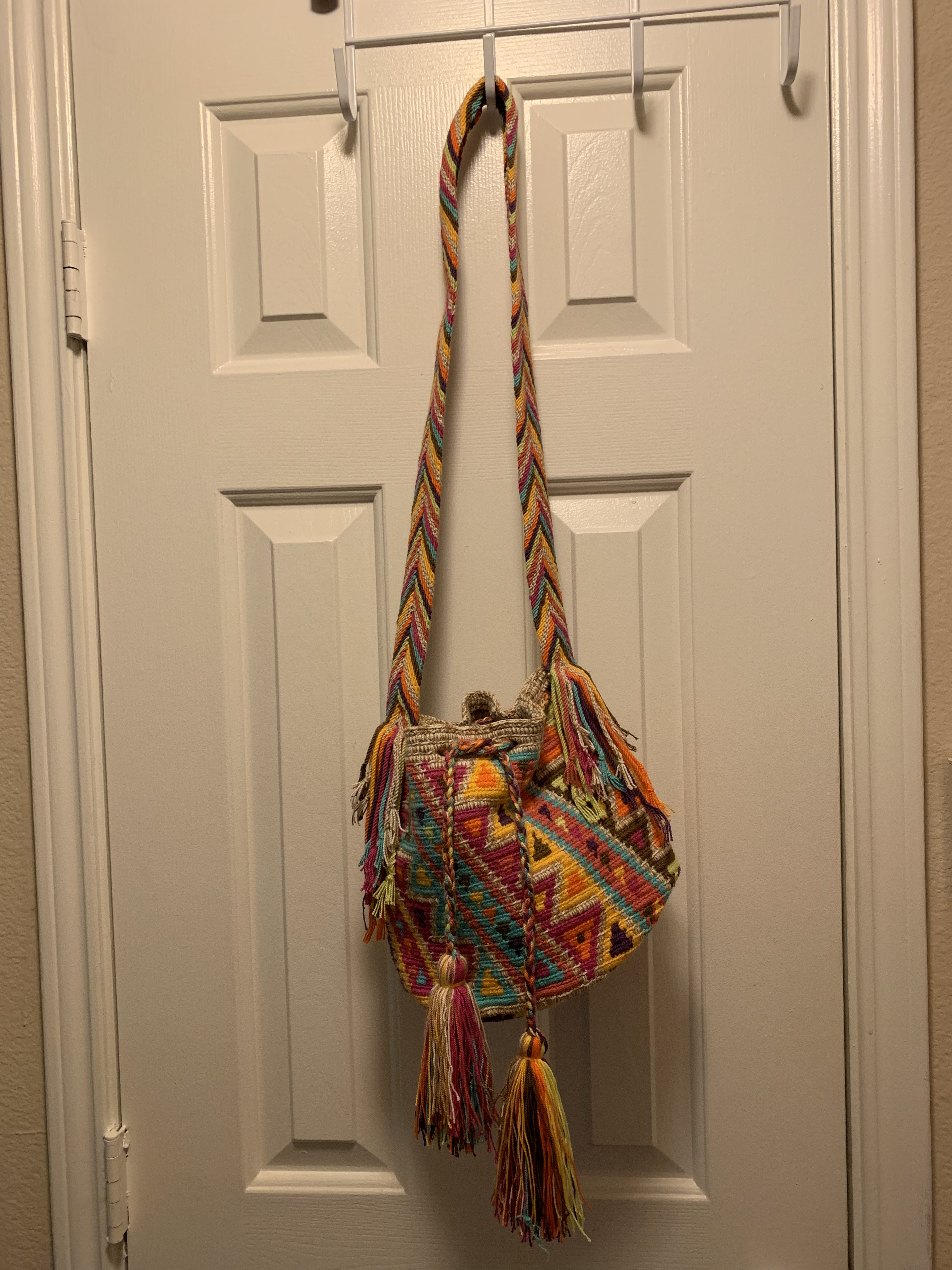
The purses, however, caught my eye with their loveliness. Handwoven by women of the Wayuu tribe in Columbia, each bag resembled more a work of art than a place to stash your lip balm and that paperback you’ve been carrying around for six months. Dazzled by the dozens of bags, I pulled out my credit card (not an easy task as it was buried in the IKEA backpack I tote when I visit the mall).
The saleswoman couldn’t get her payment processing software to work with the mall’s lousy internet service. She tried standing in the doorway of a nearby shop and leeching off their connection, while I wondered if dozens of strange purchases would pop up on my Capital One account. I offered to scoot down to the ATM and bring back cash. At the last minute I remembered the purse, wrapped and tucked in my IKEA backpack. I handed it back to the saleswoman with a teary-eyed promise to return, like Odysseus at the start of his journey to Troy.
You can find out more about the purses here, and even buy one if you have a good internet connection.
If you enjoy reading about my adventures click the Follow button at the top of the page on my website and I’ll send you my newsletter, with updates on what I’ve published and the collection of stories I’m working on.
You can unsubscribe at any time – but I hope you’ll stick around.
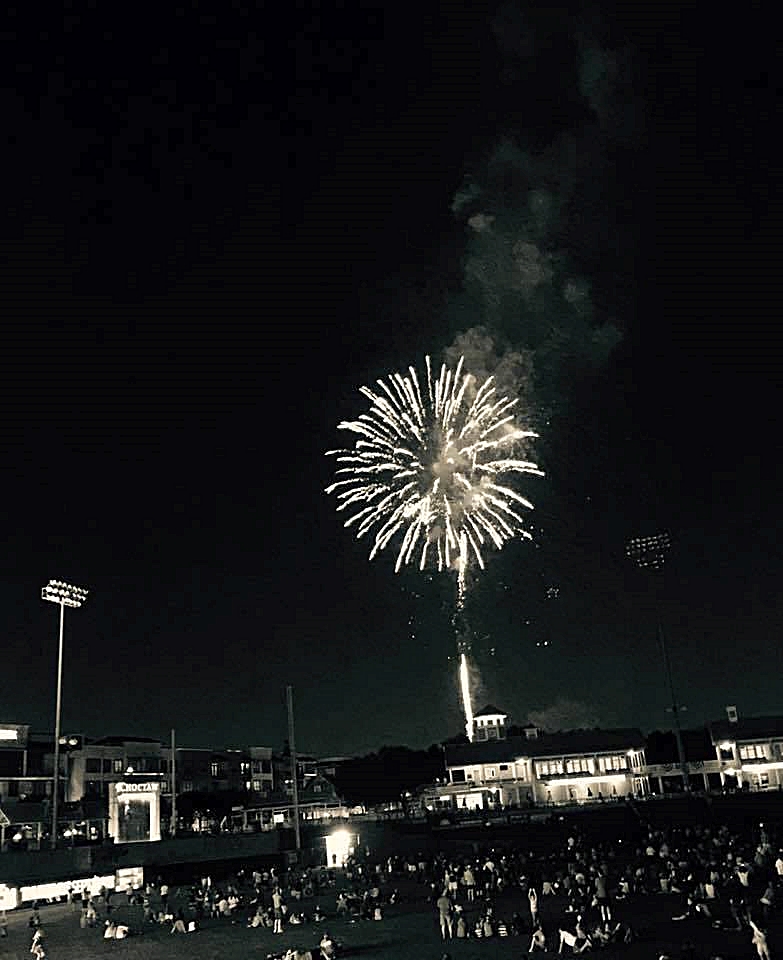
The view from 2016 when we were on the other side of the stadium.
I am not especially patriotic, but I love a good fireworks display. I’m not sure how I came to this attraction to all things bright and sparkly. It isn’t nostalgia. The only fireworks I remember in my childhood involved a car trip with my parents down a deserted country road. We stopped outside the city limits and my dad unloaded a paper sack of bottle rockets that we carried past a herd of curious cattle to the edge of a pond on some stranger’s land. It wasn’t exactly the type of memory I’m anxious to recreate.
The other day was July 4th, the day we Americans celebrate our independence by setting off grass fires and frightening the neighborhood dogs. My fiancé Andrew and I set aside this date every year for our annual disagreement about fireworks. He prefers to ignore them and hide inside in the air conditioning (I think he must have been a Labrador retriever in a past life) while I insist that the holiday won’t be complete unless I watch something explode.
“I could always stick a sparkler up my butt and run around,” Andrew said.
“Not spectacular enough,” I said, after considering his offer.
This year we compromised with an outing on July 3rd to the ballpark near our home to watch the Frisco RoughRiders play baseball. The schedule stated there would be fireworks following the game. We arrived at the stadium after the first inning and settled into our seats behind first base. I counted off the innings and willed the sun to set while we ducked at the occasional foul ball flying overhead. The ice in my soda melted and my thighs stuck to the plastic seat. The air filled with what was either the aroma of grilled hot dogs or my fellow spectators roasting in the summer heat. Around the 7th inning we rallied enough to stand and sing along with “God Bless America.”
As soon as the game ended I noticed a stream of people heading down from the stands.
“Should we follow them?” I asked.
The loudspeaker cut in, announcing that the fireworks would soon start. “They’ll be visible behind the first base section of the stands, fans will have a good view from the field,” the announcer said.
“That’s right over us,” Andrew pointed out. “I don’t think we’ll be able to see from here.” We leaned back in our seats, trying to judge the line of sight.
“We should move,” I agreed.
We hopped over rows of plastic folding seats and fought like salmon headed upstream against the crowd tromping down the aisles. The announcer warned “The fireworks will start in one minute” just as we reached the top of the stadium. I hummed the theme from Mission Impossible as we dodged a stadium attendant.
“Go! Go!” I urged Andrew as we weaved past shuttered food stands and splashed through puddles alongside the Lazy River pool. The first boom sounded as we fled through a gate and into the street beside the ballpark. I stood on the curb and leaned out into traffic so I could watch the pyrotechnics bursting in flashes of brilliant red, white, and blue. Their splendor was slightly blocked by the leaves on the tree I stood under. The display ended while I was still deciding on the best place to stand. It was like someone offered me a cookie and then broke it in half and gave me the smaller bit.
The following evening, the proper Independence Day, we celebrated with an after dark bike ride through our neighborhood. We ride at night because I will only put on bicycle shorts when there is no danger of anyone seeing me. The subdivision across from our home features roads with challenging hills. I usually complain and grumble as I downshift and pedal along. This night, as I struggled up the fourth or fifth incline, I heard the distinctive boom that meant somewhere people were celebrating.
“Can you see any fireworks at the top?” I called as Andrew cycled past me.
When we got to the peak we could hear a barrage of blasts from every direction. But we couldn’t see any fireworks. It was as though we had arrived at a free fire zone in the midst of an invisible military occupation.
We biked on through the subdivision. I struggled along hopefully at every rise in elevation while Andrew shot past me. At last we arrived at the outside edge of the subdivision, and Andrew coasted up to the stop sign at the intersection with the main road. An older man and his barefoot son stood in their front yard, watching the horizon.
“Look there.” Andrew pointed toward the east. A sound like far off thunder rolled toward us and I saw a burst of red and gold light up the sky miles away.
“I think that’s Arlington, it’s been going on almost an hour,” our neighbor told us.
We had a good view, although from our remote vantage point the fireworks resembled glittery dandelions gone to seed. As the booms faded Andrew turned to me. “If we listen carefully we might hear the people cheering.”
“Maybe,” I replied. I envied that distant crowd. I imagined the fireworks bursting in the air and showering their magic light on those below. I hoped they clapped. I hoped they cheered. I hoped they sang.
God bless America, land that I love
Stand beside her and guide her
Through the night with a light from above
From the mountains to the prairies
To the oceans white with foam
God bless America, my home sweet home
God bless America, my home sweet home






 Let's Get Out of Here