I was excited when Sherry Kappel announced this challenge. I love black and white photographs, the texture of the subject comes through so well. It was perfect timing too, we traveled to Lake Mineral Wells State Park and Trailway in Mineral Wells, Texas last weekend for a night of camping and I still had these pictures on my camera. The challenge gave me the incentive I needed to get them on my computer and edit them.
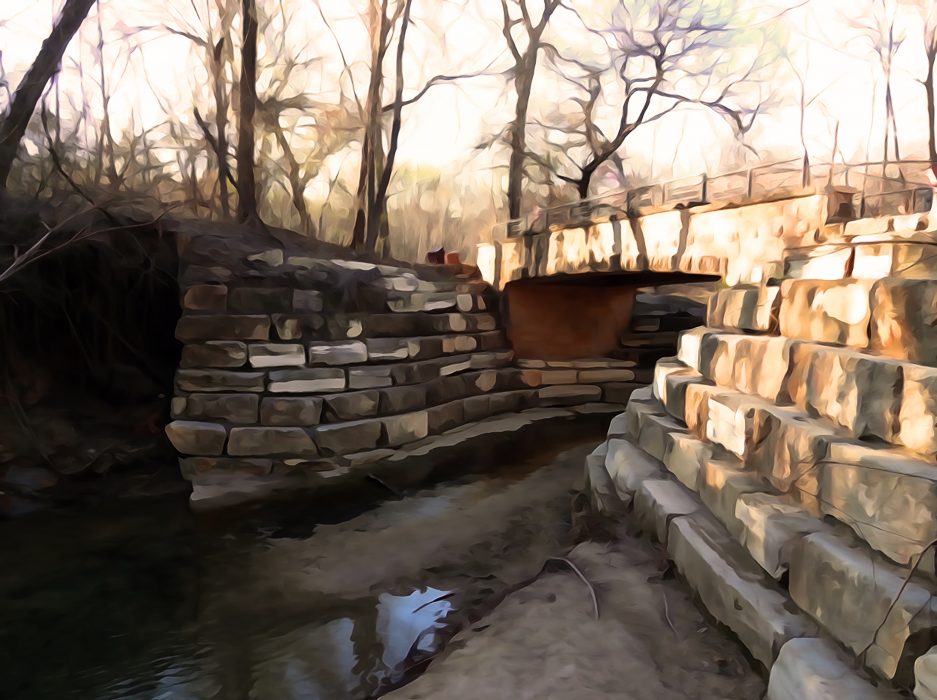
Hiking trail at Lake Mineral Wells State Park
Our first night at the state park we hiked along a trail in the dark. The photo above was taken during the following day, but the black and white print gives you an idea of what the trail might look like at night when colors are less visible. We had flashlights, and since the trail ended in a loop there was little chance of getting lost. Still, it had a bit too much “Blair Witch” feel for me, and we ended the hike early.
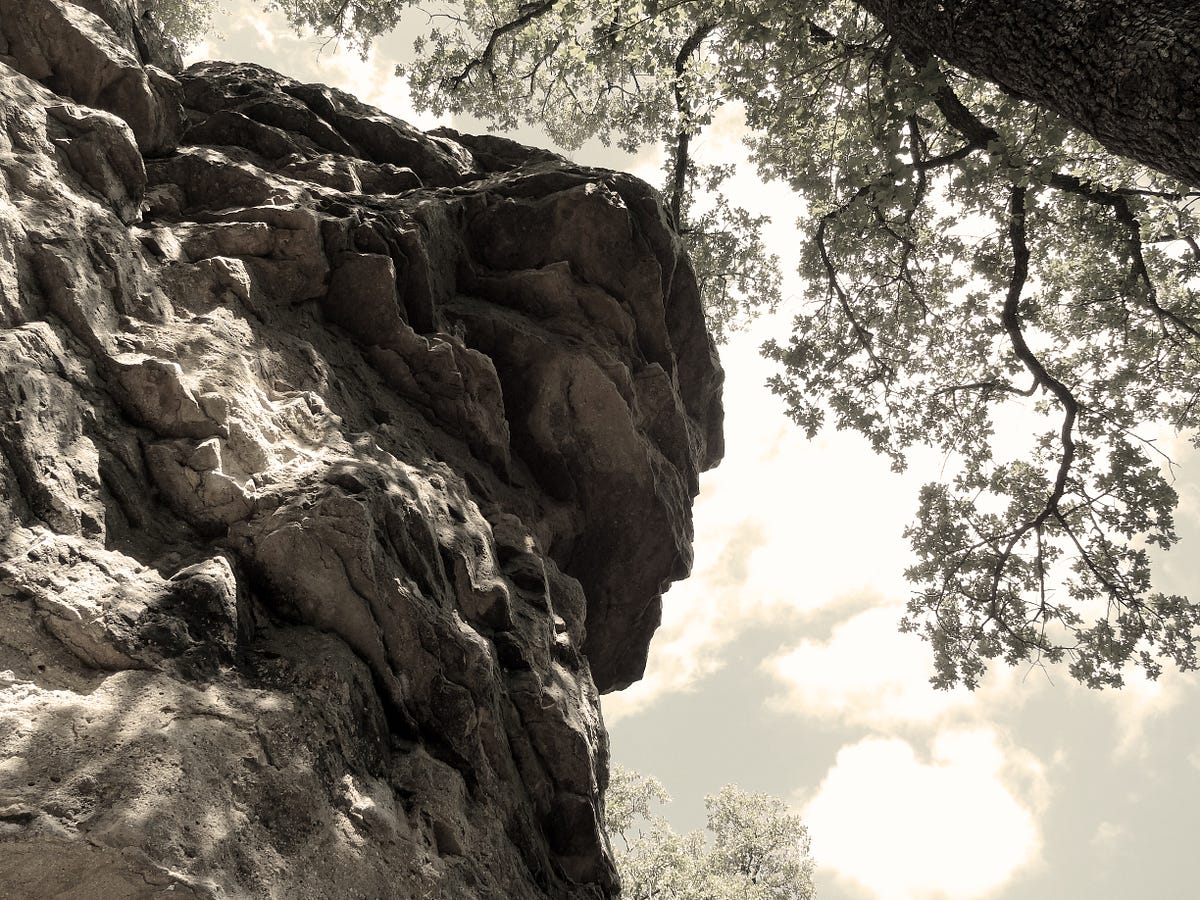
Rock Face at Penitentiary Hollow in Mineral Wells
Penitentiary Hollow at the state park is the rock climbing area. I didn’t try it, preferring to stumble along the ground instead.
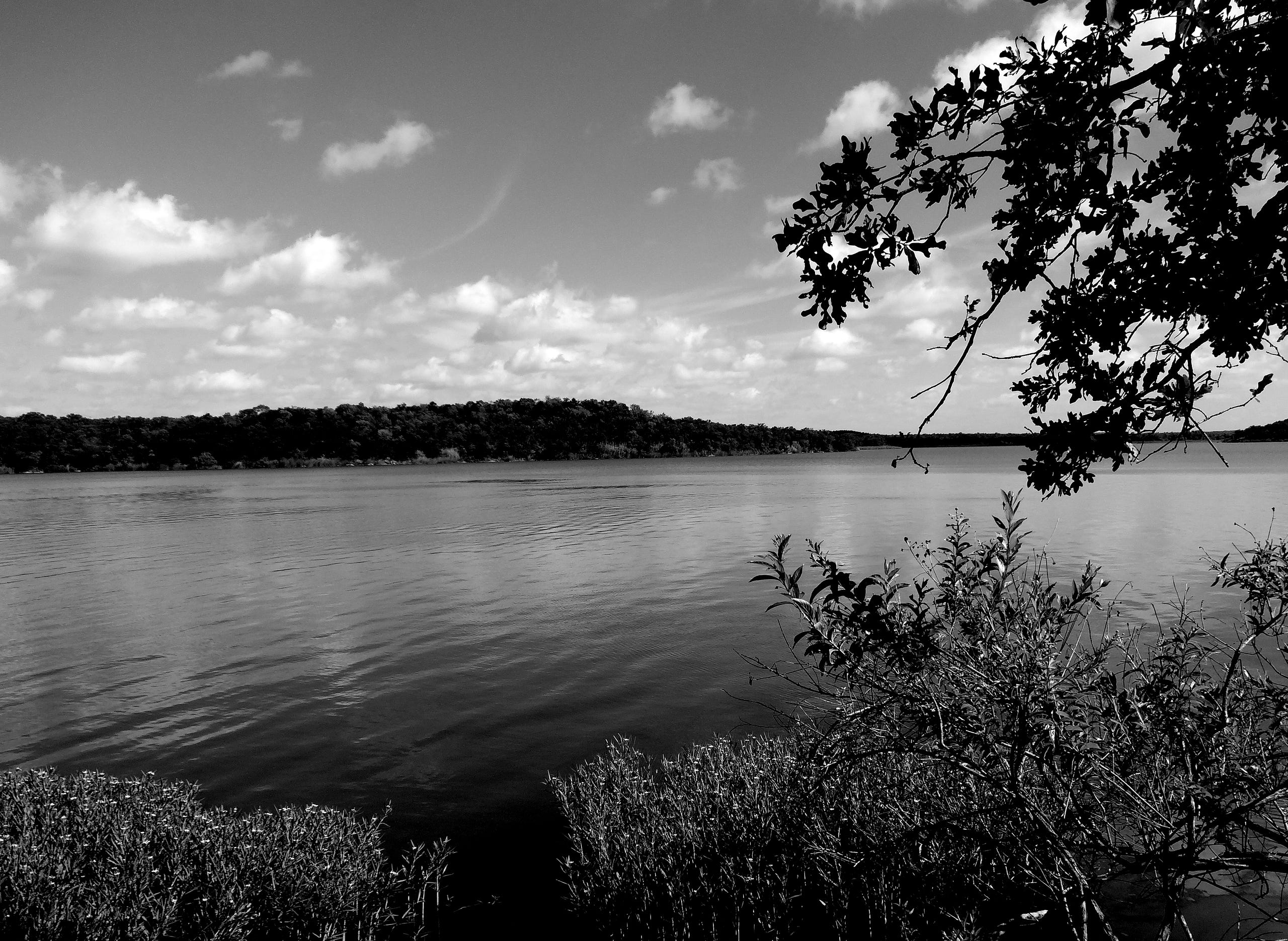
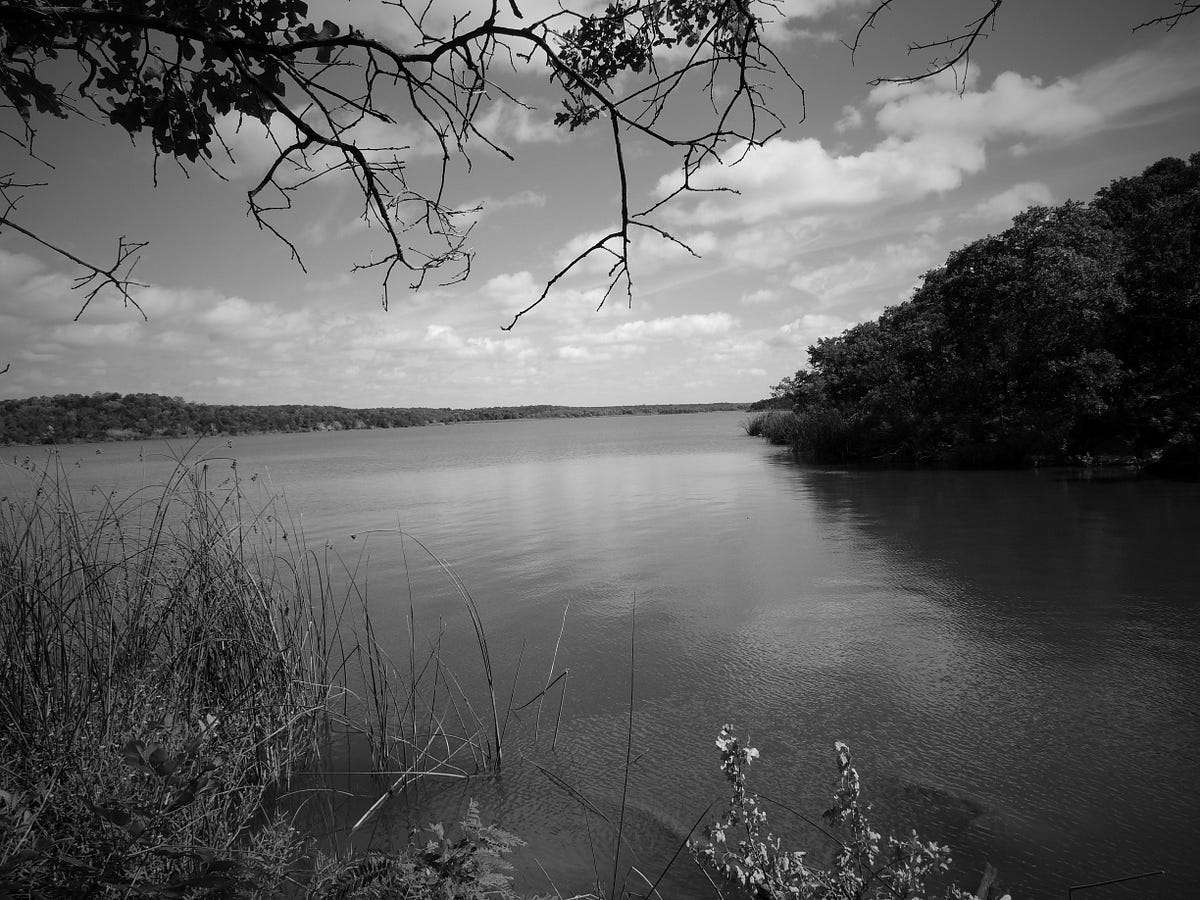
A little cove, perfect for launching a canoe or kayak
The lake is perfect for fishing, canoeing, or kayaking. There’s no skiing, tubing, or jet skis allowed so the place is calm and quiet.
Thanks again for this challenge, it’s always a pleasure to share and see what everyone posts!
I’ve never liked escalators. I look at an escalator and I see big metal teeth waiting to grind up my feet. I have a problem with the last section, the one that goes under the metal strip at the end. I imagine myself being sucked down under like a cartoon character, getting smaller and flatter until I disappear under the edge with a quiet pop.
Elevators aren’t much better. Nothing good ever happens in an elevator in the movies. If the cable doesn’t break and all the characters plummet to their death, they’ll get stuck inside the car with the bad guy. Or, just when you think everyone is going to escape, the doors will make that little “ping” noise and open up to the serial killer standing there with an ax.
I used to think I was safe on a treadmill. It doesn’t go anywhere, and I always manage to hit the “Stop” button, mostly when I don’t intend to. Recently I discovered how accurate the phrase “ass over elbows” can be, and I can now answer “Yes!” to the question “Have you ever fallen off a treadmill?” Nothing broken, except my dignity, but how much of that can you really have while you’re wearing sweat pants?
I was moving along at a brisk pace when I decided to take off my jacket. I could have easily turned off the treadmill, but I was in the middle of a nice series of laps and didn’t want to lose my place. I like to imagine myself huffing along in the lead in a 5k run while being chased by bears. In that situation I would hardly stop to take off a jacket, unless I planned on using it to distract the bears. So, without looking I tossed my top behind me, toward my gear stacked on the floor.
My friend, trudging along on the next treadmill, cried out, “Oh! You knocked over your tea!”
Born and raised a Southerner, I take my iced tea seriously, even if it is in a flimsy foam cup sitting on the floor of a gym. So I immediately turned around on the treadmill to see the damage, and the machine rewarded me by trying to shoot me off the end like I was the target in a skeet shooting competition.
I fell back onto the treadmill. Luckily I landed on the part of my body that was the object of the treadmill exercise in the first place. The treadmill was still running, any other time I would have hit the safety switch by accident and had to start my program all over. The treadmill seemed thrilled to have me back. I swear the belt sped up, and this time I shot off and performed a half somersault, something I haven’t done voluntarily since third grade.
I landed in a cold puddle of foam bits, tea, and ice, not quite so refreshing when applied to the bottom half of my body. I finished my work out on the stationary bicycle, figuring that if I fell off I would at least be closer to the floor.
I’ve heard people say, “It’s not the destination that matters, it’s the journey”, and I’m okay with that, as long as I don’t have to get there by escalator, elevator, or treadmill.
I packed up my apartment in one afternoon, amazed at the amount and the variety of useless stuff I collected in fourteen months. Some of it I had when I moved in, but not the one hundred plus ketchup packets or the fifty little plastic sleeves of soy sauce. I certainly didn’t remember owning hundreds of clothes hangers. It’s funny the items you consider worthwhile when you are choosing which to leave and which to take. Two of my possessions I consider valuable enough to be the first on the “keep” list — a small statuette of a sad dog in a Boy Scout uniform, and my 1958 Barbie doll.
Photo by Terrye Turpin
The ceramic dog was a present from my father. By the time I came along he no longer led a scout troop, but I liked the little statue and asked him for it. The Barbie doll might be worth some money if her feet weren’t marked with the imprint of my childish teeth. Barbie and the little dog were among the first things I took out of the home I left to my ex-husband.
The more stuff you own the more dusting you need to do. If I could, I would reduce all my possessions down to what would fit into a backpack. I could make do with a travois I guess and drag the lot along behind me. I fled a twenty-five-year marriage with just what fit into my car, plus a futon. A small price to pay for a quick retreat.
Three months after I appeared alone in court to finalize the divorce, my ex-husband’s sister asked if I wanted anything from the house. They were selling it in a last gasp effort to avoid foreclosure. I brought friends, boxes, and a pickup and arrived to find the front door of the house covered in plywood. Law enforcement had kicked in the door, looking for a man my ex had let stay at the house. We loaded up photo albums, dishes, books, odds and ends I thought I might want.
I wound up with a collection of novelty coffee mugs, a flock of ceramic roosters and chickens, battered pots and pans with loose handles, puzzles, games, blankets, paperback books and bookcases–it grew exhausting dragging it all along behind me. I decided to hold a garage sale. I convinced my son, Andy, that he should let me hold the sale at his house by offering to split the proceeds with him.
I’ve lived long enough to have suffered through several garage sales, they seem to come in ten-year cycles, like a plague of locusts. The day of the big event I set up in Andy’s driveway with a cup of coffee and watched the sun rise while our first customer arrived. The woman struggled out of the passenger seat of an older model pickup truck with a bed piled high with used furniture. She ambled toward me and asked “Is your lawnmower for sale?”
I explained that we didn’t own a lawnmower, let alone have one for sale, and she huffed, turned around, and walked swaying back to the truck. The treasure hunters appeared. They rummaged through the mismatched coffee mugs, torn sheets and worn out bath towels, boxes of puzzles with just one piece missing, and clocks that no longer worked. They turned to ask, “You got any gold or silver jewelry?”
I had my wedding ring, but I didn’t sell it. Not then. I kept it stashed in a wooden jewelry box for a year after the divorce. I sold it at a store front with a large black and yellow banner proclaiming “We Buy Gold! Silver! Top Dollar!”
Each item that sold meant one less thing to pack up and move. I felt lighter as the boxes of knick-knacks, throw rugs, and collections of paperback books left with each buyer. I had been carrying the weight of these things for years. By ten o’clock on the second day of the sale I was down to several dozen coffee mugs, some pots and pans, a used television antennae, and a warped dresser with loose knobs and sticky drawers.
Andy joined me on the driveway as we watched people cruise by, checking out the remnants from the safety and air conditioning of their cars. Our last customers were a pair of older Hispanic men who paid two dollars for a dozen coffee mugs. Before they left, they asked if we would like to buy some tamales. The men led us to their car, parked at the curb in front of the house. They popped the trunk and lifted a foil wrapped bundle from a red plastic cooler. The tamales were warm, fragrant with chili and garlic. My son and I closed our enterprise. We packed up the left-over goods to donate to charity and placed the bulkier stuff out by the curb with a sign that read “Free.”
I still have the Barbie doll and the ceramic dog. The other things I own do not all fit in a backpack and I doubt I could get it all into my SUV. The possessions we own and the memories they contain can weight us down and bind us in one place like anchors, keeping us from moving on toward a better destination. And sometimes our things act as ballast, giving our life balance, reminding us of where we came from and holding us steady on our course.
I hesitated in the candlelight in front of the locked metal gate seven hundred and fifty feet underground. The cave was slightly warmer than the inside of a refrigerator and smelled of mildew and the earthy scent of bat guano. As I inhaled the cool, moist air I glanced around me at the dark rock walls. My fiancé Andrew waited beside me, listening to the gray-haired park ranger give our small group last minute safety instructions. At the end of his speech, the ranger mentioned a story about a kidnapping in the cavern. Four armed men held several people captive for hours near the spot where we stood. Had I paid better attention, I would have heard him say this crime occurred in 1979. I was, however, busy calculating how long the candle in my lantern would burn before it left me in the dark.
I glanced at my fellow tourists and tried to imagine one of them pulling out a gun. The flannel clad young couple in running shoes had two small children with them, so I expected they would behave. The retirees from Florida, dressed in matching Hawaiian shirts, did not look menacing. I decided at the least I could outrun them if they turned out to be dangerous.
Andrew and I chose this tour from the comfort of our home, weeks before our trip to New Mexico, and we bought the tickets online. I don’t mind spontaneity, but my first love is a well-planned itinerary. I browsed the options listed on the Carlsbad Caverns website and rejected the “Spider Cave Tour” based on the name alone. Andrew lobbied for the “Lower Cave Tour”, but after spotting the words “crawling” and “rope ladders” in the description, I knew this would not work for me. When I was a child I broke my arm, swinging from a plastic jump rope tied to a tree. I didn’t think the experience would improve if I recreated it underground fifty years later.
“I wonder if they have a senior discount,” I asked, as I clicked through the Park Service website.
“Oh no, don’t fool with that, just pay full price,” Andrew insisted.
I am happy to accept any age related savings given, while Andrew searches for and plucks out his gray hairs each evening. I once offered to sign him up under my AARP membership, and you would think I had volunteered to donate one of his kidneys.
After some discussion, we agreed on the Left Hand Tunnel tour. It promised to recreate the caving experience of early explorers. The only warning listed described walking on uneven surfaces in dim lighting. I can find my way to our bathroom in the middle of the night, so I thought I would be okay.
Photo by Terrye Turpin
When we arrived at Carlsbad, Andrew tried again to convince me I had the skill and flexibility to navigate the Lower Cave Tour. As we strolled along the paved path through the main cavern, the Big Room, we stopped to peer over the railing, down into the deeper portion of the cave. A narrow dirt path wound through stalagmites and disappeared through a dark opening in the cave wall below. Lovely formations like lacy curtains flowed from the ceiling, but I wondered how securely they were attached. “Crushed by beauty” might be a nice epitaph, but would be small consolation once I was buried.
“I don’t think I can climb down a rope ladder, and there are no lights down there.” I pointed over the side. In contrast, spotlights in the Big Room illuminated both the cave formations, and the paved trail with gentle lighting. There were no rope ladders in sight. Instead, people traveled up and down in elevators, dined at a snack bar, and relieved themselves in restrooms with running water and flush toilets. Still, it touched me that Andrew had this faith in me; that I could scamper down a rope ladder and crawl through bat infested tunnels in the dark. We pledged to grow old together even though I have a head start.
When Andrew and I first met our age difference didn’t matter. We seemed to be in that sweet spot of time between middle age and infirmity. However, I remember that I will retire eleven years before he does. I agonize over broken hips, and Andrew scoffs I am too young to worry about falling.
While we waited for the tour orientation to start, I looked at a photo display of early explorers to the caverns. The women wore their finest silk dresses and caps with feathers. I wondered how they managed the cave while wearing high heels. The men wore sensible loafers and looked dashing in wool overcoats and fedoras. All of them looked out of place as they dropped into the cavern in the large bat guano mining buckets used by visitors before the cavern upgraded to wooden stairs.
“How historically accurate is this tour? Will they lower us down in a bucket?” Andrew asked.
“No, I believe they phased that out,” I replied.
As we assembled in a small classroom, the park ranger who would lead the tour checked off our names. He asked us to affirm our ability to walk across a dim, rough dirt path. I felt confident about my “Yes!” until he opened a metal cabinet filled with hard hats, elbow pads, and head lamps, things a coal miner would use. When he took out a box of candles and left the crawling equipment in the cabinet, I sighed and sat back in my chair. We all lined up to select a candle, and I picked one with a fresh wick that looked like it would last until the end of the tour.
After the orientation, we rode the elevator down, and walked over to the Left Hand Tunnel entrance. We picked up our lanterns, and the ranger lit the candles placed inside. He warned us of the danger of spilling hot wax on our neighbors or the fragile cave formations and off we went.
As we entered the tunnel, my eyes adjusted to the dim light. I managed to spot my feet, fearful that I might wipe out a small, irreplaceable artifact with my sturdy hiking boots. We came to a slight incline in the path, a slick little hill about four feet tall, and the ranger offered a hand up and over to anyone who needed it. I hadn’t met my insurance deductible for the year, so I accepted. Everyone else–except the elderly couple from Florida — scrambled up and over the top as though they were stepping up onto a curb outside Starbucks.
The lantern did a fair job of lighting up a one foot perimeter of the cave around my feet, so I had a great view of the crushed rock on the dirt path. I kept my eyes trained on that path as the ranger mentioned the deep pools of water and the steep drop offs that we passed. I listened as he described other points of interest, the sparkling pyrites and ghostly pale calcium carbonate formations. When I felt steady enough, I lifted my gaze from my feet and focused on the backs of Andrew’s legs as he strode along. At one point we stopped and the ranger pointed out an area where an early visitor used a flare to burn their initials into the cave wall, proving that even decades ago people were assholes.
About halfway through the tour we came to a spot leveled out by thousands of tromping tourist feet, and we set down our lanterns. The ranger continued the kidnapping story he mentioned at the start of the tour. It turns out there was alcohol involved, which explains why the would-be terrorists thought it was a good idea to isolate themselves 750 feet underground and demand a million dollars, an airplane to Brazil, and an interview with a reporter. They got the interview, but not the money or airplane, and everyone came out of the cave without injury.
“With your permission, I’d like to do something exciting now,” The ranger said. I worried that here at last we would be asked to rappel down an underground crevice or scale a rock outcropping. I prepared to protest that the tour description failed to cover this.
“I’d like us to blow out our candles and experience the cave in total darkness.” When no one objected, he continued. “We will stand here in silence and then I will come around and light your candles.”
I breathed a sigh, standing still I could do, even in the dark. The cave dimmed as each person blew out their candle, and one by one I watched my fellow tourists disappear. The darkness enveloped me like a soft, thick blanket, and there were no sounds of trouble, no heavy breathing or whispers from a drawn pistol.
When the ranger suggested that we each hold up a hand in front of our face, I kept mine at my side, fearful if I couldn’t see it, then my hand would cease to exist. I knew my hand was there, I felt it dangling at the end of my arm, but it was disconcerting to know something was there but not be able to see the physical proof of its existence. This was the price I paid for a lifetime of reading scary stories.
A slight breeze brushed my cheek, and I heard a rustling, flapping sound that was either a bat brushing by or Andrew waving his hand in front of my face. I bumped him with my shoulder and he reached down to clasp my hand. My fingers intertwined with his while the ranger came around to each of us and relit our candles. We made our way back along the path, through the metal gate at the entrance to the tunnel, and dropped off our lanterns at the end of the tour.
When we stepped off the elevator at the surface, I left to browse the overpriced souvenirs in the gift shop while Andrew stopped to look over a table top diorama of the caverns. I came out to see him studying a map of the Lower Cave.
When I turned fifty, I traded in the recklessness of my youth. I chose my clothes for comfort rather than sex appeal. Then I met Andrew, and I took a chance on dating a man eleven years younger than me. Chance implies a risk of loss, but as we grew closer, I realized there was no risk here. The loss was in the years before we met. Here was a man who would find my hand in the dark.
I pointed over to the information desk. “Why don’t we stop and see if there are tickets for the Lower Cave tour?”
When we asked, the ranger informed us that there wouldn’t be another tour until the following week. “It sells out quickly” he told us, “It’s our most popular tour.”
“I’m sorry.” I told Andrew and tried to hide my relief. There is nothing like reaping the benefit of sacrifice, without actually having to make it.
“That’s okay.” Andrew said, “We will come back sometime. We can practice climbing up a rope ladder.”
I calculated how many years we would have to wait before I qualified for the National Park Senior Pass. I pictured a much older me, leaning on a walker with one of those cloth bags on the front to hold snacks and a book I was reading. I told Andrew I would be game to try the rope ladder, and he took my hand as we walked across the parking lot to our car. If the rope ladder doesn’t work out I thought, maybe they could just lower me down in a bucket.
We arrived in San Saba, Texas, the Pecan Capital of the World, in the hot late afternoon, in time to check into our hotel and stash the packs filled with what we thought we’d need for the weekend. My fiancé, Andrew, and I wandered down the small town street while I sipped a cup of coffee from a waxed paper cup. Our reflections cast back in mirrored glass and revealed a late middle-aged couple dressed in comfortable, travel wrinkled clothes. We stretched our legs and popped joints stiff from the three hour drive. We did our best to outwit the Texas sunshine by dodging along the shade cast on the sidewalk from awnings over businesses closed for the holiday weekend. I set down the paperboard cup at last to step through the doorway and into Harry’s Boots.
Photo by Terrye Turpin
The store, established in 1939, seemed to fill half the city block. Shelves and racks lured shoppers with pearl snapped and buttoned western shirts in peacock colors or solemn, solid dyes. Sturdy denim jeans, in every size that man or woman might exist, lay neatly stacked and folded into cubbies along the walls. But the main attractions, and those which filled the space with the heady fragrance of leather and the clean, sharp scent of saddle soap and polish, were the boots.
Boots in sizes dainty through durable, made from every type of hide imaginable. Boots from alligator, ostrich, lizard, goat, buffalo, and rattlesnake. I would not miss this last, but I cringed to pick up a pair labeled “elephant.” We left after browsing through rooms crowned with hats, straw and Stetson, felt and ten gallon, fit for cowboys, cattle barons, and weekend tourists with money to spare.
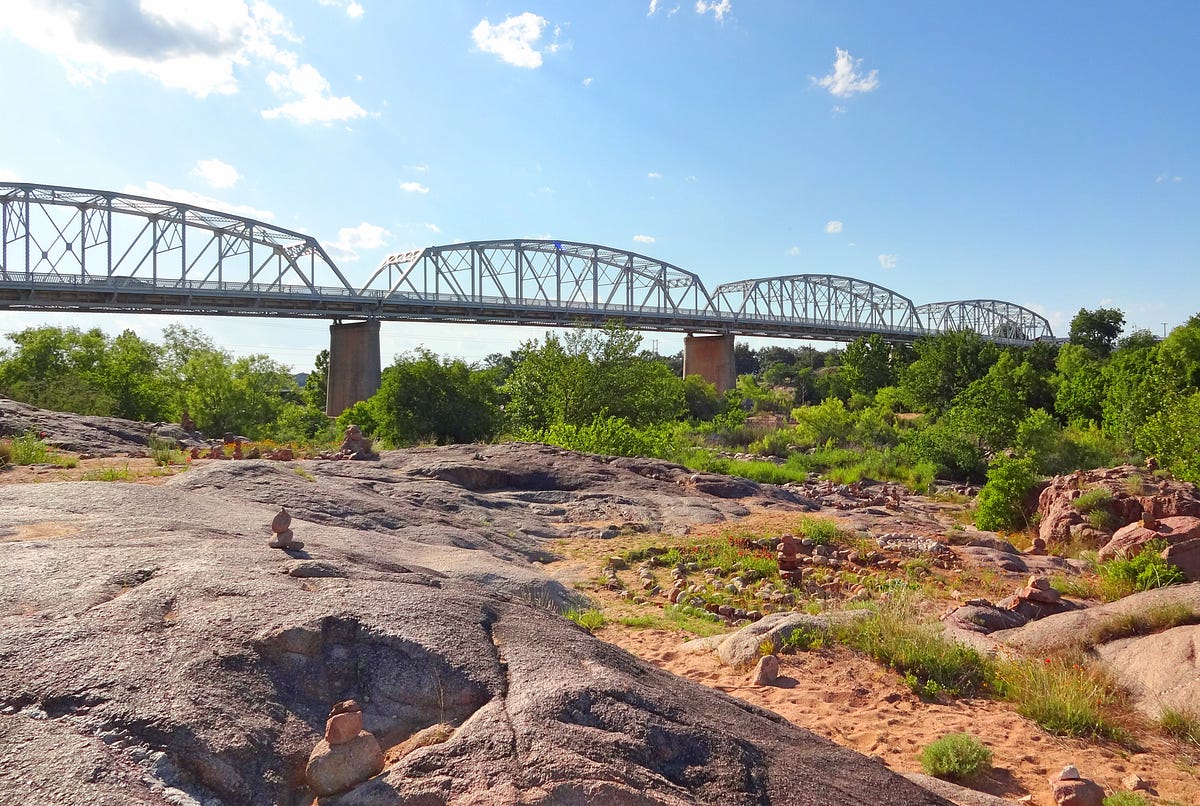
Bridge over the Llano River, photo by Terrye Turpin
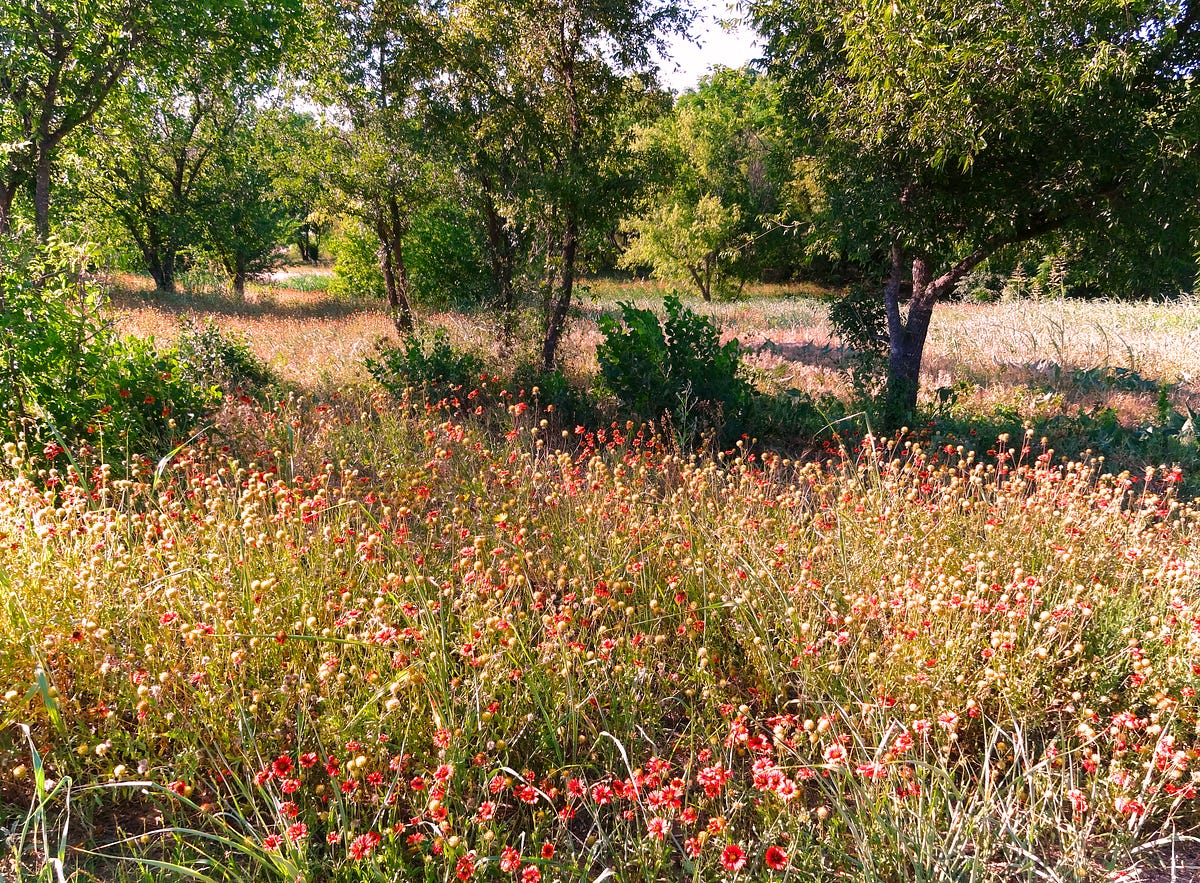
Too early for dinner, we cruised down the road to Llano, leaving the San Saba River behind and seeking the Llano in the city that bore its name. We hiked along the river bank and wondered at sculptures woven into the landscape, they seemed to have sprung up like the wildflowers, unassisted by human hands.
Photo by Terrye Turpin
Photo by Terrye Turpin
Back in San Saba we walked again, this time along a concrete trail through a park along a different river and through stands of pecan trees whose branches weaved overhead like lovers holding hands. Twilight came upon us while we bickered over which path led back to our car. Andrew held out his phone for a flashlight as we traced our steps back, past neon yellow bursts from fireflies waking to search for love. A family of deer lifted their ears and paused in their grazing to mutely ask what we thought we were up to, lingering so long near sundown.
Photo by Terrye Turpin
Photo by Terrye Turpin — Pecan trees in San Saba, Texas
Safely back in our room at the Dofflemyer Hotel, I pushed back the curtains to look down upon a street I imagined traveled by horses instead of Hondas. We turned in early after a snack of pecans roasted in butter and salt and left for us instead of mints on the pillow. I dreamed of Texas, a big land for sure, to hold those whose faith and fitness drew them here. Like the pecan I am native with roots that tap to green river water. If others wonder why I so long linger here, I’ll take a breath to remember the scent of leather boots, the charm of fireflies at dusk, and the graceful bend of prairie grass to wind.
The scar on my breast is a dark reddish brown, fading slowly at the edges. It is curved, like a parenthesis. There is a slight indentation, a flat spot under the blemish that shows when I stand in profile. The scar is hidden, even by my most revealing bathing suit. Most of the time I don’t even think about it, except when I’m undressed.
My usual routine when I can’t fall asleep consists of surfing the internet for cat memes and funny videos. The other night I sat up, bolstered on both sides by the collection of pillows my boyfriend and I have on our bed, and picked up my phone. The dark bedroom was lit by the tiny bluish glow from the screen, and I turned the volume down low so that Andrew wouldn’t hear and come in to remind me I had to get up early for work the next day.
I found a comedy sketch on YouTube that started with a woman entering a gym. Her dark hair piled on top of her head, she carries a gym bag over her arm as she walks up to the smiling young woman in a green polo shirt at the front desk. As she signs in an alarm sounds and the uniformed staffer stands up and congratulates the woman. The visitor has just turned forty, and the attendant leads her back to a special area that she is now entitled to enter. It is a changing room filled with naked women. They sprawl on benches and strut around the space without as much as a towel to hide behind. One of the women appears to be shaving her pubic hair. Another lifts her breasts and towels off underneath them. When the birthday girl protests that she’s not that comfortable with nudity, her clothes magically disappear and she’s left standing there, naked. She does, however, still have the gym bag over her arm. The other women gather around to welcome her to “not giving a shit at the gym.”
I have never been comfortable in locker rooms. I don’t like undressing in front of anyone unless they’re going to have sex with me or give me a medical exam. A changing room filled with other people has always necessitated contortions worthy of a gymnast or a Chinese acrobat. I can both remove and replace my bra without taking off my t-shirt. If I’m at the lake I can completely undress and put on a one piece bathing suit while wrapped in a beach towel. It’s not the scrutiny of strangers that bothers me, it’s being seen naked by someone I might encounter later at the grocery store.
Last year, I hesitated when one of my coworker friends invited me to come with her to a Korean spa. My friend is in her thirties, two decades younger than I am. She’s blonde, single, and a frequent shopper at Groupon, where she found a great deal on the spa visits.
“Isn’t there a lot of walking around naked at a Korean spa?” I asked her. It’s one thing to picture people without their clothes when you’re nervous about giving a presentation, but it’s another thing entirely to know exactly what they look like without their underwear. After my friend assured me that the mineral baths were the only area where nudity was required, I went with her, but I arrived later and undressed by myself in a different part of the locker room. I put on the baggy pink shirt and shorts assigned to me by the spa, and wore my bathing suit underneath.
When I told my son Robert about my visit, he encouraged me to go back and try out the mineral baths. “The nude part is no big deal, Mom” he said. Robert makes his living as a plumber, a job requiring both physical skill and tolerance for messy situations. My son is very comfortable with his body. One Christmas he arrived at a gathering of friends and family and announced “I have a new piercing!” I often wish I had his confidence, and that he had my tact.
I considered his suggestion, and I went back to the spa by myself. I decided I would take advantage of every area, including the mineral baths in the women’s locker area. I checked in with the twenty-something year old blonde girl at the counter, and paused before answering “No” when she asked if I would be consuming alcohol. She strapped the electronic device that looked like a watch on my wrist. It stored my credit card information, and I would use it to both open my assigned locker, and pay for any food or drink I might want purchase. It didn’t cover much of my body, but it did eliminate the need for pockets.
After I took off my shoes and socks, I stowed them away in the first locker area and then made my way barefoot down the white tiled hallway toward the changing room. I stopped to pick up the uniform I would wear after the bath. The friendly girl at the counter handed me a folded pair of pink shorts and a faded pink t-shirt and said “Have a good visit!” Because I was still fully dressed, except for my feet, I smiled back at her and said thanks.
After checking to make sure no one there was even remotely familiar, I undressed and stowed my belongings in my locker. Had I spotted my favorite barista from Starbucks the whole deal would have been off, but I bravely set off for the shower area. I discovered that walking naked through a crowded changing room required a degree of relaxed composure I didn’t possess. I couldn’t walk through the place with my eyes closed, but I didn’t want to be seen staring at someone’s nipples either. Direct eye contact is uncomfortable for me. Even if I am fully dressed I tend to look away nervously as if I’ve just stuffed a handful of collection plate money in my purse. I gave up staring at my feet after I almost walked into a column, and finally found that the area between the collarbone and the bottom of a person’s ear lobe is a nice, neutral area. I could avoid both running into obstacles and giving the impression that I wanted to have a conversation.
The glass walls around the mineral bath area were fogged with condensation and as I walked closer, I was greeted with warm, moist air that smelled like chlorine and salt. The first spa had just two women, an elderly Asian grandmother and a middle aged Asian woman who could have been her daughter. Their eyes were closed in blissful relaxation. I lowered myself into the hot whirlpool, and found that if scooted down on the seat around the edge of the bath, the churning water safely concealed most of my body. If I closed my eyes I could imagine myself alone, and not sharing a bath with naked strangers.
Photo by Terrye Turpin
I haven’t been back to the spa since my lumpectomy. The mass in my breast was familiar to me. It was there, in the upper right quadrant of my right breast, a small, hard lump that had been felt, scanned, and needle biopsied in the three years since I first discovered it. But when I went in for my annual well woman checkup, my gynecologist, a young woman with freckles and shiny black hair in a ponytail, paused during the breast exam.
“Was this lump there last year?” She gently tapped her fingers over my breast as I lay on the examining table. I raised my head a little bit to look at her instead of focusing on the many pictures of babies plastered on the walls. Her usual smile was replaced by a slight scowl. We had discussed this same lump last year. I even had a follow up ultrasound, but I felt as though I had conspired to hide this growth from her, maybe tucked away under my shoulder or behind my ear, one of the few places on my body not exposed during the annual exam.
“Yes.” I replied, “But maybe it’s bigger?” At this my doctor nodded her head and sent me off to a mammogram.
“You need an ultrasound.” The female technician, dressed in scrubs patterned with small hearts, frowned at me after the mammogram. Her eyes squinted at the images pinned up on the lightbox. She pushed her glasses up and pointed to the black and white pictures on the lightbox. “You have dense breasts” she said, shaking her head and blowing out a little puff of air. This was not news to me, although her tune was new, I’d heard the same refrain throughout my adult, yearly mammogram life.
I took my dense, uncooperative breasts for an ultrasound, which led to a referral to a specialist, a breast surgeon. My familiar lump had grown from the size of a small pea to slightly larger than a marble in the space of a year. The radiologist, a young man with dark hair and serious, black framed glasses, told me the growth did not look like cancer, but I would need a biopsy to be sure. The diagnosis read “Intermediate suspicion of malignancy”, which I took to mean I should make the appointment with the surgeon soon.
The next month I had the first surgery and a biopsy of the tumor. The week after that I met with my surgeon, a slim woman with a slight southern accent and soft, sure hands. Her walls were decorated with reassuring accolades and degrees. I sat on the examining table at her office and listened while she looked over the incision on my breast and discussed the lab results. The paper on the table crinkled as I shifted position.
“You have a phyllodes tumor” she explained. She went on to say that it wasn’t malignant, but that sometimes these tumors can come back, and develop into malignancies. “They are nasty” she said. I imagined a face on my tumor, like the Grinch from How the Grinch Stole Christmas. Nasty. I could choose to have her go back and remove the rest of the tumor, and the margins of tissue around it, or I could wait and monitor it with screenings. I imagined myself crossing off the days on the calendar until my insurance would cover the next ultrasound. I knew that I would feel the need to constantly check my breast, fingers measuring the skin over the lump, comparing and wondering if it had grown. If this urge overtook me in the grocery store check-out line it might be disturbing to the cashiers, so I chose the second surgery.
The scar, like the memory of the surgery that created it, fades more each day. Like the other bumps, stretch marks, and wrinkles, it is just a punctuation mark on my body, the grammar to my life story. If I were naked, the scar might require an explanation. I’m not embarrassed by it, but by the assumptions that might come from its presence. It is a purple heart from a battle that I did not have to fight.
I pull the covers up to my chin and slip down in my bed. The sheets smell pleasantly of floral fabric softener and they feel softly worn against my skin. I queue up the video again on my phone, and watch as the woman enters the gym. Once more the alarm sounds and the smiling attendant takes the lucky lady back to the changing room. The light from my phone screen lights up my face in the dark as I watch the naked women greet the newcomer. They all seem happy and relaxed, like friends I believe I would like to meet for coffee. I hear their laughter echo against the metal cabinets, as though from a distance. I think that maybe I am getting closer to where they are, in that kind and accepting place where everyone is welcome, as long as they are at least forty. As I turn off my phone for the night I take comfort in the thought that somewhere there is a room, a place for women, where no explanations or apologies are needed, and no one there gives a shit.
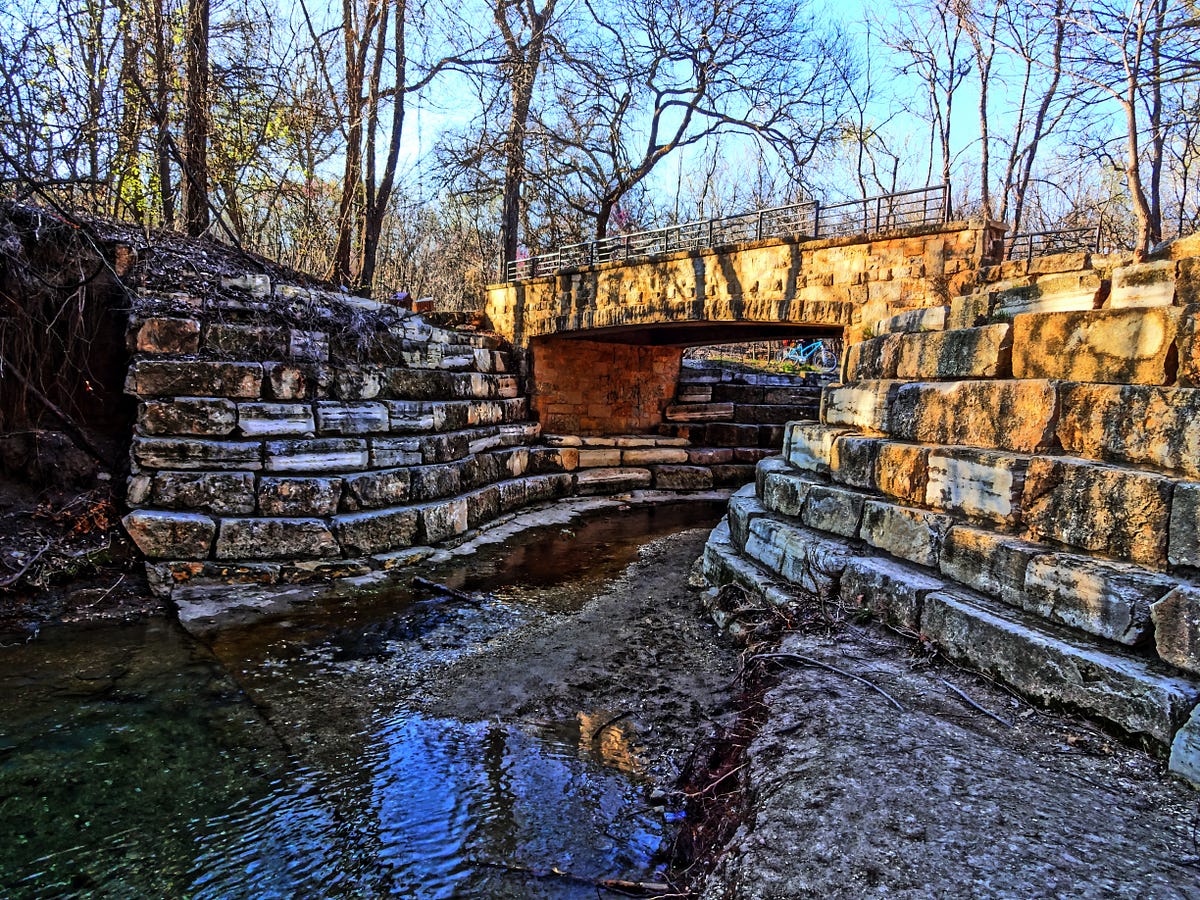
The Bridge at Arbor Hills Nature Preserve Photo by Terrye Turpin
The Artist Challenge
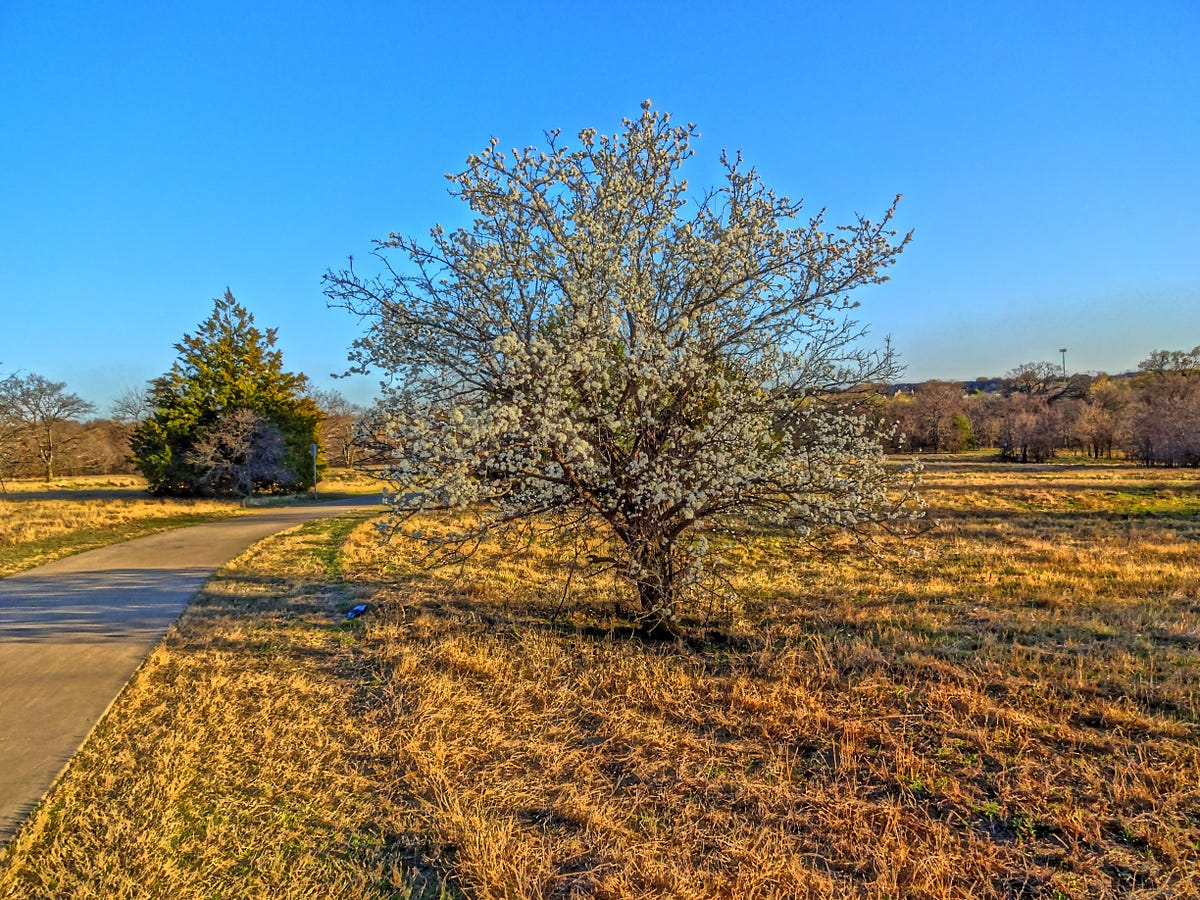
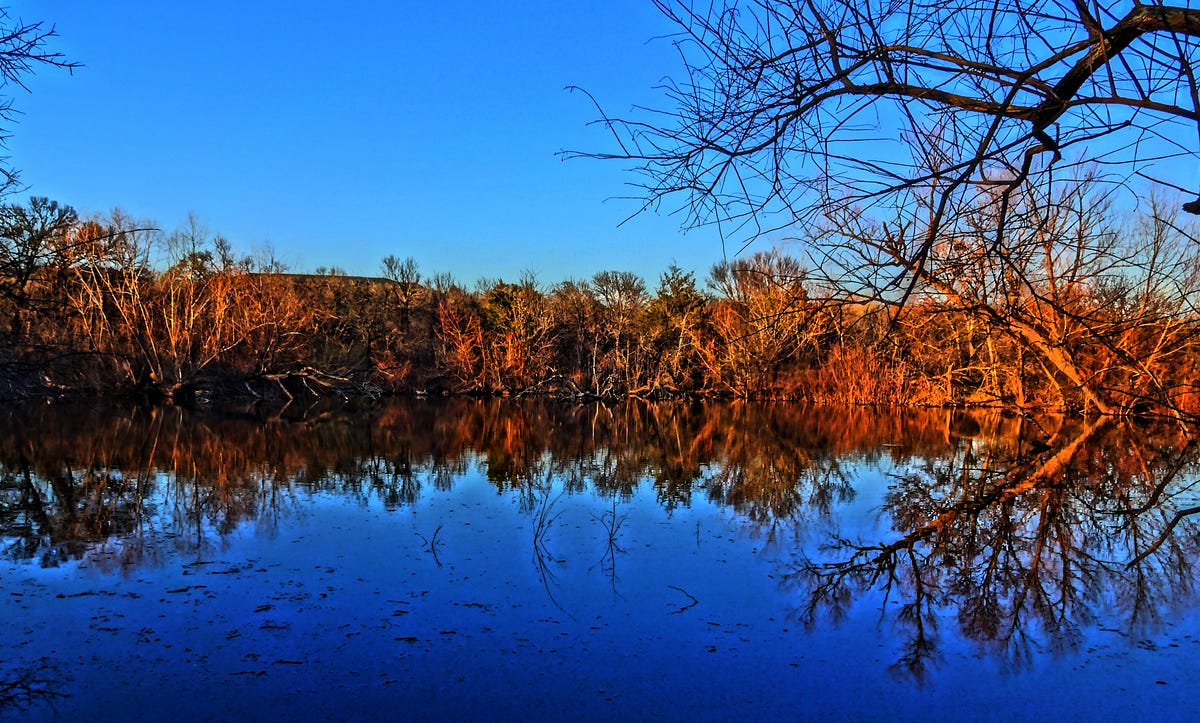
The first three photographs, the bridge, the concrete trail, and the pond, were taken with my little point and shoot Sony Cyber-shot using the “Painting” filter on the camera.
The Concrete Trail Arbor Hills Nature Preserve Photo by Terrye Turpin
The Pond Arbor Hills Nature Preserve Photo by Terrye Turpin
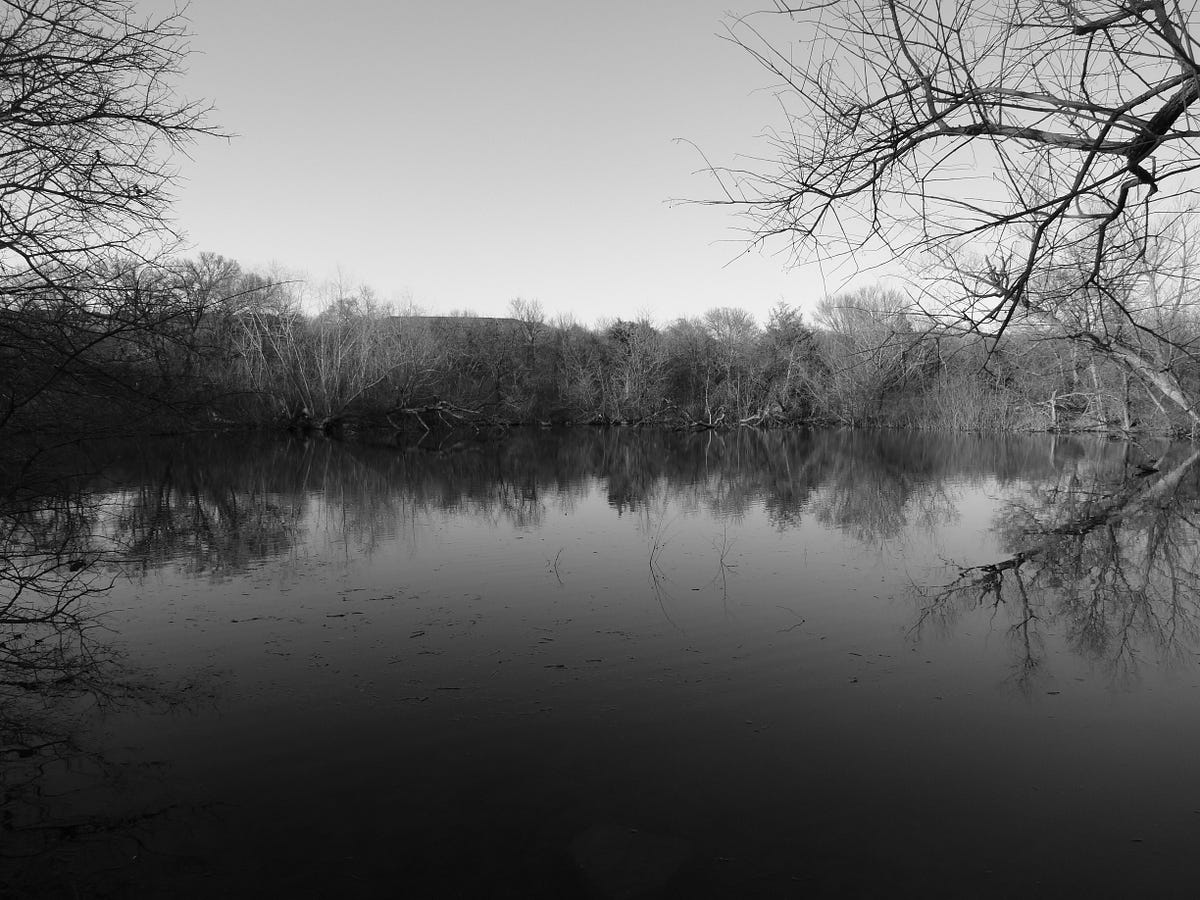
The photo below is a slightly different view of the pond at Arbor Hills Nature Preserve, without the “Painting” filter and edited to black and white.
Photo by Terrye Turpin
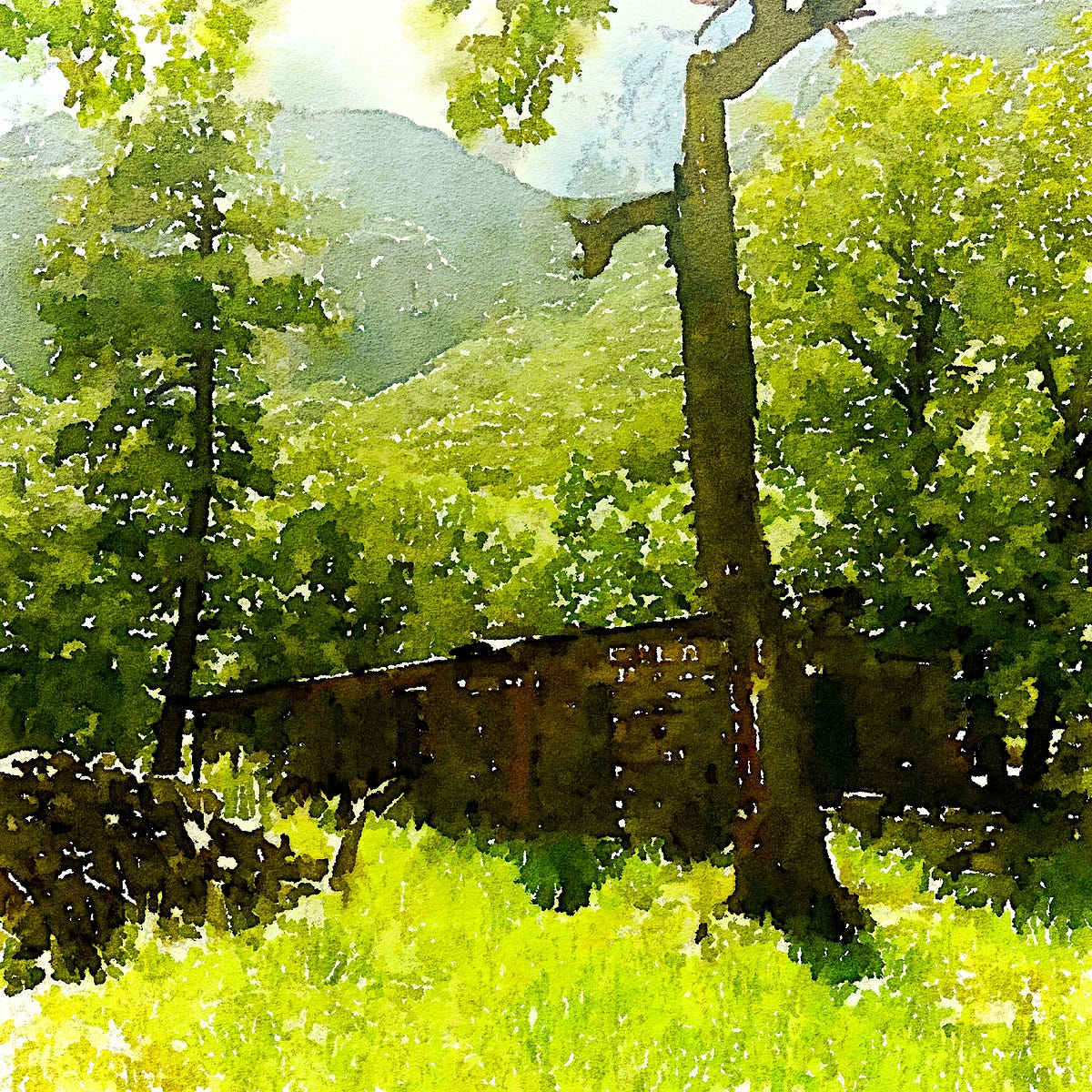
The photo below was taken at Guadalupe Mountains National Park with my iPhone 6 plus, and edited with the Waterlogue app on my phone.
Photo by Terrye Turpin
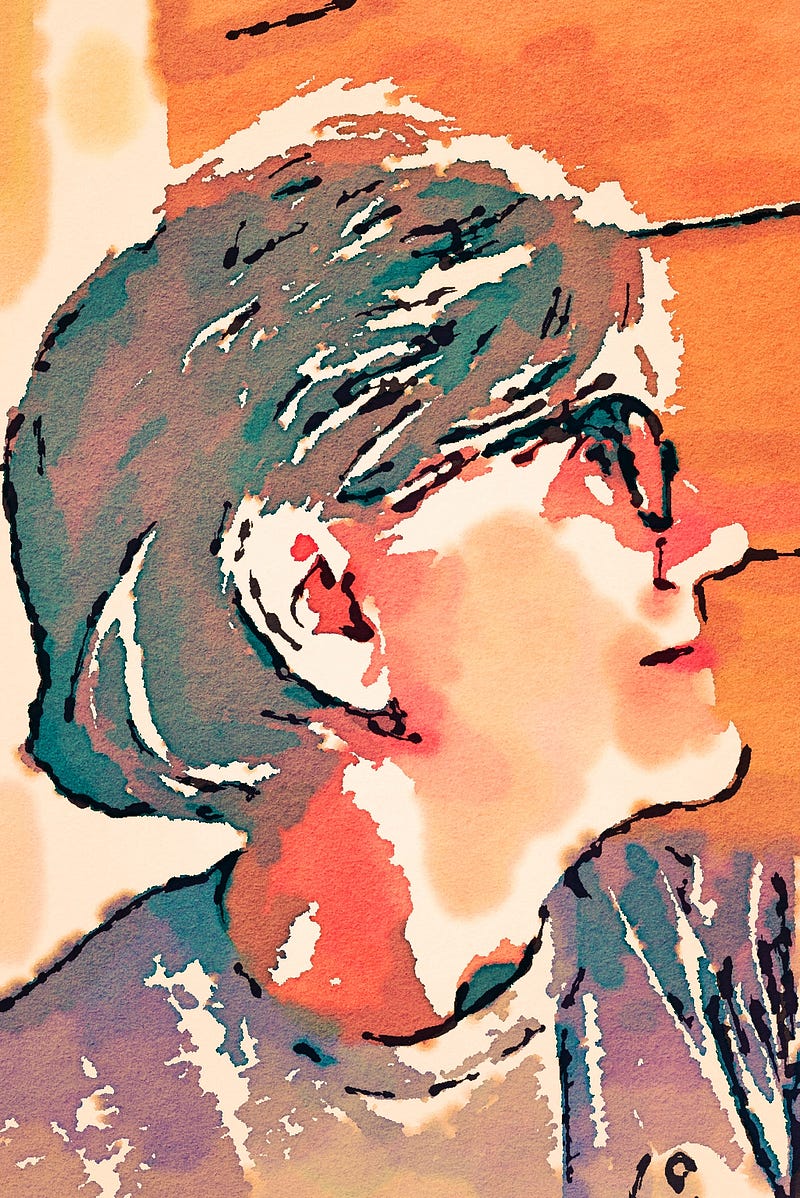
Finally, a self portrait, taken with my iPhone 6 plus, and edited with the Waterlogue app.
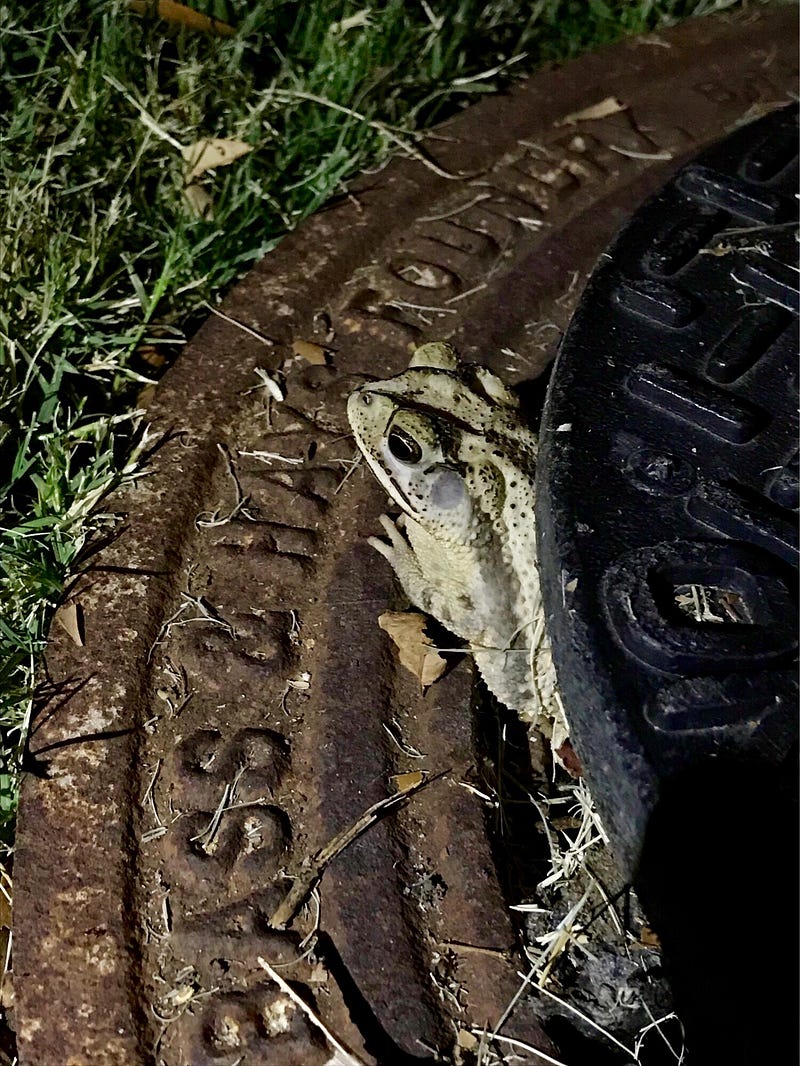
To her chagrin, she discovered that the entrance to the underworld was not guarded by Cerberus, the monstrous three-headed dog, but rather by a small, disgruntled toad.







 Let's Get Out of Here