A Token for the Journey

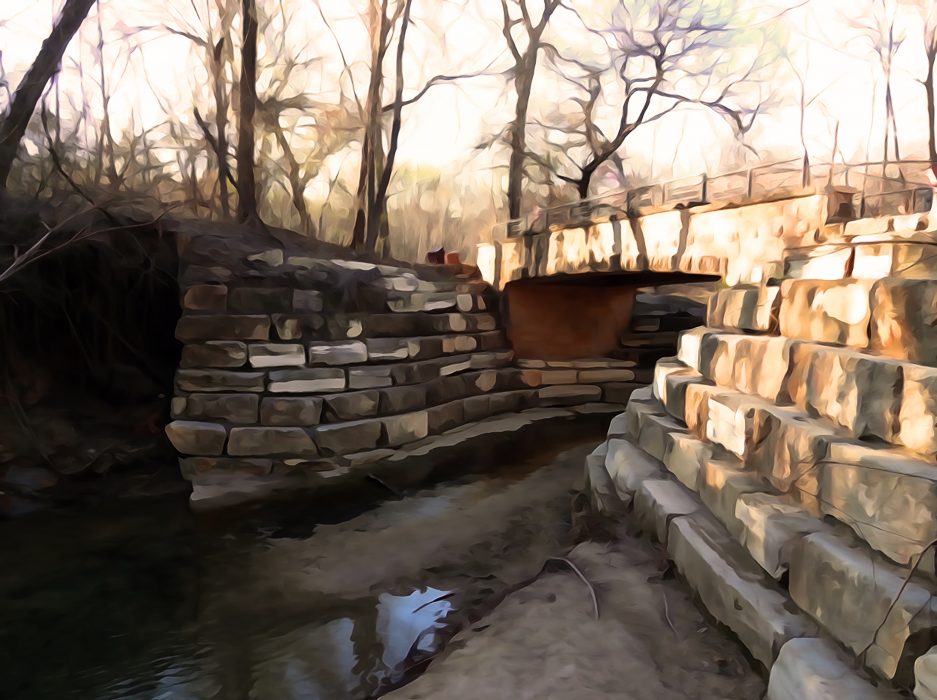
They take one last drive down Route 66

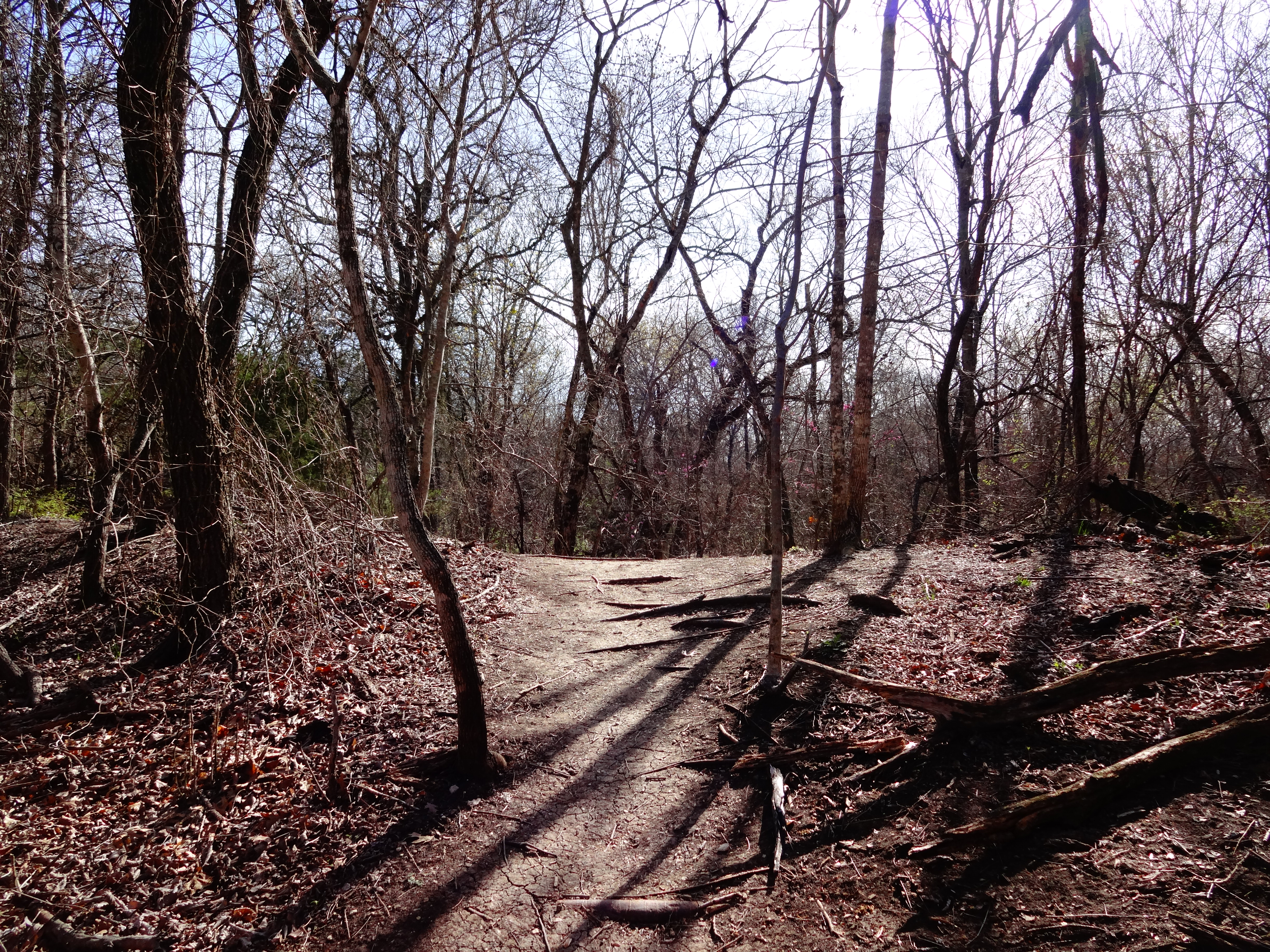
Photo by the author. Edited with the Waterlogue App

This story was first published in 2019 in the magazine The Weird and the Whatnot. I included it in my book of short stories, published in 2020. That book, The Imposter and Other Stories, has languished over on Amazon since then. I haven’t done much to promote it. In fact, I often forget that it’s out there.

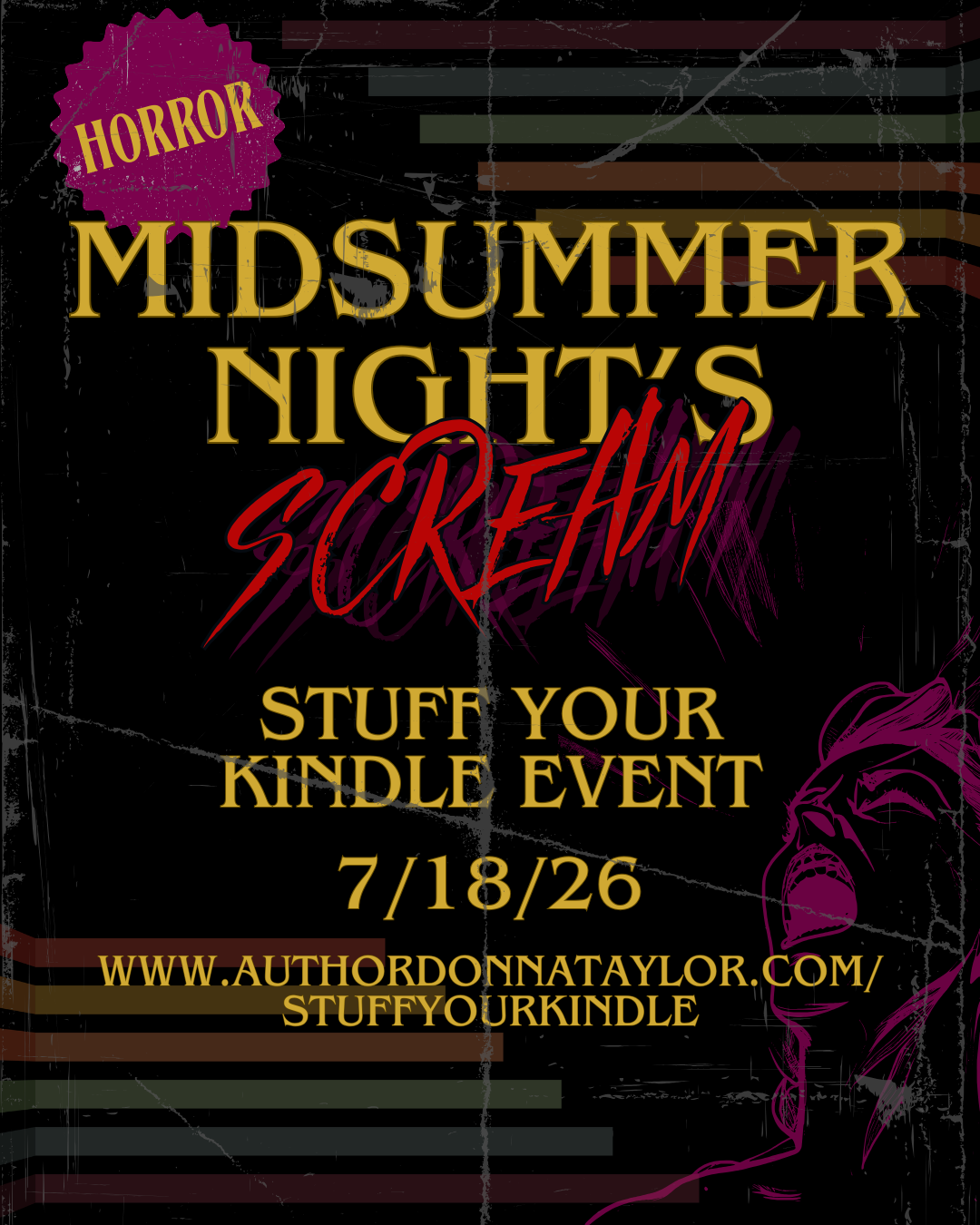
Next Saturday, July 18, that book will be included with several other horror ebooks in a “Stuff Your Kindle” promotion organized by a writing contact of mine, Donna Taylor. https://www.authordonnataylor.com/stuffyourkindle

She will be posting more on her website soon for the event, and I’ll be sharing over on Instagram and here once it kicks off.

In anticipation of this event, I thought I’d share a story that was included in the book, to give folks a look at the type of writing and stories that are in The Imposter and Other Stories.

A Token for the Journey

Together, Dottie and Bill packed the car the night before their last road trip. They rose early the next day and headed out of Oklahoma City along the old highway, now part of OK-66. The car, a restored Candy Apple Red 1967 Mustang convertible, hummed along the blacktop like she understood where they were headed, as though Bill could take his hands off the wheel and the car would continue on, in no hurry to reach the destination and happy for the journey. Bill had promised the Mustang to their grandson, but first the boy had to finish college. For now, the pleasure of driving this fine automobile was Bill’s, and he carried it all with him—the car, the road, the memories—as they started their odyssey. 

Bill mapped the route months before the trip, picking out the bits and pieces of the old Route 66 highway (the parts not swallowed up when Interstate 40 bulldozed through and killed off the small towns along the way). He aimed to land in Arizona before they turned around to head home. One benefit of old age. They didn’t have to stick to anyone’s schedule but their own. 

“Will we get to Tucumcari before dark?” Dottie asked that morning as she smoothed out the road map and traced their course across the folds and crinkles. Parts of their sojourn might take them to areas of spotty phone reception, but the main reason they brought the paper version was nostalgia. They would drive past places they visited years ago on their honeymoon trip from Oklahoma to Los Angeles. Back then, they’d relied on maps and road signs to navigate; it didn’t seem fair to cheat the course with electronic gadgets. 

Dottie, in her lemon-yellow capri pants and crisp button-up shirt, looked cool and sweet against the red vinyl seat. With her hair pulled back in a dotted scarf and the rhinestones in her cat eye sunglasses flashing in the morning sunlight, she looked much younger, like the girl Bill had married fifty years ago. Right then, it seemed they’d have more good days than bad ahead of them, but this wasn’t something they could count on. 

“We’ll make Tucumcari long before dark. And we’ll hit stops along the way, maybe have a late lunch in Amarillo, at the Big Texan,” Bill said. 

Dottie smiled and nodded as she slipped a dog-eared copy of Edith Hamilton’s Mythology out of her purse. It was her favorite book to read when they traveled, an anchor that reminded her of her days as a teacher. Mornings were best for her, she kept more of herself after a good night’s rest. 

They made their first stop in Clinton, Oklahoma, at the Route 66 museum. The nation’s first completely paved road, Route 66, wound like a river of asphalt 2,448 miles from Chicago to Los Angeles. Bill climbed out of the car and trailed along behind Dottie, the old wound in his leg giving him grief after being cramped up behind the wheel of the Mustang. They browsed through exhibits that might have come straight from their own recollection of the Mother Road. Bill’s first trip down that river had been as a kid in the backseat of his father’s Chevy. 

Bill followed as Dottie wandered through the museum, her eyes lit up like a kid’s. It was good to see her so animated. Lately it seemed she spent too much of her days along Lethe, the river of forgetfulness in Greek myth. 

When they got to the last display, Dottie turned to Bill. “I’d like to browse through the gift shop.”  

“All right. Remember we’re in the Mustang, so don’t buy anything we have to haul halfway across the country.” Bill watched his wife disappear behind a wall of coffee mugs and t-shirts. 

Bill leaned against the car while he waited for Dottie to finish her shopping. Standing there, staring out over the parking lot at the blue horizon, it reminded him of those days in the past when he waited for her outside shopping malls. Back then, he’d have a cigarette to pass the time, and the memory of it had him draw in his breath, tasting tobacco and ash on his tongue. Bill glanced at his watch, worried he’d made a bad decision leaving Dottie on her own. He pushed off the car, ready to go into the store, when he spotted her walking out the door of the museum. 

“Now don’t fuss, but I got you a little something.” Dottie laughed as she opened the car door and handed Bill a white paper bag with the museum logo. He pulled out a key chain with a tiny metal token, a round replica of the old Route 66 road signs. 

“Well look at this, it’s just right isn’t it?” he asked as he ran his finger along the edges of the little white shield. It was slightly bigger than a quarter. “I guess it’s our lucky charm,” Bill said. He clipped the Mustang’s keys onto the chain and twirled the miniature road sign before starting the motor. The afternoon had turned out nice, sunny but not too hot, so they put the white vinyl top down before they pulled out of the parking lot.

Outside Amarillo, the old highway became the service road for I-40. The Mustang would handle the interstate just fine, but they rolled along beside it and let the interstate truckers blast past in a rush of diesel-fouled air. The road stretched out in an unbroken silver line straight to the horizon, flat plowed fields on either side. Short green corn stalks poked out of the red dirt, reaching their leaves like arms to the sun. 

Past the town of Soncy, they crossed I-40 to the southern frontage road so they could pass by the Cadillac ranch. Bill slowed down to take in the sight of ten classic Cadillacs buried nose down in the muddy field. They were slanted at the same angle as the great pyramids of Egypt. Layers of peeling paint coated the autos in a riot of color that, to Bill, looked more like vandalism than pop art. 

They first spotted the hitchhiker there. He stood at the edge of the frontage road where the asphalt gave way to loose gravel. Dressed in an olive-green army fatigue jacket, at first glance he blended in with the tall grass behind him. He held a hand-lettered cardboard sign that looked as tattered as his clothes.

“What do you think he’s doing all the way out here?” Dottie asked as they cruised past.

“It is a little odd that someone dropped him there.” 

Bill glanced in the rearview mirror and saw the guy watching as they drove off. His long hair and sparse beard reminded Bill of Odysseus, on the tail end of his journey home to Ithaca after the Trojan war. From his post on the roadside, the hitchhiker took one hand off the sign to wave, and Bill mashed down the accelerator. The pony car rumbled in response, a quarter-sized hole in the exhaust making the engine sound louder and larger than the stock 289 V8 under the hood. 

The highway stretched out to the horizon, an unbroken line of grey. As the day grew warmer, heat waves shimmered across its surface and a mirage appeared ahead of them, turning the road into a false waterway. Soon they arrived in Adrian and stopped to stretch their legs at the Midpoint Café. The white painted concrete block building looked much the same as it must have in 1928. The couple pushed through the doors and walked into a dining room from the past, complete with Formica-topped tables and vinyl covered chairs with chrome legs. They slid into a booth near the front. As Dottie settled across from Bill, he spotted the hitchhiker in the last booth from the door. 

“Isn’t that the guy from outside Amarillo?”

Dottie turned around, her forehead wrinkled. She clutched Bill’s elbow as she bent her head to whispered, “Someone must have picked him up.” 

Bill wondered how he ended up ahead of them. Maybe his ride took the faster route along the interstate, instead of the scenic old highway. The hitchhiker hunched forward in the booth, hands cupped around a thick china mug. A dirty green duffle snuggled up against the bottom of the booth. The man turned toward them and lifted the coffee mug in a salute as though he knew they had been talking about him.

The hitchhiker got up to leave and Bill suggested they linger over coffee and pie. He didn’t want to walk past that guy on the way to the Mustang. When they got up to pay, Bill peeked out the front glass. He saw no one in a faded army jacket. As he dumped a handful of change onto the counter, the key chain with the road sign token clattered out amongst the dimes and pennies. 

“Don’t suppose you take this do you?” Bill said, holding up the souvenir so the Route 66 logo faced the cashier. 

The woman replied with a tired shake of her head, and Bill laughed as he dropped the keys into his pocket. “Better not give up my good luck,” he said. 

They hopped back on the frontage road and followed I-40 until the exit for Glenrio, the ghost town on the Texas and New Mexico border. They pulled the car off the road and climbed out to wander past the rotting wooden buildings that had once housed a café and a motel. Dottie snapped photos with her digital camera as Bill kicked through the high weeds surrounding a deserted gas station with rusted pumps. An abandoned car, a beat-up Oldsmobile with primer-grey fenders, sat on blocks beside the building. The wind picked up, whistling in with a cool front. They’d need to put the top up for the drive into Tucumcari. Black clouds rolled in across the horizon and the air smelled like rain. 

“We better head out before the rain starts,” Bill called out to Dottie as he turned back to the car.  

As he hiked back to the Mustang, he stumbled, his bad knee locking up, and an adrenaline jolt of pain caused Bill to gasp and clutch his chest. Fear ran through him as he slumped against the car. What would happen to Dottie if he fell and broke a hip, or worse? Bill leaned on the warm metal of the fender and zipped up his windbreaker. When his hand found his pocket, he felt the little metal road sign, the key chain Dottie had purchased that morning. His fingers smoothed over the cool, slick enamel and his breathing slowed. 

Bill turned around to search for his wife. A blur of motion at the corner of the gas station turned out to be a tumbleweed. Heavy blue-black clouds drifted over, blocking out the rest of the sunlight. A flash of lighting reflected in the grime-smudged windows of the gas station and revealed what looked like a face pressed to the glass inside. 

“Dottie?” he called, thinking she’d somehow gotten inside the building and couldn’t find her way out. She appeared from behind the station, weaving as she stumbled on the broken asphalt at the edge of the lot. She stopped, looking around as though lost. Bill had his hand on the car door, ready to limp over to her, when she spotted him and waved. He sighed and eased into the car to wait for her. As she shut the car door and buckled herself in, Bill stared in the rearview mirror. The flat landscape reminded him of Amarillo, and the hitchhiker. Bill scanned the horizon, half expecting to see a man holding a worn cardboard sign. 

They pulled into Tucumcari, New Mexico, as the rain started. There was still time before sundown, but the storm clouds hid the sun enough that they spotted the neon lights of the Blue Swallow Motel as they cruised through downtown. The sign promised refrigerated air and TV: as good a place as any to rest for the night. The room had a rattling air conditioner and a queen-sized bed covered in a fluffy white chenille spread. Bill showered and Dottie called Ray, their oldest, to check in. Ray sold insurance in Dallas, and he kept a rolling tally of their chances of meeting catastrophe. Bill listened in on their conversation until he heard the slur in Dottie’s voice, then he reached over to take the phone and tell Ray goodnight. 

The nightstand held a black, hard-backed Bible, and Bill pulled it out and flipped through the thin pages. A verse from Revelation drew him in, and he dozed off reading about the Four Horsemen of the Apocalypse. The rumble of thunder and the flash of lighting from the storm outside merged with a dream of Dottie held hostage somewhere far off. In the nightmare, he clutched an old-fashioned rotary phone receiver to his ear and heard his wife’s voice, faint and scratchy, as she pleaded for rescue. Like she was Persephone abducted by Hades and kept in the underworld, only this time there would be no returning to the world above. Where she called from, Bill could never reach. 

The next morning, they woke up to more rain. They checked out of the motel and Bill lugged their bags out to the car. 

“Oh! I know that man,” Dottie said, pointing. 

Somehow, it was the hitchhiker, Bill realized with a start. The stranger turned around then, looking right at them and holding the cardboard sign, soggy and wilting in the damp. As he walked toward the Mustang, the hitchhiker folded the sign and tucked it under his arm. 

“I wonder if I could impose on you for a ride,” he said as he halted at the side of the car near Dottie. 

“There’s not much room,” Bill began, then stopped as he saw Dottie staring at the hitchhiker as though she were puzzling out his name. He reached out to touch her arm. “We don’t know this fellow,” he said to her. 

Her eyes cleared, and she shook her head. “No one should have to stand out here in the rain. The back seat’s small, but you could probably fit if you don’t mind not being able to stretch out your legs.” Dottie looked up at Bill, waiting. 

“This is a fine automobile.” The stranger brushed a hand along the side of the car. Bill frowned, something about the way the hitchhiker touched the car did not set right with him. The trailing fingers seemed possessive, as though the stranger were stroking a lover’s waist. 

“Where you headed?” Bill asked. “We’re taking the long way, going down the scenic road along old Route 66, you’d be better off with someone else.” 

“I’m not in a hurry to get where I’m going,” he said. And with that, Dottie opened the car door and tilted the seat forward so the guy could climb in the back. 

The rain cleared, and the passenger sat back and didn’t speak up again as Bill steered the car onto the interstate. Settled into the soft leather seat, the hitchhiker smiled and gazed out the window. Bill decided they would stay on the highway and take 25 up through Glorietta, enjoying pretty scenery at least. When they stopped in Santa Fe, Bill would drop the guy off and tell him to get another ride. The decision made, Bill relaxed to the hum of the car wheels on asphalt. 

The roadside scenery changed from stunted brush and red rocks to the green of pines and juniper as the road climbed through New Mexico. The postcard perfect landscape reminded Bill of other trips they’d made along the old route. He could almost forget the stranger in the backseat, but a glance in the rearview mirror brought the man’s face into view. Each time the man met Bill’s gaze. The stranger stared into the reflection until Bill felt a heaviness in his chest, as though a thick rope wrapped around his heart and he had to look away.  

In Santa Fe they cruised through downtown, past shops in terracotta stucco and pastel colors. Bill left the hitchhiker at a busy intersection, near a sidewalk art sale. The man didn’t protest, and Bill relaxed as they drove away. After they lucked into a vacancy at a pleasant hotel near downtown, they spent the rest of the day shopping and sightseeing. 

At dinner Dottie pushed her plate of enchiladas away after a few bites. “You finish it, Ray. I’m just not hungry.” 

Bill took her hand. “It’s all right, sweetheart, let’s go get some rest.” He did not tell her she’d called him by their son’s name. 

That night Bill fell into a deep sleep, but in the darkest part of the night, he jolted awake with the strange feeling that someone stood over him, but when he sat up, there was only Dottie lying next to him. He lay back, but felt restless and didn’t want to wake Dottie, so he dressed and stepped outside to check on the Mustang. He pocketed the keys and rubbed the cool enamel of the little Route 66 road sign attached to the chain. 

The lights in the hotel parking lot cast a yellowish glow over the cars, transforming the bright red color of the car into a coppery orange shade. A light mist hung in the air, creating halos around the streetlights. Bill limped a circle around the Mustang and turned to watch the red glow of the taillights from a passing car until they disappeared down the road. When he looked back at his car, he saw a white figure at the far edge of the lot. 

It was a woman, her sheer white robe fluttered behind her like wings. 

“Hey!” Bill called, and the woman turned and came toward him. It was Dottie. Her steps were sure and quick, and as she rushed to him her face changed, her brow smoothing and her cheeks filling with youth and beauty, until she no longer resembled the woman who had set out on the road with him. The robe and nightgown draping her body molded into the shape of the wedding gown she’d worn all those years past. 

“Dottie!” Bill reached out for her and she glided by, a wintry wind in her wake. He twisted, grabbing at her arm, but his hand passed through the robe, as though he grasped a spider’s web. Confused, Bill felt as though he’d lost something. He bit the inside of his mouth, hoping that if he was dreaming, the pain would wake him. 

His wife paused before the road.  

“It’s time,” Dottie said. She folded her hands across her breast and turned her back on him to step off the curb.  

“Time?” Bill asked. The answer came from his dreams, the bad ones, the ones where he’d woken up screaming. The road, once a ribbon of asphalt, now flowed as a river of black water. Somehow, Bill knew if she stepped into that river, she’d be lost to him forever. He’d always feared he would be the first one to go on that last journey, leaving her behind to struggle through life without him.  

“No!” Bill called as the hitchhiker appeared beside Dottie. Bill recognized him then for who he was. Not Odysseus, the wanderer, but the ferryman, Charon, of Greek myth. The one who helps others on to their last destination. 

As Bill reached for his wife, the ferryman spoke. 

“I’m here for her journey,” he said, and stretched out his hand to grasp Bill’s arm. 

A jolt of pure pain fired straight to Bill’s nerves, and his mind went back to that ominous place the other night, to the dream he’d had when he listened to Dottie’s voice calling, but could not go to her. His knees hit the pavement, and he knelt there, gasping as the road beyond the parking lot wavered and shimmered in waves. 

A cool hand grasped his shoulder, and Bill looked up to find Dottie standing there, one hand held by the stranger. 

“Take me instead,” Bill stumbled to his feet and reached out to the ferryman. Nausea gripped him and he bent over, clutching his stomach. Sweat beaded on Bill’s forehead and a sharp spike of agony pierced his brain, like a nail driven in behind his eye. 

Charon scowled as he shook his head. “Only one passage is paid.” 

“Does it matter then, who you take?” 

Bill shuffled into the dark river. He expected the water to swallow him, but he felt solid ground beneath his feet. The cold, however, rushed over his legs as though he waded in ice water. 

“Is it time to leave?” Dottie faded, the white mist that made up her figure melting like wisps of smoke. “Have you seen my husband? He always takes my hand.” 

“Oh Dottie.” Bill couldn’t leave her behind, lost without him to watch over her. “Take us both, then,” he said. 

But Charon shook his head and pulled Dottie further into the river. A gondola, draped in black sackcloth and trimmed in ebony, floated up to them. 

Desperate, Bill thought to bargain with the ferryman, and pulled from his pocket the only thing he thought might work. 

“If it’s a journey you want, climb in and let’s go.” Bill tossed the keys to the Mustang, and the ferryman scooped them from the air. 

“You have a coin?” Charon puzzled over the round bit of enameled metal attached to the key chain, the Route 66 token.  

“I’ve paid for my passage, isn’t that the deal?” Bill asked. 

The ferryman nodded and took the keys. When he touched Bill this time, there was no pain, only a bright white flash of light. The age spots on Bill’s hand vanished, his wrinkled, loose skin plumping and filling with the strength he’d had forty years back. When Bill looked back to the parking lot, he saw his body, an empty shell, curled against the asphalt where he’d fallen the first time Charon touched him. 

The river vanished, leaving the dark grey asphalt of the Mother Road, and the red convertible idling in the center. How else would they take the last journey? They’d motor down the old highway and it would be new again. The route would be exactly as in their memory of all the journeys they’d taken. 

There was Dottie, with her rhinestone sunglasses and ruby lips smiling, a folded map under her arm. “Come on, slowpoke. We’ll put the top down,” she said. 

The ferryman sat in the driver’s seat. Dottie laughed and Bill smiled at the sweet sound of the girl he loved. They climbed into the back seat, and Bill no longer feared the destination. They would travel there together. 

THE END

I hope you liked this tale and be sure to check out the ebooks that will be either free or greatly discounted on July 18!
All the Beautiful Girls

A short story

Photo by the author

The story I’m sharing tonight is one I submitted to an NYC Midnight Contest. I don’t remember the prompts or the word count length. I revised it and then submitted it to a contest on the Vocal website. It didn’t win anything there either.

I removed it from the Vocal website when I cancelled my membership there and held onto the piece, thinking I’d include it in another book of short stories one day. Since then I’ve started working on a novel and the short stories have been put on hold.

Writing a novel is a long slog compared to churning out short fiction. The reward, I think, comes when you finally finish the thing and can put “THE END” to the last page. Completing a short story, the reward comes much faster. I did, however, received a boost in motivation last month when I entered the Novel Beginnings contest held by the ProWritingAid software app. My first 5,000 words was selected for the long list of 183 writers out of over 14,000 entries. I didn’t make the next round, the short list, but I’ll rest on that first win as it has inspired me to keep going and keep writing until I reach that last page of my novel. For now, I hope you enjoy this short story, but be warned – it’s horror and a bit dark.

All the Beautiful Girls

The first girl disappeared on a cold fall evening. Wet, gray leaves cloaked the ground, robbed of their color by the low-lying fog. Claire Avery knew the missing woman, not by sight, but by reputation. The sort of blonde, fizzy girl whose smiling photo had graced the pages of her high school yearbook. Claire would never be that girl. Her jaw was too sharp, her teeth too crooked, her nose too large—no one ever sought her out. The university put up notices, warnings to the students—do not walk alone at night, do not let anyone follow you into the dorms.

The school, a small midwestern college, had only recently begun admitting male students. After the second missing girl, those few young men scurried across campus with downcast eyes, as though the fact of their gender showed their guilt.

Claire’s roommate, a timid student majoring in music history, fled from the school and returned to her hometown. She left behind a wooden cross nailed to the wall. Left to herself, Claire filled the room with empty food containers, discarded notebook papers, and stacks of textbooks. She pushed her dirty laundry under the empty bed, where it filled the space with the stink of acetone and alcohol from her chemistry labs.

The morning after the second disappearance, Claire was showering in the communal bathroom when she heard one of the resident advisors call out, “Man on the floor!” Claire snatched her robe and towel and twisted the handle to cut off the water. The pipes clanged a protest as she hurried into the hall.

One of the maintenance workers, a tall man with long arms that reached almost to his knees, passed by her. Jerry. He had helped Claire carry supplies to and from the chemistry lab. They’d chatted about movies and a mutual interest in old black and white films. More conversation than she had ever had with her fellow students. He strolled past, his flat gray eyes focused down the hall, not seeing her. He held a heavy wrench in one fist. The tool bag around his waist clinked with each step.

A week passed with no sign of the missing women. Were they resting in some weed-filled field, discarded like litter? Campus security tacked up flyers with photos of the girls. At first glance, they appeared to be the same person, so alike they could be twins. People left flowers, candles, toys under each poster—offerings at an altar. More gifts than Claire had ever been given. She stole a tiny purple unicorn from the pile. The dead did not need presents.

November blew in with frost and the hint of snow. While most of her dorm mates left for home and Thanksgiving food, Claire opted to stay at the university. She and a graduate student, a woman whose eyes were always red and swollen with allergies, would be the only people in the dorm. The grad student warned her, “They’re going to do some plumbing repairs this week. We’ll have to shut off the water.”

“No problem,” Claire assured her. Lately, she hadn’t the energy to bathe. Her hair hung in greasy strands. She dressed in layers to hide the stink of her unwashed body.

Monday of Thanksgiving week, Claire woke to a rhythmic, pounding thud. It came from the basement, as though the building had gained a heartbeat. The door to the cellar stairs, usually locked and bolted, stood open. She clung to the rail and made her way down the steps.

Dust, carried on the moist heat from the boilers, wafted up to greet her. The flickering fluorescent light revealed a shirtless man in the center of the basement floor. Sweat streaked his back. He raised a massive sledge hammer and slammed it down on the concrete. The blow echoed in the space. Claire felt it travel up the soles of her feet, shuddering across her legs and thighs. 

As though he felt her watching, the man turned. Safety glasses covered his eyes, making his face resemble some alien creature. It was Jerry. Claire lifted her hand, about to wave. “What are you doing here? Get out!” He waved a gloved hand, shooing her away.

“I’m sorry.” Claire backed away, stung that he hadn’t recognized her. She swiped at her eyes and rushed back up the stairs to her room.  

“Slab leak,” the grad student explained later. “He’ll fix it, then pour new cement. Water should be off about an hour tonight.”

That night, Claire wandered the dim hallway. Barefoot, she descended the stairs to the basement and shone a flashlight across the broken floor. Dirt and broken concrete lay piled in one corner. A hole in the center revealed a crisscross of copper pipes. The gap in the earth below them was as deep as a grave.

Back in her room, Claire watched from the window as Jerry hauled bundles wrapped in black plastic across the lawn and through the side entrance. She imagined him bent under the burden as he descended the basement stairs. Bags of concrete, or something else?

Hours later, when Claire figured the job was done, she went downstairs. He’d left the basement door padlocked, but when Claire tugged at the rusty lock, it sprang open. She lit her way into the basement with the light from her phone, then clicked on the dim fluorescent fixtures.

The overhead lights revealed the slick wet surface of new concrete, a sheen of water shining on top. Claire knelt next to the dark gray square. She breathed in the sweet, musty odor of the cement. Another smell lurked underneath, rotten and foul. Leaning forward, Claire pressed her hand into the soft mass. She put her weight full on her palm, leaving a deep imprint on the cement.

A shadow fell across the stairway. Claire’s breath caught in her throat. Steps thumped across the wood. She scrambled back until the cold cinderblock wall pressed against her. The shadow crept forward until finally, he stood revealed. Jerry. He must have seen the glow from the basement lights. A glint of silver flashed at his side. A knife.

Claire held out her arms, smiling against her fear as he lifted the blade. Did he see her at last? She hoped it would be quick, she hoped they would put her picture beside theirs—all the beautiful girls.

THE END

Carry the Dead

A short story from the Writing Battle Contest

Photo by the author

Jonas had settled before the fire, tamping tobacco into his pipe, when a blow sounded against the door. His wife, Ruth, flinched and rose from her chair.

“Fetch the rifle,” Jonas said. He gripped the iron poker from the hearth.

He would not have known the visitor if not for Ruth’s gasp of recognition. White frost clung to his beard and dusted his coat. His sunken eyes stared under the shelf of his brow. In the night behind him, snowflakes as large as doves fluttered.

“Samuel!” Ruth lowered the rifle.

Jonas pulled the man, their neighbor, into the house. What terrible mission had brought him four miles to their home?

Trembling, Samuel set down his lantern. “We’ve lost Aaron.” Samuel turned to Jonas. “I need your help to bury him.”

“The ground’s too hard. Wait until the sun warms the soil…”

“It’s been two nights already. I waited, hoping the snow would stop.”

Ruth grasped Jonas’s arm. “He must be buried before the third day.”

The last coffin Jonas had carried had been his mother’s. She passed in the spring, when his shovel turned the ground as easy as planting a field. They buried her right after her last breath. Sometimes, he heard her voice call his name.

“We’ve hours until dawn, but we’ll need a fire to warm the ground.” Jonas shrugged into his coat.

“Wait!” Ruth scurried off and came back carrying two bundles. “Take this.” She thrust the packages at Samuel. “Salt pork and hardtack. Sorry I don’t have more to send.” Color rose in her face. “Tell Mary I’ll be around when the roads clear.”

Samuel tucked the food into his pockets. “I’m grateful. Truth is, we’ve run short of supplies.”

Jonas paused in the doorway when Ruth called again. She rushed to him and wound her wool shawl around his neck. “Stay safe, Jonas.”

The wind ceased when the men were halfway to Samuel’s home. Clouds scattered, revealing the moon, like a white pearl in the indigo sky. No sound but the crunch of their boots across the snow-covered fields. Their breath hung like smoke overhead.

At Samuel’s home, they found Mary’s mother seated in a rocker at the hearth with the younger child, a girl, playing on a rug at her feet. Samuel handed the old woman the food. “From Ruth.”

The grandmother rose. “She’s with him still.” She gestured to the closed door across the room. Her wrinkled face knotted in anger. “The devil takes us if we’ve come to this. No bread to fill our sorrow, no drink to wash our pain.” She motioned to Samuel. “Go fetch Mary.”

“I’ll go,” Jonas said.

The boy lay on his parent’s bed in the cold room. They had dressed him in black pants that stopped short of his ankles and a white shirt that matched the pallor of his face. His mother slumped from her chair and rested her cheek on the mattress. She clutched one of the child’s hands. 

Mary jumped when Jonas touched her shoulder. “Please, not yet. Would it be bad to have him back?”

Jonas thought of all the ones he had lost. Would it comfort this family, to be haunted by their child? “You shouldn’t tie him to this earth.”

“I’d do anything to keep him longer.”

Jonas eased her to her feet. “The dead are never gone. We carry them with us always.”

Samuel hitched a horse to their sleigh while Jonas carried the boy outside. He wrapped the body in Ruth’s shawl. Bundles of firewood rested in the back of the sleigh. Rather than put the boy there, his father held him in his lap while Jonas drove the sleigh.

At last, they reached the graveyard behind the church. The moon cast the snow in blue light. Bare-branched trees cast long shadows on their work as they stacked wood on the grave’s soil. The fire lit, the men warmed their hands in its heat. A howl sounded from the woods on the other side. Jonas glanced at the horse tethered on the cemetery’s fence. “We shouldn’t leave them there, with hungry wolves near.”

While Jonas tended to the horse, Samuel laid his son beside the fire, as though to warm him. He brushed aside the shawl and cupped the boy’s cheek. “If he died in the spring, we’d live with his ghost.” Samuel drew the cloth back over the boy. “But I couldn’t bear the guilt of it, to face him now. He’d been sick. When he died, I felt relief that there would be one less mouth to feed.”

“Hunger makes wolves of us. You can grieve the dead and worry for the living.” Jonas rested his hand on his friend’s shoulder.

When the fire had died to coals, Jonas swept them from the grave and sunk his shovel into the ground. Samuel staggered to his feet, but Jonas waved him away. He dug, mindful of the passing hours and disregarding the blisters that burned on his hands.

Jonas finished digging as a line of burnt orange stretched across the horizon. A blanket of soft gray fog rolled in. Together, Jonas and Samuel eased the boy into his resting place. The sun rose, scattering the mist and warming the earth. The ice melted from the tree branches and clear droplets of water fell over the grave.

THE END

A Bouquet of Books Read

“March is the month of expectation, the things we do not know.” — Emily Dickinson

Photo by Terrye Turpin

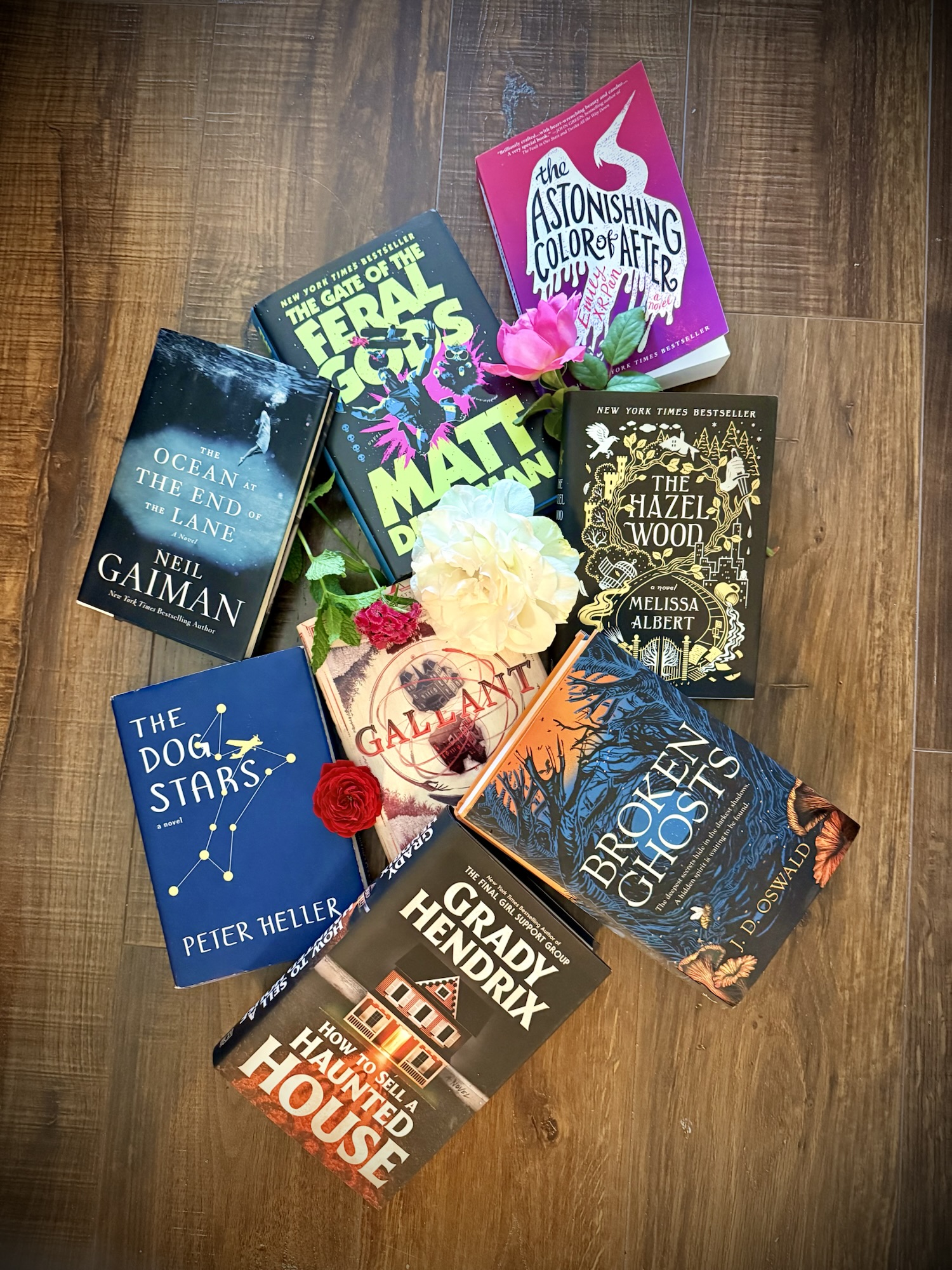
March was a good month for reading. I began with The Dog Stars by Peter Heller. I’d read this one before but this time it was for a book club pick and I enjoyed discussing it with other readers. Every time I pick up a book I try to focus on the skill behind the story, but it’s also nice to just read for enjoyment.

The Dog Stars is written in first person. Hig, the point of view character, is a pilot who owns a 1956 Cessna that he flies on reconnaissance missions with his dog Jasper as copilot. The author captures the sensation of flying with such details you feel as though you are in the plane with them.

Peter Heller’s writing style is unique and fits with the type of books he writes. The sentences are mostly short and fit perfectly with Hig’s character. Like Cormac McCarthy, Heller doesn’t use dialogue tags or different punctuation for dialogue. I thought at first this would be jarring, but instead it made me feel like I was inside the character’s head and feeling the things he felt.

Woven within this post-apocalyptic story are vivid descriptions of nature, making the loss of some species heartbreaking in this dystopian world. The overall theme, however, is hopeful as Hig searches for community and fellowship despite the struggle to survive.

One of the hardest things I find about writing is coming up with titles. I’m always interested in the meanings behind them, and I learned that Sirius, the dog star, is the brightest star in the sky, and has been used for navigation by ancient societies. Fitting then to use that as the title for a book about searching for home.

The next five books I read last month were chosen because they are similar in theme and plot to the contemporary fantasy novel that I am writing. I’ve heard it many times and it’s great advice – write the book that you want to read, and read the books that are in the genre you want to write.

I picked up Gallant by V.E. Schwab, Broken Ghosts by J.D. Oswald, The Astonishing Color of After, by Emily X.R. Pan, The Hazel Wood by Melissa Albert, and The Ocean at the End of the Lane by Neil Gaiman.

All the above had excellent examples of a well-developed magic system. I also tried to find books where the main character was dealing with loss, grief, and family secrets.

I had read The Hazel Wood years ago when it first came out, so this time around I outlined the plot structure as I read, noting the turning points in the story and where they fell in the book. This is a useful exercise. I’m used to writing short stories, and it’s taken me some adjustment to the longer form of a novel. I tried outlining my story, but that felt too much like homework. Instead, I’ve adopted an approach halfway between discovery writing and strict outlining. I know where the major plot points have to fall, and I’m writing to those as I go. Reading with a focus on how other authors have structured their books is a pleasant way to learn plotting.

One note about the Neil Gaiman book. I know he is a problematic author considering the revelations of his sexual assault accusations. Although it looks like there won’t be any charges brought against him, I don’t feel right supporting his work by buying any new work he produces. The same thing with other authors who turn out to be horrible people despite their storytelling talent – J.K. Rowling for example.

Can we appreciate the work separate from those who produced it? For me the answer is it depends. The books I have on my shelf were bought and paid for before the truth came out on these authors. Throwing out those books won’t make any difference in the world. I’ll keep them and enjoy the stories for their own merits, but I won’t spend any more money supporting those authors. There are plenty of other books to buy, plenty of deserving writers to support.

I always listen to at least one audiobook each month, and in March it was How to Sell a Haunted House. I love Grady Hendrix’s blend of humor and horror. This book had themes of grief, personal loss, family drama, and haunted puppets.

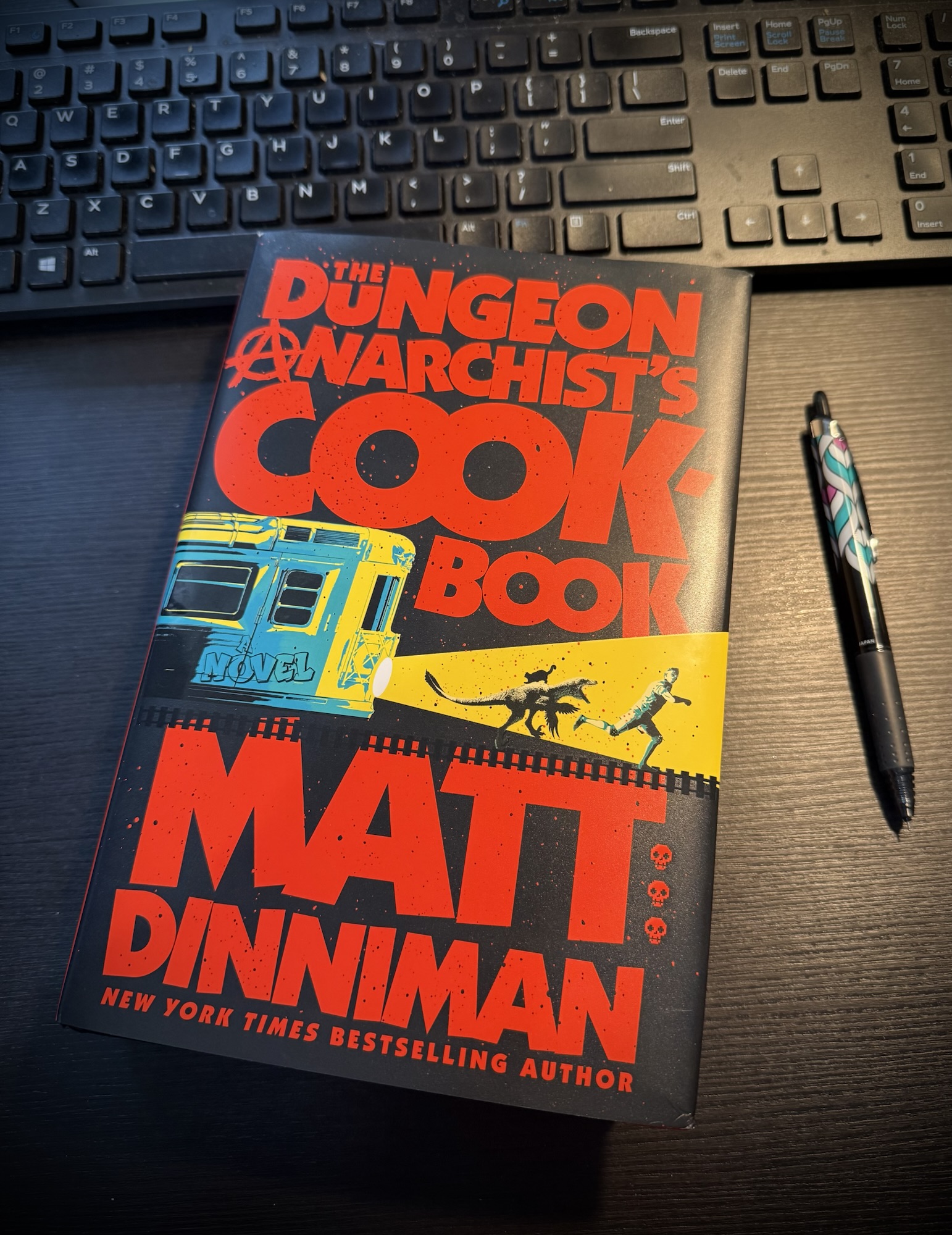
My just-for-fun book this month was book four in the Dungeon Crawler Carl series – The Gate of the Feral Gods by Matt Dinniman. I’m hooked on these books and I also bought the audiobook versions so I can enjoy the wonderful narration. My husband has started reading them, so now I have to wait for him to catch up before we can talk about them. He’s on book two, so I will probably have to read the first three again while I’m waiting for him to get to book four. It’s a struggle but I’m prepared for the sacrifice. (wink)

Someday All This Will be Yours

An inheritance of creepy things

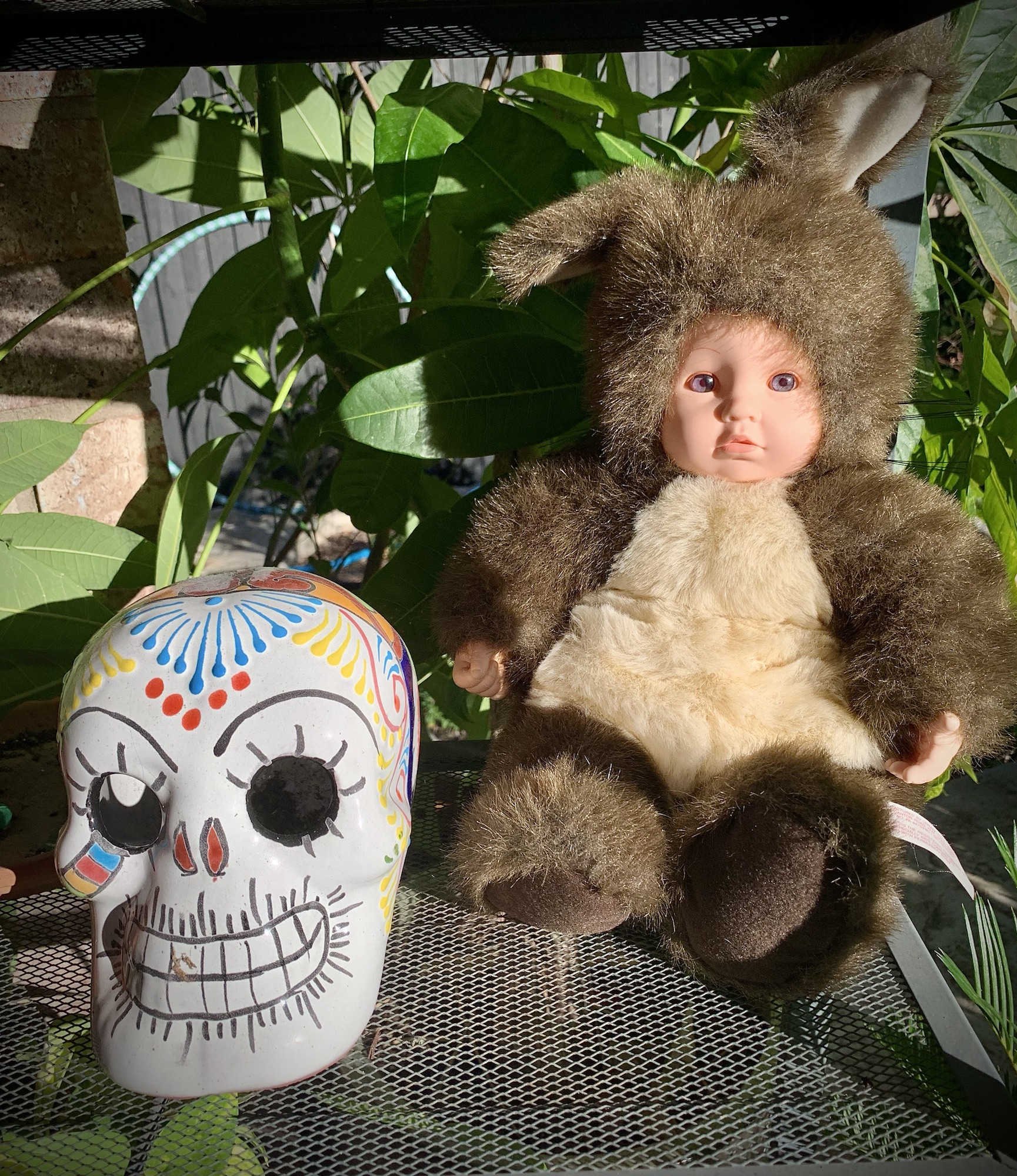
Photo by the author – (Squirrel baby does reside in our home)

I’ve been listening to the audiobook for Grady Hendrix’s novel How to Sell a Haunted House. I have a signed copy of this book somewhere on my bookcase, but I hadn’t gotten around to reading the physical copy. In order to reduce my To Be Read list, I’ve resorted to audiobooks.

The story is about a brother and sister – Louise and Mark – who have to clear out their parent’s home after their death. “Gee Terrye, that sounds like a depressing read.” Yes, it could be, but the parents were sort of hoarders and the mom left behind a huge collection of dolls and puppets. And the puppets and dolls are haunted.

Somehow Louise and Mark must reconcile their past and clear out the house in order to sell it.

Reading the story I can’t help but picture the hundreds of books and movies my husband and I have accumulated. Add in the puzzles, board games, closets full of clothing, and two china cabinets full of pottery and it will make for a hell of an estate sale when we kick off. I also have dolls, but none of them are haunted. Yet.

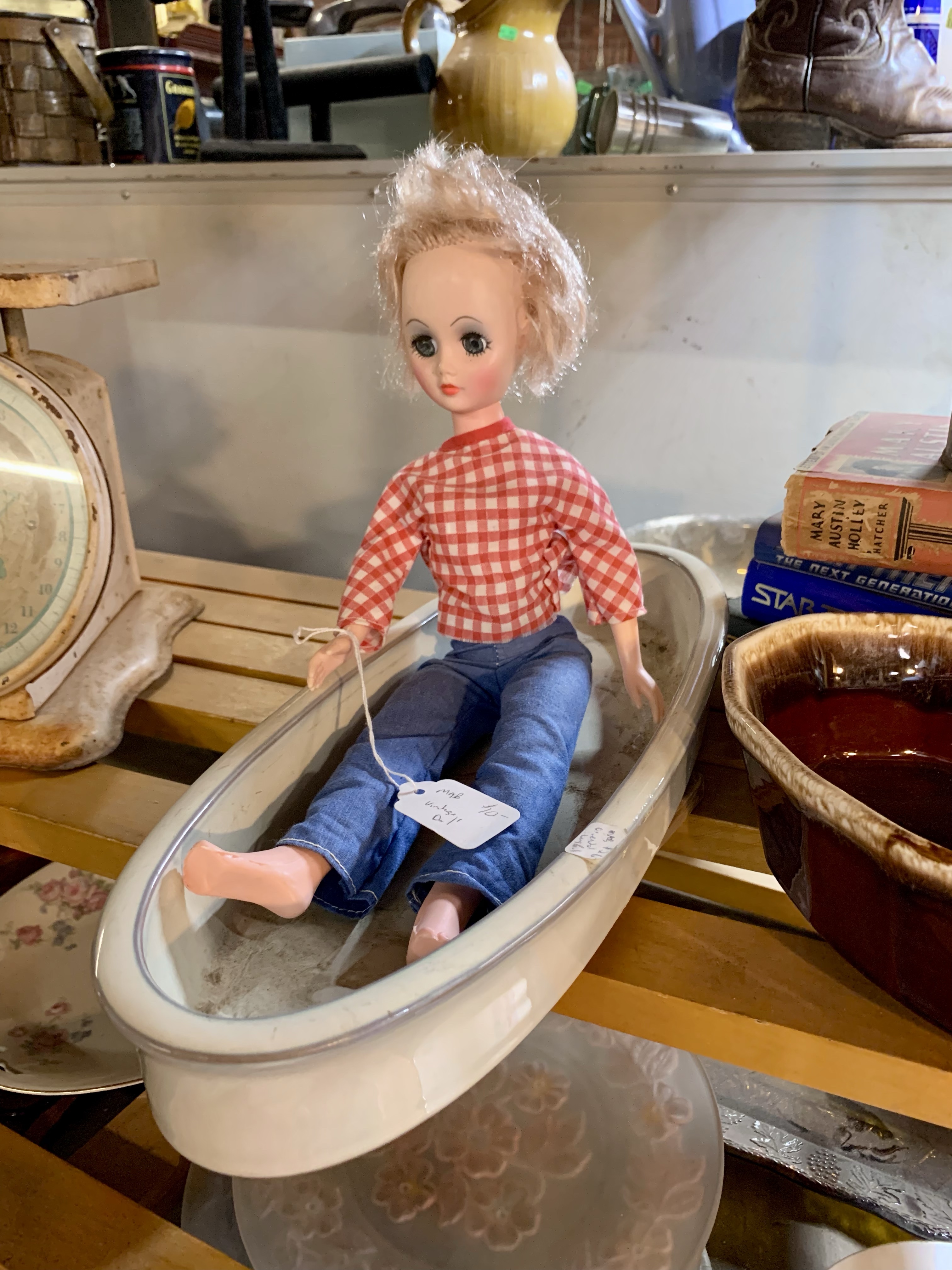
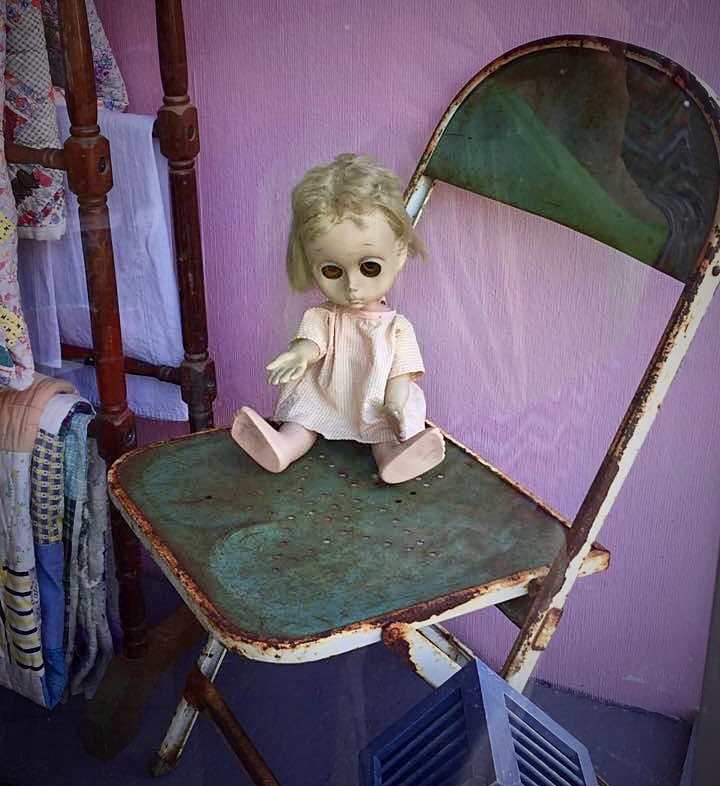
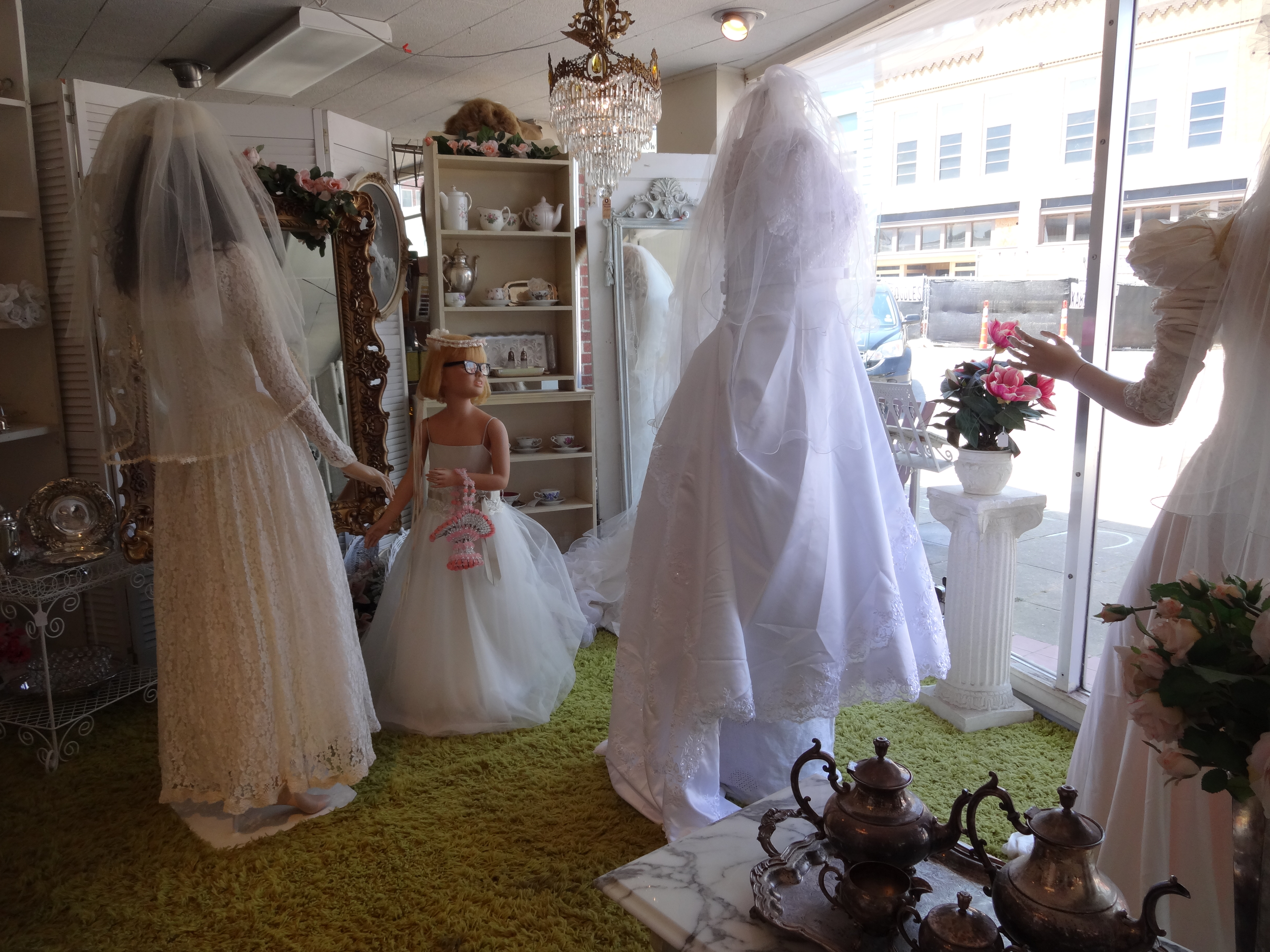
Photo by the author

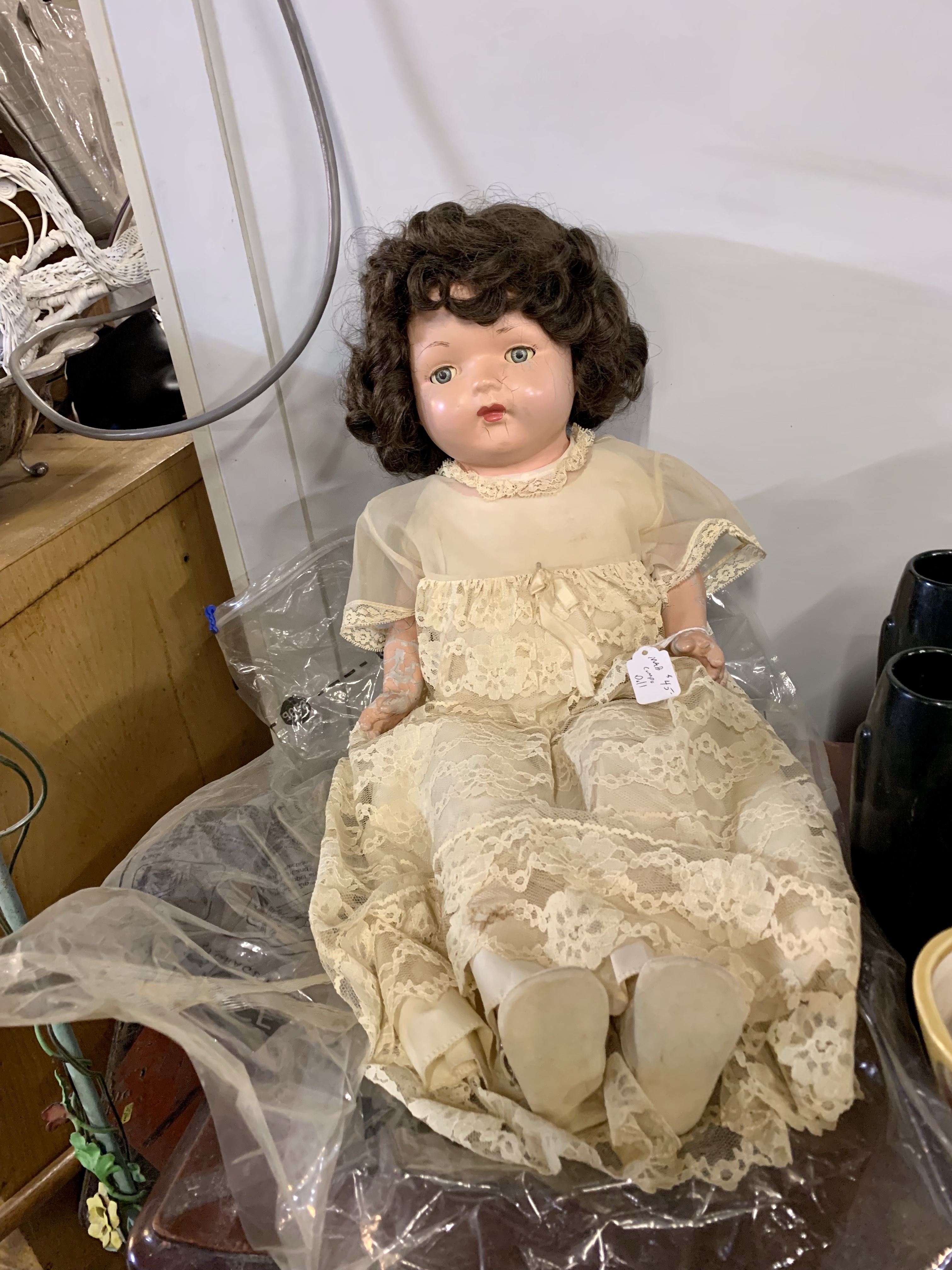
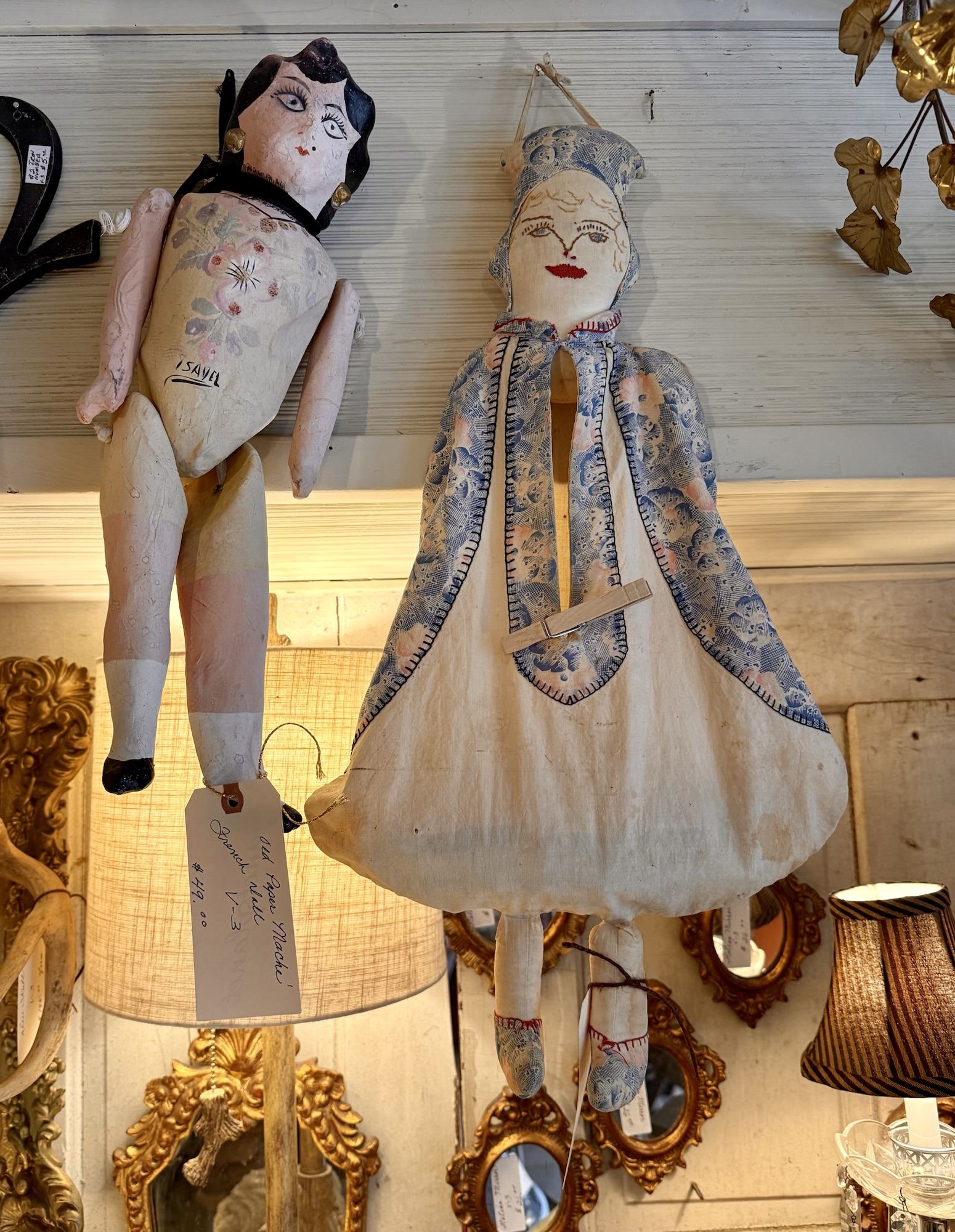
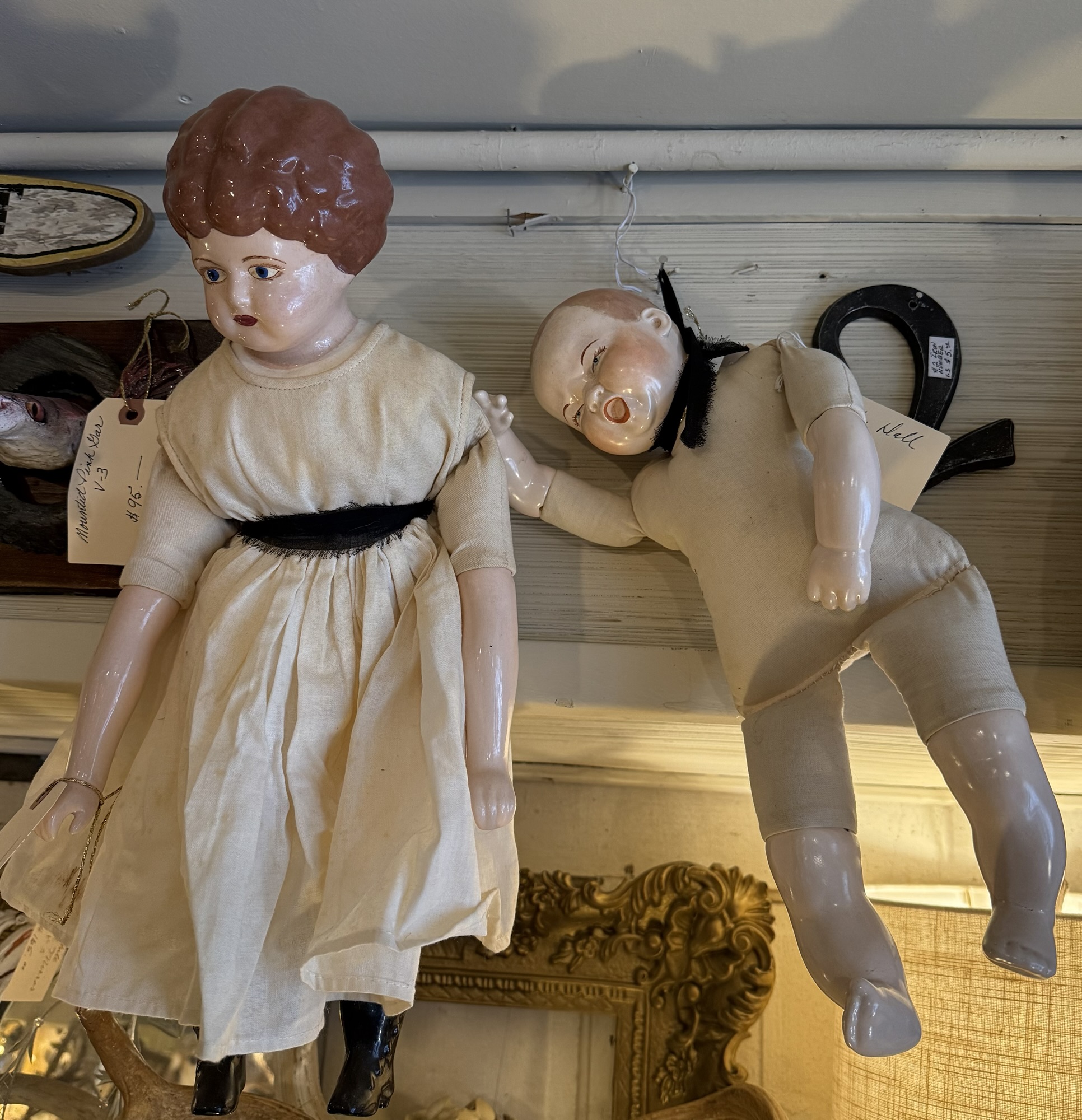
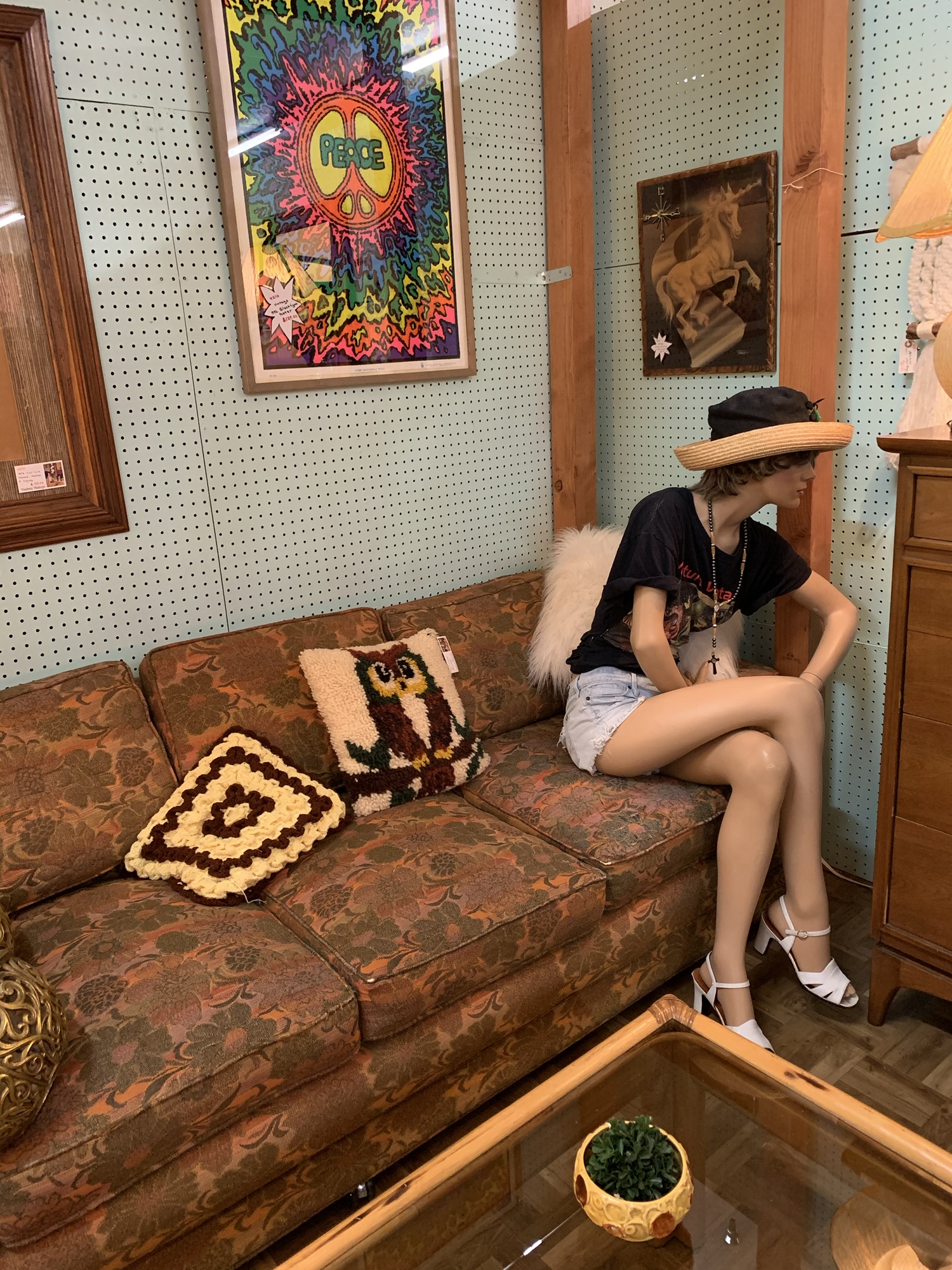
I don’t own the doll above, or any of these pictured below, although there are a couple that I do regret not buying. Can you guess which ones?

I do love encountering these creepy dolls in the stores we visit. Taking their picture is almost as satisfying as buying them and bringing them home.

Photo by the author

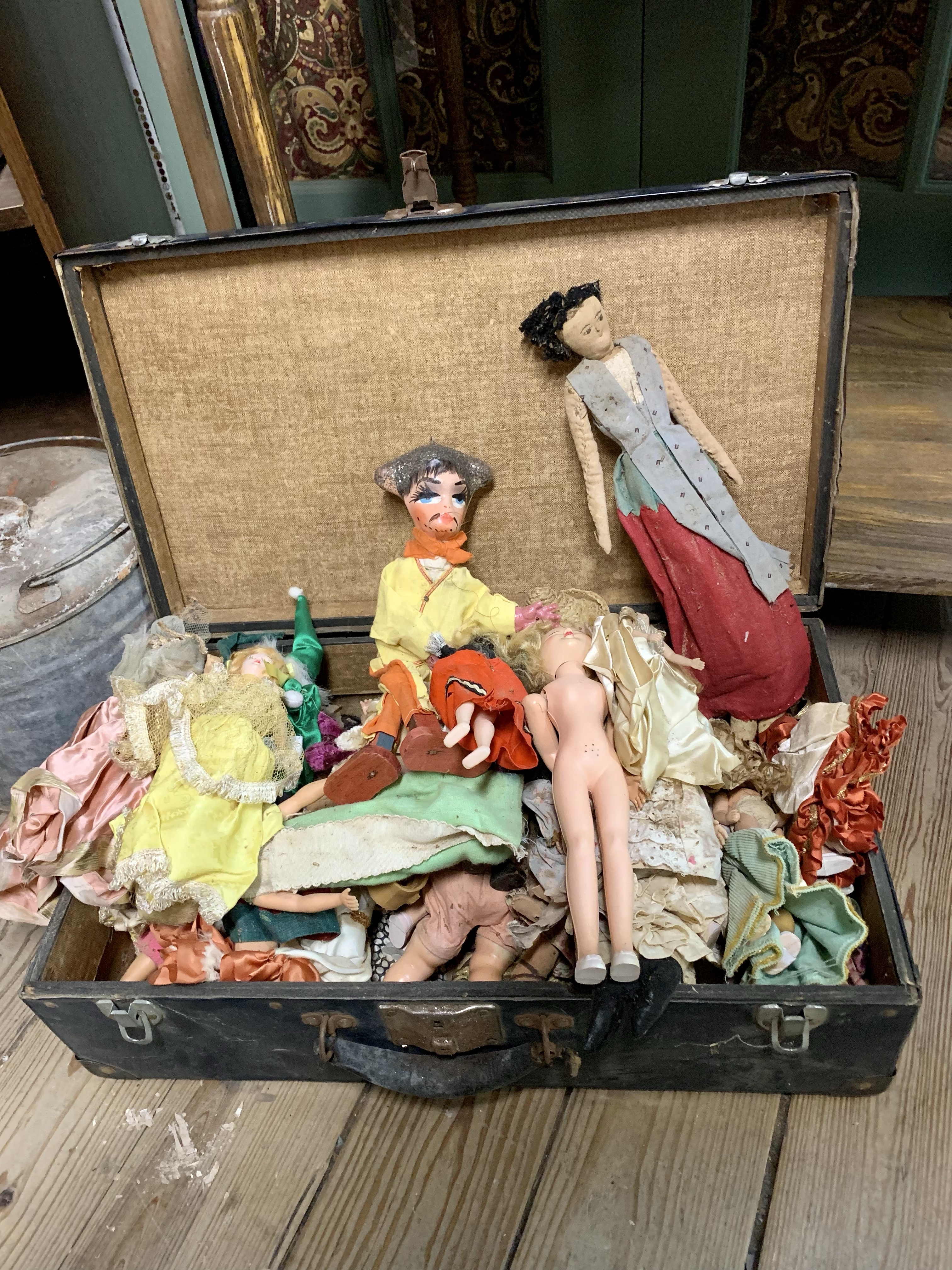
Not just one potentially possessed toy, but a whole suitcase. Who could resist? Me, that’s who.

Photo by the author

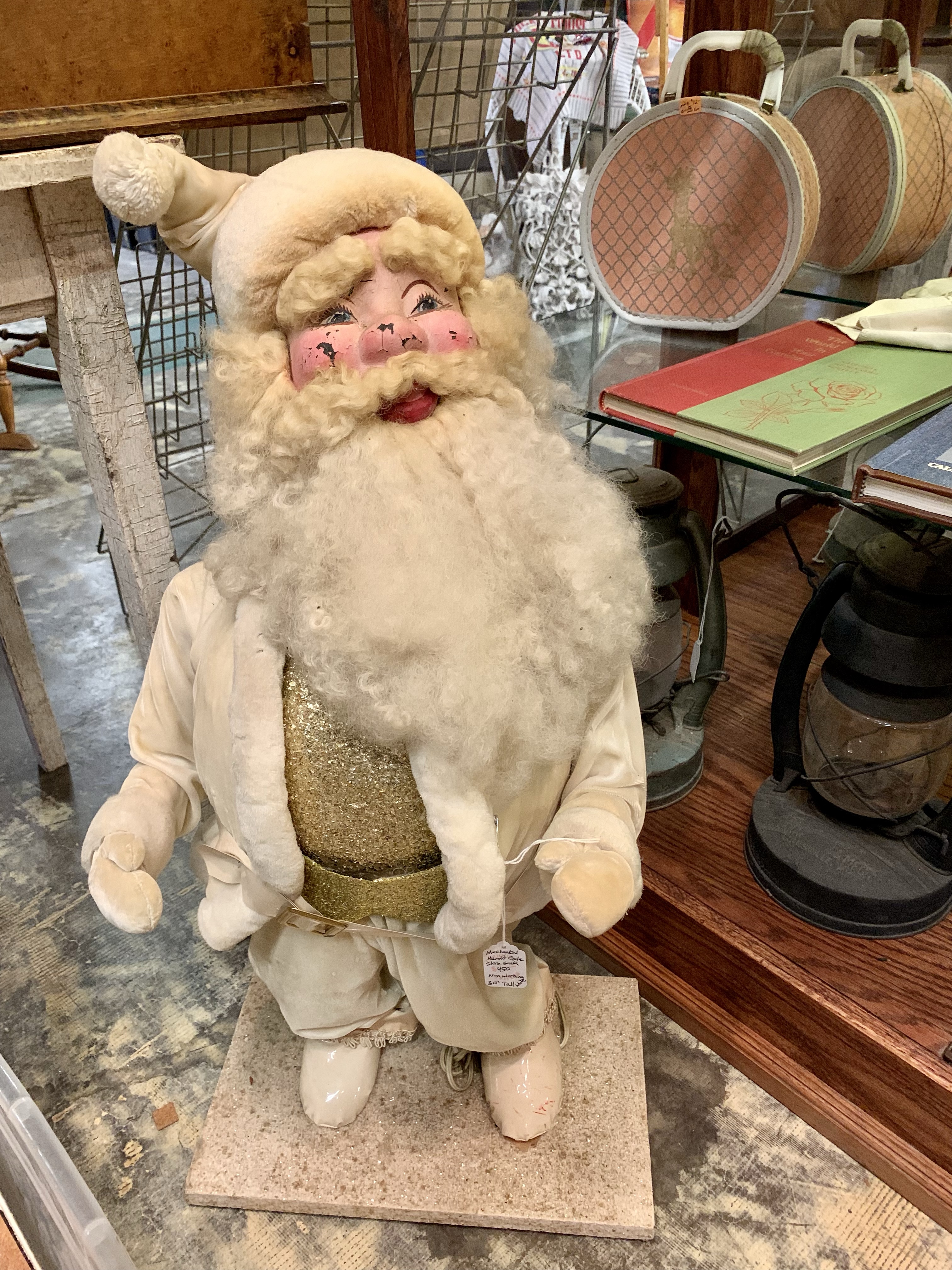
Even Saint Nick has an evil side. Maybe he just needs some love, or someone to murder. Don’t leave out cookies for this guy.

Photo by the author

This fellow looks like he’s climbing over that pile so he can jump right in your arms. He also looks like he’s been to one to many raves.

Photo by the author

No. Just no. I can’t even look at this photo for longer than a minute.

Photo by the author

Here’s a story waiting to be written – revenge of the abandoned bride (doll).

Photo by the author

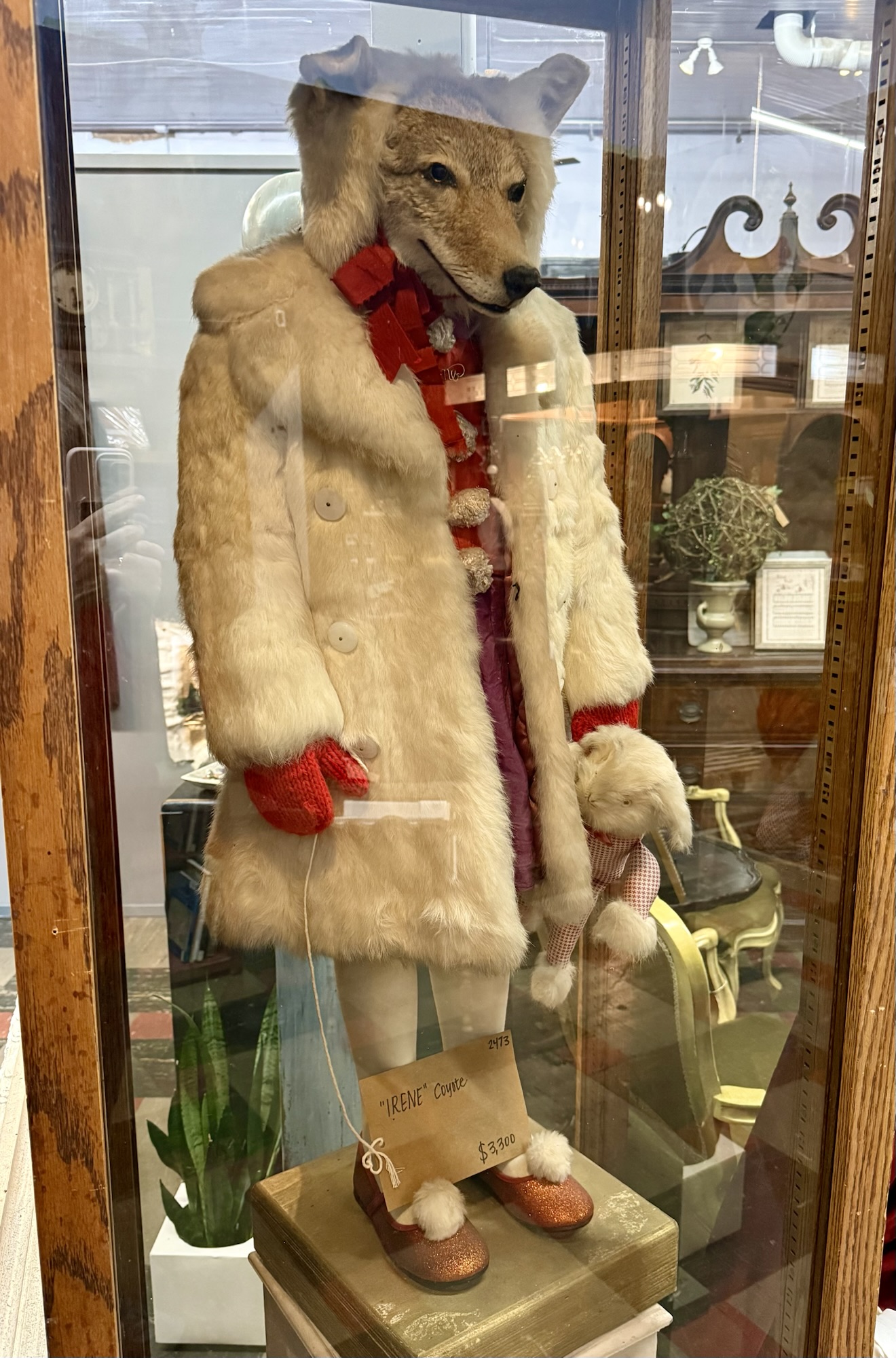
Not a doll but pretty cool. Goodnight Irene.

Photo by the author

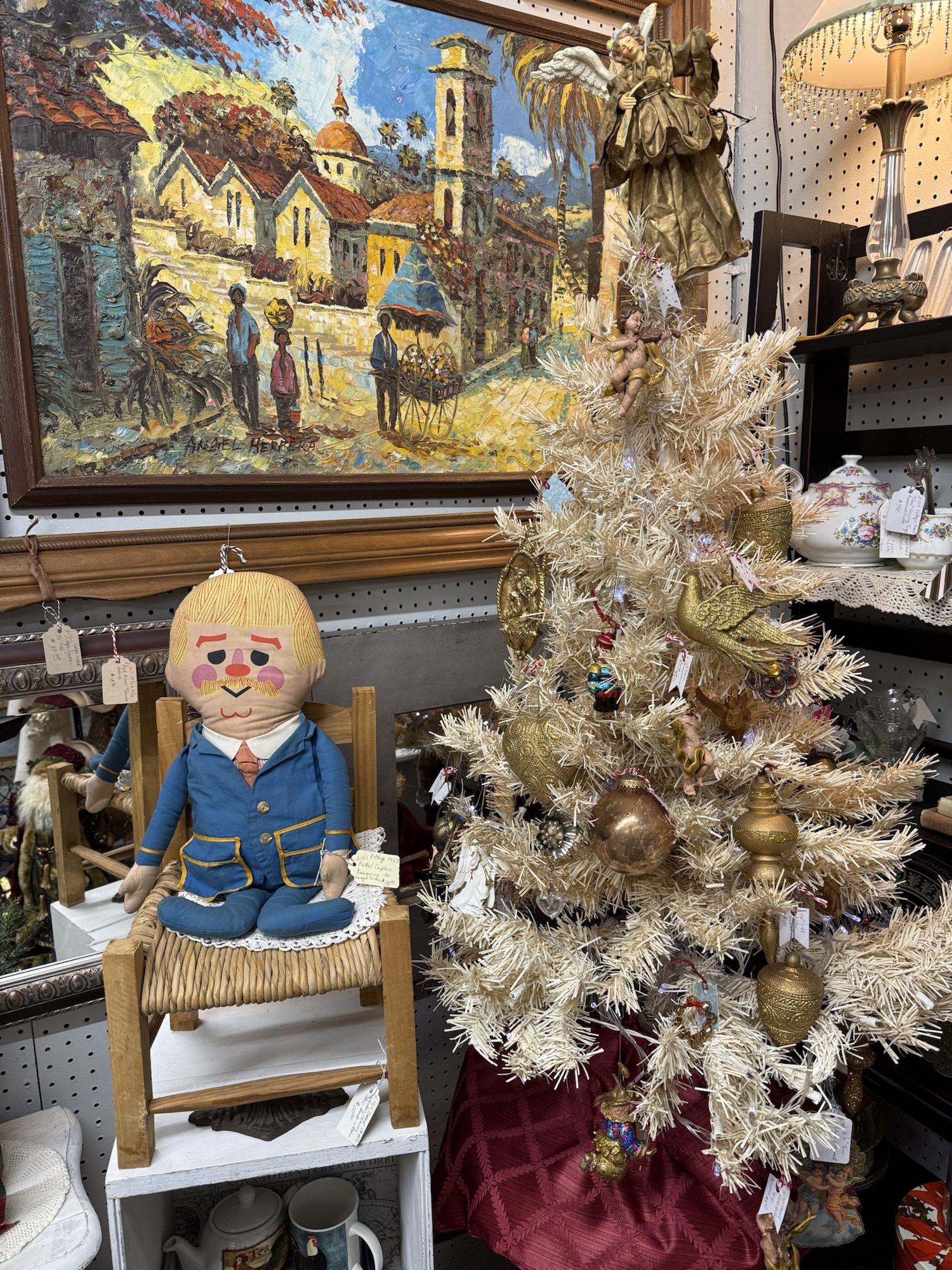
It’s difficult but not impossible to be frightened by Captain Kangaroo.

Photo by the author

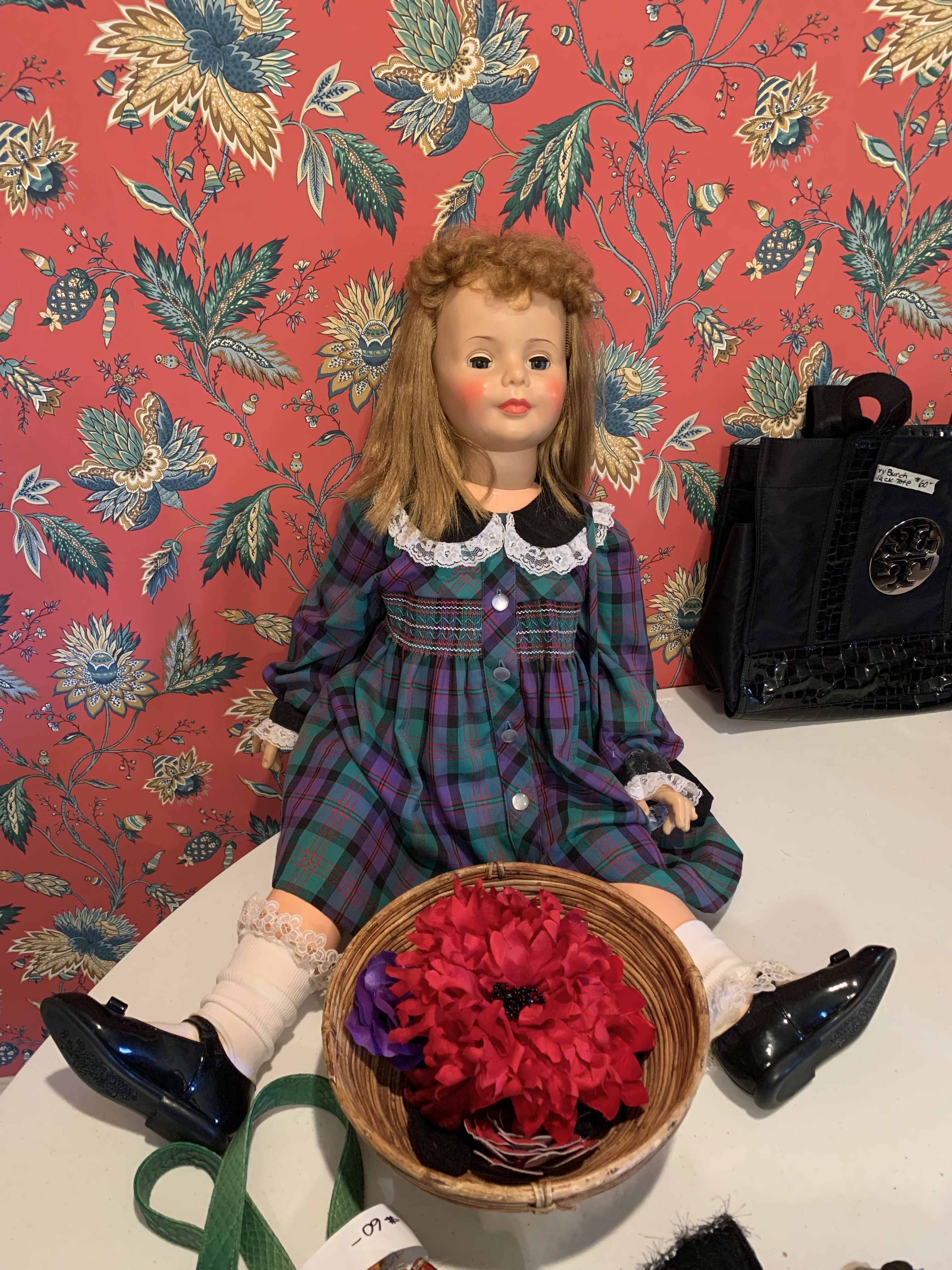
This one is life-sized. Bwa ha ha ha ha.

Photo by the author

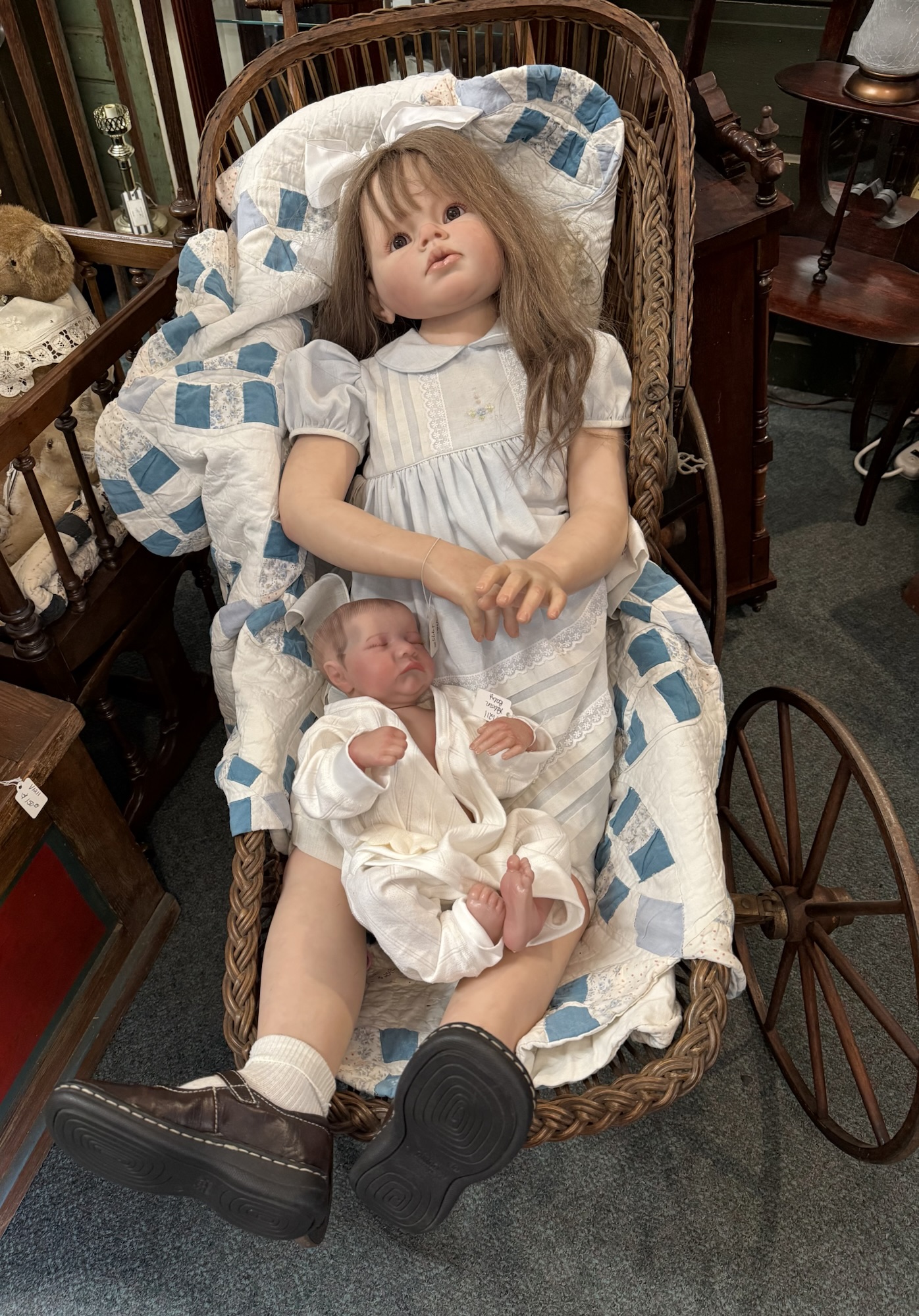
What is going on here? This child-size wheelchair is spooky enough, it reminds me of the 1980 movie The Changeling. Add in this life-sized toddler and her baby brother/sister and there’s a plot twist.

Photo by the author

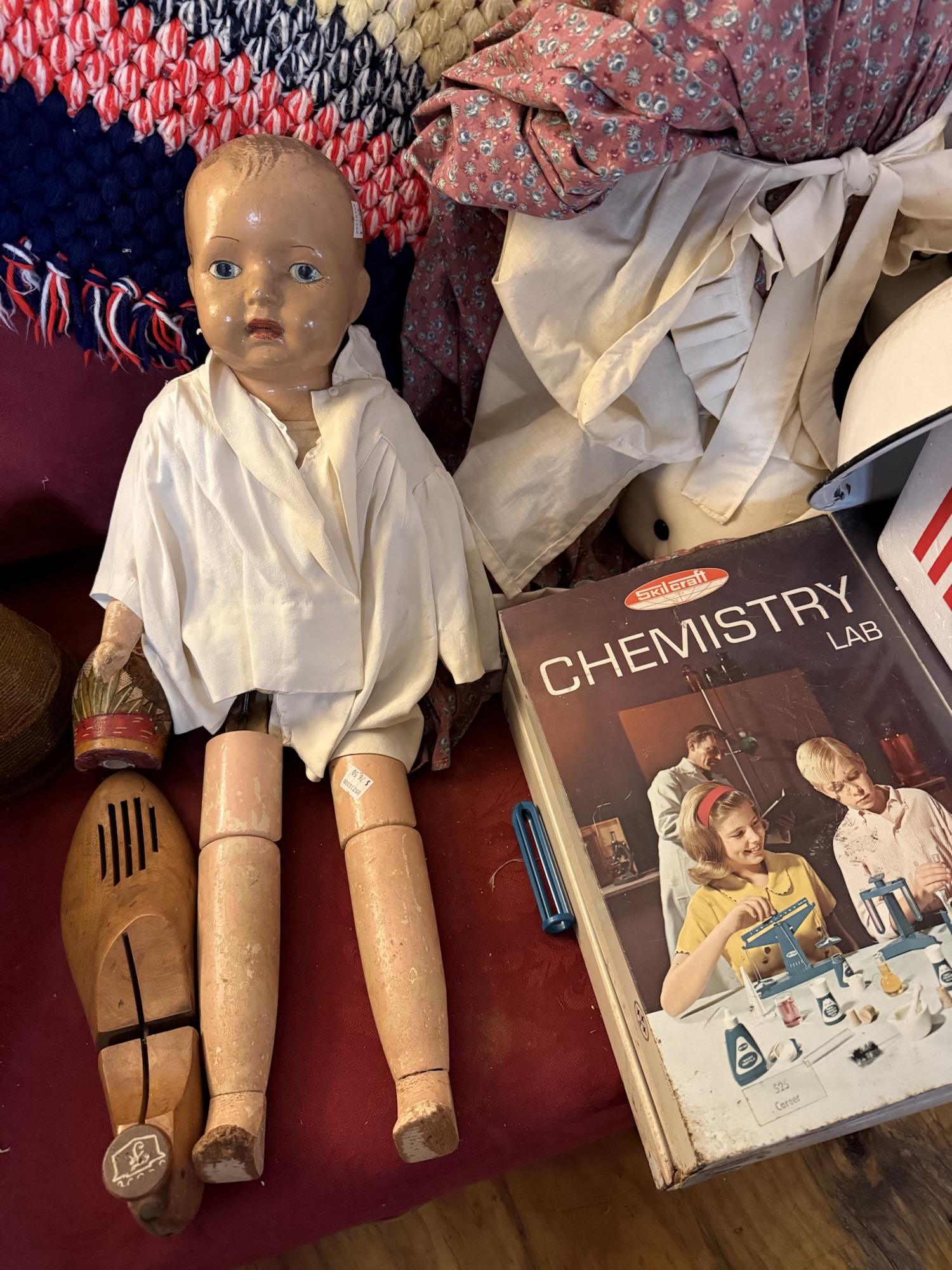
Why did the antique shop pose this guy with the Chemistry Lab? And what is he wearing? Why is his hand so tiny? His expression says he has been disappointed by everything in life.

Photo by the author

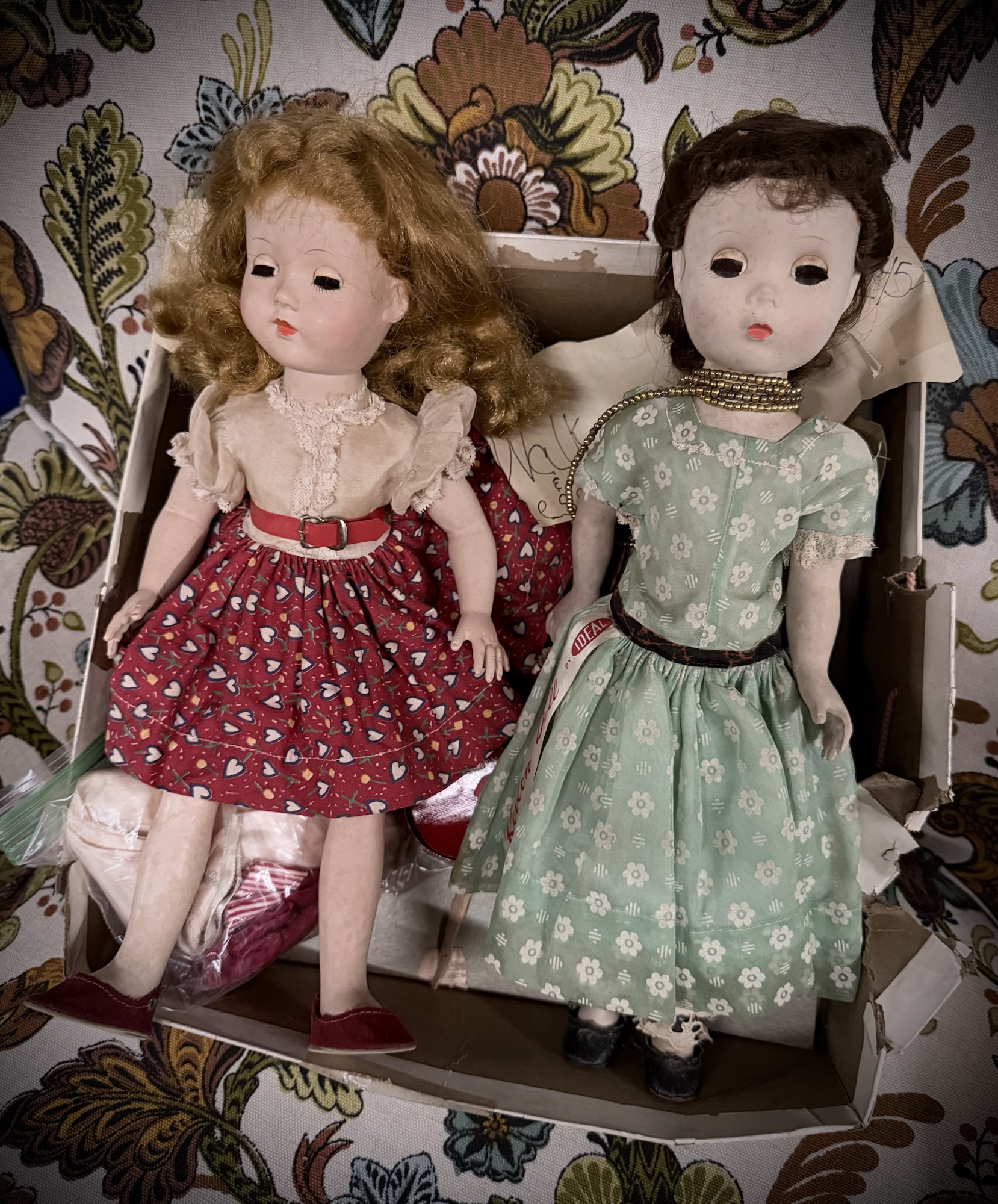
Whoever invented those doll eyes and that open and close, please know you have inspired so many nightmares.

Photo by the author

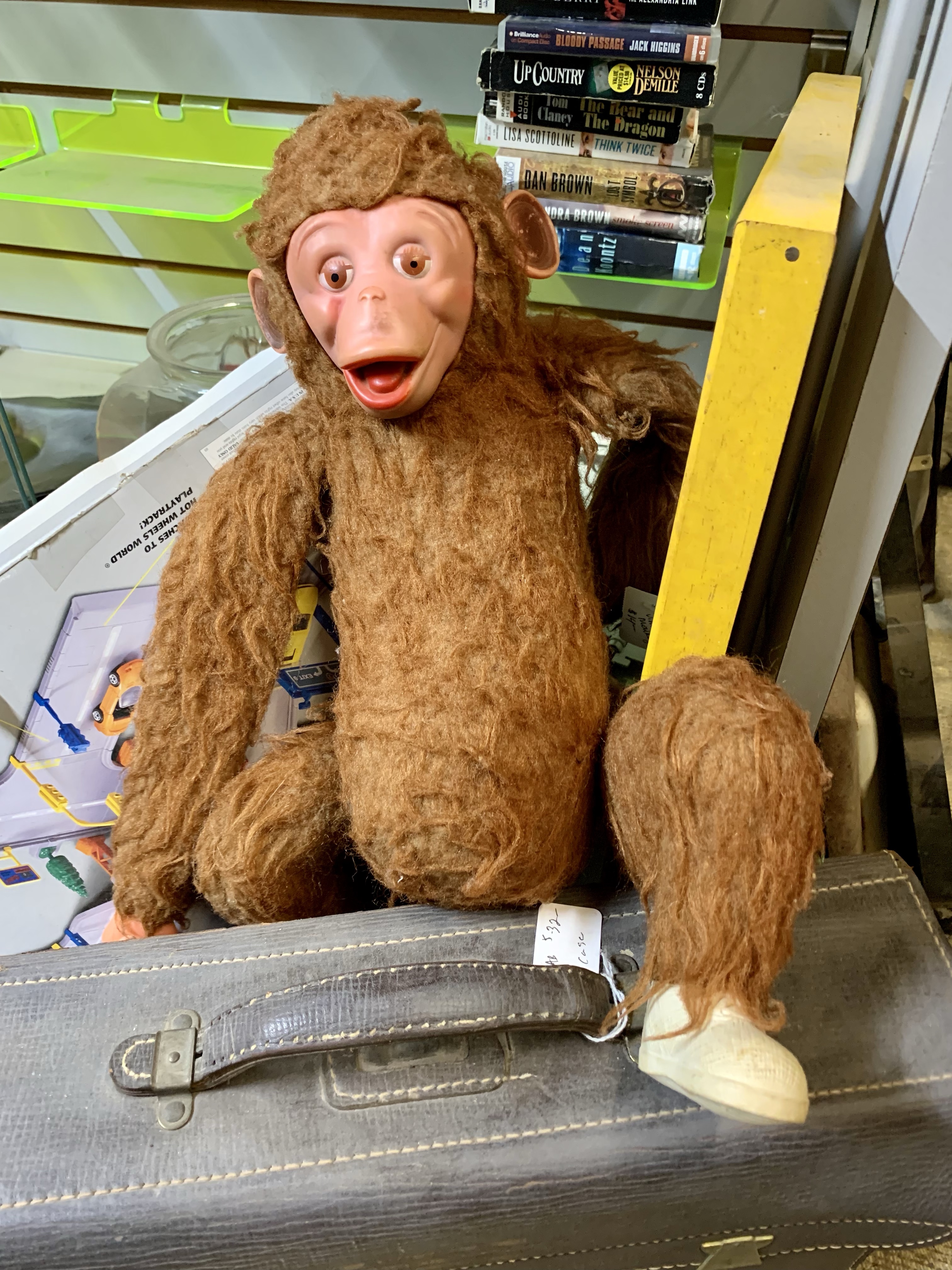
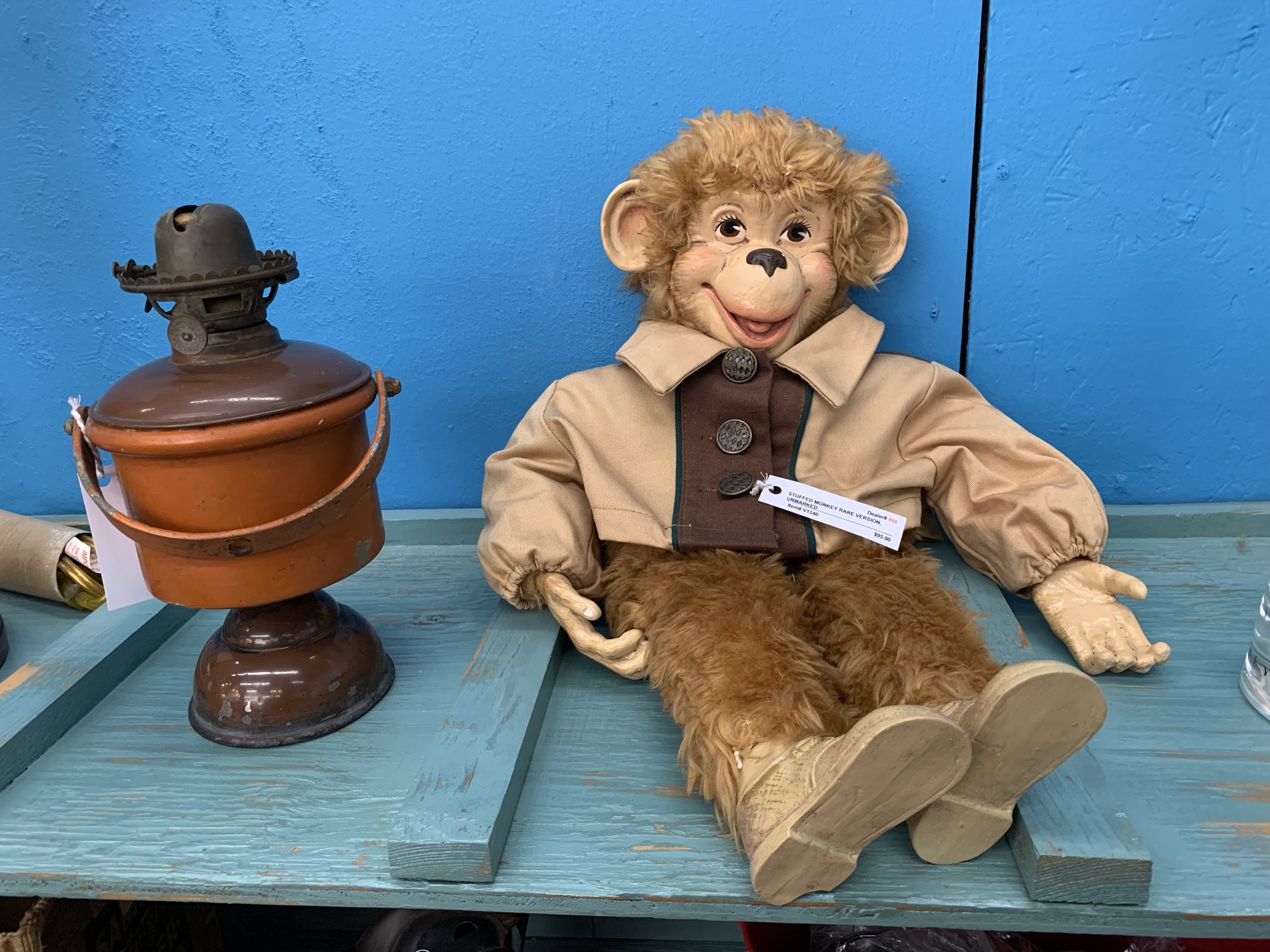
Another monkey. This one has shoes and a shirt but no pants. His half-naked state makes that grin so ominous. Also, why is half-dressed so much weirder than being completely unclothed? Is he naked if he’s covered in fur?

Photo by the author

Here’s some friends just hanging out.

Photo by the author

She looks like she’s rather be anywhere but here, with that screaming baby next to her.

I wonder about the people who owned these things. Did they have a special place in their home? How did they end up in dusty antique stores, next to framed portraits of someone’s grandmother? Were they there at the end, when the people who loved them were no longer around?

Imagine the horror inspired when the relatives gather round the patriarchs and matriarchs and hear them say, “Someday all this will be yours.”

Reading in a Short Month

Keep turning the pages

She looks bored. Quick! Someone give her a book! (Photo by the author)
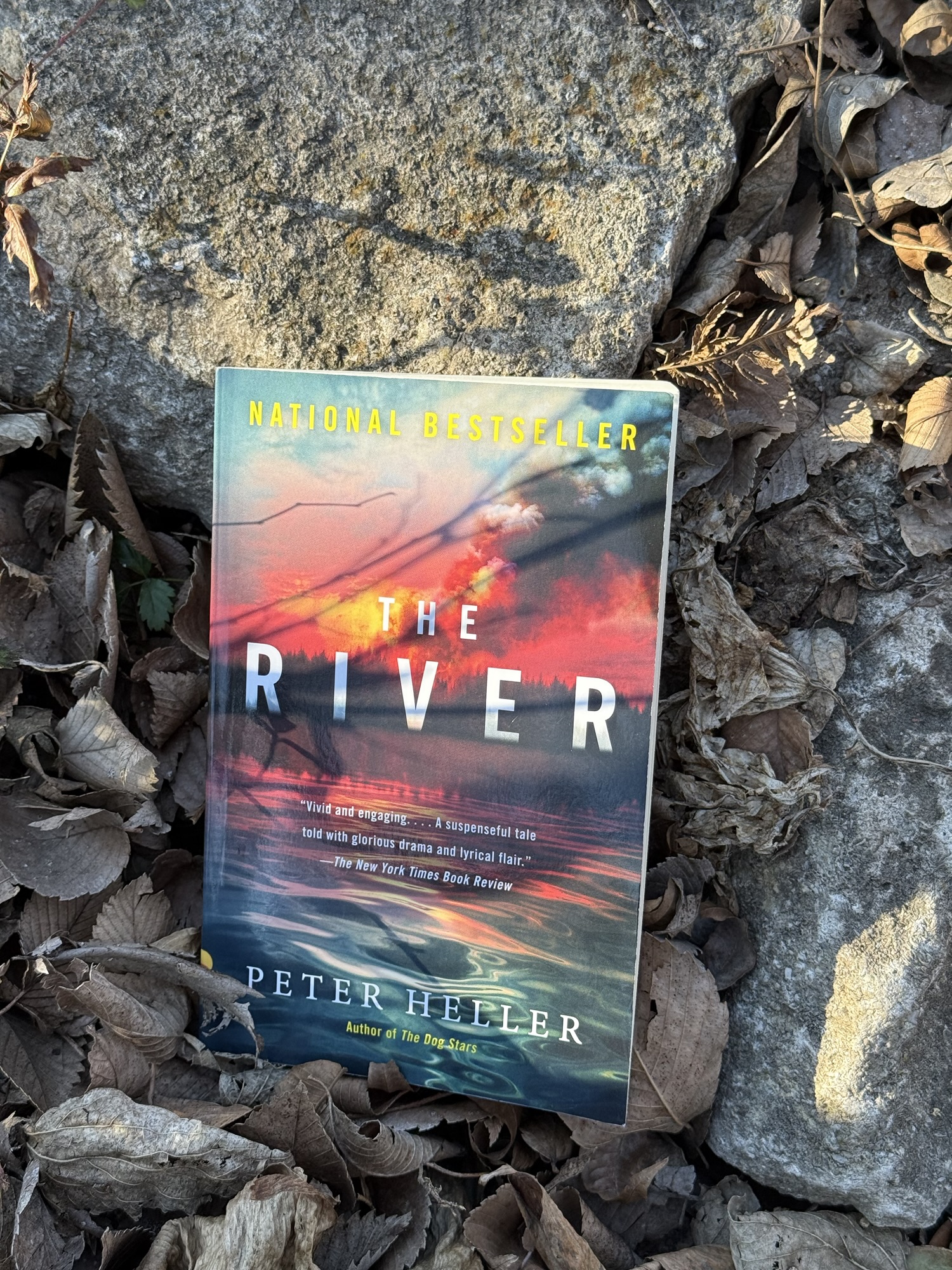
I averaged reading one book per week during February, not counting the ones I started but did not finish. The reading month began with The River by Peter Heller. I had loaned another of Heller’s books, The Guide, to my son and when he returned it to me he mentioned that it was a follow-up to another book that we didn’t have. So of course I had to pick up a copy of The River. (Shoutout to Andy for not revealing any spoilers from that second book.)

Photo by Terrye Turpin

This story lands in the action/adventure genre and is a tale of Man vs. Nature, Man vs. Man, and Man vs. Inner Self. The plot revolves around two best friends and their canoe trip along the Maskwa River in Canada. There’s a wildfire that they must escape, and a twist involving a mysterious stranger and an injured woman that they stop to help.

The setting in this book really makes the story come alive and the writing, even when describing the danger, is lovely and puts the reader right there in the scenes. The story shifts between two POVs, but it was easy to follow when each character was speaking. Reading this book felt like a master class in pacing, setting, and character.

Photo by Terrye Turpin

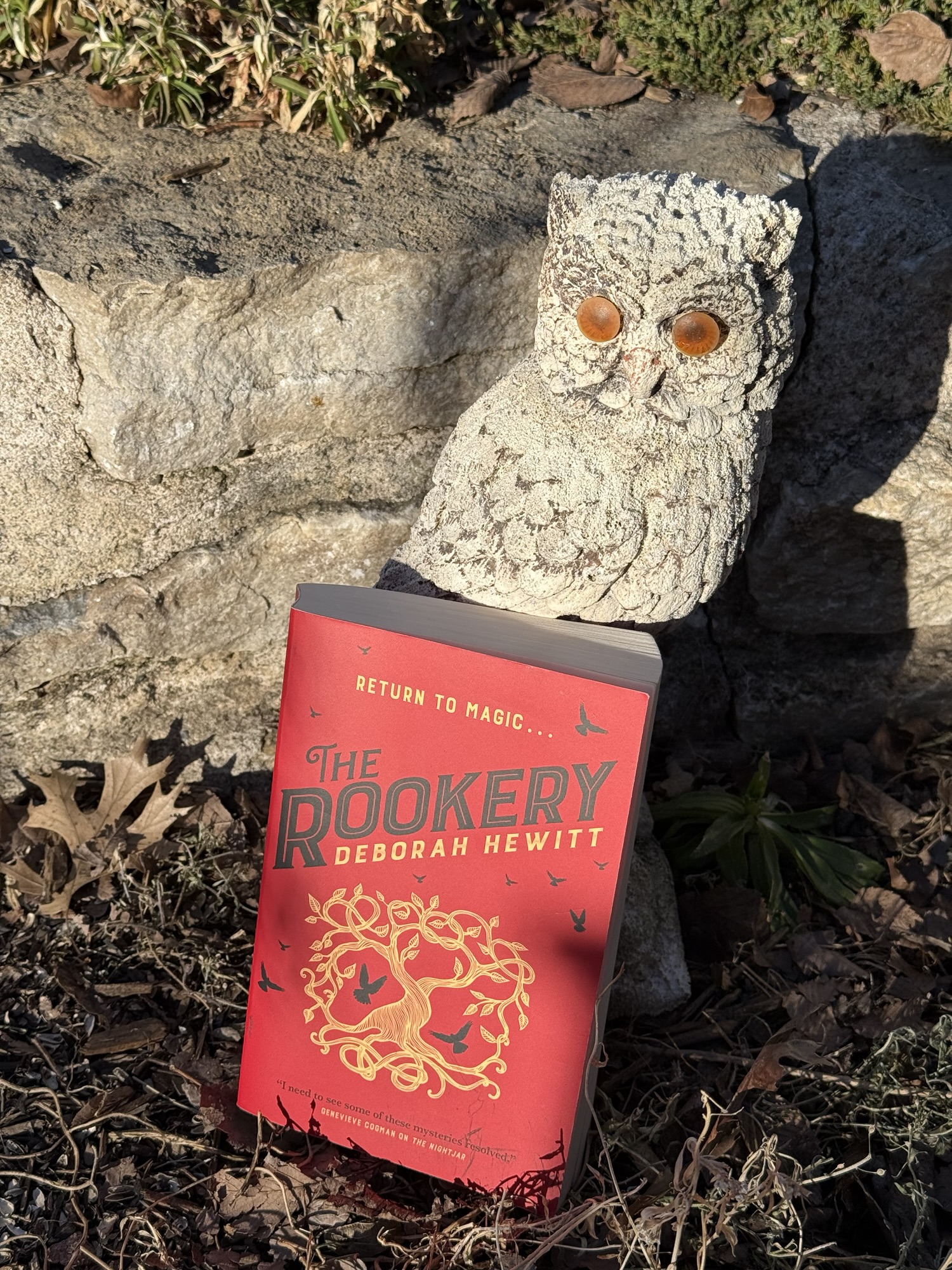
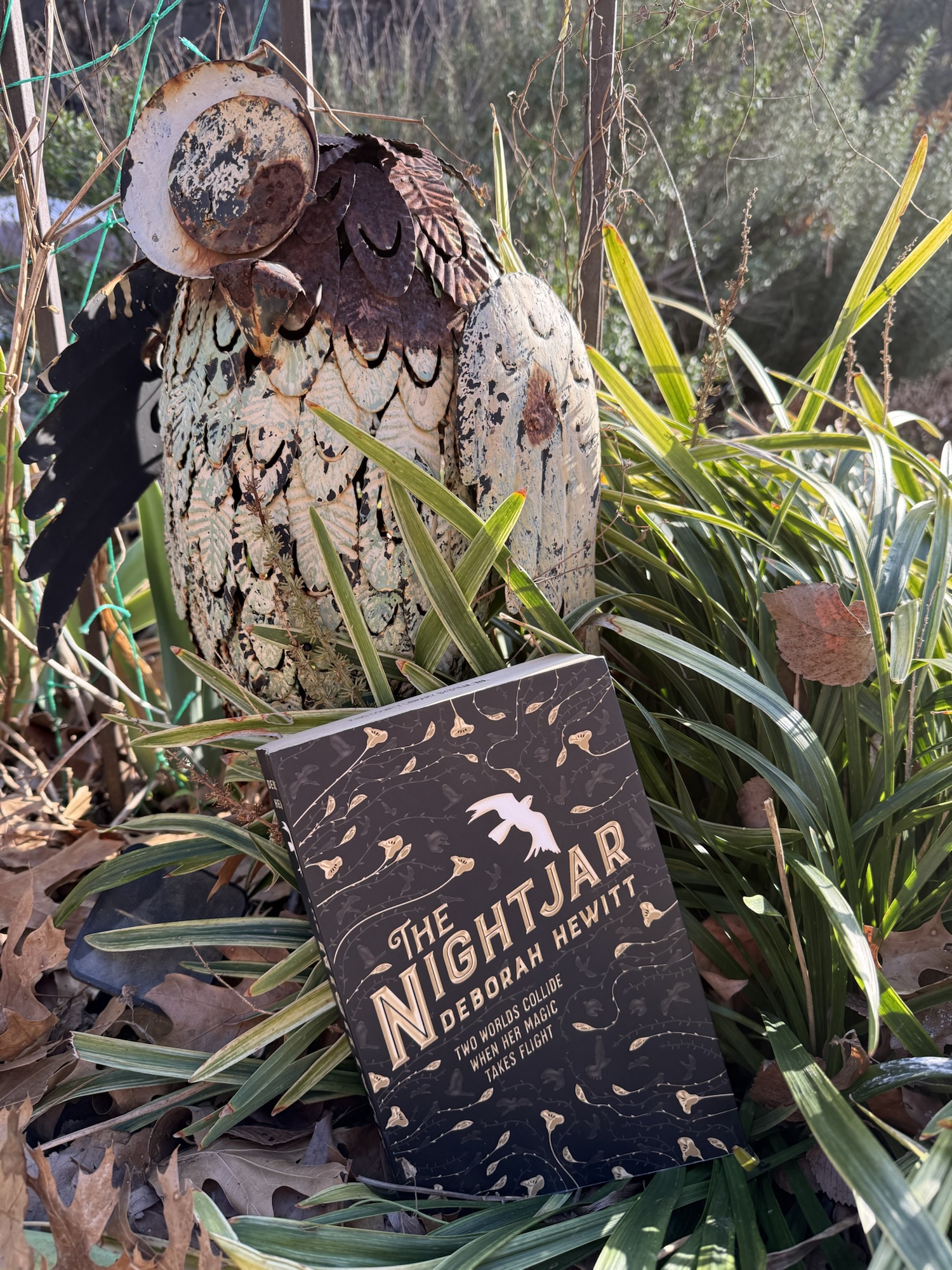
The next book I read in February was The Rookery by Deborah Hewitt. This one is the second book in a series and follows the characters from The Nightjar. Although the world building in this series is impressive and consistent, at times I felt the pacing was slow. There is a romance element that sort of continues from the first book, but the characters don’t get together until toward the very end of this book.

I liked the first book in this series much better, and it was disappointing that the second book didn’t really contribute anything new to the story. The magic system was well developed, however. If you like books with magic, portals, and alternative cities I’d recommend Victoria Schwab’s City of Bones, Bridge of Souls, and Tunnel of Bones.

Photo by Terrye Turpin

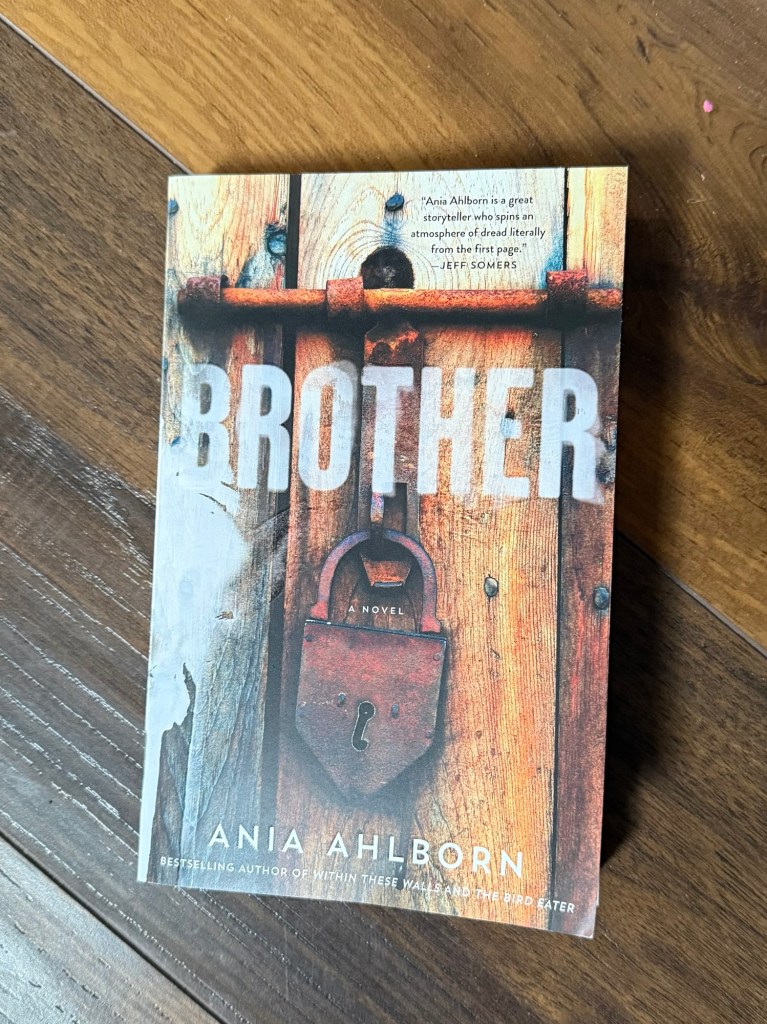
This book, Brother by Ania Ahlborn was a tough one to get through. I almost tossed it into the DNF pile several times. I’m a horror writer and I don’t shy away from gruesome stories, but this one deserves so many content warnings. There’s incest, child SA, murder, cannibalism, child abduction, and rape. Did I finish it? Reluctantly. I kept hoping for some sort of redemption to the plot and the main character.

What kept me reading this slaughterhouse of a book? Pacing and unfortunately well drawn characters. There are multiple points of view in the novel and each was so well done I felt like I was right there in their head. Which turned out to be not such a good thing. If you’re a fan of the slasher genre you might like this story. Everyone else – I’d advise giving it a pass. If you’d like to read something with a cannibalistic bent, I’d recommend The Road by Cormac McCarthy or Tender is the Flesh by Augustina Bazterrica. If you want something along the slasher/serial killer line, then pick up Maeve Fly by C.J. Leede.

Photo by Terrye Turpin

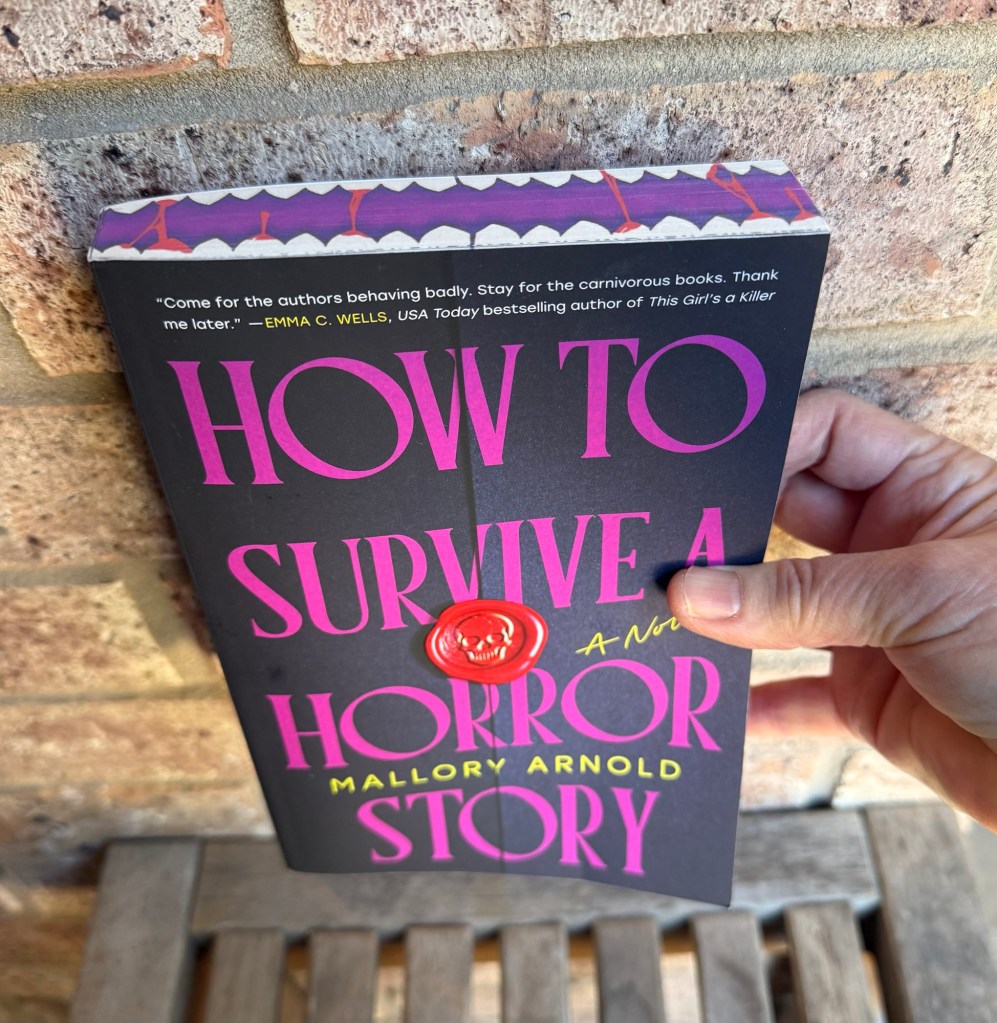
I loved the cover of this book and the premise hooked me in. It features an evil, sentient house and the characters are seven writers summoned to that house for the reading of a famous horror writer’s will. They each arrive thinking they are inheriting something but instead they are stuck in a deadly game of revenge.

In my opinion, the plot didn’t hold up to my expectations. There are multiple POVs and they all seem to have the same “voice.” None of the characters were likable so the only thing I felt at their demise was relief that their story line had ended. The promised riddles that the characters were supposed to solve were not actually riddles, just revelations of some of their bad actions against the deceased.

There wasn’t enough fright for this to be classed as horror, and not enough mystery for that genre. Instead, read And Then There Were None by Agatha Christie.

Photo by Terrye Turpin

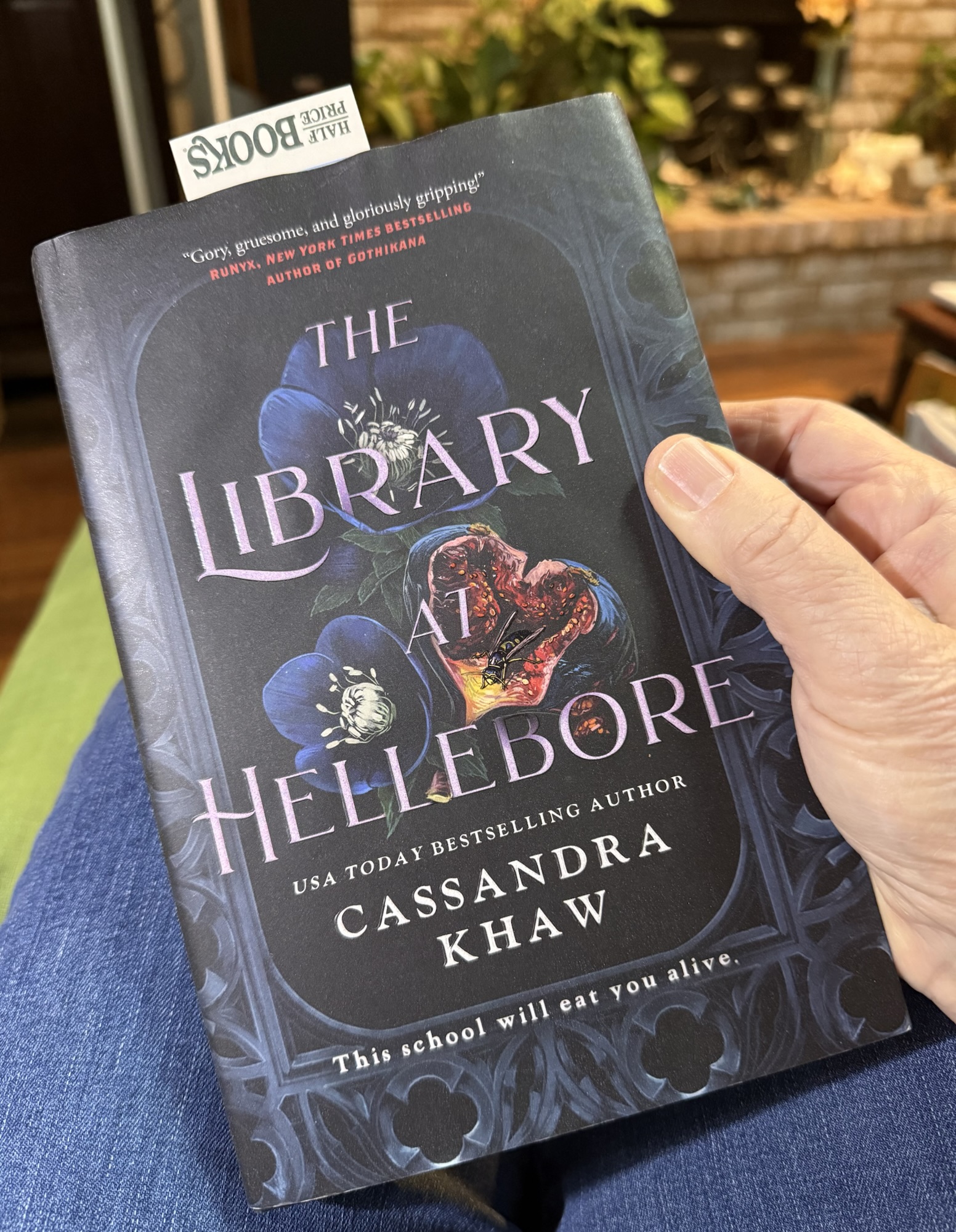
The last book I picked up in February was The Library at Hellebore by Cassandra Khaw. This author also wrote Nothing but Blackend Teeth, a scary novel that I enjoyed. I did not get the same entertainment from this one, but I did finish it.

It had a good hook – there’s a school for people with unusual, demonic abilities and the students must figure out how to escape when the faculty attacks them. They take refuge in the school library, where they are hunted by The Librarian, a monster that is determined to eat them. If that weren’t enough of a problem, the students are also out to kill each other, most often in gruesome detail. (Really, how many ways can you describe someone’s intestines? Read this book to find out.) The world building was interesting but the plot collapsed under the weight of all that rendered flesh.

Read instead: The Library at Mount Char by Scott Hawkins. It’s gruesome at times but at least you care about the characters before they are dispatched in horrible ways.

Photo by Terrye Turpin

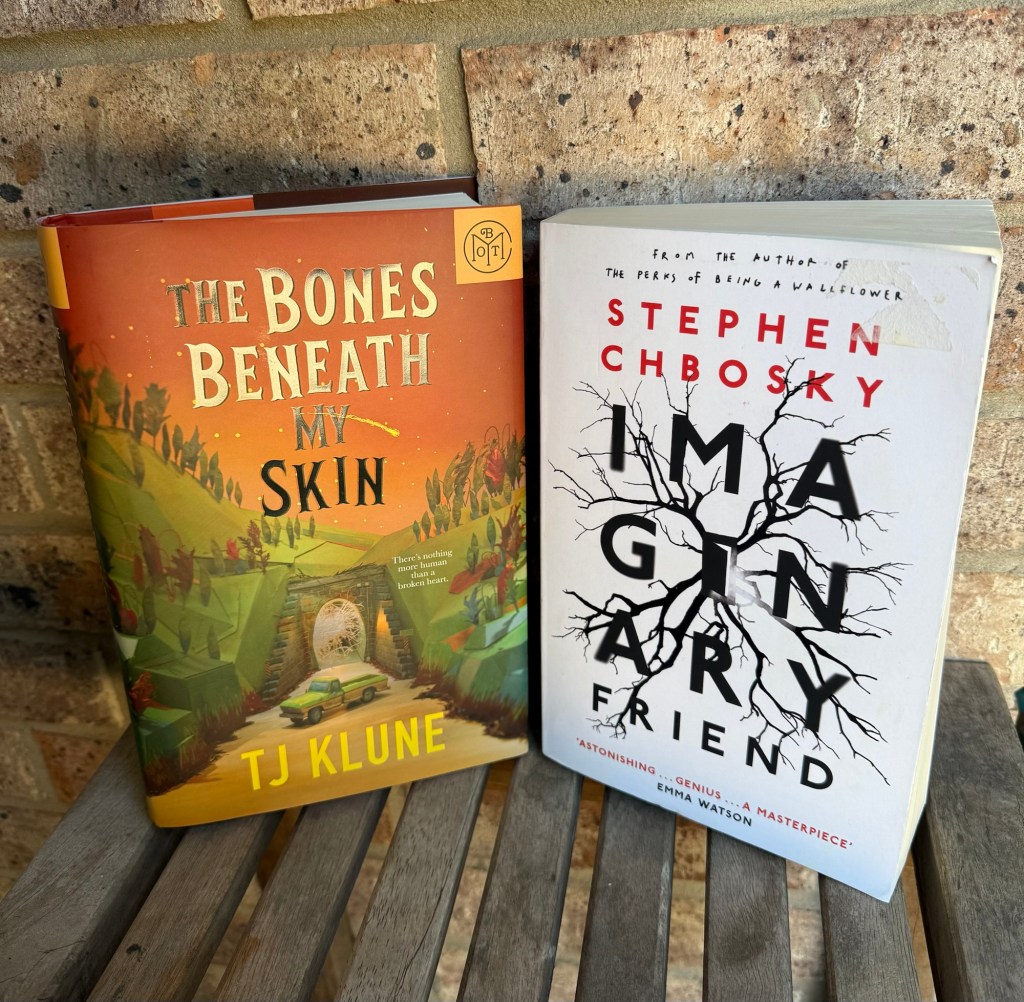
I don’t usually review books that I do not finish reading. What I dislike will probably find an audience that loves it. I tried both of the books above and did not make it to the end of each. I quit each at about the half-way mark, which is much longer than I usually do if I decide to DNF a book. The Bones Beneath My Skin is by an author that I do enjoy, and I have many of his other books. This one, however, took a turn into such a weird place that I couldn’t follow. If you like alien conspiracy theories that veer into religious overtones you might like it. I’d advise sticking to any of Klune’s other books.

I really wanted to like Imaginary Friend by Stephen Chbosky. This book sat on my shelf for over a year before I got around to reading it. I loved the premise – a coming of age type story with a portal to an imaginary world. I gave up because the plot moved so slowly I felt I would never finish this book. Also, the point of view is third person omniscient and this left me feeling distant from the characters. It’s more like watching a movie unfold instead of experiencing the story. (And the movie happens to be your uncle’s endless home movie about his trip to Muskogee, Oklahoma. Nothing against Muskogee – but you don’t need a two hour feature film to get it all in.)

There are so many other great coming-of-age novels in the horror genre. My favorites – Boy’s Life by Robert McCammon, Nosferatu by Joe Hill, Something Wicked This Way Comes by Ray Bradbury.

If you’ve read any of the above books let me know what you thought. And please share any recommendations for books. As for me, in March I’m looking forward to reading the fourth book in the Dungeon Crawler Carl series. Happy reading!

Reading the Room

My plan for completing my to-be-read list

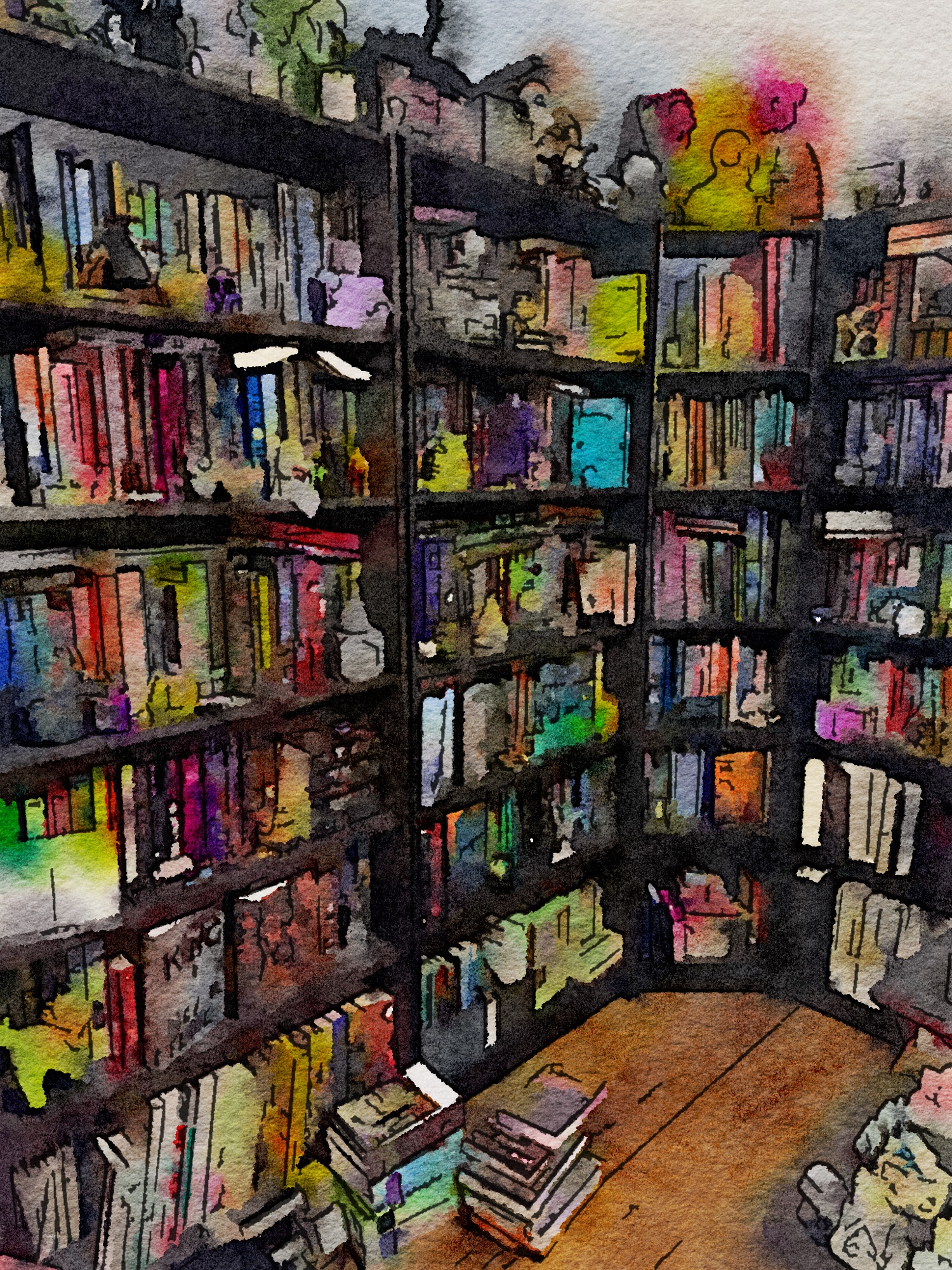
My home library – photo edited with the Waterlogue app

I’ve always felt like there’s no such thing as too many books. I reassure myself that it isn’t the number of books I own, instead the problem is the limited amount of shelf space in our house. I haven’t set a resolution or any reading goals – that is a sure path to failure in my opinion (and based on prior experience). Instead, I’m rewarding myself with reading time instead of doom-scrolling social media. Also, I’m trying to read with a focus on the writing and come away from each novel with something useful I can apply to my own work.

Photo by the Terrye T.

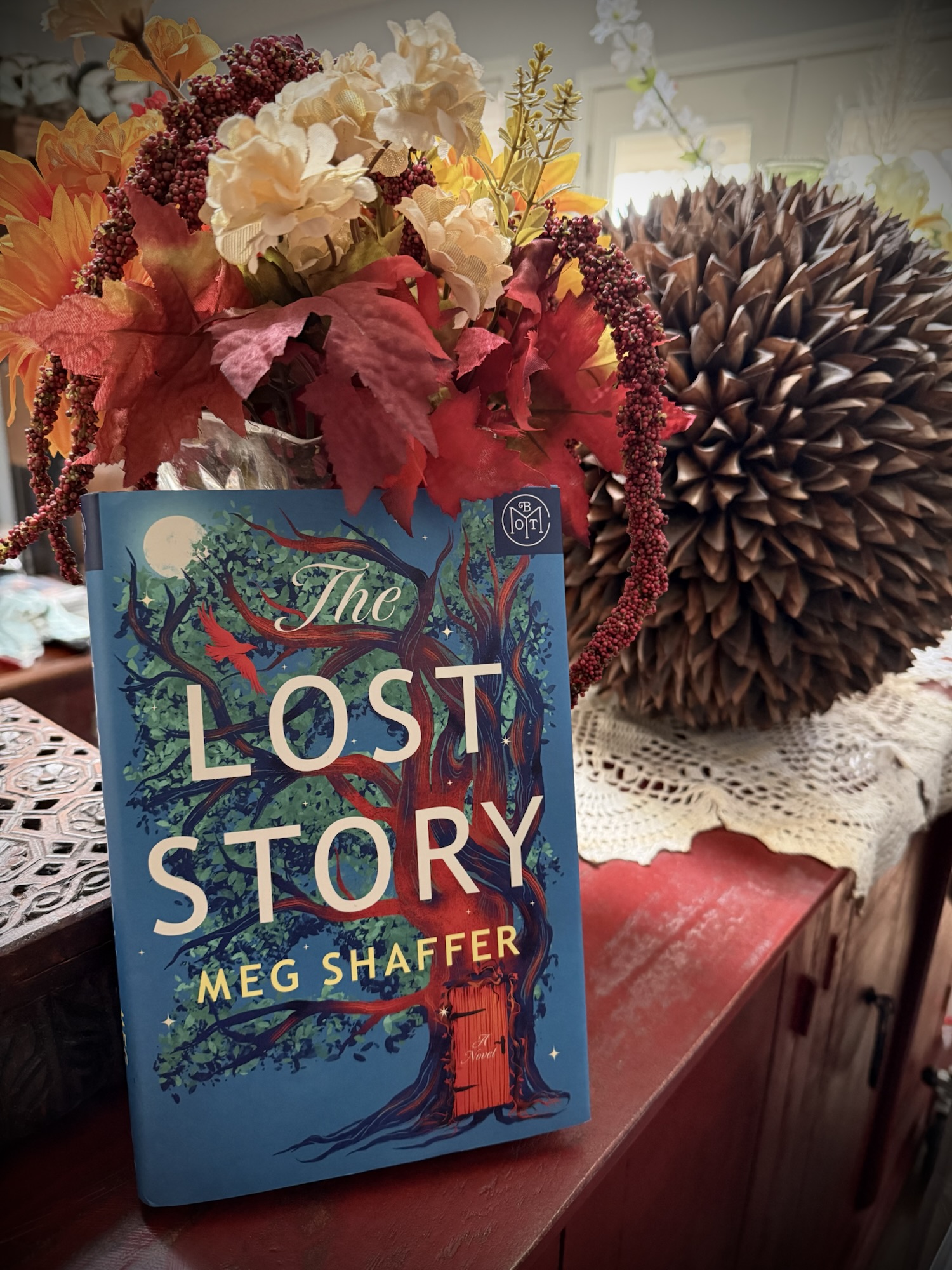
I started off the year with The Lost Story by Meg Shaffer. This is a portal fantasy that features a cozy queer (M/M) romance. The author captured the characters so well I became invested in the love story between Rafe and Jeremy.

Although I did enjoy this book, it fell short in some places. It is a portal fantasy, and there are chapters written in the point of view of an omniscient “storyteller” that give the novel the feel of a fairy tale, but at times this feels a bit intrusive and like an unnecessary explanation of events and how we as readers should interpret things.
There are three main characters – Emilie, Jeremy, and Rafe. Emilie is searching for her sister who went missing years ago, and she enlists Jeremy to help in the search. He, in turn, gets Rafe to lead them to the portal.
The world building is fair, but for this length of a novel it seemed to take too long for them to get to Shanandoah, the fantasy land where most of the action takes place.
Although Emilie’s search is the reason they venture to Shanandoah, not very much of the story is given to develop either Emilie or her sister.
The romance portion is very well done and the characters of Jeremy and Rafe are both well drawn, but so much of the story is given over to them and not enough, in my opinion, to the fantasy portion of the story. This makes the ending feel a little too convenient and easy.
Overall though I’d recommend this book because the style of writing drew me in and I was invested in the characters and wanted them to succeed.

What I learned from this book: I think if you go to the trouble to create a character, that character deserves time on the page. And I really don’t like the omniscient narrator.

Photo by Terrye T.

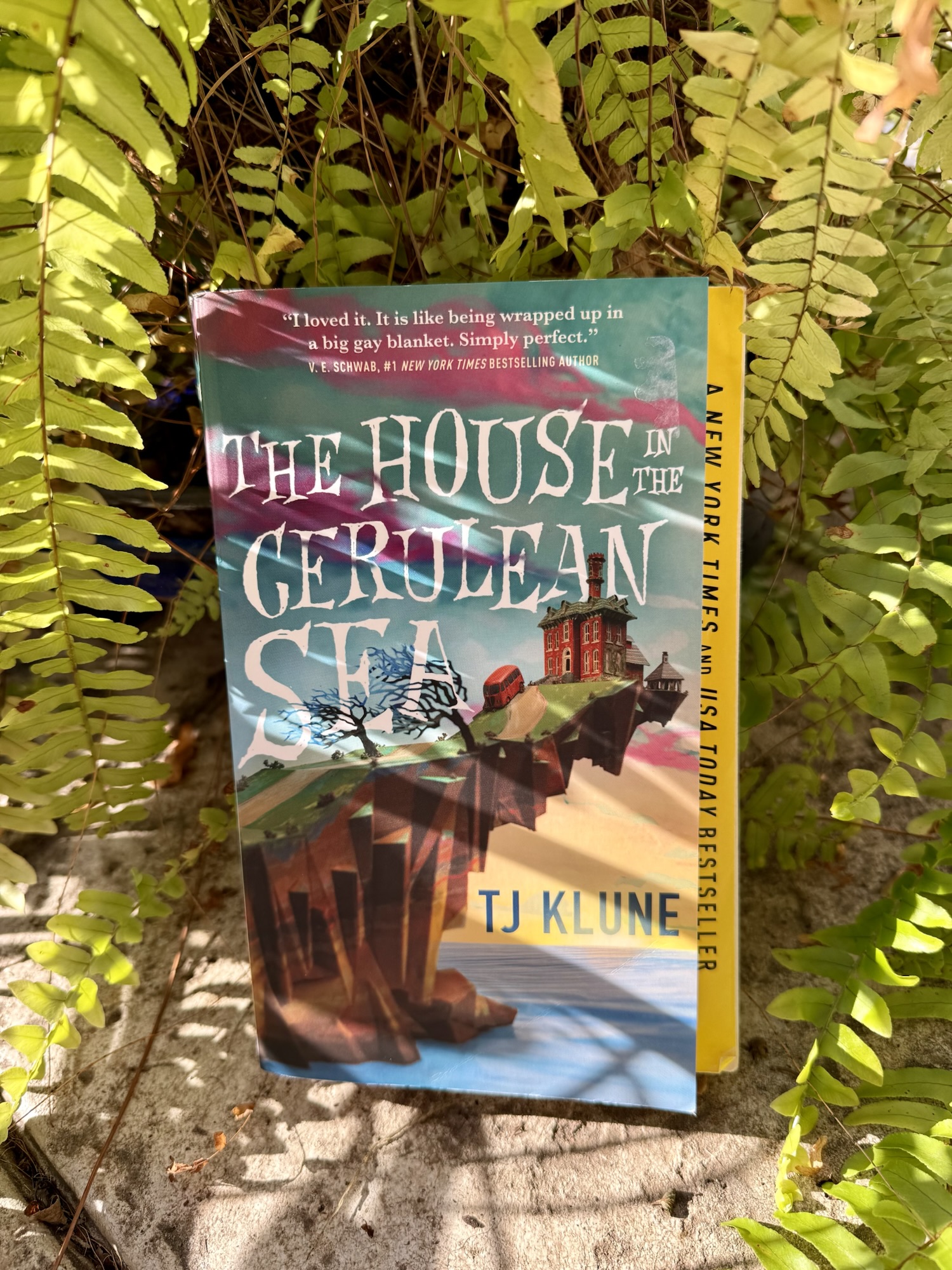
This is the second fantasy book I read last month. I enjoyed the characters and in general I love overall vibe of TJ Klune’s books. The story centers around an orphanage for magical children and the adults who care for them. There are themes of found family, overcoming prejudice, and being true to oneself.

My takeaway: Good example of close third person point of view, giving the reader an intimate look into the emotions and perceptions of the POV characters.

Photo by Terrye T.

This is the first book in a series. I bought the second book, The Rookery, at Dollar Tree, without realizing until later that I needed to read The Nightjar first. Oh woe! Tragedy! I had to buy another book in order to read the one I bought.

This is another portal fantasy, with a magical world existing alongside the real world London. I love that concept, that there might be a secret, alternate universe existing right alongside ours. (I’m still looking for the entrance)

The magic system in this story is one I haven’t seen before – every person has an invisible bird guarding their soul. The main character, Alice, has the ability to see those birds, and an evil faction wants to make her use that ability to hunt down the people with magical talent. There’s a romance subplot that doesn’t get very far in this book, but maybe the characters get together in the sequel.

The lesson here: Nail down the details of any magic system in your writing. Try a new spin on the old tropes.

Photo by Terrye T.

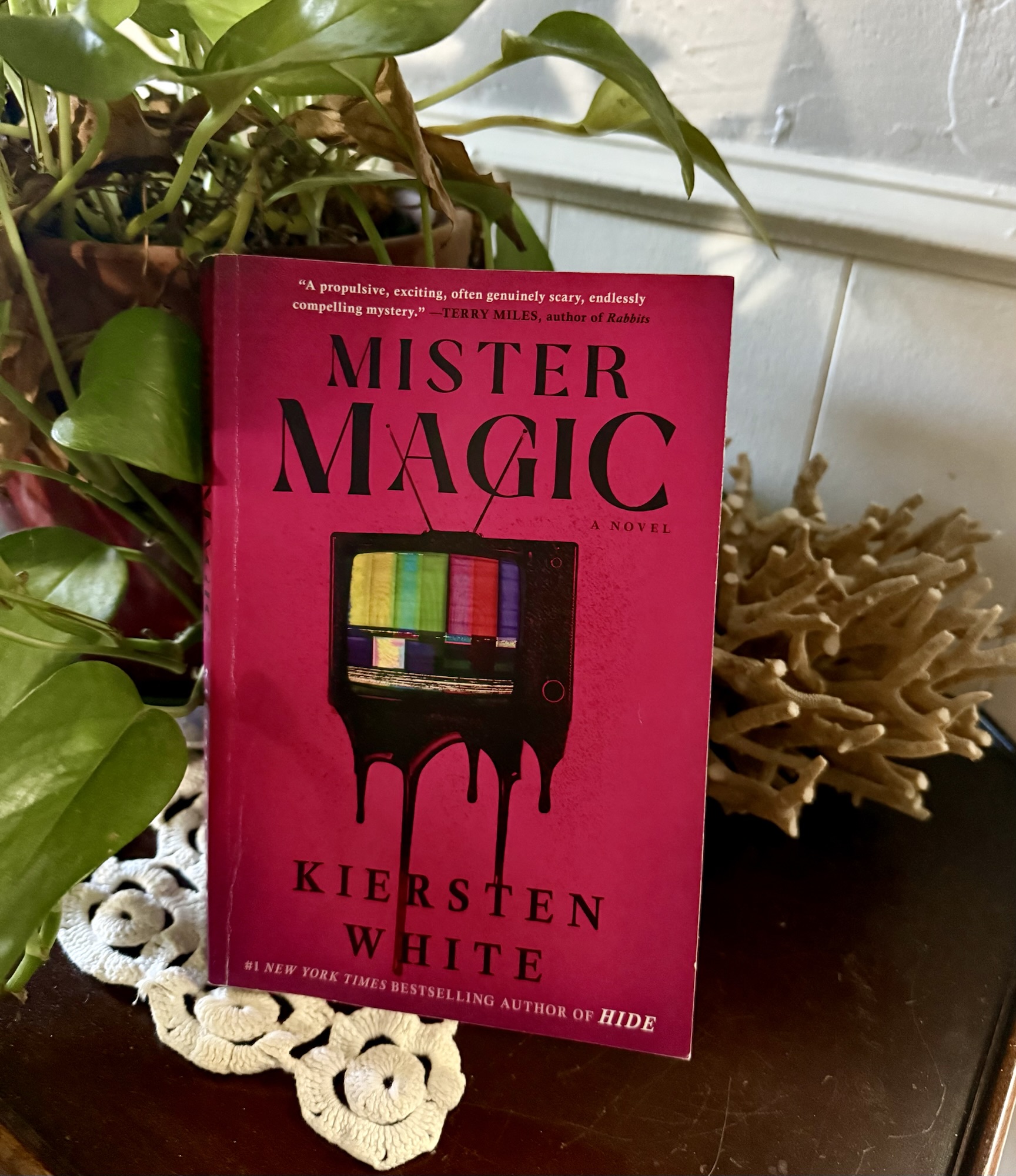
This was almost my first DNF (did not finish) for 2026. I ended up skimming through the chapters to get to the end. And I still don’t know what happened to everyone at the conclusion. It was a confusing and slow read, probably because the main viewpoint character had lost most of her childhood memories around being on the show Mr. Magic. She had only a vague understanding of the events in the past and the details about the weird and ominous show were revealed through the perception of other characters. I felt this isolated me from the tension and horror. This book could be enjoyed by readers who liked House of Leaves or Head Full of Ghosts, another two books I just couldn’t get into.

Photo by Terrye T.

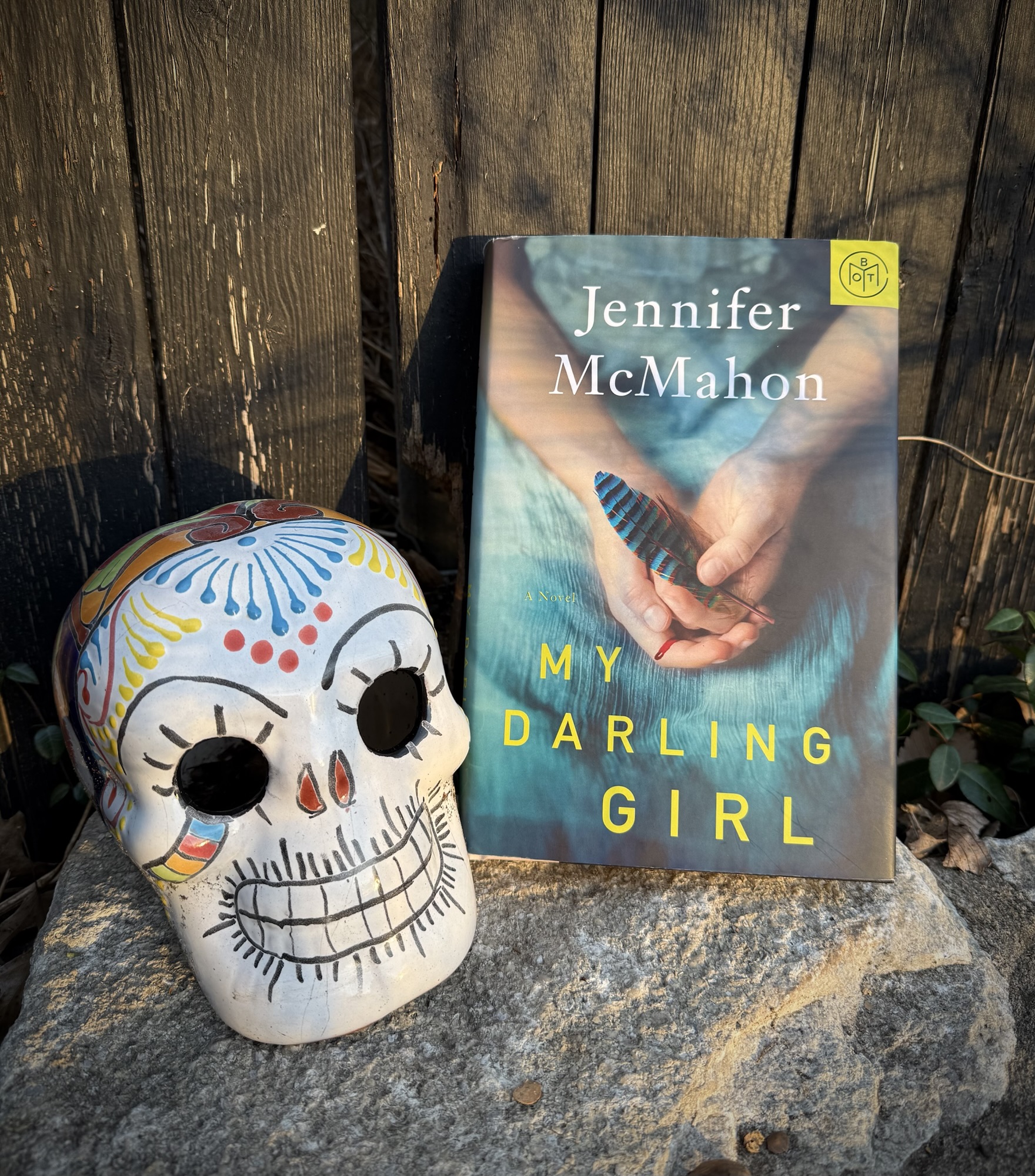
I loved this book. The cover is deceptive – I went into it thinking it might be a mild mystery story and instead got full blown horror with demon possession. Nice! Parts were so scary I had to put the book aside after dark. Plus there was an ending so messed up it made me smile with appreciation. This is toxic family drama to the ninth degree.

Lessons: Build up the characters first, and then let really horrible things happen to them. Drop hints about the ending long before the last chapter, so that when everything wraps up the reader is left smiling because it all makes sense.

Photos by Terrye T.

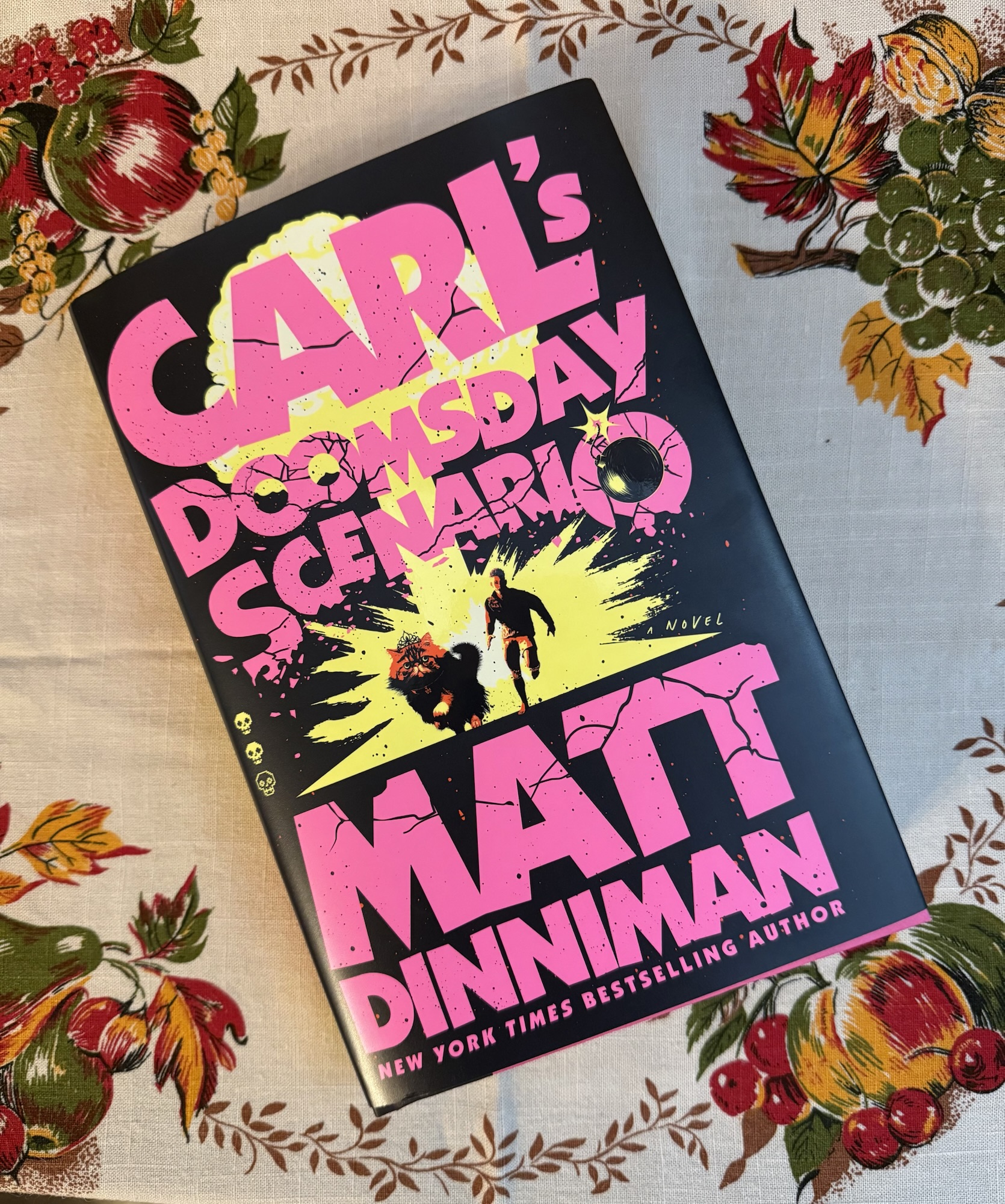
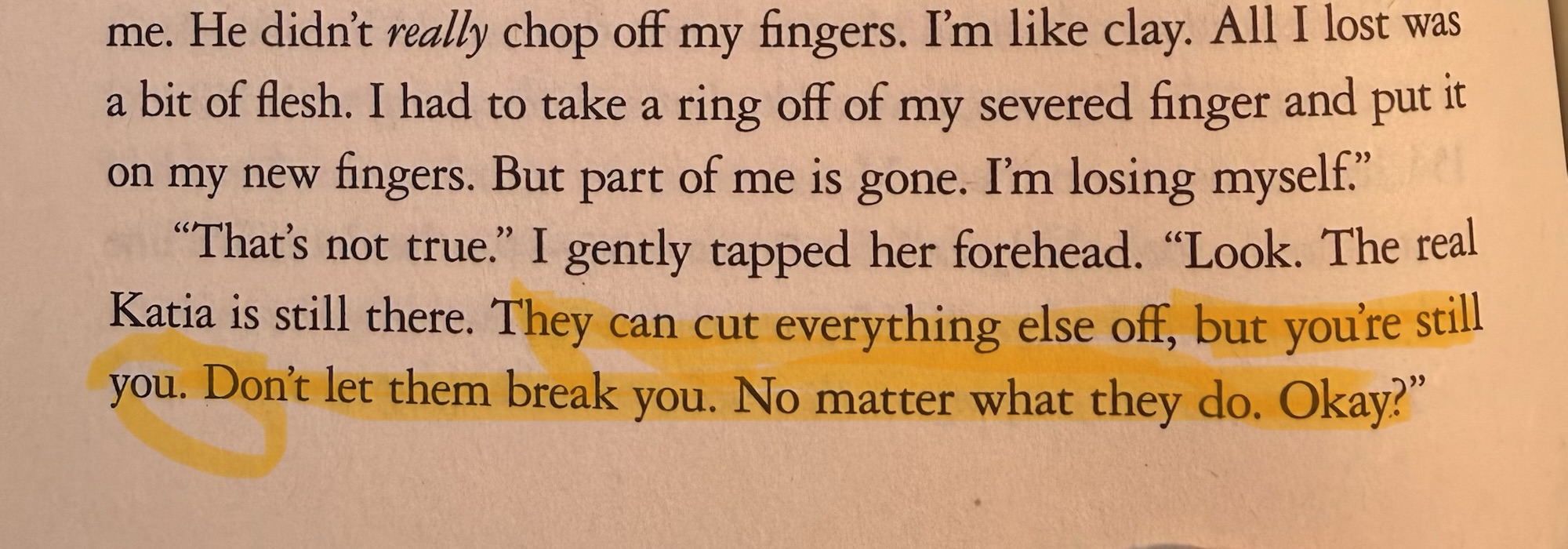
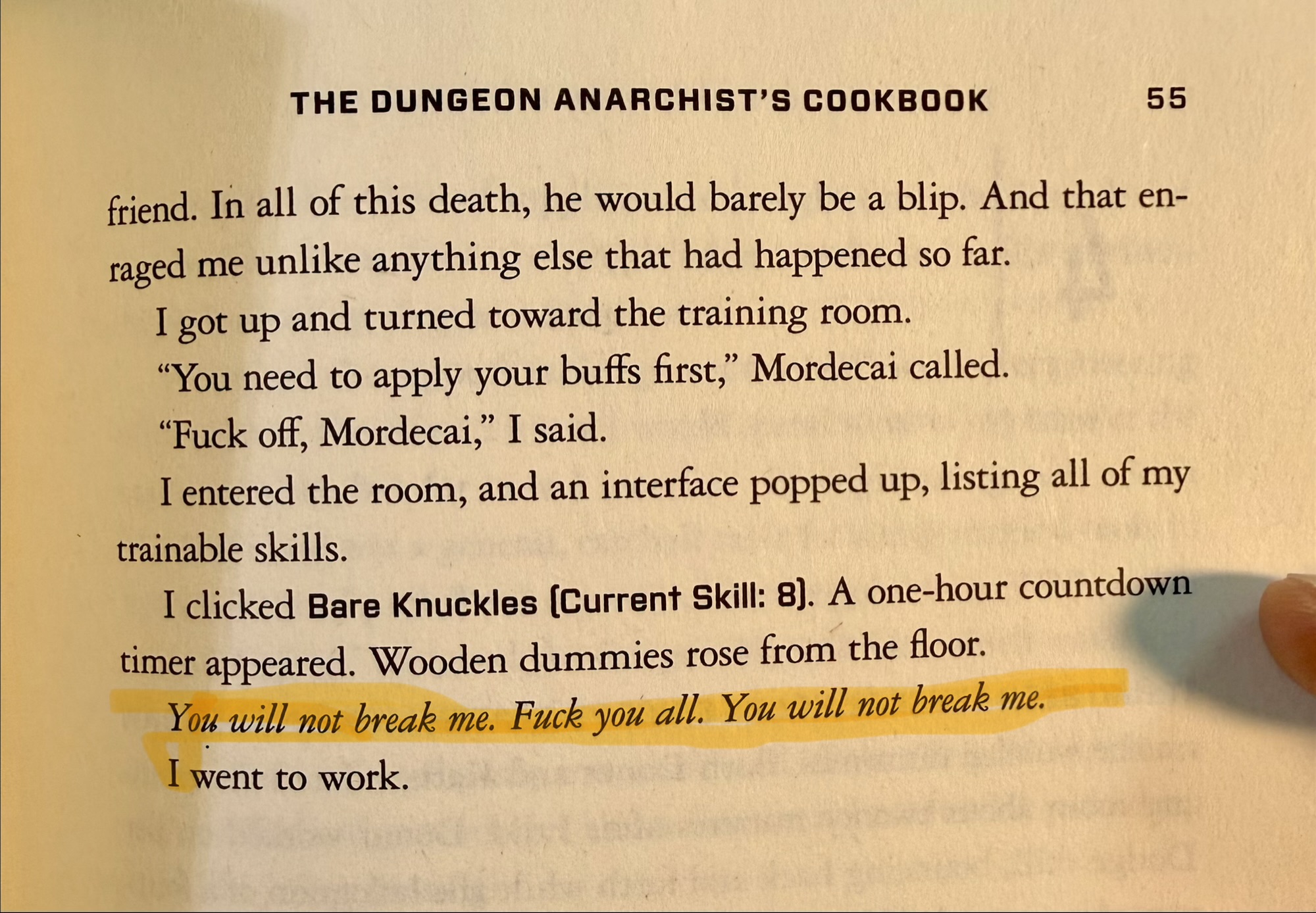
I finished up the month with another two books in the Dungeon Crawler Carl series by Matt Dinniman. These books are the perfect escape from the craziness going on in the outside world. I’d much rather experience the trials of Carl and Princess Donut as they fight their way through the alien dungeon, battling monsters and dodging deadly traps. However, in the midst of the escapism there are lessons on perseverance.

Read More Books

“In the end, we’ll all become stories.” Margaret Atwood

Photo by the author

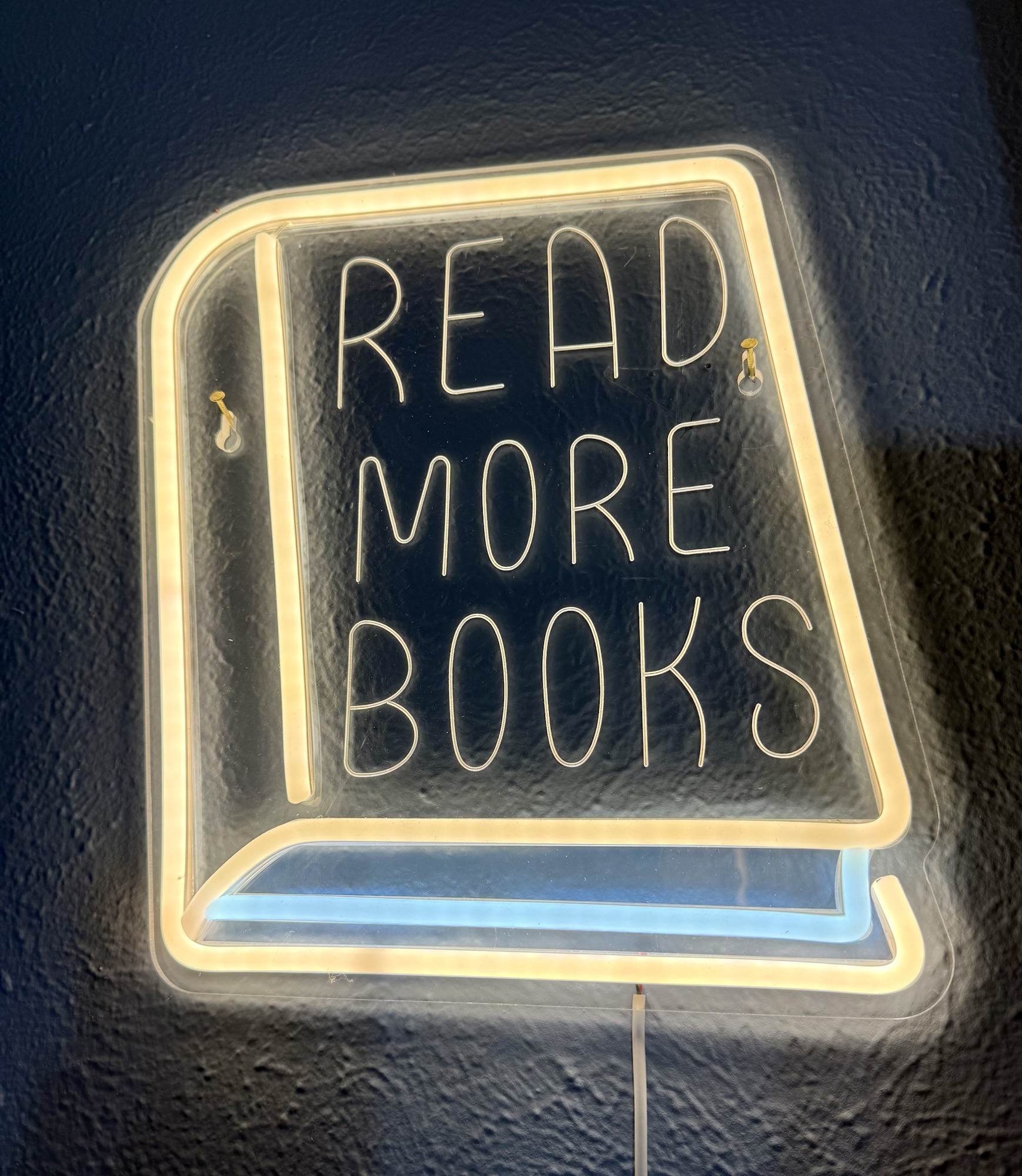
The neon sign on my office wall is a gift from a friend and a subtle reminder that my “to be read” pile is waiting patiently. They don’t really have a choice, unless those books suddenly become sentient. But that’s a whole other story. For now, I’m trying to settle in with a novel instead of doom scrolling through social media. One practice will improve my writing skills, while the other just results in a rise in my blood pressure.

Once I started studying the craft of writing and actually trying to turn out stories of my own, I noticed that my approach to reading shifted. I do read for enjoyment, but it’s hard to turn off that inner editor. Here’s a few of the books I’ve read so far this month and a bit of a review for each, along with what I learned about writing along the way.

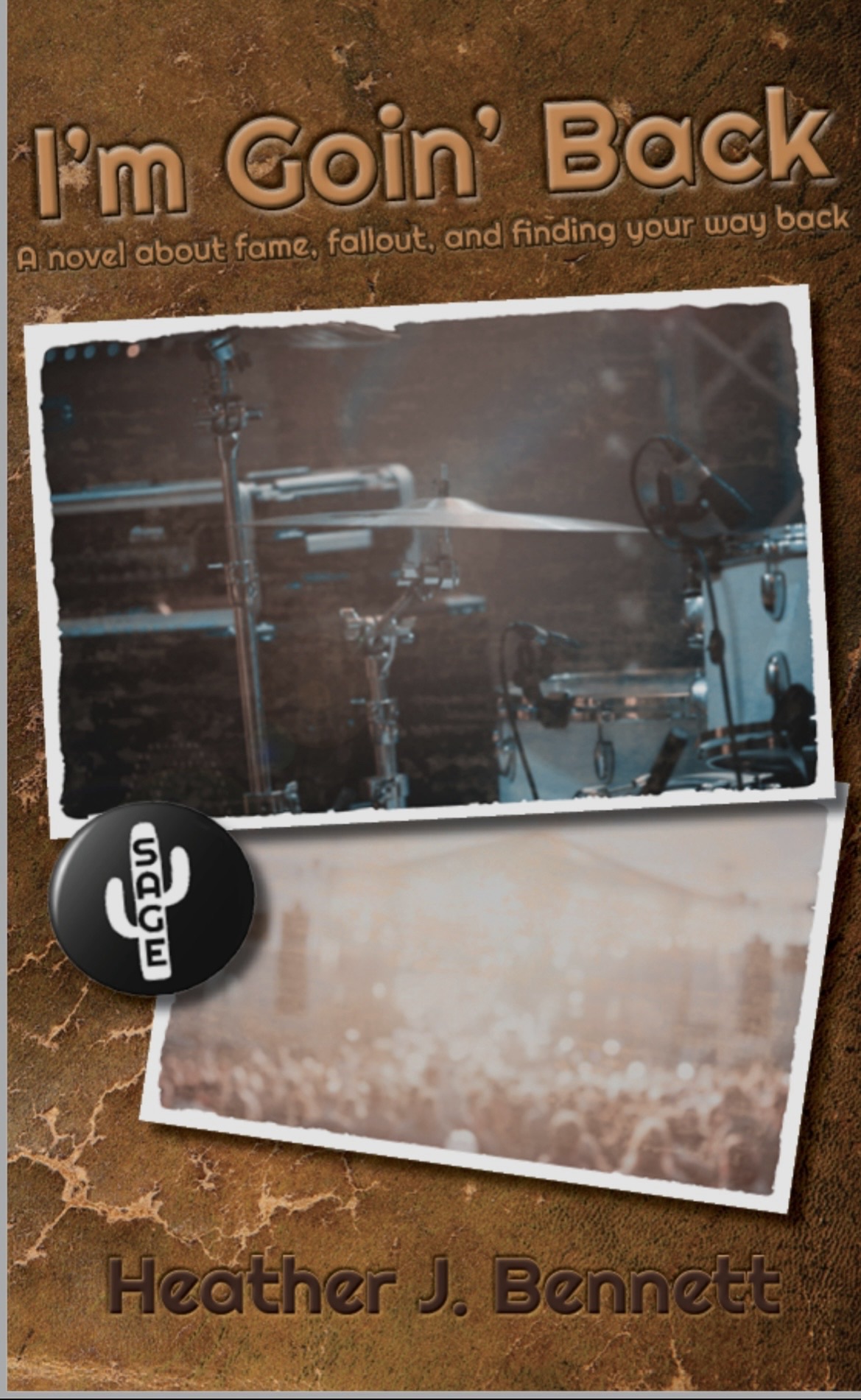
In November I read this novel written by my friend, Heather J. Bennett. She has a way of bringing her characters to life and giving the reader an intimate look at their challenges. Her books capture the 1970s – an era I grew up in – so well that I always feel like I’m settling in with an friend to reminisce about those times. The plots of her novels involve characters in the music industry, most often California rock and roll. Heather brings an authenticity to that setting that brings the reader right along with the characters. Writing wise, it’s good to read and learn from someone with such a good grasp of character development, plot, and setting detail. Plus her books are always a good story!

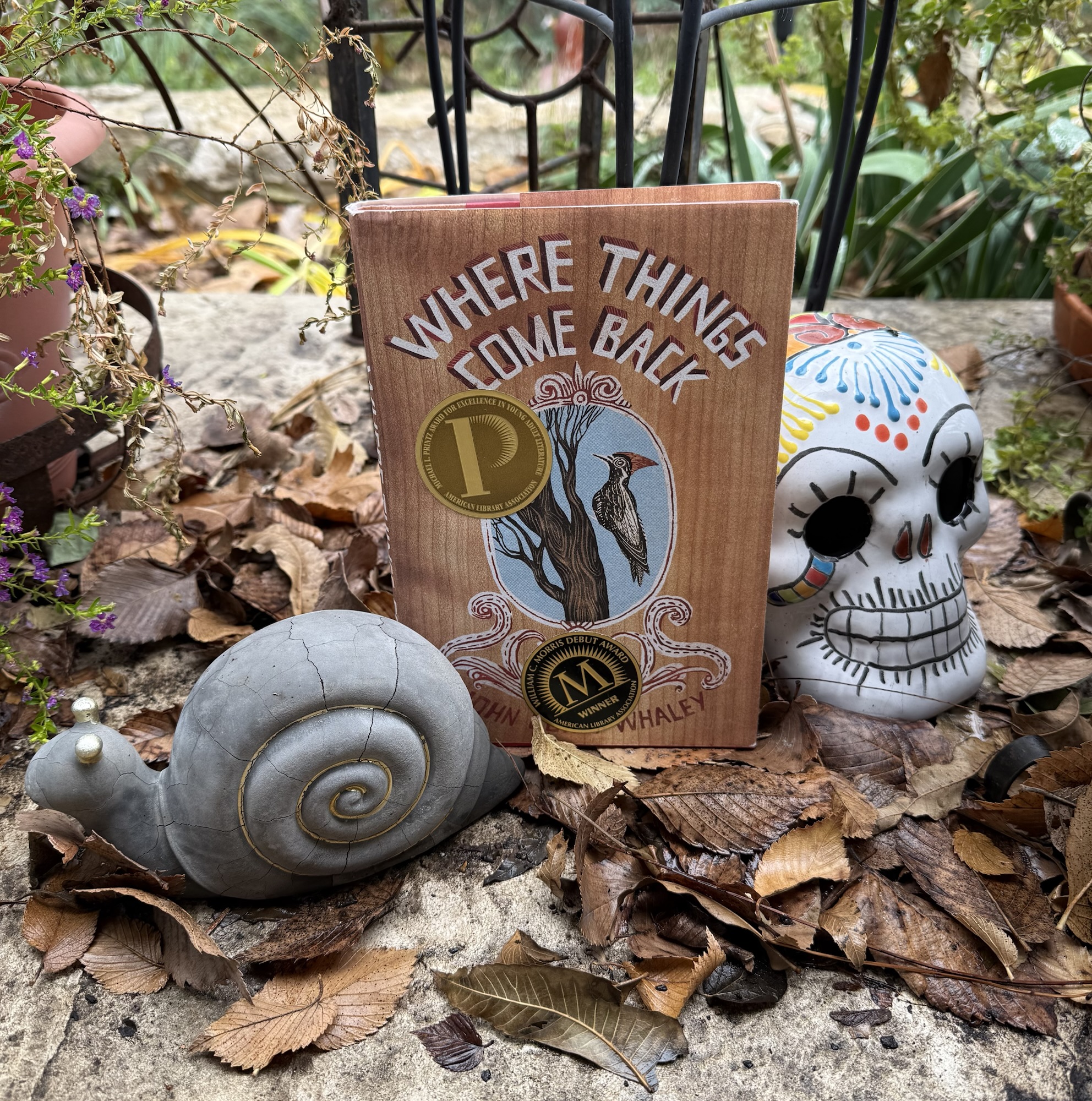
I bought this book at Dollar Tree and it was a $1.25 well spent. The first sentence hooked me in – “I was seventeen years old when I saw my first dead body.” From the title and that sentence, I was expecting something a bit darker from this novel, but I wasn’t disappointed with the story. The main characters are teenagers, so I suppose this would qualify as a “YA” book. There’s a disappearance and dual timelines that eventually converge in an unexpected but satisfying way. I like how the author, John Corey Whaley, tied everything together at the end. There’s a subplot with the town’s reaction to a possible sighting of an extinct woodpecker, and this explains the bird on the cover and also the double meaning of the title. I love it when the writer has a clear picture of how the plot will resolve and doesn’t resort to throwing everything at the conflict in hopes that something will stick. (Riley Sager, stop tossing tropes in the final chapter.)

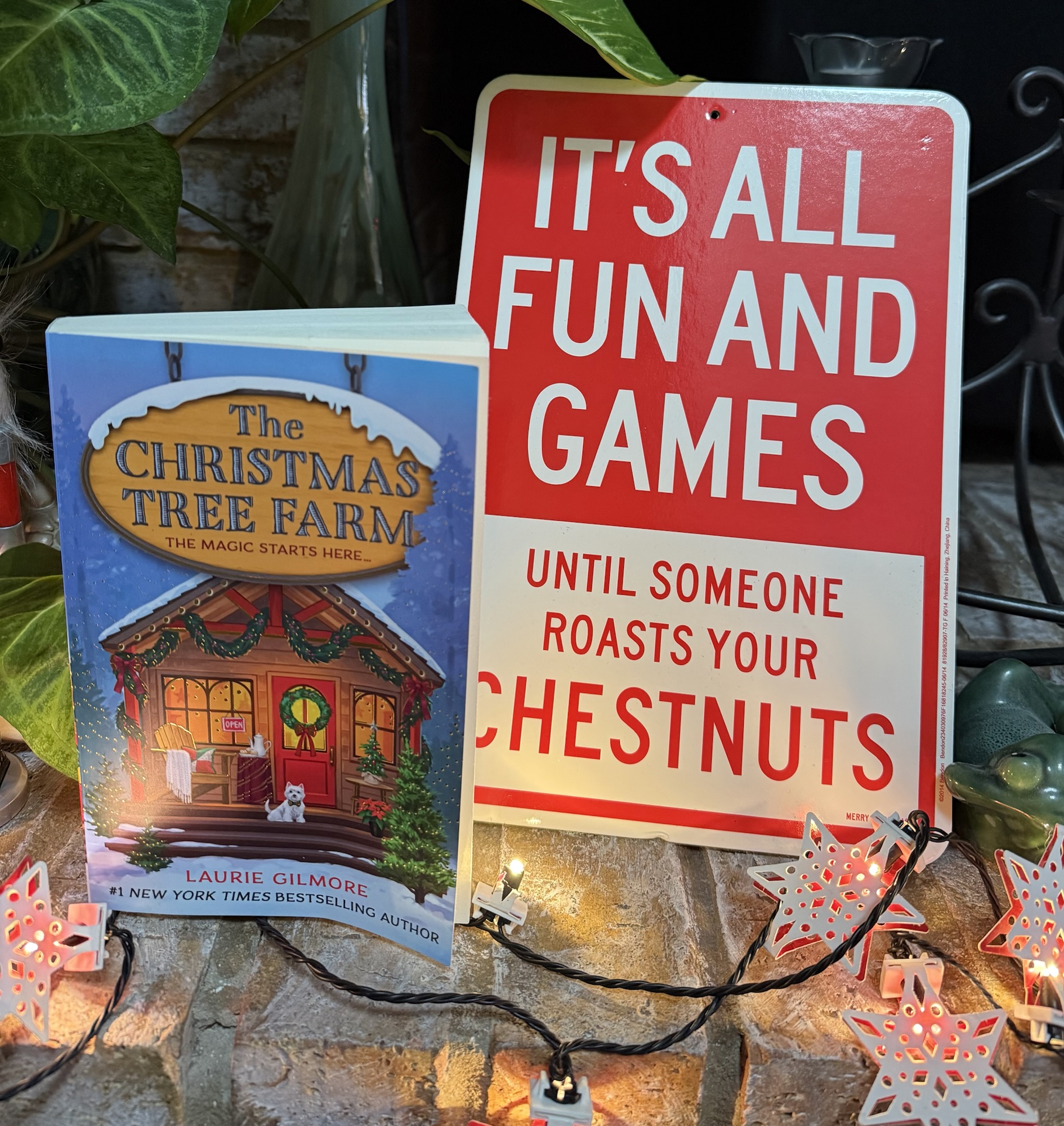
I’ll confess to an occasional binge of romance. I picked up this one based on the cover alone. Plus the author has a whole series set in this town. I loved the Virgin River series, so I thought I’d like these. Going in, I knew there were spicy scenes but I’m an adult, right? How bad could it be? Pretty bad it turns out. I’m not going to smut shame anyone, but if you picked up these books for the sexy parts, be aware the first get together doesn’t happen until about 200 pages in. And then, Kira and Bennett take up almost four pages with dialogue. Enough that I was urging them on to just finish things for heaven’s sake. As for plot, the main character, Kira, buys a Christmas tree farm and meets handsome Bennett. That’s about all that happens, over and over, until they finally hook up during a snowstorm. What I learned from this book – I don’t mind a spicy scene, but I’ve got to care enough about the characters to want them to get busy. I also realized I’ll never write a sex scene. Just coming up with euphemisms for body parts gives me a headache. Unless those parts are being loped off by the grim reaper/slasher who’s been stalking the characters.

Me and Carl

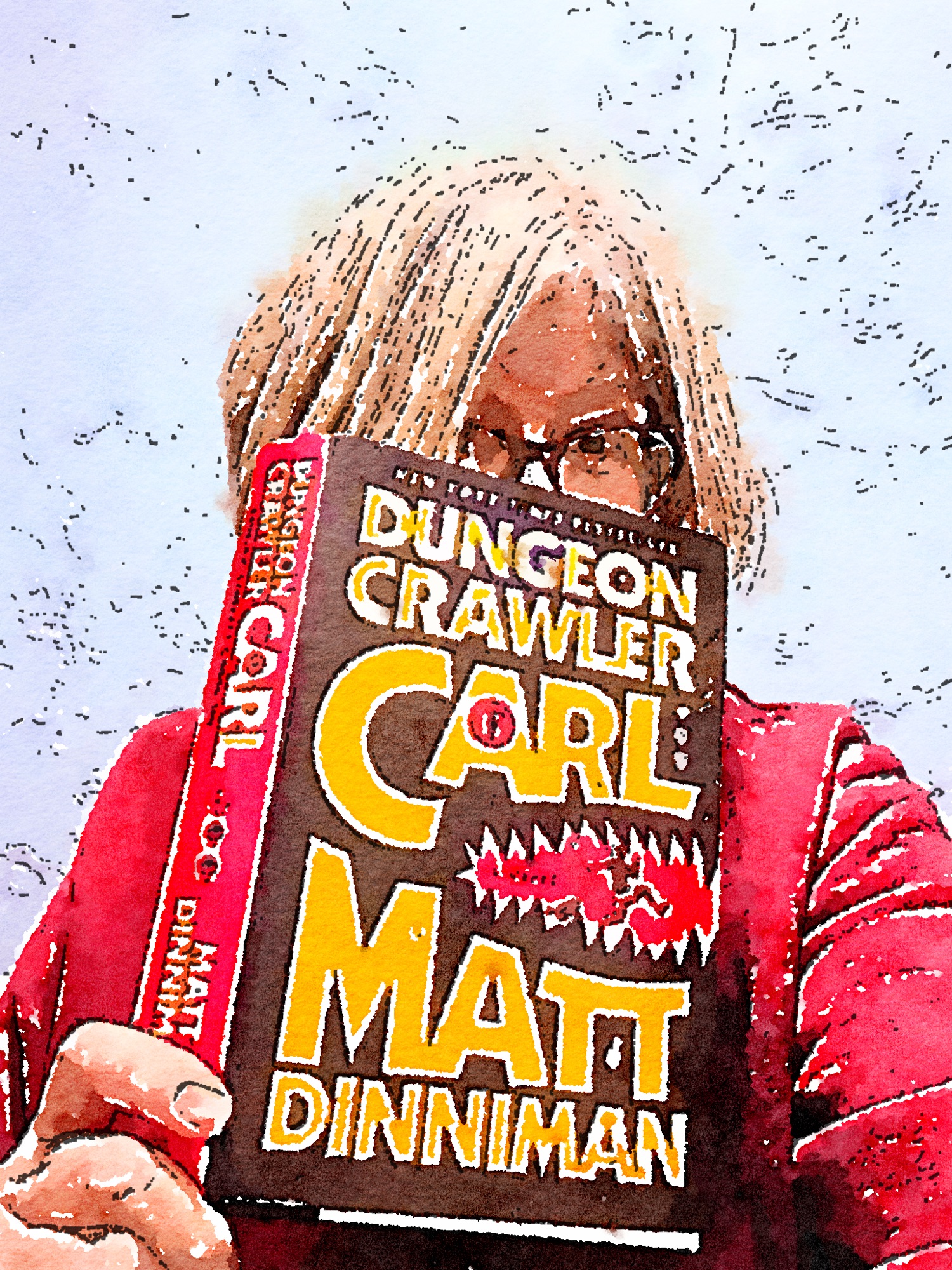
The last book is also my favorite of the month and possibly the entire year. I binged the first few chapters, staying up later than usual with no regrets. This book is a master class on pacing, conflict, hooks, and characterization. The unlikely plot – aliens have destroyed the Earth and the survivors must compete in an intergalactic game show that takes place in a dungeon – makes perfect sense once you get into the story. There’s magic, violence, fantasy, and a talking cat. The cat, Princess Donut the Queen Anne Chonk, is one of my favorite all time characters. By the end of the first chapter, I was rooting for her and Carl and hoping they didn’t get killed by the drug-dealing llamas or exploding goblins. Writing lesson – once the reader loves the main characters they’ll follow them through the story. Another lesson – give a satisfying ending with each conflict but also introduce a new conflict as a result of that ending. I LOVE these books – I bought the rest of the series (what has been published so far, that is) before I made it halfway through the first book. I’ll be reading the second book over the Christmas holiday next week, which will be much better for my blood pressure than doom scrolling Facebook.

You Always Need Another Book

Oh look! A bookstore! (and a short story)

Photo by the author

Last week, my friend Cathy and I drove up to Denison, Texas intent on finding a new bookstore I’d seen on TikTok. Despite the downtown construction that blocked a large portion of Main Street, we had no trouble locating our destination – Sundrop Books.

Sundrop Books – photo by the author

Inside we each found an armful of novels we couldn’t live without. The store sells both used and new books, plus there is a table filled with one of my personal favorites – the brown paper wrapped “blind date with a book.”

Interior of Sundrop Books – photo by the author

As we were leaving, the owner told us about another bookstore just down the street. A bonus store!

Pen and Page Weathered Books – photo by the author

Inside we each found more books that had to come home with us. Pen and Page stocks both nearly new and used books, plus original artwork by the owner.

Interior of Pen and Page Weathered Books – photo by the author

It was great to find not one, but two bookstores to add to my list of nearby places to visit. The City of Denison is remodeling the park in the middle of downtown, and when that is finished I will certainly need to visit again!

If you’ve made it this far in the post I hope you’ll stick around a bit longer and read the short story below. This one is posted in all its unedited, ugly glory, having been cobbled together over 48 hours for the second round in the NYC Midnight Flash Fiction contest this year. I was not surprised to find out I hadn’t made it to the final round. Writing this one was actually painful. My assigned genre was suspense, and the required setting was a martial arts studio. The final indignity came with the last prompt. Somehow, I had to include CAT FOOD in the story.

Gentlefolk, I present to you:

The Shadow Way

With each step, Mia Dalton tightened her grip on her umbrella, weighing the possibility of using it as a weapon. Had the strange man following her been on the bus? Impossible to tell in the dark and the rain. She hated winter, when night fell by five o’clock. It meant trudging the three blocks from the bus stop to her apartment while imagining danger behind every doorway. Despite what her therapist said, it wasn’t that unreal a fear. Mia had the scars to prove it.

The rain fell harder. As she quickened her steps, the stranger did the same. Was she leading him to her home? Then, twenty feet in front of her, a black cat appeared on the sidewalk. It pivoted to face her, yellow eyes reflecting the streetlights, then scampered across the street.

Mia groaned. A black cat crossing your path was the worst of luck, but maybe this time it was a warning. The animal sat under the awning of the convenience store on the other side, as though waiting for her. Weighing her decision, Mia changed direction, jogging toward the lighted store. If the man did the same, she could duck into the shop.

Once she made it to the storefront, Mia steeled herself and turned to look back. The stranger faced her. He waited outside the circle of light from the streetlamp, his features in shadow. Was this the man from the robbery? It had been almost a year. If he meant to track down the only witness to the murder, he would have done it sooner.

“Go away,” Mia whispered. As though he heard her, the man strode off, vanishing out of sight at the next corner. Beside her, the black cat rose and sauntered away. On impulse, Mia followed. She would circle back to her apartment complex after she was certain the man was gone.

They traveled toward the bus stop, and then turned down a side street lined with quaint, older houses. The rain stopped, and drawn by the warm light spilling from the homes, Mia tagged after the cat until it ran up onto the porch of a pale blue, two-story, Victorian-style house. She paused on the steps. Stained glass windows framed the doorway, and a sign over the entrance read “The Shadow Way: Aikido.”

The door opened, and a woman with hair the color of iron filings greeted Mia. “Hello.”

“I’m sorry.” Mia retreated. “I didn’t mean to disturb you. Is this your cat?” She pointed to where the cat had curled up on a corner of the porch.

The woman smiled. “He’s a stray, but we welcome all kinds here.” She held the door wider and motioned to Mia. “I’m Yuna. Please come in.”

“I’m Mia.” Noticing her host’s bare feet, Mia slipped off her shoes and socks and stashed them in a cubby in the entry. Inside, candles in glass jars lit every corner. A royal-blue mat covered the floor. Yuna wore a white wrap-around jacket and loose wide-legged black cotton pants.

“We don’t practice with the katana.” Yuna pointed overhead, to a polished sword hanging on the wall. “Instead, we use the wooden practice weapons. But they are just as useful when learning.” She took Mia’s arm and led her to a rack of wooden rods.

“I didn’t come for lessons. I should leave.”

Yuna tilted her head, studying Mia. “Chance brought you to me, a teacher without a student.” She handed Mia a short wooden stick from the rack.

“I’m not a fighter.” Mia hefted the rod. The weight of it felt good in her hand.

“Aikido is not about fighting, but about overcoming your fears and confronting your shadows.”

Mia nodded, thinking of the night of the robbery. She had stopped at the liquor store to grab a bottle of wine. While waiting behind one other customer, a masked man had entered. Shouts, cries, and gunfire had blended into an awful cacophony. The robber shot the cashier, the other customer, and Mia. Pain had flared in her shoulder, where the bullet had entered. She had fallen forward, as though to embrace her attacker. Her hand, scrambling for hold, had yanked away his mask. For an awful moment, he had stared into her eyes. Certain she would die, Mia had closed her eyes, but the man had left her there, with only the dead for company.

Now, Mia handed Yuna back the practice rod. “Okay. I’ll learn.”

“Good. Come back tomorrow night.”

Over the next three months, Mia visited the dojo every night. She brought expensive gourmet food for the cat until he trusted her enough to roll over at her feet. She named him Chance, and with Yuna’s blessing took him home with her.

The lessons progressed. Mia practiced with the short staff, the jo, and then with the longer bokken. The movements soothed her. Inside the dojo, she could leave her fear behind. Winter thawed, and the days grew longer until the evening of the first day of spring, when Mia saw the masked man again.

He followed her from the bus. This time, she spotted him right away, remembering the angle of his jaw and his gray eyes. At first, she thought to lead him to The Shadow Way, and Yuna’s help. That felt wrong, to bring violence to a place that had brought her peace. Instead, she marched down the sidewalk, one hand inside the tote at her side.

The streetlights flickered on when he grabbed her arm. She spun, clubbing him with the jo she had hidden in the tote. With a practiced move, she swept his feet. He fell.

The clerk at the convenience store across the street raced over. “I called 911,” he said.

Later, after she gave her statement at the police station, Mia decided to stop by the dojo and tell Yuna what had happened. But when she walked down the street, she couldn’t find the blue house. Like her fear, it was gone.

THE END

A Fellowship of Books

This week I continue with my list of Texas independent bookstores and a story at the end.

Wild Detectives Bookstore in Oak Cliff, Texas

Last Friday my friend Cathy and I continued our tour of local bookstores. In Texas, “local” can mean anything within a three hour drive, but that day we only had to venture to Oak Cliff, about a thirty minute drive from home. This neighborhood, the Bishop Arts District, is filled with quirky boutiques, cozy restaurants, coffee shops, and of course – bookstores.

Poets Bookshop in the Bishop Arts District

Lucky for us the streets were mostly shaded, proving relief from the hot Texas sunshine. We trekked from Wild Detectives to Poets Bookshop and then on to Blush. This last store features romance titles and my companions wondered if I, a horror writer and reader, would find anything to tempt me. I did see some witchy stories, but they were all books I already owned.

Blush Bookstore, Bishop Arts District

After lunch we abandoned the sidewalks for Cathy’s Subaru, and drove to our last two destinations. We stopped first at Whose Books, where I made up for the lack of romance titles by discovering three new horror books.

Whose Books in Oak Cliff, Texas

Our last stop was at Lucky Dog Books, a used bookstore. We all left there with our arms filled with new to us titles.

Lucky Dog Books in Oak Cliff, Texas

There is no more perfect way to spend the day than in the fellowship of other book lovers.

Interior of Lucky Dog Books

This week I’m sharing a flash fiction piece I wrote for one of the NYC Midnight Contests. I think the genre might have been historical fiction and the object that had to be included was a rocking chair.

Love Makes Lighter Burdens

Mattie Ferguson would forever mourn the things she had left behind. No porcelain plates, no beads nor bells—she traded these for coffee and bacon, for shovel and scythe.

“Oregon! A new start, Mattie.” Her husband, Jonas, swept her up in sturdy arms and swung her round. Dizzy, her old life spun past.

Released, she sat in her beloved rocking chair and gripped the smooth oak. Built by her father, she imagined his worn hands as he sanded the wood, pictured her mother seated by a fire as the rocker soothed a fretful baby.

“We’ll find room,” Jonas promised.

They toted the rocker through flood-swollen rivers, and grave-marked desert. They trod beside their struggling oxen, past piles of treasures, discarded in hopes of a load lightened enough to last the journey.

In Idaho, they lost an ox. With meager possessions carved down to essentials, Jonas could not meet her gaze.

“No!” Mattie spread her fingers across her rounded belly. “I’ll carry it.”

Jonas smiled and lifted the chair. He’d bear it for her—a burden made light by love. The last mile slipped past. The trek became a story for their children and their children’s children.

A century later, a young couple pushed through a beaded curtain to wander a dusty shop. Janis Joplin wailed from the radio as smoky incense wafted through the air. The woman stopped beside an antique rocker.

“We need this,” she told her lover. “It’s boss.” 

“It won’t fit in our car.”

She pouted.

“Okay, our pad’s close. I’ll carry it.” He lifted the chair, surprised at how light the load was.

The End – Thank you for reading!