Threads

A stitch to the past

Spools of thread – edited with the Waterlogue app

I belong to a Facebook group called We Pretend it’s Still the 1970s. The rules are simple – post personal photos from that decade and comment on them as though whatever is pictured has just happened. No past tense, no mentioning the future. It’s an exercise in time travel that is both humorous and poignant.

I have yet to post anything on the page, but I’m a loyal lurker. The images remind me that I lived through that era. Scrolling through Olan Mills family portraits, prom snapshots, and polaroid pics of smiling girls with that Farrah Fawcett shag haircut – I can indulge in happy memories uncluttered by the anxious reality of my teenage years.

The past seems so far away, as though the events of the 1970s happened to a different person, not me. In a way, that’s true. I’m far from that teenager now, but sometimes I come across things that bring the memories back so vividly that I can touch them and feel their weight.

We’ve been organizing our household, trying to clear some of the clutter and decide which items are worth keeping, donating, or selling. As I sorted through decades of sewing supplies, I set aside anything I wanted to keep. I’ll hang onto the thread – wooden spools either inherited or bought at antique stores and plastic spools sporting the small green Walmart price stickers from before the age of UPC tags. There are at least two dozen spools of turquoise blue thread that Mom bought on clearance. It was a really good deal.

Me and my mom circa 1970s – I’m wearing a dress I made

My mother taught me to sew. First by hand with needle and thread, and then on her classic black Singer sewing machine. A junior high school home economics class rounded out my seamstress education. Throughout the 1970s I sewed dresses, skirts, peasant tops and anything else that could be whipped up over a weekend.

I don’t sew much now, although I do still own a sewing machine. Recently I took up quilting and I’ll hand stitch together the pieces while I’m watching television. It’s a relaxing hobby and it gives me an excuse to hold onto the boxes of thread. Eventually I might even use the turquoise color that my mother found so lovely. I think she would have liked that I found some use for it.

Patterns from the 1970s

Well Hello Dolly

Not the life she imagined but the life made for her

Mannequin in a Wichita Falls antique store – Photo by the author

Andrew and I have recently taken on the task of clearing out his mother’s storage unit. Roby no longer has need or use for the cartons of fine china, boxes of shoes and purses, racks of designer clothing, or bags of vintage dresses. Over the past four years we’ve managed to sell off or donate most of the bulkier items – the dressers and chairs, the dining room table. There’s still a lot left. Enough to fill a small U-Haul. Our goal is to move enough of it out that we can set up a lower priced, smaller unit close to our house and save her the expense of renting the space.

Until then, we’ve turned our living room into a sort of staging area, bringing over car loads of clothing and sorting through it for anything that might be worth selling. We discovered that Roby’s collection of vintage 1970s to 1980s Diane Freis dresses have become popular again. Imagine the sort of outfits worn by the actresses on the set of Dynasty, Designing Women, or Dallas. Think shoulder pads, wild colors, and lots and lots of polyester. To better display these dresses, I ordered a mannequin on Amazon. Andrew named her Molly Mannequin, but I call her Dolly.

Molly Dolly wearing a Diane Freis 100% Silk dress – Photo by the author

Dolly is easy to dress – pop off her head, slip her arms out of their sockets, and drape the dress over her torso. The first set of photos we put up on Ebay featured her smooth, bald head. Andrew suggested she wear a hat, but I didn’t have one that matched the outfits. Except for this one.

Dolly – Photo by the author

The hat, in my opinion, gave her a confused, wistful look. As though she couldn’t believe she had landed here.

Dolly – Photo by the author

In the second box of clothing we discovered an acrylic wig. This was better, it gave Dolly a more life-like appearance. The wig had seen better days. It also looked like it had seen some really bad days. Frizzled strands stuck up across the surface of the artificial hair, giving Dolly an urchin look. It fit, however, with the bohemian vibe of many of the dresses. I remembered a trick recommended to smooth out the fake tresses on dolls and I soaked Dolly’s hairpiece in fabric softener. It worked, but she still didn’t seem happy, despite having smooth locks.

Dolly in a sequined Diane Freis dress – Photo by the author

Something about the racks of frilly clothing and the dressing and undressing of Dolly felt familiar. The clothes were unlike anything I would choose to wear. My wardrobe is made of t-shirts with catchy slogans and sweatpants with elastic waistbands. In another life, however, I could imagine strolling through a garden party or dancing under disco lights. Maybe plotting my revenge on J.R. Ewing or Blake Carrington.

Dolly – Photo by the author

Flipping through the rack, the soft ruffled skirts brushing against my hands – I couldn’t help but smile at some of the whimsical patterns. How fun it would be to dress in one of these. I understood the attraction, the desire to own them all. At last I realized why this felt so familiar. Hadn’t I done the same thing as a young girl?

It was with another fashion icon.

Barbie aloof – Photo by the author

Goodbye Old Friend

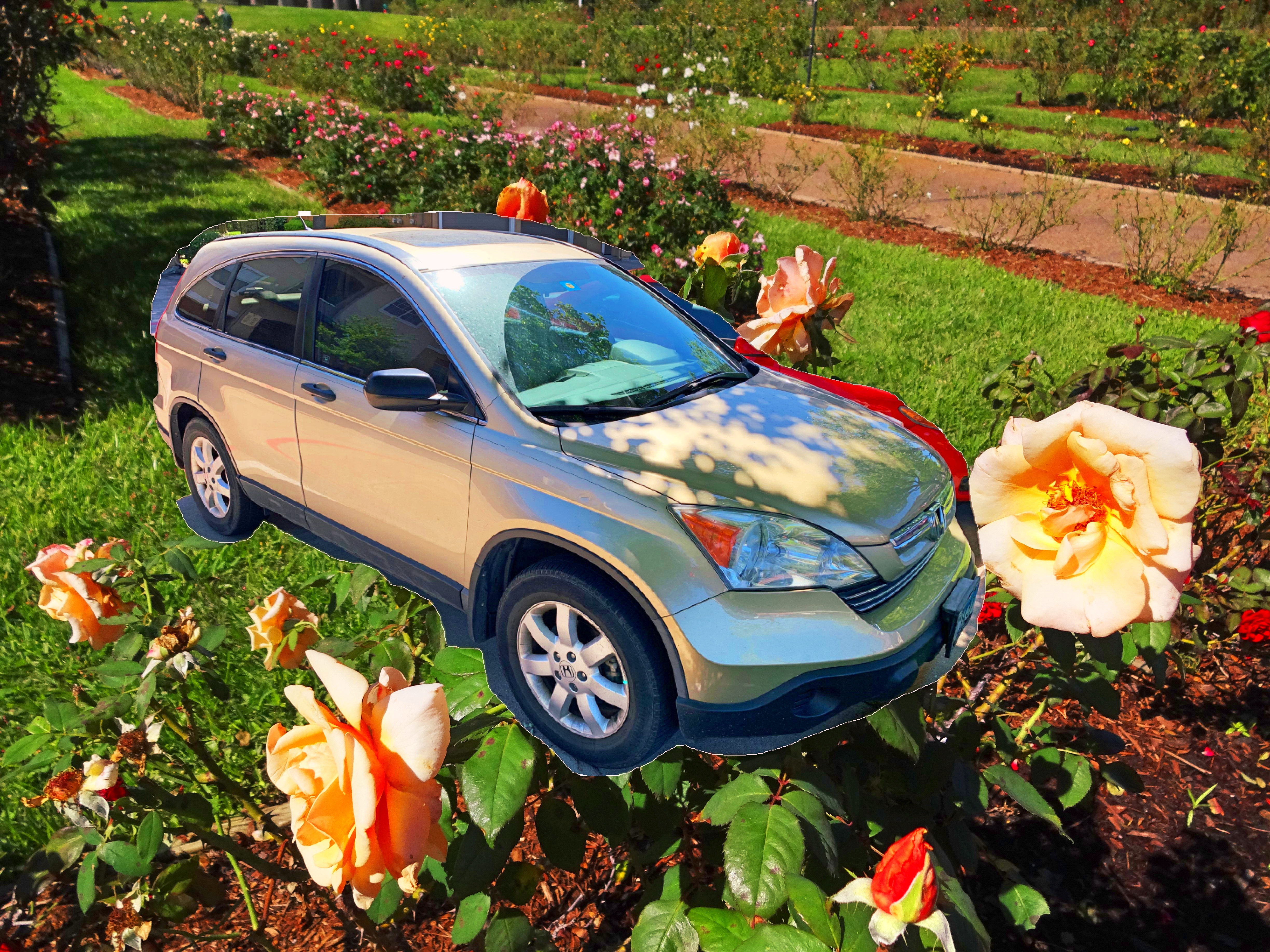
CRV_Fotor
Photo by Terrye Turpin

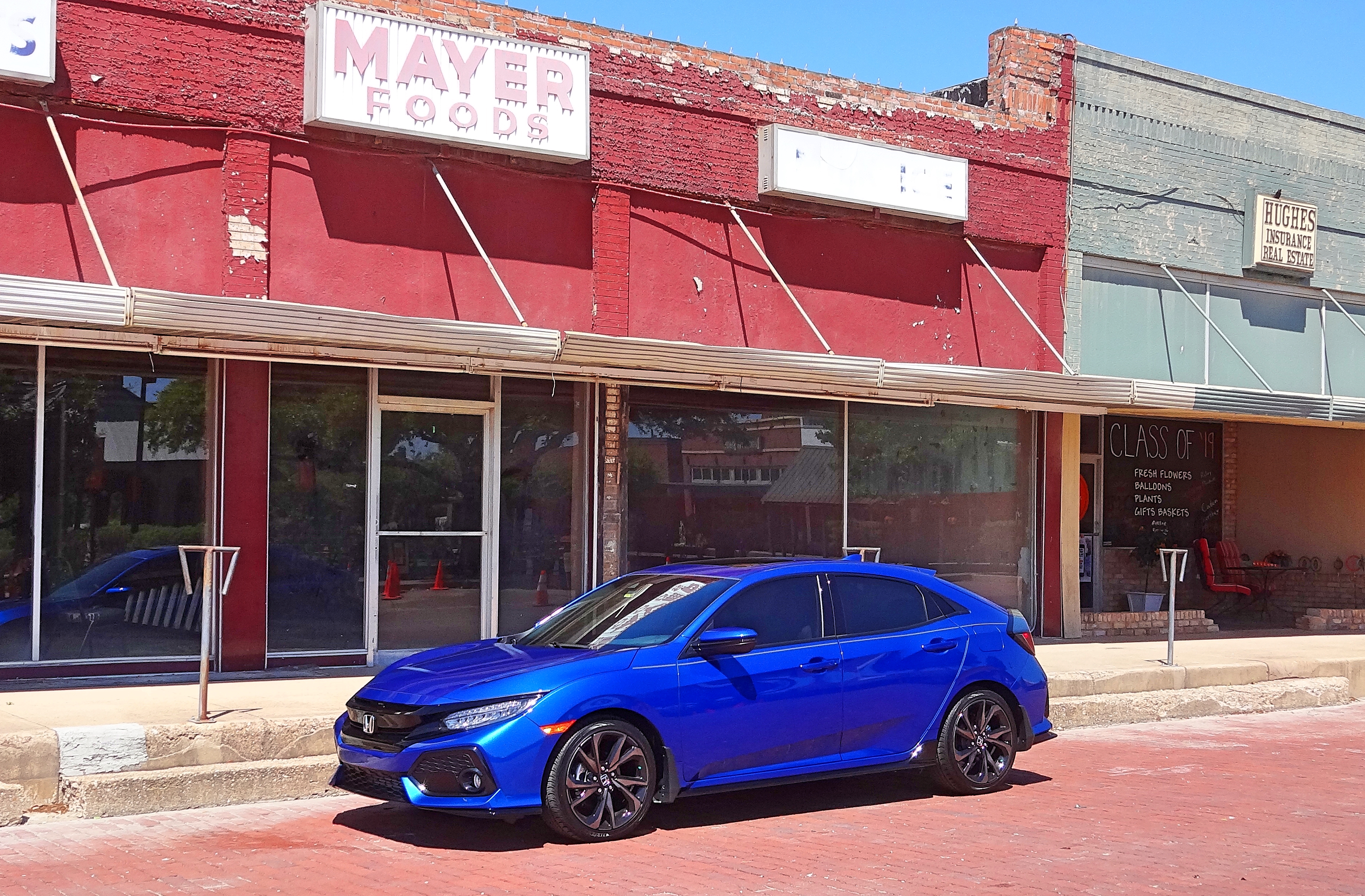
My new car is a spaceship. The dash has more buttons and dials than Doc’s DeLorean did in Back to the Future. It runs on premium gas, though, and not recycled garbage. My brand-new Honda Civic Sport Touring might be the last car I ever buy.

“What are you going to name your new car?” Andrew asked me as I scribbled my name in blood on the finance agreement.

Unlike my husband, who has had a Marilyn, Penelope, Zephyr, and Lexi in his driving life, I’ve never named my cars. At least not with anything I’d repeat in polite company.

I bought my first car forty years ago – a 1974 Subaru sedan. A short in the electrical system caused the headlights to go out after 15 minutes of driving. This didn’t stop me from traveling at night, I’d drive as far as I could, then I’d pull over and wait for the car to cool down and the lights to come back on. When the brakes went out, I drove for two weeks using only the parking brake because I was between paychecks and couldn’t afford the repair.

A sensible four door, it was not the first car I wanted, but according to my mother- the co-signer on the loan, it was the first car I deserved. She took one look at the green and white 1976 Shelby Mustang Cobra I lusted after and imagined my mangled body entombed in twisted metal.

I’ve had trucks, SUVs and sedans. Some of them came to dramatic ends. When my kids were small, I hauled them around in a silver two-door, 1979 Buick Riviera. It caught on fire one day, the paint bubbling up on the hood when we parked. “Mom! Is that smoke?” must be one of the scariest phrases ever heard.

Another car, one my then father-in-law bought for us for $50, shot flames from the exhaust every time the engine backfired. That car could clear traffic. When it looks like you’re driving a Mad Maxx rocket powered vehicle folks get out of your way.

I drove the car I traded in, a 2009 Honda CRV, for ten years. We took our last family vacation in that SUV, four of us on a road trip from Texas to the Grand Canyon in Arizona. My twenty-one-year-old son took most of the driving duty because my ex-husband felt I drove too slowly and my older son drove too recklessly.

By 2011 I was divorced. I folded the seats down in the CRV and used it to carry most of my belongings out of the house I’d shared with my husband, and into my new apartment and new life. When I paid off that car, I stood in line at the tax office to remove his name from the title.

Last year, in October 2019, my new husband and I drove to our wedding in the 2009 Honda.

I’ve never been sentimental over a car, but the sight of my gold CRV sitting on the dealer’s back lot felt like I was dumping the family pet on the side of the road. “We’ll send it over to auction,” the salesperson told me as he pointed out the trade-in value.

Auction, I imagined, would be the automobile equivalent of working in a 19th Century coal mine. I handed over the keys and gave the car a little wave, hoping to inspire the SUV with enough confidence it would last another 157,000 miles.

We tie so much of our identity to the car we drive. The SUV with room for kids, dogs, and sports equipment. The trucks for hauling, whether it’s farm supplies or groceries from Central Market. Smug hybrids and cushioned land yachts on either end of the mileage spectrum. Like my husband, the true believers among us opt for manual transmissions.

I’d hoped to drive the ’09 another hundred thousand miles. The worn shocks bounced like a Conestoga Wagon on the Oregon Trail, and a mysterious clicking emerged from under the hood, like a time-bomb for engine failure.

“I guess I need to look for a new car,” I told Andrew. “If I buy one now, I can pay it off before I retire.”  Spending a large sum is always best when justified under cover of fiscal responsibility.

We narrowed the field down to a Honda model, and like Goldilocks I discarded several models as too large or too small before declaring the Civic as just right. Thinking of grandkids and sticky fingers, I wanted leather seats. The hatchback option gave us room for camping equipment. During the test drive I appreciated the 1.5L Turbo engine.

“Do you have one in blue?” I asked.

This last car, unlike the first car, is one I picked for myself. As I make the payments, I remind myself this is the car I deserve. In ten years, we might all be riding around in flying vehicles, leaving earth and asphalt behind.

I’ve named the car Hollis—pronounced “Haul-Ass.”


Hollis
Hollis – Photo by Terrye Turpin


A Pivot Toward Acceptance

Photo by Terrye Turpin

In 1980, after my sophomore year in college at Texas Woman’s University, I waited for the letter that would lead to a pivot point in my life. Some months before, I had applied through the Baptist Student Union to be a summer missionary. I signed up, not out of deep religious conviction but because I did not want to spend the months between semesters living in my mother’s house.

Other students testified they had received God’s call, but I would have hung up in a panic, sure the almighty had a wrong number. I hoped to be sent to some distant exotic location. The recruitment flyer posted in the Baptist Student Union featured pictures of happy, smiling young people wearing shorts and working in places like Brazil or Hawaii. I pictured myself returning from summer vacation with a tan and a suitcase full of coconuts. Instead, I landed in West Texas, at a town called Big Spring. My assignment was to work in the chaplaincy department at the state psychiatric hospital located there.

“I’ll be spending my summer in the state hospital,” I told my friends. The joke always got a laugh as long as I explained that I wouldn’t be going as a patient.

My family never talked about mental illness. The youngest of seven children, I was born on my mother’s 42nd birthday. My older brothers and sisters had all escaped from the house by the time I started school. I remember my amazement that my childhood friends could come in and out of their houses at will.

In our house, when I came inside, I had to stop in the laundry room and take off all my clothes and toss them in the washer. Naked, I walked through the house to the bathroom to shower and then dress in clean clothes. We did not have carpet, instead my mother insisted on covering all the floors with vinyl, so she could mop with the pine cleaner she favored.

Everyday activities, like getting ready to leave to go shopping, involved a complex set of steps that ended with my mother putting on her shoes at the back door. Any interruption, like a ringing phone, required her to start the process over from the beginning. I fell on a piece of metal once, slicing my thumb down to the bone. My mother left me sitting on the front porch clutching a bloody washcloth, for almost an hour, while she went through the compulsive rituals that would allow her to leave and drive me to the emergency room.

“Oh, mom just likes things clean.” This was the closest the other family members came to admitting something was wrong with my mother. I never had a birthday party, never had friends overnight, and rarely invited anyone to come play in my yard—they might ask to come in and use the bathroom, and that would require explaining the whole undressing part. My mother’s obsessive-compulsive disorder required hand washing at the minimum after any physical contact. A hug would have required a scrub down like what might occur at a biological warfare lab with a leaky air filter.

My routine at the chapel in Big Spring did not include leading any prayer sessions or bible studies. Instead of torturing the residents with my singing or praying, I handed out hymnals at the Sunday and Wednesday night services, helped lead a puppet group, and visited with the residents. I would often wonder at the ordinary people who were patients at the hospital.

Until that summer I had been taught that mental illness should be hidden away, like something shameful. On a bookcase in our house there was a bowl made up of ceramic tiles. I dusted that shelf and that bowl for years before I learned my mother put it together during a stay at Terrell State Hospital when I was a toddler. Like her anxiety, depression, and OCD, it was there all the time, in plain sight but disregarded as though it were invisible.

One of my duties as a summer missionary was to give speeches at various churches, summer camps, and bible study groups. I abandoned any traditional speech and instead told about the strange guiding force that must have led me to the place I had denied all my life — an understanding of my mother’s mental illness. It wasn’t too far a stretch to speak of forgiveness and acceptance, and of following those with love.

Terrye is a native Texan who enjoys writing stories set in her home state and other strange places. In her free time Terrye enjoys exploring antique, junk, and thrift stores for inspiration and bargains. She’s had stories published in small print and online journals, and writes short, humorous essays for her blog — https://terryeturpin.com/. Sign up with the link below to follow her newsletter.


When We Are Small

Photo by Terrye Turpin

Despite the crying during our last visit, we took our grandson, Will, back to the Heard Museum to see the robotic dinosaur display. When you are shorter than three feet tall anything larger than a cat is intimidating, especially if it has sharp teeth and looks like it might eat you.

“He’s had a whole year, surely he’s recovered by now,” I remarked to my husband, Andrew.

Soon after Andrew and I began dating I warned him that, although we were past the risk of producing children, if he stuck around he would be in danger of exposure to grandchildren. I have been preparing for grandmother status half my life. I picked out my grandma name, “Mimi”, right after my son and his girlfriend announced their engagement.

Andrew’s grandpa name is “Hoppy”, the unfortunate result of letting a toddler select the name. I warned Andrew, but he began by trying out grand-père. A French accent proved too difficult for an 18-month-old who wasn’t born in France, so it left us with Hoppy and Mimi.

My grandmother was old before I was born. We visited her on holidays where I sat in her living room long enough to absorb the smell of mothballs and mentholated back rub into my clothes. Her third or fourth husband, Mac, was my step-grandfather. He wore striped overalls and had a glass eye he popped out to frighten children. I was determined we would be a different sort of grandparents.

That afternoon at the museum we began with a brisk walk through the lobby crowded with young parents and knee high children and wove our way in a quick jog past the toys in the gift shop. As I pushed open the glass door that led outside, I held onto Will’s hand as I explained, “The dinosaurs on the outdoor trail aren’t alive, they’re just robots.”

This was not as reassuring as I intended. I realized with some irony we expect our young ones to believe in Santa Claus and the Tooth Fairy, but then discourage their fear of evil robotic monsters.

We stopped at the first dinosaur on the trail. It appeared to be strolling out of the wooded area behind it, brandishing sharp claws and grinning at us with impressive rows of teeth in its gaping mouth. Bright purple and blue vinyl covered the dinosaur in a pattern that would look smashing on a pair of boots. A nearby sign announced the design was chosen by children. Will stood just above waist high beside me and gripped my hand. “I’m just small,” he announced.

“Yes,” I agreed, “but you are also brave.” Will squinted at the robotic animal and then looked back up at me as though he were about to question my judgement.

“Was it this color last year?” I asked Andrew.

“I don’t think so, and I seem to remember it was carrying a Halloween pumpkin.”

“I’m getting bigger, but right now I’m small,” Will repeated as we stood there. The dinosaur roared and nodded his head up and down as though he agreed that Will was indeed, bite-sized.

We trudged on to the next display, a Triceratops. It was the size of a small car, but I felt encouraged, as this specimen was a plant eater. However, this particular herbivore roared just like the meat eaters. It also shook its giant horned head from side to side and moved its mouth as though chewing a tasty, boy-shaped morsel.

Photo by Terrye Turpin

“Why can’t they have at least one dinosaur that chirps, or sings a little song?” I complained to Andrew as Will huddled behind me.

We continued our stroll down the trail, stopping for a moment to enjoy each exhibit, at least until the roaring started up. Will hiked along bravely. When Hoppy pointed out a huge, ancient oak tree, Will said “That’s a scary tree,” but he roared back at some of the dinosaurs.

We approached the final dinosaur, a forty-six foot tall T-Rex, and Will stopped and held up his arms. “Carry me Mimi! I’m small!” I scooped him up, and he watched over my shoulder as we marched past the overgrown lizard.

Will wrapped his arms about my neck and we followed along behind Hoppy down the trail and past the T-Rex. From the moment your children are born, they are just looking for some way to prove you wrong, but to your grandchildren you are infallible. There are people who never experience this level of unconditional love unless they own a dog.

Once we were past the dinosaurs Will spotted a play area of child-sized wooden houses meant to resemble a pioneer village. Andrew and I settled in and watched him pour rocks into a metal bucket. I tried to snap Will’s picture, but freed from the pressing danger of robotic dinosaurs, he spent his playtime rushing off to explore the little houses at the frontier town. Every shot I took was of his back as he ran away from us.

I won’t always be able to pick him up, but he won’t always need to be carried. How reassuring it must be, however, to know there will always be someone who trails behind, watching over us, and ready with strong arms to lift us when we can’t go on. When we turn to them and plead, “Please carry me, for I am just small.”

*Originally published February 24, 2018 at https://terryeturpin.com/

You Can Blame My Mother

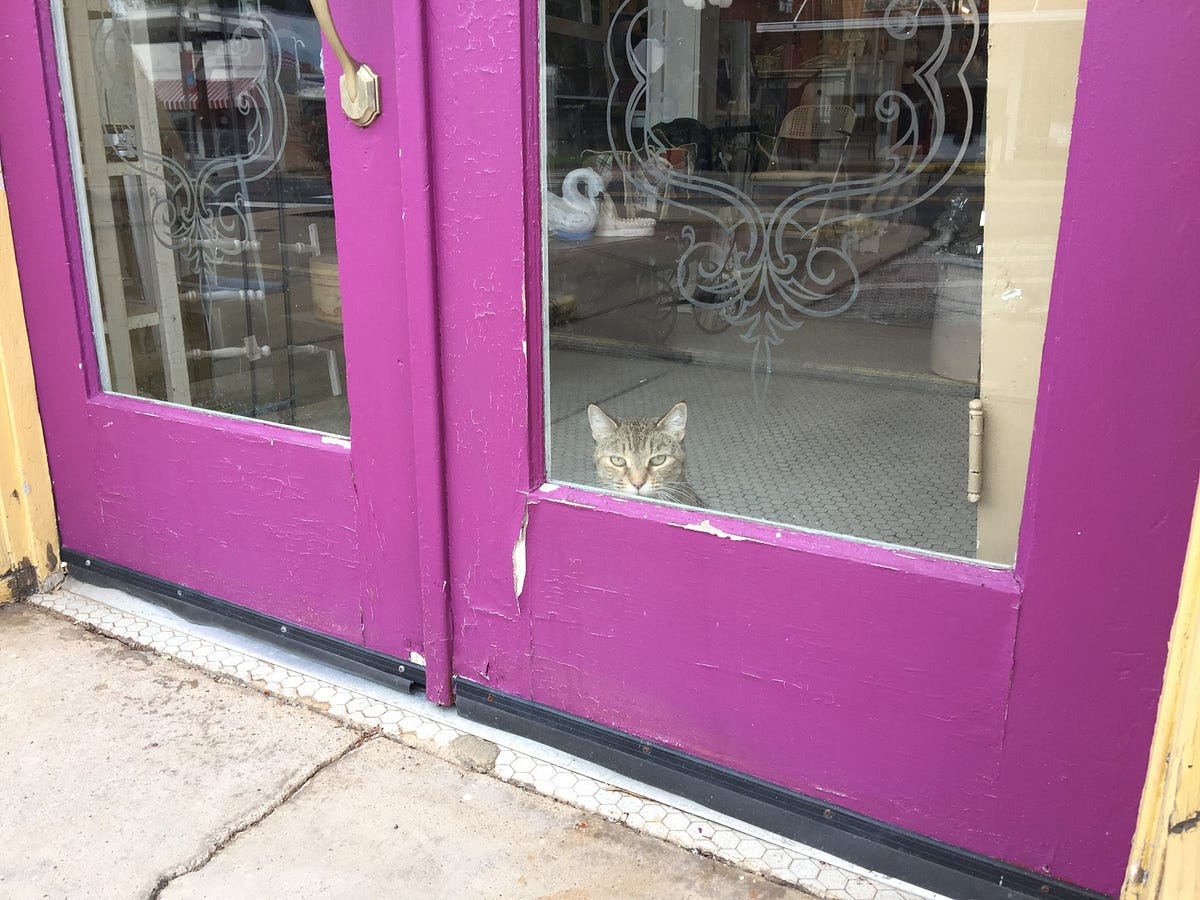
Distrustful Cat wonders who is at the door — Photo by Terrye Turpin

I’ve legally changed my name one time. When I married my first husband, I took his last name, and it has stuck through a divorce and a second marriage. Turpin is unusual enough, but my first name is the one that strikes fear in the heart of coffee shop baristas and medical office receptionists.

“Is that with an ‘I’ or a ‘Y’? they ask.

“Just spell it like a normal person would and then add a crazy ‘e’ on the end.”

I’ve heard them try to pronounce my name as two separate words — ’Ter’ and ‘Rye’, like the disembodied electronic voice that calls out directions on my phone. After I correct their spelling or pronunciation, the person asking will remark something like, “Oh! How did you come up with that?”

“You can blame my mother,” I’ll reply.

She’s the one who tagged me with that name, and it never occurred to me I could change it.

Besides confusing grocery store cashiers, fast food clerks, and telemarketers, my name kept me from purchasing a variety of mass-produced personalized mugs, pens, pencils, bracelets, and plastic souvenir license plates. They mocked me with every alternative spelling of my name — there were Terri’s and Terry’s galore, but not a single one ever spelled my name like my mother had. If every parent had been like her, a whole generation of Chinese factory workers would have been out of work, with no one to buy all the cheap plastic goods emblazoned with names that ended without unnecessary letters.

I was in junior high school when I asked my mom how she came up with the spelling. She got a smug look on her face as she explained.

“Back before you were born, I told your Aunt Judy I would name you Terrye, and she told me that was a boy’s name. But I spelled your name with an ‘e’ on the end, and that’s a girl’s name.”

I pointed out to my mother there were four others in my school, three girls and a boy, with my name. None of them ended with ‘e’, two of the girls ended their name with an ‘I’ and the boy and one girl were Terrys.

“Exactly,” my mother answered as though I’d proven her point. “Then when Judy had her youngest boy, she named your cousin Terry without the ‘e’!”

“Wait, who are you talking about?”

Until that moment I hadn’t known my cousin and I shared the same name. My cousin Bun had the misfortune to have two older sisters, who spoiled their baby brother and awarded him the nickname Honey Bun. They shortened that to Bun before his second birthday. No one in our family called him anything else. He even went through the Marine Corps as Bun.

Disappointed Self Portrait of the Author

The day I finalized my divorce I decided to pick up a copy of my birth certificate while I was at the courthouse. I wanted a passport, in case I might need to flee the country or take a cruise. I filled out the form to request the copy and handed it to the clerk behind the counter. She glanced at me over the top of her gold framed bifocals and asked if I had identification. I handed her my driver’s license, and she glanced up at me and said, “Oh, that’s an unusual spelling, how do you say your name?”

“It’s just Terrye,” I answered. She turned and tapped on her computer keyboard, then turned with a frown.

“I found a birth certificate with your parents’ names, and on your birth date, but the child’s name is different.”

Did I have a twin somewhere that I didn’t know about? Had they switched me at birth with some other child?

“Do you still want the birth certificate?” The clerk waited for my answer.

“What name is on it?” I found my voice to ask.

The clerk paused as she squinted at her computer screen. “The name is the same as yours, but there’s no ‘e’ on the end.”

I stood there dazed as I handed the clerk my payment and waited while she printed out an official copy of the birth certificate for this unknown person, this girl child who had not been burdened with an extra ‘e’. Visions of long lines of personalized gadgets and doodads marched through my vision when she placed the document in my hands. There, on the first line — my name, Terry, with no ‘e’. Where had it gone? Had some misguided or careless clerk dropped it? I looked further on the form, and there was the missing ‘e’, stuck on the end of my middle name! Renee with two ‘e’s!

I haven’t finished the passport application. I’m afraid to show up with a birth certificate with my name misspelled. They’ll shuffle me off to some bare room to be questioned by a branch of the secret service dedicated to grilling people who misuse the alphabet. I picture men in suits with square, solid names like Mark and Fred who would glare down at me and ask how I wound up with someone else’s birth certificate.

“Blame my mother!” I will cry out in vain while I hope they don’t notice the extra ‘e’ on the end of my middle name.

What We Deserve

Photo by Terrye Turpin

I didn’t miss having a dryer until I bought my washing machine. For the two years after my divorce I made do with the community laundry room at the apartment complex where I lived. It seemed a little self-indulgent to complain about the lack of a washer and dryer when there were women dodging land mines instead of worrying whether they would lose a sock to one of their neighbors. Carrying my laundry up and down the stairs and back and forth the fifty yards to the laundry room was good exercise. If it was a cold and rainy day, at least I didn’t have to carry my clothes down to the river to beat them on a rock.

In the middle of my life, when I thought my laundry future set, divorce thrust me back to a college dorm room status. I left a bad marriage with what I could carry in my arms, plus the futon from the upstairs game room. Possibly the last person over 50 to sleep on a futon, I tried to keep my material possessions down to the bare minimum, in case I ever needed to make another quick escape. Back then, I envied the homeless people standing on the corner, tied down to nothing but a backpack and a small, brown paper bag of booze.

“You need a dryer,” my boyfriend, Andrew, said one Sunday morning. We lounged in bed, by this time I had replaced the futon with a full-sized mattress supported on a wooden frame. When Andrew spent the night, we would wake tangled in the middle of the covers, each of us fighting for our share of the space.

Andrew and I met online, matched up by a mutual affection for cheese, Scrabble, and hiking. On our second date I asked him to assemble an IKEA dresser for me, and to my surprise he returned for a third date after that.

“I’ll get a dryer soon,” I replied. The new washer was less than one week old, and I was still adjusting to the idea that my belongings would no longer fit in the back of my car.

“Look, here’s one on Craig’s list, and it has a picture,” Andrew persisted as he held out his phone toward me. “You deserve clean, dry laundry,” he said. He seemed earnest, but I wondered if he’d grown tired of dodging the damp clothes slung over the shower rod.

The dryer in the picture looked functional, and the price was right. Andrew read the phone number off, and I called about the dryer. A man answered the phone in a drowsy Sunday morning voice, accepted my offer of $50 for the dryer, and gave me directions to his house.

When we arrived at the address, I noticed a large storage pod, the size and shape of a railroad boxcar, stacked on the drive way. I wondered if the dryer came from some abandoned unit. Were the people in the house divorcing and dividing up their possessions? I hoped not. I didn’t want to wind up with a vengeful dryer, one that would burst into flames from spite, or chew up my underwear and spit them out like a cat hacking up hairballs.

We made our way past several rusty metal filing cabinets lined up on the sidewalk and toward the open garage door. As Andrew texted that we had arrived, a tall man in flip flops walked out to meet us. A barefoot woman I guessed to be his wife, stepped up behind him.

“Sorry about the mess, we’re moving,” the man said. He motioned at stacks of boxes in the garage. “The dryer’s right in here, if you want to look at it.”

I followed the woman inside to the laundry room. “I can turn it on,” she said as she moved towels to a laundry basket on the floor. She turned the dial on the top of the machine and the dryer responded with a quiet hum and a little quiver as the drum inside tumbled around. I smiled and nodded that she could turn off the machine. As I counted out the money, and her husband and Andrew got ready to load up the dryer, a young girl with the same brown hair as the woman strolled over to us. A small black cat huddled in her arms, a cast on one of its legs.

“What happened?” I said, as I reached out and touched the kitty.

“We don’t know. My husband found her one night on his way home from work. Someone had run over her, or thrown her out of a car I guess.”

“Does she have a name?” I asked.

“That’s Maybe,” the woman told me. “As in, ‘Maybe we can afford the vet bills!’”

This must be a happy dryer, taking care of the clothing for a family that took in and cared for stray cats with broken legs. I imagined the machine tossing my clothes in its warm embrace as Andrew shut the hatch on my SUV, and dryer loaded, we headed back to my apartment.

Later that night I washed a load of clothes, put the wet items in the dryer, and went to the living room. I settled down on my futon with the book I had been reading and listened to the gentle thump of the dryer. The scent of lavender fabric softener drifted through the apartment, a reminder this was what we all deserve- a comfortable place to sit, clean, dry clothes, and someone to help us carry it all upstairs.

© 2019 Terrye Turpin

You Can Lead a Pill Bug to Water…

But You Can’t Make Them Do Much Else.

Photo by Terrye Turpin

I’d been thinking about adopting a cat. I wanted a soft, purring companion, one that wouldn’t demand I hand over the remote as they snuggled up next to me on the couch. My vision didn’t include dumping out the litter box. Despite numerous calculations, my bank accounts refused to yield the proper amounts for the large pet deposit required. Was I even ready to share my 650 square feet of space with another living being, one that wouldn’t get its own dinner or tend to its own toilet needs?

I mentioned to my boyfriend, Andrew, “Maybe we should get a fish.”

“Oh! Let’s pick up some pill bugs,” he said, “they can live up to three years in captivity!”

I doubted this, as I used to collect them as a child. I called them “Roly Polys”. They tended to last about two weeks, or until my mother spotted the jar I kept them in and made me dump them out.

At least the pill bugs would not require a big investment in dollars. I knew they wouldn’t be cuddly, but I expected them at least to be entertaining.

“What do you feed them?” I wondered.

“They eat their own poop,” Andrew informed me. “And fish flakes,” he added.

We set off to Petco to get a suitable habitat and other supplies. When we got there, I stopped to admire the cats and kittens up for adoption at the front of the store. I sighed over a particularly sweet gray tabby as a store employee came up to me.

“Are you thinking of adopting a cat?” she asked.

“Oh no, I’m just looking at them,” I quickly replied, before I could include “Cat” on my list of impulse purchases.

“What kind of pet do you have?” she continued, a pleasant smile on her face. I froze, looking at this nice gray-haired lady in a Petco t-shirt. I realized if I answered “pill bugs” this might result in a longer conversation than I wanted to have at that moment.

“We have a fish,” I blurted out and then rushed over to join Andrew by the aquarium supplies.

“You denied the pill bugs!” he accused.

“Well, yes, but technically I wasn’t too far off, you remember you told me they were crustaceans.”

Supplies in hand, we managed to check out. Once we got back to the apartment, we assembled our purchases — a medium sized glass terrarium, sand, a small water dish, and a container of fish food. I insisted on putting two plastic plants in the habitat. Andrew tried to talk me out of the tan resin statue of Mount Rushmore, but I wanted to watch a pill bug climbing up the sides like a tiny Cary Grant.

Later that night we went for a walk in the park next to our apartment complex, and gathered up a nice variety of pill bugs. They looked like little armored tanks with antennae. When we set them loose in the terrarium, they scurried around for a few minutes on the plants, but none of them were inclined to scale Mount Rushmore. When we touched them, they rolled up into little balls. They seemed to enjoy the fish flakes and after they ate, they burrowed under the sand and disappeared.

Over the next few days we looked for the pill bugs, but they remained stubbornly out of sight. Apparently pill bugs do not live exciting lives. They are perfectly happy to stay covered in dirt all day and night, venturing out briefly to nibble some fish flakes and possibly some of their own poop before returning to the soil.

Eventually we noticed that the only thing moving in the terrarium was a large colony of gnats. Every time I spritzed some water in for the hibernating pill bugs the gnats rose up in a small dark cloud and zipped toward my nose and ears like kamikaze pilots. Andrew tried vacuuming them up, and he did manage to eliminate some of them, along with one of the plastic plants. He insisted this was not intentional, and swore that he saw pill bugs scrambling for safety after the poor plant was dislodged. By the time I came over to look they were out of sight again.

We had company over, and my friend Susan swatted at the gnats circling her head and suggested we set up a trap for them.

“Use a plastic bottle and some apple cider vinegar as bait,” she said.

Andrew rigged up a device, and before I could protest, he poured in some of my gourmet pomegranate vinegar. They deserved, I allowed, to drown in the best.

I monitored the vinegar trap, but the gnats preferred the warm, moist terrarium and the fish flakes. The pill bugs continued to hide, offering neither amusement nor companionship. Those little crustaceans were poor pets after all.

The gnats ventured out whenever I sat down in front of the television or my computer, drawn by the warm glow of the electronic light. I heard them buzzing around my ears, as though they were whispering secrets. Maybe they wanted to tell me what those pill bugs were up to all night. When I finally gave up swatting away the gnats, several of them settled on my arms and nuzzled against my neck. We sat there in the dark together, their wings light as whiskers and their feet soft as kitten paws.

Cold Feet Warm Socks

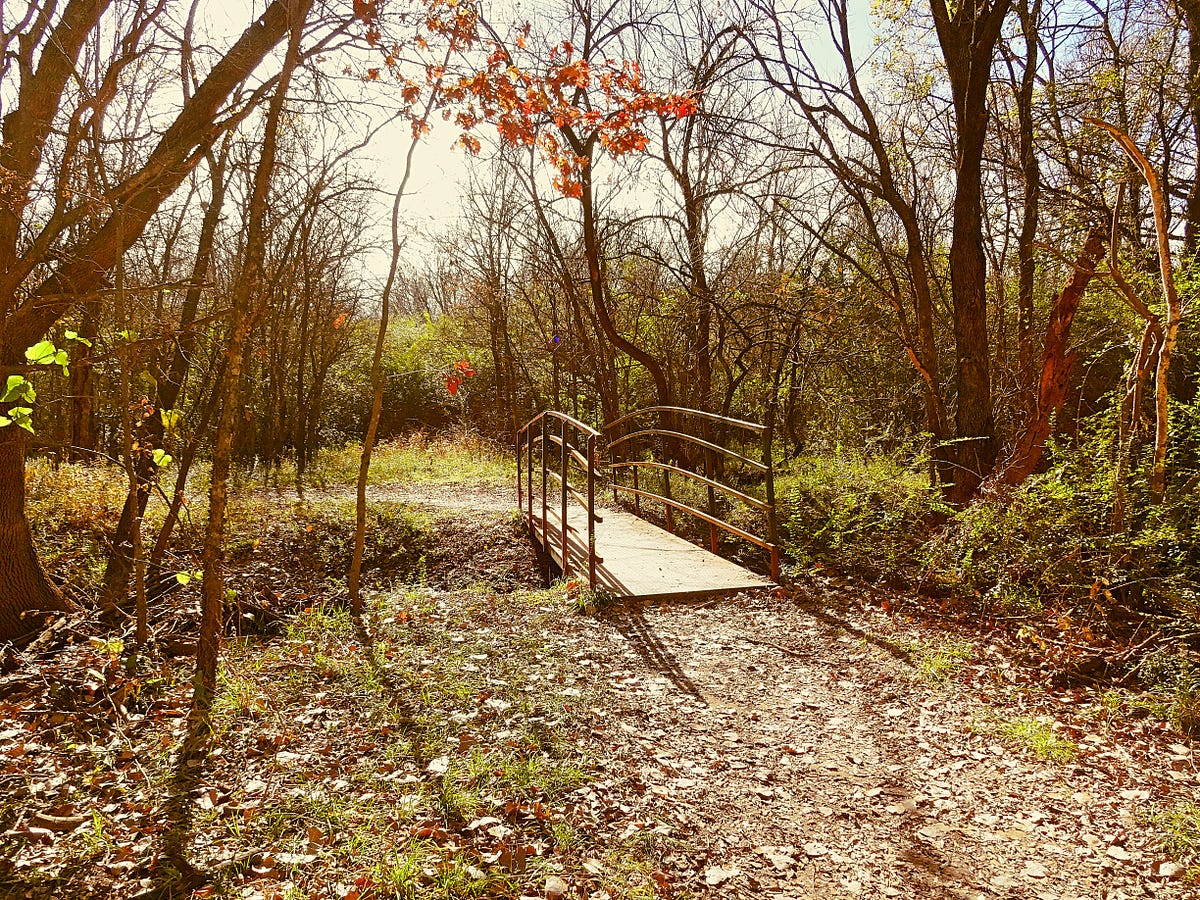
A trail suitable for walking — Photo by Terrye Turpin

Until I met Andrew, the man who would eventually become my husband, I was blissfully unaware that there were socks designed for specific activities. I purchased my socks in bulk and in solid colors that eliminated the need to make sure I had on a matching pair.

When I started dating Andrew, we spent weekends hiking along the shady trails near our home. I used to call this activity ‘taking a walk’ and it didn’t require specialized equipment. Andrew suggested that my feet would feel better if I were wearing a pair of socks with extra cushioning, and I agreed while we were limping to the car after a five-mile hike over terrain so scattered with sharp rocks and tree roots it resembled a trek through Mordor.

I didn’t realize that there were special socks for hiking, but a trip to REI (Recreational Equipment Insanity) set me straight on that right away. While I puzzled over the price tag on a pair woven from tan and green striped wool, Andrew handed me a flimsy bit of white cloth I held up and realized was actually a pair of socks.

“You should get liners. They’ll help to prevent blisters,” he said.

“You’re telling me my socks need socks?”

I left the store without purchasing anything when Andrew mentioned that REI had an outlet and if I weren’t picky on style, I could find suitable socks at a discount online. I ordered one set in a lovely shade of hot pink, just shy of rose and a little darker than blush, and I figured the color must be what landed them on the clearance section. Surely hiking socks would tend toward more solid, understated colors, like beige or olive green. I imagined that in a pinch I could take them off and use them as an emergency signal since the color could be seen by passing planes.

When the socks arrived, I opened the package to discover they came with instructions in five different languages and a 30 day no risk trial. They were made from a material called Thorlon, which sounded like a character from a fantasy novel.

“By the shield of Thorlon I command you!” I told Andrew.

The packaging described how this material magically prevented blisters. No liners required. A disclaimer on the tag mentioned the socks should not be ironed or dry-cleaned. While I pondered the type of person who would iron their socks and wondered just how this could be accomplished, I was relieved to notice the instructions included illustrations, captioned in English, of how the socks were fitted and cushioned. I worried I would have to learn German to get dressed for hiking.

The colorful tag also mentioned the socks protected against shock, impact, and shear. For a moment I thought I had mistakenly ordered a parachute. I reassured myself by trying them on and walking around my apartment. Although they seemed to have a nice amount of cushioning I didn’t think I would jump out of an airplane wearing them.

I wore the socks the next evening to walk down to the local library with Andrew to return some books. It was a chilly evening, so I put on the bright pink socks with a pair of matronly sandals that had elastic bands at the back, to hold them on my feet.

“My feet are cold,” I explained as I put on the socks and slipped into my sandals.

“Those socks should help.”

“If we get separated, just look for the pink glow,” I told him.

We made our way to and from the library, and Andrew not only walked beside me he carried my books and held my hand for most of the trip. It was dark out, which made it difficult for anyone to spot us I suppose, but the Thorlon material seemed to reflect the streetlights in a rosy glow around my feet. It occurred to me the packaging for these socks ought to include the disclaimer you shouldn’t judge someone until you had walked a mile in their socks. And while they are often found together, a warm heart doesn’t have to be accompanied by cold feet.

The God of Poop

The Dublin Bottling Works — Home of the original Dr. Pepper and definitely not a clear liquid. (Photo by Terrye Turpin)

At my last physical my doctor mentioned it had been five years since I had a colonoscopy.

“That long, huh? Gee doc, the whole experience was so pleasant it seems like only yesterday.”

Every time I light a candle in my bathroom, I feel like I’m setting up an altar to the god of poop.

I successfully delayed the colon conversation by mentioning my cholesterol. I’ve found as I grow older I can deflect almost any uncomfortable medical inquiry by bringing up another body part.

The first time I had a screening colonoscopy it took my doctor three years to convince me. She seemed puzzled that I continued to dodge major illnesses, so I felt I owed it to her to try one more test to see if we couldn’t find something. I called to make the appointment, and they told me I would need a designated driver to chauffeur me home after the procedure. Because I had spent 30 hours in labor with him, I nominated my oldest son, Robert. A few days before the big event he accompanied me to pick up the aptly named Super Bowel Prep Kit at the pharmacy.

“That will be $73,” the cheerful cashier said as she rang up my purchase.

“Holy crap!” I said. Robert laughed behind me.

I felt that for $73 the stuff should come with a sommelier, someone to uncork the bottle, swirl the liquid around in a glass, and remark on the bouquet. Reluctantly I paid for the purchase with my rapidly depleting medical flex spending card and we left with the kit — two 8 ounce bottles of clear liquid that each had to be mixed with another 8 ounces of water and then chased with yet another 16 ounces of water within an hour.

On the way back to my apartment I held up a bottle. “I wonder what it tastes like?”

“I bet it tastes like ass,” said my twenty-eight-year-old son with all the smug self-assurance of someone at least two decades away from having to drink 32 ounces of ass flavored liquid himself. We tried out different names for the drink — “Turd Tonic”, “Poopy Potion”, and finally decided the winner was “Caca Cola.”

The instructions for my prep assured me I could have all the clear liquids I wanted during the process. I enthusiastically mixed up a dozen servings of lemon and pineapple Jello. Red gelatin was discouraged in horrific detail. I discovered all the clear liquids I wanted were considerably less than the amount of clear liquids taking up room in my refrigerator.

The actual prep went as expected. I took the advice found on several internet sites and bought adult diapers to wear during the experience. They worked so well I wondered why I didn’t wear them all the time. Robert stayed with me in the beginning but when the real fun began, he left for his apartment.

“I’ll see you tomorrow!” I called out from behind the bathroom door.

The pharmacist had warned me that the prep was “very effective” and by the end of the second dose I had to agree. My colon was so clear the doctor could probably see all the way to Cleveland.

I couldn’t have anything to eat or drink the day of the colonoscopy and this worried me before I understood that by the end of the first day I wouldn’t want anything to eat or drink on the second day.

The morning of the procedure Robert strolled into my apartment. He wore an Iron Maiden t-shirt featuring a rotting corpse on the front.

“I’ll drive on the way there,” I told him.

When we arrived at the clinic I checked in while Robert discovered they didn’t have Wi-Fi in the waiting room. A smiling nurse escorted us back to a little room and I met with the doctor who would perform the colonoscopy. He looked slightly older than my son and had very nice hair.

“Awesome t-shirt dude!” he said to Robert as he flashed the metal sign and they slapped hands.

The doctor briefly explained the procedure and then a nurse brought over a hospital gown and a brown paper bag. She told me to take off all my clothes and put them in the bag.

“They’ll call when I’m ready to leave,” I tossed Robert my purse and phone as he bolted out the door.

After I stuffed my clothes into the paper bag, the nurse took a black marker and wrote my name on the outside, just in case they needed to use it as evidence. I hopped onto the narrow hospital bed as the anesthesiologist came in to meet with me. He also had nice hair and a lovely smile. He looked and sounded like the actor Antonio Banderas.

“How are you feeling?” he asked as he placed his hand on my arm. He had very warm hands.

“I’m okay,” I responded, with as much confidence as I could while my bare ass stuck to the sheet covering the bed.

“Don’t be nervous, I promise you won’t remember anything about the procedure. You will just have a little nap now.”

I smiled up at him from the bed and tried not to look nervous, despite his being one of the most handsome men to see me half naked. He kept his warm hand on my arm as he helped me turn over on my side. Then he bent down to gaze into my eyes and ask, “Do you have any loose teeth or dentures?”

My doctor came in and fussed around with something behind my back as he hummed what sounded suspiciously like “Run to the Hills”, complete with shredding guitar solo. I no longer felt nervous, I felt old and tired as I fell into the promised nap.

I had read all about the unpleasantness of the prep but what no one mentioned was how wonderful were the after-affects of the sedative they give you. I woke up to the sound of “Slow Ride” by Fog Hat playing on the room’s sound system, which was appropriate since I hadn’t felt that stoned since 1975.

“How are you doing?” asked the nurse as she took my arm and helped me to sit up.

“Wow,” I replied.

“Would you like a drink? We have Coke, Dr. Pepper, and Sprite.”

I chose a Dr. Pepper, and when the nurse asked if I wanted a regular or a diet drink, I replied, “Oh, I want a REAL Dr. Pepper!”

When Robert arrived to pick me up, I was still enjoying my not-clear drink. The nurse warned us “Go straight home. No shopping and don’t make any legal decisions or sign any documents today.”

“Can I take my Dr. Pepper with me?” I asked.

On the way home I buckled into the passenger seat of the car, propped up against the door, and enjoyed the rest of my soda while Robert drove with his usual reckless abandon. The drugs were still kicking in, so I didn’t mind when we charged through yellow lights and swerved around corners.

I wanted to make some profound comment on how wonderful it is to have a family, and how much I loved and appreciated him. Tears welled up in my eyes and I spoke in a hoarse voice.

“This is the best Dr. Pepper in the entire world.” I reached over to pat my son’s arm.

“Those must be some fantastic drugs, Mom.”

We continued on towards home, where we would listen to Iron Maiden on the stereo, watch television together, and have anything we wanted for dinner, including six or seven servings of pineapple Jello.