This story is one I wrote last year for the NYC Midnight Scary Story contest. The judges liked it enough that I advanced to the second round in that contest. One of the prompts that had to be included was a character that was a nomad. I don’t remember the other prompts. The story also had to be 500 words or less, a real challenge when you have to include specific things.
I’m not entering any NYC Midnight contests this year. They have been a good incentive to stretch my creativity, but I’ve put off writing a novel for too long and now is the time to concentrate on that. For now, I hope you enjoy this little tale. It’s a ghost story of sorts, but not too scary.
The Homecoming
Every October, Evangeline was drawn back to the place she had known as home. No matter how far she traveled, like a bird she returned, drawn to dark mysteries in the East Texas house.
She parked the RV in the weed-filled drive and waited as the witch came outside. The old woman’s name refused to rise in her recollection, but her face was one Evangeline could imagine as her own reflection, twenty years forward.
“You’re here,” the witch said. “Come inside.”
Evangeline left the motor home, with its collage of bumper stickers from places pinned on a map. Never settling, lest she mistake familiarity for forgiveness.
The porch creaked with her steps, the wood gone soft and gray. Beside the house, laundry hung on a line—cotton dresses and sheets that snapped like sails in the wind.
She followed the old woman down a hallway with portraits on the walls. A young man in a soldier’s uniform, a bride in an oval frame, a family of stern-faced folk. Last, a photograph, colors faded to blue-green, of a mother and child. Broken glass hung in the frame. Someone had carved out their faces, taken a sharp edge to the paper. Evangeline trailed her fingers across the clinging shards of glass. A carmine drop of blood bloomed on her thumb.
Inside the bathroom, water dripped into a claw-footed tub. The scent of mold and rain-damp leaves, of things left to rot, drifted out. Evangeline covered her face to hide from the room.
“Sit.” The old woman pointed at the kitchen table. Scattered across the surface were dried herbs, a hen’s egg, a black candle, and a clump of clay molded into the shape of an infant.
After lighting the candle, the woman grabbed Evangeline’s hand and squeezed a drop of blood into the flame. A clock chimed three times.
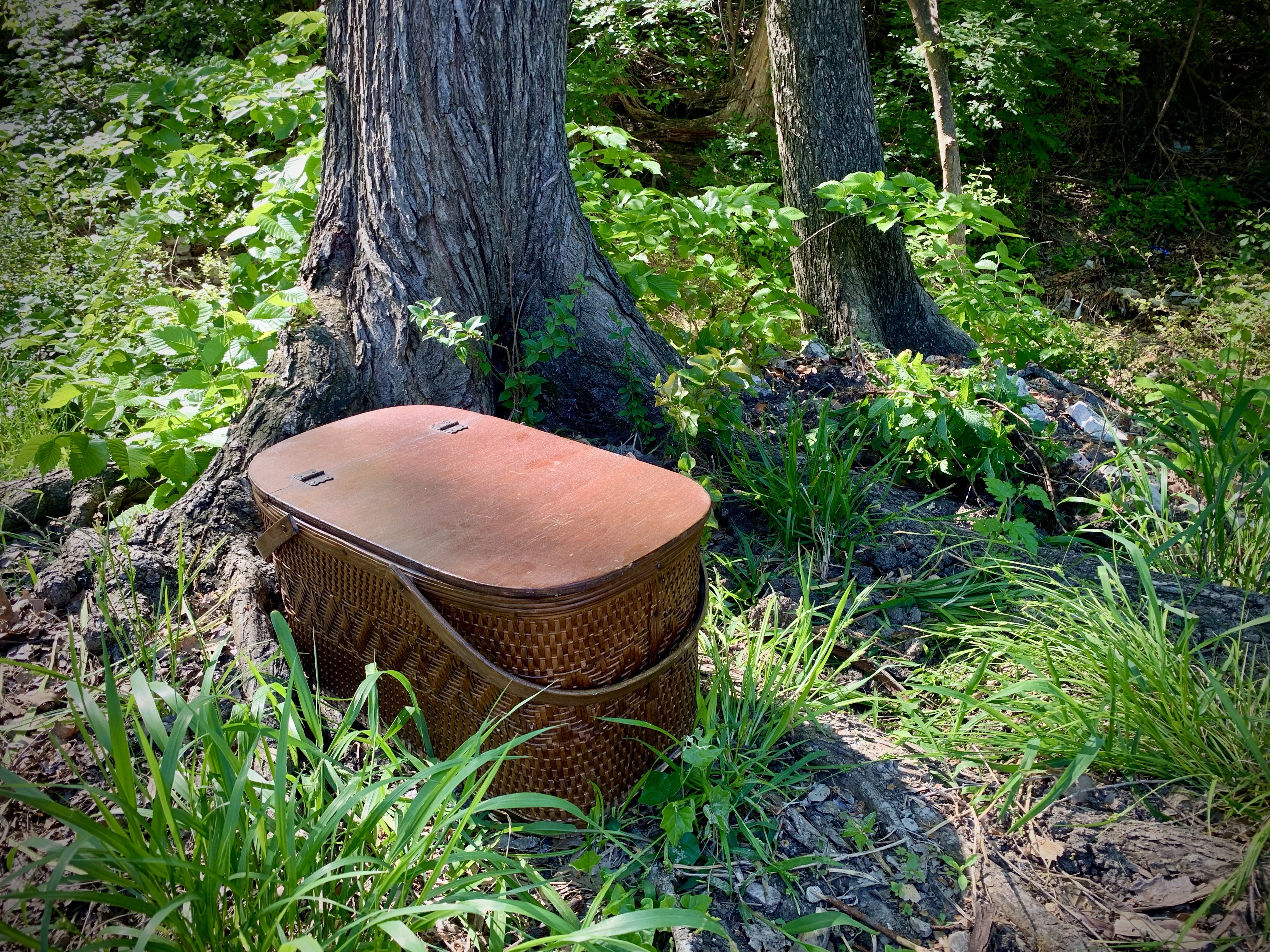
“Hurry.” The witch pushed a wicker basket at Evangeline.
Outside, dark clouds threatened. She raced to save the wash. When she tried to return the basket, the witch blocked her. “You must face this.”
Evangeline shivered. The bathroom door creaked closed, hiding what waited inside. No giggling play, no splashing. Only drip, drip, drip.
“The spell didn’t work. I don’t remember,” Evangeline lied.
“It was an accident. Forgive yourself.”
Before she climbed into the RV, Evangeline kissed the old woman’s cheek. “I’ll see you next year,” she said. “Goodbye, Mother.”
The story below is one I wrote last year for the NYC Midnight 500 word contest. I’ve held onto it, thinking maybe I would expand it and put it into a book of short stories, but the longer I put that off, the less interest I have in editing. There are folders on my computer filled with half-finished stories. At least this one is complete, although it could have used a few more words. But it’s enough for now and it gives me something to post on the weekly blog.
One of these days I’ll pull those other stories together into a book. I don’t feel too guilty letting them sit. I’ve started work on a novel, and I’ll use that as an excuse for now.
This one is a horror story and it’s a bit dark, so be warned.
Counting Dead Flowers
On my fourth trip to the cellar, the rotten step collapsed. Luckily, most of my weight had shifted, my foot planted on the next tread. Cursing, I gripped the handrail, glancing over my shoulder at the gap where the middle board had been. Much of the stairs lay in shadows due to the burned-out bulb at the top.
I could imagine my sister Ivy chiding me for not replacing it. She’d be angry enough that I was here alone. “Don’t go without me. I’ll be there by Thursday at the latest,” she’d said.
Three days had passed since our father’s death. Eager to begin the search, I had sorted through the mounds of newspapers, broken dishes, empty takeout containers, and discarded electronics that filled the home like barnacles on a ship.
I’d arranged our father’s cremation. There was no point in a funeral—the man had no one other than Ivy and me. He had lived alone in this house for twenty years.
At the bottom of the stairs, I weaved through the cardboard boxes I’d moved to clear a path to the back. The place stank of mildew and the damp earth of the cellar’s dirt floor. My shadow, cast by the pale light of the bare bulb on the ceiling, hovered over the old chest that I had uncovered. Made of cheap particleboard, one end had rotted out, spilling the contents. A child’s jump rope lay coiled on top of the chest. Lifting the rope, I recalled the rhyming song we had chanted.
I know a secret. Can you guess?
which little flower he likes best?
Setting aside the rope, I scooped out folded sheets of paper, yellowed and dotted with black and green mold. Childish handwriting covered the pages that could still be read. I shivered, remembering the scratch of pencil against paper as I created a list of names.
Daisy, Rosy, Violet, Belle,
hide in the cellar, and don’t you tell.
Upstairs, the front door creaked open, followed by my sister’s voice. “Lily?”
Frantic, I tried to stuff the papers back into the chest, but they slid out, along with a stack of Polaroid photos.
Sister doesn’t care, sister doesn’t mind.
How many petals will you find?
Her heels tapped along the wood floors. I turned over the first photo. A pale face stared at me. One of the missing girls we’d planted in the cellar dirt. How many were there? I kept getting the number confused with the count at the end of our jump rope rhyme. One, two, three, four—we stopped when he had the first stroke, when I was twelve, Ivy fourteen.
“Where are you?” Ivy’s steps halted.
“Down here.”
She wanted to confess, to set the past right. Would a jury forgive our acting as lures for the innocent? No. We clipped them, gardeners deadheading blooms.
Counting the steps as Ivy descended, I picked up the rope. If the broken tread didn’t do the job, I would finish it.
The story I’m sharing tonight was my entry for the second round in the NYC Midnight Scary Story contest. I didn’t advance to the finals and I’m a choosing to look on that as okay news as this means I now have the weekend free to work on the novel that I’ve started.
I received some good feedback from the judges, and I considered whether I wanted to go in and re-work the story to submit somewhere. But I then decided that it would just be one way of putting off the hard work of novel writing.
The prompts for this story were: burial, skipping a meal, and a couponer. I do love the prompt based writing contests, as they are always a challenge to creativity. And now, here is the story in all its unedited glory. Enjoy! (or not – this one’s a bit dark)
Die Hungry
The line of people wound through the cemetery. At the edge of the graveyard, a backhoe idled. Hayla shuffled forward, clasping her vouchers. Armed guards strode beside them, like wolves stalking prey.
“It’s fine weather for Parting Day,” the bearded man in front of her said. He grinned, revealing rotten teeth.
Shrinking back, Hayla nodded. Was this his mandatory age of disposition? She had signed up on her fiftieth birthday, five years early, to gift the unused time to her daughter.
The man leaned close enough she could smell the onion stink of his body odor. “I heard they don’t embalm or cremate folks so they can test whether the virus is still around.”
“Don’t care,” Hayla said. “Better to be buried with a full stomach than die hungry and rise as a ghoul.”
“You think this is enough?” The man held a single orange ticket, the color of the free government vouchers. Hayla had five meal coupons, one in each color, collected in preparation for today. A full digestive system halted the disease.
She turned, eager to glimpse the feast table. The scent of roasted chicken drifted through the air. Her stomach rumbled. She shouldn’t have fasted yesterday, but she wanted to gorge today. She swallowed, her mouth slick with saliva.
“Get back!” One of the armed men shouted. Across from the queue, a dozen people, men and women, fought against the ropes binding them. The unfed. Hayla shivered. Buried under concrete, unable to claw your way out. The group struggled toward the feast line.
“Go!” A guard pushed Hayla into the bearded man.
Screaming, the bound group surged into the queue. Hayla tripped, falling hard on her side. A large man landed on her, crushing her breath. She rolled, pushing the man away.
Gunfire thundered, bullets thudding into victims. Hayla crawled across the grass, shuddering as people fell wailing around her. Within seconds it was over. Hayla staggered to her feet. She ran trembling hands down her body. Her meal coupons were gone.
She grabbed a guard. “I’ve lost my tickets!”
“Sure. And I’m the pope.” He pulled her toward a pile of bodies.
A bulldozer roared, scooping up the fallen. The guard raised his gun.
Hayla woke, lying cold in absolute darkness. Something soft and wet pressed her cheek. Someone moaned. She grasped their arm and pulled it to her mouth. Hungry. She was so hungry.
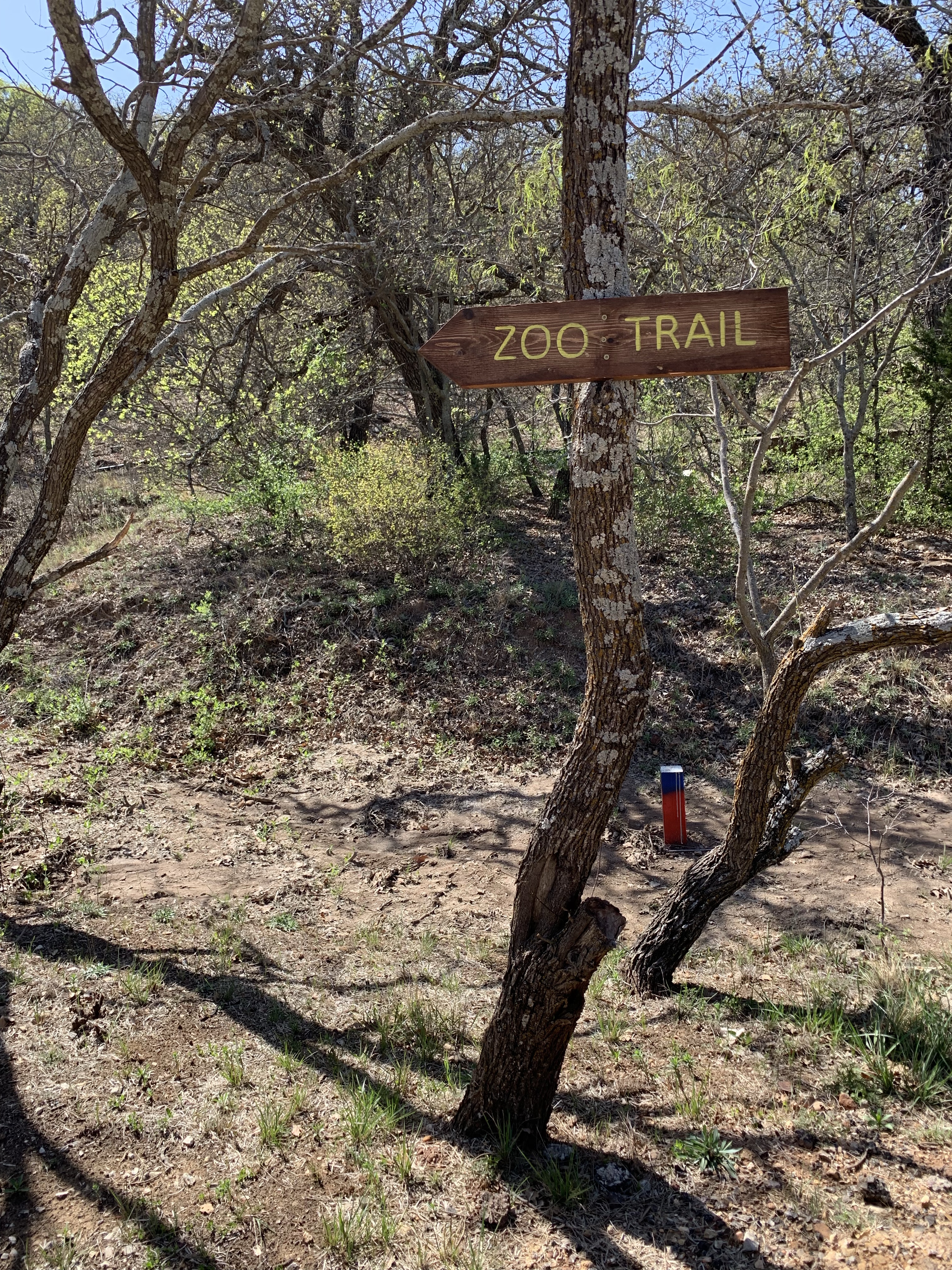
A sign on the trail at the old Cisco zoo. Photo by the author
One of the most common questions that authors get asked is some variation of “Where do you get your ideas?” For most writers, the answer is that we find them in our everyday experiences. This includes people who pen tales about ghosts, demons, and dragons. We don’t encounter those in real life, but we run across settings or objects that spur stories. Stephen King was inspired to write his novel The Shining after a winter stay at the Stanley Hotel in Estes, Colorado. The hotel’s isolated setting and a nightmare about his son gave rise to the plot of the horror story. And a very good one it is.
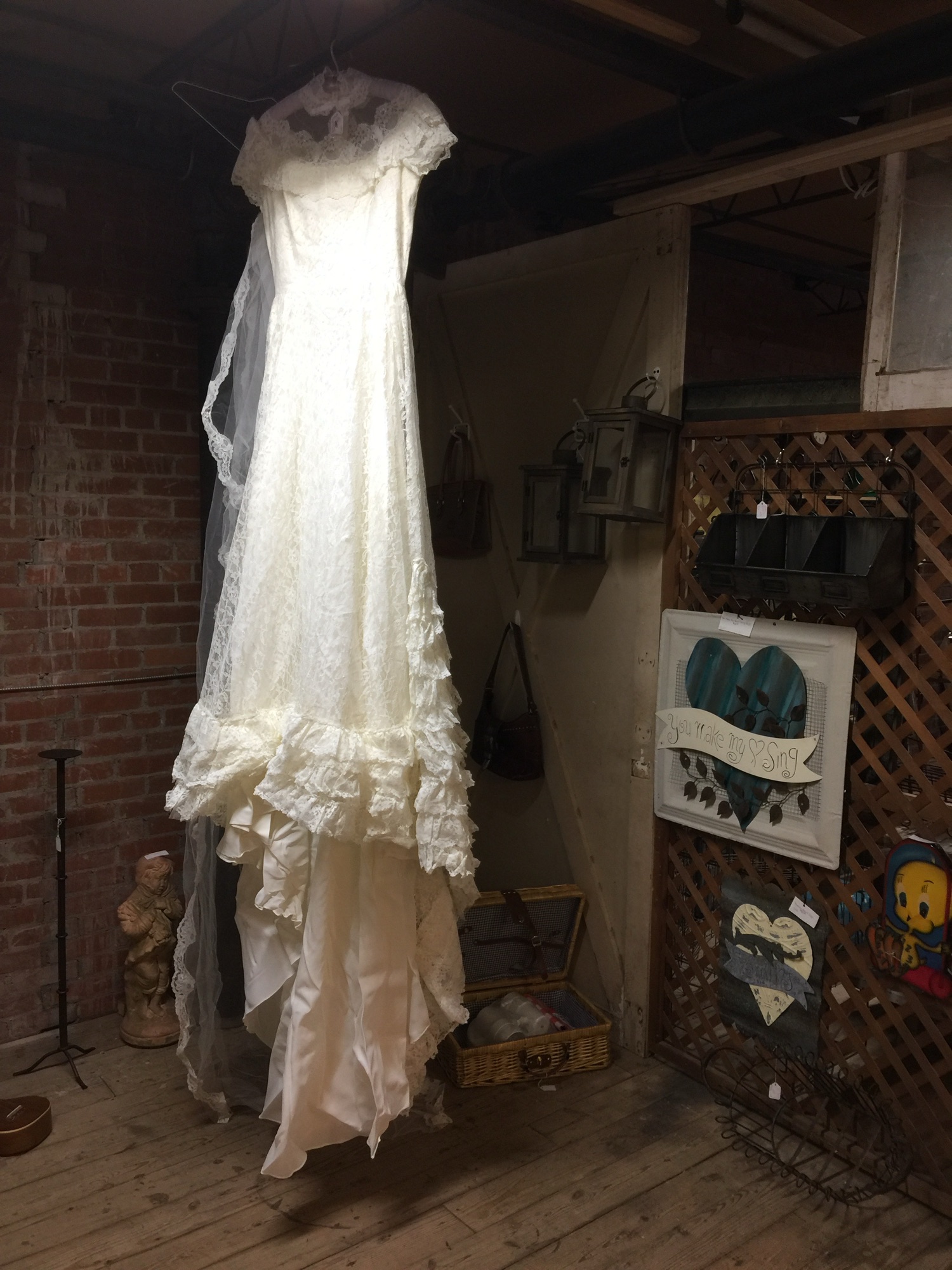
Not a ghost, but a ghostly garment for sure. Photo by the author.
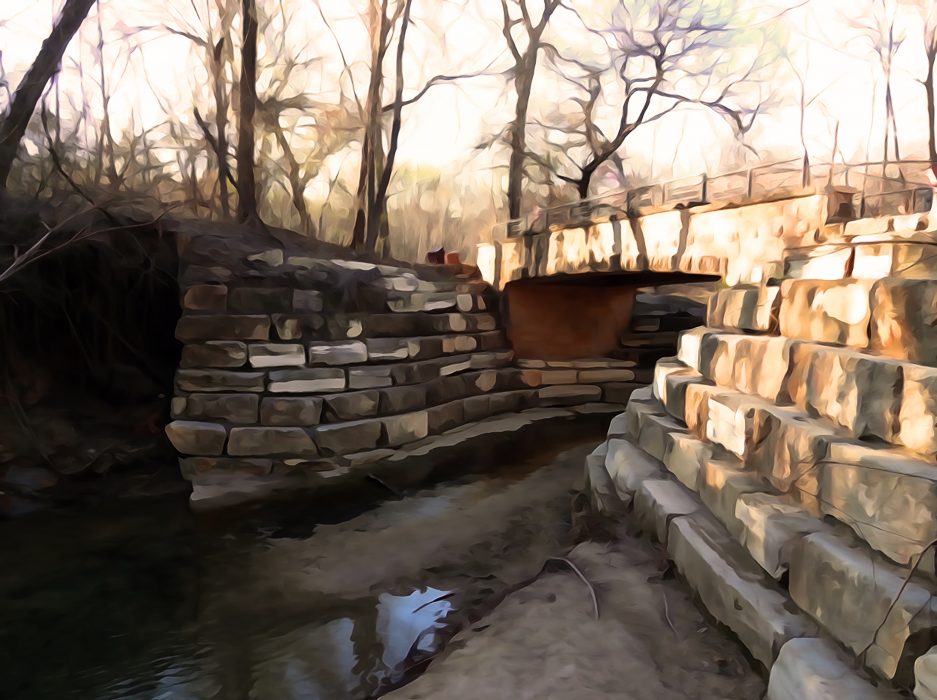
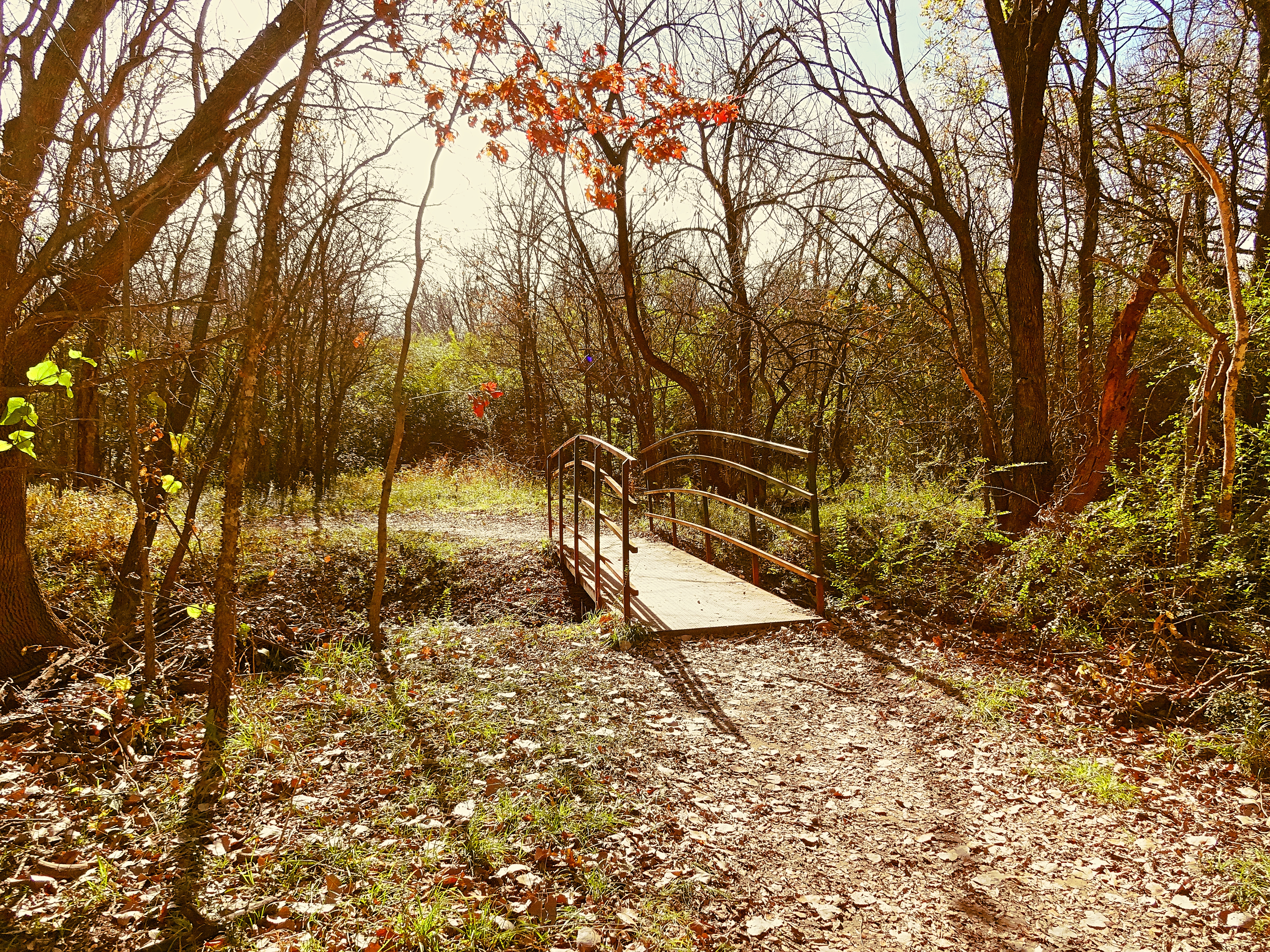
A couple of years back, my husband Andrew and I visited the abandoned zoo trail in Cisco, Texas. I’ve got a separate post about that visit – you can find it on the Road Trip tab and read about it if you’d like. Strolling through that place I felt it would make a great setting. I filed away the memories and images to recall at some later date. They came to life in the Spring 2025 Writing Battle writing contest. I received the prompts “Small Town Secrets”, “Zoo”, and “Rich Aunt.” The minute I saw “Zoo” I knew where to set my story. Once I placed the characters in that abandoned zoo I found the secret that they were keeping.
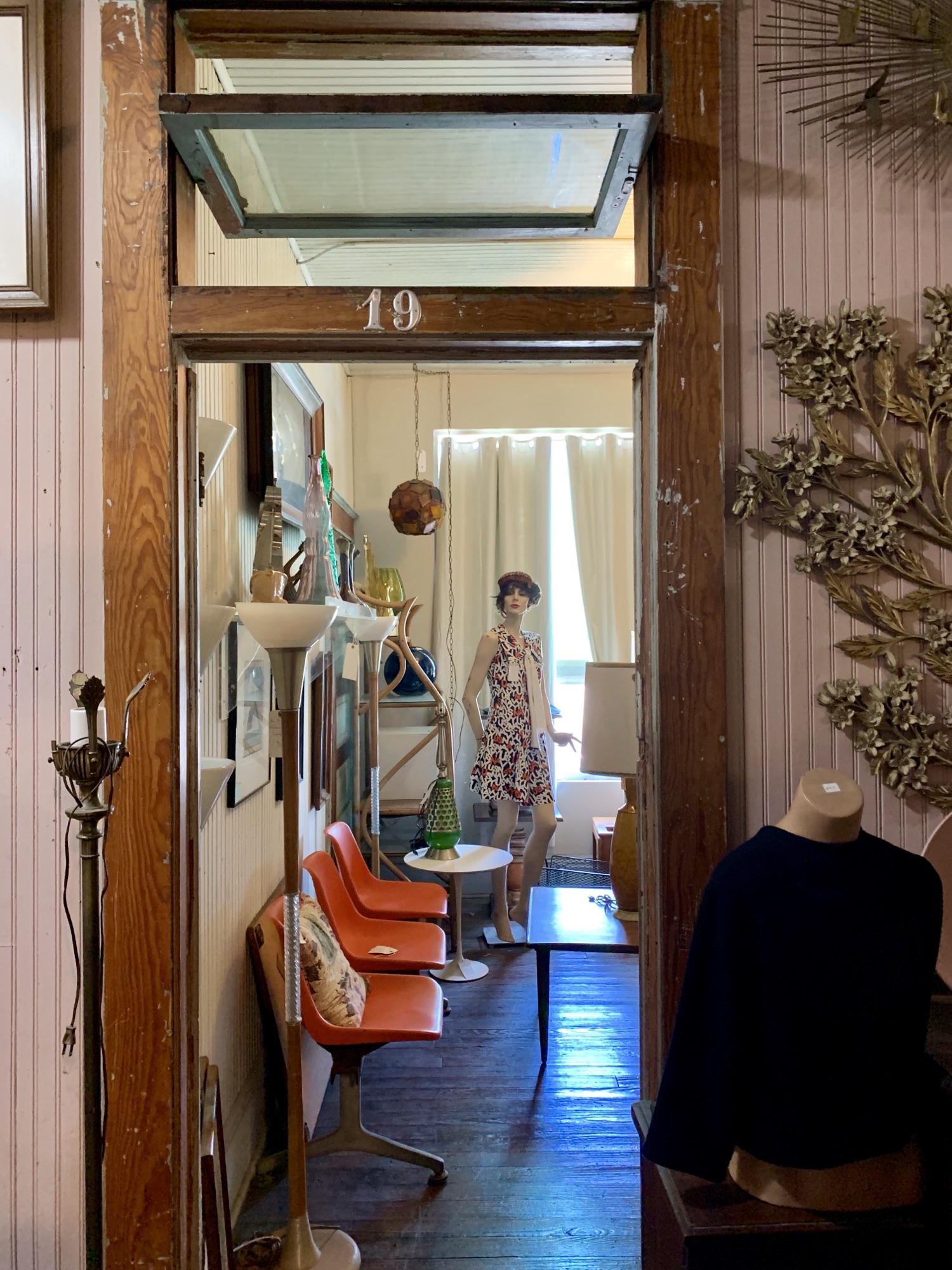
There’s a story waiting inside this room. Photo by the author.
Getting words on the page is the hardest step for me, but the contest had a deadline so that gave me motivation. I ran my first draft through the ProWritingAid app to polish the grammar and eliminate most of the passive voice. After one last edit, I finished the story and submitted it to the contest. It didn’t win any prizes. However, I received some useful feedback from the other contestants. The trick to a good story is that it’s not the writing but the rewriting that makes it stand out. After editing the draft that I had submitted to the contest, I took my pages to my writing group and got their feedback. Then, I submitted the story to the Flash Fiction Magazine’s contest. It didn’t win there either, but one of the editors emailed me afterwards and offered to publish it in the magazine. With some edits, of course. I said yes and off we went on the last round of revisions.
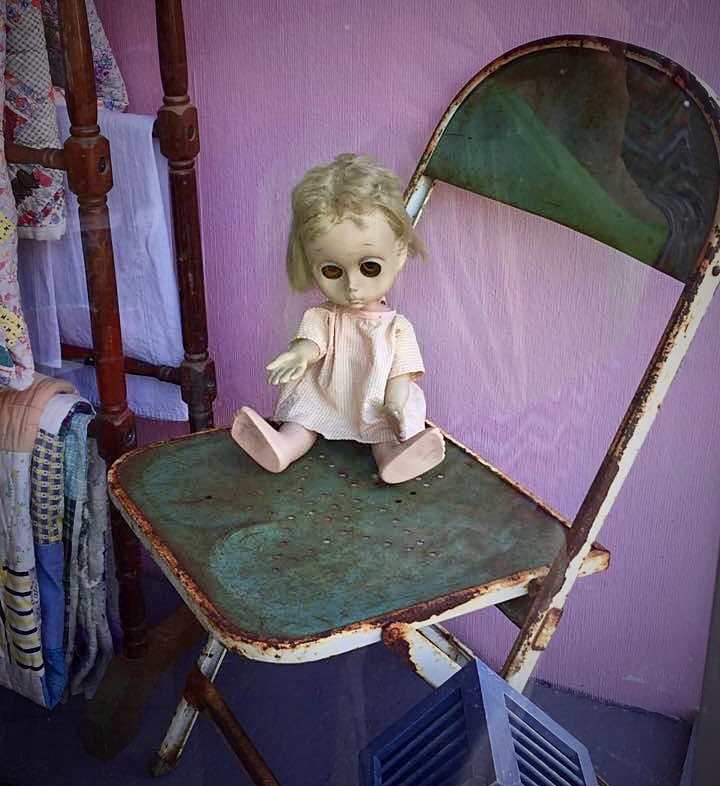
When we encounter haunted objects, there’s story waiting. Photo by the author.
My story, All We Have Abandoned, went through at least six rounds of editing before finally being published. Here is a list of some things that were changed through that process.
The title went from Forsaken but not Forgotten to the current one – All We Have Abandoned. I think the second title brings out the emotions felt in my trip to the old zoo and also fits the plot of the fiction piece better than the first title.
Some of the early readers mentioned that they couldn’t picture the point of view character. I realized that I hadn’t mentioned a gender or even a name for this character until past the halfway point in the story. Way too late – if you don’t introduce the main character early, readers will form their own idea of who that person should be. This can be jarring if they get the wrong picture of them and have to adjust later. I moved the narrator’s name up to the first word in the first sentence and added the phrase “no longer a little boy” as a second reminder of his gender.
I got rid of most of the “rich aunt” details that I had to include in the contest story but kept a couple of things about her character. She wears rhinestone-studded sunglasses and carries a cane with a silver handle. Those details I think will allow the reader to imagine her and also no a little bit about her personality.
My original draft included a full paragraph of back story about the zoo history. Fascinating stuff to me, the author, but not so interesting to readers who just wanted to get into the story. Cutting those lines allowed me room to add a scene where the main character encounters someone in the past.
Speaking of the past, I had a problem with tenses. There’s a flashback while the characters stroll through the zoo, but I wrote almost everything in present tense. Some of my early readers were confused about the timeline until I fixed that problem.
I made a small change to the ending, substituting one word for two in the last sentence. In general, I think it is always a good idea to cut words and this one change gave the story more impact and an ending that will stay with the reader.
Now, if you’d like to read the final, published story, here’s the link to the post on the Flash Fiction Magazine page: All We Have Abandoned
This story is one I submitted to one of NYC Midnight’s writing contests. I don’t remember the prompts, but they had to be something amusing to result in the following tale.
The Cook in the Kitchen
Betty Norman held the dusty cookbook angled toward the sunlight spilling through the thrift shop’s window. Her husband Eustace tromped up behind her, his arms filled with a dozen mildewed copies of Popular Mechanics magazines and five dull-brass cabinet knobs. He propped his chin on her shoulder as she traced the spidery handwriting in the margins of the cookbook. Betty flipped through the yellowed pages. She tapped a brown stain on the cover, shaped like the state of West Virginia. “I bet there’s good recipes here.”
Smiling, Eustace agreed. “This one might do the trick.”
At home, she stashed her purchase between a worn Fanny Farmer cookbook and a hardcover copy of The Joy of Cooking. The shelves on the bookcase sagged beneath the weight of thousands of recipes. Despite all this instruction, Betty had never grilled a steak she couldn’t burn to bitter charcoal, had never baked a cake that rose above the batter. If she put eggs on to boil, the water would simmer away until the pan ran dry, without so much as firming up a single yolk. When it came to cooking, she was cursed.
Her mother hadn’t meant to put a hex on her. Betty’s mother had never let her help in the kitchen. Two cooks would spoil the broth.
Later that night Betty woke to the clink of silverware, and the hushed whisper of drawers sliding open. In the dark kitchen she discovered the new cookbook on the counter, surrounded by a dusting of flour. A stove burner blazed blue flame. Betty rushed to turn it off. A pale woman wearing an apron stood reaching for the refrigerator door.
“Hey!” called Betty.
Just then, Eustace stepped into the kitchen and flipped on the light. The woman disappeared. “You fixing a late-night snack?” He pointed to the open cookbook.
“Not me.” Betty shook her head. She picked up the cookbook and shook the flour from the pages. “We brought home a ghost.”
Sighing, Betty pulled a thin, cloth-bound volume from the shelf. She opened it and ran her finger across the bold, block letters scrawled across the margins as she said, “Mom. I need your help again.”
Betty stacked her mother’s cookbook atop their latest purchase. She and Eustace went off to bed, certain the ghost would be gone. Betty’s mother never allowed anyone else in the kitchen.
I’m sharing another piece from a Writing Battle contest. This one had a limit of 250 words. The question I struggle with when writing very short, micro fiction is this: “How do you produce a complete story with characterization, rising and falling action, plot, and resolution when you only have X number of words?” Sometimes I feel like I hit the sweet spot on all those things that make a story a story, and sometimes I just have to be happy writing a vignette.
Vignette: a brief evocative description, account, or episode.
The story below made it to the top 16 in my category, but didn’t win any prizes. My genre was “Summer Fling”, I had to have a character “Bumbling Adventurer” and I had to include the word “Prudent.”
After the contest, I tried to expand the piece and I submitted it to a couple of other contests, only to get it back with the feedback that it wasn’t a complete story. Anyway I like it, so here it is. What do you think? Short story or vignette?
Lantana
Alina rolled through life like a tumbleweed — reckless, never prudent. She wore odd combinations—crimson flowers on an orange shirt and blue striped shorts, as though she dressed in the dark. One summer morning, she braided her sun-gold hair and set off to meet her latest boyfriend, Jay, at the pier.
She strolled across the sand toward a Ferris wheel outlined against a periwinkle sky. After she lost a shoe in the surf, Alina stopped at the gift shop and bought a pair of rubber sandals.
When she found Jay, he held a paper container of fries. His kiss tasted of salt. Holding hands, they weaved past carnival games and their clanging, ringing, flashing lights. A summer season of popcorn bits and peanut shells crunched underfoot. Alina purchased a souvenir cup topped with a plastic dolphin’s head. They shared a pink puff of cotton candy, the hot-sugar stickiness clinging to their fingers. So sweet, before dissolving to nothing.
They paused at a giant wooden track. Overhead, cars filled with screaming passengers rattled past. “Last chance, ride it with me?” Alina asked.
“I don’t do roller coasters.”
She thrust the dolphin cup at him and joined the queue for the ride. At the second hill, the coaster froze at the summit. In the moments before the cars resumed their plunge, Alina stretched her arms overhead. The wind carried a hint of coolness, heralding summer’s end. She searched the ground for Jay. Below, he lifted the cup in salute, or farewell.
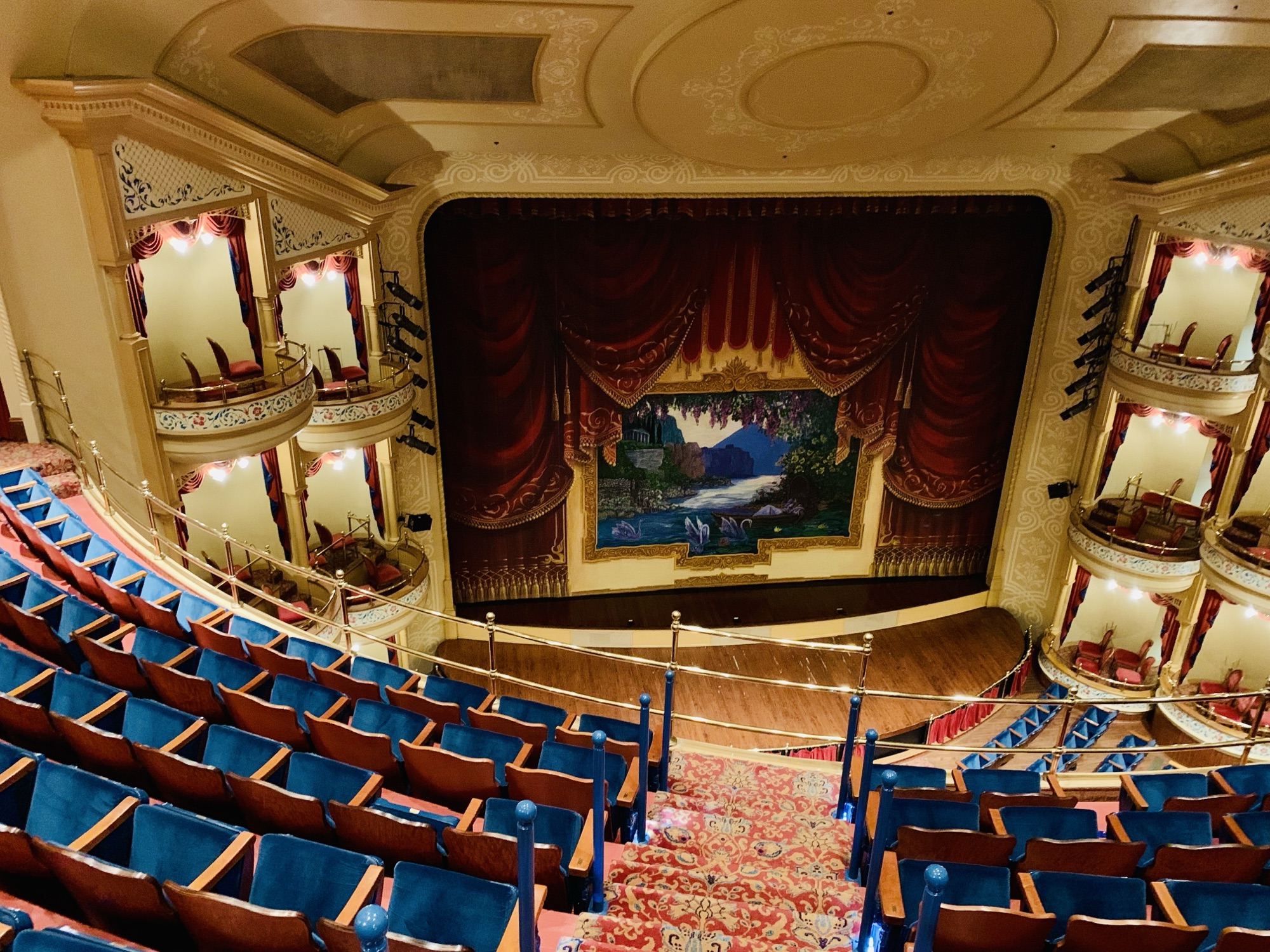
The Grand Opera House in Galveston – photo by the author
Tonight I’m sharing another NYC Midnight contest entry. This one made it through the first round of the Flash Fiction challenge this year. I had to write a 1,000 word or less story in 48 hours in the thriller genre with the setting in an auditorium. And I had to include a ladder in the piece.
Here’s my summary of the story: Magician Mark Ruska and his wife Gigi are involuntary accomplices to a pair of armed assassins during a live show. Working together, the Ruskas perform a dangerous illusion that will be their only escape.
And here is the story, complete in 999 words. (Not counting the title)
The Final Illusion
Every illusion depends on misdirection. The magician, Mark Ruska, paced the stage of the Grand Palace, noting where the set pieces would be during the performance. Everything had to be perfect. On the other side of the velvet curtain, murmurs and shuffling footsteps sounded as the audience filed into the auditorium.
“You done?” The man at the side of the stage motioned with his chin. His hands were busy holding a matte black gun. A red, ridged scar traced across his brow, above eyes the watery gray of a shark’s.
Mark’s wife Gigi stood beside the scarred man. She wore a black tuxedo coat and pants—the outfit matching Mark’s. She nodded to Mark, then wiped her face.
“We’re ready.” Mark scanned the fly space overhead. Heavy sandbags and counterweights hung suspended over a metal catwalk. At the top, accessed by a thin metal ladder, was the wide concrete hallway leading to the rooftop doorway and to an entrance to the theater’s third level.
“We’ll do our job and you guys can go,” the man said.
Mark doubted that. Neither the scarred guy nor the assassin perched on the catwalk had bothered to cover their faces. They would not leave anyone to identify them. Hopefully, their sound and lighting guy, Jim, would stay in his booth, isolated and unknowing of the drama.
At last, the house lights dimmed, the curtains opened, and the show began. The scarred man slid hidden at the side of the stage. Mark wheeled out the large steamer trunk, big as a coffin, that held their equipment.
As they worked their way through the first set—levitation, a transformation illusion, and Gigi’s disappearing rabbit trick, Mark wondered who was the intended victim? The Grand held two hundred seats among three tiers, including six balcony boxes with another twenty-four places. The boxes were positioned directly next to each stage side. Whoever sat in those seats would be at the perfect angle for the catwalk sniper.
A silver-haired man wearing a dark suit sat in the middle box at stage left. Two younger men, both with thick necks and arms that strained the sleeves of their polo shirts, sat behind him. Mark, holding up a chain of clinking triangles, risked a glance at the scarred man. The gunman leaned forward, weapon lowered, his gaze fixed on the man in the box seat.
With a flourish, Mark held the metal triangles up. The chain magically separated into two parts. When the applause faded, he spoke. “For our next trick, we will need a special assistant.” Their usual routine would be to call on a pre-screened audience member. Mark turned to Gigi, hoping their decade of performing this illusion in this theater would allow her to understand his desperate plan. Mentally counting off his steps, Mark rolled the trunk to the position he had noted earlier. Gigi met his gaze, smiled and turned to bring out the folding screen.
“Ladies and gentlemen, please welcome our backstage assistant, John.” Mark waved to the scarred man, motioning him forward. Several beats of awkward silence followed as the man scowled and shook his head.
The next few moments would determine whether they would walk out or perish in the gunfire. Mark assumed they planned to kill their target at the show’s end, hoping the distraction of everyone exiting would cover their escape. Now, some in the audience began to mutter and confused laughter sounded. The silver-haired man half-rose from his seat and looked around. Would the sniper take this as his chance? Mark held his breath, waiting.
Finally, the scarred man strode onstage. “There you are!’ Mark led the man to the steamer trunk. Gigi spun the wooden box, showing the audience the lid and locks. As she helped him into the trunk, Gigi whispered escape instructions to the gunman—instructions he wouldn’t be able to follow. Mark rattled the lock and spoke to cover her voice. “One person goes in, but who will come out?”
Mark leaned to whisper to the man inside. “Listen to the music and wait for the drumroll.” He slipped the lock from its fake, unsecured position and threaded it through the clasp holding the lid closed, then spun the box to show the audience. After he helped Gigi move the screen into place, they walked behind it. The lights dimmed and music played.
In normal times, the audience member would open the fake unlocked panel on the steamer and Gigi would climb inside. Mark would escape the stage by climbing the ladder up to the top and take the door to the third level, reappearing in the audience at the end of the drum roll. It all came down to timing. If they got this right, they might have a chance.
“Go out the back, get security, and call the police.” Mark kissed her. “Don’t look back.”
Gigi squeezed his arm. “I love you.”
The music rose in a crescendo, covering the squeak of the metal rungs as Mark climbed. The lighting changed to dark blue with silvery flashes that looked like stars. All distraction to keep the audience on edge.
When he reached the catwalk, Mark slipped off his shoes and crept toward the sniper. The man remained focused on his target, not noticing as Mark neared.
Four feet away, Mark swung the nearest sandbag in an arc at the gunman. The bag, with its thick rope, knocked the man to the edge of the metal ledge. He grabbed the rope, wrapping his hand around it to steady himself. Mark rushed forward. He pushed the man off the catwalk, then released the counterweight to the bag. The sniper, still grasping the bag, plummeted onto the stage. At the end of its line, the bag jerked to a stop. The sniper fell the last twenty feet—onto the steamer trunk.
The police arrived. An ambulance carted off the handcuffed and injured criminals. Mark looked for the silver-haired man, but he had vanished into the crowd.
This week’s story was my first entry into the Not Quite Write flash fiction contest. The challenge includes three prompts. One of the three is what they called an “anti-prompt” where the requirement is to break a named writing rule. For the round that I entered, the rule to break was “use active voice.” The other two prompts were: include the word “crane” and include the action of burning something.
I enjoyed writing the story, even if I didn’t place in the contest I still ended up with a nice little story to post here.
The Magic of Crane Flies
Erin Welch dropped the match onto the brush pile, and with a crackle, the dry tinder ignited. The leaves were burned in the evening, because that’s the way it was always done, as her grandmother had taught her. Leaning against her rake, Erin studied the sparks rising into the dark–orange blooms against the purple dusk. The autumn scent of wood smoke filled the air. Soon, they would be drawn to the light.
Minutes later, when the glow lit up the trees, the first crane fly brushed against her cheek. She captured it in her cupped hands, and its six spindly legs tap, tap, tapped against her palms. Others arrived, drunkenly flying above the flames, their wings reflecting amber light. Easy to believe they were faeries, with their long bodies and large eyes.
Erin’s grandmother, Dinky, had always said that crane flies were made for magic. During their short lives, they never ate. Instead, they spent their time reproducing for their next cycle stage. Such determination to foil death had led to their kind surviving for millions of years. Across the yard, inside Dinky’s cabin on the fireplace mantel, was proof–a fossilized crane fly, stamped on a chunk of shale.
“Capture one and it’ll grant a wish,” Dinky had said.
Adulthood cares banished belief in enchantments. Until now, the week after her grandmother’s death. Careful not to damage the trapped insect, Erin whispered her request and released the crane fly.
It joined its mates above the flames, as sparks swirled and joined to form a familiar figure. Before Erin could blink away the apparition, her dead grandmother stepped beside her.
“Nothing like a good fire.” Dinky held her hands out to the flames, as though to warm them. Her body flickered like a pixelated image. As in life, her ghost stood barely over four feet tall, her short stature the inspiration for her nickname.
“Grandma?” Erin’s breath hung in a cloud. The night air turned winter cold. She edged closer to the fire for warmth.
“I’m here.” There were so many things she wanted to ask her grandmother. She tried to touch the ghost, but her hand passed through.
Gusts of frigid wind scattered the burning leaves. Erin rushed, stamping out pockets of flames. When she finished, Dinky’s ghost had vanished.
“No!” Frantic, Erin tossed handfuls of dried leaves onto what remained of the fire. Despite her efforts, only sparks floated above. The ground circling the fire held dozens of the crane flies, their stick bodies motionless. She dropped to her knees, the cold soaking through her jeans as she scrambled, hoping to find one alive.
She wanted more time. So many things left unsaid. She strode to the cabin and went inside. The wish had only lasted for as long as the crane flies lived, so what better magic than something captured forever? Erin picked up the fossilized crane fly and made her wish.
A short story from the 2022 NYC Midnight Flash Fiction Contest
Photograph by the author
In November 2022 I made it all the way to the final round of the NYC Midnight Flash Fiction Challenge. The story I submitted didn’t land on any of the prize levels, and I filed it away until in 2024 when I reworked it into a tale that was accepted and produced for the Drew Blood’s Dark Tales podcast. Writing is often like that, we take scraps of ideas and piece them together like a quilt. This story changed quite a bit from the original, but one thing that stayed was the object that had been one of the NYC Midnight prompts – a cloche.
Here is the original story, in its unedited glory. Once again, I hope you like it, but if you don’t – don’t tell me.
The Price of Guilt
Beth pulled up the email with the instructions for the rental cottage’s lock. Assured a late arrival would be okay, she grabbed her bag and the half-empty wine bottle from the passenger seat. A single yellow bulb illuminated the porch. In its glow, she studied the damage to her car. A crack zigzagged down the front bumper. Clots of dark red liquid were smeared across the damaged running light.
Hurrying to the front door, she imagined the crunch of steps behind. Inside the house, a tiny fireplace took up one wall, bookcases on either side. Scattered among the dusty books were dozens of cloches. The bell-shaped covers reflected the light, concealing their contents until Beth stood close enough for her breath to fog the glass.
Each cloche held a tiny woodland tableau, filled with moss, twigs, and stone chips—scenes from fairy tales. The old stories, where starving children wandered lost in the woods and maidens had their hearts carved out by jealous witches. Desiccated butterflies, with their tattered wings, clung like fairies to miniature branches. Scattered within the greenery of one were the delicate, yellowed bones of a small animal.
She found the bedroom at the end of a short hall, across from a bathroom no larger than a closet. The antique door knob turned with a squeal as the door opened on rusted hinges. Beth dropped her bag on the bed and gazed at the four walls. There were no windows in the room.
The metal framed bed took up one wall, and a scarred oak dresser rested across from it. Another cloche sat atop the dresser. This one held a miniature replica of the cottage, and a screen of tiny trees. Minuscule bits of rock trailed along the inside front of the glass, circling to the tree line.
She pressed her palm to the rough texture on the blank wall, then tapped across the area with her knuckles, expecting to hear a hollow sound. When she realized the missing window would have faced the edge of the forest outside, she shivered, grateful to have missed that view.
The pipes in the bathroom groaned and rusty liquid spun down the drain, the color like bloody water. Gagging, she retreated to the bedroom to undress and snuggle under the heavy patchwork quilt. She took one last check of her phone. No messages.
She woke from a dream that drifted from her memory like smoke. Cavernous darkness surrounded her. Beth fumbled for the bedside table and her phone. Her hands met open air. She stood. Sweeping her arms out, her fingers brushed across the textured wall. She traced her steps back to the bed, but somehow missed it. Her back thumped the far wall.
Her heart thudded. The taste of sour wine rose in her throat. She scooted sideways to the next corner, then to the next, and the next. Finally, her hip bumped against the dresser. She brushed her fingertips over the cloche’s cool, rounded glass. For a second, she closed her eyes and when she opened them, a window appeared in the wall.
The moonlight streaming through the opening revealed the dresser as the only furniture remaining. No door, no bed, no table, no purse, no luggage, no phone. A sound escaped her, half-gasp, half-laugh. Taking a breath, she shook her head. Cool air brought the clean scent of pine and juniper. The walls and ceiling of the room pressed upon her, as though they shrank with each breath she drew. Outside, the open expanse called to her. She climbed through the window.
Ahead, the tree branches dipped in the wind, waving her forward. When she came to the road, she strolled on, despite the bite of gravel under her bare feet. Tire marks dug into the soft earth of the shoulder. The accident had been miles back, but here, dark blotches dotted the grass. A path of flattened weeds led into the brush, as though something large had dragged itself from the road. The tree trunks at the edge of the forest held strange symbols carved into their bark. Runes, scratched into the pale inner wood. The hair rose on her arms.
“An animal,” Beth chanted. “It was an animal.” Her mind recalled the stooped figure rising in her headlights, two black shapes like horns sprouting from its head. A deer. Wouldn’t a person have cried out? It happened so fast – in the time it took for her to glance at the phone in her hand.
A strangled cry sounded, half moan, half growl, like no animal she had ever heard. Beth jumped and raced back to the cottage. If she didn’t look, she wouldn’t know.
The space was back to how she’d found it. Door straight ahead, bed to her right, with the covers thrown off as she’d left them. When she glanced behind her, the wall had closed. No more window. Rushing to the door, she jerked it open. Down the hallway, through the living area, to the front door and then outside again. She didn’t stop until she crashed into a solid barrier. Knocked off her feet, she moaned and crawled forward, one hand held out. Stumbling upright, she banged her fist against the hard, clear surface. Glass.
“No!” She crawled to the cottage and inside to the windowless room. The dresser top sat empty—the cloche gone. Her world tilted, the floor beneath her swaying like the deck of a ship. She fell. Scrambling to her feet, she spilled from the room, rushed down the hall and out the front door. A huge red eye stared at her, distorted by the curve in the glass. It placed the cloche, her world now, on the shelf, then left. At the doorway, the thing crouched and lifted its horned head. The silhouette was exactly how it had appeared in her headlights. Beth stumbled backwards into the cottage. She stretched out on the bed in the windowless room and closed her eyes at last.
The End
If you’d like to hear the story inspired by this one you can listen to Drew Blood’s podcast on YouTube here.
This week I have a treat of a tale from one of my entries in the NYC Midnight Flash Fiction contest. For this unfortunate assignment, I received the challenge of writing a spy thriller story in 1,000 words or less. To top that off, the story had to include a flamethrower. I have forgotten what the third prompt was – just reading the story again brought flashbacks of the trauma induced by having only 48 hours to churn out something resembling a thriller. With a flamethrower.
I did not advance in that round, and the story stayed buried deep in my electronic files until now, when I have recovered enough from the embarrassment of writing it to allow it loose upon the world.
Ladies and Gentlefolk, I present to you:
Facing Fire: An undercover agent accepts a dangerous assignment to prove herself. When an unexpected threat occurs, she must face her fears in order to survive.
When I left the Navy, I swore the next time I set foot on a ship, it would be to cruise to some exotic location. I got the exotic part, but there’d be no poolside margaritas. Three weeks until Christmas, I stood on the dock in the Port of Santos, Brazil, and stared up at the 40,000 deadweight ton freighter that would be my home for the next twenty-six days.
The ship carried a crew of 25. In the time we would travel from Brazil to Baltimore, I had to determine which of them had ties to a terrorist organization, and which of the 9,000 containers on board held ten tons of cocaine they would sell to finance their operations. I would share a bunk with the only other woman on board—the medical purser, a petite black woman who spent her free time cross-stitching flowers and Bible verses on tea towels. She was either the most unlikely suspect or the one with the best cover.
I met Captain Burke my first day aboard. He was the only person who knew I belonged with the organization with three initials and not the merchant marine union.
“You’re here against my will, Miss Leary. I can’t afford an untested officer.”
I pulled at my sleeve to better hide the burn scars on my arm. “With all due respect, sir—for my last four years in the Navy, I served as Navigator. I can do the job.”
“Fine. As Third Mate, you’ll have the 4-8 watch when you’re not in the control room.”
Night watch meant 4:00 am. Not a problem—I hadn’t slept all night since before the accident that landed me at a desk. I’d fought for this job to prove myself capable of active duty again. I owed it to the ones who hadn’t survived that day.
A week passed, and I didn’t get any closer to identifying the terrorist or finding the drugs. Only one in ten of the huge metal boxes was searched in port, so the chances of its being picked at random were low. International maritime law ruled at sea. Domestic law enforcement had their hands tied until the ship docked. Not so for my group.
Halfway to Baltimore, I stood alone in the pitch-black early morning. Bundled against the cold, I shivered as the frigid salt spray hit my face. I gripped the handrail on the bridge and let my gaze roam over the white-tipped waves below. The stink of diesel didn’t cover the ocean’s saltwater scent. I turned at the sound of footsteps. The Chief Mate, Mark Simms, stopped beside me.
“Quiet night?” He tapped a cigarette from his pack and lit it.
“So far. I thought you weren’t on nights. Why the early stroll?”
“Couldn’t sleep. Thought I’d check, see if you needed help.”
I opened my mouth to ask why I’d need help when a noise sputtered through the silence. An outboard motor. Spotlights lit the gray water, illuminating a tiny craft zipping alongside the ship.
“Pirates!” Simms flipped his cigarette over the rail and took off. I thumbed my walkie-talkie and radioed the bridge. A klaxon alarm blasted. I imagined the crew stumbling like ants whose nest someone had kicked.
I jogged toward the stairs. Unarmed, I hoped I wouldn’t encounter any of the pirates. Halfway to safety, the ship went dark. Protocol— something we’d drilled on just the week before. The alarm died with a moan.
Footsteps pounded behind me. I spun to face a pack of men. One of them held a machete. These weren’t my fellow crew members. The lead guy had something strapped to his back, and the long, stick-like contraption he pointed at me wasn’t a rifle. I dived behind the nearest container. The night exploded in heat and orange light. The pirates were armed with flamethrowers.
With my back pressed against frost-covered metal, I shivered and let out a fog of breath. The cold reassured me I wasn’t on fire.
The pop of gunfire sounded. Someone screamed. I eased out from behind my cover. Five feet away, a body lay stretched on the deck in a pool of dark blood, flamethrower still strapped to his back. Ahead, the pirates had taken cover behind a stack of metal drums. Bullets pinged past. At any moment, the bad guys might turn and run for the stairs and the control room. I reached a hand to grasp the flamethrower and slip it from the body.
Motion in the cargo stacks drew my eye. Captain Burke crouched beside one container. He tugged on the straps holding the box, then startled when he noticed me. He should have been locked down in the control room.
Burke crept over to whisper, “What are you doing?” He reached to his side and drew out a pistol.
I shouldered the flamethrower, and before the pirates could charge, I aimed a burst of flame at the metal straps holding the nearest stack of containers. The straps glowed white hot, then snapped as the boxes tilted. They tumbled onto the deck, blocking the pirate’s escape.
With no way out, the bad guys surrendered. Captain Burke appeared at my side. He studied the collapsed containers with a look of relief. Once we secured the pirates in the freighter’s brig, I used my satellite phone to call in my suspicions.
Homeland Security and the DEA met the ship in Baltimore and arrested Burke. His first duty should have been to the crew. Instead, he fled to check on the cargo. One stack of containers in particular, and his look of relief when that load wasn’t the one that fell, gave me the idea that the drugs would be in the one he’d checked. Turns out I was right, and he was glad to exchange his testimony for immunity. He’d only been in it for the money.
Me, I’m booked on another ship. This one sails from Galveston to Cozumel. Warm sand, cold margaritas, and not a flamethrower in sight.





 Let's Get Out of Here