A Blessing of Beasts

Welcome to the wildlife

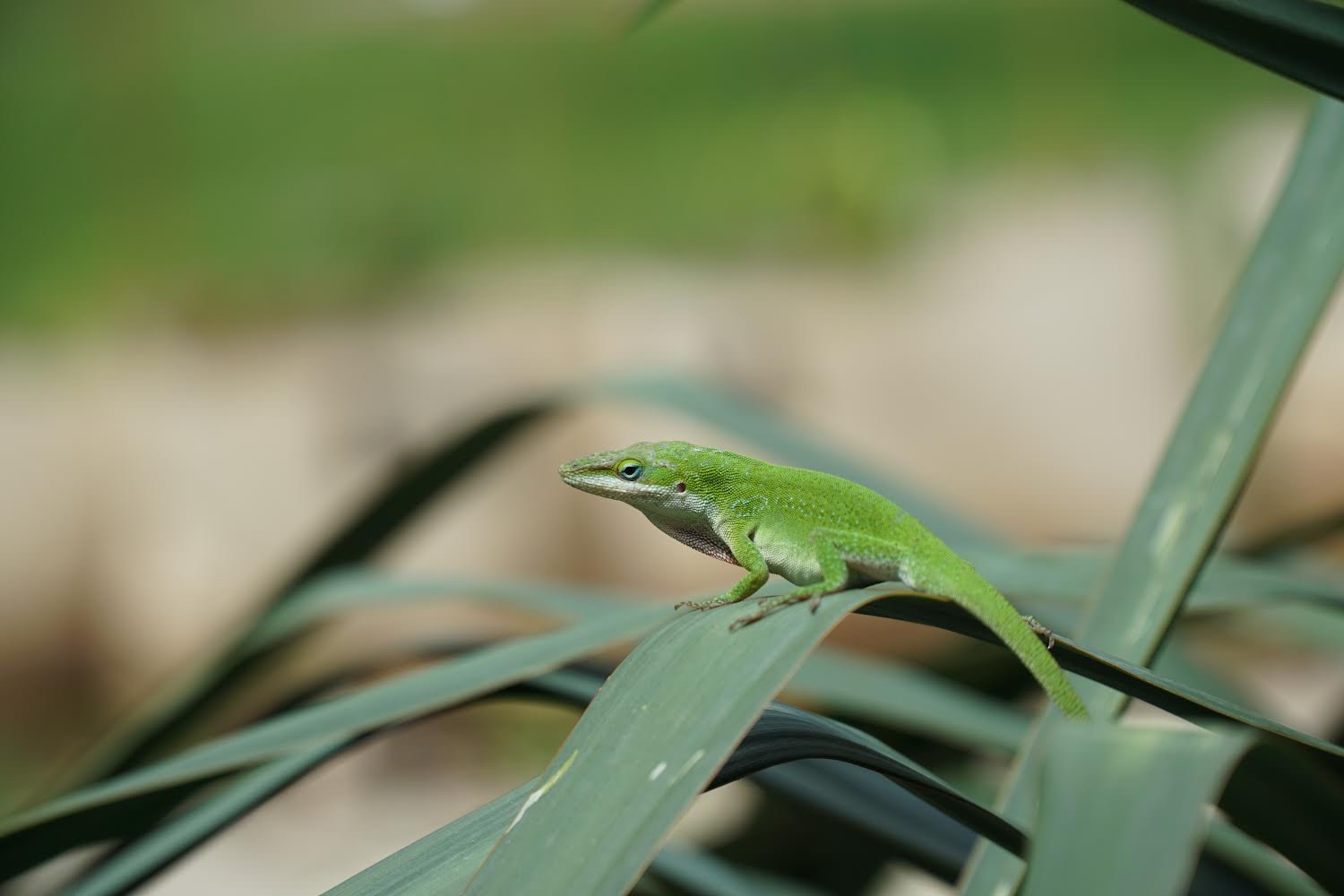
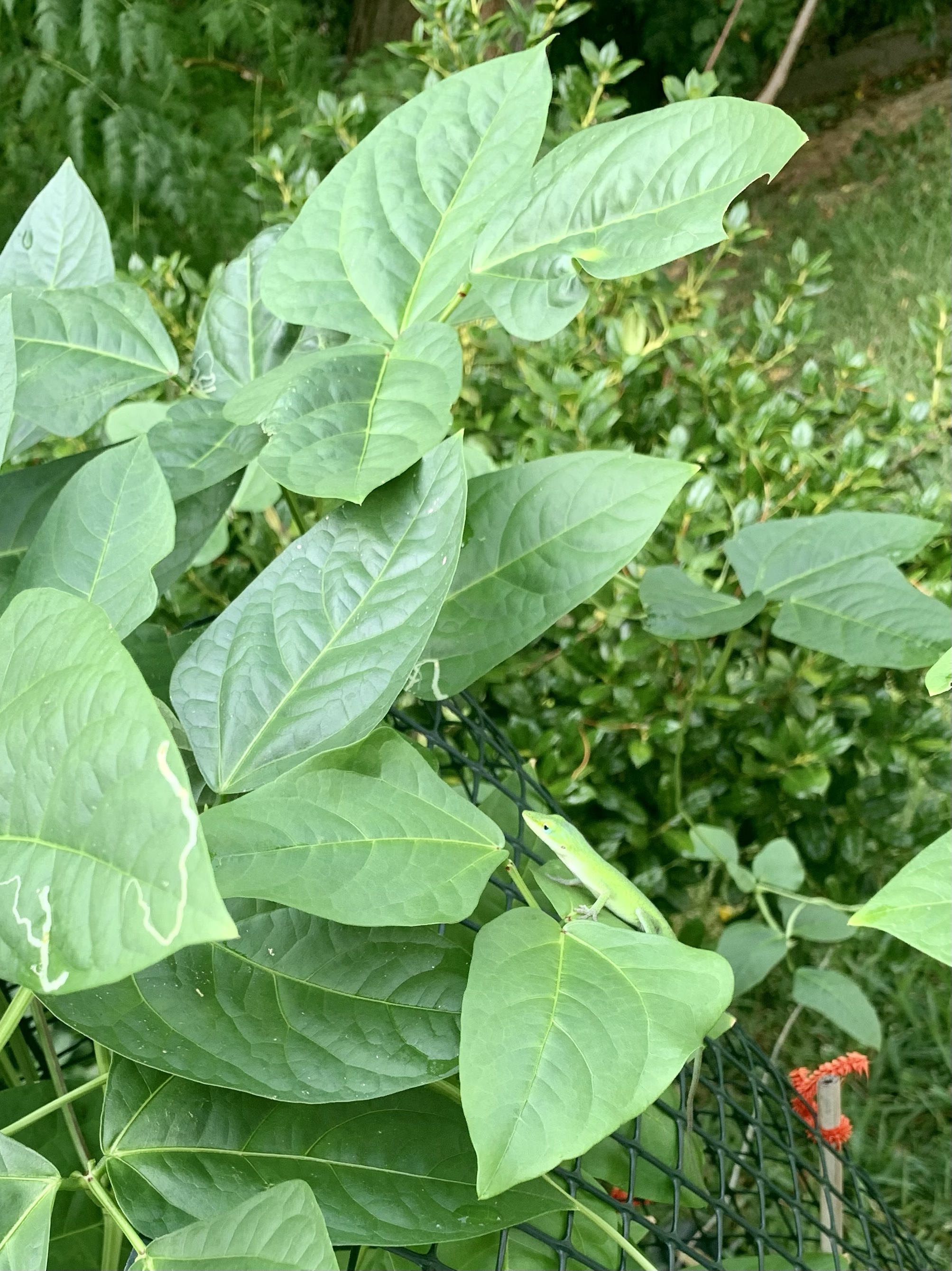
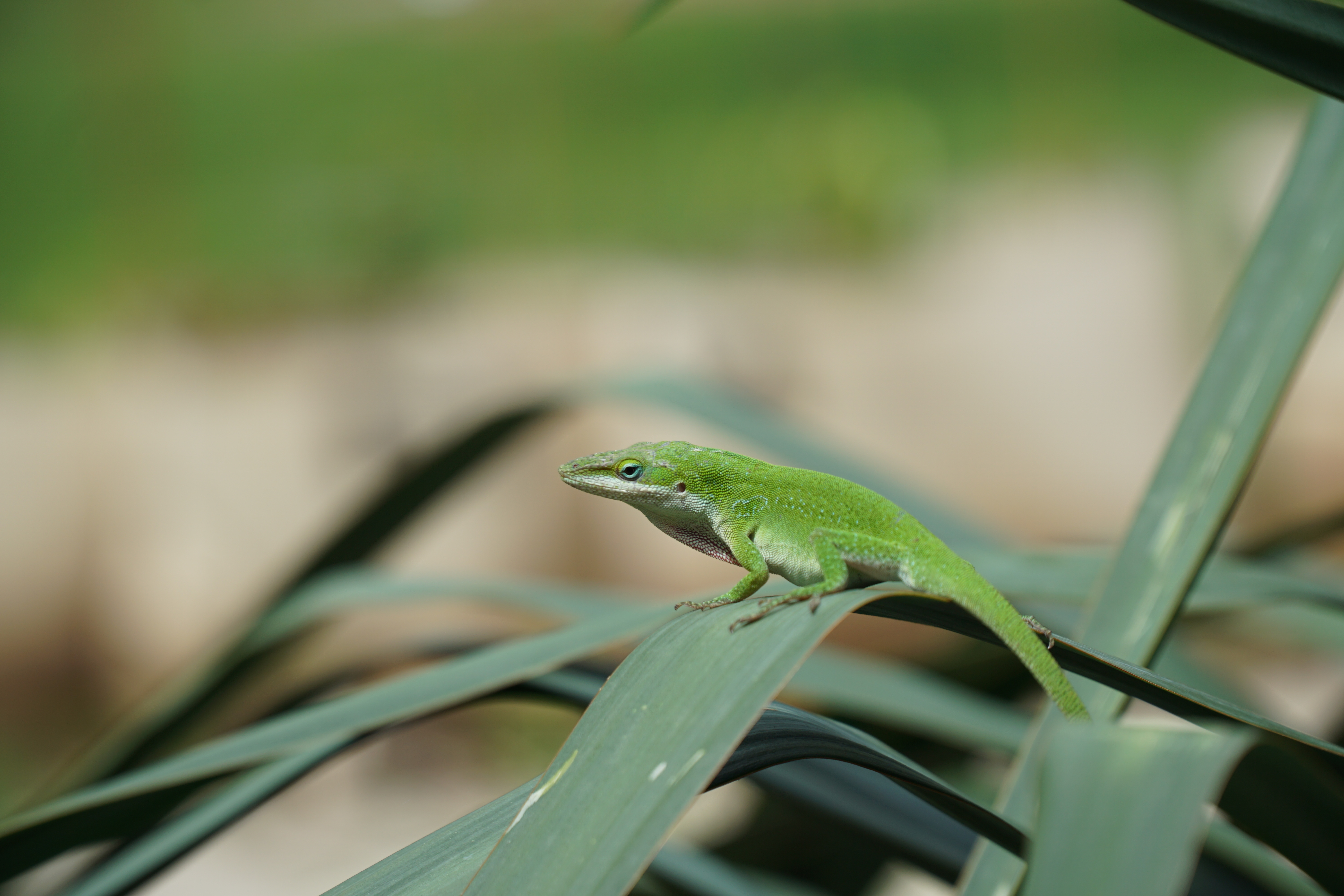
Green anole – photo by Andrew Shaw

We have been without a pet for almost three years. Our nerite snail slunk across the rainbow bridge shortly after we moved into our new home. The five gallon aquarium where he lived now sits empty inside the garden shed. Taking care of an animal requires a burden of care that we are not ready to assume. Not while we have the caretaking responsibility for Andrew’s mother. We were fortunate to buy a house already equipped with handrails and wood floors, wide doorways and an extra bedroom. But we found the best blessing in our backyard.

We have frequent visitors to our garden.

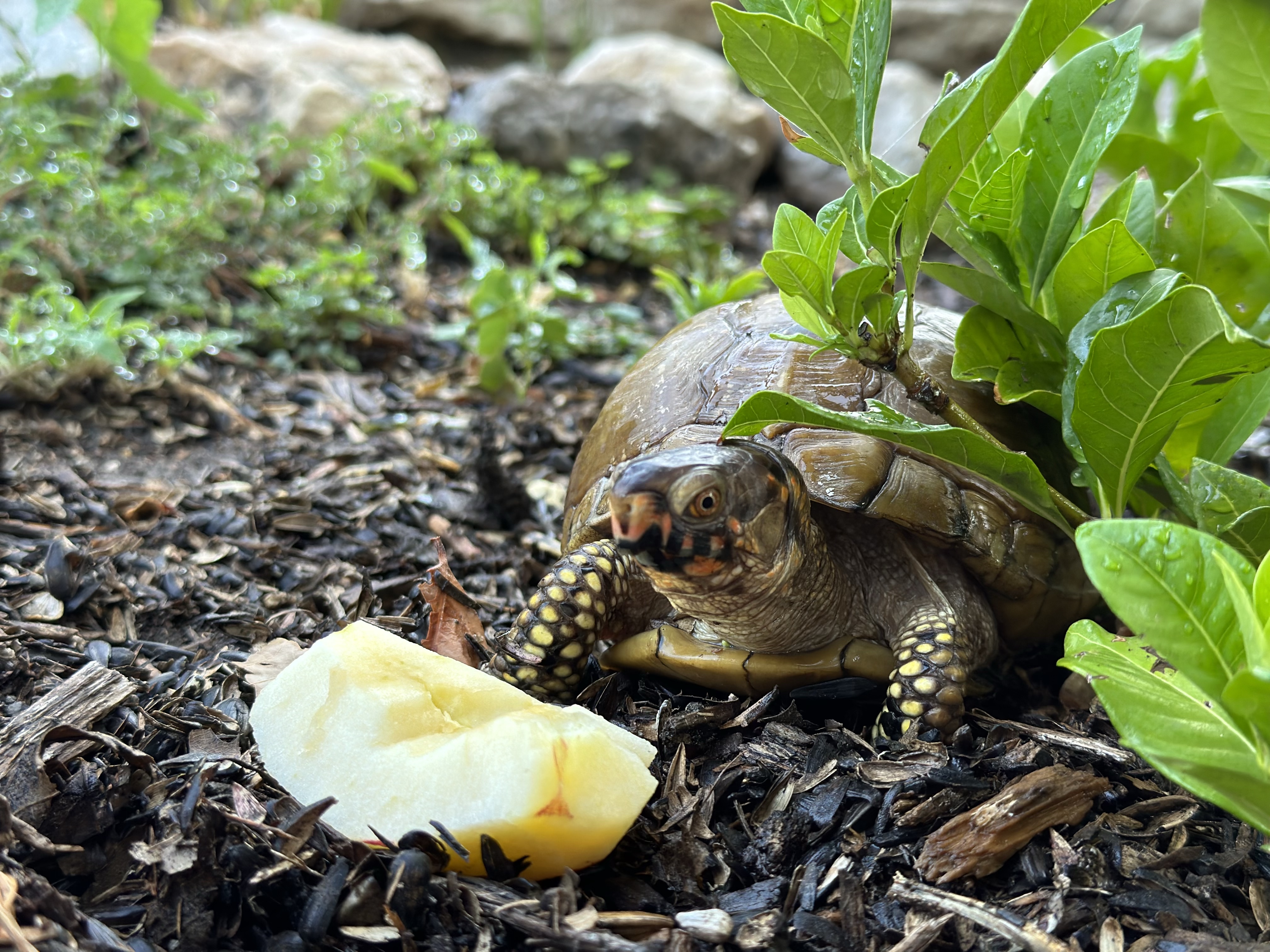
Myrtle the box turtle – photo by Andrew Shaw

This is the second year we have been visited by a box turtle. Last year, after confirming her gender, we christened her Myrtle. Female turtles have brown eyes and their shells do not have a flare at the bottom. Males tend to have red eyes and flared shells. Box turtles are not endangered, but they are listed as “vulnerable” as their habitats are shrinking. If you find one in your yard, don’t try to relocate them as they are territorial. Andrew and I believe Myrtle lived here near our creek long before we met with a realtor. We are happy to see her when we find her strolling through our flowers.

Green anole enjoying the bugs – photo by the author

A multitude of little green lizards lurk among the plants. We call them all Jake. They are most likely all related and don’t seem to mind sharing that moniker. If I approach slowly they will allow me to offer them a dried meal worm. This, I feel, is an adequate reward for their hard work clearing the insects from our vegetables.

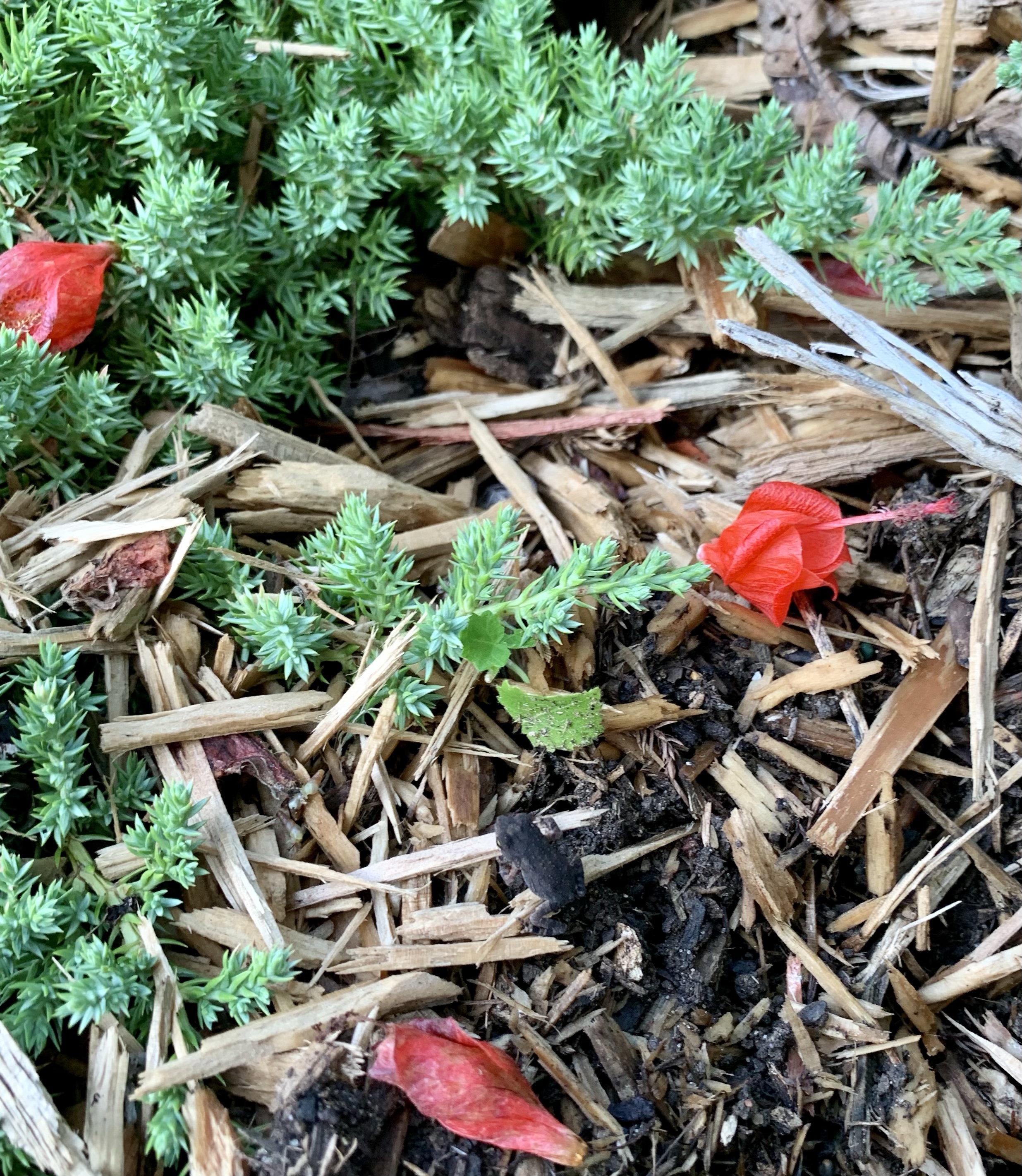
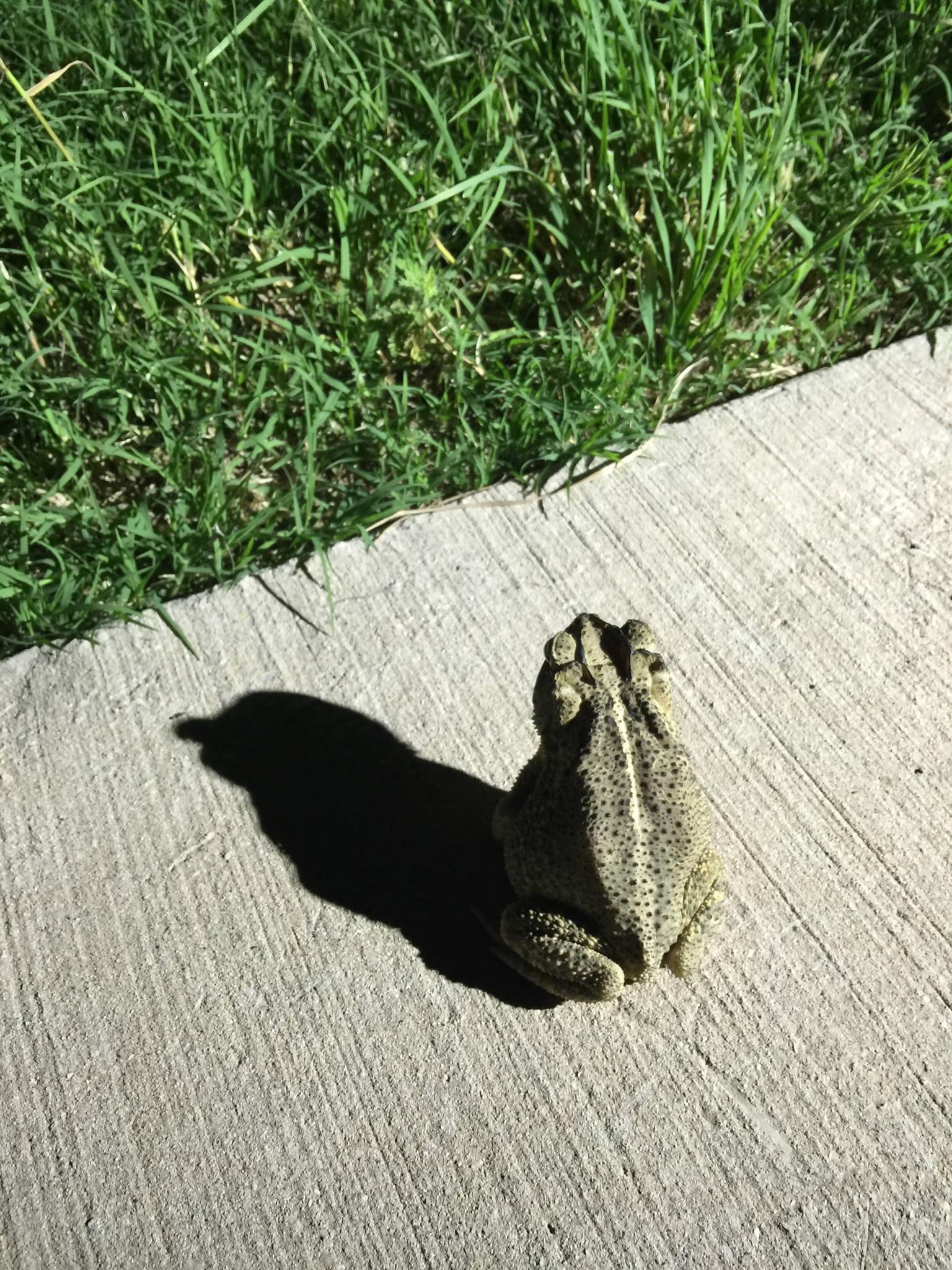
Small toad – photo by the author

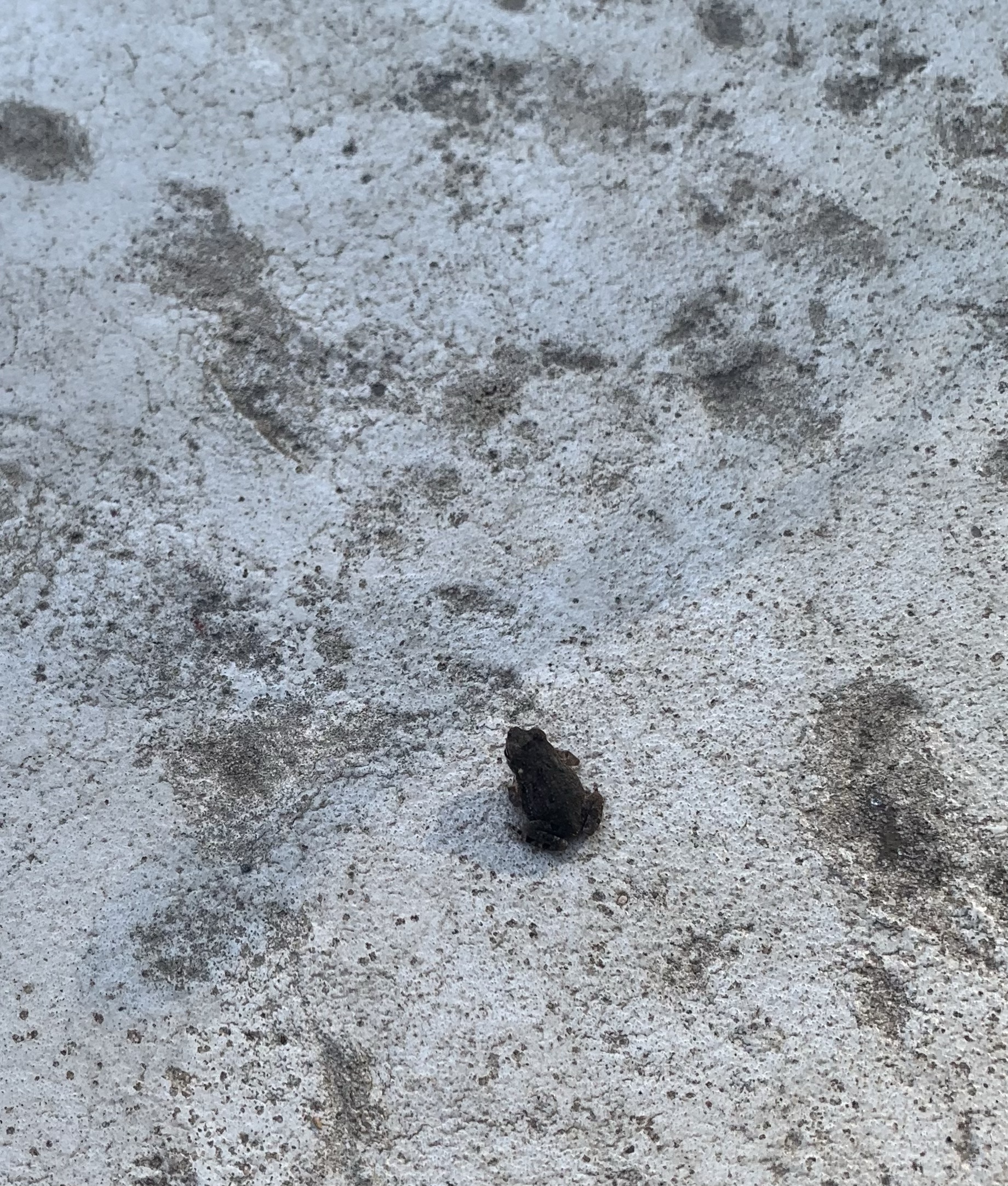
After a late summer rain finally soaked our yard, I found dozens of very tiny toads hopping across the mulch. Each one is barely the size of my thumbnail but they have an impressive jump when startled. I can empathize. The toad in the image above can be found in the center of the bottom third of the photo. If you can’t find him here is another pic of one I found on our walkway.

Very tiny toad – photo by the author

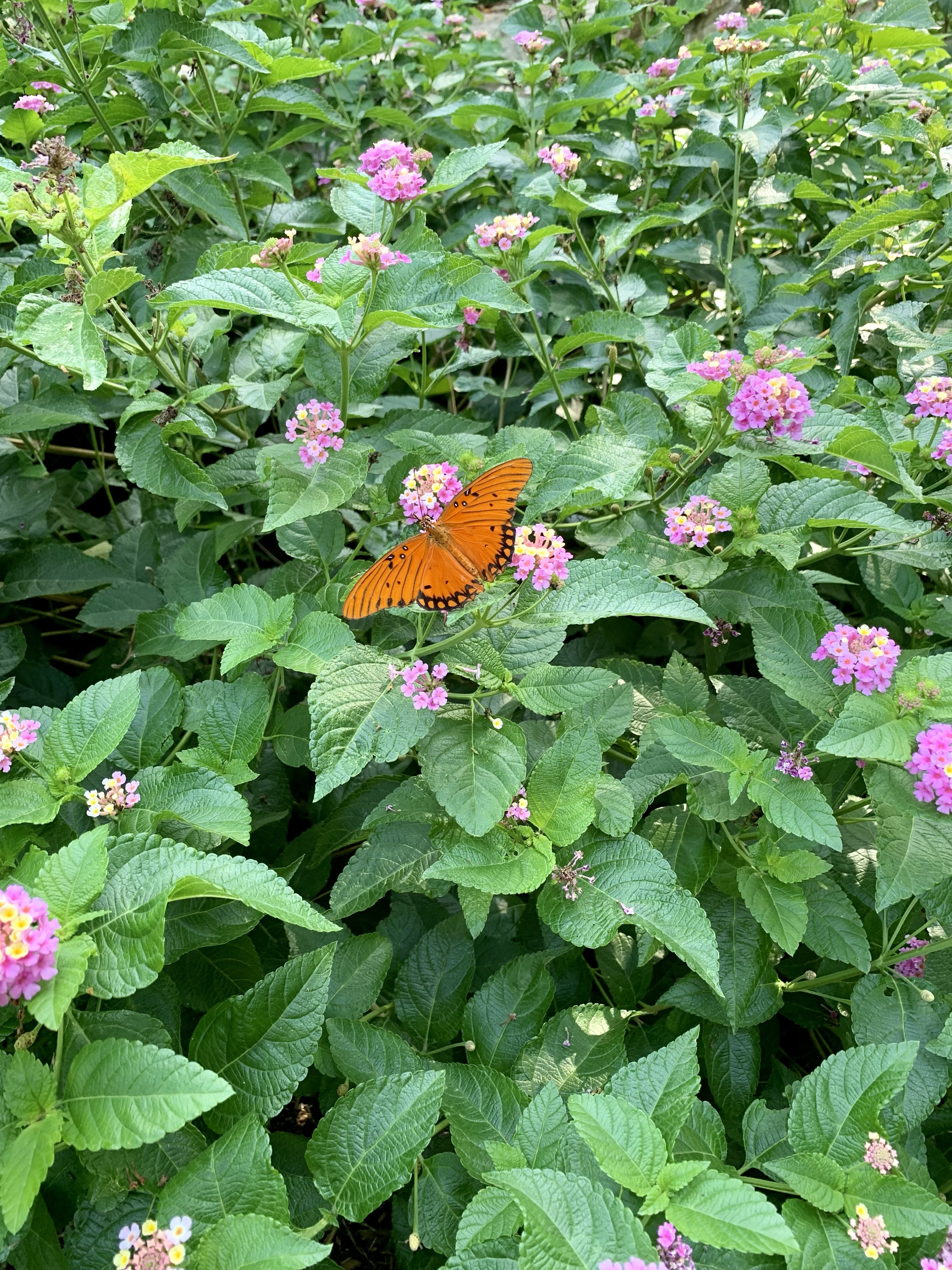
As summer ends, we keep the fallen leaves and brushy plants in the garden. Less work for us and more places for our wildlife to shelter when winter arrives. The lantana in particular has been a colorful home to bunnies and a draw for butterflies and bees.

Lantana – photo by the author

“In every walk with nature one receives far more than he seeks.” –John Muir

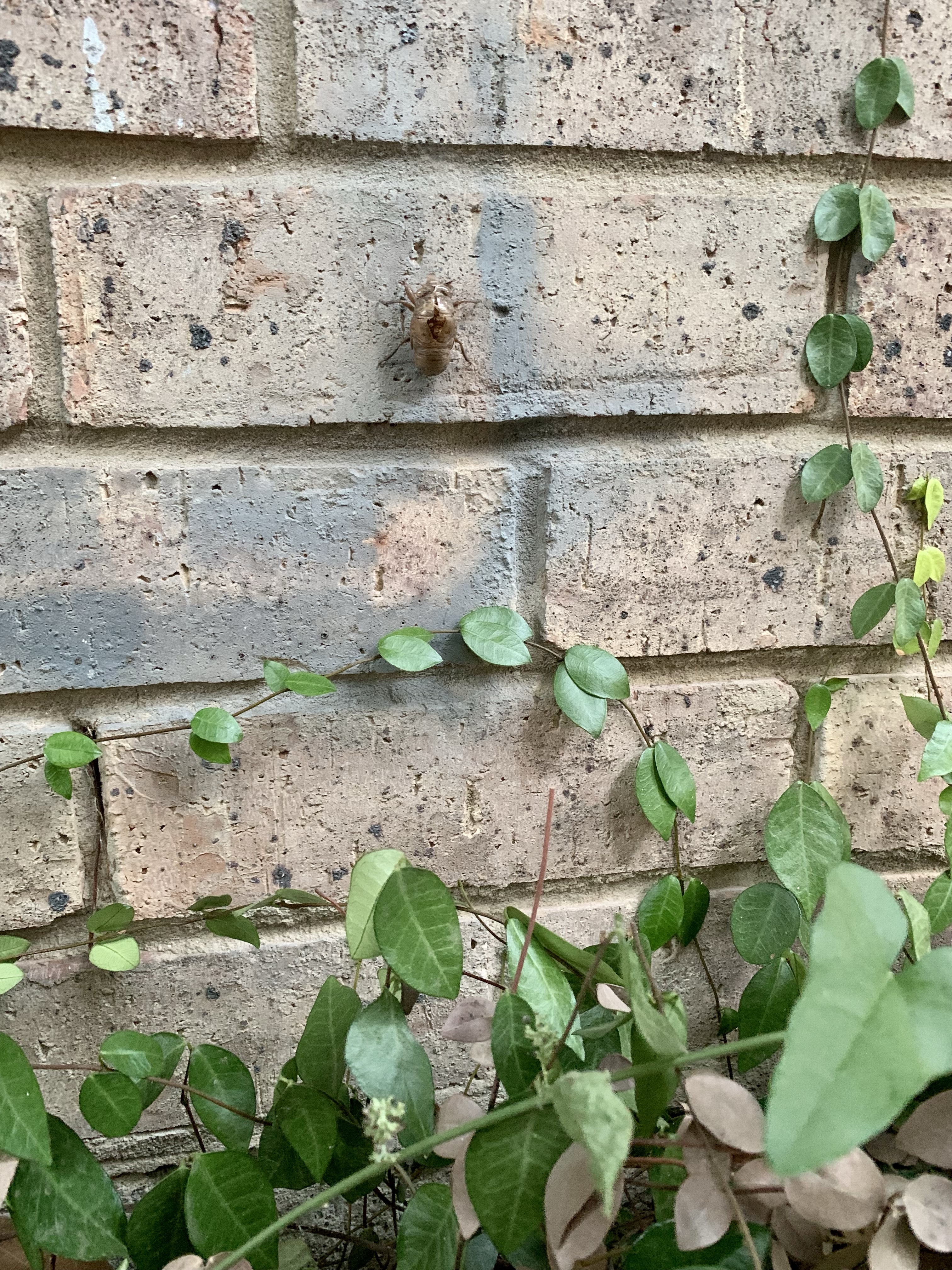
Cicada shell – photo by the author

Gardening in the Apocalypse

Bunnies and humans are a greater threat than zombies

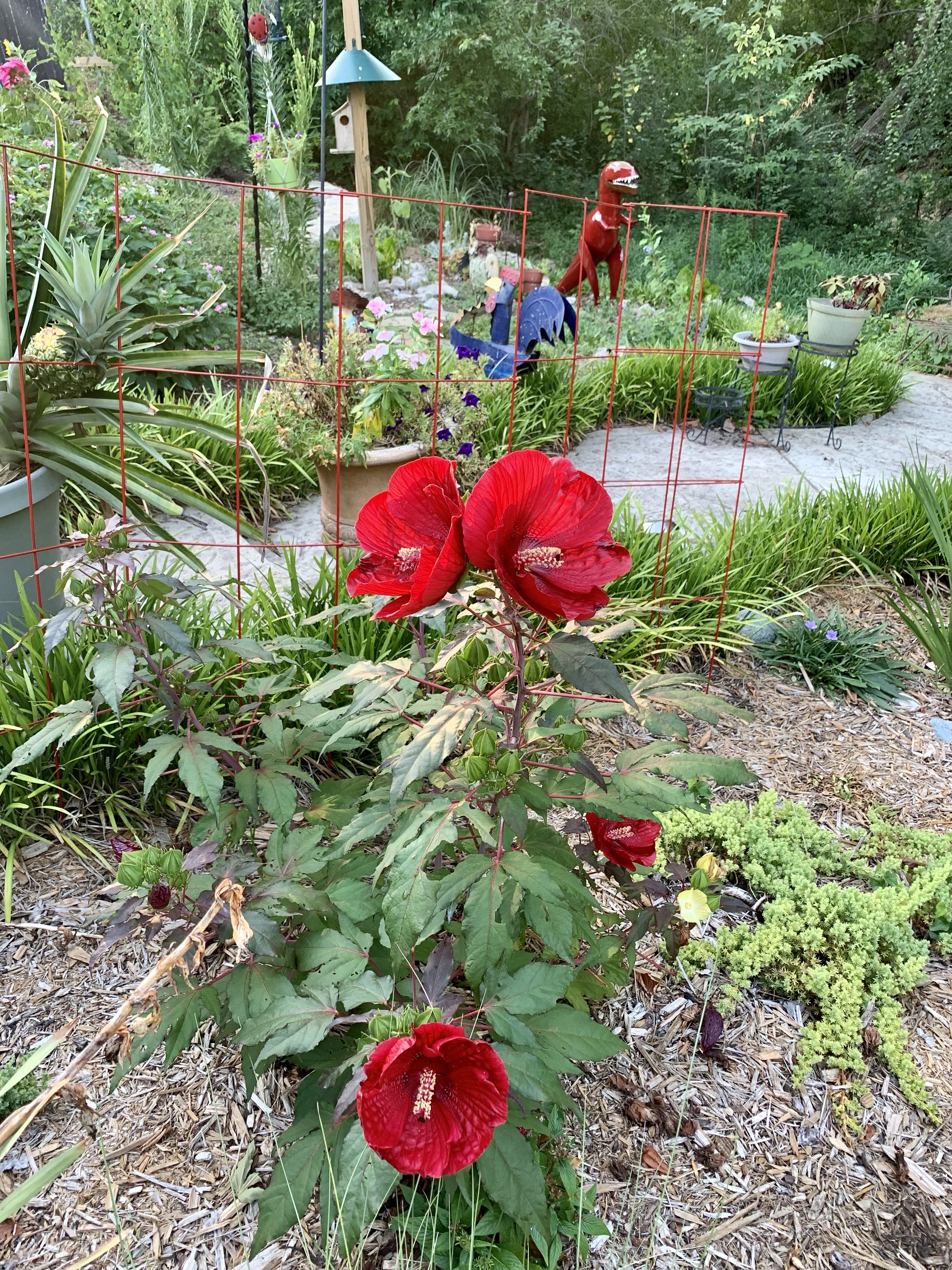
Our garden – guarded by metal chickens and a t-rex

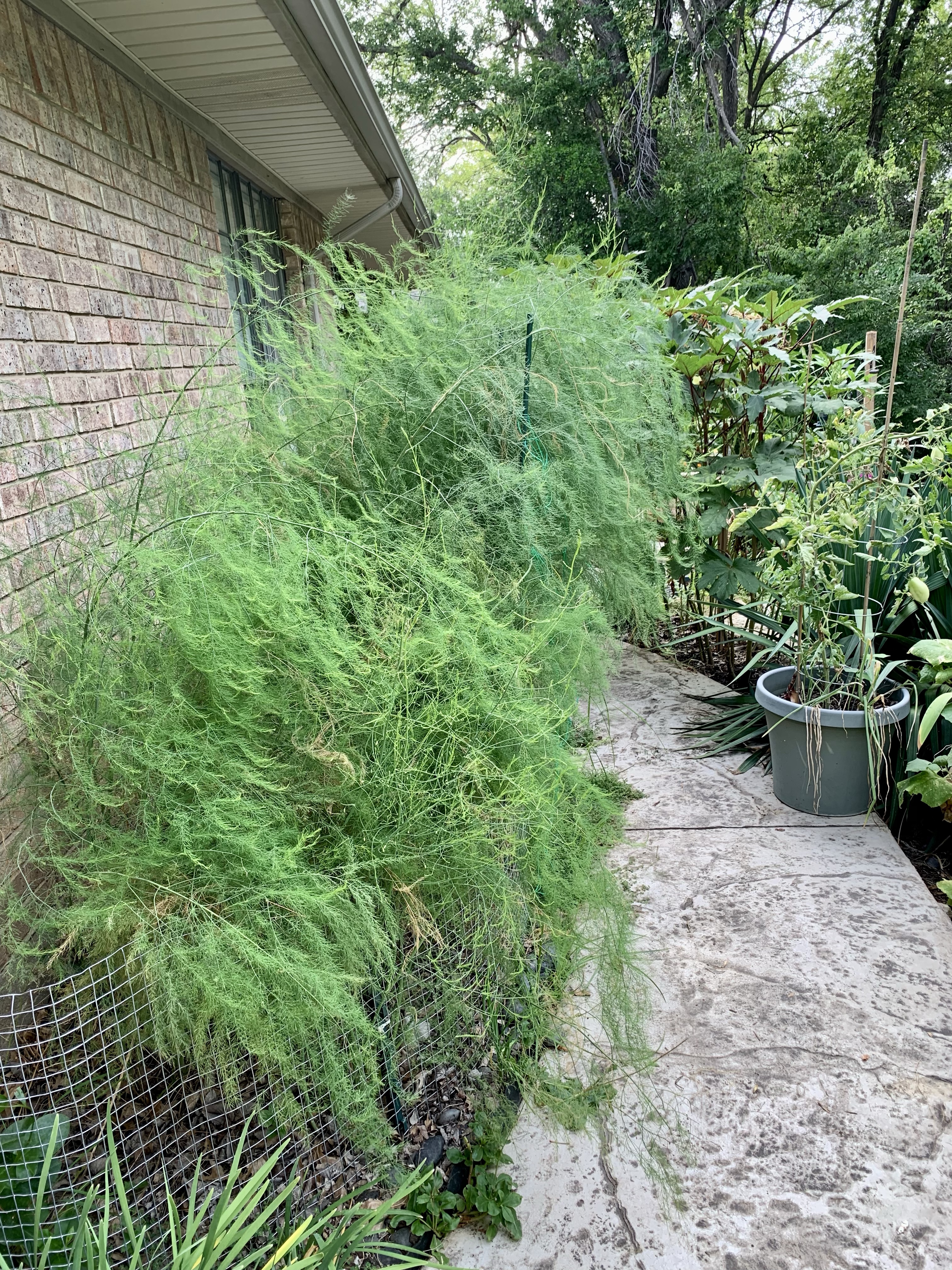
Here in Texas we are finishing another week of 100 plus degree temperatures. So far the tropical plants – the hibiscus, okra, wax mallow, and the Rose of Sharon – are thriving. But not all plants, nor all humans, are designed to survive in a climate akin to a blast furnace. While the mallow gang laugh at August, my tomatoes have wilted, the peppers gave up their blooms, and the vining plants dried up and crumbled off their stakes. Somehow the asparagus continues to force out new sprouts. I planted the roots two years ago, so next year will be the year of spears. The ferns have overgrown their little patch, hanging over the sidewalk so they brush against me when I wander past. I can’t resist running my hands through the soft tops and whispering to them, “Soon.”

The asparagus patch

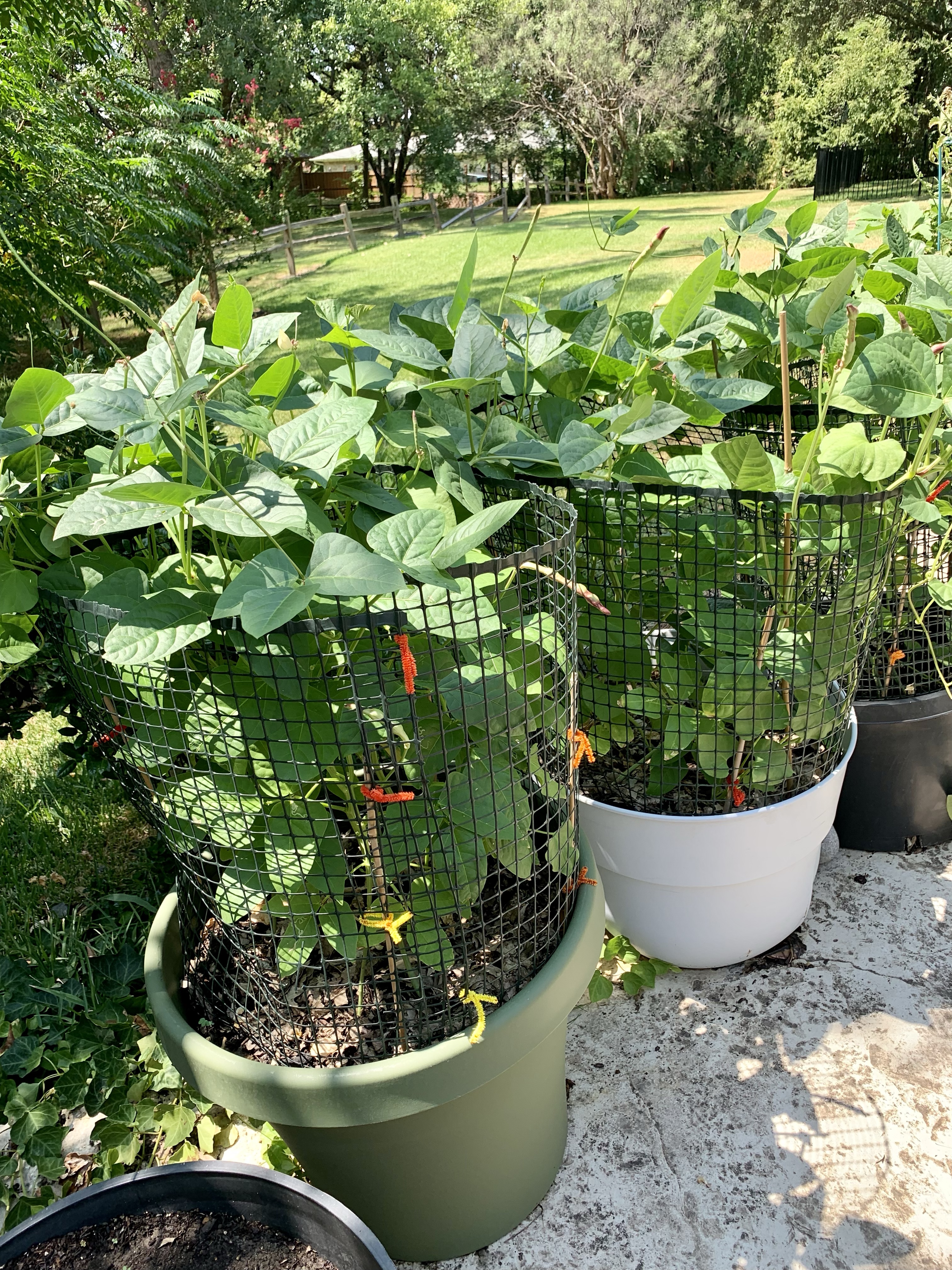
Right after the asparagus began shooting up spears, I noticed that overnight the plants would disappear. Rabbits, I discovered, like the taste of fresh asparagus. The greater insult in this was that I could not yet harvest the spears for my own meals. Our solution was to install a short fence around the plot. Not so tall that I couldn’t reach over it, but tall enough that the bunnies could not. Eventually I enclosed most of my plants in some sort of fence. It has given me a new respect for the battle between Farmer McGregor and Peter Rabbit.

Black-eyed peas and sweet potatoes in pots

My parents always had a small garden and our summers were filled with fresh vegetables. My main motivation for growing my own food has always been an appreciation for the taste of home grown tomatoes and okra. The restful meditation that comes from working with plants is a much enjoyed side benefit.

Like many people, I felt an extra urgency to produce my own food during the Covid lockdowns, when we dealt with shortages. Back then, I remember trying to order seeds online and coming up empty with each click. Mostly I grew radishes and hot peppers on our apartment balcony, not exactly enough to sustain two grown adults. Since buying our house two years ago, I’ve expanded to large pots, grow bags, and some space in our flower beds. The dry Texas summer has turned our front lawn to brown straw, and I believe I am close to convincing Andrew to till it all under and plant corn.

One of the scariest movies I ever watched was Interstellar. It wasn’t marketed as horror, but science fiction. The plot revolved around a team of scientists who were searching for alternate planets that would support life, since earth had undergone so much ecological damage that world wide famine had resulted. This was a little too close to reality. I love horror, but I’d rather watch and read stories about zombies, demonic serial killers, and haunted houses. In those cases, I can close the book, exit the theater, turn off the television and reassure myself that those things are safely secured away from my own world. However, I only have to step outside in the blazing summer heat to imagine global ecological destruction. In that case, I always think of George Carlin’s words – “The planet will be here for a long, long, LONG time after we’re gone, and it will heal itself, it will cleanse itself, ’cause that’s what it does. It’s a self-correcting system. The air and the water will recover, the earth will be renewed.”

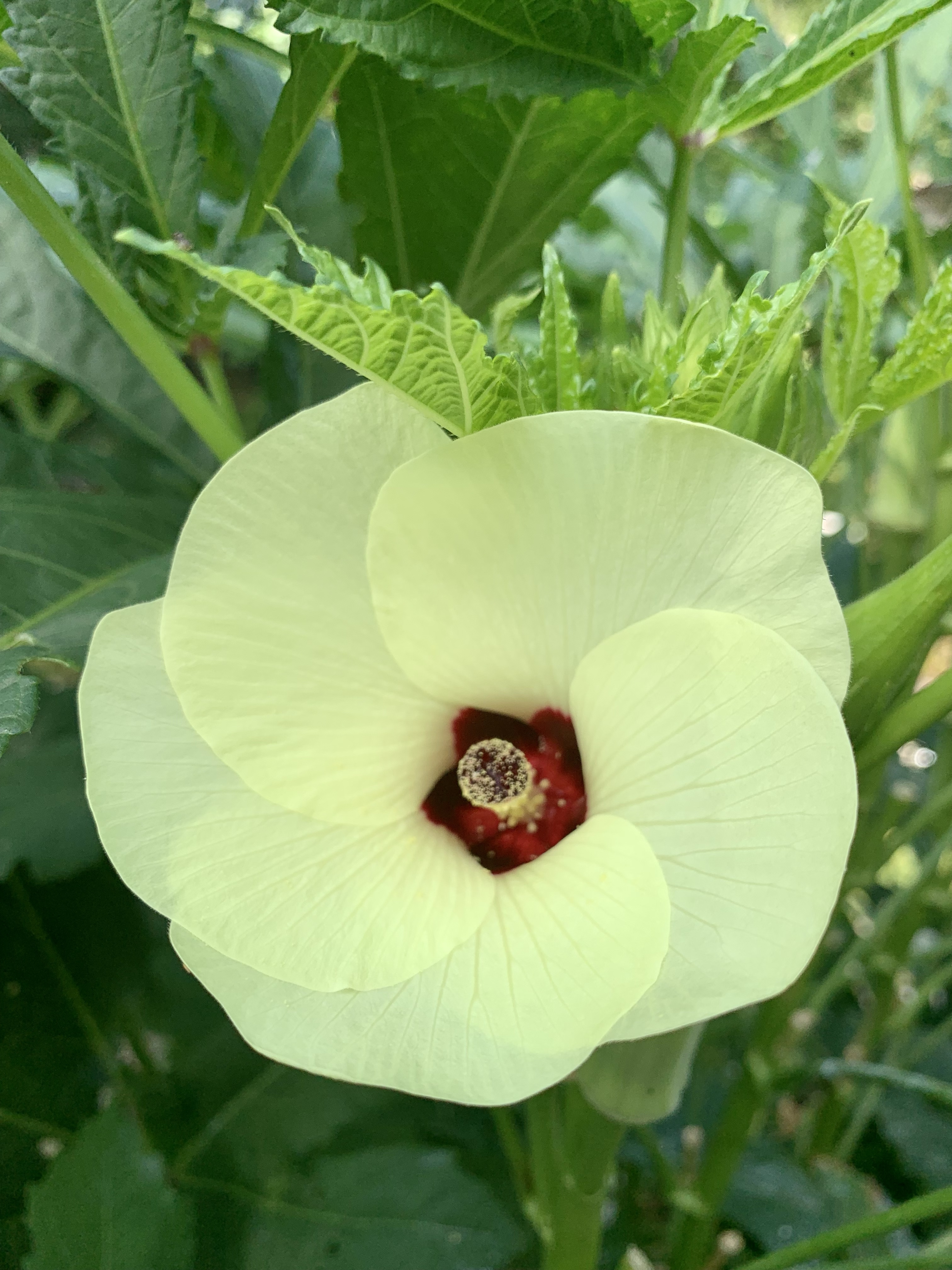
Okra blossom

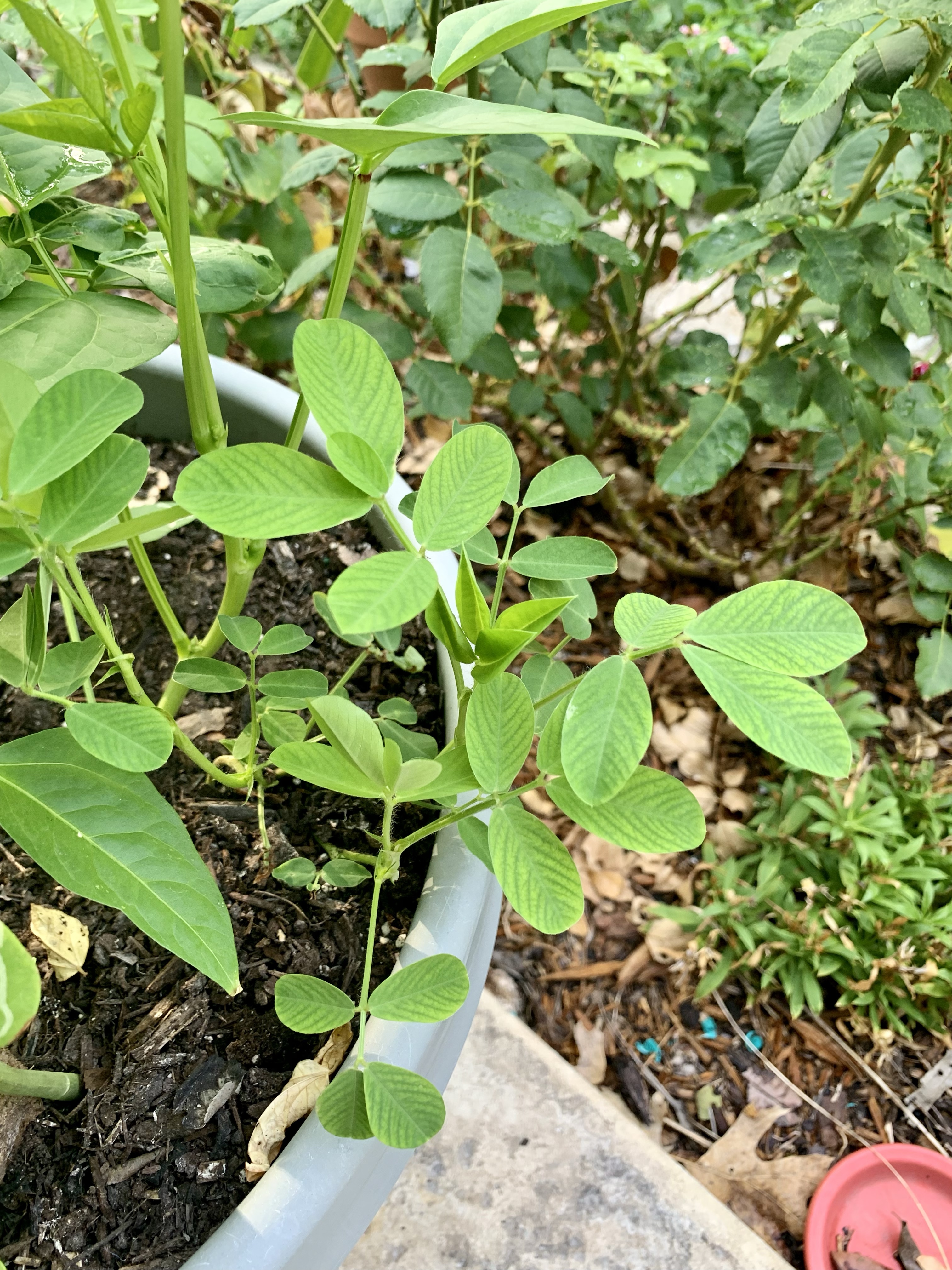
While we wait for the ecological apocalypse, the black-eyed peas and sweet potatoes thrive in their pots and don’t seem to mind the heat. Bunnies are not welcome in the garden. Birds and squirrels are okay, because they occasionally do their own cultivating – like the sunflowers that sprout around the bird feeder or the peanut plant that emerged from a flower pot of peas. It’s all good because my favorite color is green.

Peanuts planted by the squirrels

The Mob Rules Our Garden

An adventure in unintended consequences

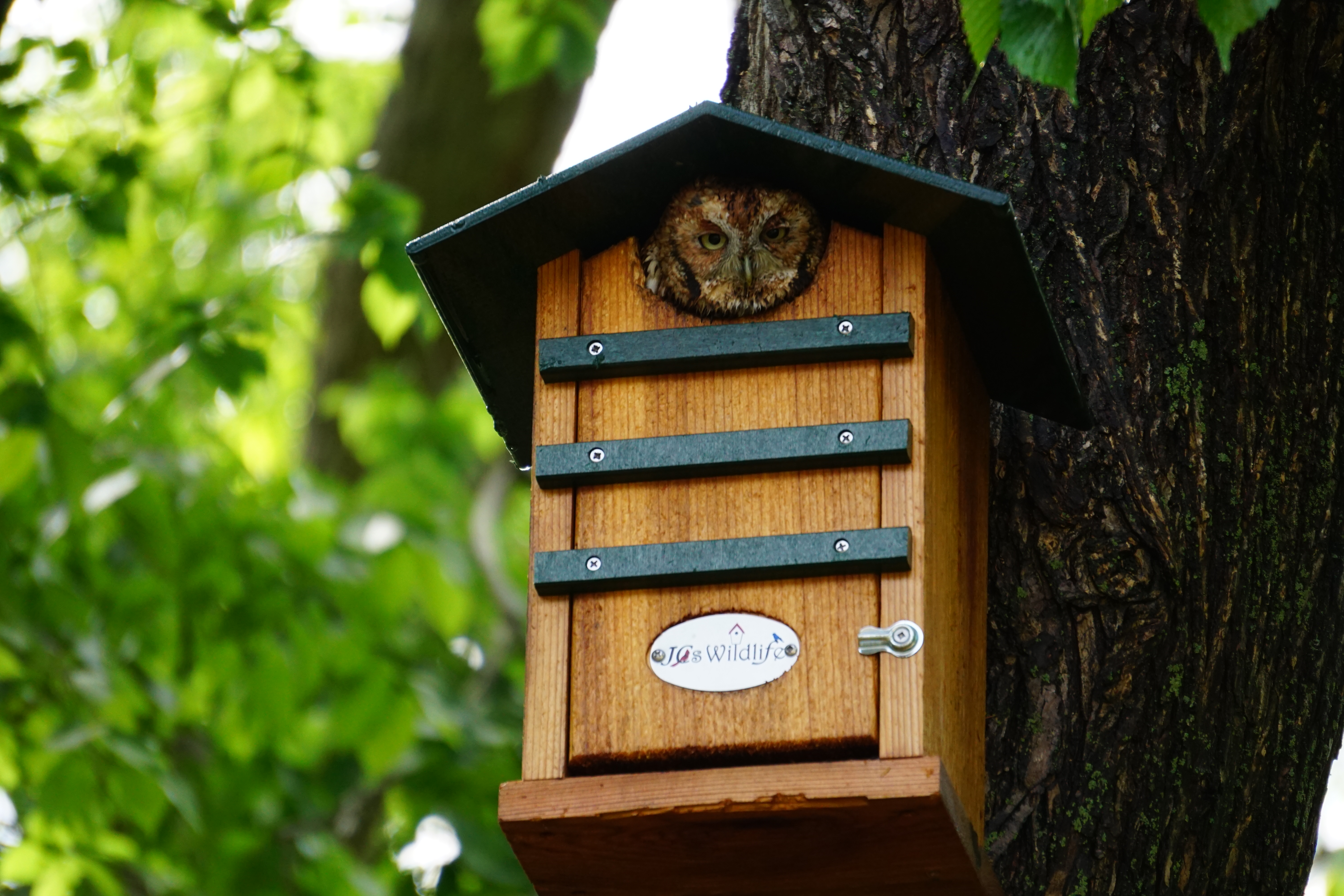
Photo by Andrew Shaw

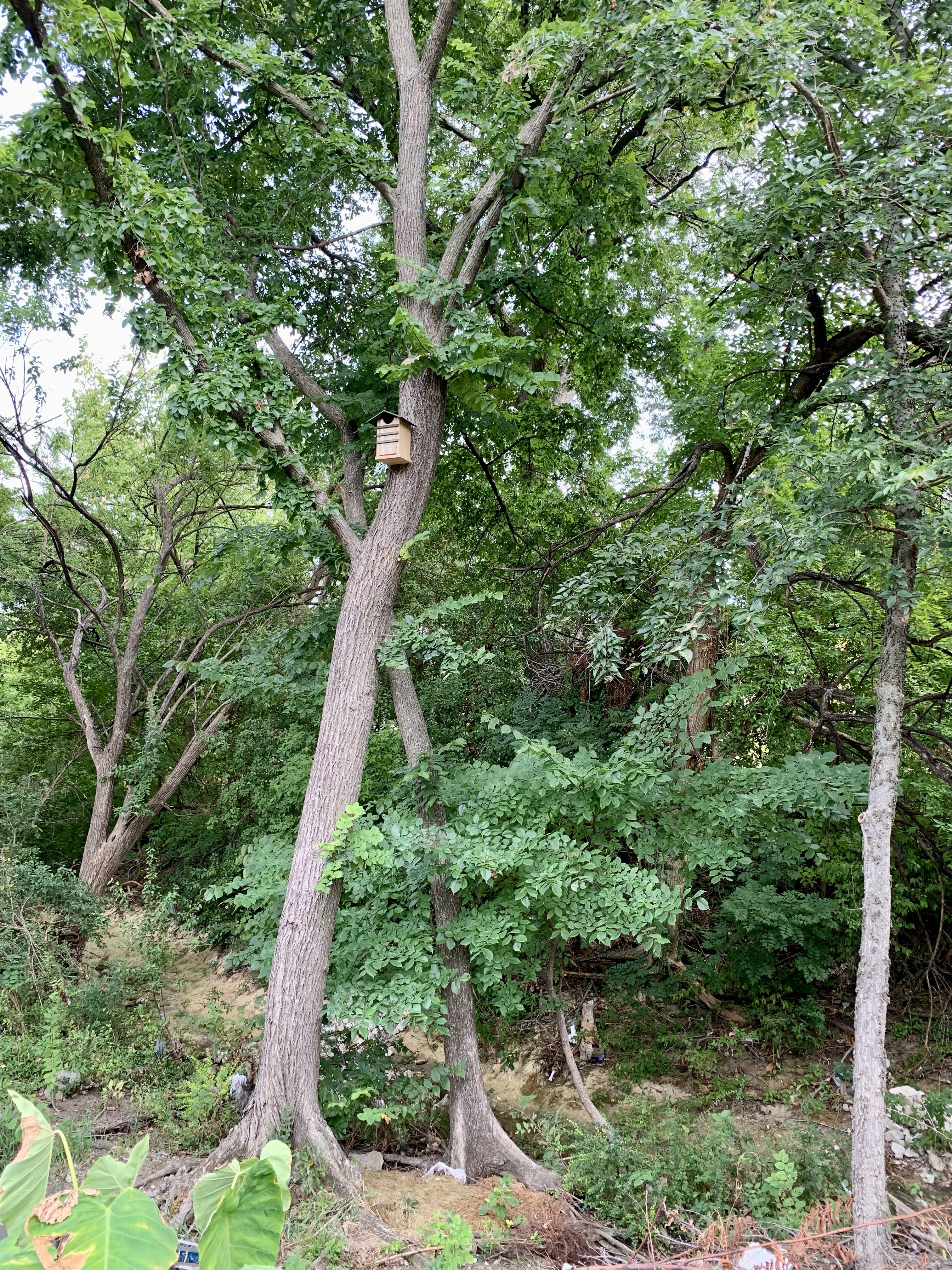
We installed the owl house with the goal of attracting a predator to our yard. Months back, we’d been overrun by a mischief of rats. They flooded our backyard every evening – a scurrying gray sea of rodents. Winter arrived and the tide of rats receded. Then, in late spring, we received our first resident owl. At first, Andrew and I rejoiced, happy to have our own rodent assassin on hand if the little buggers returned. Would we be blessed with owlets?

Excited, we broke out the binoculars. Andrew grabbed his camera and zoomed in for a portrait. With a creek bordering our property, we never want for wildlife. We were blissfully unaware of the consequences of inviting a bird of prey into our little sanctuary. After all, we had observed bobcats, raccoons, and possums wandering through our garden. I rely on a squadron of little green lizards to keep unwelcome bugs at bay.

Photo by Andrew Shaw

Along our sidewalk, toads alert on night patrol wait for juicy June bugs to stumble into their path.

Photo by Andrew Shaw

Not long after the owl first revealed itself, a chorus of squawks, chitters, and shrill whistles rose from our yard like a concert from an out of tune orchestra. Our visitor ducked back into the cover of the wooden house.

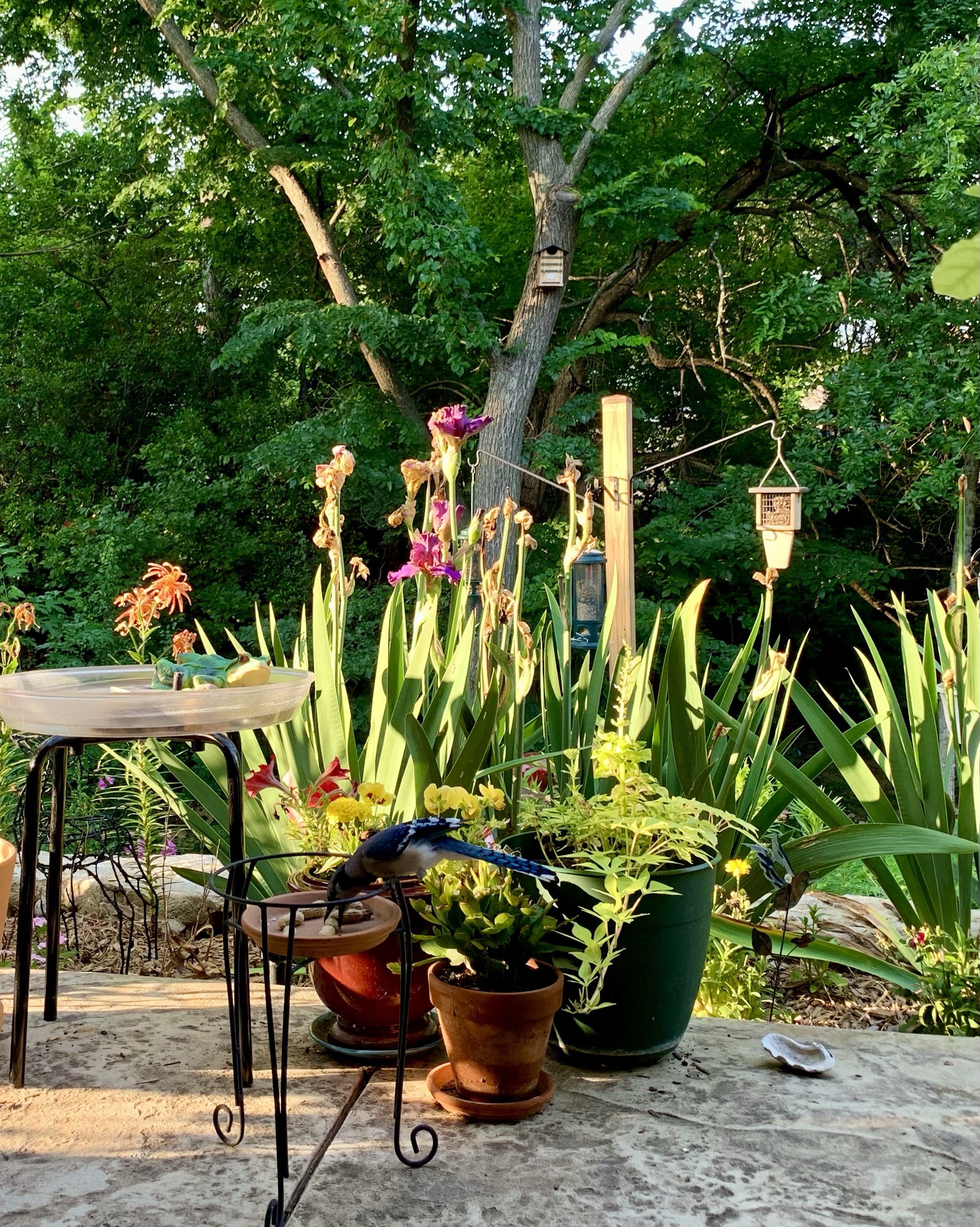
“What are they doing?” I waved at the flock of jays – a blur of blue feathers dive bombing the owl house.

Andrew stated the obvious. “They don’t like the owl.”

And no wonder. I realized we had placed the bird house directly overlooking our feeders. The ones where every morning a queue of owl-bite-sized wrens, chickadees, and finches appeared. Not so good for the victims, but a perfect opportunity for the bird of prey. We had installed a hotel room with a complementary breakfast buffet.

Photo by the author

Andrew and I joined in the ruckus, jumping and waving our hands while yelling “Shoo! Shoo!” The owl, unimpressed, poked his head out now and again to glare at us. Our songbirds – blue jays, cardinals, and chickadees – continued to squawk and dive bomb the bird house. This behavior is known as “mobbing” and occurs when birds feel threatened by a predator. They band together to harass the intruder. This continued throughout the day. The mobbing behavior reminded me of the short story The Birds by Daphne Du Maurier. Most people remember the Alfred Hitchcock movie based on the story. “We better remember to keep the feeders filled,” I told Andrew.

At last, at dusk, with the mob dispatched to their night time roosts, the owl emerged. He flew to the creek for a quick drink, then disappeared into the trees. We haven’t seen an owl since then, but we hear them sometimes. Possibly they are sharing the bad review of our noisy bed and breakfast.

A Lovely Home with a Wonderful View

Photo by the Author

I dumped a shovel of dirt over the body. The corpse in question, a dead rat, stared at me with a glazed eye before I covered it with a quart of potting soil. Miracle Grow, guaranteed for beautiful blooms. I hope nothing sprouts from this planting.

The rat expired less than a foot from where I’d been digging that morning. I wondered if I’d accidentally clonked him with the shovel as I set out the milkweed plant. Or maybe he’d nibbled on the fresh addition. I’d read that milkweed was poisonous, but I didn’t expect such a fast-acting result.

Of all the solutions to our rat problem, we decided the best answer would be owls. No harmful chemicals, no grisly traps to empty, nothing but the swoop of wings and a quick death to rodents. After Andrew ordered the owl house we discovered it most likely wouldn’t be inhabited until next spring, during nesting season.

“We’ll hang it now in case they decide to move in early,” Andrew said.

My husband is fearless. I’m afraid of climbing heights greater than four feet from the ground, crawling through small spaces, and purchasing things on credit. I admire anyone who is brave enough to scamper up a sixteen-foot ladder. However, someone has to stand at the bottom and hold the ladder steady. I felt the owls would be perfectly happy with a home half as high in the tree, but Andrew disagreed.  

Our vacant owl house – Photo by the author

I stood there, clutching the shaking ladder, while Andrew scurried up, carrying the owl house and a drill. My mother believed that owls were bad luck. When she was a child, her family had lost two homes to fires. “We heard an owl calling on the roof both times,” she told me. I felt the blaze was more likely because of a faulty chimney or bad wiring, and maybe the owl was just trying to warn them.

The owl lodging secured in place, Andrew climbed down the ladder. I had to admit, now that he was safely at ground level, the house looked nice and snug, high in the tree.

We had a little chickadee investigate the structure, but so far, no owls. At night, though, we can hear their trilling hoots as we stroll through our neighborhood. A creek winds down the back of our property, and native trees crowd along the bank. “It’s a lovely home, perfect for raising a family,” I entreat the birds, “with a wonderful view.”

I have a story on Vocal, inspired by owls. As a bonus, there’s also a dead rodent. You can read it here: A Death Redeemed.

Dealing with Triffids and Other Creeping Horrors

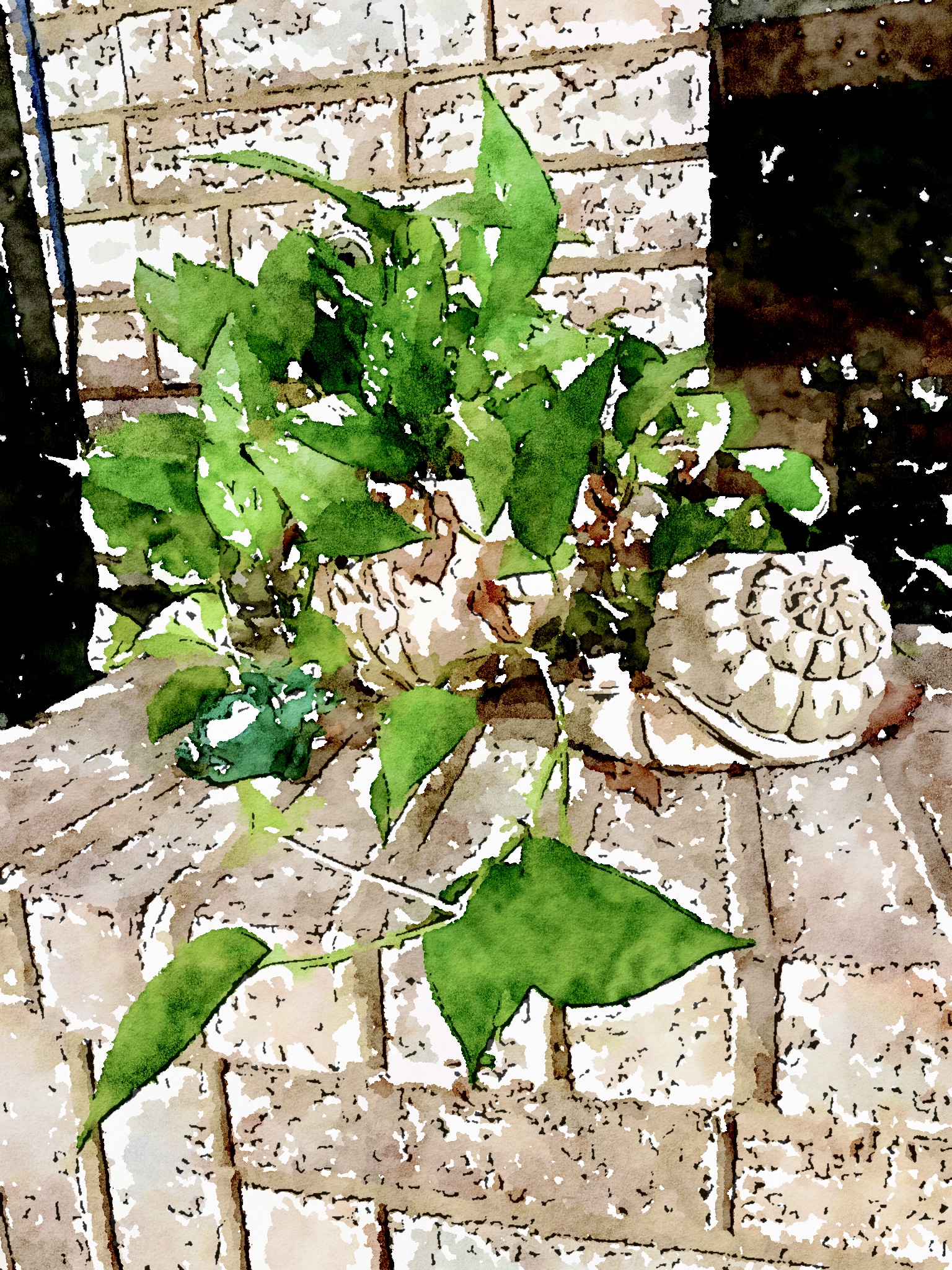
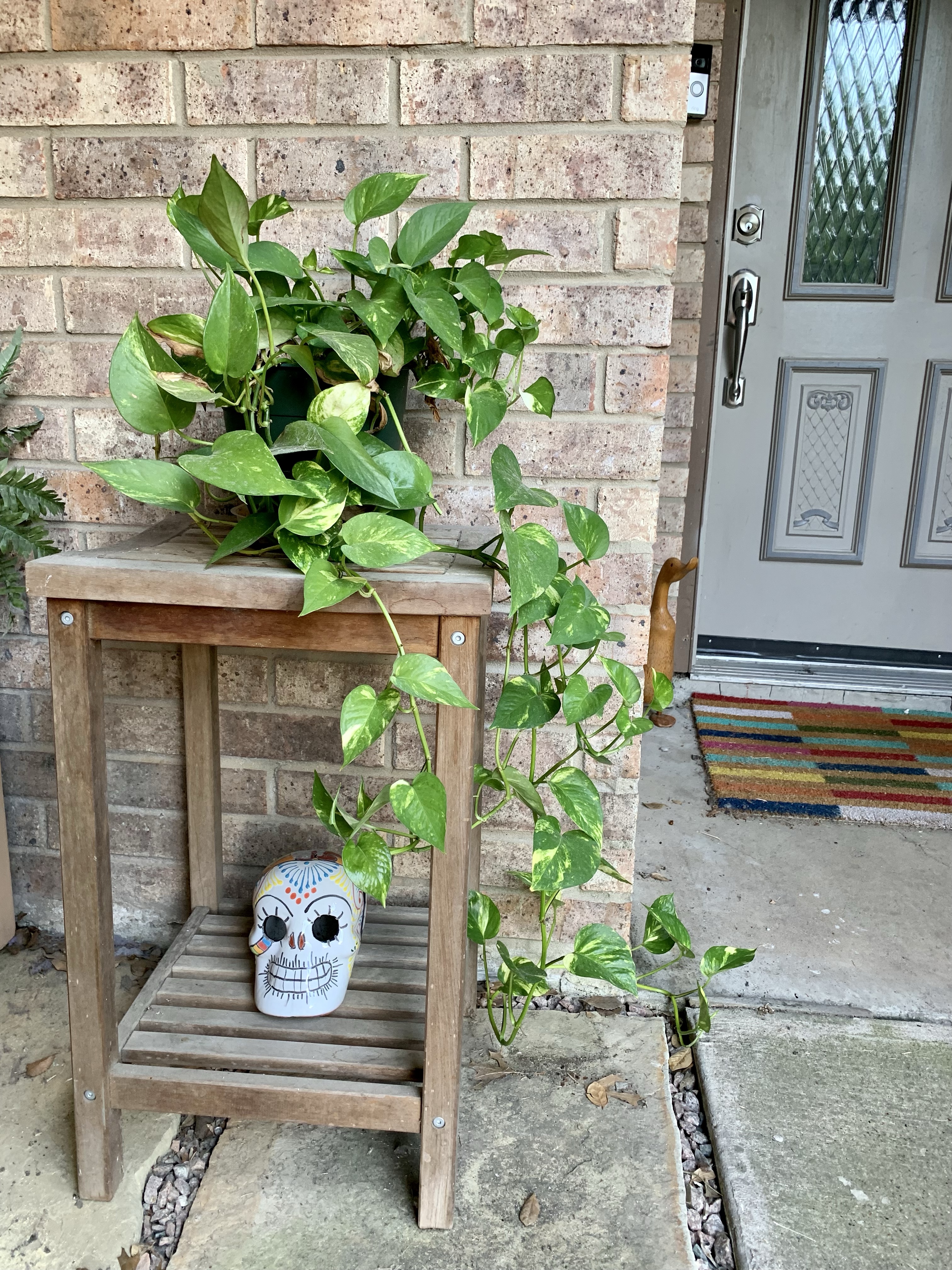
The Devil’s Ivy at home on the hearth – Photo by the author

I learned the other day that Pothos is also called Devil’s Ivy. The poisonous nature of its leaves inspires that name, surely undeserved. Pothos are very hard to kill. I can testify to their hardiness. During the lock down days of Covid, I abandoned a pot of ivy. Left to fend for itself in my office cubicle, the plant went two months with no water. I found the poor thing shriveled and dusty, its dry leaves scattered across the windowsill. I had at least left it with a decent view of the parking lot.

True to its name, the plant resurrected, and it is now determined to take over our fireplace hearth. Five years ago, I had one Pothos. Now I have eight. All started with clippings from that original pot. The vines can grow one foot every month. If my plants were sentient, they would take over the world. 

I think it is trying to reach our front door. Photo by the author

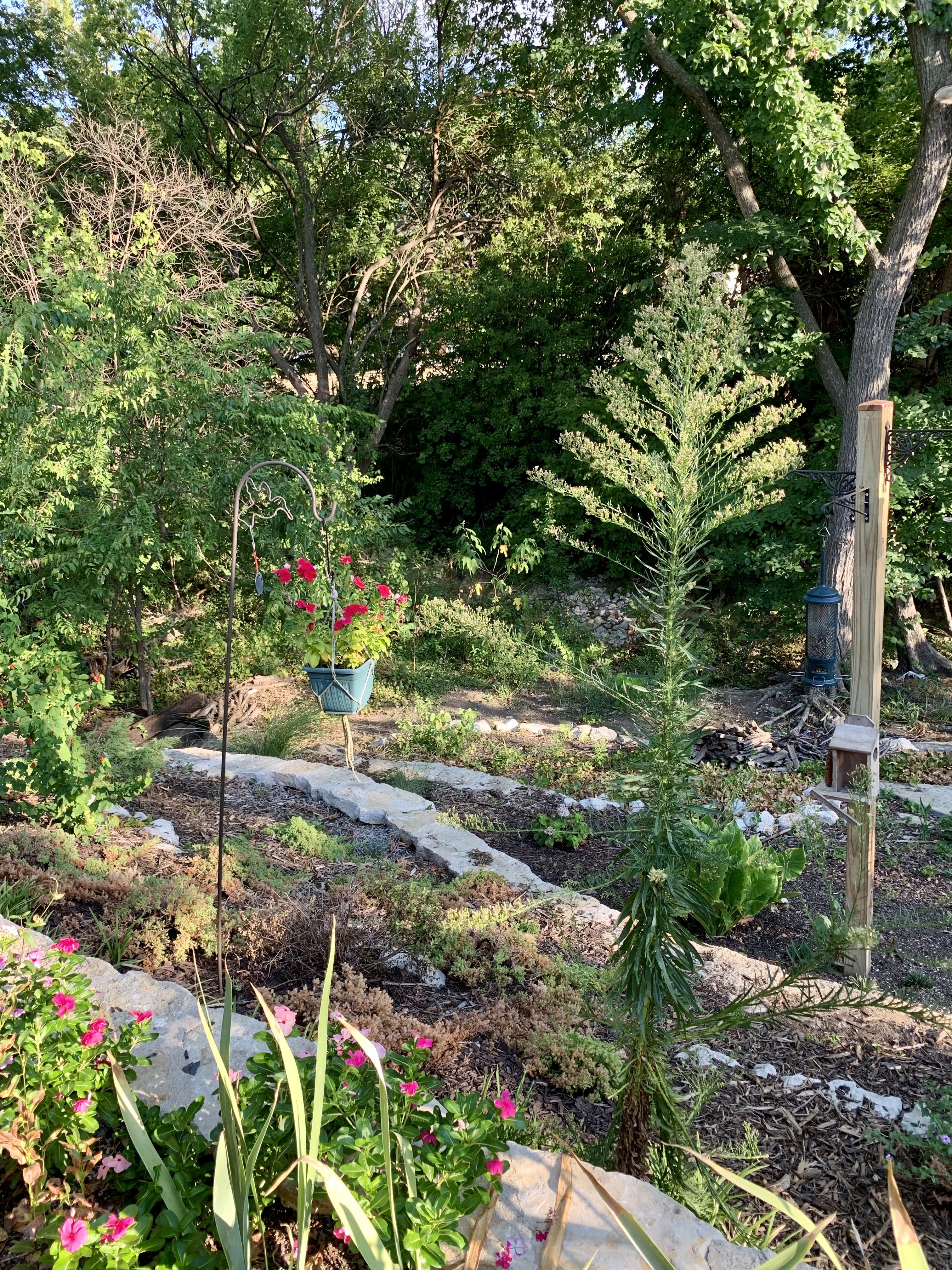
The recent rains have revived our garden. The roses are once again blooming. During July and August, they wilted in the heat like a southern belle at a cotillion. Throughout the summer, only the okra and a strange weed flourished. I identified the odd specimen with the help of a phone app—marestail, also called horseweed. Flamboyant and exotic, it sprang up to bloom in clusters of delicate flowers on a tall, leafy stem. It became the center point of our flower bed. The sight of it, upright and waving its limbs in the breeze, brings to mind a horror movie of the 1960s – Day of the Triffids. 

Horseweed standing tall in our garden. Photo by the author

The movie’s plot involves a meteor that crashes on earth, spreading alien plant spores and striking everyone blind. In the ensuing darkness, sentient ambulatory plants called Triffids take their creepy revenge on humankind. Although it would be ridiculously easy to outrun a walking plant, this film terrified me when I was a child.  

My pots of devil’s ivy unfurl their vines like arms. Perhaps they reach for me as I sleep. Would they curl their lovely, poisonous leaves across my face and into my mouth? I hope my gentle Pothos has nothing but concern as it stretches across the hearth, down the bookcase, along the windowsill. It needs me. Who would water it if I was gone? The roots carry the memory of that lonely isolation.

I have replaced my fear of Triffids with other creeping horrors. Old age, pain, dementia, debt. These are the terrors that keep me up at night. I’d gladly exchange them, not for blindness, but for Triffids. Even my stiff hips could outrun a sentient, ambulatory plant.

A Mischief of Rats

Photo by Joshua J. Cotten on Unsplash

The bunnies were cute until they began dining on my asparagus. Squirrels raided the bird feeders but they were cute and their antics fun to watch so we forgave them. A creek borders our back yard, making us a way station for all sorts of wild life. We’ve had raccoons knocking over the plants on the patio, flower beds disrupted by armadillos, and an aloof bobcat hiding behind the planters to spy on our birdfeeders. The neighborhood box turtle visited often enough that we researched her gender and named her Myrtle.

We enjoyed our status as open air zoo – tossing out sunflower seeds for the jays, peanuts for the squirrels and an occasional lettuce leaf for Myrtle. Then the rats arrived.

A clatter and rustle from the dark yard prompted us to flip on the patio light. There, exposed in the brief flash before they melted away in a wave of fur and long, skinny tails, we spied at least a dozen rats enjoying a late night snack on our birdfeeder. A plague of rats, a pack, a swarm – enough to send us stomping and yelling back to the safety of our living room.

Further horror ensued when my husband spotted one burrowing under our house. “They probably have a whole rat tunnel system under our foundation!”

We purchased pebbles and rock and filled in the holes while blotting out the image of stranded rats slowly decomposing among our plumbing pipes.

I wondered if we would have found them so despicable had they had the soft, fluffy tails of squirrels. The sight of those rats clinging to our birdfeeder reminded me of the movie Willard. It came out in 1971, when I was eleven years old. I saw it at the movie theater, probably on dollar night and with my friends. I don’t remember much about the plot, except that it involved revenge, and a lot of rats. The main character, a young man named Willard, formed a friendship with a pair of intelligent rats. There are many directions the movie could have taken from that point, but this is a horror movie, so I’ll just tell you the final scene involved a rat army led by their commander, Ben.

The odd thing about this movie, when I look back on it, is that I remember feeling sympathy for the animals and not the human characters. Strange how our perspective shifts when we identify with the monster.

We solved the rat issue by bringing in the bird feeder each night. I picture them gathering at the base of the pole where the feeder hung, wondering who took away their buffet dinner. The collective noun for a group of rats could be pack, plague, colony, swarm but they can also be called a mischief.

You can read about the movie Willard at the AFI Catalog site.

Willard inspired a sequel two years later – the movie Ben. This film featured a song by Michael Jackson. Try to listen to it and remember he is singing about a rat.