I cut my writing teeth on short stories. Sometimes, they were very short. Working on a novel is quite different. But I’ve found the process of choosing the right words to express what I want to be similar to those exercises in flash fiction. Maybe I learned something? Time and editing will tell.
For now, here are five of my favorite very short stories. Four of them were published in online journals and I’ve included links at the end of this post.
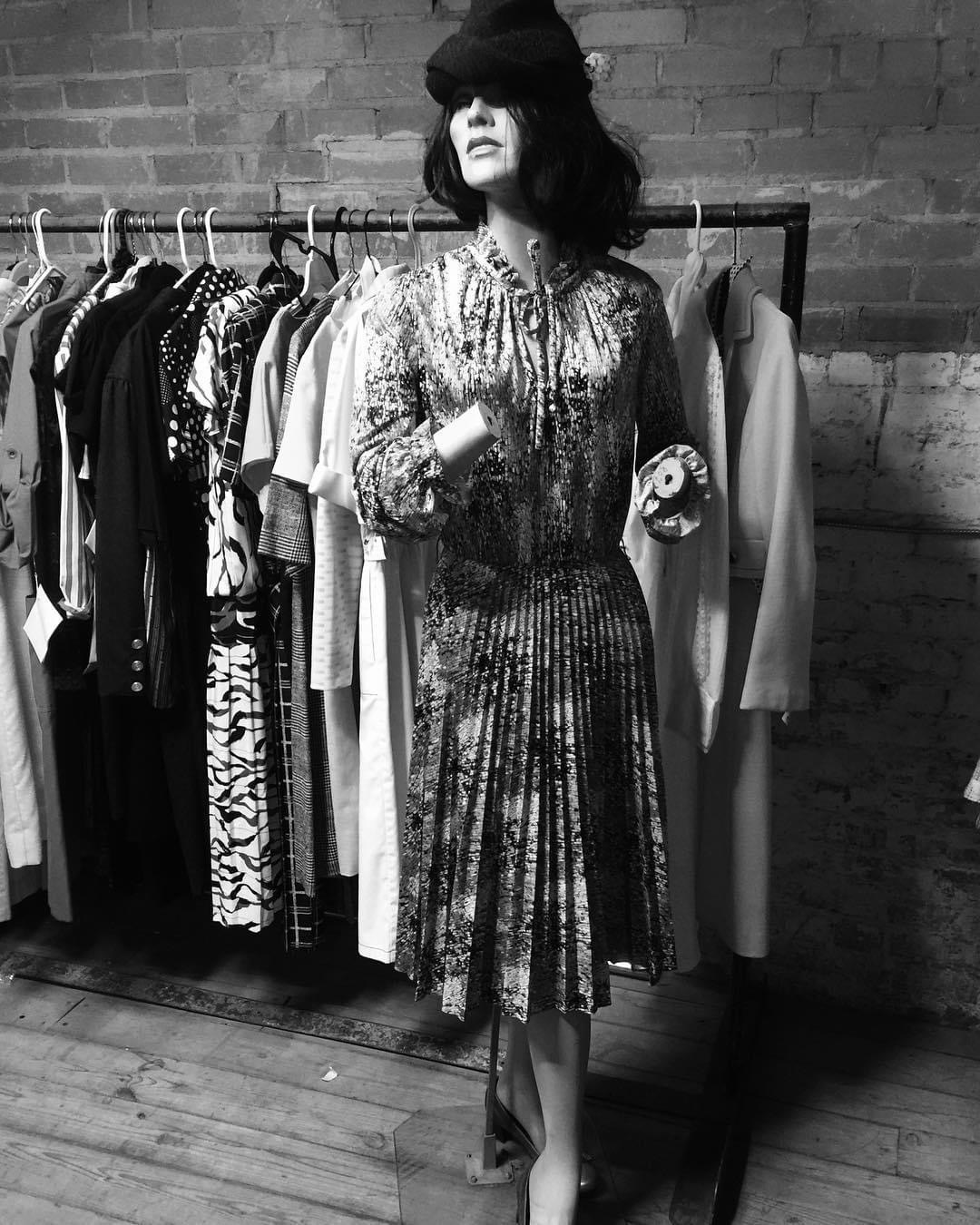
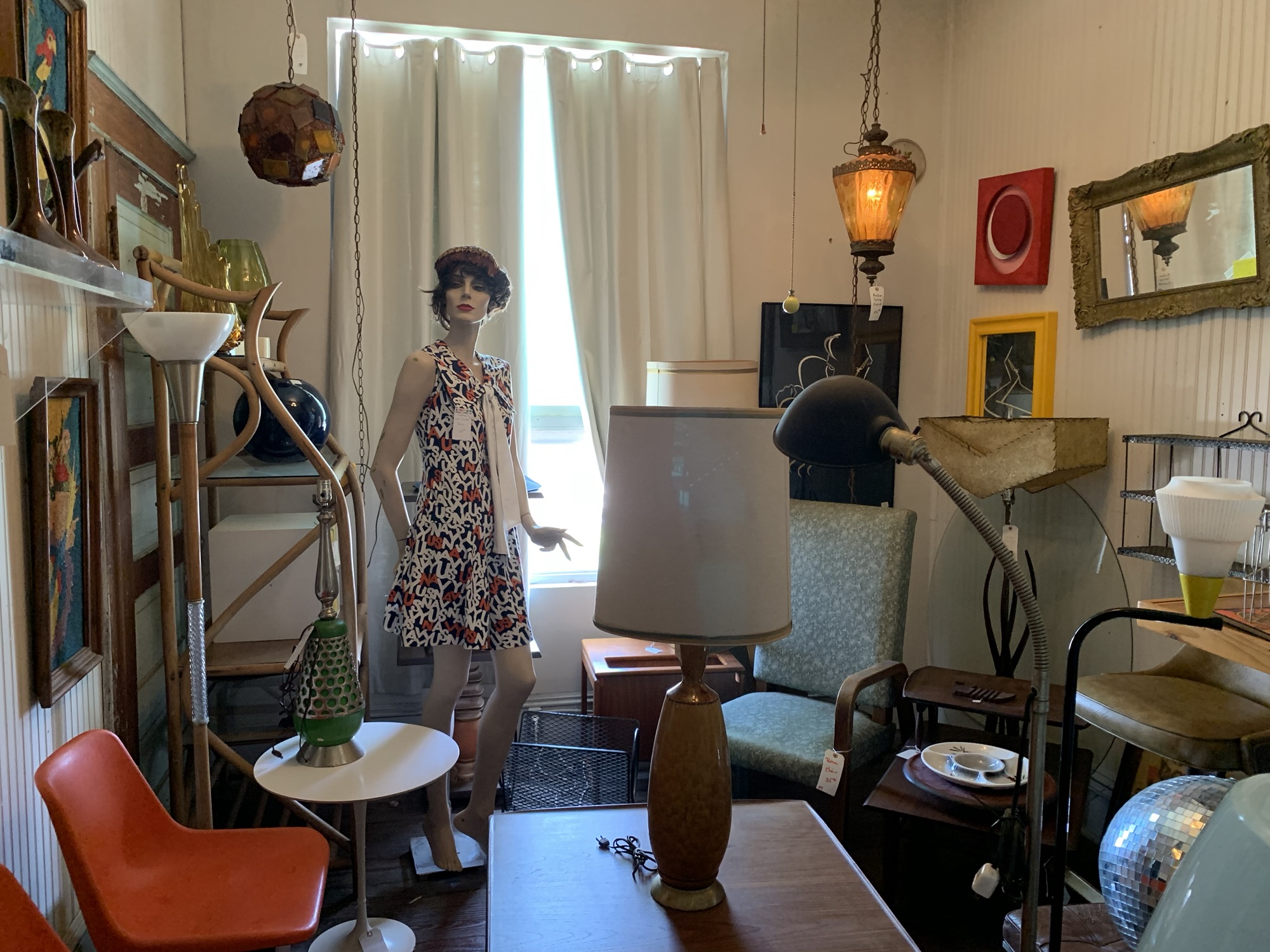
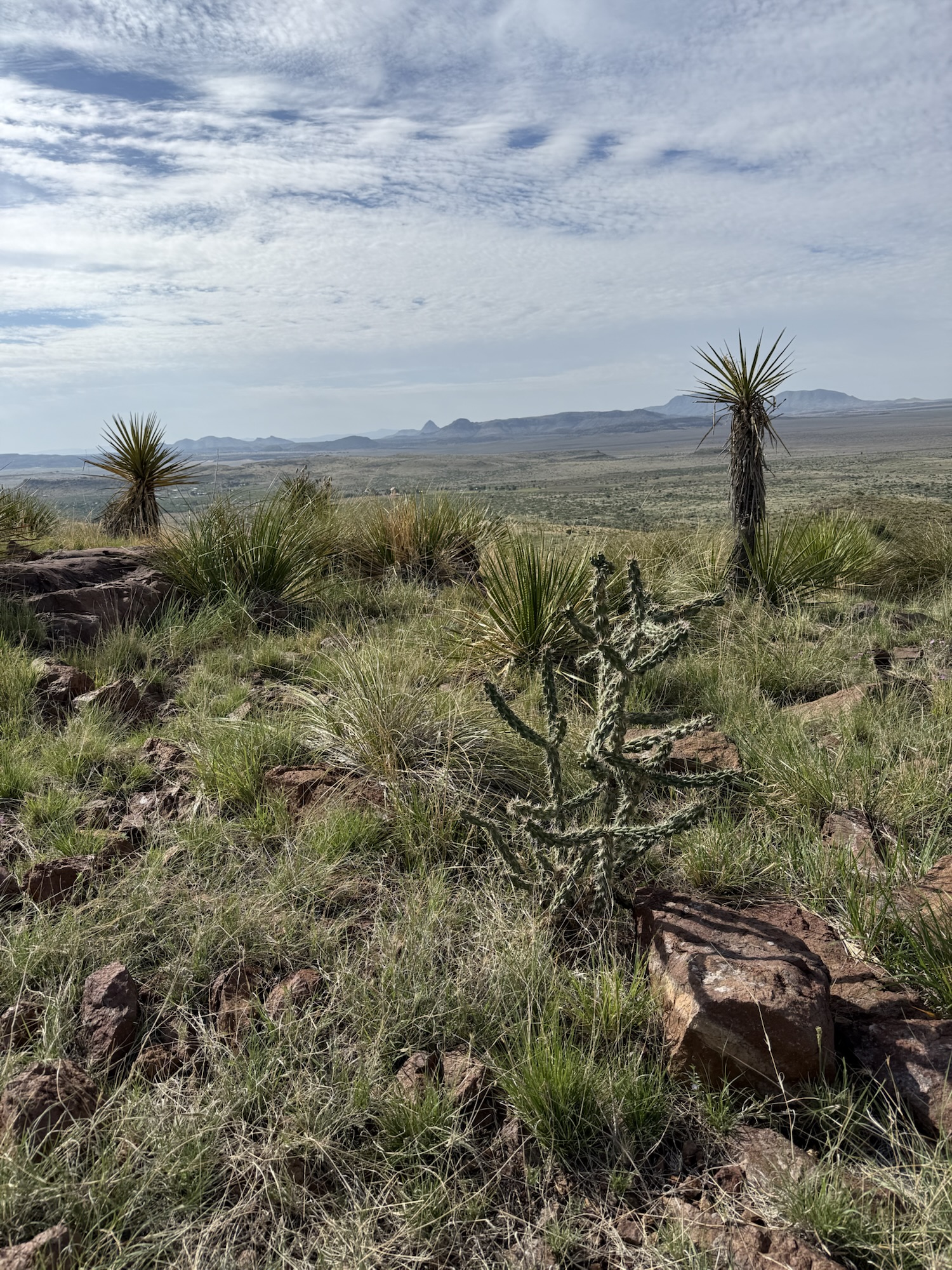
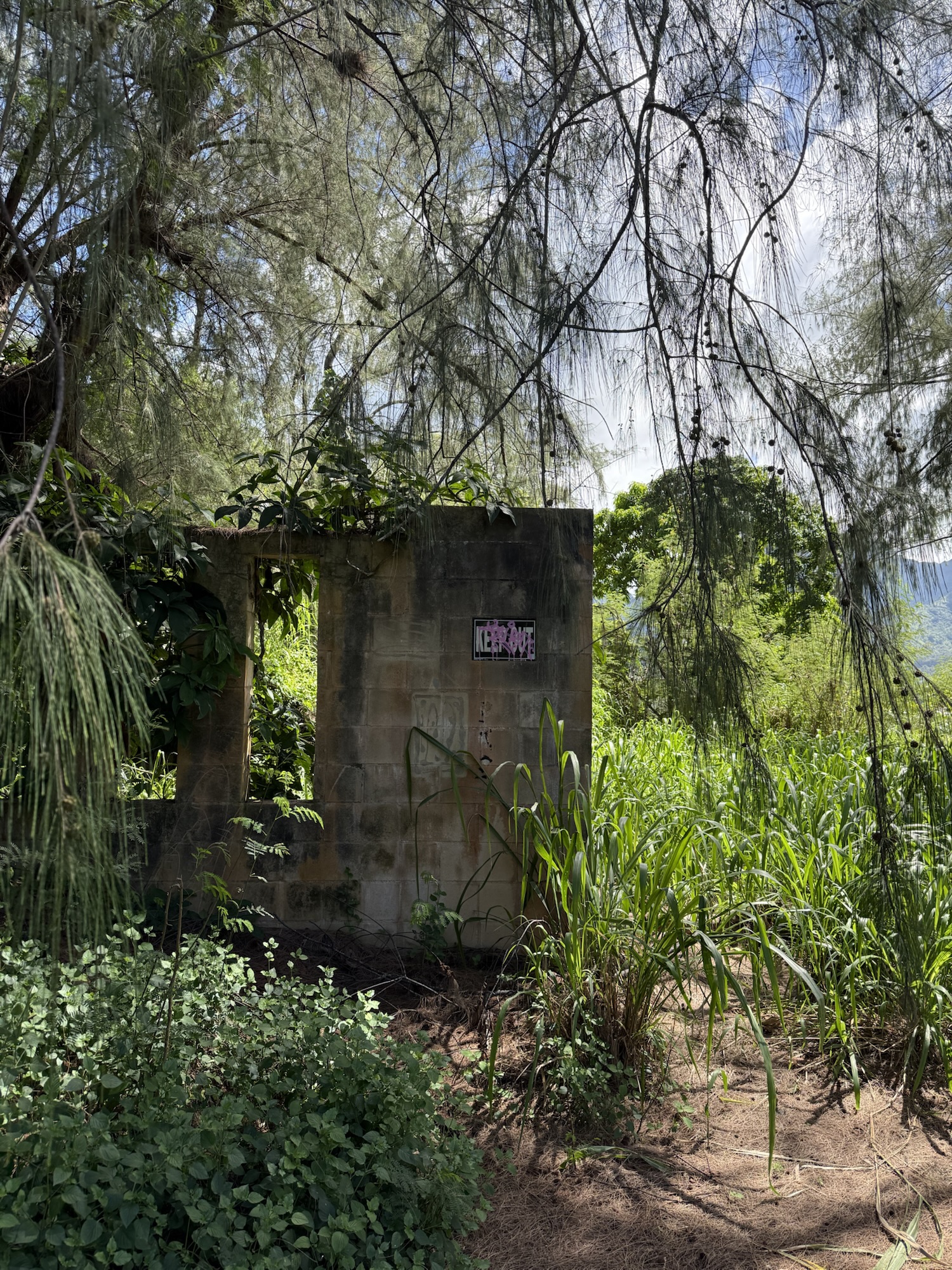
Despite the brief length, each is a complete tale. I hope you enjoy them, and the photos. All the pictures here are either ones I’ve taken or photos of me. I try to pick shots that match the feeling and mood of the stories.
This first piece is fiction, but I’d be lying if I told you it doesn’t sit close to truth. Unless you were super popular in school, I think you can relate to those feelings of being an outsider in the midst of your peers. And maybe even the popular kids felt that way at times.
The inspiration for this one wasn’t my own high school reunion, but an abandoned school that my husband and I drove past one Sunday afternoon. Hence the last lines in the story.
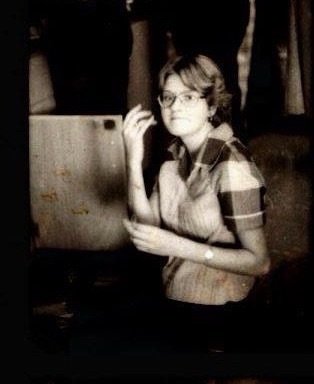
The author, photo from high school album
Reunion
I open my email and scroll past a black-and-white photo—stone lions crouching at a high school entrance. Recollection rings like the end of day bell. Rushing from locker to class, brushing past people who don’t see me, don’t feel me. I inhale the scent of rubber-soled shoes on a waxed gym floor. My arms sag, heavy with books sharp against my chest. Thirty years unravel, an unruly thread.
The invitation, sent from a name I’m supposed to recognize, gradually slides down my inbox, behind offers for car repairs and notices of bills now due. That high school has long emptied of anyone I care to see again. Ghosts linger like clouds of chalk dust, and wander empty halls that echo with phantom footsteps. They climb the stands and cheer for games now played only in memory.
That evening, I mention the reunion to Mark, my husband.
“Thirty years is big. Are we going?” He asks.
I shrug. “I don’t think so.”
I log onto Facebook and find the reunion group. Former students have posted pictures. Squinting at the images, I try to reconcile the faces with those captured in the yearbooks on my bookcase.
I request to join the group. A week later, the group admin replies and asks, “Who are you?”
In high school, she had sat next to me in algebra class. Now, she’s the person organizing the reunion. After searching through my email, I find and delete the invitation.
Months later, on a slow Sunday, Mark and I drive past a building marked for demolition. Broken windows cast blank stares. A shadow flickers like a waving hand, and somewhere inside I imagine a bell ringing. I tell my husband, “I went to school there. I think.”
THE END
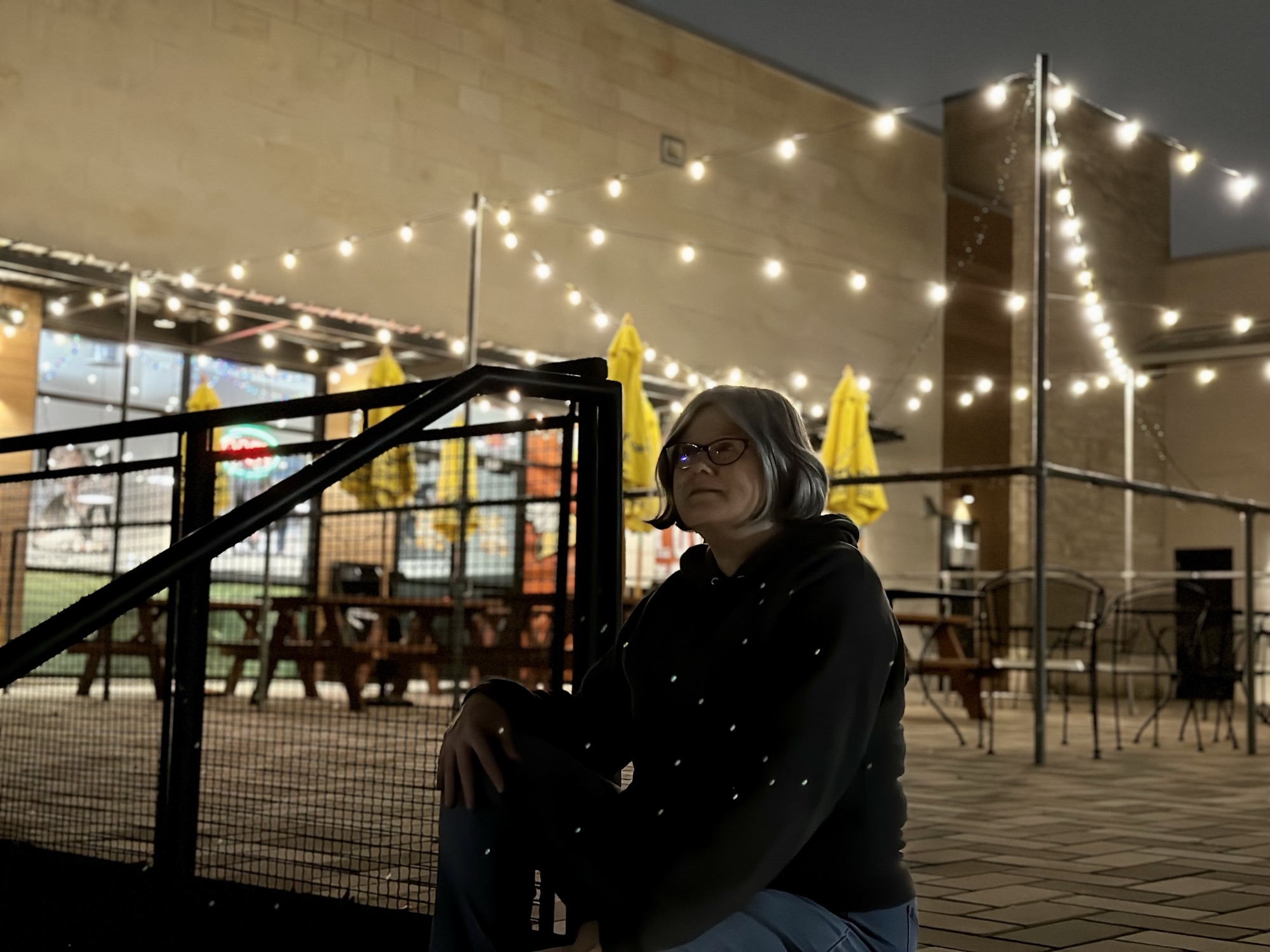
The author, photo by her husband
This next one if my favorite micro fiction story that I’ve written. It has that feel of the Old West, blended with a crime thriller. If you like it, you would probably enjoy one of my favorite movies: Hell or High Water.
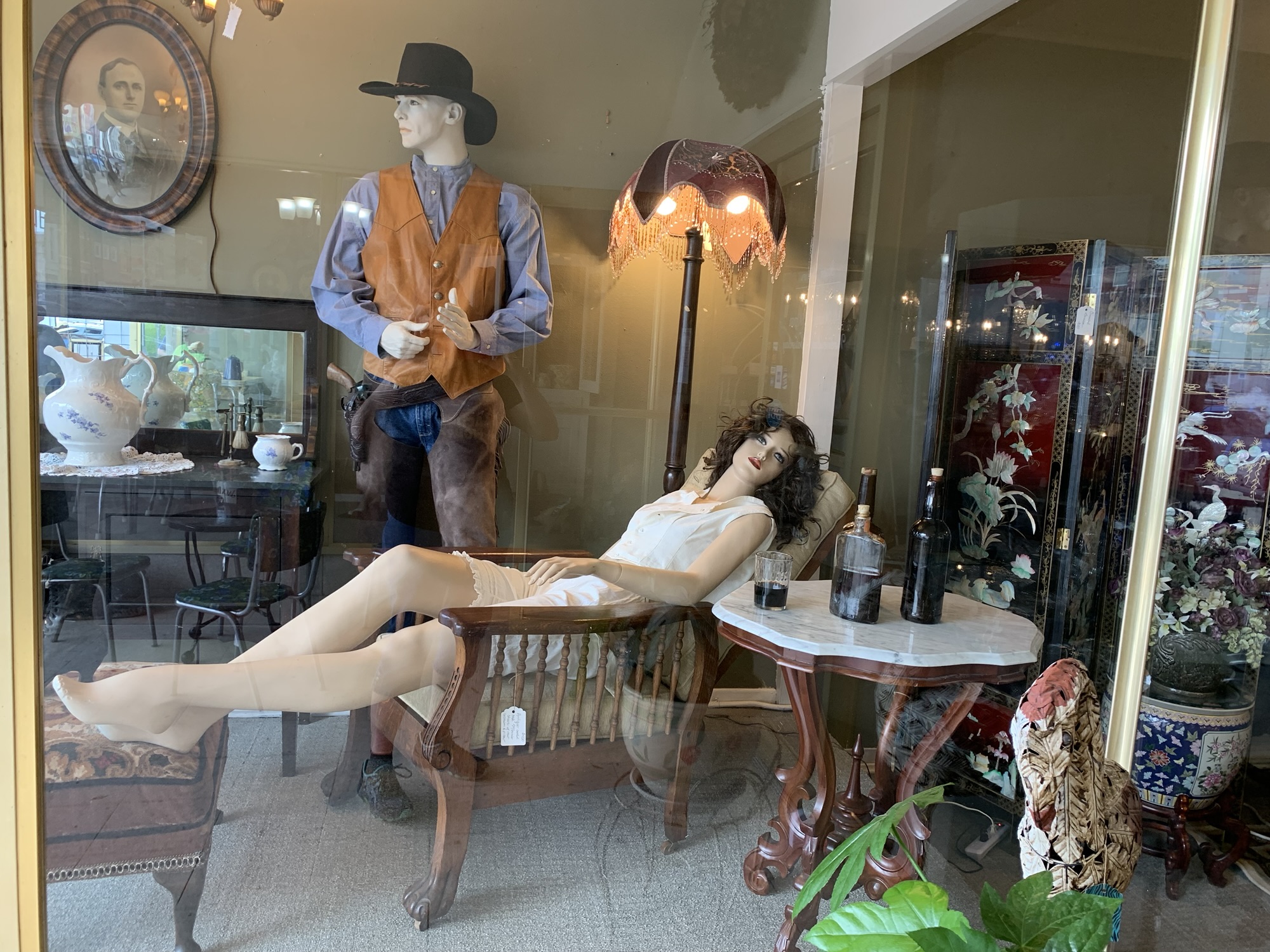
Photo by the author
You Can Tell a Lot About a Person by What They Leave Behind.
Fifty-six years of bad choices ended in a job cleaning toilets and sweeping used condoms from under sway-backed beds at the Star Motel. Nobody traveled there except oil tankers, tumbleweeds, and truckers dodging weigh stations.
Photo by the author
The place paid in cash – enough to linger, not escape. Drunken nights spent listening to West Texas wind, dreaming of something else. One day, I opened a nightstand drawer, expecting a water-stained bible. Instead, a snub nose revolver lay coiled like a black snake. I climbed into my rusted-out Ford and tucked the gun under the vinyl seat.
It waited there, a dark possibility.
THE END
Photo by the author
This next one was a contest entry for Globe Soup. The contest required entries to use the word “hollow”. It didn’t win anything, but it found a home eventually and was published.
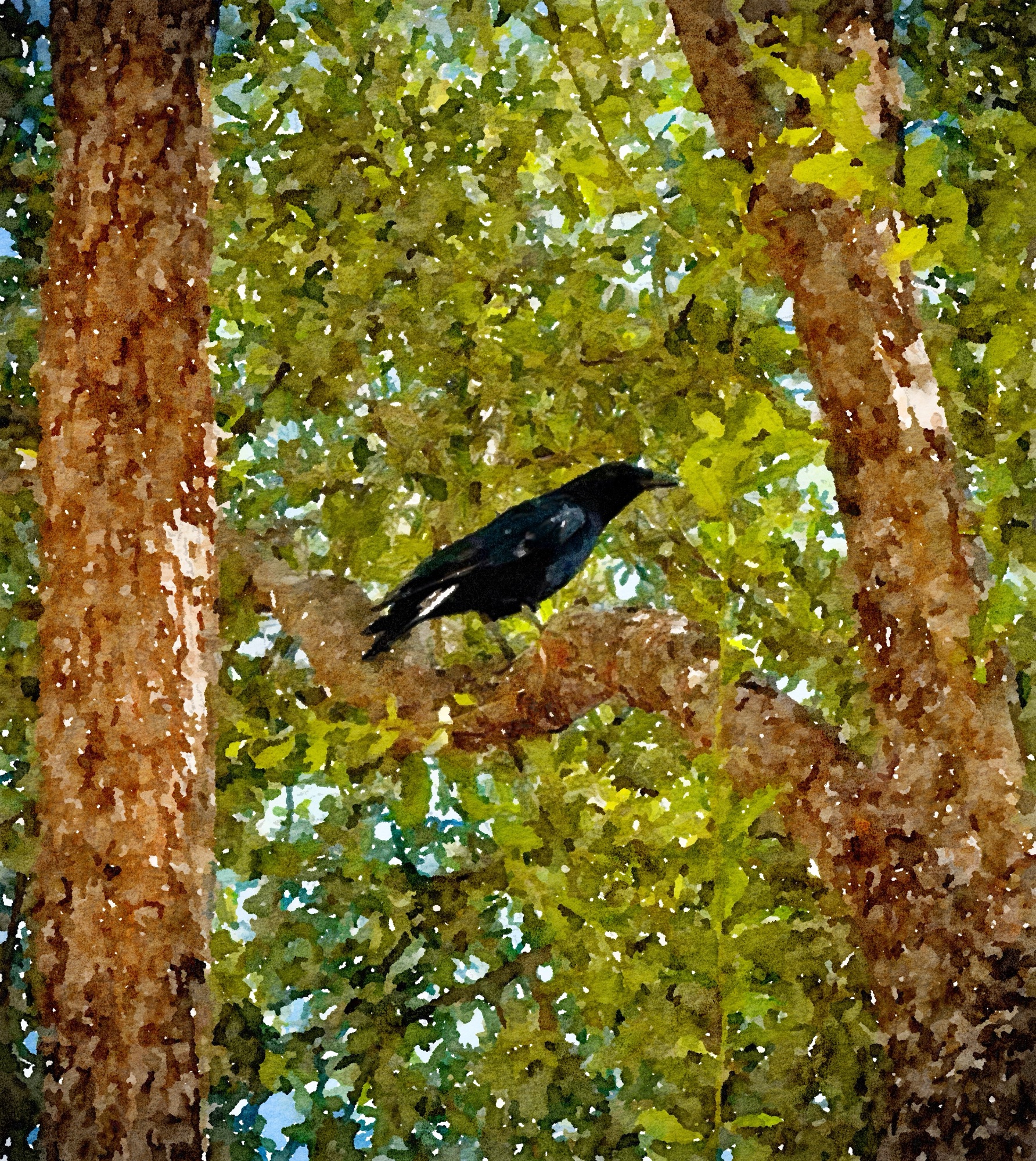
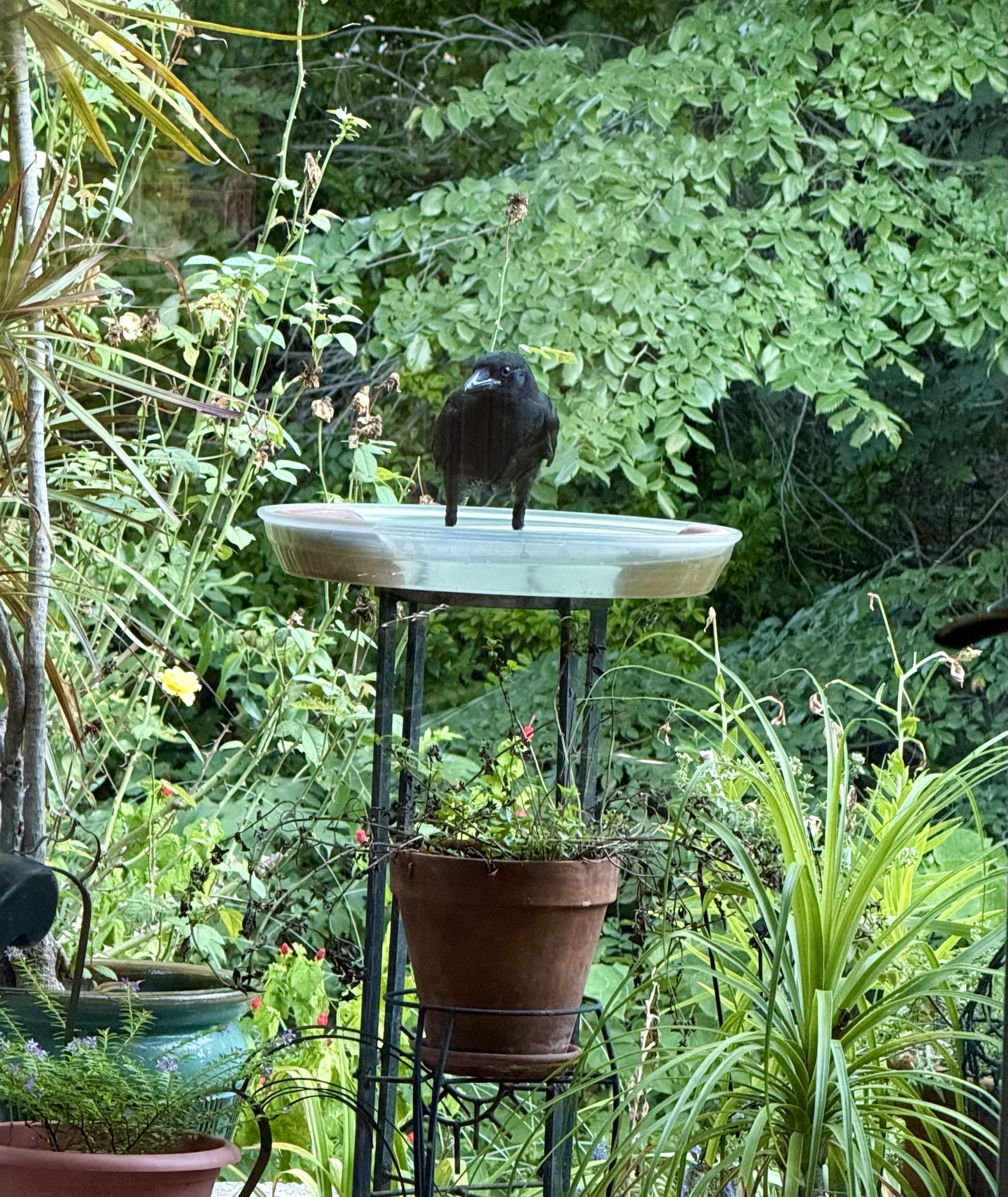
We enjoy feeding birds at our house, and crows are frequent visitors.
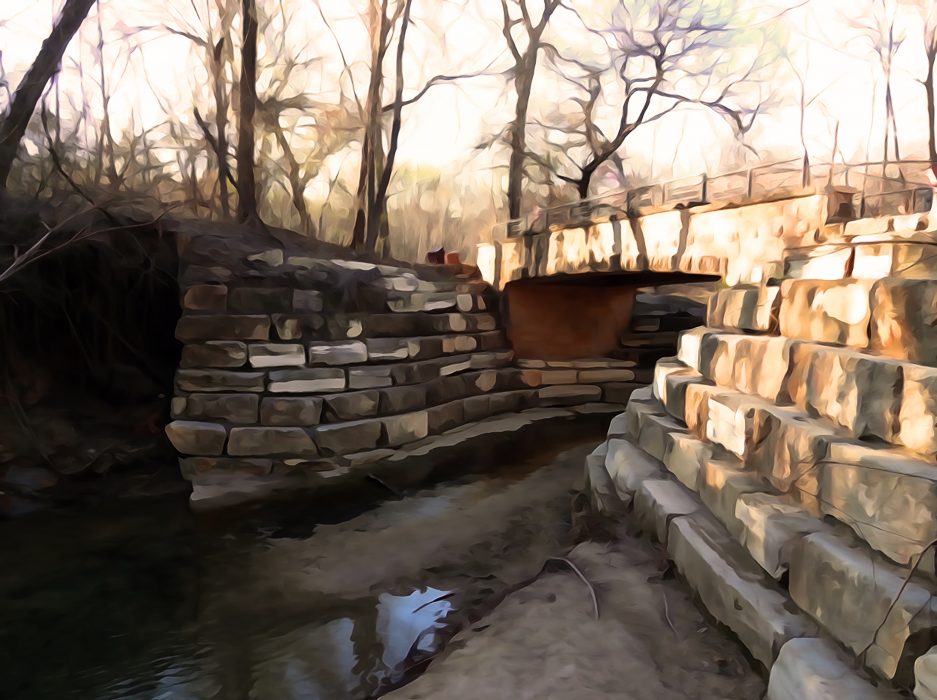
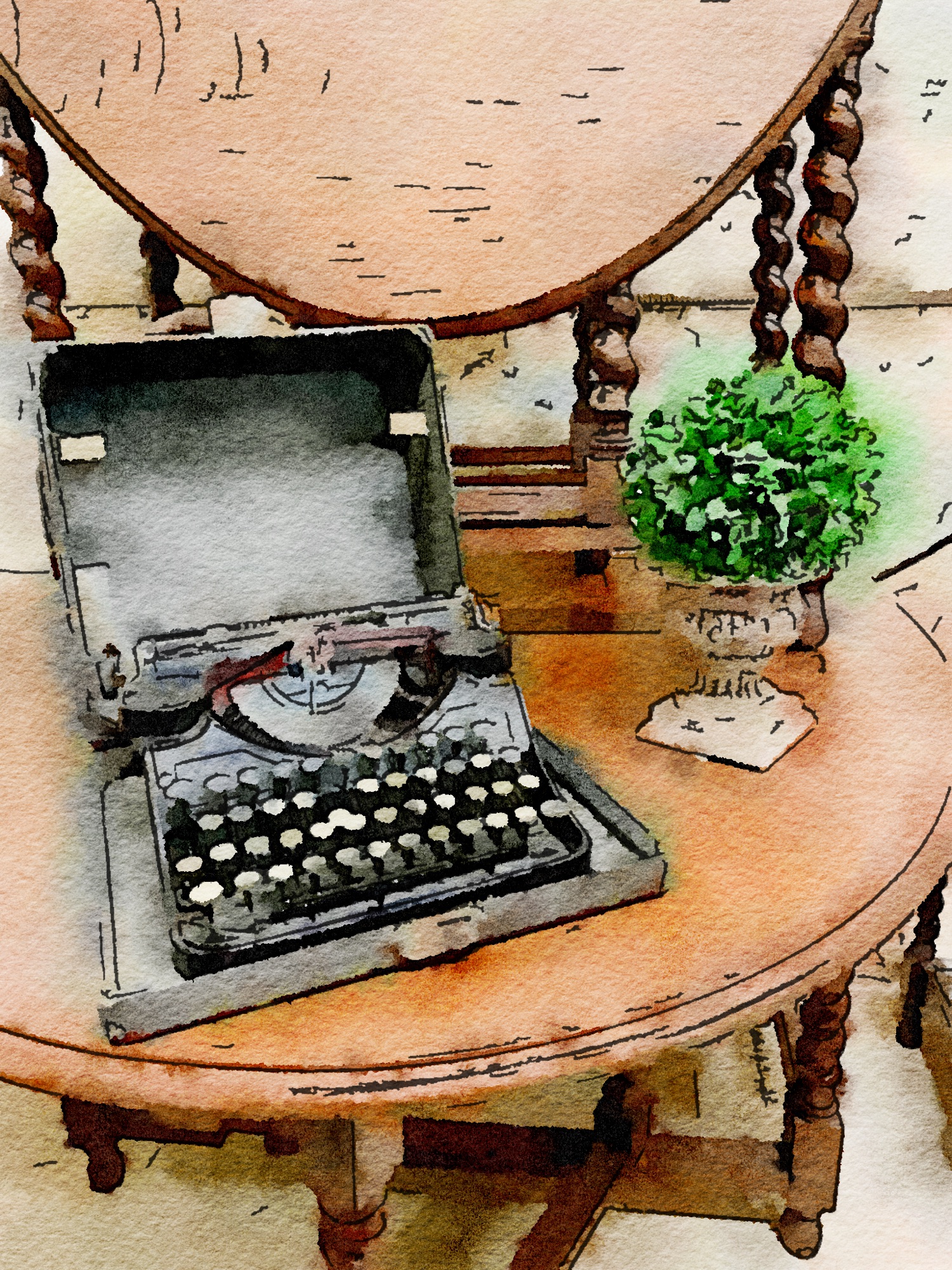
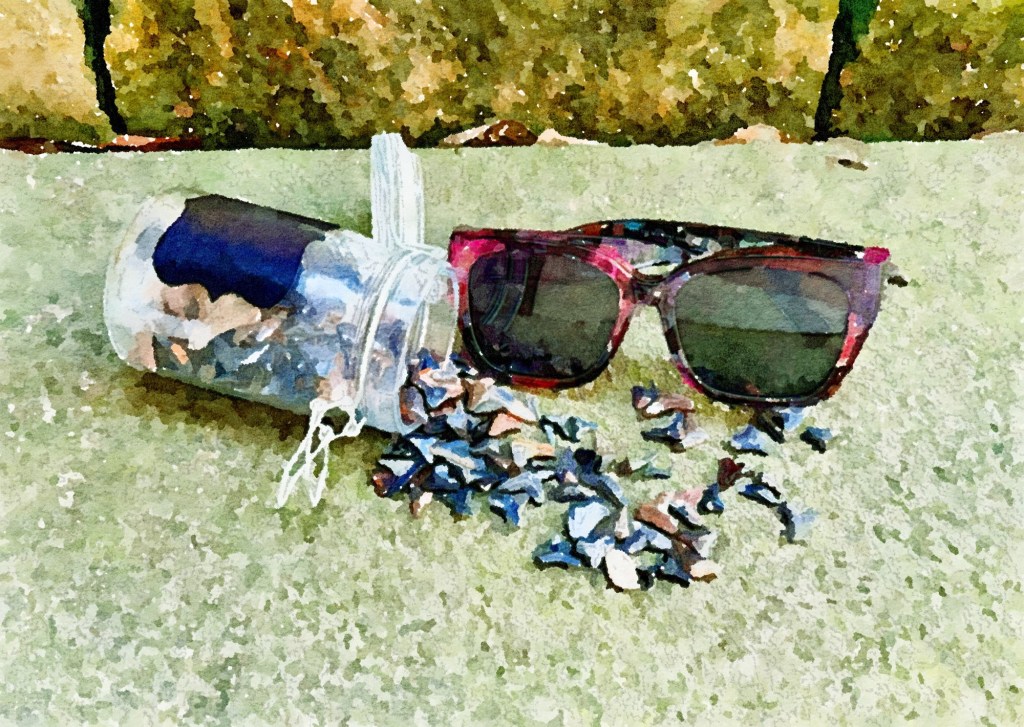
Photo by the author, edited with the Waterlogue app
An Empty Heart Holds Only Echoes
The day after her husband’s funeral, a crow crashed into Vera Scott’s patio door. At first, she overlooked the small black body on the other side of the glass. The collision’s hollow thump had been so loud she had expected something larger to have caused it.
She kneeled and picked up the bird. Lined above them in the trees, a murder of crows assembled. Cawing, they hopped from limb to limb—loud, black clad mourners.
Photo by the author
Tired of death, she willed the bird to stir. A shiny eye blinked. With a rustle of ebony feathers, the crow flew—hollow bones lifted weightless.
THE END
Most of the horror stories I write tend more toward Gothic fiction, with haunted houses and ghosts set in Texas or other strange places. I’ll never kill off a dog, cat, or child in my tales, but grown adults are fair game.
This little story is one that keeps popping back in my imagination, begging for more words. It’s a bit dark, but not gory.
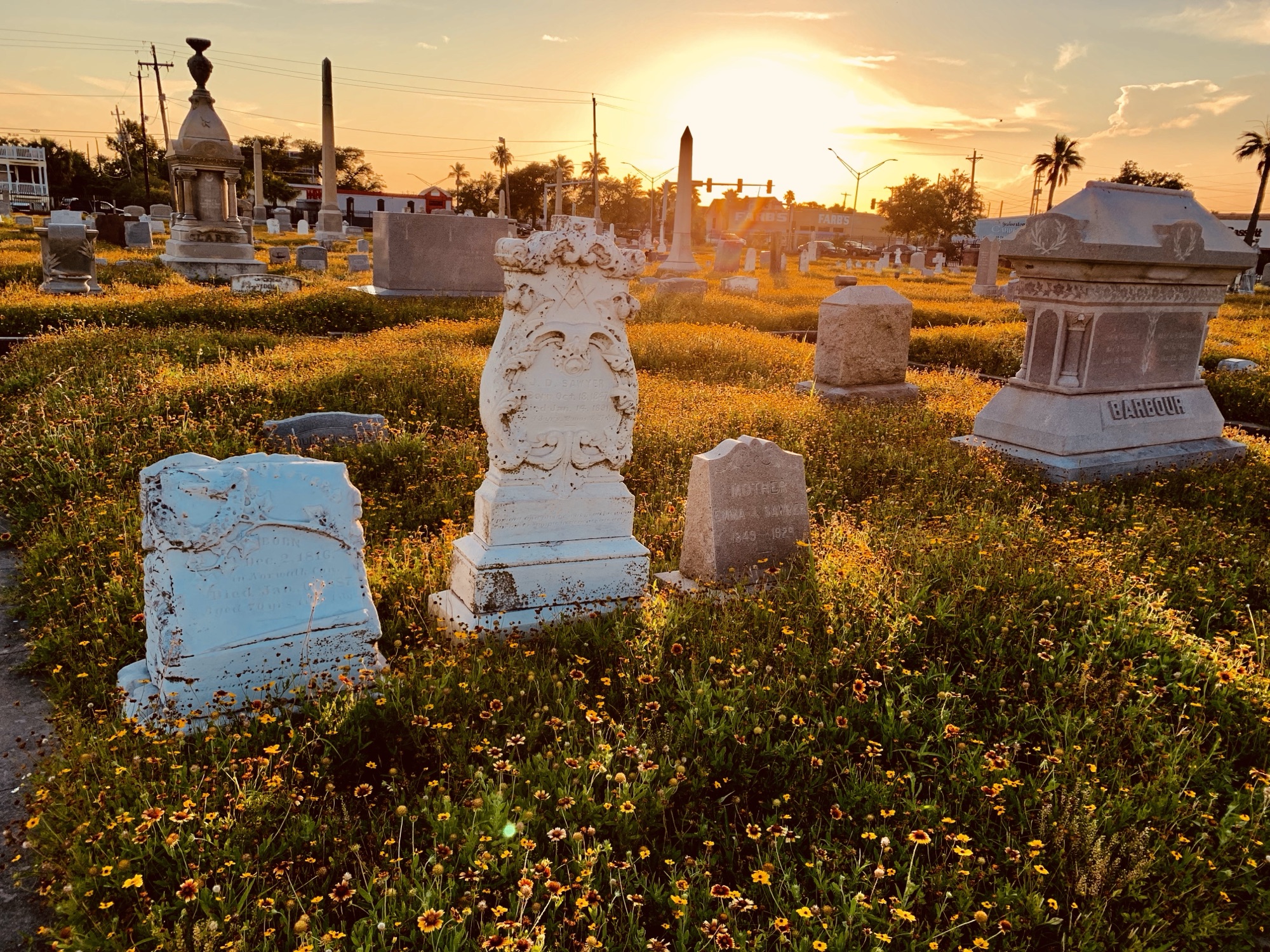
Photo by the author
What is Planted in Despair Will be Raised for Vengeance
We buried her in the spring, in the field where summer poppies bloom. Nothing holy grew from our grief, scattered like seeds across her grave.
Her mother’s tears watered the ground. Her lover’s guilt summoned the reaping. Had we recognized in time the truth of her death, he would have joined her under that cold blanket of dirt.
Her bones rose—white roots clawing through black soil to reach the sun. Conjured with regret, she will glean the good with the guilty.
We could have salted the earth to kill the curse, but fall is the time for the harvest.
THE END
Photo by the author
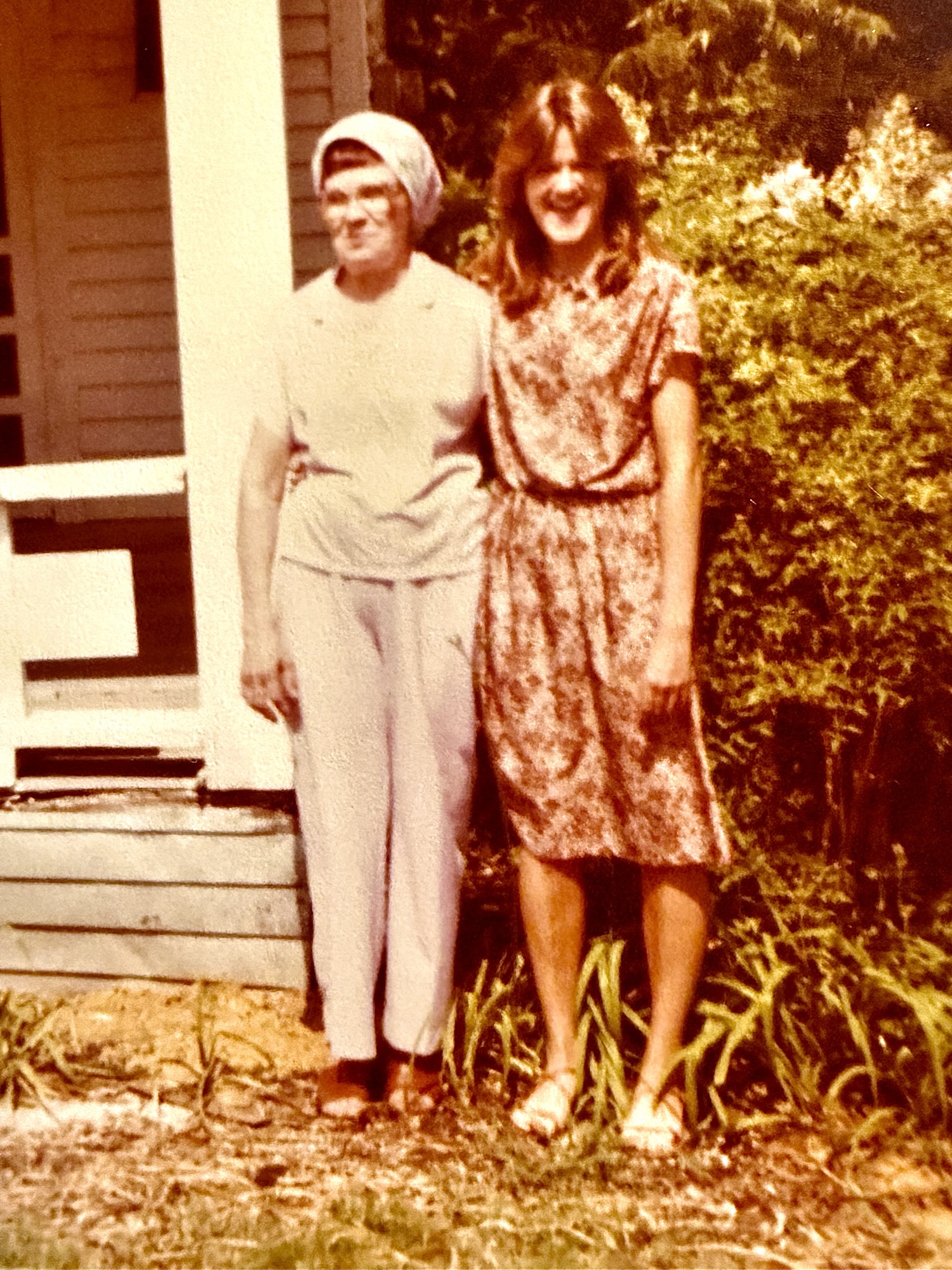
My relationship with my mom had the normal ups and downs, plus the complications from her undiagnosed mental illness. By the time this picture was taken we had reconciled and we had relaxed into enjoying each other’s company.
The micro fiction below was an entry in a contest. My entry didn’t win or advance and I haven’t tried to submit it anywhere. Instead, I chose to share it here.
I don’t remember the exact prompt, but it was something like “packing for a trip.”
I chose a darker interpretation of that prompt.
My mother, Christene Hamilton, passed away in 2010 at age 92. Departed finally on that last journey.
The author and her mother, Christene, sometime around 1982.
Wishing You Weren’t Here
My mother will not go. Her empty suitcase waits, ready to be packed.
Photographs faded to blue and green, recipe cards in her careful printing, a hairbrush threaded with silver, scarves scented with her perfume—all lie scattered nearby.
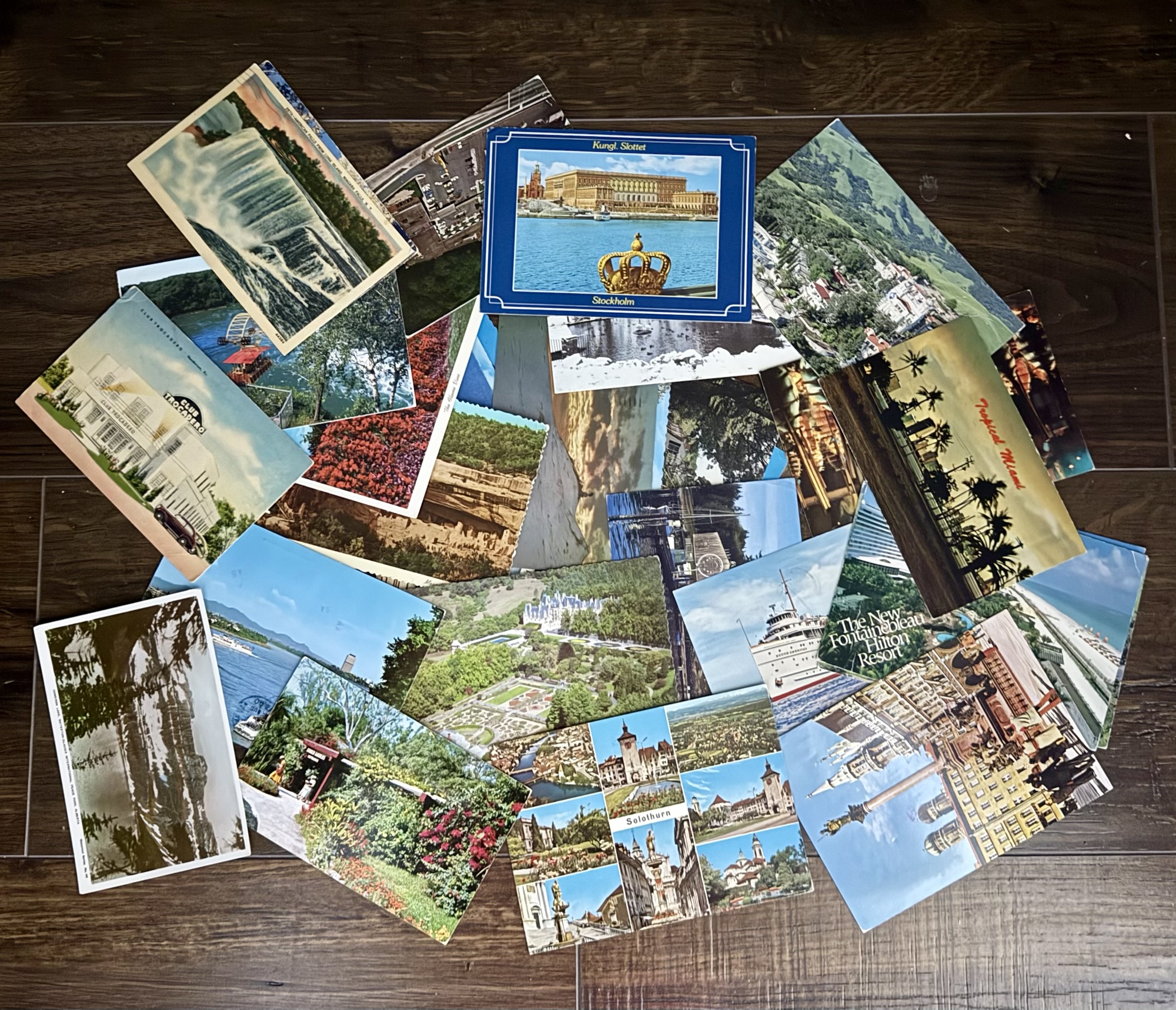
I add postcards from places never ventured, menus for foods never tasted. The yellowed fabric of her wedding dress goes in last. Out of sight, lest regret serve as an anchor. The coin for Charon’s crossing gleams beside the case.
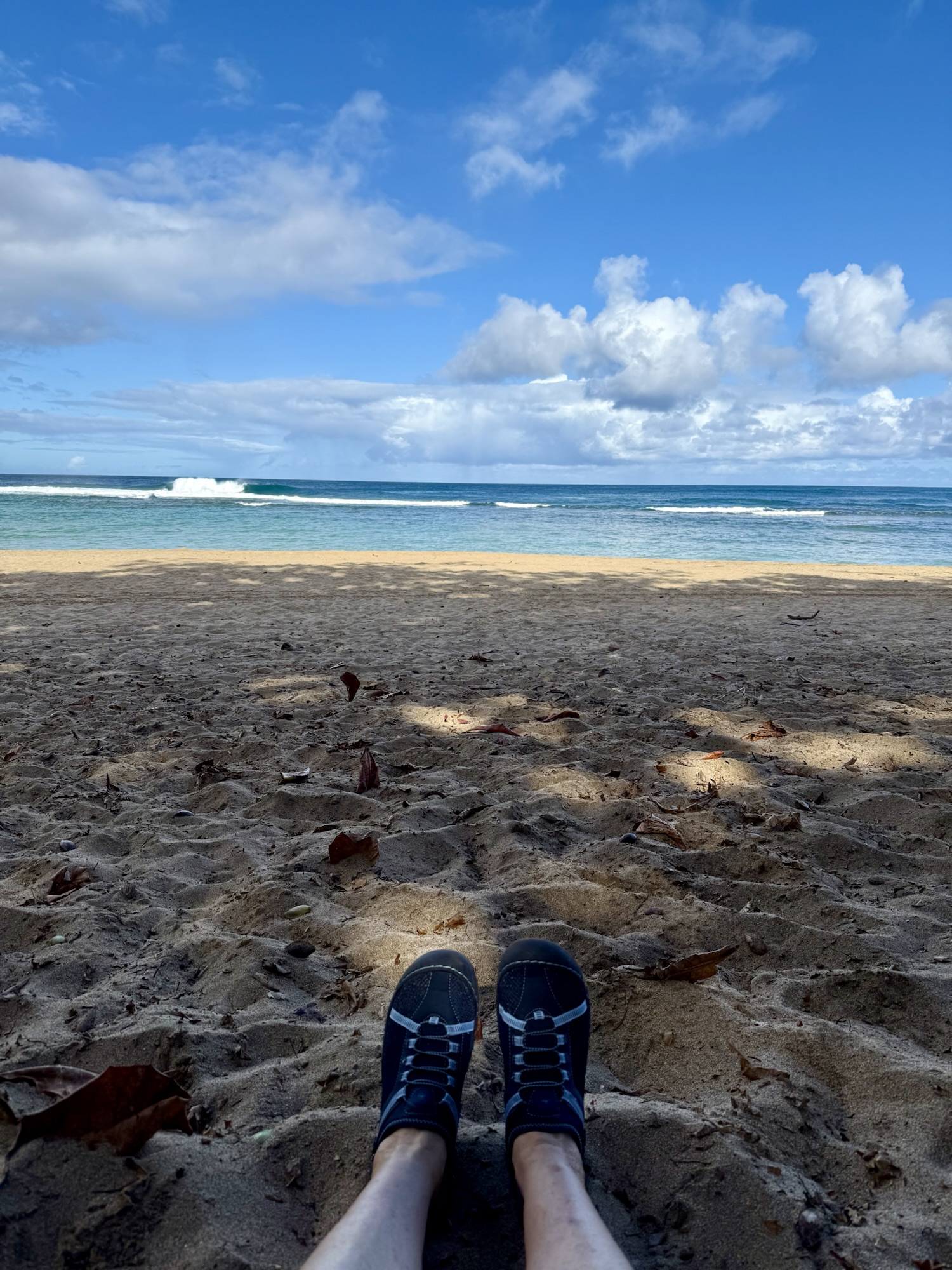
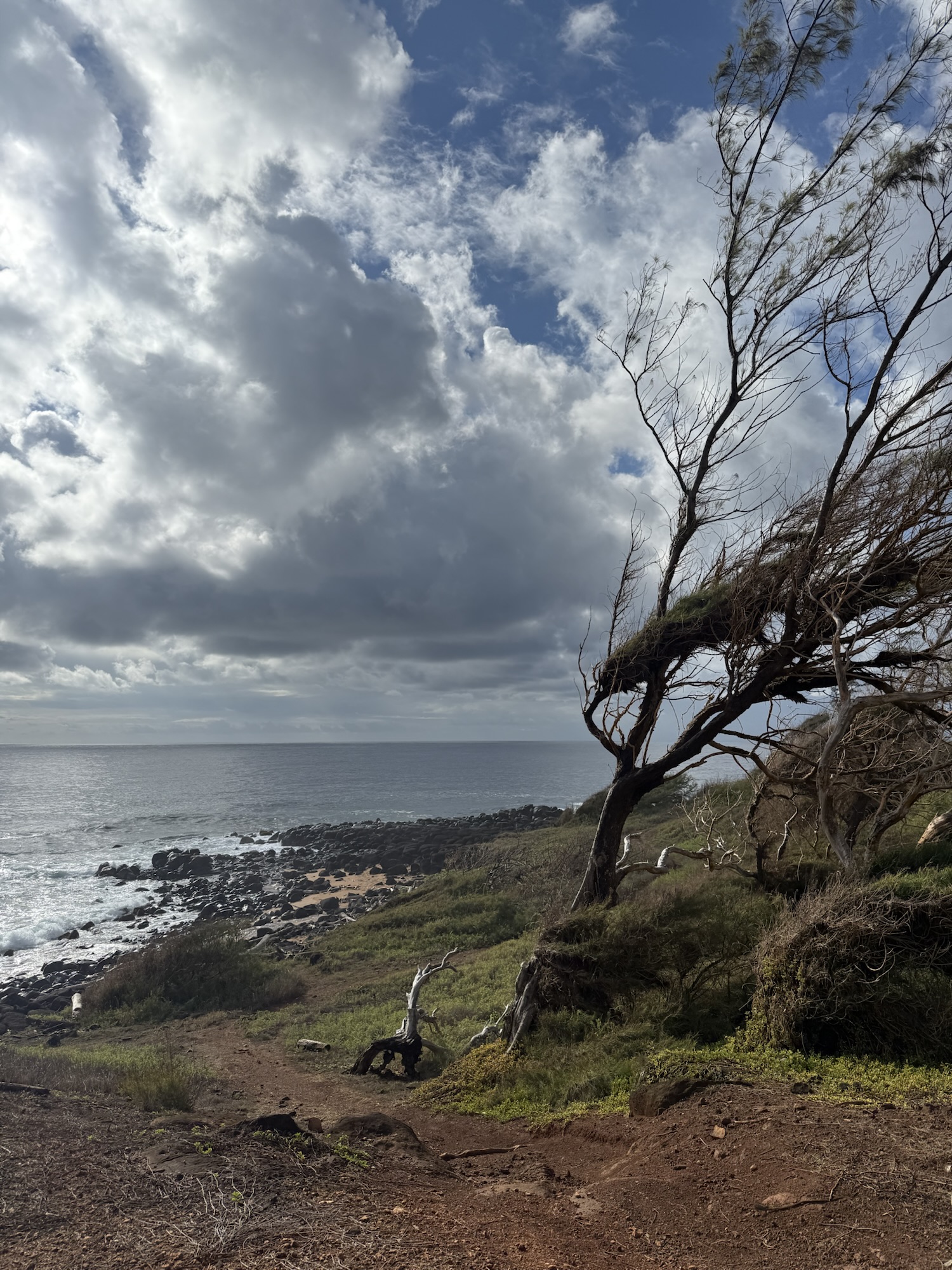
Photo by the author. Beach on Kauai, HI
I am sorry for this long journey, our distance fueled by bitter words.
When she leaves, who will love me then?
THE END
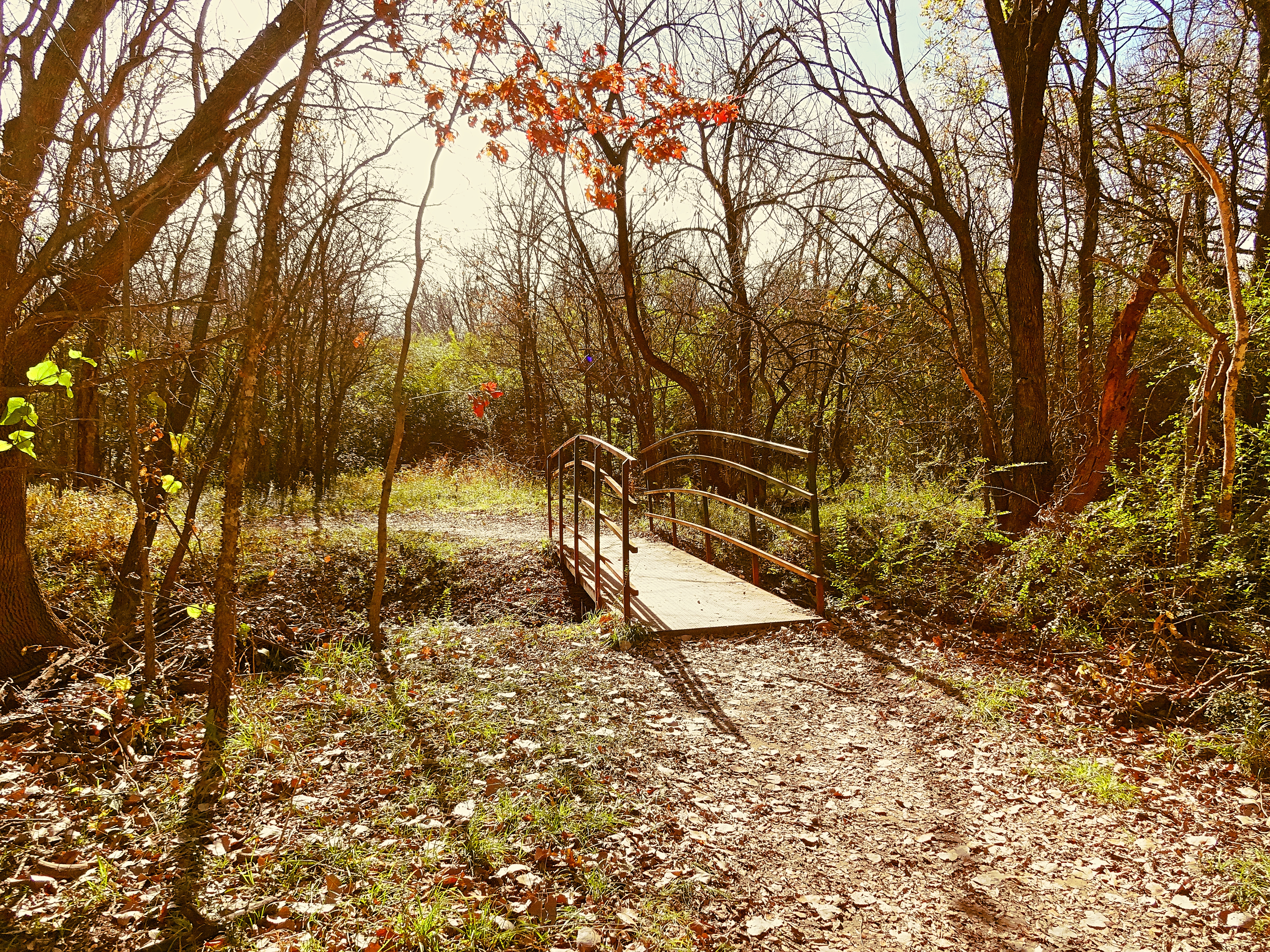
Photo by the author, edited with the Waterlogue App
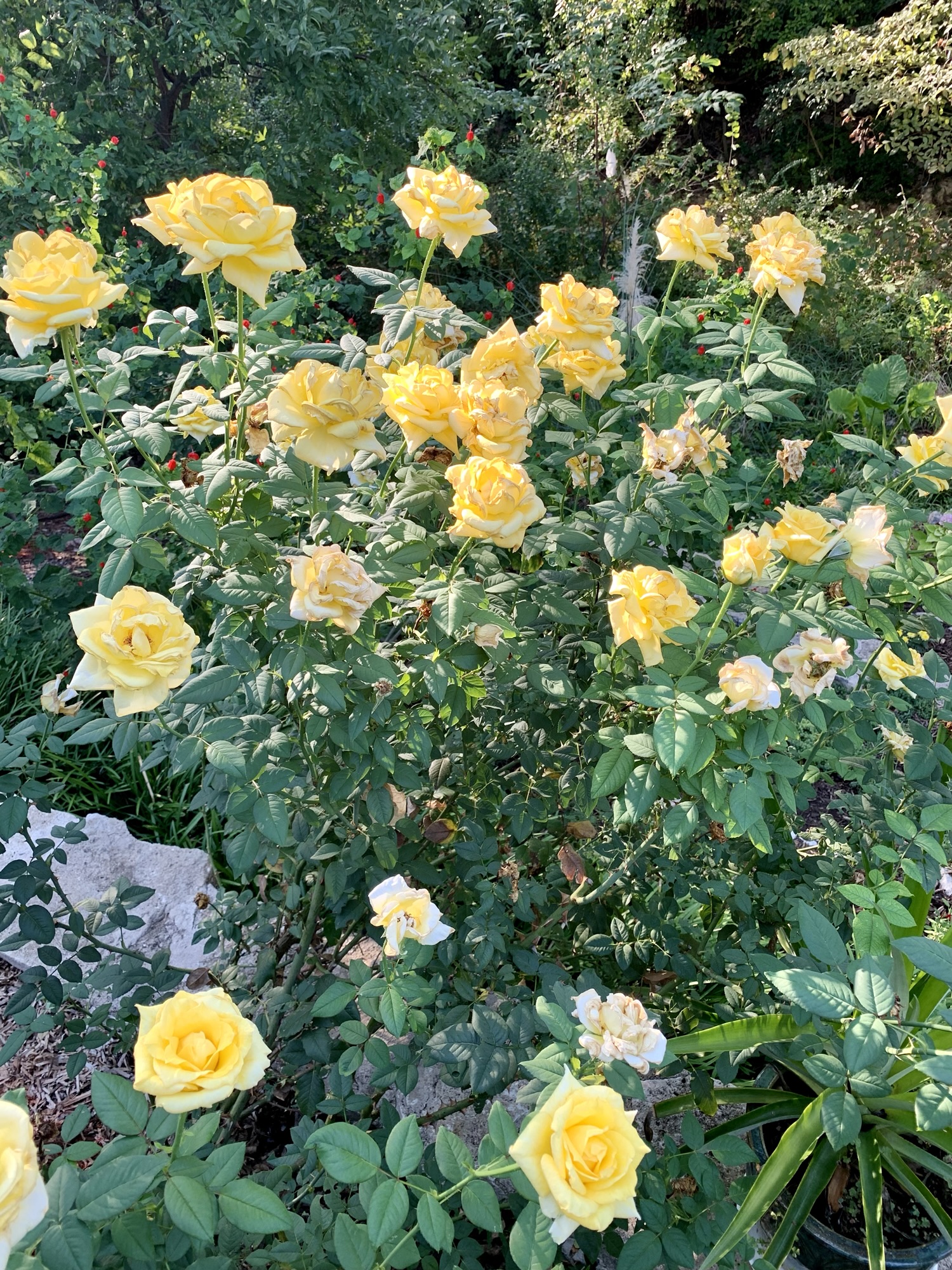
Photo by the author. Edited with the Waterlogue App
This story was first published in 2019 in the magazine The Weird and the Whatnot. I included it in my book of short stories, published in 2020. That book, The Imposter and Other Stories, has languished over on Amazon since then. I haven’t done much to promote it. In fact, I often forget that it’s out there.
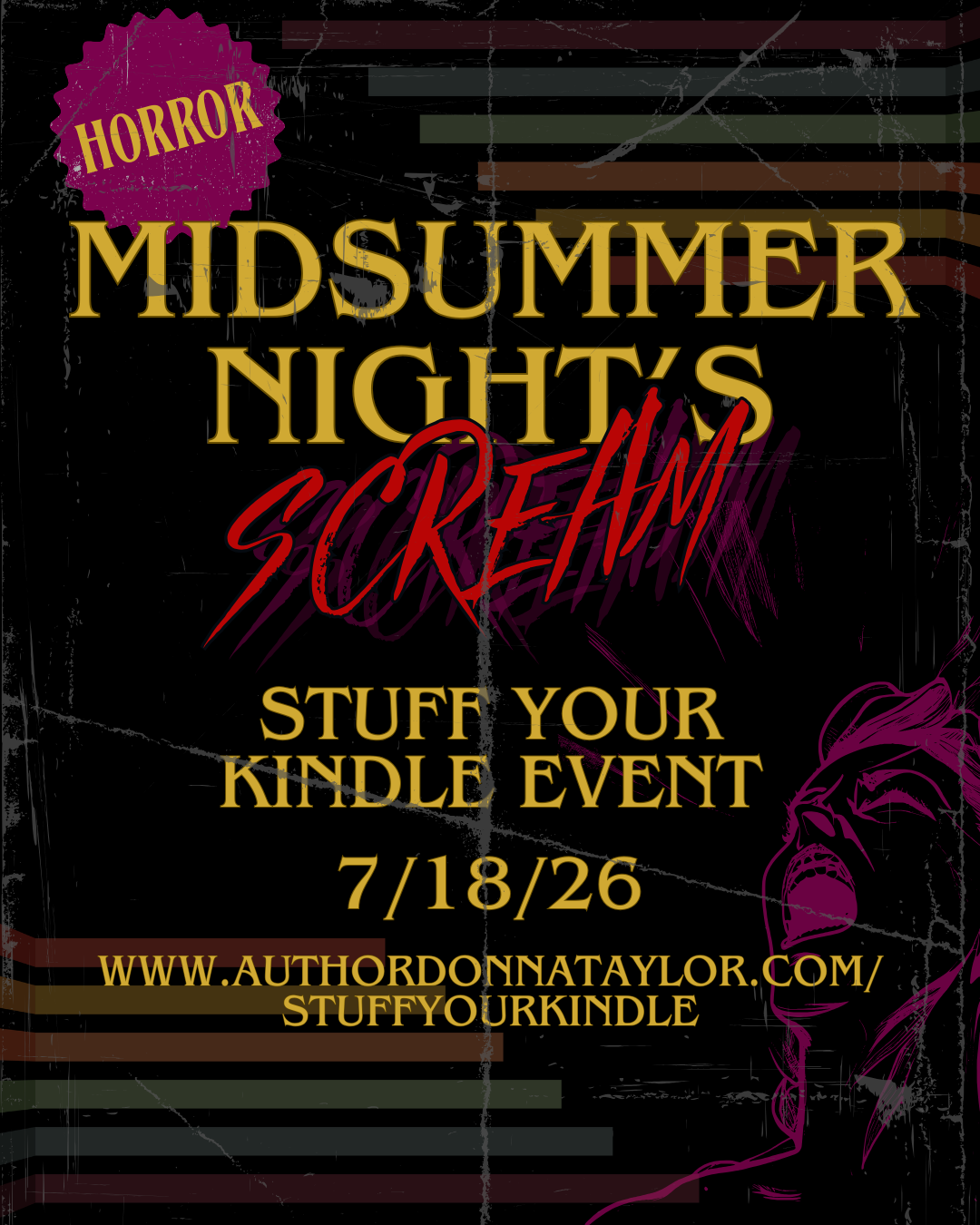
Next Saturday, July 18, that book will be included with several other horror ebooks in a “Stuff Your Kindle” promotion organized by a writing contact of mine, Donna Taylor. https://www.authordonnataylor.com/stuffyourkindle
She will be posting more on her website soon for the event, and I’ll be sharing over on Instagram and here once it kicks off.
In anticipation of this event, I thought I’d share a story that was included in the book, to give folks a look at the type of writing and stories that are in The Imposter and Other Stories.
A Token for the Journey
Together, Dottie and Bill packed the car the night before their last road trip. They rose early the next day and headed out of Oklahoma City along the old highway, now part of OK-66. The car, a restored Candy Apple Red 1967 Mustang convertible, hummed along the blacktop like she understood where they were headed, as though Bill could take his hands off the wheel and the car would continue on, in no hurry to reach the destination and happy for the journey. Bill had promised the Mustang to their grandson, but first the boy had to finish college. For now, the pleasure of driving this fine automobile was Bill’s, and he carried it all with him—the car, the road, the memories—as they started their odyssey.
Bill mapped the route months before the trip, picking out the bits and pieces of the old Route 66 highway (the parts not swallowed up when Interstate 40 bulldozed through and killed off the small towns along the way). He aimed to land in Arizona before they turned around to head home. One benefit of old age. They didn’t have to stick to anyone’s schedule but their own.
“Will we get to Tucumcari before dark?” Dottie asked that morning as she smoothed out the road map and traced their course across the folds and crinkles. Parts of their sojourn might take them to areas of spotty phone reception, but the main reason they brought the paper version was nostalgia. They would drive past places they visited years ago on their honeymoon trip from Oklahoma to Los Angeles. Back then, they’d relied on maps and road signs to navigate; it didn’t seem fair to cheat the course with electronic gadgets.
Dottie, in her lemon-yellow capri pants and crisp button-up shirt, looked cool and sweet against the red vinyl seat. With her hair pulled back in a dotted scarf and the rhinestones in her cat eye sunglasses flashing in the morning sunlight, she looked much younger, like the girl Bill had married fifty years ago. Right then, it seemed they’d have more good days than bad ahead of them, but this wasn’t something they could count on.
“We’ll make Tucumcari long before dark. And we’ll hit stops along the way, maybe have a late lunch in Amarillo, at the Big Texan,” Bill said.
Dottie smiled and nodded as she slipped a dog-eared copy of Edith Hamilton’s Mythology out of her purse. It was her favorite book to read when they traveled, an anchor that reminded her of her days as a teacher. Mornings were best for her, she kept more of herself after a good night’s rest.
They made their first stop in Clinton, Oklahoma, at the Route 66 museum. The nation’s first completely paved road, Route 66, wound like a river of asphalt 2,448 miles from Chicago to Los Angeles. Bill climbed out of the car and trailed along behind Dottie, the old wound in his leg giving him grief after being cramped up behind the wheel of the Mustang. They browsed through exhibits that might have come straight from their own recollection of the Mother Road. Bill’s first trip down that river had been as a kid in the backseat of his father’s Chevy.
Bill followed as Dottie wandered through the museum, her eyes lit up like a kid’s. It was good to see her so animated. Lately it seemed she spent too much of her days along Lethe, the river of forgetfulness in Greek myth.
When they got to the last display, Dottie turned to Bill. “I’d like to browse through the gift shop.”
“All right. Remember we’re in the Mustang, so don’t buy anything we have to haul halfway across the country.” Bill watched his wife disappear behind a wall of coffee mugs and t-shirts.
Bill leaned against the car while he waited for Dottie to finish her shopping. Standing there, staring out over the parking lot at the blue horizon, it reminded him of those days in the past when he waited for her outside shopping malls. Back then, he’d have a cigarette to pass the time, and the memory of it had him draw in his breath, tasting tobacco and ash on his tongue. Bill glanced at his watch, worried he’d made a bad decision leaving Dottie on her own. He pushed off the car, ready to go into the store, when he spotted her walking out the door of the museum.
“Now don’t fuss, but I got you a little something.” Dottie laughed as she opened the car door and handed Bill a white paper bag with the museum logo. He pulled out a key chain with a tiny metal token, a round replica of the old Route 66 road signs.
“Well look at this, it’s just right isn’t it?” he asked as he ran his finger along the edges of the little white shield. It was slightly bigger than a quarter. “I guess it’s our lucky charm,” Bill said. He clipped the Mustang’s keys onto the chain and twirled the miniature road sign before starting the motor. The afternoon had turned out nice, sunny but not too hot, so they put the white vinyl top down before they pulled out of the parking lot.
Outside Amarillo, the old highway became the service road for I-40. The Mustang would handle the interstate just fine, but they rolled along beside it and let the interstate truckers blast past in a rush of diesel-fouled air. The road stretched out in an unbroken silver line straight to the horizon, flat plowed fields on either side. Short green corn stalks poked out of the red dirt, reaching their leaves like arms to the sun.
Past the town of Soncy, they crossed I-40 to the southern frontage road so they could pass by the Cadillac ranch. Bill slowed down to take in the sight of ten classic Cadillacs buried nose down in the muddy field. They were slanted at the same angle as the great pyramids of Egypt. Layers of peeling paint coated the autos in a riot of color that, to Bill, looked more like vandalism than pop art.
They first spotted the hitchhiker there. He stood at the edge of the frontage road where the asphalt gave way to loose gravel. Dressed in an olive-green army fatigue jacket, at first glance he blended in with the tall grass behind him. He held a hand-lettered cardboard sign that looked as tattered as his clothes.
“What do you think he’s doing all the way out here?” Dottie asked as they cruised past.
“It is a little odd that someone dropped him there.”
Bill glanced in the rearview mirror and saw the guy watching as they drove off. His long hair and sparse beard reminded Bill of Odysseus, on the tail end of his journey home to Ithaca after the Trojan war. From his post on the roadside, the hitchhiker took one hand off the sign to wave, and Bill mashed down the accelerator. The pony car rumbled in response, a quarter-sized hole in the exhaust making the engine sound louder and larger than the stock 289 V8 under the hood.
The highway stretched out to the horizon, an unbroken line of grey. As the day grew warmer, heat waves shimmered across its surface and a mirage appeared ahead of them, turning the road into a false waterway. Soon they arrived in Adrian and stopped to stretch their legs at the Midpoint Café. The white painted concrete block building looked much the same as it must have in 1928. The couple pushed through the doors and walked into a dining room from the past, complete with Formica-topped tables and vinyl covered chairs with chrome legs. They slid into a booth near the front. As Dottie settled across from Bill, he spotted the hitchhiker in the last booth from the door.
“Isn’t that the guy from outside Amarillo?”
Dottie turned around, her forehead wrinkled. She clutched Bill’s elbow as she bent her head to whispered, “Someone must have picked him up.”
Bill wondered how he ended up ahead of them. Maybe his ride took the faster route along the interstate, instead of the scenic old highway. The hitchhiker hunched forward in the booth, hands cupped around a thick china mug. A dirty green duffle snuggled up against the bottom of the booth. The man turned toward them and lifted the coffee mug in a salute as though he knew they had been talking about him.
The hitchhiker got up to leave and Bill suggested they linger over coffee and pie. He didn’t want to walk past that guy on the way to the Mustang. When they got up to pay, Bill peeked out the front glass. He saw no one in a faded army jacket. As he dumped a handful of change onto the counter, the key chain with the road sign token clattered out amongst the dimes and pennies.
“Don’t suppose you take this do you?” Bill said, holding up the souvenir so the Route 66 logo faced the cashier.
The woman replied with a tired shake of her head, and Bill laughed as he dropped the keys into his pocket. “Better not give up my good luck,” he said.
They hopped back on the frontage road and followed I-40 until the exit for Glenrio, the ghost town on the Texas and New Mexico border. They pulled the car off the road and climbed out to wander past the rotting wooden buildings that had once housed a café and a motel. Dottie snapped photos with her digital camera as Bill kicked through the high weeds surrounding a deserted gas station with rusted pumps. An abandoned car, a beat-up Oldsmobile with primer-grey fenders, sat on blocks beside the building. The wind picked up, whistling in with a cool front. They’d need to put the top up for the drive into Tucumcari. Black clouds rolled in across the horizon and the air smelled like rain.
“We better head out before the rain starts,” Bill called out to Dottie as he turned back to the car.
As he hiked back to the Mustang, he stumbled, his bad knee locking up, and an adrenaline jolt of pain caused Bill to gasp and clutch his chest. Fear ran through him as he slumped against the car. What would happen to Dottie if he fell and broke a hip, or worse? Bill leaned on the warm metal of the fender and zipped up his windbreaker. When his hand found his pocket, he felt the little metal road sign, the key chain Dottie had purchased that morning. His fingers smoothed over the cool, slick enamel and his breathing slowed.
Bill turned around to search for his wife. A blur of motion at the corner of the gas station turned out to be a tumbleweed. Heavy blue-black clouds drifted over, blocking out the rest of the sunlight. A flash of lighting reflected in the grime-smudged windows of the gas station and revealed what looked like a face pressed to the glass inside.
“Dottie?” he called, thinking she’d somehow gotten inside the building and couldn’t find her way out. She appeared from behind the station, weaving as she stumbled on the broken asphalt at the edge of the lot. She stopped, looking around as though lost. Bill had his hand on the car door, ready to limp over to her, when she spotted him and waved. He sighed and eased into the car to wait for her. As she shut the car door and buckled herself in, Bill stared in the rearview mirror. The flat landscape reminded him of Amarillo, and the hitchhiker. Bill scanned the horizon, half expecting to see a man holding a worn cardboard sign.
They pulled into Tucumcari, New Mexico, as the rain started. There was still time before sundown, but the storm clouds hid the sun enough that they spotted the neon lights of the Blue Swallow Motel as they cruised through downtown. The sign promised refrigerated air and TV: as good a place as any to rest for the night. The room had a rattling air conditioner and a queen-sized bed covered in a fluffy white chenille spread. Bill showered and Dottie called Ray, their oldest, to check in. Ray sold insurance in Dallas, and he kept a rolling tally of their chances of meeting catastrophe. Bill listened in on their conversation until he heard the slur in Dottie’s voice, then he reached over to take the phone and tell Ray goodnight.
The nightstand held a black, hard-backed Bible, and Bill pulled it out and flipped through the thin pages. A verse from Revelation drew him in, and he dozed off reading about the Four Horsemen of the Apocalypse. The rumble of thunder and the flash of lighting from the storm outside merged with a dream of Dottie held hostage somewhere far off. In the nightmare, he clutched an old-fashioned rotary phone receiver to his ear and heard his wife’s voice, faint and scratchy, as she pleaded for rescue. Like she was Persephone abducted by Hades and kept in the underworld, only this time there would be no returning to the world above. Where she called from, Bill could never reach.
The next morning, they woke up to more rain. They checked out of the motel and Bill lugged their bags out to the car.
“Oh! I know that man,” Dottie said, pointing.
Somehow, it was the hitchhiker, Bill realized with a start. The stranger turned around then, looking right at them and holding the cardboard sign, soggy and wilting in the damp. As he walked toward the Mustang, the hitchhiker folded the sign and tucked it under his arm.
“I wonder if I could impose on you for a ride,” he said as he halted at the side of the car near Dottie.
“There’s not much room,” Bill began, then stopped as he saw Dottie staring at the hitchhiker as though she were puzzling out his name. He reached out to touch her arm. “We don’t know this fellow,” he said to her.
Her eyes cleared, and she shook her head. “No one should have to stand out here in the rain. The back seat’s small, but you could probably fit if you don’t mind not being able to stretch out your legs.” Dottie looked up at Bill, waiting.
“This is a fine automobile.” The stranger brushed a hand along the side of the car. Bill frowned, something about the way the hitchhiker touched the car did not set right with him. The trailing fingers seemed possessive, as though the stranger were stroking a lover’s waist.
“Where you headed?” Bill asked. “We’re taking the long way, going down the scenic road along old Route 66, you’d be better off with someone else.”
“I’m not in a hurry to get where I’m going,” he said. And with that, Dottie opened the car door and tilted the seat forward so the guy could climb in the back.
The rain cleared, and the passenger sat back and didn’t speak up again as Bill steered the car onto the interstate. Settled into the soft leather seat, the hitchhiker smiled and gazed out the window. Bill decided they would stay on the highway and take 25 up through Glorietta, enjoying pretty scenery at least. When they stopped in Santa Fe, Bill would drop the guy off and tell him to get another ride. The decision made, Bill relaxed to the hum of the car wheels on asphalt.
The roadside scenery changed from stunted brush and red rocks to the green of pines and juniper as the road climbed through New Mexico. The postcard perfect landscape reminded Bill of other trips they’d made along the old route. He could almost forget the stranger in the backseat, but a glance in the rearview mirror brought the man’s face into view. Each time the man met Bill’s gaze. The stranger stared into the reflection until Bill felt a heaviness in his chest, as though a thick rope wrapped around his heart and he had to look away.
In Santa Fe they cruised through downtown, past shops in terracotta stucco and pastel colors. Bill left the hitchhiker at a busy intersection, near a sidewalk art sale. The man didn’t protest, and Bill relaxed as they drove away. After they lucked into a vacancy at a pleasant hotel near downtown, they spent the rest of the day shopping and sightseeing.
At dinner Dottie pushed her plate of enchiladas away after a few bites. “You finish it, Ray. I’m just not hungry.”
Bill took her hand. “It’s all right, sweetheart, let’s go get some rest.” He did not tell her she’d called him by their son’s name.
That night Bill fell into a deep sleep, but in the darkest part of the night, he jolted awake with the strange feeling that someone stood over him, but when he sat up, there was only Dottie lying next to him. He lay back, but felt restless and didn’t want to wake Dottie, so he dressed and stepped outside to check on the Mustang. He pocketed the keys and rubbed the cool enamel of the little Route 66 road sign attached to the chain.
The lights in the hotel parking lot cast a yellowish glow over the cars, transforming the bright red color of the car into a coppery orange shade. A light mist hung in the air, creating halos around the streetlights. Bill limped a circle around the Mustang and turned to watch the red glow of the taillights from a passing car until they disappeared down the road. When he looked back at his car, he saw a white figure at the far edge of the lot.
It was a woman, her sheer white robe fluttered behind her like wings.
“Hey!” Bill called, and the woman turned and came toward him. It was Dottie. Her steps were sure and quick, and as she rushed to him her face changed, her brow smoothing and her cheeks filling with youth and beauty, until she no longer resembled the woman who had set out on the road with him. The robe and nightgown draping her body molded into the shape of the wedding gown she’d worn all those years past.
“Dottie!” Bill reached out for her and she glided by, a wintry wind in her wake. He twisted, grabbing at her arm, but his hand passed through the robe, as though he grasped a spider’s web. Confused, Bill felt as though he’d lost something. He bit the inside of his mouth, hoping that if he was dreaming, the pain would wake him.
His wife paused before the road.
“It’s time,” Dottie said. She folded her hands across her breast and turned her back on him to step off the curb.
“Time?” Bill asked. The answer came from his dreams, the bad ones, the ones where he’d woken up screaming. The road, once a ribbon of asphalt, now flowed as a river of black water. Somehow, Bill knew if she stepped into that river, she’d be lost to him forever. He’d always feared he would be the first one to go on that last journey, leaving her behind to struggle through life without him.
“No!” Bill called as the hitchhiker appeared beside Dottie. Bill recognized him then for who he was. Not Odysseus, the wanderer, but the ferryman, Charon, of Greek myth. The one who helps others on to their last destination.
As Bill reached for his wife, the ferryman spoke.
“I’m here for her journey,” he said, and stretched out his hand to grasp Bill’s arm.
A jolt of pure pain fired straight to Bill’s nerves, and his mind went back to that ominous place the other night, to the dream he’d had when he listened to Dottie’s voice calling, but could not go to her. His knees hit the pavement, and he knelt there, gasping as the road beyond the parking lot wavered and shimmered in waves.
A cool hand grasped his shoulder, and Bill looked up to find Dottie standing there, one hand held by the stranger.
“Take me instead,” Bill stumbled to his feet and reached out to the ferryman. Nausea gripped him and he bent over, clutching his stomach. Sweat beaded on Bill’s forehead and a sharp spike of agony pierced his brain, like a nail driven in behind his eye.
Charon scowled as he shook his head. “Only one passage is paid.”
“Does it matter then, who you take?”
Bill shuffled into the dark river. He expected the water to swallow him, but he felt solid ground beneath his feet. The cold, however, rushed over his legs as though he waded in ice water.
“Is it time to leave?” Dottie faded, the white mist that made up her figure melting like wisps of smoke. “Have you seen my husband? He always takes my hand.”
“Oh Dottie.” Bill couldn’t leave her behind, lost without him to watch over her. “Take us both, then,” he said.
But Charon shook his head and pulled Dottie further into the river. A gondola, draped in black sackcloth and trimmed in ebony, floated up to them.
Desperate, Bill thought to bargain with the ferryman, and pulled from his pocket the only thing he thought might work.
“If it’s a journey you want, climb in and let’s go.” Bill tossed the keys to the Mustang, and the ferryman scooped them from the air.
“You have a coin?” Charon puzzled over the round bit of enameled metal attached to the key chain, the Route 66 token.
“I’ve paid for my passage, isn’t that the deal?” Bill asked.
The ferryman nodded and took the keys. When he touched Bill this time, there was no pain, only a bright white flash of light. The age spots on Bill’s hand vanished, his wrinkled, loose skin plumping and filling with the strength he’d had forty years back. When Bill looked back to the parking lot, he saw his body, an empty shell, curled against the asphalt where he’d fallen the first time Charon touched him.
The river vanished, leaving the dark grey asphalt of the Mother Road, and the red convertible idling in the center. How else would they take the last journey? They’d motor down the old highway and it would be new again. The route would be exactly as in their memory of all the journeys they’d taken.
There was Dottie, with her rhinestone sunglasses and ruby lips smiling, a folded map under her arm. “Come on, slowpoke. We’ll put the top down,” she said.
The ferryman sat in the driver’s seat. Dottie laughed and Bill smiled at the sweet sound of the girl he loved. They climbed into the back seat, and Bill no longer feared the destination. They would travel there together.
THE END
I hope you liked this tale and be sure to check out the ebooks that will be either free or greatly discounted on July 18!
Robbing a casino would be a crazy big start to a criminal career
Photo by Terrye Turpin
Iris scanned the casino, the weight of the gun in her pocket an anchor. A cloud of cigarette smoke hovered over the clanging slots, wisps of it drifting down. The gamblers stared at the machines, mesmerized like worshipers begging for answers from their gods. Perched on stools in front of the slots, their faces lit by the flashing lights, each pull of the lever was a prayer. Even when the spin hit a payout, and gold tokens clattered out, they never lost that dazed expression, just scooped up their winnings without a sound and fed them back into the machine.
She carried a round gold coin in her left hand. Exactly like the tokens held by every gambler in the casino, one side featured the image of a four-leaf clover. The other side held a horseshoe. Unlike every other casino she’d ever been in, this one used only this chip on every game, not just the slots. No telling how much it was worth. There was no denomination printed on the coin, only the name of the casino—The Elysian.
She resisted the urge to drop the token into one of the slot machines, because she knew one thing for sure – the devil loves a loser. Iris had known this from the time she was a kid in thrift store clothes, stealing food and smokes from the convenience store near the trailer park. Bad luck followed her into the Army, giving her a gift of shrapnel in her back and memories she buried with her dead comrades.
Squeezing past a crowded blackjack table, she spotted Felix, the second man in their group. Tall, and so thin he barely cast a shadow, Felix shifted from foot to foot in a weird dance. Their third member, her boyfriend Chance, should be joining them. Broad-shouldered and solid, people often mistook his size for power, when it was Iris who could deadlift twice her weight.
The building felt impossibly huge, bigger than the outside had suggested. An endless row of slot machines stretched at the back of the casino. And the more she wandered the floor, the more packed it became with people. She could swear she hadn’t seen the front doors open. Where were they coming from?
Felix raised his chin at Iris, then stepped over to the roulette wheel. She made her way to stand on the other side of the table, across from him. They kept an eye on the bulky fellow whom they had determined was the only security detail. The bulge of a gun under his suit jacket gave him away.
A silver-haired woman dressed in a thin gray cloak brushed past Iris and slid a handful of tokens onto the square marked for black. The wheel spun and dropped the ball onto 18 red. Without pausing, the old woman dumped another pile of gold onto the table. Where had she pulled those from? Granny didn’t look like she had money to spare. Iris shook her head. It wasn’t her problem. She wasn’t there to stop anyone from blowing next month’s rent money. She was there to rob the place.
They had hatched the plan two weeks ago, when Felix stopped by Iris and Chance’s apartment. Felix had just finished a run through Mexico. He’d driven a semi down to Tijuana, unloaded a trailer filled with hijacked televisions and picked up a different sort of cargo. On his way back to Vegas, he took to the back roads, avoiding weigh stations and troopers. He described the casino as though it were a pot of gold at the end of the rainbow.
“I came over a rise and there it was, lit up like Christmas,” he told them. “Nothing else around for miles.”
Iris called out from the kitchen, where she was stacking plates in the dishwasher. “Are you sure you weren’t hallucinating from all that trucker speed?”
Felix laughed. “Oh, hell no. I did wish there’d be something to see besides asphalt and cactus.”
“So, you stopped and checked it out?” Chance asked.
“Sure did. I’ve been looking for a score like this.”
Iris joined them in the living room. As Felix described the casino, she stood behind Chance, where he sat on the couch, and placed her hands on his shoulders.
“This place is old school. The slots are mechanical, and I didn’t see a security camera anywhere. It was past two a.m. and it was packed. Imagine the money going through there.” Felix scratched at a scabbed-over sore on his arm.
“I don’t know.” Chance twisted around to peer at Iris. “Sounds too good to be true.”
Chance stared at her, waiting for her response. He always followed Iris’s lead, waiting for her to make the important decisions. She’d have to weigh this opportunity carefully. Chance and Felix had been friends for years, but unlike Felix, Iris’s boyfriend had never done anything illegal. Robbing a casino would be a crazy big start to a criminal career.
“It might be too good, but it’s also true. Look here.” Felix set a gold token on the coffee table.
Iris walked from behind the couch to pick up the coin. The token was heavy, real metal, golden and warm as though it had absorbed sunlight. How much was it worth? She imagined stacks of these coins and bundles of dollars. Hundreds, thousands, enough money to buy whatever you wanted.
When she had been in the Army, she had dreamed of being stationed somewhere cool and green. Instead, she had temporarily traded the Nevada desert for the sand in Iraq. She learned to dismantle and put back together both rifles and Humvees, and one of those skills got her employed at a fast oil change place. Decent money, but not enough to get her out of the desert.
Holding the token up to the light, she frowned, thinking about how long she would have to work to save enough money to get them out of the shitty little apartment where the rent went up every year and sand blew in through the cracks in the window frames. How many years of dealing with rude customers, smelling the stink of oil and exhaust, digging the grease from under her nails?
“A place like that, it’s bound to have guards, even if it doesn’t have cameras,” Iris said. She dropped the coin into her pocket. “We’d have to get out quickly, have an escape route planned,” Iris said. “We need a fast car.”
Grinning, Felix bounced in his seat. “I can get one.”
“And a gun,” Iris added.
At this, all three quieted until Chance cleared his throat. “We hit it, we’ll be set up for life. Head down to Mexico and live like kings,” he said.
“Okay,” Iris said. But not Mexico, unless it was someplace on the gulf. The beach might be fine—lie there on a towel and sip margaritas and listen to the ocean. “We’re in. There’s one more thing we need, and this is how we do it…” She told them her plan.
On the night of the robbery, Felix arrived in a 2019 Dodge Charger. Iris didn’t question where he got it. It took them two hours to reach the casino, following Felix’s vague directions. Iris rolled down the windows, filling the Dodge with the scent of sage and sunbaked earth. The asphalt road spooled out like a gray ribbon. She had been about to give up and turn around when the glow of neon green lit the horizon.
They circled the building, and Iris noted the back entrance to the casino. She parked next to a 1956 Chevy with a thick layer of dust coating its turquoise paint. All the cars in the lot were covered, as though a sandstorm had blown through. Iris checked the safety on the pistol Felix had given her, then tucked it into the waistband of her jeans.
Gold columns stood on either side of the revolving door at the casino entrance. Iris paused for a breath at the top of the steps leading to the door, while Felix and Chance hung back behind her, waiting. She had the option to turn around, leave, and the guys would follow her. Instead, the door spun open as though inviting them in.
They split up to reconnoiter the space. When they met at the roulette wheel, Chance sidled up next to Iris and spoke in a low voice. “Found the office. It’s at the back, past the blackjack tables.”
“That’s got to be where they store the cash,” Iris said.
She tapped the side of her nose—the signal to start their plan. Felix and Chance set off. They each had a single smoke bomb, and in forty-five seconds they would light them.
Iris weaved through a crush of people. The closer she got to the office, the more bodies crowded in around her. She mumbled excuses as she pushed against unyielding flesh. Not one of them talked, and each had a vacant stare like those in a trance. It was as though these gamblers knew what she intended, and they were determined to stop her. She had to get through. That money was hers.
She was at the start of the hallway leading to the office when she heard Felix yell, “Fire!”
The people in front of her parted, then shuffled forward, away from her. Iris expected screams and confusion. In fact, their plan depended in part on this. In the rush of people escaping the fake fire, Felix and Chance would slip out and meet her with the car at the back. Instead, the only sounds were the continued ringing and whirring of the slot machines. A fog of blue and gray smoke filled the casino and filtered into the hallway.
Iris passed through the crowd. Behind her, they swayed and bumped into each other. A low hum sounded, like an electric motor starting up. She ran toward the office. Just as she reached the door, a gunshot boomed from the casino floor. And at last, someone screamed. Then another shot, another scream.
Iris turned. Should she go back? No. Whatever had happened out there was over. Banging on the metal door, Iris yelled, “Fire!” Whoever was inside ignored her. Maybe no one was there? An alarm sounded, the blare of a claxon horn overpowering all other noise.
Again, she beat on the door. The alarm cut off. She drew the gun, then with her free hand grabbed the handle to the door. It swung open.
Iris stepped across the threshold, and the door shut behind her. Inside was a darkness so thick it felt solid. She reached out a hand, fumbling. Her fingers brushed the edge of a table, and when she swept her hand across it, she knocked loose what she thought must be a stack of the gold chips. They clinked as they struck the floor. She fell to her knees and scooped up as many as she could with one hand, then dropped the pistol so she could pick up more coins. The door opened.
The security guard stood at the opening. He raised his gun, the barrel a giant blank eye staring at her. When he spoke, his voice sounded like it came from a deep well. “Win? Or lose?”
For an answer, Iris grabbed for her gun. The blast from the guard’s gun deafened her. Pain blazed hot through her chest before the world turned cold and black.
She woke outside the casino, on the steps leading up to the revolving door. The guard stood in front of her, and she flinched when he lifted his hand. But this time it was empty. He took her arm and led her through the doorway.
“You chose to lose,” he said in answer to her unspoken question.
She followed him inside, to an empty seat before a slot machine, and dropped her gold token into the machine, pulled the lever, and prayed for paradise.
Photo by Terrye Turpin edited with the Waterlogue app
This story is one I wrote for a writing class. It lingered on my computer for awhile before I posted it on Reedsy and then on Medium. I never submitted it anywhere else since it had already been published that left it out of most literary magazines. If I had it to do over I’d hold it and try to get it published somewhere. Hopefully someplace that paid a little.
The piece got a whole seven views on Reedsy. It topped out at 37 views on Medium. I like the story, and I think it deserves at least another couple of views. It is a horror story and I’ll include a trigger warning for child endangerment.
Hitcher
They picked up the hitchhiker outside Salado, Texas. Twelve-year-old Kenny, his head hanging out the window like a dog’s, was the first to spot the blind man. He stood on the gravel embankment at the edge of the highway, nothing around him — no gas stations, no fast-food places, no buildings — just the flat expanse of fields dotted with scraggly trees. The last rest area had been three miles back, on the other side of the interstate.
“A hitchhiker!” Kenny whooped, delighted by the unexpected vision, as if he’d spotted a flying saucer. “I think he’s blind,” Kenny added as the car zipped past the man. The hitchhiker held a white cane and thick-framed dark glasses covered his eyes.
Kenny’s father braked at the next exit and circled back. “We can’t leave him on the side of the road,” he said. “Not in this heat.”
The air conditioning in their rented Buick had died with a rattle the day before, ten miles west of Oklahoma City. Kenny’s father made a wrong turn somehow, and they were halfway to Amarillo before he swung the car around. He searched for someone else to blame, and when no one came forward, he blamed the car’s GPS, even though he’d refused to follow the directions spewed out by the Buick’s electronic voice.
In the front seat, Kenny’s mother held a can of cola, dripping with ice water from the cooler, against her forehead. Her breath smelled of mints and menthol from the cigarette she’d sneaked behind the motel that morning. “That man might be a serial killer.”
“Cool.” Kenny squirmed in his seat, struggling to locate the hitchhiker again as his father sped down the interstate.
“He might be a veteran,” Kenny’s father muttered through clenched teeth.
He had never served, but Kenny’s dad had a soft spot for the armed forces. He teared up at the ballpark when they played the National Anthem and claimed his “biggest regret” that he’d never enlisted. Kenny thought it a strange thing to regret — missing the opportunity to be shot by strangers in a foreign land.
“Are you crazy?” Kenny’s mother grabbed his father’s arm when he stopped the car and backed up toward the man waiting on the side of the road. “We’ll wind up dead, chopped to bits along I-35.”
“How many blind serial killers do you know? Hot as it is, he might die out there. You need that on your conscience?” Kenny’s father left the car and approached the hitchhiker.
Kenny, watching his dad talking to the man, commented, “He doesn’t look like a soldier.” The blind man wore torn, dirty jeans and a faded t-shirt with a beer company logo. “How would a blind guy shoot a gun?” Kenny wondered.
“Christ on the cross, Kenny, maybe he wasn’t always blind.” Kenny’s mother leaned her head out the window, then popped back inside with a huff. “There goes your father, playing the hero.”
Kenny’s father held the hitchhiker’s arm and led him toward the Buick. The blind man tapped the ground with his white cane. Bare patches dotted his clipped brown hair. Maybe his barber had also been blind.
“Scoot over, Kenny.” For a moment, as the blind man stooped to climb into the car, Kenny met his own face mirrored in the lenses of the hitchhiker’s glasses.
Grumbling, Kenny scooped up his backpack and slid toward the driver’s side window, his bare legs sticking to the vinyl seat. His father helped the blind man buckle his seatbelt before he sauntered around the car to the driver’s side door. He gave Kenny’s mother a little smirk when he passed her.
“I appreciate the ride,” the blind man said. “It sure was getting hot out there. My name’s Martin. Martin Colson.”
“I’m Roger. My wife, Doris.” Kenny’s father waved a hand toward Kenny’s mother, then looked into the rearview mirror as he continued, “and that’s our boy, Kenny.”
“A pleasure,” the blind man, Martin, said.
“We’re only going to San Antonio,” Kenny’s mother said. “To visit my mother.”
“San Antonio. I haven’t been there in years. Time to go back, I reckon.”
Kenny’s mother stared straight ahead through the windshield. If she stared holes through the blind man, he wouldn’t know. The blind man, Martin, twisted his face, as though searching for something. Kenny wondered what his eyes looked like under the glasses. Were they blank as stones? The man kept his cane between his legs and rested his palms on the top. The backs of his hands were covered with scabbed over scratches. He stank of stale sweat and something else — raw hamburger right before the meat turned bad.
As the car pulled out onto the highway, Kenny leaned into the oven-hot rush of air streaming in the car window. In the front seat, Kenny’s mother crossed her arms on her chest and closed her eyes. The Saint Christopher medal she had draped from the rear-view mirror swung back and forth on a silver chain. “You should call the rental place again,” she said to Kenny’s father.
“We’ll trade it in at the office in San Antonio. They had nothing this size in Dallas.”
“Hard to believe.” Kenny’s mother peered at the windshield, addressing the flat landscape rushing by outside.
“I’m not putting my family in some piece of crap foreign car.” Kenny’s father tapped the car’s digital screen, tuning the radio to a country station.
Kenny figured the rental agency offered to refund his father’s money, and now he planned to get all the free mileage he could from the car.
Ahead of the car, the road flowed into the horizon. Heat waves shimmered across the asphalt, creating an endless mirage of standing water, sparkling puddles that disappeared, then reappeared as the car traveled down the highway.
As they crossed through Austin, a sudden rain shower forced them to roll up the windows. Humidity fogged the window glass until beads of water gathered on the inside. The blind man, Martin, rested his hand, palm up, on the seat next to Kenny. A black fly spiraled down and landed on Martin’s hand. The fly twitched, about to take flight, when Martin snapped his fist closed. His fingers drooped open, and he wiped the crushed fly against the leg of his pants.
They arrived in San Antonio two hours before their check-in time at the hotel. As they pulled off the interstate, Kenny’s father called the car rental agency and discovered they would have a replacement ready after five that evening.
“I can’t stay in this car another minute,” Kenny’s mother said.
“Okay. We’ll stick to the plan, go to the aquarium.” Kenny’s father glanced at the blind man in the back seat. “Can we drop you there? Or, I could pull over at the next exit.”
Martin shrugged. “The aquarium will work. I don’t want to be a bother.”
Kenny’s mother swiveled in her seat. She studied Martin for a moment, then asked, “Why don’t you join us?” She glanced at Kenny’s father. He shrugged.
Inside the aquarium, the family split off in different directions. Kenny’s parents lingered to read the lengthy descriptions posted at each exhibit. Martin shuffled beside Kenny. Occasionally, the blind man asked Kenny to describe what he saw.
“There’re all kinds of fish. Different colors.” How to explain colors to someone who’d never seen the blue of the ocean?
They passed a large tank with white sand at the bottom. Sharks drifted past, their eyes flat and cold behind the glass. Kenny stopped before the tank, leaning forward to study the predators. Martin halted behind him. Their image, displayed in the shark tank, made it appear that they floated in the water while the sharks swam around them.
As they strolled away, a chattering toddler crashed into Martin. He laughed while the child’s mother scooped her up. The mother apologized, but Kenny noticed she wrinkled her nose at the blind man, frowning as she backed away. Kenny considered how Martin must appear to them, outsiders. His worn clothing, his body odor, his patchy haircut. Instead of being embarrassed by Martin, Kenny felt noble, like he had accomplished some great good deed.
“Hey!” Kenny paused at the entrance to another hallway. “You want to feed the stingrays?” This would be something even the blind could experience.
“If you want to, yes.” Martin said.
They purchased tokens to exchange for small fish to offer to the rays. Martin drew out his wallet at the counter and thumbed through the bills.
“How do you know how much to give them?” Kenny asked.
“They’re folded differently, see.” Martin eased a twenty halfway out of the billfold and held the wallet out to Kenny.
The leather of the wallet was warm and shaped to the curve of Martin’s body. Kenny touched the money, tugging gently at the bill. He looked up at his face reflected in the blind man’s glasses and eased the twenty from the wallet. Would he notice the loss of his money? Kenny palmed the bill, stuffing it into his pocket.
The stingrays swam in a large open pool, a little larger than the wading pool Kenny had in his backyard when he was younger. While they waited their turn, they trailed their hands in the warm salt water. The stingrays drifted by, rubbing against Kenny’s palm like cats.
One of the aquarium staff explained how to hold the tiny fish they would feed to the stingrays. “Like you’re holding an ice cream cone,” she said.
Kenny wrapped his hand around Martin’s, holding the bait, and guided Martin’s fist toward the tank. Together, they lowered their hands into the warm water. The stingrays swooped over and sucked the fish from Kenny’s hand. How odd, this sudden, sandpaper rough brush against his fist. Kenny grinned. “It tickles,” he said. He shivered, imagining what it might be like if the rays had sharp teeth.
“Yes, it does.” Martin smiled, and lowered another fish morsel.
Kenny closed his eyes as he dipped his hand back into the water. He listened to the splash and slap of the stingrays as they rushed to devour the food.
Afterwards, Martin asked Kenny, “How about a bathroom stop?”
They were alone in the restroom. Kenny stopped at the urinal, one hand on the zipper of his shorts, when he noticed Martin, paused in the middle of the room. The blind man turned his head.
“There’s a stall in front of you, about four steps,” Kenny said. His voice echoed in the space.
“This way?” Martin pointed toward the wall on the east side of the restroom.
“No, here.” Kenny stepped over and took Martin’s arm. He led the blind man to the large stall on the end and pushed open the door. When Kenny moved to step away, Martin clutched his shoulder and pulled him close.
“You aren’t such a good boy, are you?” Martin whispered. Wet flecks of spit landed on the side of Kenny’s face.
Kenny pulled against Martin’s grip, grabbing the door to the stall, but the blind man held on, crushing Kenny’s fingers and dragging him forward.
“You’re hurting me,” Kenny said. He thought he should cry out, but he hesitated, confused. Was this about the money? Did Martin know about the stolen twenty? “I didn’t mean it. I’ll give it back,” Kenny said. He let go of the door and reached toward his pocket.
With his free hand, Martin gripped Kenny’s bicep, his fingers pinching into the flesh. The white cane, held to the blind man’s wrist with a plastic strap, banged against the metal door of the stall.
“Let go!” Kenny struggled. He dropped the money. The bill fluttered to the floor and landed in a puddle of liquid.
Martin bent toward him. His mouth opened, impossibly wide, as though he were unhinging his jaw. Gray fillings capped several of his teeth. The blind man dropped Kenny’s hand and brushed his palm across the crotch of Kenny’s shorts.
At the touch, Kenny thought of the stingray mouthing the fish from his hand. Bitter bile rose at the back of his throat. “No!” Kenny shouted, his voice echoing in the tiled room.
Now Martin clutched Kenny’s arm with both hands. He bent toward the bare skin as though to kiss it, then clamped his teeth on Kenny’s bicep.
Enormous pain, like a brilliant flash of light, enveloped Kenny. He struggled to draw breath to scream. Martin turned his head from side to side, grinding his teeth into Kenny’s flesh. Everything fell away until only the agony remained and Kenny felt if he did not escape, Martin would devour him. He stomped on the blind man’s foot and punched Martin’s ear.
“Ah!” Martin released him.
Kenny twisted away as Martin stumbled backwards, his feet sliding in the puddle between them. The cane slipped from the blind man’s wrist, tangling in his legs. Kenny shoved him. Martin slipped, his head knocking against the toilet. The blind man’s dark glasses clattered onto the tile floor. His eyes, revealed at last, were a cloudy blue, blank and cold. Martin reached out, his fingers groping for Kenny’s leg.
Kenny backed out of the stall, then stooped and grabbed up the twenty. He turned and ran.
Kenny banged out of the restroom. As he ran through the door, he almost knocked down an elderly man standing just outside. The man gave him a scolding look, and Kenny slowed.
Back in the main hallway of the aquarium, Kenny pushed up the sleeve of his t-shirt and studied the mark on his arm. His skin, a vivid red, held a perfect oval of teeth-marks that were already beginning to purple. He pulled his shirt sleeve down to cover the injury and brushed at the tears that fogged his vision.
When he passed the souvenir shop near the entrance, Kenny paused. Stuffed sharks, rubber fish in a rainbow of colors — children’s toys lined the shelves. A display of sunglasses stared out at him, row after row of black lenses. His hand went to his pocket to clutch the twenty-dollar bill he’d stolen from Martin’s wallet.
As he left the shop, Kenny slid the sunglasses he’d bought onto his face. The world became a place of shadows. He moved through the hallways, unseen, a shark gliding past in search of his prey.
The story I’m sharing tonight is one I submitted to an NYC Midnight Contest. I don’t remember the prompts or the word count length. I revised it and then submitted it to a contest on the Vocal website. It didn’t win anything there either.
I removed it from the Vocal website when I cancelled my membership there and held onto the piece, thinking I’d include it in another book of short stories one day. Since then I’ve started working on a novel and the short stories have been put on hold.
Writing a novel is a long slog compared to churning out short fiction. The reward, I think, comes when you finally finish the thing and can put “THE END” to the last page. Completing a short story, the reward comes much faster. I did, however, received a boost in motivation last month when I entered the Novel Beginnings contest held by the ProWritingAid software app. My first 5,000 words was selected for the long list of 183 writers out of over 14,000 entries. I didn’t make the next round, the short list, but I’ll rest on that first win as it has inspired me to keep going and keep writing until I reach that last page of my novel. For now, I hope you enjoy this short story, but be warned – it’s horror and a bit dark.
All the Beautiful Girls
The first girl disappeared on a cold fall evening. Wet, gray leaves cloaked the ground, robbed of their color by the low-lying fog. Claire Avery knew the missing woman, not by sight, but by reputation. The sort of blonde, fizzy girl whose smiling photo had graced the pages of her high school yearbook. Claire would never be that girl. Her jaw was too sharp, her teeth too crooked, her nose too large—no one ever sought her out. The university put up notices, warnings to the students—do not walk alone at night, do not let anyone follow you into the dorms.
The school, a small midwestern college, had only recently begun admitting male students. After the second missing girl, those few young men scurried across campus with downcast eyes, as though the fact of their gender showed their guilt.
Claire’s roommate, a timid student majoring in music history, fled from the school and returned to her hometown. She left behind a wooden cross nailed to the wall. Left to herself, Claire filled the room with empty food containers, discarded notebook papers, and stacks of textbooks. She pushed her dirty laundry under the empty bed, where it filled the space with the stink of acetone and alcohol from her chemistry labs.
The morning after the second disappearance, Claire was showering in the communal bathroom when she heard one of the resident advisors call out, “Man on the floor!” Claire snatched her robe and towel and twisted the handle to cut off the water. The pipes clanged a protest as she hurried into the hall.
One of the maintenance workers, a tall man with long arms that reached almost to his knees, passed by her. Jerry. He had helped Claire carry supplies to and from the chemistry lab. They’d chatted about movies and a mutual interest in old black and white films. More conversation than she had ever had with her fellow students. He strolled past, his flat gray eyes focused down the hall, not seeing her. He held a heavy wrench in one fist. The tool bag around his waist clinked with each step.
A week passed with no sign of the missing women. Were they resting in some weed-filled field, discarded like litter? Campus security tacked up flyers with photos of the girls. At first glance, they appeared to be the same person, so alike they could be twins. People left flowers, candles, toys under each poster—offerings at an altar. More gifts than Claire had ever been given. She stole a tiny purple unicorn from the pile. The dead did not need presents.
November blew in with frost and the hint of snow. While most of her dorm mates left for home and Thanksgiving food, Claire opted to stay at the university. She and a graduate student, a woman whose eyes were always red and swollen with allergies, would be the only people in the dorm. The grad student warned her, “They’re going to do some plumbing repairs this week. We’ll have to shut off the water.”
“No problem,” Claire assured her. Lately, she hadn’t the energy to bathe. Her hair hung in greasy strands. She dressed in layers to hide the stink of her unwashed body.
Monday of Thanksgiving week, Claire woke to a rhythmic, pounding thud. It came from the basement, as though the building had gained a heartbeat. The door to the cellar stairs, usually locked and bolted, stood open. She clung to the rail and made her way down the steps.
Dust, carried on the moist heat from the boilers, wafted up to greet her. The flickering fluorescent light revealed a shirtless man in the center of the basement floor. Sweat streaked his back. He raised a massive sledge hammer and slammed it down on the concrete. The blow echoed in the space. Claire felt it travel up the soles of her feet, shuddering across her legs and thighs.
As though he felt her watching, the man turned. Safety glasses covered his eyes, making his face resemble some alien creature. It was Jerry. Claire lifted her hand, about to wave. “What are you doing here? Get out!” He waved a gloved hand, shooing her away.
“I’m sorry.” Claire backed away, stung that he hadn’t recognized her. She swiped at her eyes and rushed back up the stairs to her room.
“Slab leak,” the grad student explained later. “He’ll fix it, then pour new cement. Water should be off about an hour tonight.”
That night, Claire wandered the dim hallway. Barefoot, she descended the stairs to the basement and shone a flashlight across the broken floor. Dirt and broken concrete lay piled in one corner. A hole in the center revealed a crisscross of copper pipes. The gap in the earth below them was as deep as a grave.
Back in her room, Claire watched from the window as Jerry hauled bundles wrapped in black plastic across the lawn and through the side entrance. She imagined him bent under the burden as he descended the basement stairs. Bags of concrete, or something else?
Hours later, when Claire figured the job was done, she went downstairs. He’d left the basement door padlocked, but when Claire tugged at the rusty lock, it sprang open. She lit her way into the basement with the light from her phone, then clicked on the dim fluorescent fixtures.
The overhead lights revealed the slick wet surface of new concrete, a sheen of water shining on top. Claire knelt next to the dark gray square. She breathed in the sweet, musty odor of the cement. Another smell lurked underneath, rotten and foul. Leaning forward, Claire pressed her hand into the soft mass. She put her weight full on her palm, leaving a deep imprint on the cement.
A shadow fell across the stairway. Claire’s breath caught in her throat. Steps thumped across the wood. She scrambled back until the cold cinderblock wall pressed against her. The shadow crept forward until finally, he stood revealed. Jerry. He must have seen the glow from the basement lights. A glint of silver flashed at his side. A knife.
Claire held out her arms, smiling against her fear as he lifted the blade. Did he see her at last? She hoped it would be quick, she hoped they would put her picture beside theirs—all the beautiful girls.
Some of my first short stories were ones I wrote for the Medium website. One of the publications there was called The Weekly Knob. The editors posted a writing prompt, usually an object, that had to be included in the story. You had a week to come up with something. There was no word limit or specific genre, so this was perfect inspiration for me. In 2020 I compiled many of those stories into a book and published it on Amazon.
I continued writing short stories and submitting them to different publications on Medium. The Weekly Knob changed their name to Hinged. Sometime in 2022 I stopped writing unique stories for Medium and I just reposted from my website over there.
My most prolific writing years were the ones I spent writing for The Weekly Knob. I loved getting the prompts every week and I interacted with so many lovely writers who were also posting on Medium. The practice and encouragement I got on Medium helped me to become the writer I am today.
Change comes to us all. Websites come and go, publications fold and so do publishers. I will be sharing here some of the stories I posted on Medium, just to make sure they have a permanent home. I had thought about gathering them for a another book of short stories, but I tell myself I have enough work to do just finishing the novel I’m working on. And the overall goal is to share the tales, so here’s the first one, originally published in August, 2021. I think the prompt was “hinge.”
(If you are one of the people who read this story back when it was first published, I apologize, but perhaps you’ll enjoy it a second time.)
The Cry at Cliff’s Edge
On the first anniversary of her daughter’s death, Ginny Stroud drove to the sea. In her late thirties, Ginny had dark brown hair that she kept clipped close to her scalp, like a young boy’s. A thick scar, twisted and rose-pink, traced from her scalp down the side of her face. Another scar, hidden beneath her jeans, traveled from her hip to just above her knee. Beside her, on the passenger seat of the car, lay a stack of paperback books, her leather purse, and a silver handled cane.
Her little red car, so nimble and reliable when navigating crowded parking lots and slick city streets, chugged up the winding road that led to the Inn at Cliff’s Edge. She had found the hotel on a blog devoted to quiet, less-traveled vacation spots. The place didn’t even have a website. Ginny looked forward to the isolation of being surrounded by people who did not know the tragedy that had shattered her family the year before.
The road, a narrow, one lane asphalt drive, appeared chiseled from the cliff face. A low guardrail stood between her car and the drop to the white-capped grey ocean below. With one hand on the gearshift, Ginny pressed as close as she dared to the towering rock on the passenger side of the car. A large white bird swooped across the road at a curve, and Ginny, distracted, allowed the car to drift onto the loose gravel at the edge.
“Oh!” The involuntary cry escaped her as she steered back into her lane. Her heart drummed in her ears and she shook her head at the near accident. Would it have been so bad after all, if she’d broken through the guardrail and plunged into the cold water below?
At the hotel, she tossed her clothes into the antique dresser in her room and kicked off her shoes. Her room, on the second story of the inn, faced the ocean. Opening the French doors that led outside to the iron railed balcony, Ginny leaned out to breathe in the cold, salt scented air. Below, an overgrown trail led to a wooden gate with peeling paint and rusted hardware. Vines twirled through the arch at the top of the gate, and scrubby pine trees obscured the view, but Ginny supposed the path must continue on the other side.
Tired from the drive, she stretched out on top of the quilt covering the bed. She thought to text her sister to tell her she’d arrived safe and sound, but a check of her phone revealed no service. She would use the hotel phone and call that evening, after dinner.
Hours later, she woke to odd shadows cast by moonlight filtering in through the open balcony doors. Disoriented, she sat up, dizzy with the shock of waking up in unfamiliar surroundings. Memory filled in her day — the long drive from her home to the coast, checking into the hotel, and at last — collapsing on the bed. Ginny had swung her feet off the side of the bed when she heard the cry.
It sounded like an animal cry, but the noise fluttered up the scale, then dropped to an unmistakable human sob. Ginny sprung from the bed, wincing at the sharp pain in her hip. She fumbled with the cane propped beside the bed and, grasping it in one hand, limped barefoot to the French doors.
“Hello?” Ginny leaned over the balcony’s rail, peering into the night below. A scant yellow light illuminated the shrubs at the hotel’s foundation, but did little to light the pathway to the gate. The cry echoed again, fading as though the owner were striding away, down the trail on the other side of the gate. It could be a child, Ginny thought, lost out there in the dark. She reached for the inn’s phone beside her bed, then changed her mind and slipped on her shoes.
“Are you sure?” At the hotel’s desk, Ginny questioned the clerk. “It sounded like a child.”
The night clerk, an older woman with gray streaked black hair, shook her head. Deep lines bracketed the woman’s mouth. “There are no children with our guests. You probably heard the hinge on the gate. It’s old and when the wind blows…”
“I suppose that could have been it,” Ginny allowed. Her stomach rumbled, reminding her she hadn’t eaten since breakfast that morning. “I don’t suppose the kitchen is still open?”
“No.” The clerk shook her head. “But I could open the pantry, make you a sandwich if you’re not too particular.”
“A cold sandwich sounds wonderful.” Ginny read the woman’s name from the white plastic badge pinned to her shirt. “Thank you, Marie. I’m in room 215.”
The clerk smiled, the expression softening her face. “You go on back upstairs and I’ll have someone bring it up.”
Back in her room, Ginny phoned her sister. “I’m here. Safe and sound.”
“That’s good, at least. I still don’t think it’s a good idea for you to be alone right now. Have you talked to Dennis?”
Ginny shook her head as she answered. “No.” She’d read somewhere that many marriages didn’t survive the death of a child. Her husband, Dennis, had moved out two months ago. She didn’t expect they would reconcile. She didn’t have the energy to even try.
“Please tell me you won’t hole up in that place alone all weekend. I don’t like to think of you all by yourself tomorrow. Go outside. Is it pretty there at least?”
“It’s lovely, Stef.” Ginny described the inn — the ivy-covered stone walls, the lofty view of the ocean below. She didn’t mention the old wooden gate. “There’s a farmer’s market tomorrow in the town. I saw the sign when I passed through this afternoon. I’ll drive down and check it out.”
“That sounds like a good plan.” Her sister paused. The sound of her breathing filled the phone receiver. “No one ever blamed you, Ginny.”
True, no one had ever assigned fault to her, at least not where she could hear them. Maybe Dennis had doubts, in the nights he had paced sleepless through their home, over whether Ginny could have done anything differently that day. The burden of the accident lay like a slab of stone on Ginny’s heart.
Ginny clutched the phone so tightly her knuckles grew white. She was about to answer her sister when a knock sounded. Her sandwich. “I’ve got to go, my dinner’s here.”
“All right. Remember — we love you.”
“Love you too,” Ginny whispered into the silent phone.
She fetched a couple of dollars and some change from her purse for a tip for whoever had delivered her food. When she opened the door, Ginny spied a tray on the hallway floor, with her sandwich wrapped in paper and resting on a white napkin on its center. A noise at the end of the hall, near the stairs, drew her attention and she glanced that way in time to see a young boy grasp the handrail. He turned toward her before he started down the stairs. Ginny glimpsed dark brown eyes and a shock of black hair that fell across his brow before he fled down the stairs.
“Hey!” Ginny called after him. She waved the money grasped in her fist, but his steps echoed as he disappeared from view.
The next day, at the farmer’s market, Ginny studied the people weaving amongst the booths set up on the town square. The clerk, Marie, had said there were no children staying at the inn, so maybe the boy was local, lived in the town. He looked too young to be working at the inn, but maybe the rules were more relaxed there.
At one booth, Ginny bought a loaf of bread and a jar of local honey. The vendor’s daughter sat on a quilt on the ground playing with dolls. Tears blurred Ginny’s vision — the girl looked so much like Lottie. Sometimes she went weeks glimpsing no one who reminded her of the child she’d lost. And some days she couldn’t even venture out to the grocery store, afraid she might one day lose herself and chase after some stranger’s daughter.
Back at the inn, Ginny felt she needed a distraction. She explored the grounds. In particular, she wanted a closer look at the gate. Brushing aside sticks and tangled weeds with her cane, she ventured along the path. Exercise, her doctor had declared, would do her good.
The gate at close view looked more mundane than mysterious. It might have once been painted white, but now only patches of color remained on the grey wood. There was only one hinge, a large ornate piece of metal with curled emblems stamped on the surface. A shiny brass padlock hung from the hasp on the gate, unusual for its newness. Had someone unlocked the gate the night before? If the padlock had been in place, the wind couldn’t have swung the gate and made the noise that Ginny heard.
The screws holding the hinge in place felt loose when she pushed against them. She ran her fingers across the surface of the hinge and then wiped her hand across the hem of her shirt. Rust, red as blood, stained her clothes.
“You shouldn’t do that.”
Ginny spun to see the source of the warning. The dark-haired boy from the other night stood behind her on the path. As he strolled up to join her at the gate, Ginny saw he was older than she’d first thought, closer to thirteen than the nine years she’d assumed.
“This is not a good place,” the boy said.
“The inn?”
“No.” The boy waved a hand at the gate. “This. The path, the gate. It’s too close to the edge. You should walk on the other side.”
“But there’s no ocean view over there.”
The boy frowned, considering her. “All right, but don’t go past the gate. That’s why it’s locked, you know.” He stepped beside her and placed a hand on the gate, pushing. The hinge creaked, shifting against the wood, but the lock held. Satisfied, the boy stepped aside and turned to leave.
“Wait,” Ginny called after him. “Do you live here? What’s your name? I’m Ginny.”
Walking backward, the boy answered. “Anthony. I live with my grandmother. She works here.”
Something about the boy’s solemn face and dark hair reminded her of the night clerk, Marie. This must be her grandson.
“Marie?” When the boy nodded, Ginny asked, “Where is your mother?”
Anthony stopped and stared past her. “She’s gone,” he said, and then he spun and jogged away.
That evening, Ginny had an early dinner in the inn’s cozy dining room. The place filled with customers, even before sundown. She didn’t think the Inn at Cliff’s Edge had rooms for that many people. It must be the closest restaurant for many of the locals. The clatter of plates and the drone of conversation filled the air. Marie had smiled and waved at her as she walked past the desk to the dining room, and Ginny wondered if Anthony was around.
She lingered over coffee and a slice of apple pie after her meal. The sun dropped low and cast an orange glow on the horizon when she paid her check and limped outside. Her hip ached from too much activity that day, but she felt restless and she wasn’t ready to turn in for the night, wasn’t ready to be alone with her memories of this night the year before.
In the fading light, the gravel path seemed to glow and Ginny picked her way along, tapping at the ground with her cane to make sure she didn’t encounter any unexpected obstacles. When she reached the gate, she noticed the hinge had come loose from the screws holding it in place on the post beside the gate. The padlock still hung from the hasp, but without the hinge, the gate leaned open, revealing the white rocks of the path beyond. Ginny stepped through the opening.
Brush and vines crowded against her, but the trail itself was oddly clear and level, as though someone had swept away the sticks and larger rocks. Pine and salt spray scented the air, and Ginny heard the faint sound of waves breaking against the cliff face below. She couldn’t see the end of the path, and she wondered if it led down to the shore or if it broke off at the edge of the cliff. The further she walked, the darker it grew and just as she felt she should turn back, she heard the cry from the night before. This time it ended, not with a sob, but with a tiny voice calling, “Momma!”
Ginny shook her head to clear it. How many times over the past year had she spun at that cry? Knowing it couldn’t be her daughter, but unable to resist the call of a child.
“Hello?” Not Lottie, Ginny scolded herself, but some other child in need. “Where are you? I’m coming.” She pushed along the trail, toward the voice.
Turning a corner, the path emerged into a clearing. A small figure stood at the center of the space with her arms held out toward Ginny. A girl child. And if the girl’s face wavered, the bones shifting and reassembling, Ginny didn’t care.
“Lottie?”
The child motioned her closer. Behind her, the trail disappeared at a drop-off. Ginny hobbled forward. Tears blurred her vision, but she kept going, toward the girl, toward the end of the path.
“No!” Small hands clutched at Ginny’s back. She whirled around to see Anthony. He grabbed hold of her cane. “Come back. She’s not real!”
“I don’t care.” Ginny shook her head. But before she could turn back around, an angry growl sounded.
“Run!” Anthony pulled her along.
Ginny stumbled after him. She dared a glance over her shoulder at the thing pursuing them. It grew and shrank, warping from the blond daughter Ginny had lost to the stocky figure of an older man, then to a slim, black-haired woman. The thing’s skin melted and stretched, like putty over a frame of wire and bone. Its mouth dripped a thick, tar-like substance over shark-sharp teeth. The transformations slowed its progress to a shuffling crawl, but Ginny feared they wouldn’t reach the gate before the creature caught them.
“Go on!” She pushed Anthony away, and he ran up to the gate, prying it open further so Ginny could stagger through.
“Help me.” He pulled the gate closed and held it while Ginny fumbled with the screws on the hinge.
“They’re too loose!” The hinge wobbled. The drilled holes were too worn for the screws to hold.
“Just close it. As long as the hinge is on the gate it can’t get through.”
Ginny slammed the last screw into place. Something large and heavy brushed against the wood on the other side. It snuffled and scraped at the gate, but the portal held. At last, it fell silent.
“It looked like my daughter.” Ginny’s legs trembled, and she sank to the ground.
Anthony nodded. “It’s different for everyone.”
“Who do you see?”
“My mother.”
“What is it?”
Anthony shrugged. “I don’t know. It lives there, on the edge.”
There were so many questions Ginny wanted to ask. Why did the hinge keep it from coming through the gate? And why hadn’t anyone tried to get close to the portal? They could at least hide the gate and keep curious people from trying to go through.
But she didn’t ask any of these questions. Not because she felt Anthony couldn’t or wouldn’t answer, but because the answer came to her as they walked away from the gate.
The next day, as she packed her things into her car to leave the Inn at Cliff’s Edge, Anthony waved goodbye to her from the front porch of the inn. Ginny remembered the wistful look on his face the evening before, when she asked him who he saw when the creature appeared. She knew that feeling, that desire to glimpse a beloved face just one more time. The answer to why the gate still stood was the trade-off. She’d go to the edge again herself, if she could, to give life to an evil that fed from one’s grief, in order to pretend the lost walked the earth again.
This story is one I wrote last year for the NYC Midnight Scary Story contest. The judges liked it enough that I advanced to the second round in that contest. One of the prompts that had to be included was a character that was a nomad. I don’t remember the other prompts. The story also had to be 500 words or less, a real challenge when you have to include specific things.
I’m not entering any NYC Midnight contests this year. They have been a good incentive to stretch my creativity, but I’ve put off writing a novel for too long and now is the time to concentrate on that. For now, I hope you enjoy this little tale. It’s a ghost story of sorts, but not too scary.
The Homecoming
Every October, Evangeline was drawn back to the place she had known as home. No matter how far she traveled, like a bird she returned, drawn to dark mysteries in the East Texas house.
She parked the RV in the weed-filled drive and waited as the witch came outside. The old woman’s name refused to rise in her recollection, but her face was one Evangeline could imagine as her own reflection, twenty years forward.
“You’re here,” the witch said. “Come inside.”
Evangeline left the motor home, with its collage of bumper stickers from places pinned on a map. Never settling, lest she mistake familiarity for forgiveness.
The porch creaked with her steps, the wood gone soft and gray. Beside the house, laundry hung on a line—cotton dresses and sheets that snapped like sails in the wind.
She followed the old woman down a hallway with portraits on the walls. A young man in a soldier’s uniform, a bride in an oval frame, a family of stern-faced folk. Last, a photograph, colors faded to blue-green, of a mother and child. Broken glass hung in the frame. Someone had carved out their faces, taken a sharp edge to the paper. Evangeline trailed her fingers across the clinging shards of glass. A carmine drop of blood bloomed on her thumb.
Inside the bathroom, water dripped into a claw-footed tub. The scent of mold and rain-damp leaves, of things left to rot, drifted out. Evangeline covered her face to hide from the room.
“Sit.” The old woman pointed at the kitchen table. Scattered across the surface were dried herbs, a hen’s egg, a black candle, and a clump of clay molded into the shape of an infant.
After lighting the candle, the woman grabbed Evangeline’s hand and squeezed a drop of blood into the flame. A clock chimed three times.
“Hurry.” The witch pushed a wicker basket at Evangeline.
Outside, dark clouds threatened. She raced to save the wash. When she tried to return the basket, the witch blocked her. “You must face this.”
Evangeline shivered. The bathroom door creaked closed, hiding what waited inside. No giggling play, no splashing. Only drip, drip, drip.
“The spell didn’t work. I don’t remember,” Evangeline lied.
“It was an accident. Forgive yourself.”
Before she climbed into the RV, Evangeline kissed the old woman’s cheek. “I’ll see you next year,” she said. “Goodbye, Mother.”
The story below is one I wrote last year for the NYC Midnight 500 word contest. I’ve held onto it, thinking maybe I would expand it and put it into a book of short stories, but the longer I put that off, the less interest I have in editing. There are folders on my computer filled with half-finished stories. At least this one is complete, although it could have used a few more words. But it’s enough for now and it gives me something to post on the weekly blog.
One of these days I’ll pull those other stories together into a book. I don’t feel too guilty letting them sit. I’ve started work on a novel, and I’ll use that as an excuse for now.
This one is a horror story and it’s a bit dark, so be warned.
Counting Dead Flowers
On my fourth trip to the cellar, the rotten step collapsed. Luckily, most of my weight had shifted, my foot planted on the next tread. Cursing, I gripped the handrail, glancing over my shoulder at the gap where the middle board had been. Much of the stairs lay in shadows due to the burned-out bulb at the top.
I could imagine my sister Ivy chiding me for not replacing it. She’d be angry enough that I was here alone. “Don’t go without me. I’ll be there by Thursday at the latest,” she’d said.
Three days had passed since our father’s death. Eager to begin the search, I had sorted through the mounds of newspapers, broken dishes, empty takeout containers, and discarded electronics that filled the home like barnacles on a ship.
I’d arranged our father’s cremation. There was no point in a funeral—the man had no one other than Ivy and me. He had lived alone in this house for twenty years.
At the bottom of the stairs, I weaved through the cardboard boxes I’d moved to clear a path to the back. The place stank of mildew and the damp earth of the cellar’s dirt floor. My shadow, cast by the pale light of the bare bulb on the ceiling, hovered over the old chest that I had uncovered. Made of cheap particleboard, one end had rotted out, spilling the contents. A child’s jump rope lay coiled on top of the chest. Lifting the rope, I recalled the rhyming song we had chanted.
I know a secret. Can you guess?
which little flower he likes best?
Setting aside the rope, I scooped out folded sheets of paper, yellowed and dotted with black and green mold. Childish handwriting covered the pages that could still be read. I shivered, remembering the scratch of pencil against paper as I created a list of names.
Daisy, Rosy, Violet, Belle,
hide in the cellar, and don’t you tell.
Upstairs, the front door creaked open, followed by my sister’s voice. “Lily?”
Frantic, I tried to stuff the papers back into the chest, but they slid out, along with a stack of Polaroid photos.
Sister doesn’t care, sister doesn’t mind.
How many petals will you find?
Her heels tapped along the wood floors. I turned over the first photo. A pale face stared at me. One of the missing girls we’d planted in the cellar dirt. How many were there? I kept getting the number confused with the count at the end of our jump rope rhyme. One, two, three, four—we stopped when he had the first stroke, when I was twelve, Ivy fourteen.
“Where are you?” Ivy’s steps halted.
“Down here.”
She wanted to confess, to set the past right. Would a jury forgive our acting as lures for the innocent? No. We clipped them, gardeners deadheading blooms.
Counting the steps as Ivy descended, I picked up the rope. If the broken tread didn’t do the job, I would finish it.
Photo by the author – (Squirrel baby does reside in our home)
I’ve been listening to the audiobook for Grady Hendrix’s novel How to Sell a Haunted House. I have a signed copy of this book somewhere on my bookcase, but I hadn’t gotten around to reading the physical copy. In order to reduce my To Be Read list, I’ve resorted to audiobooks.
The story is about a brother and sister – Louise and Mark – who have to clear out their parent’s home after their death. “Gee Terrye, that sounds like a depressing read.” Yes, it could be, but the parents were sort of hoarders and the mom left behind a huge collection of dolls and puppets. And the puppets and dolls are haunted.
Somehow Louise and Mark must reconcile their past and clear out the house in order to sell it.
Reading the story I can’t help but picture the hundreds of books and movies my husband and I have accumulated. Add in the puzzles, board games, closets full of clothing, and two china cabinets full of pottery and it will make for a hell of an estate sale when we kick off. I also have dolls, but none of them are haunted. Yet.
Photo by the author
I don’t own the doll above, or any of these pictured below, although there are a couple that I do regret not buying. Can you guess which ones?
I do love encountering these creepy dolls in the stores we visit. Taking their picture is almost as satisfying as buying them and bringing them home.
Photo by the author
Not just one potentially possessed toy, but a whole suitcase. Who could resist? Me, that’s who.
Photo by the author
Even Saint Nick has an evil side. Maybe he just needs some love, or someone to murder. Don’t leave out cookies for this guy.
Photo by the author
This fellow looks like he’s climbing over that pile so he can jump right in your arms. He also looks like he’s been to one to many raves.
Photo by the author
No. Just no. I can’t even look at this photo for longer than a minute.
Photo by the author
Here’s a story waiting to be written – revenge of the abandoned bride (doll).
Photo by the author
Not a doll but pretty cool. Goodnight Irene.
Photo by the author
It’s difficult but not impossible to be frightened by Captain Kangaroo.
Photo by the author
This one is life-sized. Bwa ha ha ha ha.
Photo by the author
What is going on here? This child-size wheelchair is spooky enough, it reminds me of the 1980 movie The Changeling. Add in this life-sized toddler and her baby brother/sister and there’s a plot twist.
Photo by the author
Why did the antique shop pose this guy with the Chemistry Lab? And what is he wearing? Why is his hand so tiny? His expression says he has been disappointed by everything in life.
Photo by the author
Whoever invented those doll eyes and that open and close, please know you have inspired so many nightmares.
Photo by the author
Another monkey. This one has shoes and a shirt but no pants. His half-naked state makes that grin so ominous. Also, why is half-dressed so much weirder than being completely unclothed? Is he naked if he’s covered in fur?
Photo by the author
Here’s some friends just hanging out.
Photo by the author
She looks like she’s rather be anywhere but here, with that screaming baby next to her.
I wonder about the people who owned these things. Did they have a special place in their home? How did they end up in dusty antique stores, next to framed portraits of someone’s grandmother? Were they there at the end, when the people who loved them were no longer around?
Imagine the horror inspired when the relatives gather round the patriarchs and matriarchs and hear them say, “Someday all this will be yours.”
She looks bored. Quick! Someone give her a book! (Photo by the author)
I averaged reading one book per week during February, not counting the ones I started but did not finish. The reading month began with The River by Peter Heller. I had loaned another of Heller’s books, The Guide, to my son and when he returned it to me he mentioned that it was a follow-up to another book that we didn’t have. So of course I had to pick up a copy of The River. (Shoutout to Andy for not revealing any spoilers from that second book.)
Photo by Terrye Turpin
This story lands in the action/adventure genre and is a tale of Man vs. Nature, Man vs. Man, and Man vs. Inner Self. The plot revolves around two best friends and their canoe trip along the Maskwa River in Canada. There’s a wildfire that they must escape, and a twist involving a mysterious stranger and an injured woman that they stop to help.
The setting in this book really makes the story come alive and the writing, even when describing the danger, is lovely and puts the reader right there in the scenes. The story shifts between two POVs, but it was easy to follow when each character was speaking. Reading this book felt like a master class in pacing, setting, and character.
Photo by Terrye Turpin
The next book I read in February was The Rookery by Deborah Hewitt. This one is the second book in a series and follows the characters from The Nightjar. Although the world building in this series is impressive and consistent, at times I felt the pacing was slow. There is a romance element that sort of continues from the first book, but the characters don’t get together until toward the very end of this book.
I liked the first book in this series much better, and it was disappointing that the second book didn’t really contribute anything new to the story. The magic system was well developed, however. If you like books with magic, portals, and alternative cities I’d recommend Victoria Schwab’s City of Bones, Bridge of Souls, and Tunnel of Bones.
Photo by Terrye Turpin
This book, Brother by Ania Ahlborn was a tough one to get through. I almost tossed it into the DNF pile several times. I’m a horror writer and I don’t shy away from gruesome stories, but this one deserves so many content warnings. There’s incest, child SA, murder, cannibalism, child abduction, and rape. Did I finish it? Reluctantly. I kept hoping for some sort of redemption to the plot and the main character.
What kept me reading this slaughterhouse of a book? Pacing and unfortunately well drawn characters. There are multiple points of view in the novel and each was so well done I felt like I was right there in their head. Which turned out to be not such a good thing. If you’re a fan of the slasher genre you might like this story. Everyone else – I’d advise giving it a pass. If you’d like to read something with a cannibalistic bent, I’d recommend The Road by Cormac McCarthy or Tender is the Flesh by Augustina Bazterrica. If you want something along the slasher/serial killer line, then pick up Maeve Fly by C.J. Leede.
Photo by Terrye Turpin
I loved the cover of this book and the premise hooked me in. It features an evil, sentient house and the characters are seven writers summoned to that house for the reading of a famous horror writer’s will. They each arrive thinking they are inheriting something but instead they are stuck in a deadly game of revenge.
In my opinion, the plot didn’t hold up to my expectations. There are multiple POVs and they all seem to have the same “voice.” None of the characters were likable so the only thing I felt at their demise was relief that their story line had ended. The promised riddles that the characters were supposed to solve were not actually riddles, just revelations of some of their bad actions against the deceased.
There wasn’t enough fright for this to be classed as horror, and not enough mystery for that genre. Instead, read And Then There Were None by Agatha Christie.
Photo by Terrye Turpin
The last book I picked up in February was The Library at Hellebore by Cassandra Khaw. This author also wrote Nothing but Blackend Teeth, a scary novel that I enjoyed. I did not get the same entertainment from this one, but I did finish it.
It had a good hook – there’s a school for people with unusual, demonic abilities and the students must figure out how to escape when the faculty attacks them. They take refuge in the school library, where they are hunted by The Librarian, a monster that is determined to eat them. If that weren’t enough of a problem, the students are also out to kill each other, most often in gruesome detail. (Really, how many ways can you describe someone’s intestines? Read this book to find out.) The world building was interesting but the plot collapsed under the weight of all that rendered flesh.
Read instead: The Library at Mount Char by Scott Hawkins. It’s gruesome at times but at least you care about the characters before they are dispatched in horrible ways.
Photo by Terrye Turpin
I don’t usually review books that I do not finish reading. What I dislike will probably find an audience that loves it. I tried both of the books above and did not make it to the end of each. I quit each at about the half-way mark, which is much longer than I usually do if I decide to DNF a book. The Bones Beneath My Skin is by an author that I do enjoy, and I have many of his other books. This one, however, took a turn into such a weird place that I couldn’t follow. If you like alien conspiracy theories that veer into religious overtones you might like it. I’d advise sticking to any of Klune’s other books.
I really wanted to like Imaginary Friend by Stephen Chbosky. This book sat on my shelf for over a year before I got around to reading it. I loved the premise – a coming of age type story with a portal to an imaginary world. I gave up because the plot moved so slowly I felt I would never finish this book. Also, the point of view is third person omniscient and this left me feeling distant from the characters. It’s more like watching a movie unfold instead of experiencing the story. (And the movie happens to be your uncle’s endless home movie about his trip to Muskogee, Oklahoma. Nothing against Muskogee – but you don’t need a two hour feature film to get it all in.)
There are so many other great coming-of-age novels in the horror genre. My favorites – Boy’s Life by Robert McCammon, Nosferatu by Joe Hill, Something Wicked This Way Comes by Ray Bradbury.
If you’ve read any of the above books let me know what you thought. And please share any recommendations for books. As for me, in March I’m looking forward to reading the fourth book in the Dungeon Crawler Carl series. Happy reading!