I cut my writing teeth on short stories. Sometimes, they were very short. Working on a novel is quite different. But I’ve found the process of choosing the right words to express what I want to be similar to those exercises in flash fiction. Maybe I learned something? Time and editing will tell.
For now, here are five of my favorite very short stories. Four of them were published in online journals and I’ve included links at the end of this post.
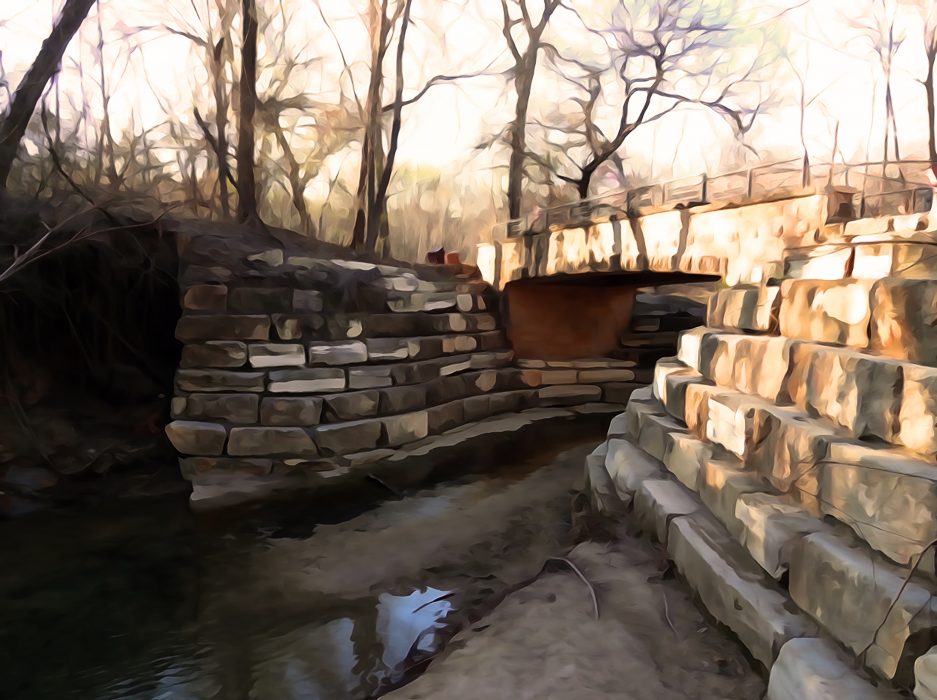
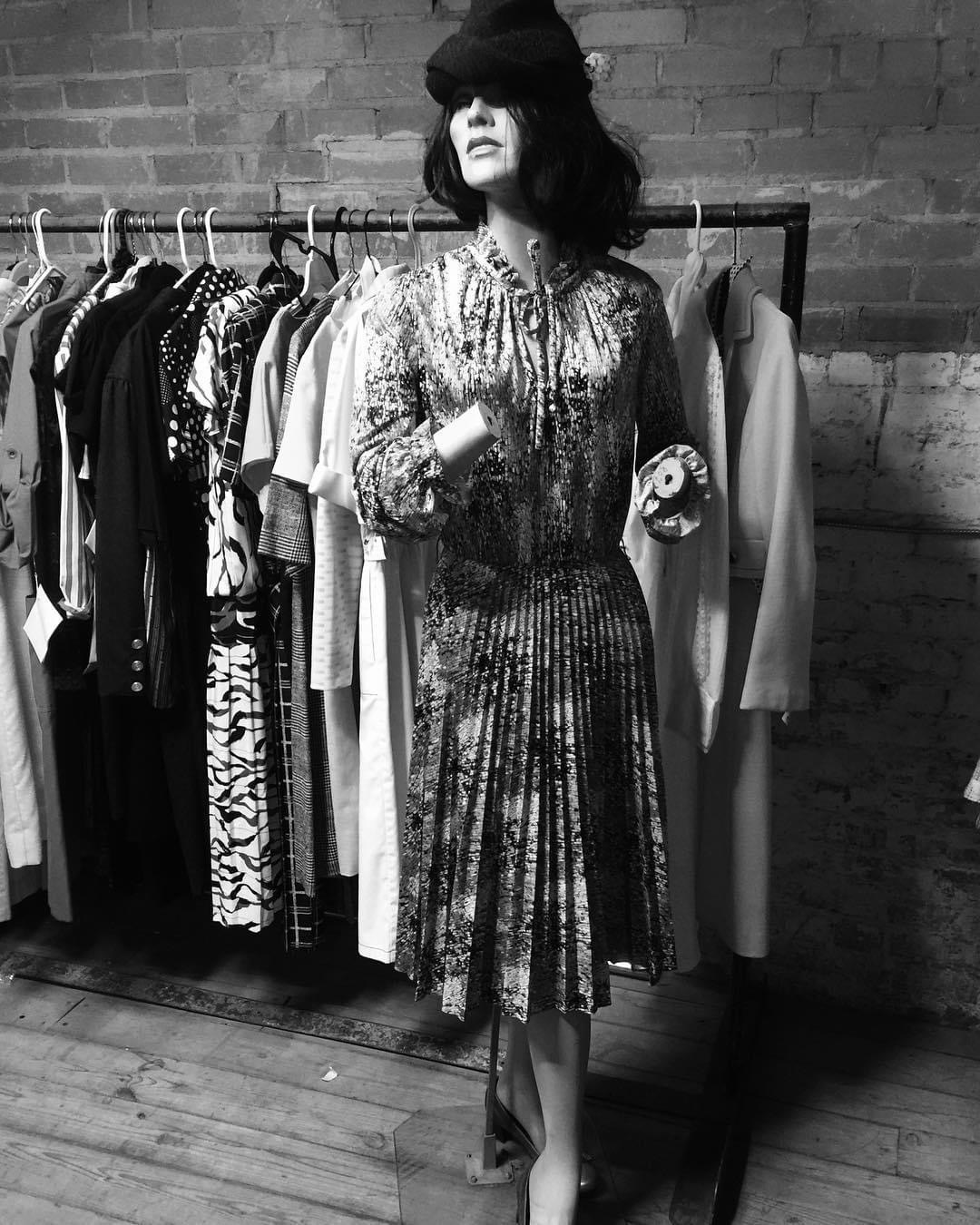
Despite the brief length, each is a complete tale. I hope you enjoy them, and the photos. All the pictures here are either ones I’ve taken or photos of me. I try to pick shots that match the feeling and mood of the stories.
This first piece is fiction, but I’d be lying if I told you it doesn’t sit close to truth. Unless you were super popular in school, I think you can relate to those feelings of being an outsider in the midst of your peers. And maybe even the popular kids felt that way at times.
The inspiration for this one wasn’t my own high school reunion, but an abandoned school that my husband and I drove past one Sunday afternoon. Hence the last lines in the story.
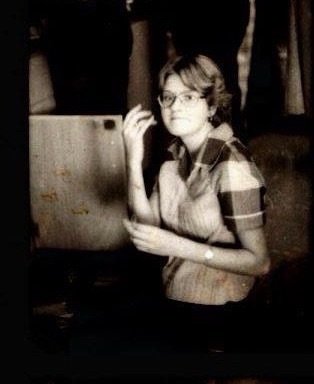
The author, photo from high school album
Reunion
I open my email and scroll past a black-and-white photo—stone lions crouching at a high school entrance. Recollection rings like the end of day bell. Rushing from locker to class, brushing past people who don’t see me, don’t feel me. I inhale the scent of rubber-soled shoes on a waxed gym floor. My arms sag, heavy with books sharp against my chest. Thirty years unravel, an unruly thread.
The invitation, sent from a name I’m supposed to recognize, gradually slides down my inbox, behind offers for car repairs and notices of bills now due. That high school has long emptied of anyone I care to see again. Ghosts linger like clouds of chalk dust, and wander empty halls that echo with phantom footsteps. They climb the stands and cheer for games now played only in memory.
That evening, I mention the reunion to Mark, my husband.
“Thirty years is big. Are we going?” He asks.
I shrug. “I don’t think so.”
I log onto Facebook and find the reunion group. Former students have posted pictures. Squinting at the images, I try to reconcile the faces with those captured in the yearbooks on my bookcase.
I request to join the group. A week later, the group admin replies and asks, “Who are you?”
In high school, she had sat next to me in algebra class. Now, she’s the person organizing the reunion. After searching through my email, I find and delete the invitation.
Months later, on a slow Sunday, Mark and I drive past a building marked for demolition. Broken windows cast blank stares. A shadow flickers like a waving hand, and somewhere inside I imagine a bell ringing. I tell my husband, “I went to school there. I think.”
THE END
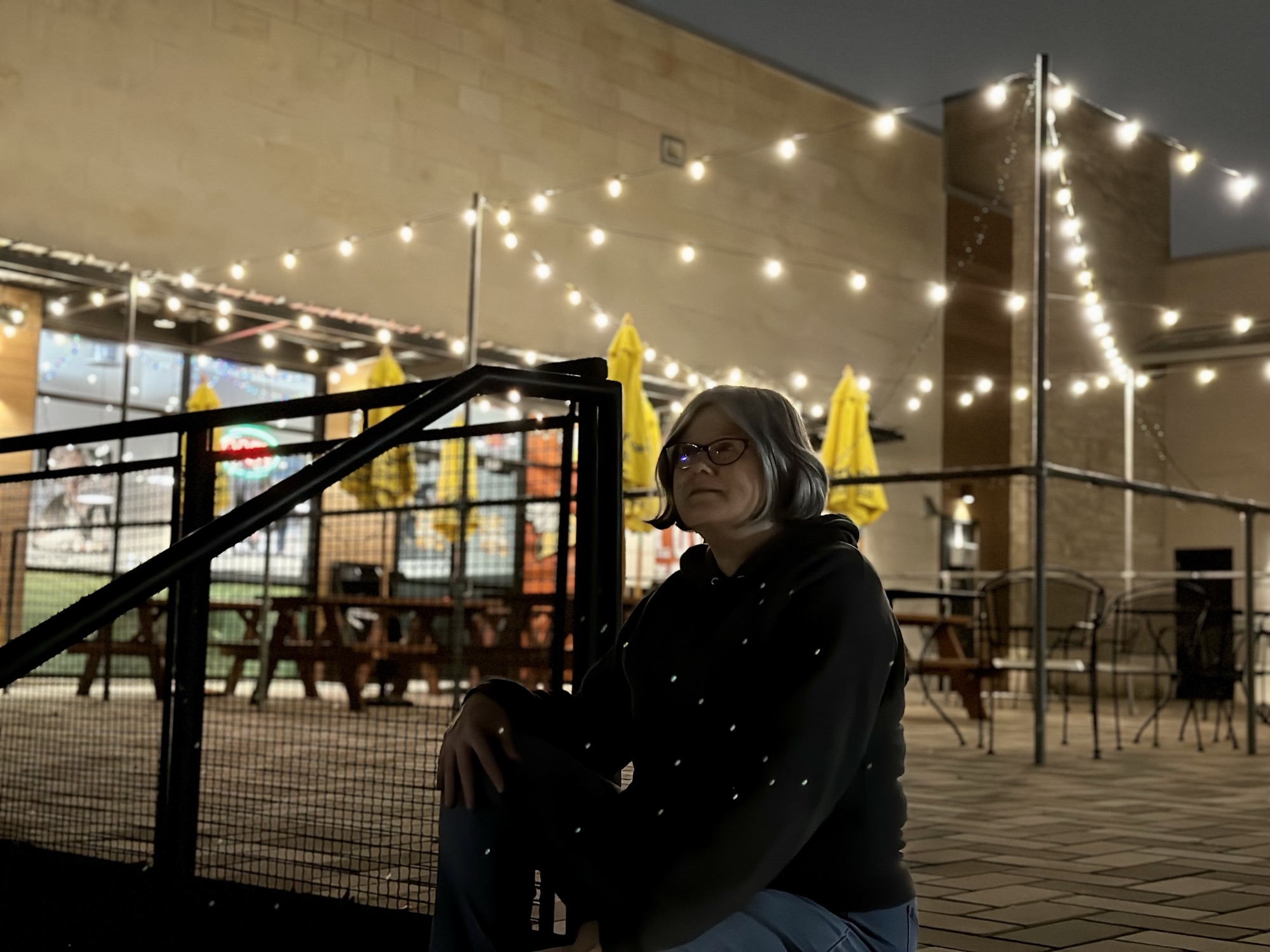
The author, photo by her husband
This next one if my favorite micro fiction story that I’ve written. It has that feel of the Old West, blended with a crime thriller. If you like it, you would probably enjoy one of my favorite movies: Hell or High Water.
Photo by the author
You Can Tell a Lot About a Person by What They Leave Behind.
Fifty-six years of bad choices ended in a job cleaning toilets and sweeping used condoms from under sway-backed beds at the Star Motel. Nobody traveled there except oil tankers, tumbleweeds, and truckers dodging weigh stations.
Photo by the author
The place paid in cash – enough to linger, not escape. Drunken nights spent listening to West Texas wind, dreaming of something else. One day, I opened a nightstand drawer, expecting a water-stained bible. Instead, a snub nose revolver lay coiled like a black snake. I climbed into my rusted-out Ford and tucked the gun under the vinyl seat.
It waited there, a dark possibility.
THE END
Photo by the author
This next one was a contest entry for Globe Soup. The contest required entries to use the word “hollow”. It didn’t win anything, but it found a home eventually and was published.
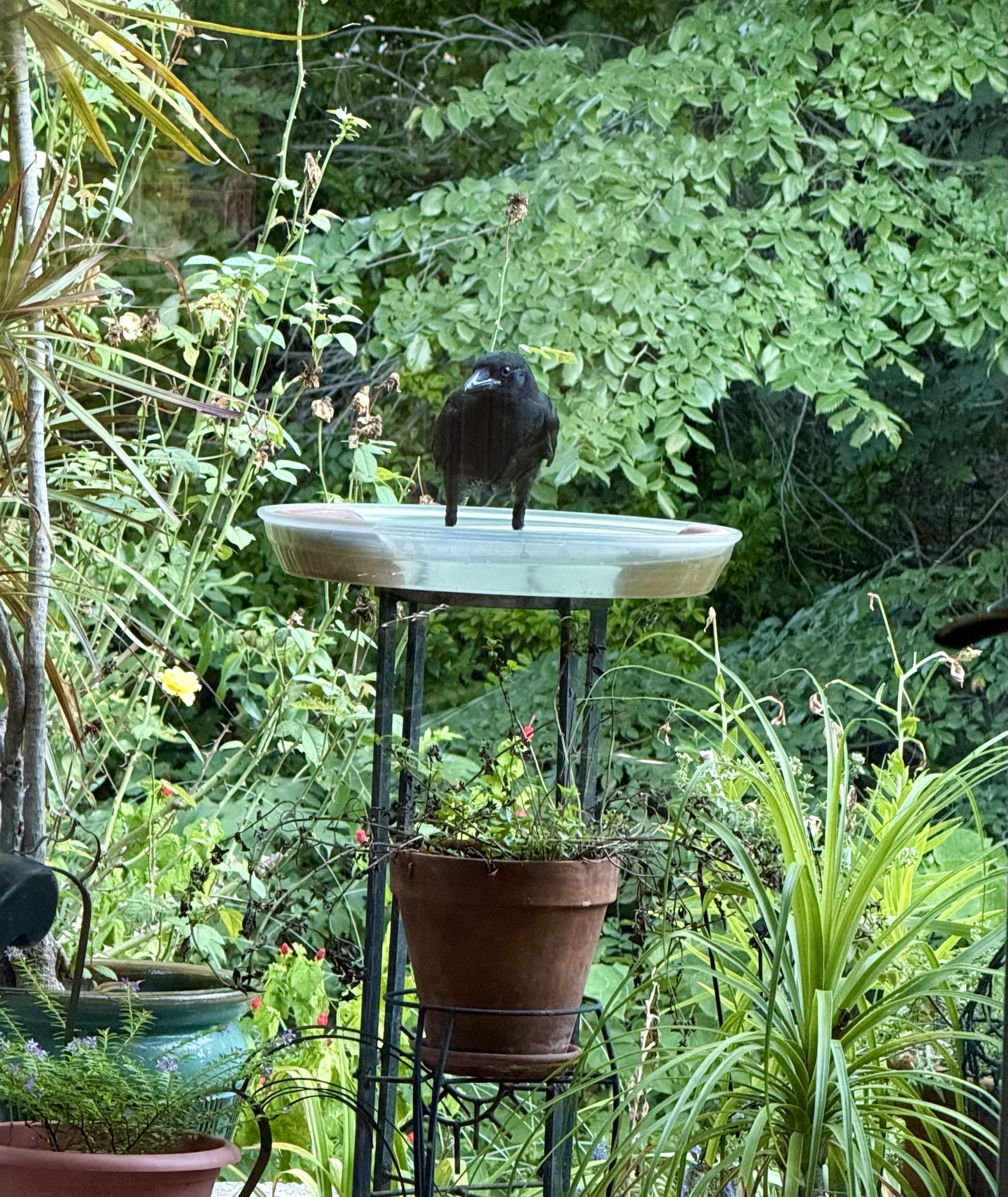
We enjoy feeding birds at our house, and crows are frequent visitors.
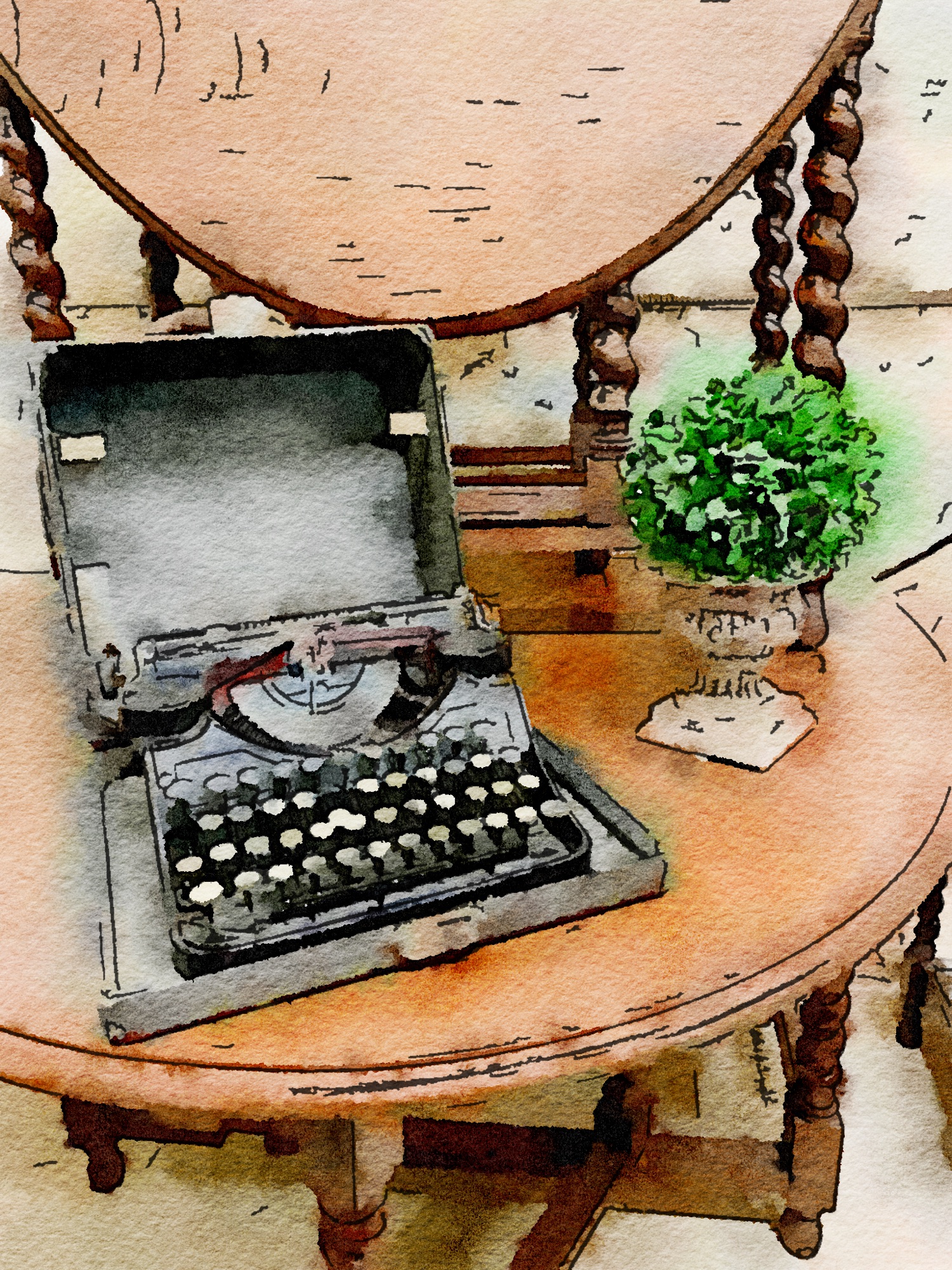
Photo by the author, edited with the Waterlogue app
An Empty Heart Holds Only Echoes
The day after her husband’s funeral, a crow crashed into Vera Scott’s patio door. At first, she overlooked the small black body on the other side of the glass. The collision’s hollow thump had been so loud she had expected something larger to have caused it.
She kneeled and picked up the bird. Lined above them in the trees, a murder of crows assembled. Cawing, they hopped from limb to limb—loud, black clad mourners.
Photo by the author
Tired of death, she willed the bird to stir. A shiny eye blinked. With a rustle of ebony feathers, the crow flew—hollow bones lifted weightless.
THE END
Most of the horror stories I write tend more toward Gothic fiction, with haunted houses and ghosts set in Texas or other strange places. I’ll never kill off a dog, cat, or child in my tales, but grown adults are fair game.
This little story is one that keeps popping back in my imagination, begging for more words. It’s a bit dark, but not gory.
Photo by the author
What is Planted in Despair Will be Raised for Vengeance
We buried her in the spring, in the field where summer poppies bloom. Nothing holy grew from our grief, scattered like seeds across her grave.
Her mother’s tears watered the ground. Her lover’s guilt summoned the reaping. Had we recognized in time the truth of her death, he would have joined her under that cold blanket of dirt.
Her bones rose—white roots clawing through black soil to reach the sun. Conjured with regret, she will glean the good with the guilty.
We could have salted the earth to kill the curse, but fall is the time for the harvest.
THE END
Photo by the author
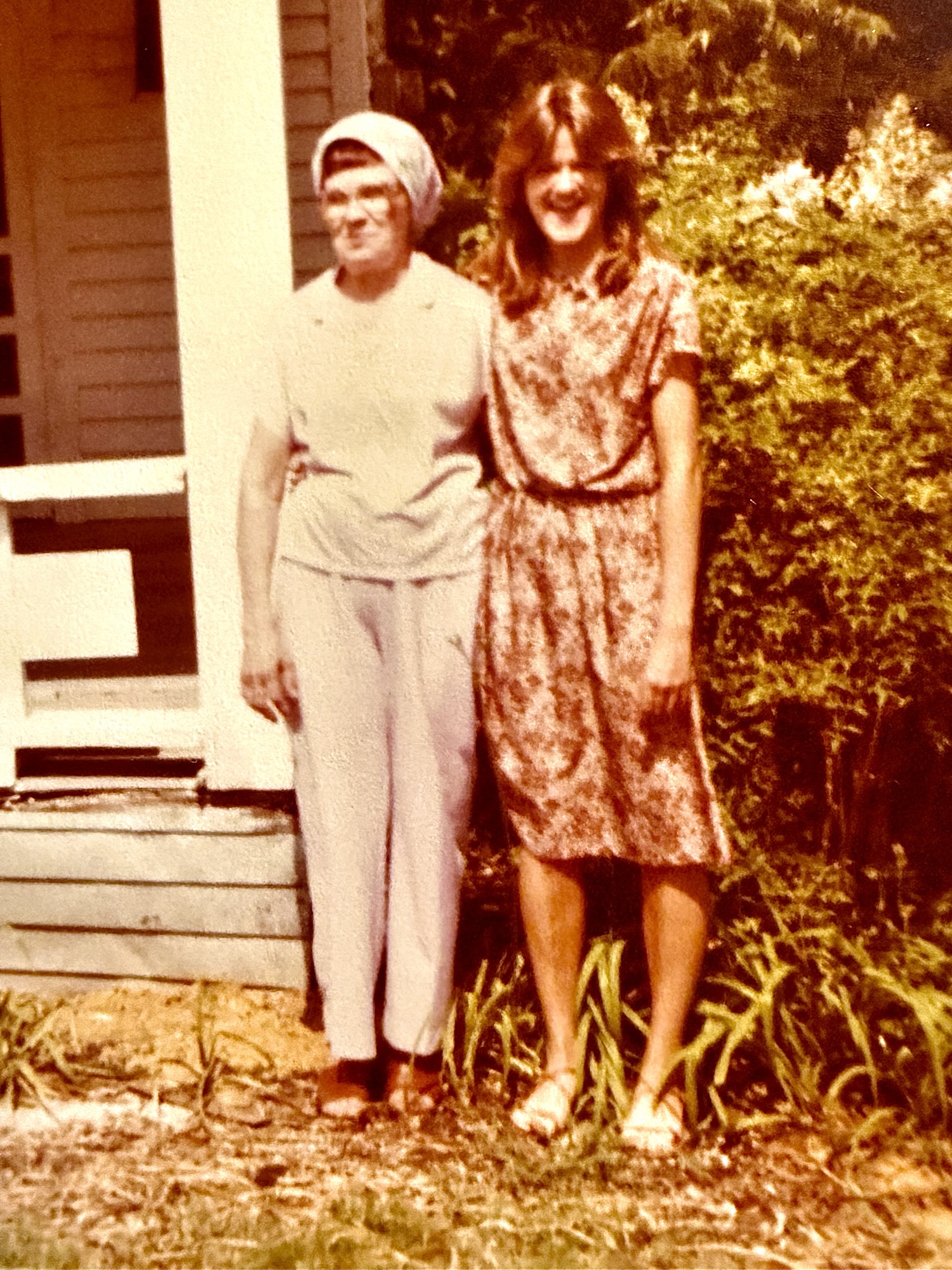
My relationship with my mom had the normal ups and downs, plus the complications from her undiagnosed mental illness. By the time this picture was taken we had reconciled and we had relaxed into enjoying each other’s company.
The micro fiction below was an entry in a contest. My entry didn’t win or advance and I haven’t tried to submit it anywhere. Instead, I chose to share it here.
I don’t remember the exact prompt, but it was something like “packing for a trip.”
I chose a darker interpretation of that prompt.
My mother, Christene Hamilton, passed away in 2010 at age 92. Departed finally on that last journey.
The author and her mother, Christene, sometime around 1982.
Wishing You Weren’t Here
My mother will not go. Her empty suitcase waits, ready to be packed.
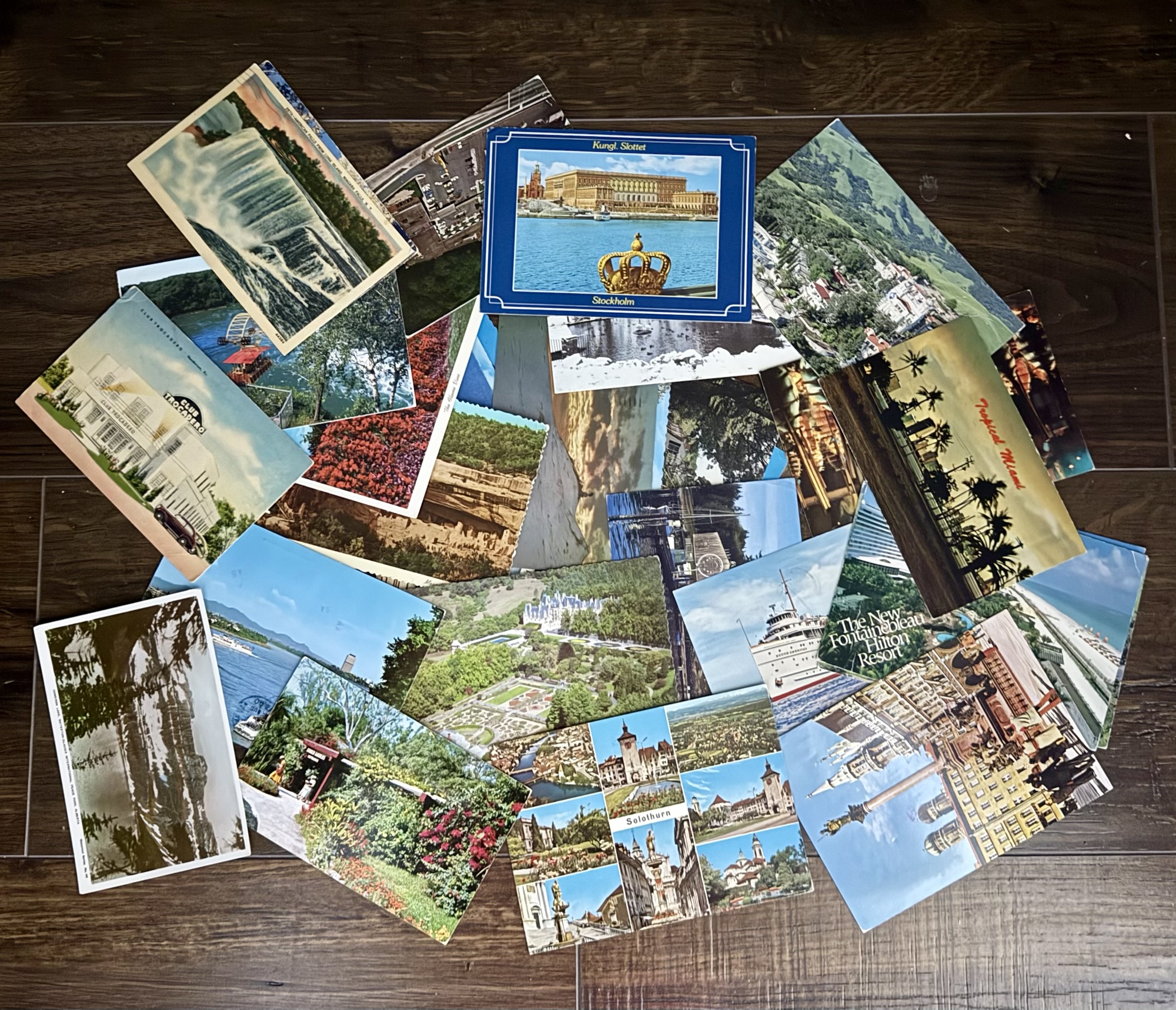
Photographs faded to blue and green, recipe cards in her careful printing, a hairbrush threaded with silver, scarves scented with her perfume—all lie scattered nearby.
I add postcards from places never ventured, menus for foods never tasted. The yellowed fabric of her wedding dress goes in last. Out of sight, lest regret serve as an anchor. The coin for Charon’s crossing gleams beside the case.
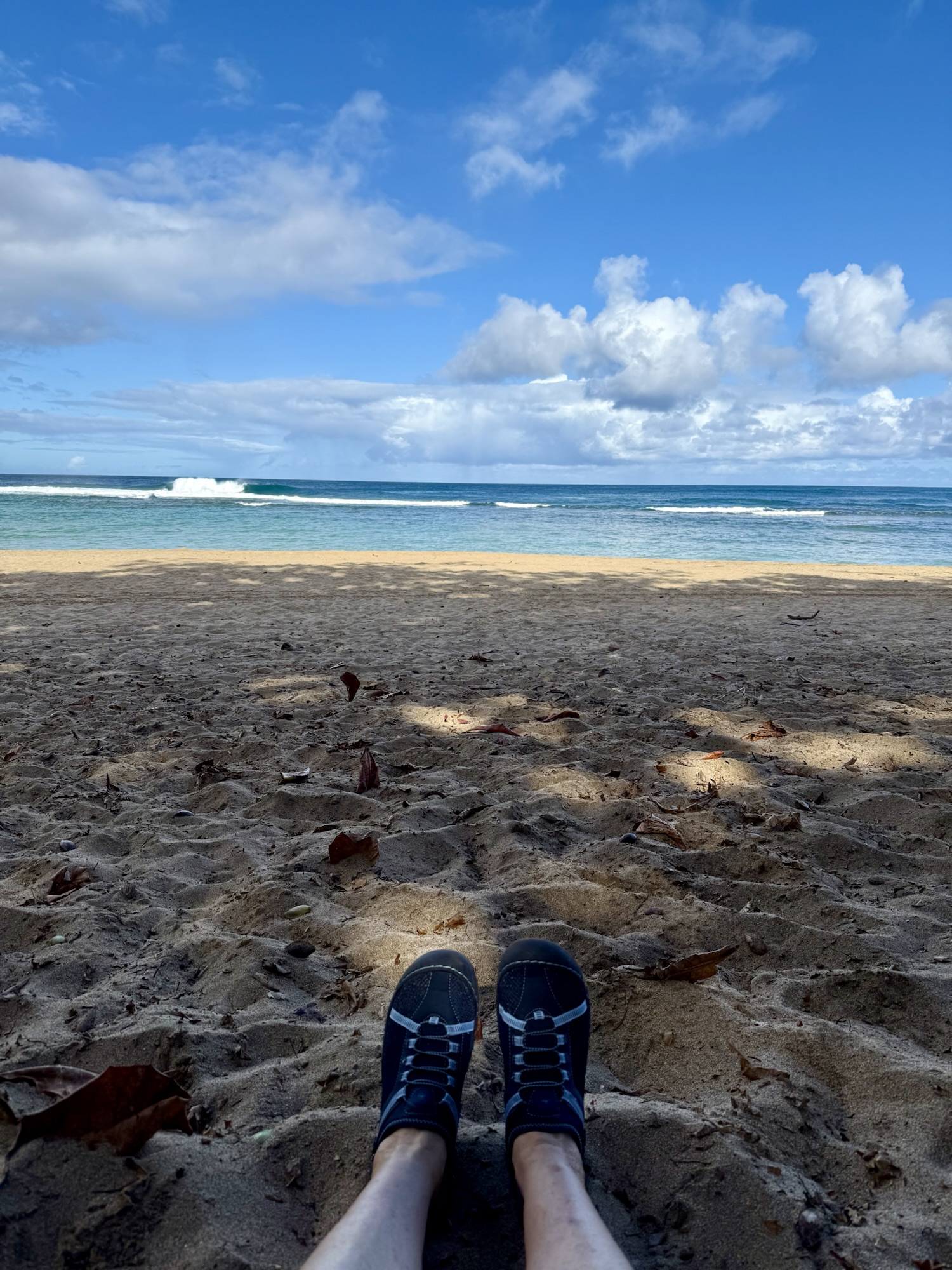
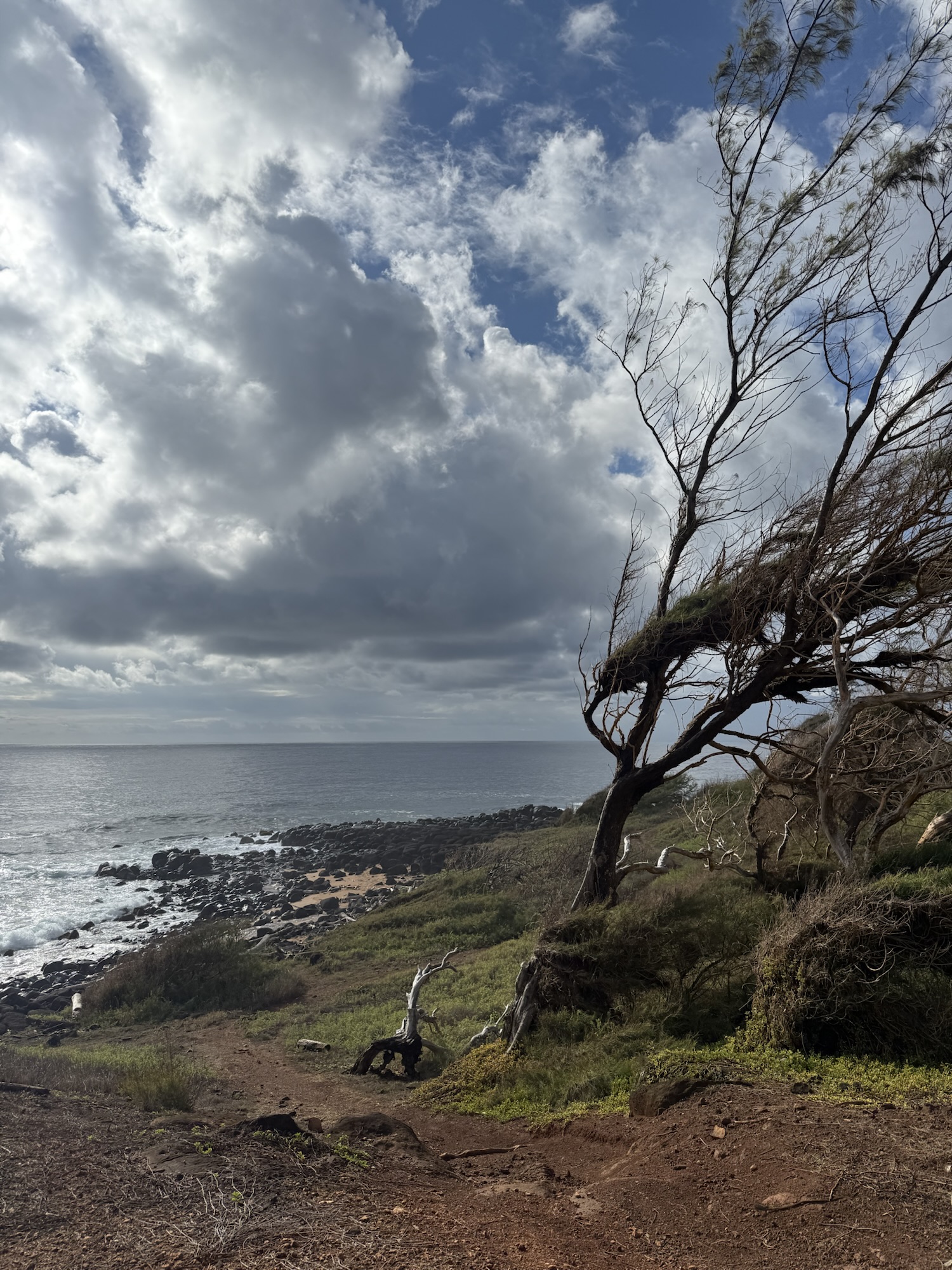
Photo by the author. Beach on Kauai, HI
I am sorry for this long journey, our distance fueled by bitter words.
When she leaves, who will love me then?
THE END
Photo by the author, edited with the Waterlogue App
Photo by Terrye Turpin edited with the Waterlogue app
This story is one I wrote for a writing class. It lingered on my computer for awhile before I posted it on Reedsy and then on Medium. I never submitted it anywhere else since it had already been published that left it out of most literary magazines. If I had it to do over I’d hold it and try to get it published somewhere. Hopefully someplace that paid a little.
The piece got a whole seven views on Reedsy. It topped out at 37 views on Medium. I like the story, and I think it deserves at least another couple of views. It is a horror story and I’ll include a trigger warning for child endangerment.
Hitcher
They picked up the hitchhiker outside Salado, Texas. Twelve-year-old Kenny, his head hanging out the window like a dog’s, was the first to spot the blind man. He stood on the gravel embankment at the edge of the highway, nothing around him — no gas stations, no fast-food places, no buildings — just the flat expanse of fields dotted with scraggly trees. The last rest area had been three miles back, on the other side of the interstate.
“A hitchhiker!” Kenny whooped, delighted by the unexpected vision, as if he’d spotted a flying saucer. “I think he’s blind,” Kenny added as the car zipped past the man. The hitchhiker held a white cane and thick-framed dark glasses covered his eyes.
Kenny’s father braked at the next exit and circled back. “We can’t leave him on the side of the road,” he said. “Not in this heat.”
The air conditioning in their rented Buick had died with a rattle the day before, ten miles west of Oklahoma City. Kenny’s father made a wrong turn somehow, and they were halfway to Amarillo before he swung the car around. He searched for someone else to blame, and when no one came forward, he blamed the car’s GPS, even though he’d refused to follow the directions spewed out by the Buick’s electronic voice.
In the front seat, Kenny’s mother held a can of cola, dripping with ice water from the cooler, against her forehead. Her breath smelled of mints and menthol from the cigarette she’d sneaked behind the motel that morning. “That man might be a serial killer.”
“Cool.” Kenny squirmed in his seat, struggling to locate the hitchhiker again as his father sped down the interstate.
“He might be a veteran,” Kenny’s father muttered through clenched teeth.
He had never served, but Kenny’s dad had a soft spot for the armed forces. He teared up at the ballpark when they played the National Anthem and claimed his “biggest regret” that he’d never enlisted. Kenny thought it a strange thing to regret — missing the opportunity to be shot by strangers in a foreign land.
“Are you crazy?” Kenny’s mother grabbed his father’s arm when he stopped the car and backed up toward the man waiting on the side of the road. “We’ll wind up dead, chopped to bits along I-35.”
“How many blind serial killers do you know? Hot as it is, he might die out there. You need that on your conscience?” Kenny’s father left the car and approached the hitchhiker.
Kenny, watching his dad talking to the man, commented, “He doesn’t look like a soldier.” The blind man wore torn, dirty jeans and a faded t-shirt with a beer company logo. “How would a blind guy shoot a gun?” Kenny wondered.
“Christ on the cross, Kenny, maybe he wasn’t always blind.” Kenny’s mother leaned her head out the window, then popped back inside with a huff. “There goes your father, playing the hero.”
Kenny’s father held the hitchhiker’s arm and led him toward the Buick. The blind man tapped the ground with his white cane. Bare patches dotted his clipped brown hair. Maybe his barber had also been blind.
“Scoot over, Kenny.” For a moment, as the blind man stooped to climb into the car, Kenny met his own face mirrored in the lenses of the hitchhiker’s glasses.
Grumbling, Kenny scooped up his backpack and slid toward the driver’s side window, his bare legs sticking to the vinyl seat. His father helped the blind man buckle his seatbelt before he sauntered around the car to the driver’s side door. He gave Kenny’s mother a little smirk when he passed her.
“I appreciate the ride,” the blind man said. “It sure was getting hot out there. My name’s Martin. Martin Colson.”
“I’m Roger. My wife, Doris.” Kenny’s father waved a hand toward Kenny’s mother, then looked into the rearview mirror as he continued, “and that’s our boy, Kenny.”
“A pleasure,” the blind man, Martin, said.
“We’re only going to San Antonio,” Kenny’s mother said. “To visit my mother.”
“San Antonio. I haven’t been there in years. Time to go back, I reckon.”
Kenny’s mother stared straight ahead through the windshield. If she stared holes through the blind man, he wouldn’t know. The blind man, Martin, twisted his face, as though searching for something. Kenny wondered what his eyes looked like under the glasses. Were they blank as stones? The man kept his cane between his legs and rested his palms on the top. The backs of his hands were covered with scabbed over scratches. He stank of stale sweat and something else — raw hamburger right before the meat turned bad.
As the car pulled out onto the highway, Kenny leaned into the oven-hot rush of air streaming in the car window. In the front seat, Kenny’s mother crossed her arms on her chest and closed her eyes. The Saint Christopher medal she had draped from the rear-view mirror swung back and forth on a silver chain. “You should call the rental place again,” she said to Kenny’s father.
“We’ll trade it in at the office in San Antonio. They had nothing this size in Dallas.”
“Hard to believe.” Kenny’s mother peered at the windshield, addressing the flat landscape rushing by outside.
“I’m not putting my family in some piece of crap foreign car.” Kenny’s father tapped the car’s digital screen, tuning the radio to a country station.
Kenny figured the rental agency offered to refund his father’s money, and now he planned to get all the free mileage he could from the car.
Ahead of the car, the road flowed into the horizon. Heat waves shimmered across the asphalt, creating an endless mirage of standing water, sparkling puddles that disappeared, then reappeared as the car traveled down the highway.
As they crossed through Austin, a sudden rain shower forced them to roll up the windows. Humidity fogged the window glass until beads of water gathered on the inside. The blind man, Martin, rested his hand, palm up, on the seat next to Kenny. A black fly spiraled down and landed on Martin’s hand. The fly twitched, about to take flight, when Martin snapped his fist closed. His fingers drooped open, and he wiped the crushed fly against the leg of his pants.
They arrived in San Antonio two hours before their check-in time at the hotel. As they pulled off the interstate, Kenny’s father called the car rental agency and discovered they would have a replacement ready after five that evening.
“I can’t stay in this car another minute,” Kenny’s mother said.
“Okay. We’ll stick to the plan, go to the aquarium.” Kenny’s father glanced at the blind man in the back seat. “Can we drop you there? Or, I could pull over at the next exit.”
Martin shrugged. “The aquarium will work. I don’t want to be a bother.”
Kenny’s mother swiveled in her seat. She studied Martin for a moment, then asked, “Why don’t you join us?” She glanced at Kenny’s father. He shrugged.
Inside the aquarium, the family split off in different directions. Kenny’s parents lingered to read the lengthy descriptions posted at each exhibit. Martin shuffled beside Kenny. Occasionally, the blind man asked Kenny to describe what he saw.
“There’re all kinds of fish. Different colors.” How to explain colors to someone who’d never seen the blue of the ocean?
They passed a large tank with white sand at the bottom. Sharks drifted past, their eyes flat and cold behind the glass. Kenny stopped before the tank, leaning forward to study the predators. Martin halted behind him. Their image, displayed in the shark tank, made it appear that they floated in the water while the sharks swam around them.
As they strolled away, a chattering toddler crashed into Martin. He laughed while the child’s mother scooped her up. The mother apologized, but Kenny noticed she wrinkled her nose at the blind man, frowning as she backed away. Kenny considered how Martin must appear to them, outsiders. His worn clothing, his body odor, his patchy haircut. Instead of being embarrassed by Martin, Kenny felt noble, like he had accomplished some great good deed.
“Hey!” Kenny paused at the entrance to another hallway. “You want to feed the stingrays?” This would be something even the blind could experience.
“If you want to, yes.” Martin said.
They purchased tokens to exchange for small fish to offer to the rays. Martin drew out his wallet at the counter and thumbed through the bills.
“How do you know how much to give them?” Kenny asked.
“They’re folded differently, see.” Martin eased a twenty halfway out of the billfold and held the wallet out to Kenny.
The leather of the wallet was warm and shaped to the curve of Martin’s body. Kenny touched the money, tugging gently at the bill. He looked up at his face reflected in the blind man’s glasses and eased the twenty from the wallet. Would he notice the loss of his money? Kenny palmed the bill, stuffing it into his pocket.
The stingrays swam in a large open pool, a little larger than the wading pool Kenny had in his backyard when he was younger. While they waited their turn, they trailed their hands in the warm salt water. The stingrays drifted by, rubbing against Kenny’s palm like cats.
One of the aquarium staff explained how to hold the tiny fish they would feed to the stingrays. “Like you’re holding an ice cream cone,” she said.
Kenny wrapped his hand around Martin’s, holding the bait, and guided Martin’s fist toward the tank. Together, they lowered their hands into the warm water. The stingrays swooped over and sucked the fish from Kenny’s hand. How odd, this sudden, sandpaper rough brush against his fist. Kenny grinned. “It tickles,” he said. He shivered, imagining what it might be like if the rays had sharp teeth.
“Yes, it does.” Martin smiled, and lowered another fish morsel.
Kenny closed his eyes as he dipped his hand back into the water. He listened to the splash and slap of the stingrays as they rushed to devour the food.
Afterwards, Martin asked Kenny, “How about a bathroom stop?”
They were alone in the restroom. Kenny stopped at the urinal, one hand on the zipper of his shorts, when he noticed Martin, paused in the middle of the room. The blind man turned his head.
“There’s a stall in front of you, about four steps,” Kenny said. His voice echoed in the space.
“This way?” Martin pointed toward the wall on the east side of the restroom.
“No, here.” Kenny stepped over and took Martin’s arm. He led the blind man to the large stall on the end and pushed open the door. When Kenny moved to step away, Martin clutched his shoulder and pulled him close.
“You aren’t such a good boy, are you?” Martin whispered. Wet flecks of spit landed on the side of Kenny’s face.
Kenny pulled against Martin’s grip, grabbing the door to the stall, but the blind man held on, crushing Kenny’s fingers and dragging him forward.
“You’re hurting me,” Kenny said. He thought he should cry out, but he hesitated, confused. Was this about the money? Did Martin know about the stolen twenty? “I didn’t mean it. I’ll give it back,” Kenny said. He let go of the door and reached toward his pocket.
With his free hand, Martin gripped Kenny’s bicep, his fingers pinching into the flesh. The white cane, held to the blind man’s wrist with a plastic strap, banged against the metal door of the stall.
“Let go!” Kenny struggled. He dropped the money. The bill fluttered to the floor and landed in a puddle of liquid.
Martin bent toward him. His mouth opened, impossibly wide, as though he were unhinging his jaw. Gray fillings capped several of his teeth. The blind man dropped Kenny’s hand and brushed his palm across the crotch of Kenny’s shorts.
At the touch, Kenny thought of the stingray mouthing the fish from his hand. Bitter bile rose at the back of his throat. “No!” Kenny shouted, his voice echoing in the tiled room.
Now Martin clutched Kenny’s arm with both hands. He bent toward the bare skin as though to kiss it, then clamped his teeth on Kenny’s bicep.
Enormous pain, like a brilliant flash of light, enveloped Kenny. He struggled to draw breath to scream. Martin turned his head from side to side, grinding his teeth into Kenny’s flesh. Everything fell away until only the agony remained and Kenny felt if he did not escape, Martin would devour him. He stomped on the blind man’s foot and punched Martin’s ear.
“Ah!” Martin released him.
Kenny twisted away as Martin stumbled backwards, his feet sliding in the puddle between them. The cane slipped from the blind man’s wrist, tangling in his legs. Kenny shoved him. Martin slipped, his head knocking against the toilet. The blind man’s dark glasses clattered onto the tile floor. His eyes, revealed at last, were a cloudy blue, blank and cold. Martin reached out, his fingers groping for Kenny’s leg.
Kenny backed out of the stall, then stooped and grabbed up the twenty. He turned and ran.
Kenny banged out of the restroom. As he ran through the door, he almost knocked down an elderly man standing just outside. The man gave him a scolding look, and Kenny slowed.
Back in the main hallway of the aquarium, Kenny pushed up the sleeve of his t-shirt and studied the mark on his arm. His skin, a vivid red, held a perfect oval of teeth-marks that were already beginning to purple. He pulled his shirt sleeve down to cover the injury and brushed at the tears that fogged his vision.
When he passed the souvenir shop near the entrance, Kenny paused. Stuffed sharks, rubber fish in a rainbow of colors — children’s toys lined the shelves. A display of sunglasses stared out at him, row after row of black lenses. His hand went to his pocket to clutch the twenty-dollar bill he’d stolen from Martin’s wallet.
As he left the shop, Kenny slid the sunglasses he’d bought onto his face. The world became a place of shadows. He moved through the hallways, unseen, a shark gliding past in search of his prey.
Some of my first short stories were ones I wrote for the Medium website. One of the publications there was called The Weekly Knob. The editors posted a writing prompt, usually an object, that had to be included in the story. You had a week to come up with something. There was no word limit or specific genre, so this was perfect inspiration for me. In 2020 I compiled many of those stories into a book and published it on Amazon.
I continued writing short stories and submitting them to different publications on Medium. The Weekly Knob changed their name to Hinged. Sometime in 2022 I stopped writing unique stories for Medium and I just reposted from my website over there.
My most prolific writing years were the ones I spent writing for The Weekly Knob. I loved getting the prompts every week and I interacted with so many lovely writers who were also posting on Medium. The practice and encouragement I got on Medium helped me to become the writer I am today.
Change comes to us all. Websites come and go, publications fold and so do publishers. I will be sharing here some of the stories I posted on Medium, just to make sure they have a permanent home. I had thought about gathering them for a another book of short stories, but I tell myself I have enough work to do just finishing the novel I’m working on. And the overall goal is to share the tales, so here’s the first one, originally published in August, 2021. I think the prompt was “hinge.”
(If you are one of the people who read this story back when it was first published, I apologize, but perhaps you’ll enjoy it a second time.)
The Cry at Cliff’s Edge
On the first anniversary of her daughter’s death, Ginny Stroud drove to the sea. In her late thirties, Ginny had dark brown hair that she kept clipped close to her scalp, like a young boy’s. A thick scar, twisted and rose-pink, traced from her scalp down the side of her face. Another scar, hidden beneath her jeans, traveled from her hip to just above her knee. Beside her, on the passenger seat of the car, lay a stack of paperback books, her leather purse, and a silver handled cane.
Her little red car, so nimble and reliable when navigating crowded parking lots and slick city streets, chugged up the winding road that led to the Inn at Cliff’s Edge. She had found the hotel on a blog devoted to quiet, less-traveled vacation spots. The place didn’t even have a website. Ginny looked forward to the isolation of being surrounded by people who did not know the tragedy that had shattered her family the year before.
The road, a narrow, one lane asphalt drive, appeared chiseled from the cliff face. A low guardrail stood between her car and the drop to the white-capped grey ocean below. With one hand on the gearshift, Ginny pressed as close as she dared to the towering rock on the passenger side of the car. A large white bird swooped across the road at a curve, and Ginny, distracted, allowed the car to drift onto the loose gravel at the edge.
“Oh!” The involuntary cry escaped her as she steered back into her lane. Her heart drummed in her ears and she shook her head at the near accident. Would it have been so bad after all, if she’d broken through the guardrail and plunged into the cold water below?
At the hotel, she tossed her clothes into the antique dresser in her room and kicked off her shoes. Her room, on the second story of the inn, faced the ocean. Opening the French doors that led outside to the iron railed balcony, Ginny leaned out to breathe in the cold, salt scented air. Below, an overgrown trail led to a wooden gate with peeling paint and rusted hardware. Vines twirled through the arch at the top of the gate, and scrubby pine trees obscured the view, but Ginny supposed the path must continue on the other side.
Tired from the drive, she stretched out on top of the quilt covering the bed. She thought to text her sister to tell her she’d arrived safe and sound, but a check of her phone revealed no service. She would use the hotel phone and call that evening, after dinner.
Hours later, she woke to odd shadows cast by moonlight filtering in through the open balcony doors. Disoriented, she sat up, dizzy with the shock of waking up in unfamiliar surroundings. Memory filled in her day — the long drive from her home to the coast, checking into the hotel, and at last — collapsing on the bed. Ginny had swung her feet off the side of the bed when she heard the cry.
It sounded like an animal cry, but the noise fluttered up the scale, then dropped to an unmistakable human sob. Ginny sprung from the bed, wincing at the sharp pain in her hip. She fumbled with the cane propped beside the bed and, grasping it in one hand, limped barefoot to the French doors.
“Hello?” Ginny leaned over the balcony’s rail, peering into the night below. A scant yellow light illuminated the shrubs at the hotel’s foundation, but did little to light the pathway to the gate. The cry echoed again, fading as though the owner were striding away, down the trail on the other side of the gate. It could be a child, Ginny thought, lost out there in the dark. She reached for the inn’s phone beside her bed, then changed her mind and slipped on her shoes.
“Are you sure?” At the hotel’s desk, Ginny questioned the clerk. “It sounded like a child.”
The night clerk, an older woman with gray streaked black hair, shook her head. Deep lines bracketed the woman’s mouth. “There are no children with our guests. You probably heard the hinge on the gate. It’s old and when the wind blows…”
“I suppose that could have been it,” Ginny allowed. Her stomach rumbled, reminding her she hadn’t eaten since breakfast that morning. “I don’t suppose the kitchen is still open?”
“No.” The clerk shook her head. “But I could open the pantry, make you a sandwich if you’re not too particular.”
“A cold sandwich sounds wonderful.” Ginny read the woman’s name from the white plastic badge pinned to her shirt. “Thank you, Marie. I’m in room 215.”
The clerk smiled, the expression softening her face. “You go on back upstairs and I’ll have someone bring it up.”
Back in her room, Ginny phoned her sister. “I’m here. Safe and sound.”
“That’s good, at least. I still don’t think it’s a good idea for you to be alone right now. Have you talked to Dennis?”
Ginny shook her head as she answered. “No.” She’d read somewhere that many marriages didn’t survive the death of a child. Her husband, Dennis, had moved out two months ago. She didn’t expect they would reconcile. She didn’t have the energy to even try.
“Please tell me you won’t hole up in that place alone all weekend. I don’t like to think of you all by yourself tomorrow. Go outside. Is it pretty there at least?”
“It’s lovely, Stef.” Ginny described the inn — the ivy-covered stone walls, the lofty view of the ocean below. She didn’t mention the old wooden gate. “There’s a farmer’s market tomorrow in the town. I saw the sign when I passed through this afternoon. I’ll drive down and check it out.”
“That sounds like a good plan.” Her sister paused. The sound of her breathing filled the phone receiver. “No one ever blamed you, Ginny.”
True, no one had ever assigned fault to her, at least not where she could hear them. Maybe Dennis had doubts, in the nights he had paced sleepless through their home, over whether Ginny could have done anything differently that day. The burden of the accident lay like a slab of stone on Ginny’s heart.
Ginny clutched the phone so tightly her knuckles grew white. She was about to answer her sister when a knock sounded. Her sandwich. “I’ve got to go, my dinner’s here.”
“All right. Remember — we love you.”
“Love you too,” Ginny whispered into the silent phone.
She fetched a couple of dollars and some change from her purse for a tip for whoever had delivered her food. When she opened the door, Ginny spied a tray on the hallway floor, with her sandwich wrapped in paper and resting on a white napkin on its center. A noise at the end of the hall, near the stairs, drew her attention and she glanced that way in time to see a young boy grasp the handrail. He turned toward her before he started down the stairs. Ginny glimpsed dark brown eyes and a shock of black hair that fell across his brow before he fled down the stairs.
“Hey!” Ginny called after him. She waved the money grasped in her fist, but his steps echoed as he disappeared from view.
The next day, at the farmer’s market, Ginny studied the people weaving amongst the booths set up on the town square. The clerk, Marie, had said there were no children staying at the inn, so maybe the boy was local, lived in the town. He looked too young to be working at the inn, but maybe the rules were more relaxed there.
At one booth, Ginny bought a loaf of bread and a jar of local honey. The vendor’s daughter sat on a quilt on the ground playing with dolls. Tears blurred Ginny’s vision — the girl looked so much like Lottie. Sometimes she went weeks glimpsing no one who reminded her of the child she’d lost. And some days she couldn’t even venture out to the grocery store, afraid she might one day lose herself and chase after some stranger’s daughter.
Back at the inn, Ginny felt she needed a distraction. She explored the grounds. In particular, she wanted a closer look at the gate. Brushing aside sticks and tangled weeds with her cane, she ventured along the path. Exercise, her doctor had declared, would do her good.
The gate at close view looked more mundane than mysterious. It might have once been painted white, but now only patches of color remained on the grey wood. There was only one hinge, a large ornate piece of metal with curled emblems stamped on the surface. A shiny brass padlock hung from the hasp on the gate, unusual for its newness. Had someone unlocked the gate the night before? If the padlock had been in place, the wind couldn’t have swung the gate and made the noise that Ginny heard.
The screws holding the hinge in place felt loose when she pushed against them. She ran her fingers across the surface of the hinge and then wiped her hand across the hem of her shirt. Rust, red as blood, stained her clothes.
“You shouldn’t do that.”
Ginny spun to see the source of the warning. The dark-haired boy from the other night stood behind her on the path. As he strolled up to join her at the gate, Ginny saw he was older than she’d first thought, closer to thirteen than the nine years she’d assumed.
“This is not a good place,” the boy said.
“The inn?”
“No.” The boy waved a hand at the gate. “This. The path, the gate. It’s too close to the edge. You should walk on the other side.”
“But there’s no ocean view over there.”
The boy frowned, considering her. “All right, but don’t go past the gate. That’s why it’s locked, you know.” He stepped beside her and placed a hand on the gate, pushing. The hinge creaked, shifting against the wood, but the lock held. Satisfied, the boy stepped aside and turned to leave.
“Wait,” Ginny called after him. “Do you live here? What’s your name? I’m Ginny.”
Walking backward, the boy answered. “Anthony. I live with my grandmother. She works here.”
Something about the boy’s solemn face and dark hair reminded her of the night clerk, Marie. This must be her grandson.
“Marie?” When the boy nodded, Ginny asked, “Where is your mother?”
Anthony stopped and stared past her. “She’s gone,” he said, and then he spun and jogged away.
That evening, Ginny had an early dinner in the inn’s cozy dining room. The place filled with customers, even before sundown. She didn’t think the Inn at Cliff’s Edge had rooms for that many people. It must be the closest restaurant for many of the locals. The clatter of plates and the drone of conversation filled the air. Marie had smiled and waved at her as she walked past the desk to the dining room, and Ginny wondered if Anthony was around.
She lingered over coffee and a slice of apple pie after her meal. The sun dropped low and cast an orange glow on the horizon when she paid her check and limped outside. Her hip ached from too much activity that day, but she felt restless and she wasn’t ready to turn in for the night, wasn’t ready to be alone with her memories of this night the year before.
In the fading light, the gravel path seemed to glow and Ginny picked her way along, tapping at the ground with her cane to make sure she didn’t encounter any unexpected obstacles. When she reached the gate, she noticed the hinge had come loose from the screws holding it in place on the post beside the gate. The padlock still hung from the hasp, but without the hinge, the gate leaned open, revealing the white rocks of the path beyond. Ginny stepped through the opening.
Brush and vines crowded against her, but the trail itself was oddly clear and level, as though someone had swept away the sticks and larger rocks. Pine and salt spray scented the air, and Ginny heard the faint sound of waves breaking against the cliff face below. She couldn’t see the end of the path, and she wondered if it led down to the shore or if it broke off at the edge of the cliff. The further she walked, the darker it grew and just as she felt she should turn back, she heard the cry from the night before. This time it ended, not with a sob, but with a tiny voice calling, “Momma!”
Ginny shook her head to clear it. How many times over the past year had she spun at that cry? Knowing it couldn’t be her daughter, but unable to resist the call of a child.
“Hello?” Not Lottie, Ginny scolded herself, but some other child in need. “Where are you? I’m coming.” She pushed along the trail, toward the voice.
Turning a corner, the path emerged into a clearing. A small figure stood at the center of the space with her arms held out toward Ginny. A girl child. And if the girl’s face wavered, the bones shifting and reassembling, Ginny didn’t care.
“Lottie?”
The child motioned her closer. Behind her, the trail disappeared at a drop-off. Ginny hobbled forward. Tears blurred her vision, but she kept going, toward the girl, toward the end of the path.
“No!” Small hands clutched at Ginny’s back. She whirled around to see Anthony. He grabbed hold of her cane. “Come back. She’s not real!”
“I don’t care.” Ginny shook her head. But before she could turn back around, an angry growl sounded.
“Run!” Anthony pulled her along.
Ginny stumbled after him. She dared a glance over her shoulder at the thing pursuing them. It grew and shrank, warping from the blond daughter Ginny had lost to the stocky figure of an older man, then to a slim, black-haired woman. The thing’s skin melted and stretched, like putty over a frame of wire and bone. Its mouth dripped a thick, tar-like substance over shark-sharp teeth. The transformations slowed its progress to a shuffling crawl, but Ginny feared they wouldn’t reach the gate before the creature caught them.
“Go on!” She pushed Anthony away, and he ran up to the gate, prying it open further so Ginny could stagger through.
“Help me.” He pulled the gate closed and held it while Ginny fumbled with the screws on the hinge.
“They’re too loose!” The hinge wobbled. The drilled holes were too worn for the screws to hold.
“Just close it. As long as the hinge is on the gate it can’t get through.”
Ginny slammed the last screw into place. Something large and heavy brushed against the wood on the other side. It snuffled and scraped at the gate, but the portal held. At last, it fell silent.
“It looked like my daughter.” Ginny’s legs trembled, and she sank to the ground.
Anthony nodded. “It’s different for everyone.”
“Who do you see?”
“My mother.”
“What is it?”
Anthony shrugged. “I don’t know. It lives there, on the edge.”
There were so many questions Ginny wanted to ask. Why did the hinge keep it from coming through the gate? And why hadn’t anyone tried to get close to the portal? They could at least hide the gate and keep curious people from trying to go through.
But she didn’t ask any of these questions. Not because she felt Anthony couldn’t or wouldn’t answer, but because the answer came to her as they walked away from the gate.
The next day, as she packed her things into her car to leave the Inn at Cliff’s Edge, Anthony waved goodbye to her from the front porch of the inn. Ginny remembered the wistful look on his face the evening before, when she asked him who he saw when the creature appeared. She knew that feeling, that desire to glimpse a beloved face just one more time. The answer to why the gate still stood was the trade-off. She’d go to the edge again herself, if she could, to give life to an evil that fed from one’s grief, in order to pretend the lost walked the earth again.
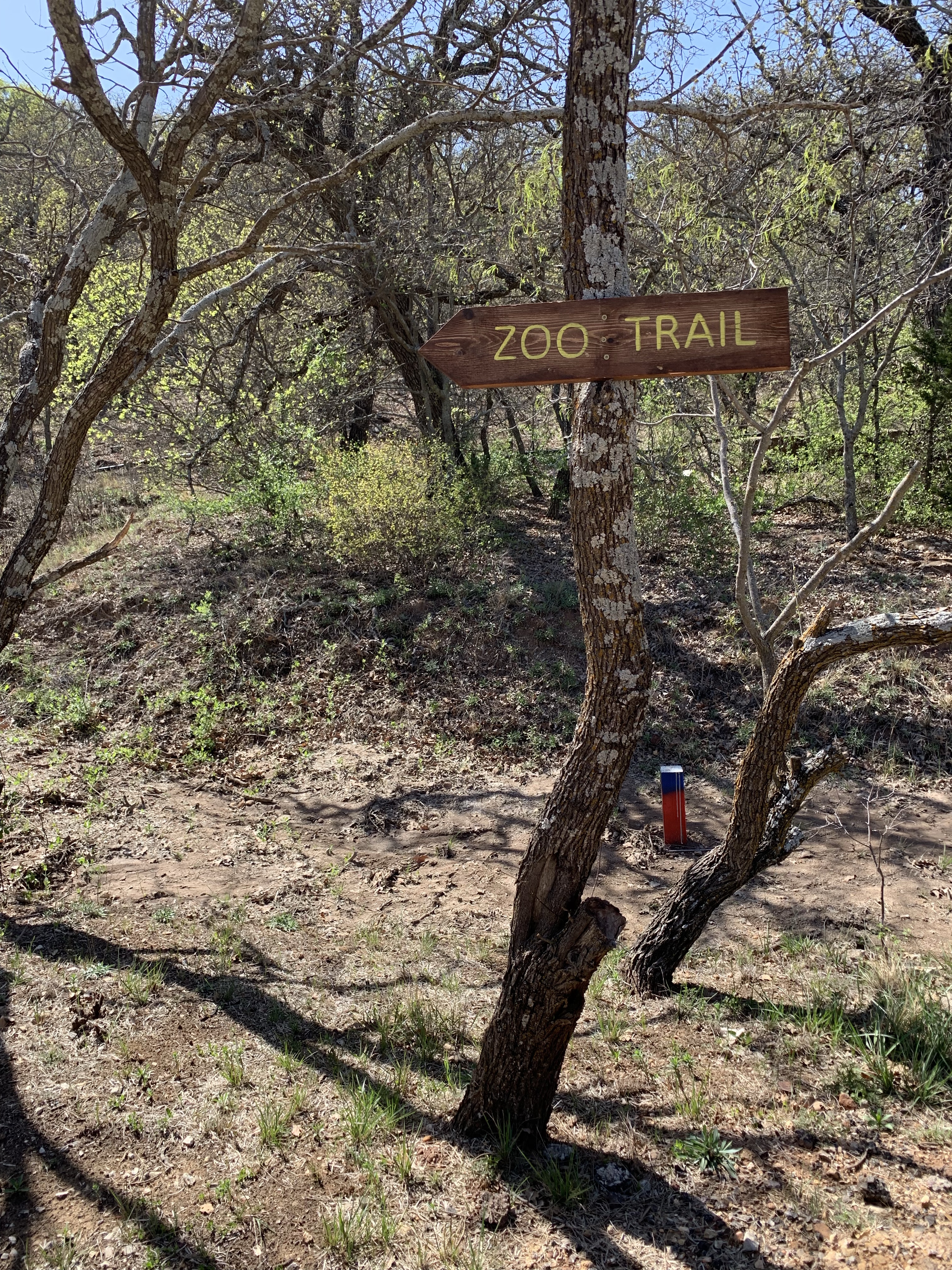
A sign on the trail at the old Cisco zoo. Photo by the author
One of the most common questions that authors get asked is some variation of “Where do you get your ideas?” For most writers, the answer is that we find them in our everyday experiences. This includes people who pen tales about ghosts, demons, and dragons. We don’t encounter those in real life, but we run across settings or objects that spur stories. Stephen King was inspired to write his novel The Shining after a winter stay at the Stanley Hotel in Estes, Colorado. The hotel’s isolated setting and a nightmare about his son gave rise to the plot of the horror story. And a very good one it is.
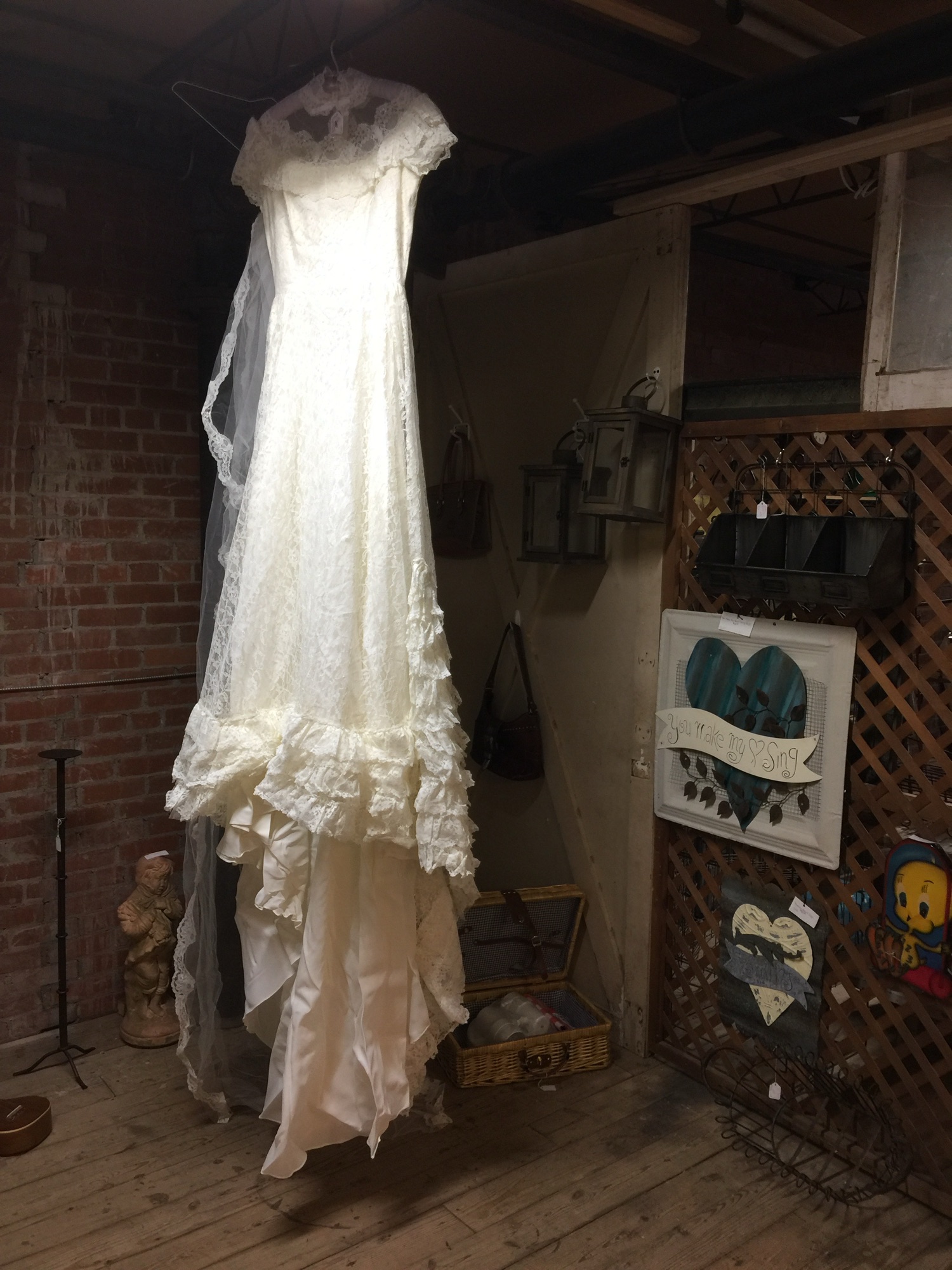
Not a ghost, but a ghostly garment for sure. Photo by the author.
A couple of years back, my husband Andrew and I visited the abandoned zoo trail in Cisco, Texas. I’ve got a separate post about that visit – you can find it on the Road Trip tab and read about it if you’d like. Strolling through that place I felt it would make a great setting. I filed away the memories and images to recall at some later date. They came to life in the Spring 2025 Writing Battle writing contest. I received the prompts “Small Town Secrets”, “Zoo”, and “Rich Aunt.” The minute I saw “Zoo” I knew where to set my story. Once I placed the characters in that abandoned zoo I found the secret that they were keeping.
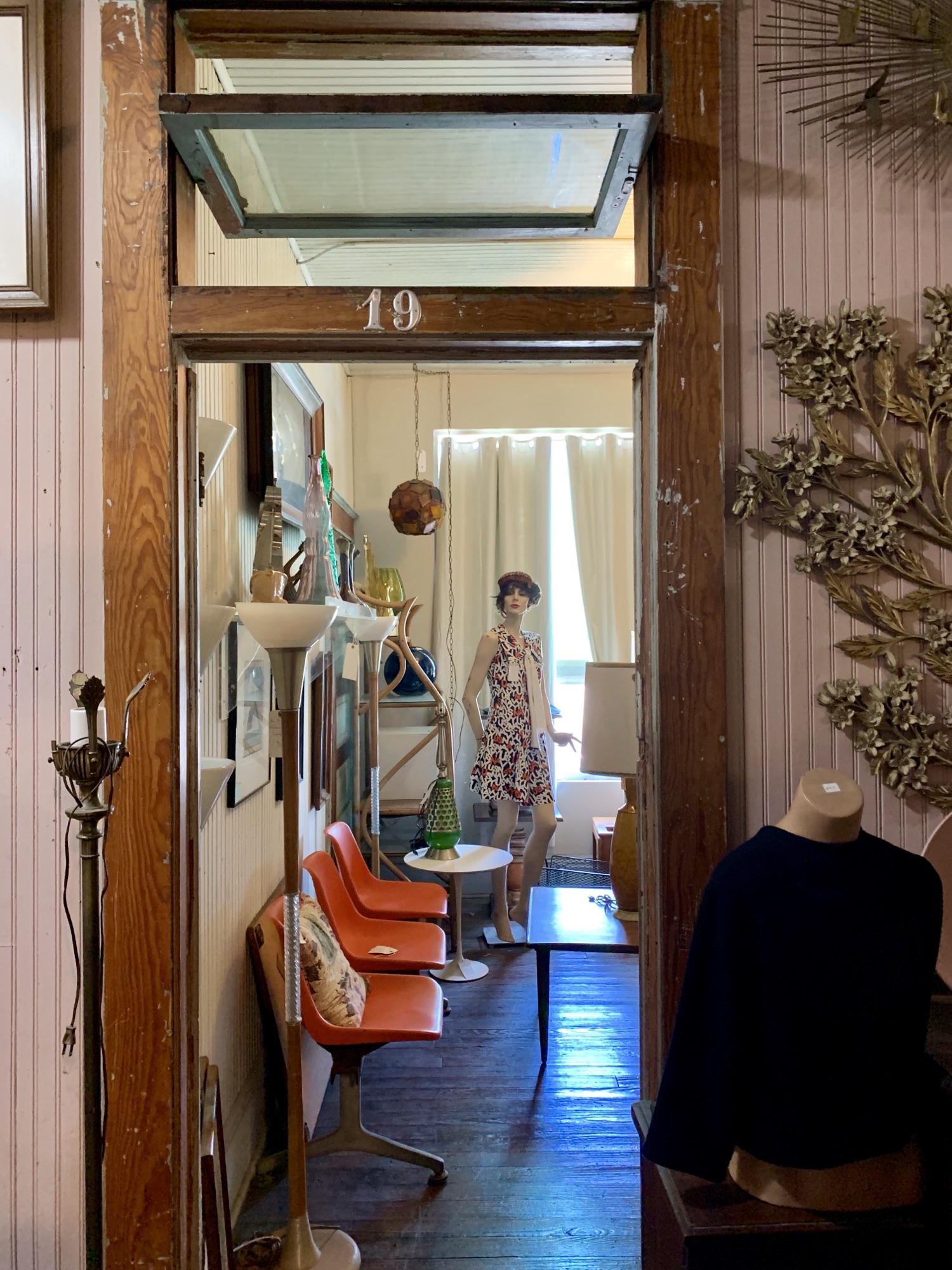
There’s a story waiting inside this room. Photo by the author.
Getting words on the page is the hardest step for me, but the contest had a deadline so that gave me motivation. I ran my first draft through the ProWritingAid app to polish the grammar and eliminate most of the passive voice. After one last edit, I finished the story and submitted it to the contest. It didn’t win any prizes. However, I received some useful feedback from the other contestants. The trick to a good story is that it’s not the writing but the rewriting that makes it stand out. After editing the draft that I had submitted to the contest, I took my pages to my writing group and got their feedback. Then, I submitted the story to the Flash Fiction Magazine’s contest. It didn’t win there either, but one of the editors emailed me afterwards and offered to publish it in the magazine. With some edits, of course. I said yes and off we went on the last round of revisions.
When we encounter haunted objects, there’s story waiting. Photo by the author.
My story, All We Have Abandoned, went through at least six rounds of editing before finally being published. Here is a list of some things that were changed through that process.
The title went from Forsaken but not Forgotten to the current one – All We Have Abandoned. I think the second title brings out the emotions felt in my trip to the old zoo and also fits the plot of the fiction piece better than the first title.
Some of the early readers mentioned that they couldn’t picture the point of view character. I realized that I hadn’t mentioned a gender or even a name for this character until past the halfway point in the story. Way too late – if you don’t introduce the main character early, readers will form their own idea of who that person should be. This can be jarring if they get the wrong picture of them and have to adjust later. I moved the narrator’s name up to the first word in the first sentence and added the phrase “no longer a little boy” as a second reminder of his gender.
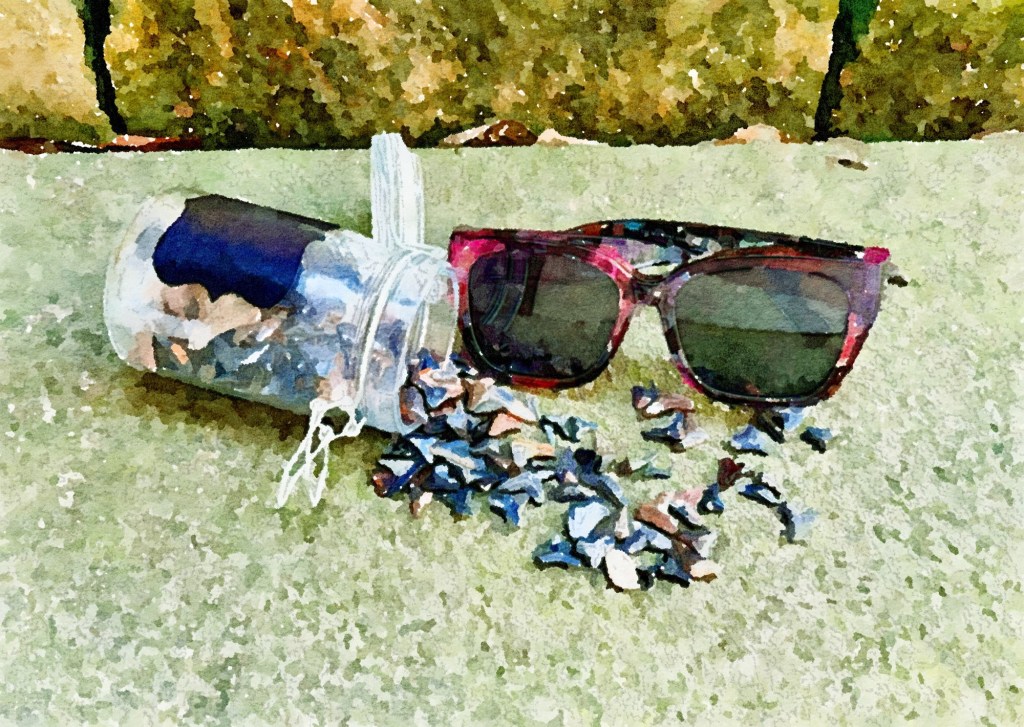
I got rid of most of the “rich aunt” details that I had to include in the contest story but kept a couple of things about her character. She wears rhinestone-studded sunglasses and carries a cane with a silver handle. Those details I think will allow the reader to imagine her and also no a little bit about her personality.
My original draft included a full paragraph of back story about the zoo history. Fascinating stuff to me, the author, but not so interesting to readers who just wanted to get into the story. Cutting those lines allowed me room to add a scene where the main character encounters someone in the past.
Speaking of the past, I had a problem with tenses. There’s a flashback while the characters stroll through the zoo, but I wrote almost everything in present tense. Some of my early readers were confused about the timeline until I fixed that problem.
I made a small change to the ending, substituting one word for two in the last sentence. In general, I think it is always a good idea to cut words and this one change gave the story more impact and an ending that will stay with the reader.
Now, if you’d like to read the final, published story, here’s the link to the post on the Flash Fiction Magazine page: All We Have Abandoned
Tonight’s story is one of the first that I wrote for the NYC Midnight writing contest. I don’t remember the prompts, but I think the genre must have been mystery or crime. And I do remember that one of the words that had to be used was “surrogate.” Anyway, here it is copied below. I spent more time selecting the photo to accompany it than I did posting the story, so please forgive any editing that might need to be done.
Speaking of photos – I always try to use something either my husband or I have captured. This is harder when it’s a fiction piece. For this story I wanted something mysterious, but most of my landscape shots tend toward picturesque and not eerie. I almost used the one below as the top picture, but decided on one with “water” as the theme. After you read the story, let me know which photo best captures the mood of the tale.
Photo by the author
Blood Over Water
I picked up the hitchhiker a quarter-mile past where our Main Street became TX-86. A rusty pickup blew past where she stood with her thumb out. When his brake lights flashed, I hit my light bar and beeped the siren. The truck kept going. Hitchhiking is legal in Texas, and I wouldn’t have pulled over for just any traveler, but this one looked nine months pregnant.
“Hot for a hike, isn’t it?” I leaned toward the open passenger side window, smiling and hoping the girl wouldn’t bolt. Skittish as a deer, she wavered at the edge of the asphalt. Dark sweat stains circled the neck and armholes of her gray t-shirt, stretched tight across her belly. A black leather purse rested at her feet. She shrugged and tucked a lank strand of brown hair behind her ear.
I pushed open the car door. “Hop in. We can talk about it in the air conditioning.”
“You arresting me?”
“That depends. You committed any crimes?” This earned me a smile. To my relief, the girl eased into the seat beside me.
“Thank you, officer.” She glanced at me, then away. “I’ve never been in a police car before.”
“Good to hear.” I held out my hand. “Chief John Lawson, at your service.”
“Cindy Brinkman.” Her hand was hot and slick with sweat.
“When’s your baby due, Cindy?”
“It’s not my baby.” Her bottom lip quivered, and she turned to stare at the flat West Texas landscape.
I wondered about that, but figured it was best not to push her. “I tell you what, there’s a Dairy Queen in town, has a cold soda waiting.” She nodded, and I put the cruiser in gear and drove off.
Over a pair of cherry Cokes, I learned Cindy was twenty-three, five years younger than my daughter Alice. Cindy lived in town with her boyfriend, Jamie, when he wasn’t working. He stayed in Midland during the week, in a trailer with other oil field workers.
“We had a fight, and I left.” She spread her hand protectively across her stomach.
“He hurt you?”
“Oh, no! Jamie would never do that!” She shook her head, her eyes wide. “It’s just hard, you know.”
“You have someone you can call?”
She rummaged in her purse and brought out a pink phone. “My sister. But my battery is dead.”
“You can use mine.” I went to the counter to order food while she made the call.
Cindy polished off a double cheeseburger and two refills of cola before her sister arrived. I recognized the woman that pushed through the door of the Dairy Queen—she’d made an unsuccessful run for school board last year. Brenda York. Her husband did something in tech.
“What were you thinking? It’s hot as hell and the baby is due any day. Why didn’t you call?” Angry red blotches dotted her face. She swept her arm toward the window, almost clocking her husband, a tall, whip-thin man hovering behind her.
Brenda’s husband leaned across the table. “Carl York,” he said, shaking my hand. “Thank you for picking her up.” Carl had close-cropped black hair—like a military cut.
“Part of the job. I’m glad some good Samaritan called in when they saw her on the side of the road.”
Before Cindy left, I pulled her aside. “You folks go ahead.” When Brenda and her husband were out of earshot, I asked Cindy, “You sure you want to go with them?”
She nodded.
“When things calm down, call Jamie. I’m a father myself, and I know he’ll be worried about you and the baby.”
Cindy gave me a startled look, her eyes wide. “Oh,” she said, “it’s Brenda’s baby.” She pointed outside, where her sister waited, one hand on their SUV. “I’m her surrogate.”
Later that night, while we loaded dishes into the dishwasher, I asked my wife about the surrogacy thing. Barb, my wife, worked as a nurse. I could have looked it up on the internet, but I’d rather someone explain the medical terms in words I could understand.
“There are several ways they can go about it,” Barb said. “The surrogate carries the baby because Mom can’t. Sometimes they use a donor egg.”
“Who’s the father?” I rinsed a plate and handed it to Barb.
“They can use the husband’s sperm, or a donor. Either they fertilize the surrogate’s egg, or if they use the mom’s egg, they’ll fertilize it and transfer the embryo to the surrogate.”
“After that, it’s business as usual? Nine months later, you have a baby?”
Barb laughed. “We hope everything goes as usual. If the implantation is successful, yes—the embryo clings to the uterus and nine months later you have a baby.” She closed the dishwasher and punched the button to start a load. “Now tell me, John Lawson, why the sudden interest in where babies come from?”
I explained about picking up Cindy and meeting her sister and her brother-in-law. “She told me twice it wasn’t her baby.”
“There’s sure to be a contract. She would have to sign away any rights to the child.”
“Why would someone agree to that? Have a baby and give it up?”
“Why does anyone do anything? It’s always for love or money.”
Two months passed before I thought of my pregnant hitchhiker. Labor Day, we had a record of four calls for drunk and disorderly at the RV park. The next week, a grass fire swept up to the edge of town, almost igniting the First Baptist Church.
The night of the grass fire, after our volunteer fire department had it under control, I stopped at the Allsup’s convenience store for a cup of coffee and a fried burrito. A haze of smoke hung in the air, blurring the stars. The heat had broken, ushering in the promise of cool nights in the fall. I leaned against the cruiser, careful to keep burrito crumbs off my uniform shirt. A baby’s wail erupted from the black Lincoln SUV parked at the pump. I recognized the man pumping gas—Carl York. I wandered over.
“That’s a healthy set of lungs. Congratulations.”
Carl grimaced. “Do babies ever stop crying?”
“In my experience, hardly ever.” I peered into the back seat, nodding with approval at the fancy carrier turned backwards to face the seat. I tapped on the window. “Boy or girl?”
“Boy.” Carl hung the hose back in its holder. “I better get going. Only time he stops crying is when the car’s moving.”
“Colic?”
“Yeah. Brenda is exhausted, and I barely get any work done. I’d give anything for a quiet night.” He collapsed into the driver’s seat. I held onto the car door.
“What about Cindy? Can she help?”
“We don’t think that’s a good idea.” Carl tugged at the car door and I stepped back. He snorted a half-laugh. “We gave her the money, and she gave us the baby. Over and done.”
Under the fluorescent lights of the station, his skin looked sallow, like he’d aged ten years in the past month. Lack of sleep would do that. I thought I’d ask Barb if she’d pick up a gift for the baby. Give me an excuse to stop by, check on them. I didn’t follow through, though, and the next time I spoke to them, their baby was missing.
The call came in early on a Sunday morning. Sunrise was a yellow line of promise across the horizon when the police scanner in my den crackled to life. Donna, our night shift dispatcher, called out the code for a missing child. By the time I made it to the York’s house, two of our cruisers sat parked in their drive, lights spinning.
The York’s lived in a sprawling, ranch style home. I met them in their living room. Brenda was wrapped in a pale blue robe. Her brown hair was flattened on one side. Carl had pulled on a pair of loose sweat pants and a t-shirt. He held a heavy-duty flashlight in one hand. As we talked, he tapped the light against his palm.
“Tell me what happened,” I asked them. They’d have to repeat the story later for the FBI field team. I’d called my contact there, and they’d be on the way from Dallas. I wouldn’t wait for them. Time is the biggest enemy in a child abduction.
“I thought he slept through the night. Then when I got to the room…” Brenda broke down in sobs. She took deep, hiccupping breaths.
Carl put a hand on her shoulder. “We heard nothing. Not a sound,” he said.
A uniformed officer stood guard outside the baby’s room. She stepped aside to let me enter, but I stopped at the threshold. I scanned the room. Bright red letters hung on the wall, spelling out the boy’s name, Colton. A framed picture of the baby hung below the letters. He had the flat, formless features of a newborn, topped with a thatch of strawberry blonde hair.
The window curtains over the crib had balloons and rainbows printed on the fabric. The rails on the side of the crib were raised and something white and square lay on the floor. I used a pencil to flip on the light switch. The white thing was a baby monitor.
“Anyone else been in here?” I asked the officer.
“No sir.” She straightened her shoulders and adjusted her belt. “Not since we got here.”
Carl met me in the hallway. I asked him, “Was that window closed last night?”
“Closed and locked.”
“What about the doors? You folks have an alarm?”
Carl shook his head. “I let the dog out the back door last night before I went to bed. I don’t think I locked it after.”
“Was this before or after you put the baby to bed?”
“After,” Carl answered. “Last night, he was fussy. I had to take him out in the car to get him to sleep. It was past midnight when we got back. Brenda was asleep.”
“You see anything on that monitor?” I motioned behind me into the baby’s room.
“Nothing. Not until this morning, when Brenda…” His voice trailed off, and he cupped both hands over his face. “What do we do?”
“The FBI folks will be here later. Right now, we’ll keep things secure, talk to your neighbors and see if anyone noticed anything. We’ll send out an Amber Alert.”
I walked with Carl back to the living room. “Have either of you talked to Cindy?”
Brenda looked from me to Carl before she answered. “You mean this morning? No. Not yet. I should do that.”
After the FBI team arrived, I met with the agent in charge, a tall, square-jawed woman named Twyla Carson, and gave her a recap of all I knew. Agent Carson had steel-gray eyes and a firm handshake. Her suit, despite the five-hour drive from Dallas, looked fresh off the rack. I left the feds at their work and I drove over to check on Cindy.
Her address belonged to a small, wood-framed house close to the Allsup’s where I’d seen Carl and the baby. An apple red Honda Civic with paper dealer tags sat in the drive. Cindy opened the door before I could knock. She stood in the half-open doorway, blocking my view into the house.
“Hello, Cindy. How are you holding up?”
“I’m okay.”
The young woman in front of me looked a world different from the pregnant hitchhiker I’d met three months ago. Instead of a sweat-stained t-shirt, she wore a floral print blouse and dark jeans. I studied her face for signs of tears.
“Is your boyfriend home? If not, it would be a good idea for you to be with family right now.”
“I was gonna go over there, but Brenda said to wait until later.”
“Mind if I come in? I wanted to go over a couple of things. You never know what might help us find Colton.”
Cindy bit her lip and hesitated, but she backed away and opened the door. We walked down a short hallway and into the living room. Empty food containers—pizza boxes, hamburger wrappers and Styrofoam plates—covered the coffee table. A breast pump sat atop one of the pizza boxes. Cindy hustled over and started clearing the trash.
“When’s the last time you saw the baby?” I asked.
“I was over there last night.” She picked up the breast pump. “I’ve been dropping off breast milk. They tried formula, but he does better with this.”
“You’ve done that from the start?”
“I don’t mind it.” She carried the pump into the kitchen and called, “You want a glass of water or something?”
“No thank you,” I answered. “But I’d like to borrow your bathroom.”
“Sure.” Cindy came back into the living room. “It’s right down the hall.”
I didn’t need the bathroom, but it was the best excuse to get a look at the rest of the house. The door to the master bedroom hung open, and I glimpsed an open suitcase laid out on the bed. When I left the bathroom, I stopped in the hall opposite the second bedroom. They’d set this room up as a sort of den. A pair of gaming chairs sat in front of a television.
Back in the living room, I picked up a framed photo of Cindy and her boyfriend, Jamie. The picture showed them standing at the base of a red, sand-stone cliff. Sunshine gave the photo a golden tint, lighting up Jamie’s reddish-blond hair. I handed the photo to Cindy.
“Where are they, Cindy?” I thought at first she wouldn’t answer, but then her face crumpled.
“I thought it would all work out, but after he was born…” She collapsed on the couch. “We’re going to be in so much trouble, aren’t we?”
I called Agent Carson and gave her the address of the hotel where they’d find Jamie and Colton. For the second time, I gave Cindy a ride in my police car. At the station, she told the whole story.
“We already had the money when I lost the baby,” she said. “It was right after the first round. I didn’t go to the doctor. I thought they’d be able to tell at the next checkup and I could pretend I didn’t know.”
But by the time Cindy had her next check-up, she was pregnant. This time, the baby was hers and Jamie’s. They decided not to tell. They had the money—fifty thousand dollars, and Cindy had signed away all rights to the baby. That was the first baby, though. The one that didn’t take. As her due date approached, Jamie pressured her to keep the baby. That was what the fight had been about. That day I’d picked her up.
It would be a mess to sort out. Why did they do it? For love or for money, my wife had said. I figured that was true.
 Let's Get Out of Here