What Falls From the Sky Does Not Strike Me

The author — Photo by her patient husband, Andrew

Our rented Buick rocked as the tractor trailers and rock haulers zipped past on the highway. I gripped the door handle, certain a homicidal maniac steered each truck rushing by, intent on racking up another victim on their way to the West Texas oil fields.

We had selected the Buick from a fleet of options. We assumed the larger car would be safer and more comfortable than my ten-year-old Honda. The rental car’s bucket seats fit anorexic teenagers, not late middle-aged women, and my butt had grown numb over the miles since we left Dallas. If not for the thrill of certain death in a fiery car crash, the rest of me would have fallen asleep staring at the flat scenery on our way to Carlsbad, New Mexico to tour the caverns.

One arm draped over the console, my husband Andrew stared through the windshield, judging how much room he needed before he could squeeze the Buick in between the cement truck and the oil tanker in the next lane.

“Would you like to stop and see the Odessa Meteor Crater?” Andrew asked.

Everything I know about meteors I learned from movies, television, and comic books. They don’t have a good reputation. Anything tied to the phrase “extinction event” is something to avoid. Another semi rocketed past, blowing sand and gravel across us. As Andrew steered the car back into our lane, I answered “Sure.”

I’m a big fan of bizarre roadside exhibits. I imagined a meteor crater would be a giant hole in the earth, similar to the Grand Canyon, but smaller, less grand. Maybe they would have a viewing station and tiny plastic meteorites for souvenirs. I got out my camera and checked the battery, to be sure I was ready to take pictures of the stunning vista.

Andrew turned off the main highway and bumped along a rough road paved in potholed asphalt. We arrived at a gated entrance in front of a metal-roofed, tan brick building. A sign on the side proclaimed we had reached the Meteor Crater Museum. The place could have been any other standard government building- a place to renew your driver’s license or pay your water bill.

I pulled myself from the tight embrace of the bucket seat and climbed from the car, camera at the ready. Leaning against the Buick, I turned around and searched for a glimpse of the crater. I didn’t want to fall into some crevice and break a hip right at the start of our vacation. The landscape stretched out to the horizon, broken only by scraggly desert plants and medium-sized chunks of limestone. In the distance, oil field pump jacks bobbed up and down like dinosaurs.

“How much further is the crater?” I asked. When I shielded my eyes and squinted through the swirling dust in the parking lot, the most interesting thing I noticed was a concrete picnic table.

“It’s right there,” Andrew answered, pointing. “That dip in the ground.”

The sandy soil past the parking lot sloped down in a shallow bowl. If I held my head just right, I could make out a circular shape to the area. We strolled along the little path that wound through the crater and read the educational signs that told about the history of the site, until I grew tired of the heat. Andrew stopped to admire an anthill, and I walked on ahead to the museum, hoping for a water fountain and air conditioning.

The exhibit area was slightly larger than my living room, and staffed with three people, two men and one woman, sitting on rolling chairs behind a glass counter. They all turned to greet me as I strolled in. I picked up a brochure explaining the history of the crater. It must have been larger when they discovered it in 1892. The crater was formed 63,000 years ago, so I forgave it for being filled in with West Texas silt. I know how fast dust can accumulate if you aren’t diligent. If only we had visited sooner.

I looked over the small pieces of meteorites on display and glanced at the scientific charts and graphs. At last I stopped in front of a framed photo of a woman reclining on a hospital bed. This was Ann Hodges, a woman struck by a meteor in 1954 when it crashed through the roof of her house. I imagined her stretched out on her couch, relaxing with a book maybe, or watching television, her face illuminated with the blue glow from the screen. Maybe the accident happened after a commercial for Geritol or the new RCA Victor Portable Radio, her peaceful night shattered by a huge rock falling through her ceiling. Did she know what hit her? Or did she suppose Fidel Castro had targeted her, a housewife in rural Alabama, with a missile meant for Miami?

I turned from the display as Andrew walked over to stand by my side.

“I found the t-shirts!” he said.

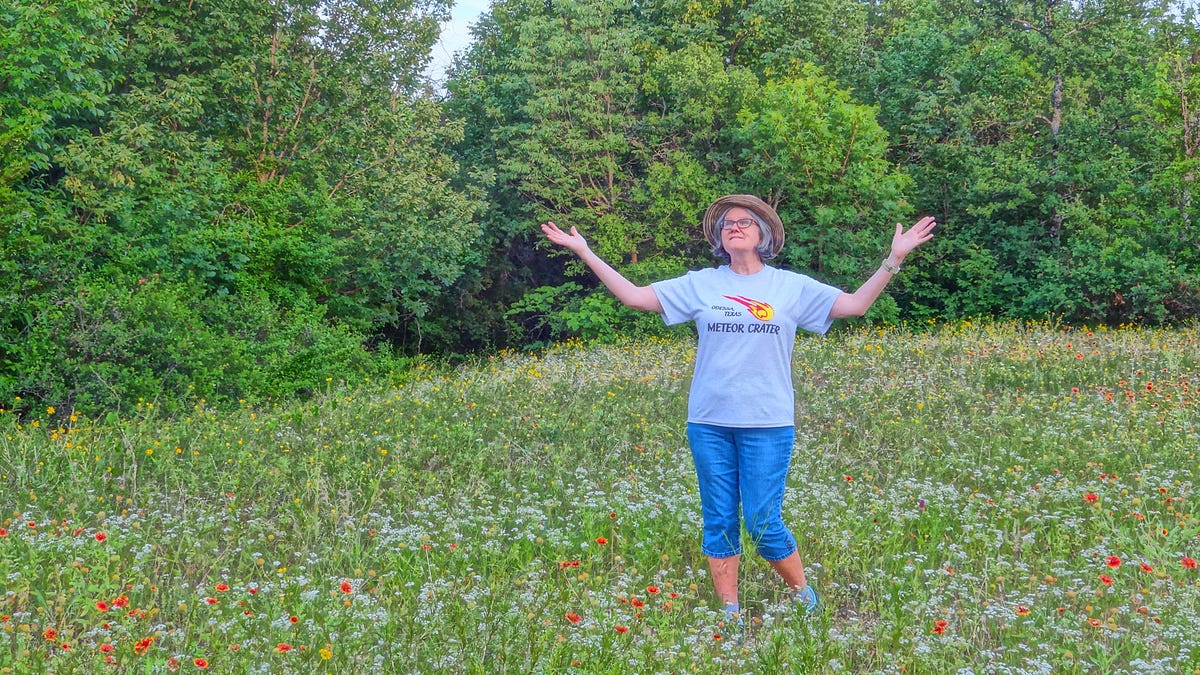
He held up a gray shirt with “Odessa Texas Meteor Crater” printed on the front. A yellow and red meteor streaked down toward an innocent cartoon superhero, or a reclining woman.

All three staff members assisted me as I purchased the shirt. We left the cool air conditioning and stepped out into the bright sunlight of a West Texas summer. The blue sky overhead held no threat of hail, lightening, or flaming rocks. As we strolled across the parking lot toward the Buick, I decided the risk of venturing out on the highway was worth the reward of finding new places to explore. I was just as likely to be struck by a meteor at home while I lounged on my couch.

At the Odessa Meteor Crater

Terrye is a native Texan who enjoys writing stories set in her home state and other strange places. In her free time Terrye enjoys exploring antique, junk, and thrift stores for inspiration and bargains. She’s had stories published in small print and online journals, and writes short, humorous essays for her blog — https://terryeturpin.com/. Sign up below to follow her.


A Bird in the Basket

Photo by Alvaro Daimiel on Unsplash

I hadn’t planned on sharing the 650 square feet of space I called home. Andrew and I had reached the point in our dating life where he kept a spare toothbrush at my place and I had cleared out a shelf in my closet for him. I could barely fit all my shoes in the closet, so this was a sacrifice on my part.

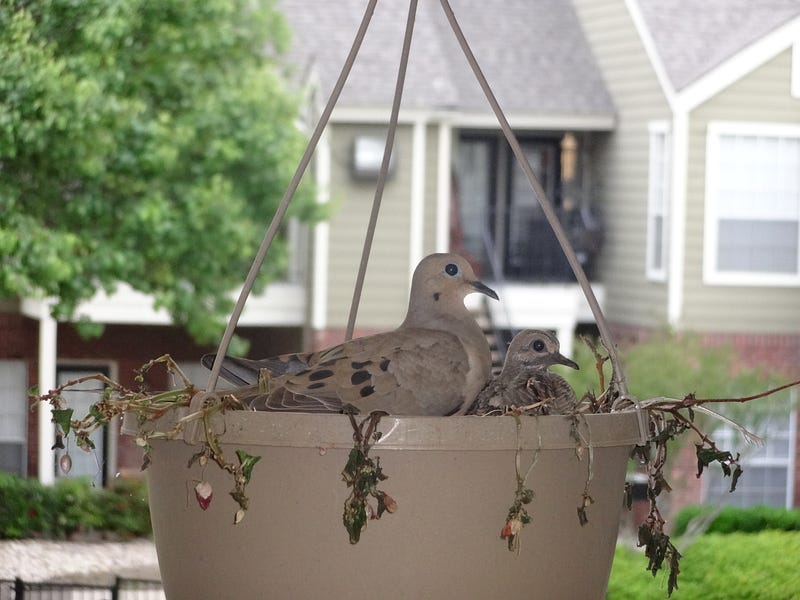
Dovey didn’t move into the apartment. She and her mate Lovey took over the hanging basket on the balcony. When they first showed up, they strutted around cooing at the potted plants. They reminded me of an old married couple scouting out real estate, sashaying around wing to wing, nodding their little bird heads and inspecting the soffit for dry rot.

“They’re looking for a spot to nest,” Andrew warned me as I commented on how sweet they were.

“If they’re moving in, I guess I should name them,” I replied.

When I first settled in my apartment, I decided against owning a dog or a cat. The complex required one fourth of my salary for a pet deposit. And the additional pet fee with each rent payment would mean I might have to give up bathing, since I wouldn’t be able to afford the water bill while paying for a pet. I didn’t plan on adding any animals to my household, but a pair of mourning doves decided my place fit them just fine.

I discovered my home had passed the mourning dove inspection and Dovey had moved in when I went to water my petunias the next day. Even standing on tiptoe I couldn’t see past the flowers blooming in the pot, but with the first stream of cold water she burst forth, scattering blooms and whistling bird curses.

She perched on the gutter above my landing to shake off the water droplets, then roosted there to fix me with the stink eye. I took this opportunity to peek in the basket. A single white egg lay cushioned in a mashed down mat of limp petunias. Two twigs tossed to the side of the egg and some dried grass blades stuck on the edge of the basket made up what passed for a nest.

When I described the nest to Andrew, he told me that doves are bad builders. Dove are the trailer trash of the feathered world, living in what amounts to a tornado-ravaged mobile home.

“They’ll set up anywhere, and patch together the bare minimum for a nest. Most of the eggs drop right out.”

I was horrified, and glad Dovey had chosen the hanging basket for a nursery. After I apologized to the petunias for sacrificing them, I stopped watering the flowers.

Mornings I eased open the back door and announced my presence before I stepped out, so as not to startle the little bird.

“Okay, it’s just me. No reason to get scared, I’m coming out now.”

Sometimes a neighbor would pass by walking their dog, and give me a curious look as I stood there, poking my head out the door and warning the plants of my approach. I must have made an even odder sight a few days later, standing on a chair on the back porch and talking baby talk to the dead, wilted flowers in the hanging basket.

“Oh, what’s you got there? Is you got a baby?”

I would lean forward, toward the basket but not too close to the edge of the railing, since I am not known for my sense of balance.

Dovey puffed up and glared at me while trying to stuff the hatched chick back under her wing. I could understand why she tried to hide him. Every parent is proud of their child, but Baby looked like he was missing feathers from his scrawny neck. I did what most people do when confronted by someone else’s homely offspring — I lied and told Dovey what a cute chick she had hatched.

The first hatchling grew up and left the nest while I was out of town on a business trip. My neighbor Lisa kept me informed by text message. “B is out of the nest?! OMG! Cute!”

I was sad to have missed this baby’s first steps until Andrew reminded me most likely Dovey would be back. She returned, even though by this time the basket was bare dirt, with brown, withered stalks dropping off the sides. Dovey felt this was adequate, without adding twigs or grass to the nest inside.

Photo by Andrew Shaw

This time there were two eggs, and I got to watch them from hatching to when they left the nest and spent three days stumbling around on my balcony like drunken sorority sisters. I read on the internet that dove fledglings “stay around hedges and bird feeders, begging for food from adults.” Sort of like human teenagers, I thought, hanging out in front of an open refrigerator and asking “What’s there to eat in here?”

After the second set of chicks moved on, I took down the hanging basket. I thought I had had enough of running a rookery, but Dovey had other plans. She and Lovey returned and placed a few dried blades of grass on top of an empty ceramic planter balanced at the top of a rickety wooden shelf on the corner of my porch and called it their new home.

“You will need to put that basket back up,” Andrew said.

Since I had already thrown away the old pot, there was only one thing to do. I went shopping, and returned with one of those coconut husk liners and an assortment of bright orange, artificial hibiscus flowers. Andrew and I lined the new basket with trimmings from the coconut fibers, carefully arranged the large fake flowers, and transferred the new nest to the balcony. This arrangement suited the happy couple, and soon after Dovey was raising another pair of chicks in the tropical atmosphere of the new pot.

Dovey left now and then, but she always came back to my balcony. She appeared to be satisfied sharing my porch. I was content too, living in a place where the fake flowers bloomed and I had room for most of my shoes, even if I had to share my closet space. At the end of summer Dovey took off for vacation. While she was gone, I planted a tiny American flag in the basket and added a small wooden plaque to welcome her return — one that read, “Home Sweet Home.”

Photo by Terrye Turpin

Goodbye Old Friend

CRV_Fotor
Photo by Terrye Turpin

My new car is a spaceship. The dash has more buttons and dials than Doc’s DeLorean did in Back to the Future. It runs on premium gas, though, and not recycled garbage. My brand-new Honda Civic Sport Touring might be the last car I ever buy.

“What are you going to name your new car?” Andrew asked me as I scribbled my name in blood on the finance agreement.

Unlike my husband, who has had a Marilyn, Penelope, Zephyr, and Lexi in his driving life, I’ve never named my cars. At least not with anything I’d repeat in polite company.

I bought my first car forty years ago – a 1974 Subaru sedan. A short in the electrical system caused the headlights to go out after 15 minutes of driving. This didn’t stop me from traveling at night, I’d drive as far as I could, then I’d pull over and wait for the car to cool down and the lights to come back on. When the brakes went out, I drove for two weeks using only the parking brake because I was between paychecks and couldn’t afford the repair.

A sensible four door, it was not the first car I wanted, but according to my mother- the co-signer on the loan, it was the first car I deserved. She took one look at the green and white 1976 Shelby Mustang Cobra I lusted after and imagined my mangled body entombed in twisted metal.

I’ve had trucks, SUVs and sedans. Some of them came to dramatic ends. When my kids were small, I hauled them around in a silver two-door, 1979 Buick Riviera. It caught on fire one day, the paint bubbling up on the hood when we parked. “Mom! Is that smoke?” must be one of the scariest phrases ever heard.

Another car, one my then father-in-law bought for us for $50, shot flames from the exhaust every time the engine backfired. That car could clear traffic. When it looks like you’re driving a Mad Maxx rocket powered vehicle folks get out of your way.

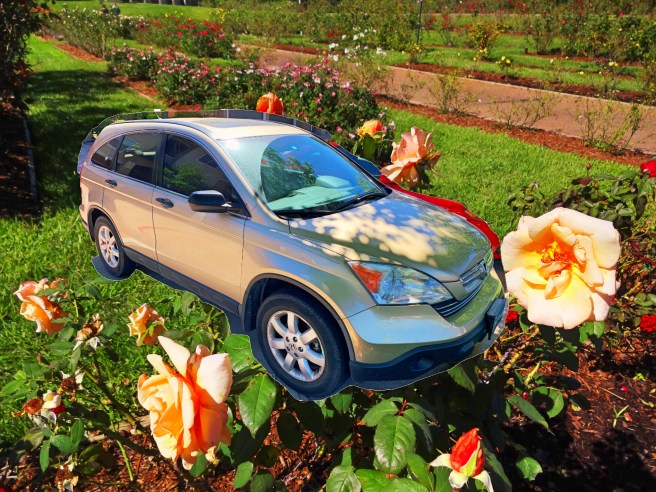
I drove the car I traded in, a 2009 Honda CRV, for ten years. We took our last family vacation in that SUV, four of us on a road trip from Texas to the Grand Canyon in Arizona. My twenty-one-year-old son took most of the driving duty because my ex-husband felt I drove too slowly and my older son drove too recklessly.

By 2011 I was divorced. I folded the seats down in the CRV and used it to carry most of my belongings out of the house I’d shared with my husband, and into my new apartment and new life. When I paid off that car, I stood in line at the tax office to remove his name from the title.

Last year, in October 2019, my new husband and I drove to our wedding in the 2009 Honda.

I’ve never been sentimental over a car, but the sight of my gold CRV sitting on the dealer’s back lot felt like I was dumping the family pet on the side of the road. “We’ll send it over to auction,” the salesperson told me as he pointed out the trade-in value.

Auction, I imagined, would be the automobile equivalent of working in a 19th Century coal mine. I handed over the keys and gave the car a little wave, hoping to inspire the SUV with enough confidence it would last another 157,000 miles.

We tie so much of our identity to the car we drive. The SUV with room for kids, dogs, and sports equipment. The trucks for hauling, whether it’s farm supplies or groceries from Central Market. Smug hybrids and cushioned land yachts on either end of the mileage spectrum. Like my husband, the true believers among us opt for manual transmissions.

I’d hoped to drive the ’09 another hundred thousand miles. The worn shocks bounced like a Conestoga Wagon on the Oregon Trail, and a mysterious clicking emerged from under the hood, like a time-bomb for engine failure.

“I guess I need to look for a new car,” I told Andrew. “If I buy one now, I can pay it off before I retire.”  Spending a large sum is always best when justified under cover of fiscal responsibility.

We narrowed the field down to a Honda model, and like Goldilocks I discarded several models as too large or too small before declaring the Civic as just right. Thinking of grandkids and sticky fingers, I wanted leather seats. The hatchback option gave us room for camping equipment. During the test drive I appreciated the 1.5L Turbo engine.

“Do you have one in blue?” I asked.

This last car, unlike the first car, is one I picked for myself. As I make the payments, I remind myself this is the car I deserve. In ten years, we might all be riding around in flying vehicles, leaving earth and asphalt behind.

I’ve named the car Hollis—pronounced “Haul-Ass.”


Hollis
Hollis – Photo by Terrye Turpin


The Enchanted Rock and the Little Hill

Image by GeorgeB2 from Pixabay

“We should visit Enchanted Rock,” Andrew suggested one evening, not long after we started dating.

I pictured a place shrouded in a sparkling mist and peopled with tiny fairies peeking from behind evergreens. I worried whether the rock, enchanted or not, would provide shade. I’m a great fan of shade, especially when the temperature gets above eighty degrees. When I hike in the summer, I stuff my hydration pack full of ice. I’d carry an electric fan if I could, and string out a bright orange extension cord behind me as I tramp along the trail. Our visit to the Enchanted Rock Natural Area in the Hill Country of Texas was to take place in the unseasonably warm month of May.

I had discovered that Andrew got along quite well outdoors. He always carried one of those multi-function pocketknives and a small, intense flashlight, in case he needed to defend himself against orcs or cut up an apple in the dark.

“What’s enchanted about the rock? Are there trees?” I asked.

“The rock makes noise at night, as the granite cools off, and there are a few trees,” Andrew assured me. “We can climb to the top!”

“Climb?”

I wondered about those rock noises. I pictured myself strapped into a leather harness and dangling from the side of a cliff. I was willing to explore exciting experiences with Andrew, but I didn’t think plunging to my death would make a good impression.

“Oh, it’s really more like hiking. It’s not that steep.”

I was not reassured. Andrew’s legs were shorter than mine, so his center of gravity was closer to the ground. His sturdy legs were built for inclines.

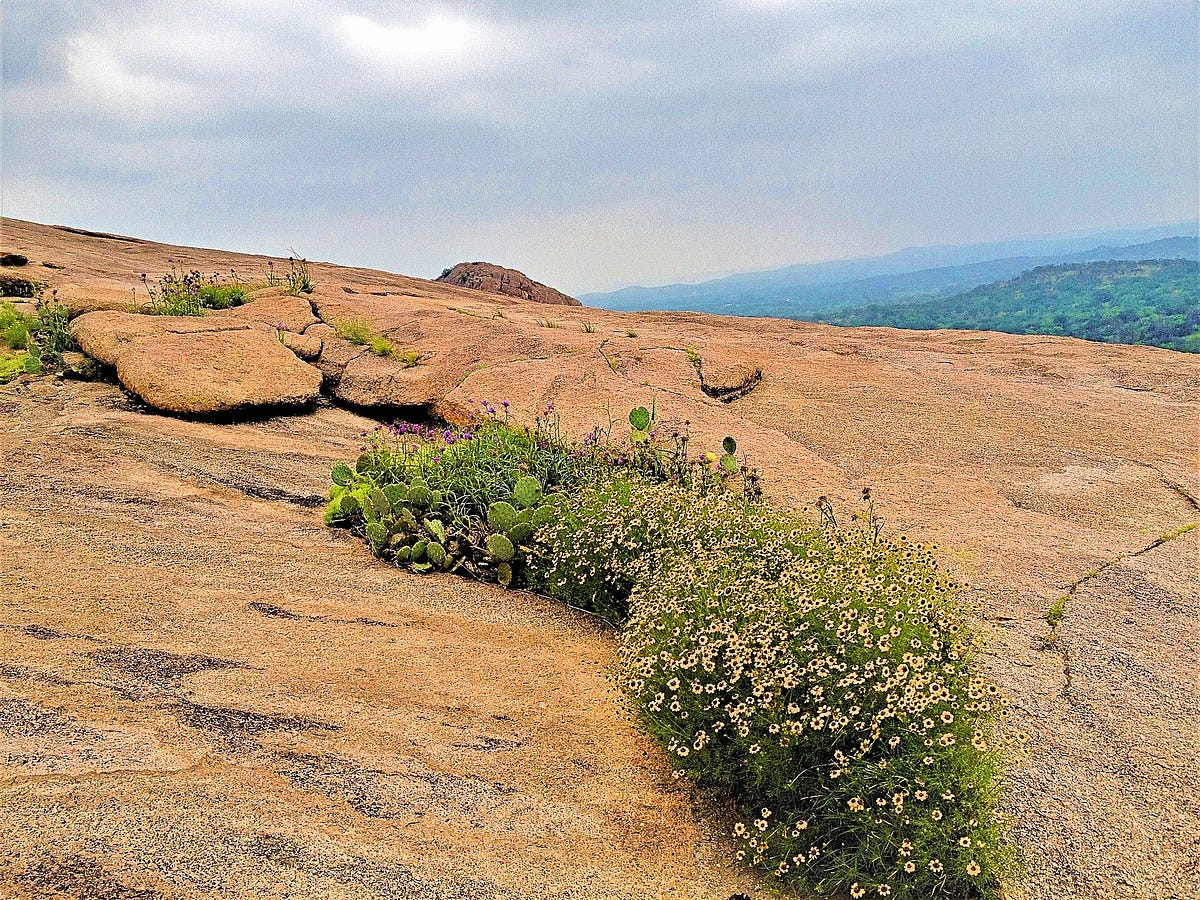
I searched the internet for a picture of the place and found an image on the state park website. It showed a dull pinkish grey, rounded hill of granite set against a backdrop of bright blue sky. Stunted mesquite trees in sparse blotches of green dotted the bottom of the hill. The sides and top of the rock, however, resembled the balding head of a middle-aged man who declined the comb over but wasn’t ready to give up all his hair. Another website suggested the area might once have been the location for human sacrifices. As I wondered aloud if we might still see bloodstains on the granite, Andrew made our camping reservations.

When arrived at the Enchanted Rock Natural Area, we stopped to check in at the ranger station and pick up a map of the area. The helpful ranger, a rosy complexioned, blond young man in a pressed tan uniform shirt and a hat like Smoky the Bear might wear, pointed out the camping spots on the map. Off we went to explore before hiking to our campground. Beyond the parking area the focus of the state park, the Enchanted Rock itself, rose into the sky. Clouds hovered some distance above the summit of the hill, and the pink granite sides shimmered in the afternoon sun. Boulders the size of small sheds clung to the surface. I didn’t see many trees on the slope, or places that looked to afford either shade or an easy stroll to the top.

“We could hike up the Little Hill this afternoon and save the larger one for tomorrow.”

Andrew pointed across from the Enchanted Rock. The Little Hill was shorter than the larger granite hill that gave the park its name. There were however, a few small trees clinging to the granite slopes. The guidebook, “On Your Way Up, a Guide to the Top of Enchanted Rock” cautioned “if you are unsteady on your feet or have trouble with your footing, please consider your physical condition before attempting the climb.” I have trouble keeping my footing when I step in and out of my bathtub, so I agreed with Andrew that we should postpone our adventure on the Enchanted Rock, and warm up with a climb up the Little Hill.

We walked past the brave hikers headed up the main path toward the Enchanted Rock. They were an interesting assortment of age and ability. Many of them had on sneakers instead of hiking boots. I noticed several people leading dogs. A tiny brown Chihuahua scrambled alongside an older woman with white hair held back in a visor. When I pointed out the little dog to Andrew, he reminded me he had once climbed to the summit while accompanied by a Chihuahua. The dog belonged to an old friend, a girl he knew before we met. I had seen a photo of Andrew posed on a barren, rocky, landscape, holding a tiny tan and white dog with a pink jeweled collar, but I hadn’t realized the picture captured the top of the granite mountain.

“Did the dog enjoy the climb?” I wanted to know.

“Yes, she did!” Andrew replied as we started up the side of the Little Hill.

As I shuffled over piles of loose pebbles and searched for the path with the least slope, I thought about that picture of Andrew and the little dog. He posted it on his online dating profile, where I saw it when we first chatted. The dog’s owner was absent from the picture, but in my imagination, she looked something like Scarlett Johansen, Andrew’s favorite movie star.

We had trudged about halfway up the incline when I realized the slope was getting steeper. The outcroppings where I might gain a handhold were getting further apart. I squinted into the sun and wiped the sweat from my face, trying to gauge how much farther along we had to go. I regretted leaving my ice filled water bottle behind in the car.

“Let’s stop here for a minute.” I panted and clung to a large rock the size of a Volkswagen, poised to slide down the side of the granite slope, with or without me still clinging to it.

“Are you tired?” Andrew asked as he stepped closer to the edge of an outcropping, where he would have a good view of my body as it tumbled unhindered down the hard, rocky ground.

I thought Andrew and I had reached the point in our relationship where I should disclose one of my shortcomings.

“No,” I replied. “I’m afraid of heights.”

“Oh! Are you okay? Should we go back down?”

Andrew walked toward me, sending a shower of loose rocks cascading past my feet and bouncing along to the concrete parking lot below. I risked a glance behind. The gentle incline we had traveled transformed into a forty-five-degree slant covered with sharp bits of gravel.

“No, let’s keep moving.” As I said this, a dark shadow floated across the rock. I glanced up to spot a turkey buzzard, circling in for a closer view.

“How about we aim for that rock up there?” Andrew gestured up the hill, toward a grouping of boulders the size of cattle cars. They did not appear to have anything holding them onto the side of the mountain.

“There are a lot of rocks up there, which one are you talking about?” I leaned out past the boulder to get a better glimpse up the hill.

“The penis shaped one,” Andrew answered.

“That doesn’t look like a penis.”

No matter how much I squinted the rock did not seem the least bit phallic shaped. Maybe he meant a different rock, and I had a moment of panic, picturing Andrew wandering up and out of view while I trekked from one tall pointy rock to another.

“You can do it! Let’s get a little closer.” Andrew marched up toward the summit, and out of view around yet another large boulder.

I realized the mysterious noises heard at night were most likely not ghosts, or some reasonably explained natural phenomenon. They must be instead the cries of abandoned hikers, afraid to venture away from the rocks they anchored behind.

We worked our way to the top, with Andrew stopping now and then to wait for me to scrabble along behind. We made our way from one vaguely penile column of granite to the next. I resisted the urge to crawl, afraid even that might prove too frightening, and I would be forced to push myself up the slope on my belly like a snake.

When we reached the top of the hill, I found a patch of green moss growing in a weathered depression in the rock. This was not the Enchanted Rock, but it looked as though we might find fairies. Birds chirped and flitted about a stunted oak tree as though they were down at ground level. I hurried over to the tree, eager to take hold in case it was a heat induced mirage. If I clung to the tree, I hoped I could convince myself I wasn’t on top of a hill I would have to climb back down. I should plant a flag, if only the surface beneath me weren’t solid granite.

I posed on the summit of the Little Hill and loosened my hold on the scrubby tree. To a casual observer, including the boyfriend I wanted to impress, I would appear to be leaning my hand against the bark, and not clinging for dear life to the nearest object that didn’t move when I touched it.

Andrew positioned himself at the edge of a drop-off and gazed off toward the Main Dome next to us while he snapped pictures with his camera. The pink granite of the Enchanted Rock glowed in the late afternoon sun. If I squinted a little, I might make out a small, determined form on the top of that neighboring rock. I closed my eyes and I could see her clearly, her little snout raised up to smell the fresh wind off the moss, and her four feet planted firmly in triumph on that solid ground.

Photo by Terrye Turpin

Lemur Island is a Lonely Island

But It’s a Lovely Place to Visit

Photo by Amy Reed on Unsplash

We arrived at the zoo in a car loaded with boxes of books and mismatched towels, two tennis rackets, and some stereo equipment. I’d been lured into the trip by Andrew, my boyfriend back then. I love the opportunity to view any animal secured behind a fence where there is little chance of it being able to bite me, sting me, or pee on my leg. When Andrew mentioned an overnight trip to Waco to the Cameron Park Zoo, I packed my toothbrush.

“We’ll stop by the zoo on our way home, after we pick up things I have stored in Austin,” he said.

“Wait, there’s labor involved?”

“The zoo has an entire exhibit devoted to lemurs,” he said. “You won’t want to miss that.”

I agreed to a couple of hours rummaging through the boxes stashed in Andrew’s storage unit. We had been dating awhile by then, and there’s no better way to get to know someone than snooping among their possessions.

When we arrived at the zoo, I wanted to go see the lemurs right off, but Andrew suggested we save them for last.

“We’ll walk a big circle through the park, and end up at Lemur Island,” he promised.

After we meandered past the sloths hanging like hammocks in their enclosure, somewhere around the middle of the zoo, we came across a playground. It had a slide, a climbing wall, and a giant concrete snake painted in bright stripes of black, red, and yellow.

“Oh! A snake!” Andrew took out his camera. “We need to get a picture of you with that snake.”

I agreed immediately. Before my divorce I rarely posed for photographs. There are hundreds of pictures of my children growing up. They are almost always alone in the portraits, as though they had no parents and were raised by wolves. I remember a time before the invention of smart phones, when all you had to do to prevent your own picture being snapped was to keep a firm grip on the camera.

Things changed the year after my divorce. I signed up for an account with OK Cupid and realized I’d need to post photos of myself. The pictures I selected tended toward the silly side. For Halloween, I posed in front of a Christmas tree decorated with plastic bats and skulls. I’d rather be judged for my sense of humor than my appearance, plus I reasoned — who doesn’t love a clown?

When I spotted the shot of Andrew wearing a giant mushroom hat, I knew we would be a good match. It turned out he loved taking silly photographs as much as I loved posing for them. If a compromising picture of me ever surfaces, it will be one in which I am clothed, wearing a funny hat or a tiara, and posed on top of a mechanical bull.

On the playground, I looked at the snake and tried to imagine the best angle.

“What if I climb on top?” I offered.

“No, no — you should get inside, in his mouth, like he’s swallowing you.”

I weaved through the noisy children running around on the playground as though this site belonged to them alone. Eventually, enough tired of this exercise I had a clear path to the snake, and I rushed over and ducked into the mouth. The snake was constructed to accommodate a small to medium sized child, and not a grown, inflexible woman.

“No, turn around.” Andrew motioned circles with his hand.

He lowered the camera as I tried to swing my feet over and onto the slick painted surface of the snake’s mouth. I slid around face down, with most of my body hanging out as I tried to get some purchase on the slippery concrete.

“No! No! The other way!”

Andrew continued to wave his hands about, while I ignored the toddler standing in front of me with a puzzled look on his face. The child, a little boy, frowned and stuck a grimy finger in his mouth. A line of sticky purple that looked like grape jelly trailed down the front of his t-shirt.

“Lay down,” Andrew directed.

I dropped my face toward the mulch cushioning the playground and tried not to think about germs in the wood chips.

“No! Not that way!” Andrew motioned again with his arm, waving it in a helicopter pattern over his head.

Several sets of parents shuffled their children away from the crazy lady rolling around inside the giant cement cobra.

“Lie down on your back and throw your arms out. He’s eating you alive!”

The toddler who had been watching me burst into tears and ran over to hide behind his mother. I flipped over and stuck my arms out past the snake’s mouth, banging my elbow in the maneuver. I hoped the resulting pained expression on my face would add a touch of realism to the photo.

Later, while we were snapping pictures of a giraffe, Andrew discovered the exposure on the camera was set a little too light for his taste. He fussed with the adjustments and then announced, “I’m afraid we’ll have to go back and take that snake picture again.”

“Can we see the lemurs first?”

Maybe on the way over to Lemur Island Andrew would find something more promising than a large cement snake for me to pose on- hopefully a big, soft, stuffed bear.

“It won’t take but a minute, it’s not like the lemurs are taking appointments.”

When we arrived back at the playground, we discovered it covered with children. There were at least five or six of them claiming the snake as a good place to stand and shout out to their parents. I passed the time while we waited staring longingly at the icon for Lemur Island on the zoo map.

The last child left her perch on the snake for the chance to go push her brother off the climbing wall, and I seized the opportunity to dash over and slide myself feet first into the snake. I bumped my elbow again. Andrew snapped off a couple of quick pictures and we left to make our way at last to Lemur Island.

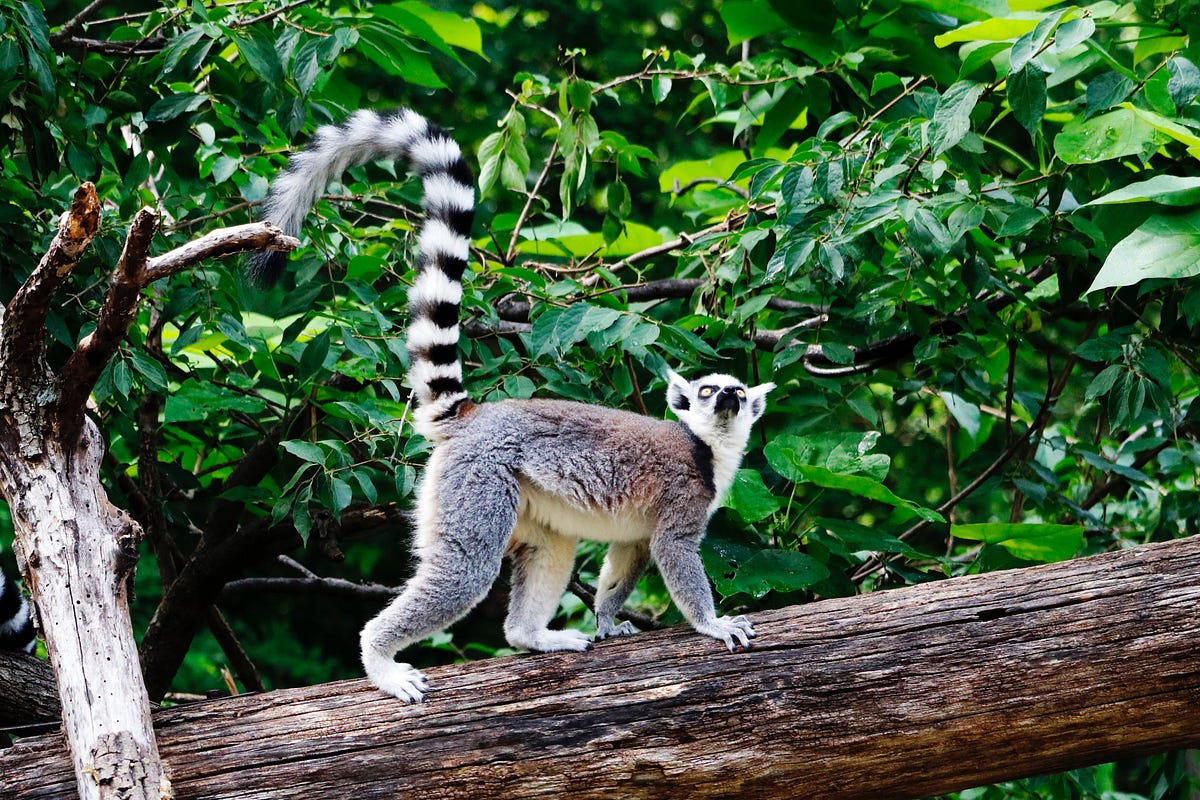
When we got to the habitat, I discovered the exhibit was a lovely place, complete with artfully constructed cliffs and ledges, tall trees, and a thirty-foot moat encircling the land area. The only thing lacking, as far as I could tell, was lemurs. I made out a lone greyish-brown animal sunning on a ledge fifty feet away. Andrew offered me his binoculars, and I watched the lemur scratch behind his ear and then lumber over to another section of the cliff to settle in for a good nap.

“Where are all the lemurs?” I asked.

“I don’t know, maybe they’re sleeping.”

Andrew took out his camera and zoomed in for a photo. We sat at a table at the observation area across from Lemur Island and took turns looking through the binoculars until it was time to leave.

The next day Andrew emailed the pictures he took at the zoo, including the photo of me and the snake. It was the first one, the overexposed photo. Andrew sent it with a little note — “Turns out I liked this photo better.”

As I read the email, I had to admit the picture was a good one, and worth the trouble it took staging it. There I was, arms flung out, the map of the zoo and other assorted brochures tossed just out of reach of my hands. I had a terrified look on my face, as though I knew we would have to stage the whole thing again.

The photo of Lemur Island showed the beautiful landscape and a small dot amongst the rocks. If I squinted just right and put my nose on the computer screen, I might imagine the dot was a lemur. There he was, snoozing alone on the rock ledge. He might not have been lonely, but I couldn’t help feeling sorry for him, with no one to snap his picture should he have the urge to put on a funny hat and dance along the edge of the cliff.

Lemur Island at the Cameron Park Zoo in Waco, Texas — Photo by Terrye Turpin

The Picture — Photo by Andrew Shaw

Love and Frozen Peas

Antique Shop Display — Photo by Terrye Turpin

The truest test of whether someone will stick by you ‘in sickness and in health’ comes from the ordinary ills — the soggy discomfort of the common cold or the excess body fluids that accompany the flu. You’d have to be a complete troll to abandon the loved one who had cancer or needed one of your kidneys, but it takes a strong commitment to pass the Kleenex to someone who just sneezed on you. Show me someone who can listen as you complain about an ingrown toenail, and I’ll show you someone who loves you.

I am not a good patient, I don’t like to rest when I’m ill and I resent having to use up a day off just to stay home in bed. Because I have a hard time remembering to take prescribed medications, I’ve resorted to one of those plastic boxes with compartments for each day of the week. The box is the size of a wooden ruler, like one I used in elementary school. It’s filled with vitamins. I don’t know what I’ll do if I ever get stricken with a serious illness.

Last year I gave in and scheduled the dental implant surgery I’d been avoiding for twenty years. The first step would involve a bone graft. I opted for sedation after my periodontist, a sincere young man who resembled Ron Howard and who might have just stepped off the set of Mayberry RFD himself, described the surgery involved. I volunteered my husband, Andrew, to accompany me.

Every time I visit the dentist my mind replays that scene from the movie Marathon Man where they torture the hero by drilling into his teeth without anesthetic. I had my surgery at the dental college. Not only did they remember the anesthetic, they gave me two little blue Halcion beforehand. The last thing I remember of the surgery is resting my head on Andrew’s shoulder while we sat in the waiting room.

When I came around, I sat in our living room while Andrew steeped a tea bag for me to place on my gums. My mouth was numb, a dark purple bruise bloomed on my cheek, and there was a trail of blood and drool in the corner of my lips. I looked like an extra from The Walking Dead. Over the next few days my diet comprised blended food, an antibiotic pill the size of a small grape, a steroid, and pain relievers. For dessert I enjoyed a prescription mouthwash with a name I couldn’t pronounce and a taste like something used to exterminate wasps. I spent most of my time reclined in a chair in front of the television, with an ice pack made from frozen peas pressed to my jaw.

To prepare for the surgery, we stocked up on soup and ice cream, but by day three I was glaring at Andrew every time he tried to open a bag of crunchy chips. He hopped up and down so many times fetching my ice pack he wore a trail in the carpet. If only I could have unhinged my jaw like a snake and swallowed a fried chicken wing.

I developed a craving for mashed potatoes with cream gravy and convinced Andrew I was well enough to go out to dinner. After applying a layer of concealer I considered the purple and green bruise hidden, and we headed over to a diner near our home. On the way I imagined how wonderful the mashed potatoes would taste. Hopefully they would be made with a generous amount of artery clogging butter and drowned with cream gravy so thick with dairy products they resembled pudding.

When we got there Andrew ordered the all-day breakfast special with scrambled eggs and biscuits, and I had a bowl of mashed potatoes and gravy. When our food arrived I was dismayed to see the potatoes came, not with the delicious smooth cream gravy I had been dreaming of, but a watery, lumpy brown gravy. I noticed that Andrew’s eggs were runny, which he hates, but he ate them anyway.

“How are your potatoes?” he asked.

“Fine,” I replied. I didn’t mention brown gravy on potatoes should only be served north of the Mason Dixon line.

As soon as we returned from dinner, I took a pain pill, and hoped the throbbing in my jaw would ease. It hurt too much to talk, so I tried my best to send an “I love you” telepathically as I gave Andrew’s shoulder a little pat. He sighed and got up from the couch to go into the kitchen. He came back with my bag of frozen peas, which I accepted, certain he understood.

A Pivot Toward Acceptance

Photo by Terrye Turpin

In 1980, after my sophomore year in college at Texas Woman’s University, I waited for the letter that would lead to a pivot point in my life. Some months before, I had applied through the Baptist Student Union to be a summer missionary. I signed up, not out of deep religious conviction but because I did not want to spend the months between semesters living in my mother’s house.

Other students testified they had received God’s call, but I would have hung up in a panic, sure the almighty had a wrong number. I hoped to be sent to some distant exotic location. The recruitment flyer posted in the Baptist Student Union featured pictures of happy, smiling young people wearing shorts and working in places like Brazil or Hawaii. I pictured myself returning from summer vacation with a tan and a suitcase full of coconuts. Instead, I landed in West Texas, at a town called Big Spring. My assignment was to work in the chaplaincy department at the state psychiatric hospital located there.

“I’ll be spending my summer in the state hospital,” I told my friends. The joke always got a laugh as long as I explained that I wouldn’t be going as a patient.

My family never talked about mental illness. The youngest of seven children, I was born on my mother’s 42nd birthday. My older brothers and sisters had all escaped from the house by the time I started school. I remember my amazement that my childhood friends could come in and out of their houses at will.

In our house, when I came inside, I had to stop in the laundry room and take off all my clothes and toss them in the washer. Naked, I walked through the house to the bathroom to shower and then dress in clean clothes. We did not have carpet, instead my mother insisted on covering all the floors with vinyl, so she could mop with the pine cleaner she favored.

Everyday activities, like getting ready to leave to go shopping, involved a complex set of steps that ended with my mother putting on her shoes at the back door. Any interruption, like a ringing phone, required her to start the process over from the beginning. I fell on a piece of metal once, slicing my thumb down to the bone. My mother left me sitting on the front porch clutching a bloody washcloth, for almost an hour, while she went through the compulsive rituals that would allow her to leave and drive me to the emergency room.

“Oh, mom just likes things clean.” This was the closest the other family members came to admitting something was wrong with my mother. I never had a birthday party, never had friends overnight, and rarely invited anyone to come play in my yard—they might ask to come in and use the bathroom, and that would require explaining the whole undressing part. My mother’s obsessive-compulsive disorder required hand washing at the minimum after any physical contact. A hug would have required a scrub down like what might occur at a biological warfare lab with a leaky air filter.

My routine at the chapel in Big Spring did not include leading any prayer sessions or bible studies. Instead of torturing the residents with my singing or praying, I handed out hymnals at the Sunday and Wednesday night services, helped lead a puppet group, and visited with the residents. I would often wonder at the ordinary people who were patients at the hospital.

Until that summer I had been taught that mental illness should be hidden away, like something shameful. On a bookcase in our house there was a bowl made up of ceramic tiles. I dusted that shelf and that bowl for years before I learned my mother put it together during a stay at Terrell State Hospital when I was a toddler. Like her anxiety, depression, and OCD, it was there all the time, in plain sight but disregarded as though it were invisible.

One of my duties as a summer missionary was to give speeches at various churches, summer camps, and bible study groups. I abandoned any traditional speech and instead told about the strange guiding force that must have led me to the place I had denied all my life — an understanding of my mother’s mental illness. It wasn’t too far a stretch to speak of forgiveness and acceptance, and of following those with love.

Terrye is a native Texan who enjoys writing stories set in her home state and other strange places. In her free time Terrye enjoys exploring antique, junk, and thrift stores for inspiration and bargains. She’s had stories published in small print and online journals, and writes short, humorous essays for her blog — https://terryeturpin.com/. Sign up with the link below to follow her newsletter.


You Can Blame My Mother

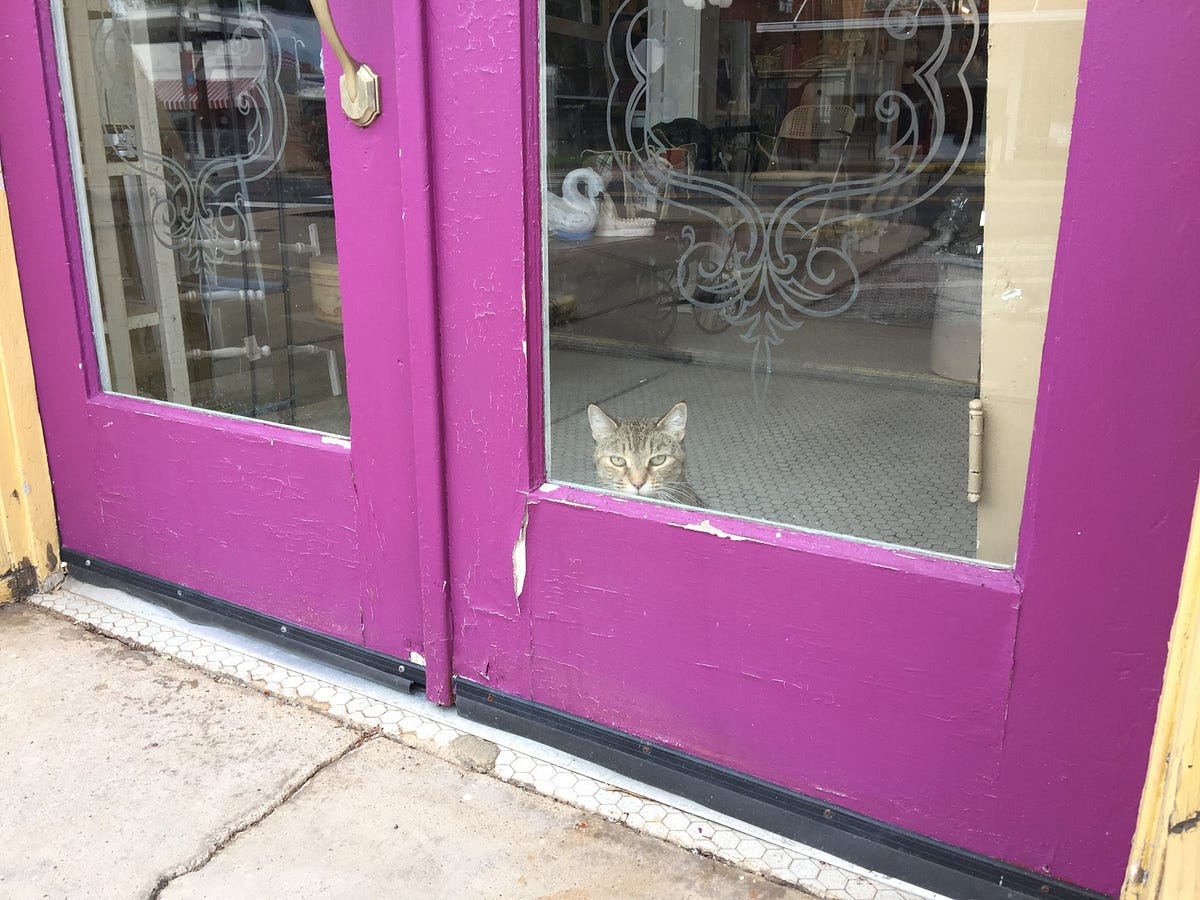
Distrustful Cat wonders who is at the door — Photo by Terrye Turpin

I’ve legally changed my name one time. When I married my first husband, I took his last name, and it has stuck through a divorce and a second marriage. Turpin is unusual enough, but my first name is the one that strikes fear in the heart of coffee shop baristas and medical office receptionists.

“Is that with an ‘I’ or a ‘Y’? they ask.

“Just spell it like a normal person would and then add a crazy ‘e’ on the end.”

I’ve heard them try to pronounce my name as two separate words — ’Ter’ and ‘Rye’, like the disembodied electronic voice that calls out directions on my phone. After I correct their spelling or pronunciation, the person asking will remark something like, “Oh! How did you come up with that?”

“You can blame my mother,” I’ll reply.

She’s the one who tagged me with that name, and it never occurred to me I could change it.

Besides confusing grocery store cashiers, fast food clerks, and telemarketers, my name kept me from purchasing a variety of mass-produced personalized mugs, pens, pencils, bracelets, and plastic souvenir license plates. They mocked me with every alternative spelling of my name — there were Terri’s and Terry’s galore, but not a single one ever spelled my name like my mother had. If every parent had been like her, a whole generation of Chinese factory workers would have been out of work, with no one to buy all the cheap plastic goods emblazoned with names that ended without unnecessary letters.

I was in junior high school when I asked my mom how she came up with the spelling. She got a smug look on her face as she explained.

“Back before you were born, I told your Aunt Judy I would name you Terrye, and she told me that was a boy’s name. But I spelled your name with an ‘e’ on the end, and that’s a girl’s name.”

I pointed out to my mother there were four others in my school, three girls and a boy, with my name. None of them ended with ‘e’, two of the girls ended their name with an ‘I’ and the boy and one girl were Terrys.

“Exactly,” my mother answered as though I’d proven her point. “Then when Judy had her youngest boy, she named your cousin Terry without the ‘e’!”

“Wait, who are you talking about?”

Until that moment I hadn’t known my cousin and I shared the same name. My cousin Bun had the misfortune to have two older sisters, who spoiled their baby brother and awarded him the nickname Honey Bun. They shortened that to Bun before his second birthday. No one in our family called him anything else. He even went through the Marine Corps as Bun.

Disappointed Self Portrait of the Author

The day I finalized my divorce I decided to pick up a copy of my birth certificate while I was at the courthouse. I wanted a passport, in case I might need to flee the country or take a cruise. I filled out the form to request the copy and handed it to the clerk behind the counter. She glanced at me over the top of her gold framed bifocals and asked if I had identification. I handed her my driver’s license, and she glanced up at me and said, “Oh, that’s an unusual spelling, how do you say your name?”

“It’s just Terrye,” I answered. She turned and tapped on her computer keyboard, then turned with a frown.

“I found a birth certificate with your parents’ names, and on your birth date, but the child’s name is different.”

Did I have a twin somewhere that I didn’t know about? Had they switched me at birth with some other child?

“Do you still want the birth certificate?” The clerk waited for my answer.

“What name is on it?” I found my voice to ask.

The clerk paused as she squinted at her computer screen. “The name is the same as yours, but there’s no ‘e’ on the end.”

I stood there dazed as I handed the clerk my payment and waited while she printed out an official copy of the birth certificate for this unknown person, this girl child who had not been burdened with an extra ‘e’. Visions of long lines of personalized gadgets and doodads marched through my vision when she placed the document in my hands. There, on the first line — my name, Terry, with no ‘e’. Where had it gone? Had some misguided or careless clerk dropped it? I looked further on the form, and there was the missing ‘e’, stuck on the end of my middle name! Renee with two ‘e’s!

I haven’t finished the passport application. I’m afraid to show up with a birth certificate with my name misspelled. They’ll shuffle me off to some bare room to be questioned by a branch of the secret service dedicated to grilling people who misuse the alphabet. I picture men in suits with square, solid names like Mark and Fred who would glare down at me and ask how I wound up with someone else’s birth certificate.

“Blame my mother!” I will cry out in vain while I hope they don’t notice the extra ‘e’ on the end of my middle name.

The Chicken Dance

Photo by Terrye Turpin

I’d been sick with a cold, and in case I didn’t recover in time for the weekend, Andrew and I cancelled the camping trip we had planned. Back then we were still in the early stages of dating when broken plans required a spectacular replacement. He asked me what I wanted to do instead of spending the night shivering in the woods, and I offered up a polka band.

“Brave Combo!” I said, as I hooked my thumbs in my armpits and flapped my arms up and down.

“What is that?” he asked. “Do you still have a fever?”

“Chicken dance!” I said. “Don’t tell me you’ve never done the chicken dance?”

“I’m afraid I’m not much of a dancer,” he answered.

I explained that the famous polka band Brave Combo would be performing in a nearby town, Grand Prairie, during the street festival that weekend. When I added “You can sit out the dancing if you want,” Andrew agreed the festival would be a fine alternative.

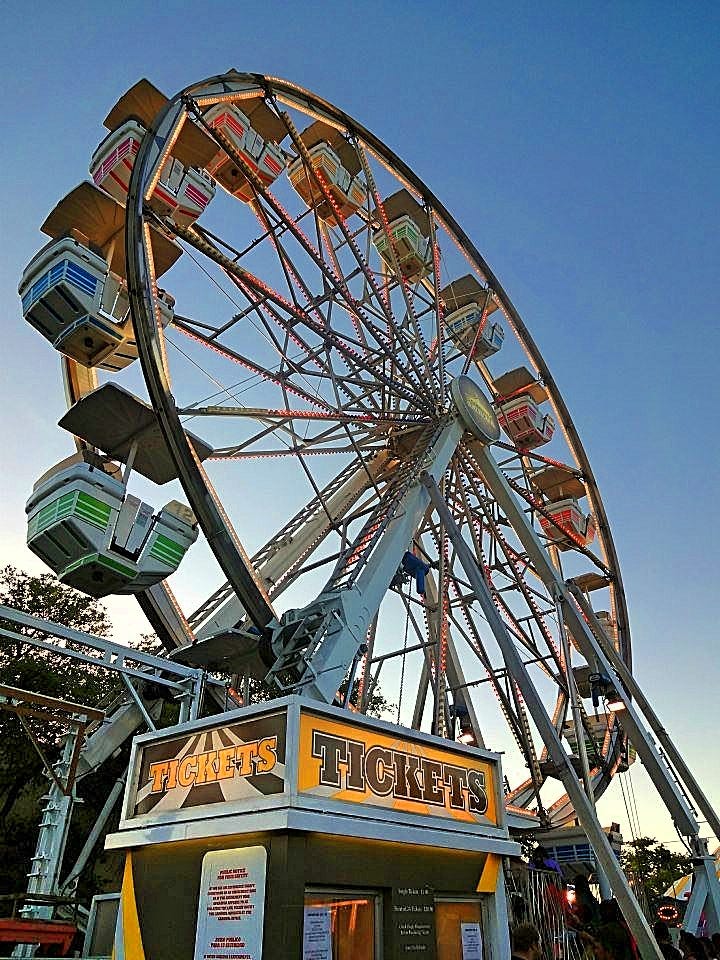
We arrived at the main street and located the stage where the band would perform later that evening. Drawn by the drowsily rotating Ferris Wheel and the sugar scent of cotton candy we ambled over to the carnival games. We stopped at one game that offered the chance to win a goldfish or a hermit crab. Dozens of glass bowls and cups sparkled on a plywood tabletop while the game operator, a grandmotherly looking woman wearing a canvas apron, bounced a white ping pong ball on the railing surrounding the playing area. Occasionally she flipped the ball over the table where it bounced through the bowls until, with a last jitter, it came to rest like a round egg in a crystal nest.

“Hermit crabs!” Andrew leaned over the tank on display at the front of the game booth where dozens of the crustaceans, housed in neon bright painted shells, crawled over each other. Several of them seemed to be waving at us, their tiny claws raised in a happy salute, so I put down five dollars for a basket of ping pong balls and we went to work. Five dollars later we had landed one ball in a glass bowl, earning us a coupon we could redeem for a plastic baggie of water with a live goldfish.

“If you want to keep trying, you can trade four goldfish for a hermit crab,” the helpful operator of this game suggested.

“Should we try for a hermit crab?” Andrew asked.

“I should probably tell you about my history with hermit crabs,” I replied.

Photo by Andrew Shaw

When I was twelve years old, my family spent a long summer weekend in Corpus Christi. The three of us, my mom, my dad, and me — spent those lazy days strolling the beach, picking up shells and storing them in a five-gallon bucket, the sort you could pick up at the hardware store and might have once held paint. At the end of the weekend we snapped on the lid and the five-gallon bucket rode home to Dallas in the trunk of the car where it stayed throughout the four hundred and fifty-mile, seven hour drive in hot summer heat. At home at the end of our journey my dad opened the trunk, and we discovered the shells were inhabited by hermit crabs. Once alive, they were now well steamed.

We had to air out the trunk of that car for weeks, and it took me ten years to be able to look at a plate of seafood. I still feel a twinge of guilt whenever I walk past the lobster tank at Central Market.

When I finished the story, Andrew sighed, and we gave our goldfish coupon to an excited child and her not so enthusiastic mother. As we walked away, I hummed my own version of the chicken dance song–“I don’t wanna be a chicken, I don’t wanna be a duck. Please don’t lock me in the trunk, nana nana nana na.”

We shared a snack of popcorn and made our way toward a booth with rows of multi-colored balloons arranged as a backdrop behind a low wooden counter.

“Darts!” I stepped up, eager to play. I love a game where there might be a risk of physical injury in exchange for the chance to win something.

“A guaranteed prize every time!” The man behind the counter shouted as we arrived. One of his eyes tilted downward, and I wondered if this could be a dart related injury. But he held out to us soft vinyl balls, not sharp pointy darts.

“No darts?” I asked.

“No,” the man replied, “But we got this nail behind the balloon, so all’s you got to do is hit it.”

He stepped over and slapped the nearest balloon, which obligingly popped and revealed the sharp, rusty nail behind it. Rusty nails made a fine trade-off for darts, so I nudged Andrew and he offered up a five-dollar bill to the operator.

“Oh! You don’t pay until you win.” The man shook his head and stepped back as though Andrew were handing him a snake. Two throws later we had popped one balloon and scored a toy stuffed goldfish the size of my palm. I shrugged and turned to walk away.

“Wait!” The operator held out another three balls to Andrew. “Keep throwing, and if you don’t hit anything you don’t have to pay.” The man shrugged, his wayward eye winking. “You only pay if you win.”

While I counted on my fingers the cost of the balls so far, Andrew tossed and hit two more balloons. The carnival operator held up his hand. He looked around as though about to impart a government secret.

“Okay, you hit one more balloon and you win the medium sized prize.”

I clapped until the man continued, “And you’ll owe me twenty dollars.”

I tried to decide whether to take my stuffed goldfish and run, and while I hesitated Andrew threw the last ball, popped a balloon, and earned himself the prize of handing over a $20 bill for a stuffed toy made by third world child labor.

Andrew, a good sport, just looked slightly pained while he paid the man and I picked out my prize. The giant fluorescent yellow bananas required a forty-dollar commitment. I wavered between the glittery cobra with jiggly eyes, and the stuffed toy lemurs with bright, fuzzy tails.

“I’ll take the white lemur with the orange striped tail,” I said.

Over the calliope of carnival music, I could hear the strums and toots that signaled the band warming up, so I suggested we go by the car and put the lemur up for safe keeping. His little stuffed paws seemed to grasp my hand in trust and the black stitching making up his mouth smiled up at me like Mona Lisa. I patted his soft fluffy tail and settled him onto the back seat of the car. The glimmer of carnival lights reflected in his big orange plastic eyes as they twinkled back at me.

“I really like this lemur,” I told Andrew.

“I should hope so,” he replied.

“You think he’ll be okay here in the car?”

“Oh, I don’t know, I’d hate for someone to see him and break a window to get in. Better put him down on the floorboard.”

“But not in the trunk,” I replied.

“Oh no, never in the trunk.”

I moved the overpriced but not undervalued lemur to the floorboard. Andrew and I held hands as we joined the revelry near the stage. The saxophone called, and the trumpets joined in while Andrew took a seat at the picnic tables set up around one edge of the parking lot. I smiled and waved as I joined a ring of strangers and danced the chicken dance under the lights from the Ferris wheel.

©2019 Terrye Turpin

Photo by Terrye Turpin

The God of Poop

The Dublin Bottling Works — Home of the original Dr. Pepper and definitely not a clear liquid. (Photo by Terrye Turpin)

At my last physical my doctor mentioned it had been five years since I had a colonoscopy.

“That long, huh? Gee doc, the whole experience was so pleasant it seems like only yesterday.”

Every time I light a candle in my bathroom, I feel like I’m setting up an altar to the god of poop.

I successfully delayed the colon conversation by mentioning my cholesterol. I’ve found as I grow older I can deflect almost any uncomfortable medical inquiry by bringing up another body part.

The first time I had a screening colonoscopy it took my doctor three years to convince me. She seemed puzzled that I continued to dodge major illnesses, so I felt I owed it to her to try one more test to see if we couldn’t find something. I called to make the appointment, and they told me I would need a designated driver to chauffeur me home after the procedure. Because I had spent 30 hours in labor with him, I nominated my oldest son, Robert. A few days before the big event he accompanied me to pick up the aptly named Super Bowel Prep Kit at the pharmacy.

“That will be $73,” the cheerful cashier said as she rang up my purchase.

“Holy crap!” I said. Robert laughed behind me.

I felt that for $73 the stuff should come with a sommelier, someone to uncork the bottle, swirl the liquid around in a glass, and remark on the bouquet. Reluctantly I paid for the purchase with my rapidly depleting medical flex spending card and we left with the kit — two 8 ounce bottles of clear liquid that each had to be mixed with another 8 ounces of water and then chased with yet another 16 ounces of water within an hour.

On the way back to my apartment I held up a bottle. “I wonder what it tastes like?”

“I bet it tastes like ass,” said my twenty-eight-year-old son with all the smug self-assurance of someone at least two decades away from having to drink 32 ounces of ass flavored liquid himself. We tried out different names for the drink — “Turd Tonic”, “Poopy Potion”, and finally decided the winner was “Caca Cola.”

The instructions for my prep assured me I could have all the clear liquids I wanted during the process. I enthusiastically mixed up a dozen servings of lemon and pineapple Jello. Red gelatin was discouraged in horrific detail. I discovered all the clear liquids I wanted were considerably less than the amount of clear liquids taking up room in my refrigerator.

The actual prep went as expected. I took the advice found on several internet sites and bought adult diapers to wear during the experience. They worked so well I wondered why I didn’t wear them all the time. Robert stayed with me in the beginning but when the real fun began, he left for his apartment.

“I’ll see you tomorrow!” I called out from behind the bathroom door.

The pharmacist had warned me that the prep was “very effective” and by the end of the second dose I had to agree. My colon was so clear the doctor could probably see all the way to Cleveland.

I couldn’t have anything to eat or drink the day of the colonoscopy and this worried me before I understood that by the end of the first day I wouldn’t want anything to eat or drink on the second day.

The morning of the procedure Robert strolled into my apartment. He wore an Iron Maiden t-shirt featuring a rotting corpse on the front.

“I’ll drive on the way there,” I told him.

When we arrived at the clinic I checked in while Robert discovered they didn’t have Wi-Fi in the waiting room. A smiling nurse escorted us back to a little room and I met with the doctor who would perform the colonoscopy. He looked slightly older than my son and had very nice hair.

“Awesome t-shirt dude!” he said to Robert as he flashed the metal sign and they slapped hands.

The doctor briefly explained the procedure and then a nurse brought over a hospital gown and a brown paper bag. She told me to take off all my clothes and put them in the bag.

“They’ll call when I’m ready to leave,” I tossed Robert my purse and phone as he bolted out the door.

After I stuffed my clothes into the paper bag, the nurse took a black marker and wrote my name on the outside, just in case they needed to use it as evidence. I hopped onto the narrow hospital bed as the anesthesiologist came in to meet with me. He also had nice hair and a lovely smile. He looked and sounded like the actor Antonio Banderas.

“How are you feeling?” he asked as he placed his hand on my arm. He had very warm hands.

“I’m okay,” I responded, with as much confidence as I could while my bare ass stuck to the sheet covering the bed.

“Don’t be nervous, I promise you won’t remember anything about the procedure. You will just have a little nap now.”

I smiled up at him from the bed and tried not to look nervous, despite his being one of the most handsome men to see me half naked. He kept his warm hand on my arm as he helped me turn over on my side. Then he bent down to gaze into my eyes and ask, “Do you have any loose teeth or dentures?”

My doctor came in and fussed around with something behind my back as he hummed what sounded suspiciously like “Run to the Hills”, complete with shredding guitar solo. I no longer felt nervous, I felt old and tired as I fell into the promised nap.

I had read all about the unpleasantness of the prep but what no one mentioned was how wonderful were the after-affects of the sedative they give you. I woke up to the sound of “Slow Ride” by Fog Hat playing on the room’s sound system, which was appropriate since I hadn’t felt that stoned since 1975.

“How are you doing?” asked the nurse as she took my arm and helped me to sit up.

“Wow,” I replied.

“Would you like a drink? We have Coke, Dr. Pepper, and Sprite.”

I chose a Dr. Pepper, and when the nurse asked if I wanted a regular or a diet drink, I replied, “Oh, I want a REAL Dr. Pepper!”

When Robert arrived to pick me up, I was still enjoying my not-clear drink. The nurse warned us “Go straight home. No shopping and don’t make any legal decisions or sign any documents today.”

“Can I take my Dr. Pepper with me?” I asked.

On the way home I buckled into the passenger seat of the car, propped up against the door, and enjoyed the rest of my soda while Robert drove with his usual reckless abandon. The drugs were still kicking in, so I didn’t mind when we charged through yellow lights and swerved around corners.

I wanted to make some profound comment on how wonderful it is to have a family, and how much I loved and appreciated him. Tears welled up in my eyes and I spoke in a hoarse voice.

“This is the best Dr. Pepper in the entire world.” I reached over to pat my son’s arm.

“Those must be some fantastic drugs, Mom.”

We continued on towards home, where we would listen to Iron Maiden on the stereo, watch television together, and have anything we wanted for dinner, including six or seven servings of pineapple Jello.