The story I’m sharing tonight was my entry for the second round in the NYC Midnight Scary Story contest. I didn’t advance to the finals and I’m a choosing to look on that as okay news as this means I now have the weekend free to work on the novel that I’ve started.
I received some good feedback from the judges, and I considered whether I wanted to go in and re-work the story to submit somewhere. But I then decided that it would just be one way of putting off the hard work of novel writing.
The prompts for this story were: burial, skipping a meal, and a couponer. I do love the prompt based writing contests, as they are always a challenge to creativity. And now, here is the story in all its unedited glory. Enjoy! (or not – this one’s a bit dark)
Die Hungry
The line of people wound through the cemetery. At the edge of the graveyard, a backhoe idled. Hayla shuffled forward, clasping her vouchers. Armed guards strode beside them, like wolves stalking prey.
“It’s fine weather for Parting Day,” the bearded man in front of her said. He grinned, revealing rotten teeth.
Shrinking back, Hayla nodded. Was this his mandatory age of disposition? She had signed up on her fiftieth birthday, five years early, to gift the unused time to her daughter.
The man leaned close enough she could smell the onion stink of his body odor. “I heard they don’t embalm or cremate folks so they can test whether the virus is still around.”
“Don’t care,” Hayla said. “Better to be buried with a full stomach than die hungry and rise as a ghoul.”
“You think this is enough?” The man held a single orange ticket, the color of the free government vouchers. Hayla had five meal coupons, one in each color, collected in preparation for today. A full digestive system halted the disease.
She turned, eager to glimpse the feast table. The scent of roasted chicken drifted through the air. Her stomach rumbled. She shouldn’t have fasted yesterday, but she wanted to gorge today. She swallowed, her mouth slick with saliva.
“Get back!” One of the armed men shouted. Across from the queue, a dozen people, men and women, fought against the ropes binding them. The unfed. Hayla shivered. Buried under concrete, unable to claw your way out. The group struggled toward the feast line.
“Go!” A guard pushed Hayla into the bearded man.
Screaming, the bound group surged into the queue. Hayla tripped, falling hard on her side. A large man landed on her, crushing her breath. She rolled, pushing the man away.
Gunfire thundered, bullets thudding into victims. Hayla crawled across the grass, shuddering as people fell wailing around her. Within seconds it was over. Hayla staggered to her feet. She ran trembling hands down her body. Her meal coupons were gone.
She grabbed a guard. “I’ve lost my tickets!”
“Sure. And I’m the pope.” He pulled her toward a pile of bodies.
A bulldozer roared, scooping up the fallen. The guard raised his gun.
Hayla woke, lying cold in absolute darkness. Something soft and wet pressed her cheek. Someone moaned. She grasped their arm and pulled it to her mouth. Hungry. She was so hungry.
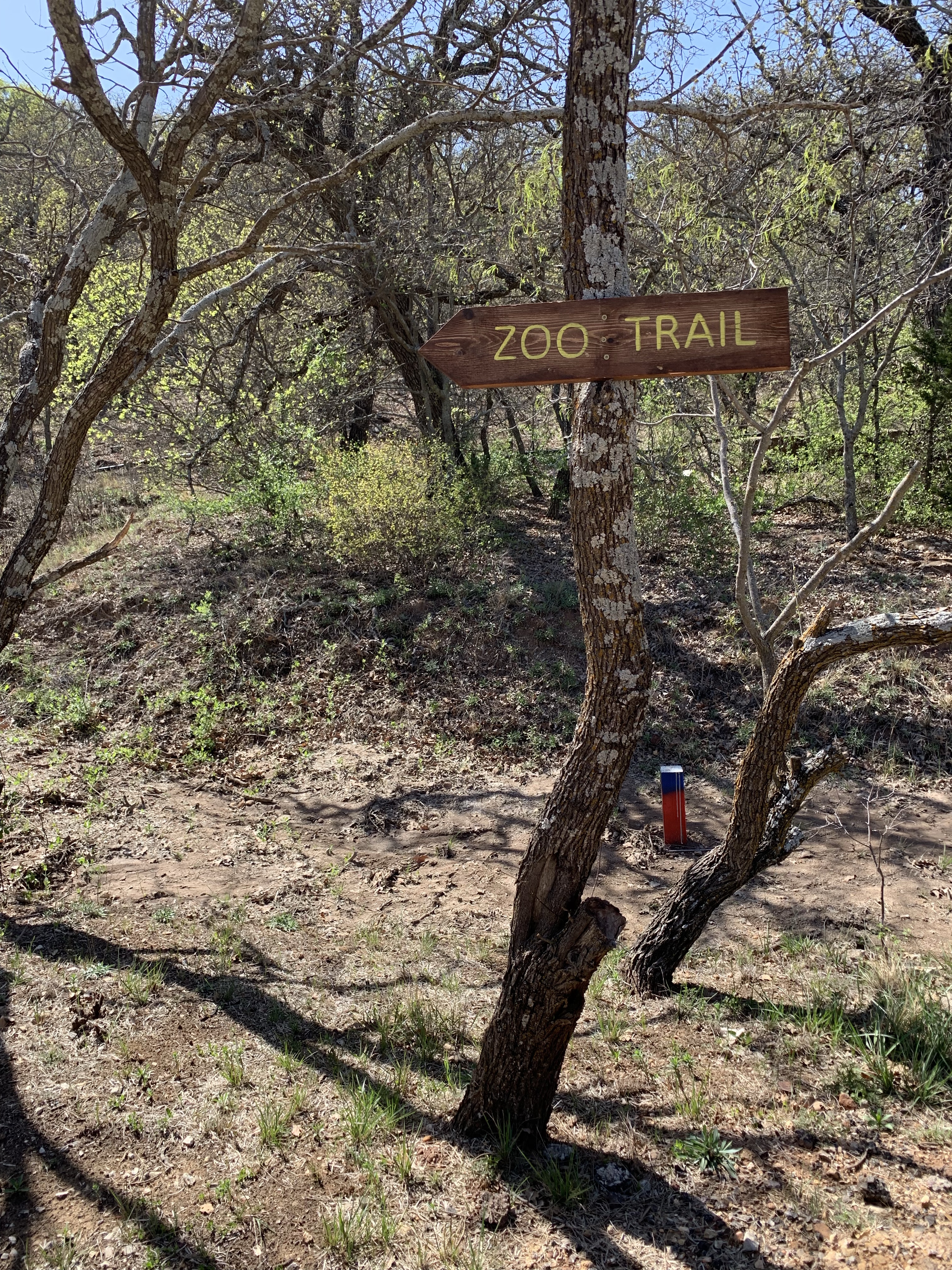
A sign on the trail at the old Cisco zoo. Photo by the author
One of the most common questions that authors get asked is some variation of “Where do you get your ideas?” For most writers, the answer is that we find them in our everyday experiences. This includes people who pen tales about ghosts, demons, and dragons. We don’t encounter those in real life, but we run across settings or objects that spur stories. Stephen King was inspired to write his novel The Shining after a winter stay at the Stanley Hotel in Estes, Colorado. The hotel’s isolated setting and a nightmare about his son gave rise to the plot of the horror story. And a very good one it is.
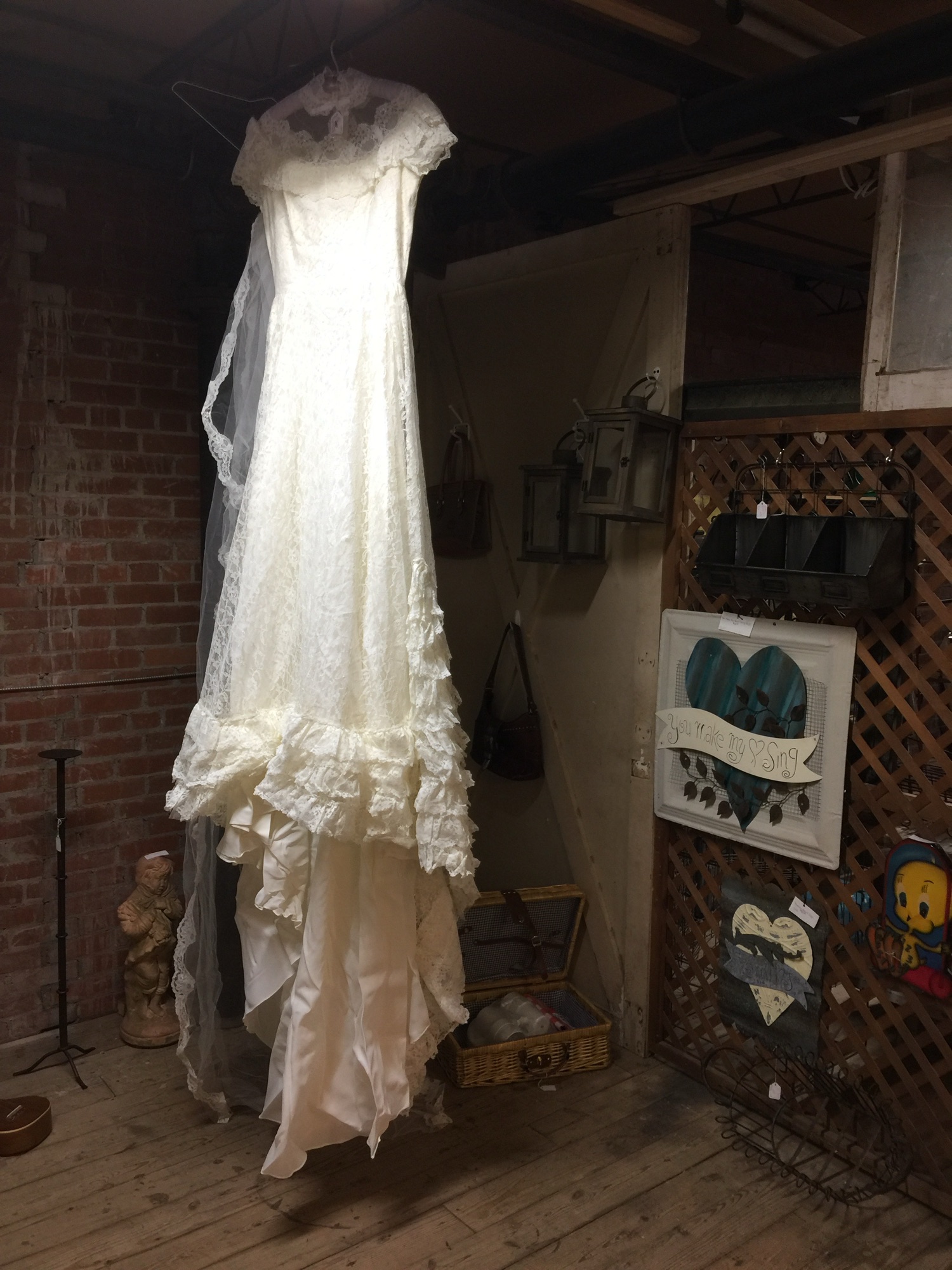
Not a ghost, but a ghostly garment for sure. Photo by the author.
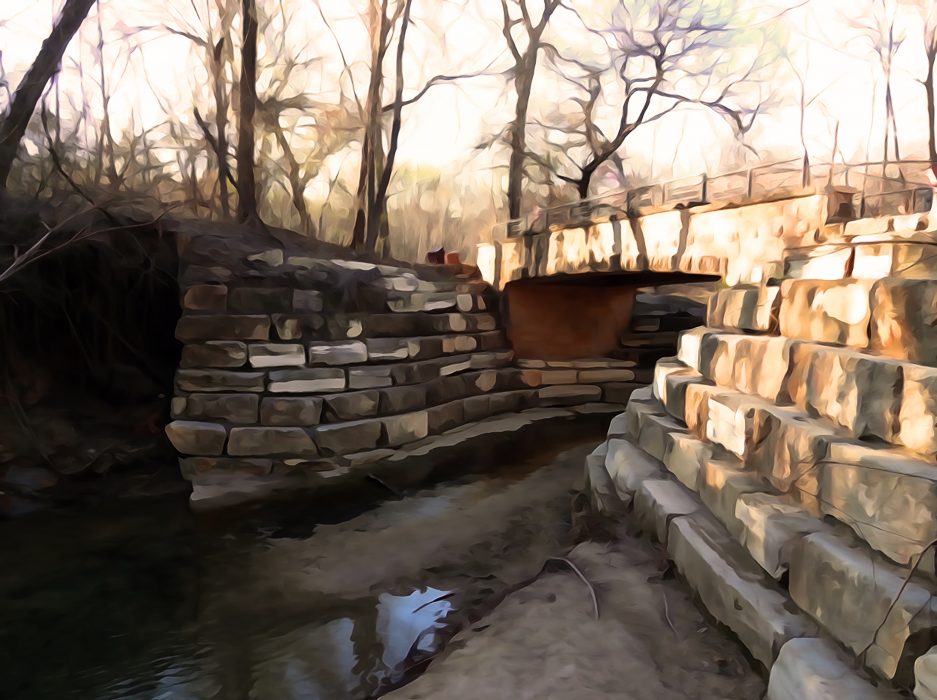
A couple of years back, my husband Andrew and I visited the abandoned zoo trail in Cisco, Texas. I’ve got a separate post about that visit – you can find it on the Road Trip tab and read about it if you’d like. Strolling through that place I felt it would make a great setting. I filed away the memories and images to recall at some later date. They came to life in the Spring 2025 Writing Battle writing contest. I received the prompts “Small Town Secrets”, “Zoo”, and “Rich Aunt.” The minute I saw “Zoo” I knew where to set my story. Once I placed the characters in that abandoned zoo I found the secret that they were keeping.
There’s a story waiting inside this room. Photo by the author.
Getting words on the page is the hardest step for me, but the contest had a deadline so that gave me motivation. I ran my first draft through the ProWritingAid app to polish the grammar and eliminate most of the passive voice. After one last edit, I finished the story and submitted it to the contest. It didn’t win any prizes. However, I received some useful feedback from the other contestants. The trick to a good story is that it’s not the writing but the rewriting that makes it stand out. After editing the draft that I had submitted to the contest, I took my pages to my writing group and got their feedback. Then, I submitted the story to the Flash Fiction Magazine’s contest. It didn’t win there either, but one of the editors emailed me afterwards and offered to publish it in the magazine. With some edits, of course. I said yes and off we went on the last round of revisions.
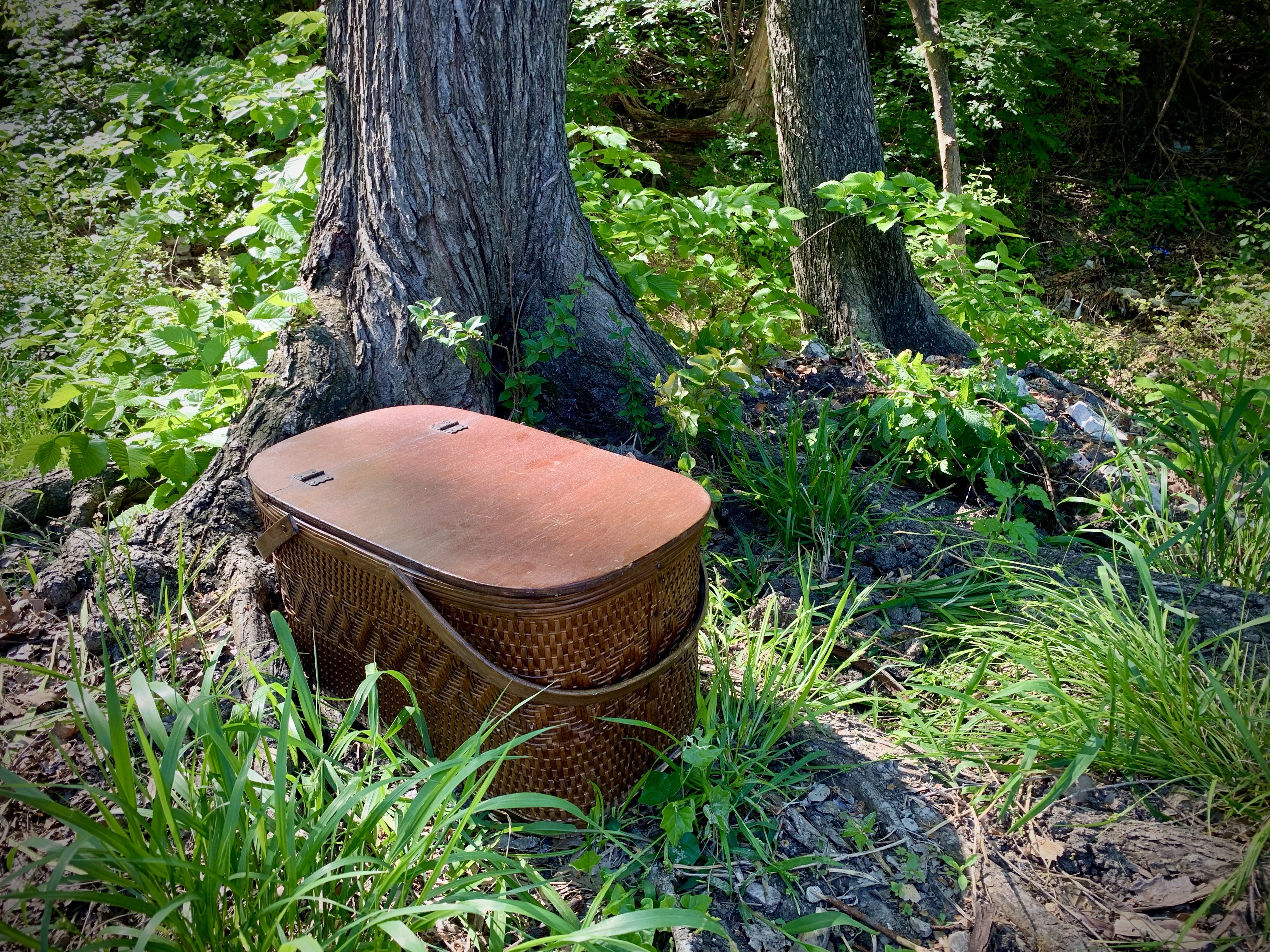
When we encounter haunted objects, there’s story waiting. Photo by the author.
My story, All We Have Abandoned, went through at least six rounds of editing before finally being published. Here is a list of some things that were changed through that process.
The title went from Forsaken but not Forgotten to the current one – All We Have Abandoned. I think the second title brings out the emotions felt in my trip to the old zoo and also fits the plot of the fiction piece better than the first title.
Some of the early readers mentioned that they couldn’t picture the point of view character. I realized that I hadn’t mentioned a gender or even a name for this character until past the halfway point in the story. Way too late – if you don’t introduce the main character early, readers will form their own idea of who that person should be. This can be jarring if they get the wrong picture of them and have to adjust later. I moved the narrator’s name up to the first word in the first sentence and added the phrase “no longer a little boy” as a second reminder of his gender.
I got rid of most of the “rich aunt” details that I had to include in the contest story but kept a couple of things about her character. She wears rhinestone-studded sunglasses and carries a cane with a silver handle. Those details I think will allow the reader to imagine her and also no a little bit about her personality.
My original draft included a full paragraph of back story about the zoo history. Fascinating stuff to me, the author, but not so interesting to readers who just wanted to get into the story. Cutting those lines allowed me room to add a scene where the main character encounters someone in the past.
Speaking of the past, I had a problem with tenses. There’s a flashback while the characters stroll through the zoo, but I wrote almost everything in present tense. Some of my early readers were confused about the timeline until I fixed that problem.
I made a small change to the ending, substituting one word for two in the last sentence. In general, I think it is always a good idea to cut words and this one change gave the story more impact and an ending that will stay with the reader.
Now, if you’d like to read the final, published story, here’s the link to the post on the Flash Fiction Magazine page: All We Have Abandoned
This story is one I submitted to one of NYC Midnight’s writing contests. I don’t remember the prompts, but they had to be something amusing to result in the following tale.
The Cook in the Kitchen
Betty Norman held the dusty cookbook angled toward the sunlight spilling through the thrift shop’s window. Her husband Eustace tromped up behind her, his arms filled with a dozen mildewed copies of Popular Mechanics magazines and five dull-brass cabinet knobs. He propped his chin on her shoulder as she traced the spidery handwriting in the margins of the cookbook. Betty flipped through the yellowed pages. She tapped a brown stain on the cover, shaped like the state of West Virginia. “I bet there’s good recipes here.”
Smiling, Eustace agreed. “This one might do the trick.”
At home, she stashed her purchase between a worn Fanny Farmer cookbook and a hardcover copy of The Joy of Cooking. The shelves on the bookcase sagged beneath the weight of thousands of recipes. Despite all this instruction, Betty had never grilled a steak she couldn’t burn to bitter charcoal, had never baked a cake that rose above the batter. If she put eggs on to boil, the water would simmer away until the pan ran dry, without so much as firming up a single yolk. When it came to cooking, she was cursed.
Her mother hadn’t meant to put a hex on her. Betty’s mother had never let her help in the kitchen. Two cooks would spoil the broth.
Later that night Betty woke to the clink of silverware, and the hushed whisper of drawers sliding open. In the dark kitchen she discovered the new cookbook on the counter, surrounded by a dusting of flour. A stove burner blazed blue flame. Betty rushed to turn it off. A pale woman wearing an apron stood reaching for the refrigerator door.
“Hey!” called Betty.
Just then, Eustace stepped into the kitchen and flipped on the light. The woman disappeared. “You fixing a late-night snack?” He pointed to the open cookbook.
“Not me.” Betty shook her head. She picked up the cookbook and shook the flour from the pages. “We brought home a ghost.”
Sighing, Betty pulled a thin, cloth-bound volume from the shelf. She opened it and ran her finger across the bold, block letters scrawled across the margins as she said, “Mom. I need your help again.”
Betty stacked her mother’s cookbook atop their latest purchase. She and Eustace went off to bed, certain the ghost would be gone. Betty’s mother never allowed anyone else in the kitchen.
I’m sharing another piece from a Writing Battle contest. This one had a limit of 250 words. The question I struggle with when writing very short, micro fiction is this: “How do you produce a complete story with characterization, rising and falling action, plot, and resolution when you only have X number of words?” Sometimes I feel like I hit the sweet spot on all those things that make a story a story, and sometimes I just have to be happy writing a vignette.
Vignette: a brief evocative description, account, or episode.
The story below made it to the top 16 in my category, but didn’t win any prizes. My genre was “Summer Fling”, I had to have a character “Bumbling Adventurer” and I had to include the word “Prudent.”
After the contest, I tried to expand the piece and I submitted it to a couple of other contests, only to get it back with the feedback that it wasn’t a complete story. Anyway I like it, so here it is. What do you think? Short story or vignette?
Lantana
Alina rolled through life like a tumbleweed — reckless, never prudent. She wore odd combinations—crimson flowers on an orange shirt and blue striped shorts, as though she dressed in the dark. One summer morning, she braided her sun-gold hair and set off to meet her latest boyfriend, Jay, at the pier.
She strolled across the sand toward a Ferris wheel outlined against a periwinkle sky. After she lost a shoe in the surf, Alina stopped at the gift shop and bought a pair of rubber sandals.
When she found Jay, he held a paper container of fries. His kiss tasted of salt. Holding hands, they weaved past carnival games and their clanging, ringing, flashing lights. A summer season of popcorn bits and peanut shells crunched underfoot. Alina purchased a souvenir cup topped with a plastic dolphin’s head. They shared a pink puff of cotton candy, the hot-sugar stickiness clinging to their fingers. So sweet, before dissolving to nothing.
They paused at a giant wooden track. Overhead, cars filled with screaming passengers rattled past. “Last chance, ride it with me?” Alina asked.
“I don’t do roller coasters.”
She thrust the dolphin cup at him and joined the queue for the ride. At the second hill, the coaster froze at the summit. In the moments before the cars resumed their plunge, Alina stretched her arms overhead. The wind carried a hint of coolness, heralding summer’s end. She searched the ground for Jay. Below, he lifted the cup in salute, or farewell.
The story I’m sharing tonight is from a Writing Battle contest. I like this contest because it is peer judged and each writer gets feedback from other contestants. To make it fair, you read and judge stories that aren’t in the same category as yours. The prompts and genres are always a surprise, and include some crazy combinations. For the story below, my genre was “Military Lampoon” and I had to include the subject of “Justice” and the word “Zealous.” Also, it had to be less than 500 words.
The feedback I received mentioned that the tale didn’t quite meet the justice theme, but I had fun with it.
The War of Roses
Lee Hammond had no quarrel with his neighbor until the crape myrtle incident. He kept silent over the neon dandelions dotting the yard next door, figuring someone who had spent his life at sea wouldn’t understand the complexities of lawn maintenance. Lee’s grass was an immaculate spread of green, like a soft blanket thrown across the ground. Saturdays, at exactly 0800, he zealously attacked the shrubbery, chopping it into uniform rectangles.
He ignored the Navy flag flapping from the man’s porch and ordered a larger version of his own banner—a sparkling white Army flag with gold fringe.
The morning of the crape myrtle massacre, a landscaping truck parked in front of Lee’s driveway. Workers spilled onto the ten-foot-wide strip of grass separating the two homes. Music throbbed from a boom box, accompanied by the buzz of a chainsaw.
“Hmph.” Lee dropped the blind he’d been peering behind.
Lee’s wife folded her newspaper. “You should go over. Introduce yourself.”
He stooped to pet Ike, their English bulldog. “And say what? Why are you cutting down that tree? The one shading my drive?”
“You two have much in common, being retired military.”
Lee grunted and parted the blinds again. “In common? The man has a cat, Helen. I see it over there, in the window.” An orange tabby pressed against the glass, staring at him.
At the end of the day, the lawn between the two homes had been transformed. A squat rosebush sported crimson buds, and pink and yellow zinnias were sprinkled throughout the bed. That evening, while he took the dog out, Lee paced off the distance from his drive to the flowers. He smiled when Ike raised a leg to relieve himself against the rosebush.
Things went on quietly until the morning Ike slipped under the backyard fence. Lee woke to a clamor of shouts, barks, and howls. He raced outside to spot Ike panting in the yard next door. Muddy flower petals littered the driveway and the rose bush tilted half out of the dirt. The orange tabby peered from atop the neighbor’s garage.
“I’m sorry.” Lee grasped the dog’s collar. “Ike never does this.”
“Ike? As in Eisenhower? Commander-in-chief?” When Lee nodded, the neighbor waved at the cat. “Meet Admiral Chester Nimitz.” The neighbor held out his hand. “I’m Jack.”
After securing Ike inside, Lee offered the ladder from his garage. He held it as Jack climbed.
Once they’d rescued Chester, Lee gestured to the ruined landscaping. “Since my dog did this damage, I’ll pay for replacements. And help you replant.”
“I suspect it was a joint operation, Army and Navy,” Jack said. “Half is fair. Why don’t you come with me to the nursery?”
Lee accepted the man’s offer, glad to offer advice on drought and pet tolerant plants. Later, their work finished, he had to admit they made a pleasant view, though he missed the crape myrtle’s shade. Red roses, blue lobelia and white gardenias—a perfectly patriotic compromise.
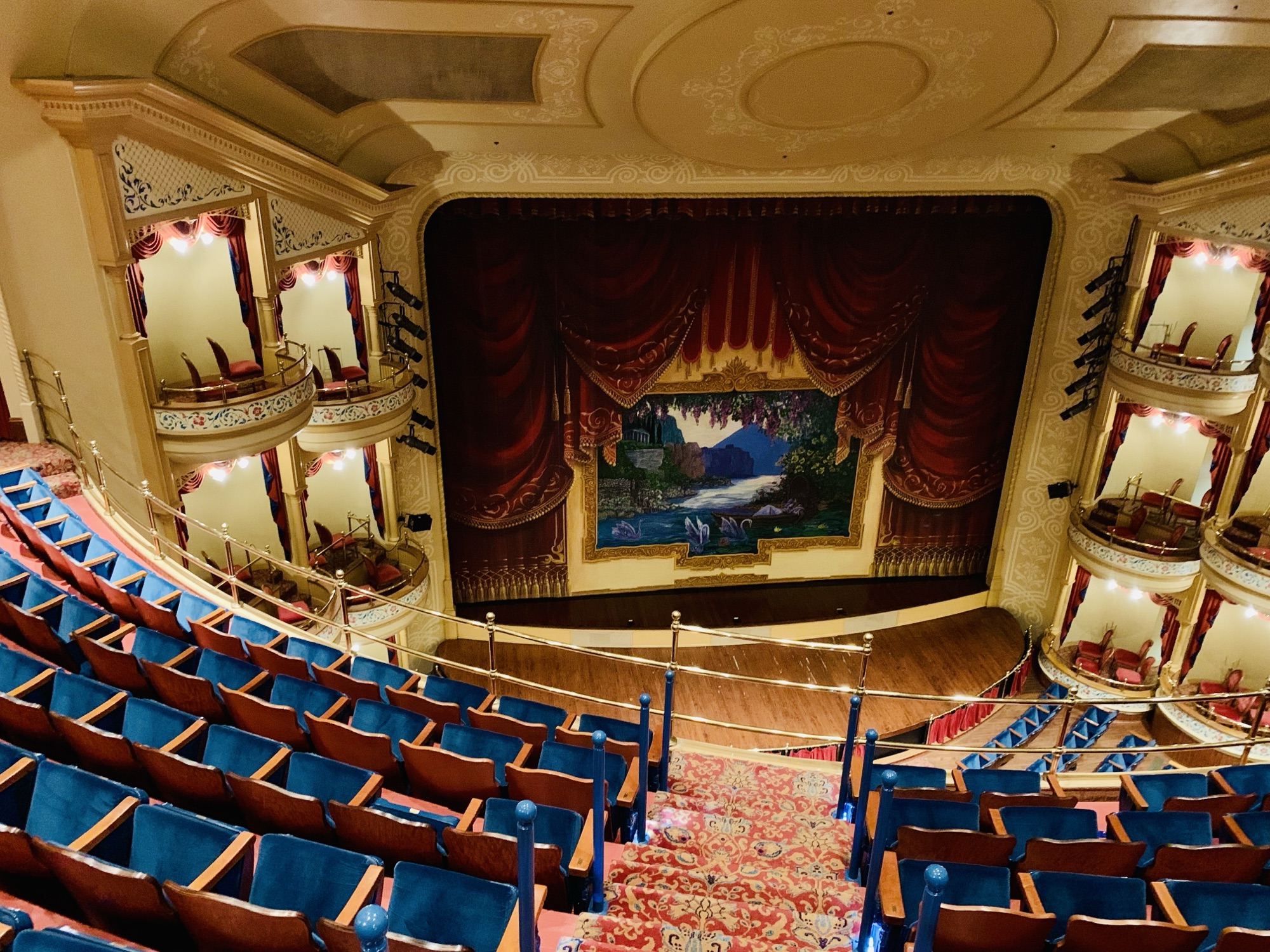
The Grand Opera House in Galveston – photo by the author
Tonight I’m sharing another NYC Midnight contest entry. This one made it through the first round of the Flash Fiction challenge this year. I had to write a 1,000 word or less story in 48 hours in the thriller genre with the setting in an auditorium. And I had to include a ladder in the piece.
Here’s my summary of the story: Magician Mark Ruska and his wife Gigi are involuntary accomplices to a pair of armed assassins during a live show. Working together, the Ruskas perform a dangerous illusion that will be their only escape.
And here is the story, complete in 999 words. (Not counting the title)
The Final Illusion
Every illusion depends on misdirection. The magician, Mark Ruska, paced the stage of the Grand Palace, noting where the set pieces would be during the performance. Everything had to be perfect. On the other side of the velvet curtain, murmurs and shuffling footsteps sounded as the audience filed into the auditorium.
“You done?” The man at the side of the stage motioned with his chin. His hands were busy holding a matte black gun. A red, ridged scar traced across his brow, above eyes the watery gray of a shark’s.
Mark’s wife Gigi stood beside the scarred man. She wore a black tuxedo coat and pants—the outfit matching Mark’s. She nodded to Mark, then wiped her face.
“We’re ready.” Mark scanned the fly space overhead. Heavy sandbags and counterweights hung suspended over a metal catwalk. At the top, accessed by a thin metal ladder, was the wide concrete hallway leading to the rooftop doorway and to an entrance to the theater’s third level.
“We’ll do our job and you guys can go,” the man said.
Mark doubted that. Neither the scarred guy nor the assassin perched on the catwalk had bothered to cover their faces. They would not leave anyone to identify them. Hopefully, their sound and lighting guy, Jim, would stay in his booth, isolated and unknowing of the drama.
At last, the house lights dimmed, the curtains opened, and the show began. The scarred man slid hidden at the side of the stage. Mark wheeled out the large steamer trunk, big as a coffin, that held their equipment.
As they worked their way through the first set—levitation, a transformation illusion, and Gigi’s disappearing rabbit trick, Mark wondered who was the intended victim? The Grand held two hundred seats among three tiers, including six balcony boxes with another twenty-four places. The boxes were positioned directly next to each stage side. Whoever sat in those seats would be at the perfect angle for the catwalk sniper.
A silver-haired man wearing a dark suit sat in the middle box at stage left. Two younger men, both with thick necks and arms that strained the sleeves of their polo shirts, sat behind him. Mark, holding up a chain of clinking triangles, risked a glance at the scarred man. The gunman leaned forward, weapon lowered, his gaze fixed on the man in the box seat.
With a flourish, Mark held the metal triangles up. The chain magically separated into two parts. When the applause faded, he spoke. “For our next trick, we will need a special assistant.” Their usual routine would be to call on a pre-screened audience member. Mark turned to Gigi, hoping their decade of performing this illusion in this theater would allow her to understand his desperate plan. Mentally counting off his steps, Mark rolled the trunk to the position he had noted earlier. Gigi met his gaze, smiled and turned to bring out the folding screen.
“Ladies and gentlemen, please welcome our backstage assistant, John.” Mark waved to the scarred man, motioning him forward. Several beats of awkward silence followed as the man scowled and shook his head.
The next few moments would determine whether they would walk out or perish in the gunfire. Mark assumed they planned to kill their target at the show’s end, hoping the distraction of everyone exiting would cover their escape. Now, some in the audience began to mutter and confused laughter sounded. The silver-haired man half-rose from his seat and looked around. Would the sniper take this as his chance? Mark held his breath, waiting.
Finally, the scarred man strode onstage. “There you are!’ Mark led the man to the steamer trunk. Gigi spun the wooden box, showing the audience the lid and locks. As she helped him into the trunk, Gigi whispered escape instructions to the gunman—instructions he wouldn’t be able to follow. Mark rattled the lock and spoke to cover her voice. “One person goes in, but who will come out?”
Mark leaned to whisper to the man inside. “Listen to the music and wait for the drumroll.” He slipped the lock from its fake, unsecured position and threaded it through the clasp holding the lid closed, then spun the box to show the audience. After he helped Gigi move the screen into place, they walked behind it. The lights dimmed and music played.
In normal times, the audience member would open the fake unlocked panel on the steamer and Gigi would climb inside. Mark would escape the stage by climbing the ladder up to the top and take the door to the third level, reappearing in the audience at the end of the drum roll. It all came down to timing. If they got this right, they might have a chance.
“Go out the back, get security, and call the police.” Mark kissed her. “Don’t look back.”
Gigi squeezed his arm. “I love you.”
The music rose in a crescendo, covering the squeak of the metal rungs as Mark climbed. The lighting changed to dark blue with silvery flashes that looked like stars. All distraction to keep the audience on edge.
When he reached the catwalk, Mark slipped off his shoes and crept toward the sniper. The man remained focused on his target, not noticing as Mark neared.
Four feet away, Mark swung the nearest sandbag in an arc at the gunman. The bag, with its thick rope, knocked the man to the edge of the metal ledge. He grabbed the rope, wrapping his hand around it to steady himself. Mark rushed forward. He pushed the man off the catwalk, then released the counterweight to the bag. The sniper, still grasping the bag, plummeted onto the stage. At the end of its line, the bag jerked to a stop. The sniper fell the last twenty feet—onto the steamer trunk.
The police arrived. An ambulance carted off the handcuffed and injured criminals. Mark looked for the silver-haired man, but he had vanished into the crowd.
Tonight’s story is one of the first that I wrote for the NYC Midnight writing contest. I don’t remember the prompts, but I think the genre must have been mystery or crime. And I do remember that one of the words that had to be used was “surrogate.” Anyway, here it is copied below. I spent more time selecting the photo to accompany it than I did posting the story, so please forgive any editing that might need to be done.
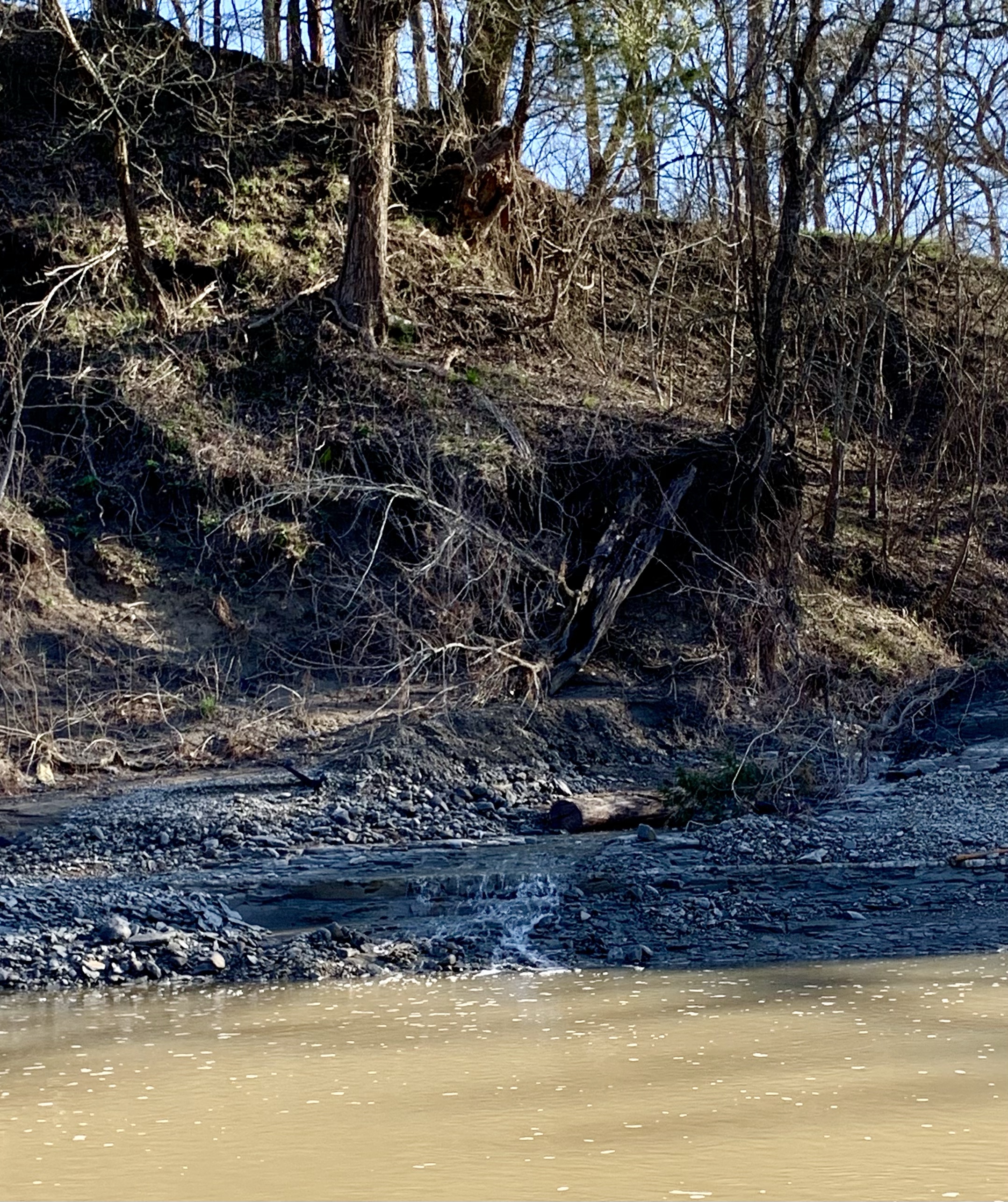
Speaking of photos – I always try to use something either my husband or I have captured. This is harder when it’s a fiction piece. For this story I wanted something mysterious, but most of my landscape shots tend toward picturesque and not eerie. I almost used the one below as the top picture, but decided on one with “water” as the theme. After you read the story, let me know which photo best captures the mood of the tale.
Photo by the author
Blood Over Water
I picked up the hitchhiker a quarter-mile past where our Main Street became TX-86. A rusty pickup blew past where she stood with her thumb out. When his brake lights flashed, I hit my light bar and beeped the siren. The truck kept going. Hitchhiking is legal in Texas, and I wouldn’t have pulled over for just any traveler, but this one looked nine months pregnant.
“Hot for a hike, isn’t it?” I leaned toward the open passenger side window, smiling and hoping the girl wouldn’t bolt. Skittish as a deer, she wavered at the edge of the asphalt. Dark sweat stains circled the neck and armholes of her gray t-shirt, stretched tight across her belly. A black leather purse rested at her feet. She shrugged and tucked a lank strand of brown hair behind her ear.
I pushed open the car door. “Hop in. We can talk about it in the air conditioning.”
“You arresting me?”
“That depends. You committed any crimes?” This earned me a smile. To my relief, the girl eased into the seat beside me.
“Thank you, officer.” She glanced at me, then away. “I’ve never been in a police car before.”
“Good to hear.” I held out my hand. “Chief John Lawson, at your service.”
“Cindy Brinkman.” Her hand was hot and slick with sweat.
“When’s your baby due, Cindy?”
“It’s not my baby.” Her bottom lip quivered, and she turned to stare at the flat West Texas landscape.
I wondered about that, but figured it was best not to push her. “I tell you what, there’s a Dairy Queen in town, has a cold soda waiting.” She nodded, and I put the cruiser in gear and drove off.
Over a pair of cherry Cokes, I learned Cindy was twenty-three, five years younger than my daughter Alice. Cindy lived in town with her boyfriend, Jamie, when he wasn’t working. He stayed in Midland during the week, in a trailer with other oil field workers.
“We had a fight, and I left.” She spread her hand protectively across her stomach.
“He hurt you?”
“Oh, no! Jamie would never do that!” She shook her head, her eyes wide. “It’s just hard, you know.”
“You have someone you can call?”
She rummaged in her purse and brought out a pink phone. “My sister. But my battery is dead.”
“You can use mine.” I went to the counter to order food while she made the call.
Cindy polished off a double cheeseburger and two refills of cola before her sister arrived. I recognized the woman that pushed through the door of the Dairy Queen—she’d made an unsuccessful run for school board last year. Brenda York. Her husband did something in tech.
“What were you thinking? It’s hot as hell and the baby is due any day. Why didn’t you call?” Angry red blotches dotted her face. She swept her arm toward the window, almost clocking her husband, a tall, whip-thin man hovering behind her.
Brenda’s husband leaned across the table. “Carl York,” he said, shaking my hand. “Thank you for picking her up.” Carl had close-cropped black hair—like a military cut.
“Part of the job. I’m glad some good Samaritan called in when they saw her on the side of the road.”
Before Cindy left, I pulled her aside. “You folks go ahead.” When Brenda and her husband were out of earshot, I asked Cindy, “You sure you want to go with them?”
She nodded.
“When things calm down, call Jamie. I’m a father myself, and I know he’ll be worried about you and the baby.”
Cindy gave me a startled look, her eyes wide. “Oh,” she said, “it’s Brenda’s baby.” She pointed outside, where her sister waited, one hand on their SUV. “I’m her surrogate.”
Later that night, while we loaded dishes into the dishwasher, I asked my wife about the surrogacy thing. Barb, my wife, worked as a nurse. I could have looked it up on the internet, but I’d rather someone explain the medical terms in words I could understand.
“There are several ways they can go about it,” Barb said. “The surrogate carries the baby because Mom can’t. Sometimes they use a donor egg.”
“Who’s the father?” I rinsed a plate and handed it to Barb.
“They can use the husband’s sperm, or a donor. Either they fertilize the surrogate’s egg, or if they use the mom’s egg, they’ll fertilize it and transfer the embryo to the surrogate.”
“After that, it’s business as usual? Nine months later, you have a baby?”
Barb laughed. “We hope everything goes as usual. If the implantation is successful, yes—the embryo clings to the uterus and nine months later you have a baby.” She closed the dishwasher and punched the button to start a load. “Now tell me, John Lawson, why the sudden interest in where babies come from?”
I explained about picking up Cindy and meeting her sister and her brother-in-law. “She told me twice it wasn’t her baby.”
“There’s sure to be a contract. She would have to sign away any rights to the child.”
“Why would someone agree to that? Have a baby and give it up?”
“Why does anyone do anything? It’s always for love or money.”
Two months passed before I thought of my pregnant hitchhiker. Labor Day, we had a record of four calls for drunk and disorderly at the RV park. The next week, a grass fire swept up to the edge of town, almost igniting the First Baptist Church.
The night of the grass fire, after our volunteer fire department had it under control, I stopped at the Allsup’s convenience store for a cup of coffee and a fried burrito. A haze of smoke hung in the air, blurring the stars. The heat had broken, ushering in the promise of cool nights in the fall. I leaned against the cruiser, careful to keep burrito crumbs off my uniform shirt. A baby’s wail erupted from the black Lincoln SUV parked at the pump. I recognized the man pumping gas—Carl York. I wandered over.
“That’s a healthy set of lungs. Congratulations.”
Carl grimaced. “Do babies ever stop crying?”
“In my experience, hardly ever.” I peered into the back seat, nodding with approval at the fancy carrier turned backwards to face the seat. I tapped on the window. “Boy or girl?”
“Boy.” Carl hung the hose back in its holder. “I better get going. Only time he stops crying is when the car’s moving.”
“Colic?”
“Yeah. Brenda is exhausted, and I barely get any work done. I’d give anything for a quiet night.” He collapsed into the driver’s seat. I held onto the car door.
“What about Cindy? Can she help?”
“We don’t think that’s a good idea.” Carl tugged at the car door and I stepped back. He snorted a half-laugh. “We gave her the money, and she gave us the baby. Over and done.”
Under the fluorescent lights of the station, his skin looked sallow, like he’d aged ten years in the past month. Lack of sleep would do that. I thought I’d ask Barb if she’d pick up a gift for the baby. Give me an excuse to stop by, check on them. I didn’t follow through, though, and the next time I spoke to them, their baby was missing.
The call came in early on a Sunday morning. Sunrise was a yellow line of promise across the horizon when the police scanner in my den crackled to life. Donna, our night shift dispatcher, called out the code for a missing child. By the time I made it to the York’s house, two of our cruisers sat parked in their drive, lights spinning.
The York’s lived in a sprawling, ranch style home. I met them in their living room. Brenda was wrapped in a pale blue robe. Her brown hair was flattened on one side. Carl had pulled on a pair of loose sweat pants and a t-shirt. He held a heavy-duty flashlight in one hand. As we talked, he tapped the light against his palm.
“Tell me what happened,” I asked them. They’d have to repeat the story later for the FBI field team. I’d called my contact there, and they’d be on the way from Dallas. I wouldn’t wait for them. Time is the biggest enemy in a child abduction.
“I thought he slept through the night. Then when I got to the room…” Brenda broke down in sobs. She took deep, hiccupping breaths.
Carl put a hand on her shoulder. “We heard nothing. Not a sound,” he said.
A uniformed officer stood guard outside the baby’s room. She stepped aside to let me enter, but I stopped at the threshold. I scanned the room. Bright red letters hung on the wall, spelling out the boy’s name, Colton. A framed picture of the baby hung below the letters. He had the flat, formless features of a newborn, topped with a thatch of strawberry blonde hair.
The window curtains over the crib had balloons and rainbows printed on the fabric. The rails on the side of the crib were raised and something white and square lay on the floor. I used a pencil to flip on the light switch. The white thing was a baby monitor.
“Anyone else been in here?” I asked the officer.
“No sir.” She straightened her shoulders and adjusted her belt. “Not since we got here.”
Carl met me in the hallway. I asked him, “Was that window closed last night?”
“Closed and locked.”
“What about the doors? You folks have an alarm?”
Carl shook his head. “I let the dog out the back door last night before I went to bed. I don’t think I locked it after.”
“Was this before or after you put the baby to bed?”
“After,” Carl answered. “Last night, he was fussy. I had to take him out in the car to get him to sleep. It was past midnight when we got back. Brenda was asleep.”
“You see anything on that monitor?” I motioned behind me into the baby’s room.
“Nothing. Not until this morning, when Brenda…” His voice trailed off, and he cupped both hands over his face. “What do we do?”
“The FBI folks will be here later. Right now, we’ll keep things secure, talk to your neighbors and see if anyone noticed anything. We’ll send out an Amber Alert.”
I walked with Carl back to the living room. “Have either of you talked to Cindy?”
Brenda looked from me to Carl before she answered. “You mean this morning? No. Not yet. I should do that.”
After the FBI team arrived, I met with the agent in charge, a tall, square-jawed woman named Twyla Carson, and gave her a recap of all I knew. Agent Carson had steel-gray eyes and a firm handshake. Her suit, despite the five-hour drive from Dallas, looked fresh off the rack. I left the feds at their work and I drove over to check on Cindy.
Her address belonged to a small, wood-framed house close to the Allsup’s where I’d seen Carl and the baby. An apple red Honda Civic with paper dealer tags sat in the drive. Cindy opened the door before I could knock. She stood in the half-open doorway, blocking my view into the house.
“Hello, Cindy. How are you holding up?”
“I’m okay.”
The young woman in front of me looked a world different from the pregnant hitchhiker I’d met three months ago. Instead of a sweat-stained t-shirt, she wore a floral print blouse and dark jeans. I studied her face for signs of tears.
“Is your boyfriend home? If not, it would be a good idea for you to be with family right now.”
“I was gonna go over there, but Brenda said to wait until later.”
“Mind if I come in? I wanted to go over a couple of things. You never know what might help us find Colton.”
Cindy bit her lip and hesitated, but she backed away and opened the door. We walked down a short hallway and into the living room. Empty food containers—pizza boxes, hamburger wrappers and Styrofoam plates—covered the coffee table. A breast pump sat atop one of the pizza boxes. Cindy hustled over and started clearing the trash.
“When’s the last time you saw the baby?” I asked.
“I was over there last night.” She picked up the breast pump. “I’ve been dropping off breast milk. They tried formula, but he does better with this.”
“You’ve done that from the start?”
“I don’t mind it.” She carried the pump into the kitchen and called, “You want a glass of water or something?”
“No thank you,” I answered. “But I’d like to borrow your bathroom.”
“Sure.” Cindy came back into the living room. “It’s right down the hall.”
I didn’t need the bathroom, but it was the best excuse to get a look at the rest of the house. The door to the master bedroom hung open, and I glimpsed an open suitcase laid out on the bed. When I left the bathroom, I stopped in the hall opposite the second bedroom. They’d set this room up as a sort of den. A pair of gaming chairs sat in front of a television.
Back in the living room, I picked up a framed photo of Cindy and her boyfriend, Jamie. The picture showed them standing at the base of a red, sand-stone cliff. Sunshine gave the photo a golden tint, lighting up Jamie’s reddish-blond hair. I handed the photo to Cindy.
“Where are they, Cindy?” I thought at first she wouldn’t answer, but then her face crumpled.
“I thought it would all work out, but after he was born…” She collapsed on the couch. “We’re going to be in so much trouble, aren’t we?”
I called Agent Carson and gave her the address of the hotel where they’d find Jamie and Colton. For the second time, I gave Cindy a ride in my police car. At the station, she told the whole story.
“We already had the money when I lost the baby,” she said. “It was right after the first round. I didn’t go to the doctor. I thought they’d be able to tell at the next checkup and I could pretend I didn’t know.”
But by the time Cindy had her next check-up, she was pregnant. This time, the baby was hers and Jamie’s. They decided not to tell. They had the money—fifty thousand dollars, and Cindy had signed away all rights to the baby. That was the first baby, though. The one that didn’t take. As her due date approached, Jamie pressured her to keep the baby. That was what the fight had been about. That day I’d picked her up.
It would be a mess to sort out. Why did they do it? For love or for money, my wife had said. I figured that was true.
This week’s story comes from an NYC Midnight contest. I had the questionable luck of drawing romantic comedy as my assigned genre, and I had to include a gymnast and the action of being “tech-savvy.” This was part of the short story challenge, and I wrote this one for the third round of the competition. I’ll give myself kudos for making it through the first two rounds, even though I didn’t advance past this one. I did have fun though, and that counts for something.
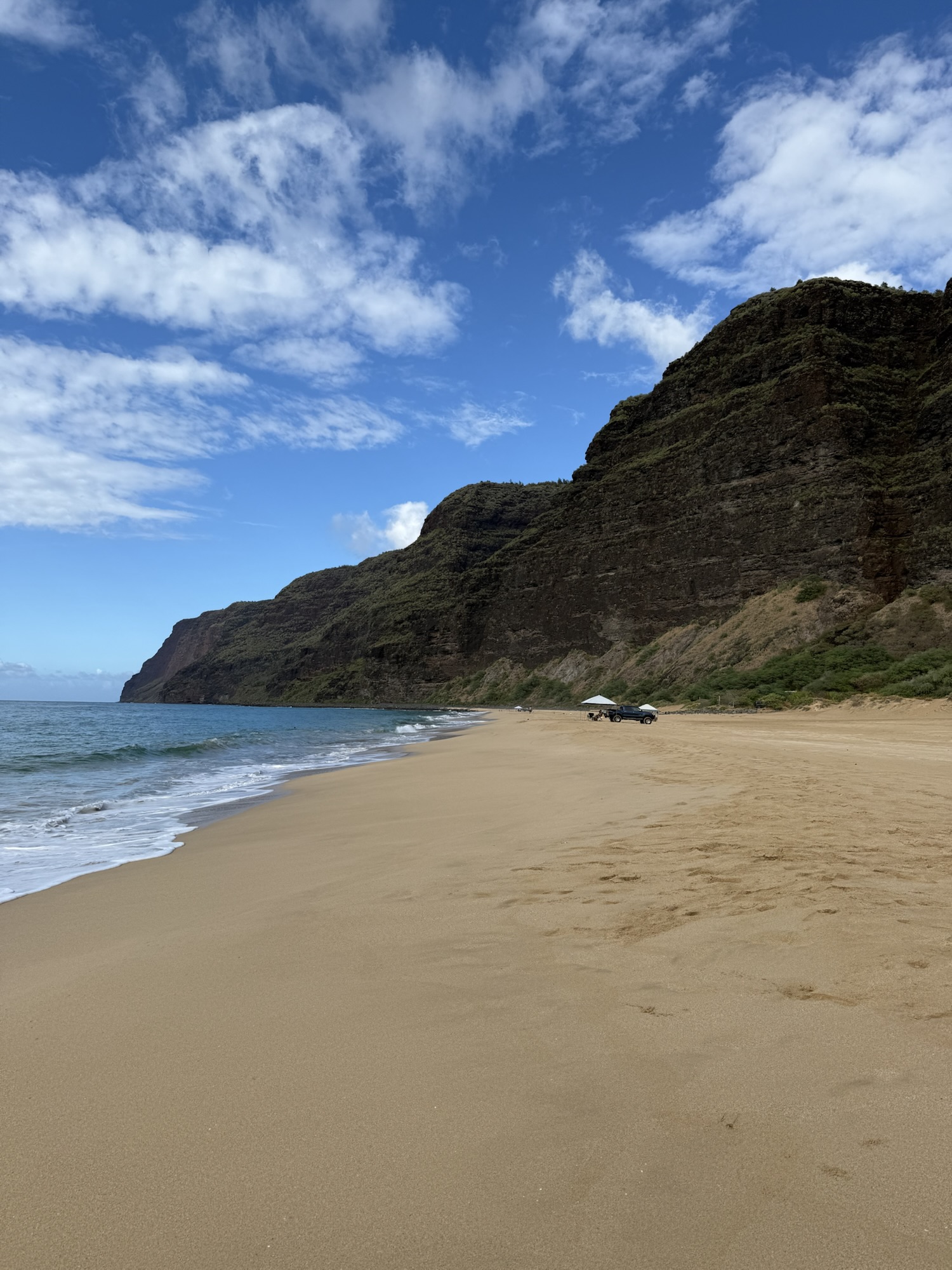
By the way, the photo I’m using to illustrate this week’s story is from our visit to Kauai this year. We stayed at a condo with an ocean view. It was a lovely trip with family and I will share more about that trip soon. For now, please enjoy my venture into the romance genre.
An Unexpected View
Kate Aldridge finally departed (for Florida, not heaven) from her two-bedroom condo in the Park Haven retirement community. Lena Stafford had long coveted Kate’s balcony. The second-floor view of the neighboring nature preserve was perfect for capturing images of migrating birds she could post to her Facebook group.
Lena’s apartment faced the parking lot. From her balcony she watched ambulances ferrying residents off to the hospital or to another permanent destination.
When the condo sale was posted, Lena would be ready. She had her real estate agent on speed dial, her earnest money in hand, and her moving boxes ordered. There were few interested in the condo, as most Park Haven residents were satisfied with smaller places. She could out bid every buyer except one—Arthur McCay.
The week after Kate moved out, Lena met her best friend, Miriam, in the community common room. They sipped wine from matching mugs and worked on a puzzle. Lena wore her usual outfit of neutral colors, blending into the background. A tan canvas fanny pack held her iPhone.
Miriam wore a Hawaiian shirt with pink and orange flowers and a matching headband.
“Here he comes,” Lena said. They had been discussing Lena’s upcoming bid on the condo. She had instructed her realtor to send it over the minute the home listed. One mention of Arthur’s name and the man himself appeared as though summoned.
Miriam tried forcing a puzzle piece into the wrong place. “You’re obsessed with him.”
Arthur, an ex-Olympic gymnast, was a hot catch in the community. Six feet tall, he had silver hair and blue eyes a shade darker than his locks. Lena told herself her interest extended solely to how much money he had on hand. Arthur McCay had founded a lucrative nutritional supplement company, and rumor had it that he had sold it for millions. Lena, a retired software engineer, had considerably less than that in the bank.
“Afternoon, ladies.” Arthur stopped at their table. “Have you seen the cork board?” He held up a hand printed yellow flyer. “I need to post the sign-up sheet for my yoga class.”
“They moved it by the restrooms,” Lena said. “We use a digital bulletin board now. I added it to the Parkview Haven website.”
“I don’t get online much,” Arthur said.
Lena held out her hand. “I can post a sign-up link. What’s your email address?”
“Thanks, but I don’t check it often. You can use my phone number. It’s on the flyer.” He gave Lena the paper and winked at Miriam. “I’ll tack a copy to the cork board, in case there are old-timers like me around.”
“I teach a free internet class—Surfing for Seniors.” Lena tucked the flyer into her fanny pack.
“Oh!” Miriam tugged Lena’s arm. “You could trade – internet for yoga.”
“Sure thing.” Arthur smiled. “There’s a chair yoga class, too. If you want to start with something easier.”
“I’ll keep that in mind.” Lena stuck out her tongue at his departing back. “Start easier. Ha! He should learn something himself.” Why was she so angry? She supposed it was the competition for the condo. It wasn’t fair. Arthur lived in a top floor apartment that already had a view of the woods next door. He didn’t need another place. Lena gulped the last of her wine, then slammed the mug onto the table. “He probably still has the first computer he bought at Radio Shack.”
Miriam leaned forward and cupped a hand next to her mouth to whisper, “I heard he owns a flip phone.”
That Friday, Lena agreed to go with Miriam to the yoga class. She dug from her closet the foam mat she purchased when she signed up for an exercise class on Zoom. That effort failed during the first session, when Lena turned off her camera and took a nap on the mat.
When they arrived at yoga, Arthur was setting up a large boom box. He was dressed exactly like Lena in loose gray sweats and a white t-shirt. Good lord, they could be one of those couples who wore matching outfits.
“I didn’t know there was a uniform,” Miriam said as she rolled out her mat. Miriam wore fluorescent green tights, pink leg warmers and a sweatshirt with the words “Let’s Get Physical” emblazoned across the front.
Arthur popped a cassette tape into the player, and a wave of soft notes and chimes filled the room. “Good morning and welcome.” He turned his blue-eyed gaze to Lena. “We will start with stretching.”
As they worked their way through the poses, Lena relaxed. This wasn’t so hard, and Arthur demonstrated variations of the forms for those who had physical limitations. Toward the end of class, she wobbled getting into Warrior I.
“Try to keep your hips square with the front of the mat.” Arthur padded over to her.
Frustrated, Lena glanced around the room. At least no one was watching her performance.
“Is it okay if I touch you?” Arthur held his hands out, palms up.
Lena nodded yes. His fingers brushed her waist, moving her hips forward. “Drop your shoulders and relax.” With the lightest touch, he started at her neck, and ran his hands to rest lightly on her shoulders.
She exhaled and lifted her hands higher, ignoring the blush heating up her face.
Three days later, Lena rose early, before the heat set in, packed a bottle of cold water in her fanny pack, and headed to the nature preserve. At the entrance, she downloaded a trail map onto her phone. The yoga workout had made Lena realize she spent too much time sitting at her laptop, waiting to hear from her agent. She’d sent over her offer the day before.
Hearing an unfamiliar bird call, she weaved through the brush trying to find the source. Instead, she located a path that wasn’t marked. This track led to a ridge above the creek winding through the park. Where was that bird? She lifted her phone to at least capture the sound on video. Two steps closer to the edge of the drop off, her foot slid in loose dirt and she tumbled, ass over teakettle, down the ridge and into the shallow creek.
“Oh!” Lena cried out, managing a weak “Help.” Her hip ached and her foot was bent underneath her. Whimpering, she untangled her limbs. Ten feet away, her phone buzzed. Moments later, she realized her watch, registering her fall, had called 911. “Oh no.” Lena tried and failed to reach the phone and cancel the call, more humiliated than injured. She crawled out of the creek right before the ambulance arrived and the EMTs insisted on taking her to the hospital.
Four hours of prodding and two x-rays later, Lena was cleared to leave the emergency room. They had rescued her phone also, and Lena tried calling Miriam for a ride. No answer. She could call an Uber, but hated to add the expense. Then she remembered the flyer with Arthur’s phone number. It was still in her fanny pack, where she’d stashed it after posting the sign-up info. She took it out and called him.
Once they arrive back at Park Haven, he insisted on helping her get settled in her apartment. “Is there anything else you need?” he asked.
“I’m okay. No broken bones, but I have a bruise shaped like Texas on my hip.”
“I bet that’s a sight.” Arthur stuttered, “I mean…”
“No offense, it really is something. At least now I know my watch and phone will look out for me if I have another hard fall.”
Arthur gave her a confused look, so Lena explained about the automatic call for help. “That’s interesting,” he said. “Something to think about.”
The next morning, Lena was propped up in bed, resting her hip, when she got the call from her realtor, telling her the condo had sold to someone else. Right after that, her Ring camera alerted her to a visitor. Arthur.
Why was he here? He held a shopping bag. Had he brought her a consolation present? She considered ignoring him, but finally pushed herself out of bed and answered the door.
“Congratulations,” she said. “The condo. You were the winning bid, right?”
“I didn’t buy it. I’m happy where I am.” He shook his head. “Were you bidding on it?”
“I wanted that park view.”
“Oh.” Arthur held up the shopping bag. “I need some help if you have time.”
“Sure. I owe you for the ride home. What do you need?”
He opened the bag and pulled out a new iPhone and an Apple watch. “It’s time to join the twentieth century.”
“It’s the twenty-first, Arthur.”
“Let’s take it one century at a time. I’ve got a good view of the park. Come over and help set up this stuff. We can have coffee on my balcony. Watch the birds.”
Lena nodded. “That’s a good trade.” And maybe a good start for something more.
This week’s story was my first entry into the Not Quite Write flash fiction contest. The challenge includes three prompts. One of the three is what they called an “anti-prompt” where the requirement is to break a named writing rule. For the round that I entered, the rule to break was “use active voice.” The other two prompts were: include the word “crane” and include the action of burning something.
I enjoyed writing the story, even if I didn’t place in the contest I still ended up with a nice little story to post here.
The Magic of Crane Flies
Erin Welch dropped the match onto the brush pile, and with a crackle, the dry tinder ignited. The leaves were burned in the evening, because that’s the way it was always done, as her grandmother had taught her. Leaning against her rake, Erin studied the sparks rising into the dark–orange blooms against the purple dusk. The autumn scent of wood smoke filled the air. Soon, they would be drawn to the light.
Minutes later, when the glow lit up the trees, the first crane fly brushed against her cheek. She captured it in her cupped hands, and its six spindly legs tap, tap, tapped against her palms. Others arrived, drunkenly flying above the flames, their wings reflecting amber light. Easy to believe they were faeries, with their long bodies and large eyes.
Erin’s grandmother, Dinky, had always said that crane flies were made for magic. During their short lives, they never ate. Instead, they spent their time reproducing for their next cycle stage. Such determination to foil death had led to their kind surviving for millions of years. Across the yard, inside Dinky’s cabin on the fireplace mantel, was proof–a fossilized crane fly, stamped on a chunk of shale.
“Capture one and it’ll grant a wish,” Dinky had said.
Adulthood cares banished belief in enchantments. Until now, the week after her grandmother’s death. Careful not to damage the trapped insect, Erin whispered her request and released the crane fly.
It joined its mates above the flames, as sparks swirled and joined to form a familiar figure. Before Erin could blink away the apparition, her dead grandmother stepped beside her.
“Nothing like a good fire.” Dinky held her hands out to the flames, as though to warm them. Her body flickered like a pixelated image. As in life, her ghost stood barely over four feet tall, her short stature the inspiration for her nickname.
“Grandma?” Erin’s breath hung in a cloud. The night air turned winter cold. She edged closer to the fire for warmth.
“I’m here.” There were so many things she wanted to ask her grandmother. She tried to touch the ghost, but her hand passed through.
Gusts of frigid wind scattered the burning leaves. Erin rushed, stamping out pockets of flames. When she finished, Dinky’s ghost had vanished.
“No!” Frantic, Erin tossed handfuls of dried leaves onto what remained of the fire. Despite her efforts, only sparks floated above. The ground circling the fire held dozens of the crane flies, their stick bodies motionless. She dropped to her knees, the cold soaking through her jeans as she scrambled, hoping to find one alive.
She wanted more time. So many things left unsaid. She strode to the cabin and went inside. The wish had only lasted for as long as the crane flies lived, so what better magic than something captured forever? Erin picked up the fossilized crane fly and made her wish.
The third time I entered the Writers’ Playground short story contest, I actually managed to finish and submit something. I like this contest because the genre is open, and they offer a good mix of prompts so you’re not tied to something crazy. Despite the opportunity to go all out in horror, I went with the story below as my entry. The prompts were: one of the characters had to be a carpenter, the setting must be mostly in a rehabilitation center, and the story must include a piece of amber with something living preserved inside.
One of the best things about entering the Writers’ Playground contests is they send you feedback on your entry, even if you don’t place in the contest. For this story the judges had some nice praise but they pointed out that the story didn’t seem to have any conflict. Everything flowed a little too smoothly for the main character.
I liked the story, but I don’t think I’ll be revising it, so here it is, in all its unedited glory. Enjoy (or not)
Bird, Stone, Pen, Ring, Sand
Cole Miller lost his wife, Kira, on a rain-slick county road. Not to death. Thank God she wasn’t with him the night a drunk driver plowed into his pickup, but the accident wiped all memory of her from him as smoothly as wiping crumbs from a counter.
Since that night, he had spent forty-two long days in the hospital before transferring to the rehabilitation facility that had been his home for the past three weeks. Days, he shuffled along the smooth vinyl floors, down hallways painted a calming robin’s egg blue, to appointments with the therapists entrusted with his care. His recovery advanced in painful bits both physical and mental. Cole wondered if he would ever regain what he had lost.
On his left hand, he wore a simple platinum wedding band and around his neck hung an amber pendant on a gold chain. His wife had brought the necklace to him when he first entered rehab. “Amber is for courage and healing,” she said. A butterfly lay captured inside the resin, its delicate wings folded closed. Fragile, yet protected by the substance that had trapped it.
The pocket of his fleece hoodie sagged with a stack of notecards, a felt-tip pen, and five creased photographs. These were the tools he had been given to recapture his life. Cole would try to be brave, while he struggled to recover the bits of his past he had lost.
He had traded his walker for a cane the week before and he was still working out the use of it, stumbling now and then when his feet refused the rhythm of walking. With each falter, he peeked around him, to make sure no one saw his weakness. Before the accident, he had been able to stroll along the top plate of a four-story apartment construction, balancing on the 2×4 frame as though it were the width of a sidewalk. Stopping at an open door, he peered inside to reassure himself he had arrived at the psychologist’s office at the right time.
“Good morning, Cole. Come in.” The woman greeting him had long, dark hair, pulled back in a loose bun, wispy tendrils draping to frame her face. A pair of reading glasses perched on her forehead.
After a moment, like the answer from a Magic Eight Ball, her name floated into his consciousness. “Doctor Foster.”
“That’s right. But you can call me Ellen.” Tapping her desk, she motioned to the seat across from her. “How are the cards going?”
Shrugging, Cole pulled the note cards and photos from his pocket. “Not much new, I’m afraid.” He covered the lot with his hand, embarrassed by how few lines he had written in the two days since they had last met.
“Okay. Let’s get started and we’ll go over the changes. Your memories are still there. They’re filed away, and we just need to teach your brain how to reach them again.” She leaned toward him, as though about to impart a secret. “First, I’m going to say five words. Listen carefully and try to remember as many of them as you can. I’ll ask you for the words in a few minutes.” When Cole nodded, she said, “Bird, Stone, Pen, Ring, Sand.”
Silently, Cole repeated the words. He met with Ellen twice a week, and he had failed this test each time. The random words together made no sense to him, which he supposed was part of the test. Instead of a filing cabinet, his memories were like the butterfly in the amber. Encased in resin and like the delicate wings of the insect, he feared they would be damaged as he tried to free them.
Why couldn’t Ellen use things he could recall easily—hammer and nail, saw and plane? Vivid as a movie, he replayed days on job sites. The sun warming the back of his neck as he bent to cut a sheet of plywood, and the burned wood scent of sawdust as it drifted into piles at his feet.
“Let’s go over your notes.” Ellen interrupted his recollection.
Cole sorted the cards into piles next to the photos. He picked up the first card and the picture that went with it. It was a studio portrait of an older couple, posed in front of a fake background of tropical flowers. “My parents,” Cole said, “taken a couple of years ago when they were on a cruise.” He smiled and pointed to his notes. “It was their anniversary.”
As he nudged a faded polaroid of a small dog with a wiry, black and white coat, Cole said, “My dog. But I think it was a long time ago.” He frowned with the strain of reaching for the dog’s name. Was it Topper? Tipper?
“Good. And the other photographs? Anything you remember?”
Arranged in a triangle, the last three photos were still somewhat of a mystery to Cole. The first was of waves rolling onto a beach, an orange sun either setting or rising across the horizon. A man stood knee deep in the surf, his back to the camera. Someone had captured a one story, red-brick house in the second photo. This was where he and Kira lived. The house felt comforting, in the way the set of a favorite movie or television show would be familiar.
In the last picture, he sat at a restaurant table next to a woman in a denim jacket. His wife. With one of her hands, she lifted a margarita glass. The other hand rested on Cole’s arm. Her head flung back, a wide smile stretched her lips. The flat, one-dimensional photograph did not hide the spark in her eyes. “Kira,” he said.
Cole picked up the photo and turned over the note card that went with it. The card held the details he had been able to recall so far. She was a teacher. They met in high school and married ten years ago, soon after graduation. No children.
Cole scooted forward in his chair. “No children. Not yet,” he said, and something in those words brought a wave of sadness. He touched the photo, where a matching pendant to his could be seen tucked halfway hidden by the fabric of his wife’s shirt. Was this a different necklace, or had Kira given him hers? Did this one also have a butterfly captured inside? As he studied the photograph, his wife’s face shifted, replaced by a younger version of herself, then back to the familiar image in the picture. Cole rubbed his eyes. “We don’t have kids, but we want them.” At least, this was what he thought now. Had they really been trying for a baby, or had he recreated an alternate reality to fill in the gaps in his memory? And which option was the better one?
“That’s good,” Ellen said. “Put it on your card.” When he finished writing, she asked, “Now, how many of the five words can you name?”
Cole froze. He blinked and flinched at a flash of pain behind his eyes. Trying to recall the words, he shook his head, then glanced at the spread of photos and the card he had written on. “Pen!” Picking up the photo of the beach, he added, “Sand.” It was cheating, using these things to trigger the words, but he allowed himself a deep breath and a moment of satisfaction.
“Anything else?” Ellen asked. “Take your time.”
Cole gripped the side of his head as though he could pull the remaining three words from his brain. He slapped the table, frustrated. “No, they’re gone.” His voice rose. “I can’t do this.”
“It’s okay. Two is a good start.” Ellen gripped his hand. “We’ll try again.” She pointed to the cards. “You’re making progress and I expect you’ll be able to recover your past, up to the accident. Forgetting that is the mind’s way of protecting you.”
Protection? Did that mean he would only recapture the good things from his past, and not the bad? He grasped the amber pendant, rubbing the smooth surface across the calluses on his fingers. The motion relaxed him.
Ellen flipped through the folder on her desk. “You’re scheduled for discharge tomorrow, but we will continue therapy on an outpatient basis. Are you ready for that?”
“I guess.” He tried for a hopeful tone. “Yes, it’ll be good to be home.” As he scooped up his things, Cole asked, “Hey. Can you tell me those words again?”
“You know they change each time, right? We’ll keep working, don’t worry. Let everything come back naturally. Once you’re home in familiar surroundings, that will help.”
“I just want to write them down.” Even though he knew the next test would have new ones, this group was special, because for the first time he had been able to recall two of them. He wanted to hold on to all of them, as though they were magic words that would unlock everything.
Ellen nodded. “I guess it doesn’t matter. Here they are – Bird, stone, pen, ring, sand.”
During the drive home the next afternoon, Cole stared out the car’s window, studying the houses and businesses flashing past. His shoulders relaxed as he settled back against the car’s vinyl seat.
“Some music?” Kira asked.
“Sure.” Cole adjusted the oversized sunglasses that covered his eyes. They helped block the light that triggered migraines and wearing them, he could hide the crimson scar that ran from his temple to his cheek. “Oh. I wanted to ask you about this.” He held out the amber pendant. “Where did I get it? Was it a present?”
Kira glanced at him, then looked back to the road. “It was a present, yes. You gave it to me. When we traveled to the coast last year. There was a gift shop near the beach.”
Cole closed his eyes, still holding the pendant. When he breathed in, he swore he could smell salt in the air. “The photograph—that trip?”
“That’s it, yes. It was after…” She shook her head. “You told me amber was for healing.”
“And courage,” Cole added. “Sometimes, I think my memory is like this butterfly. Trapped in here.”
“Not trapped,” Kira said, “preserved.”
He closed his eyes. Preserved meant kept safe. The night before, he had had trouble falling asleep. Finally, he had taken out the card where he wrote the words from his therapy session. He had read them, then tucked away the paper and repeated the words from memory.
Kira turned on the radio, and his eyelids heavy, Cole surrendered to sleep. He woke as the car pulled into their driveway. For a moment, he expected to see his Ford parked there, but no—it would have been totaled in the wreck, towed away to a scrapyard.
Stepping into the house, Cole slipped his sunglasses into his pocket and paused on the threshold. He leaned on his cane and exhaled, reassured by the sight of things he knew. The couch with its sagging cushions covered by a green and yellow blanket, the braided rug before the fireplace, and the photograph over the mantel—Kira and him on their wedding day. A faint scent of vanilla hung in the air from the candles arranged on the coffee table.
“Welcome home.” Kira took his arm. “Do you need a tour?”
“That depends. Do I need a ticket?” He started down the hall, toward the master bedroom.
“I think we can let you slide this time.”
When he stopped in front of a closed door, Kira stepped beside him and blocked his path. He put a palm against the door. What was inside this room? He grasped the handle and pushed open the door. Kira followed him inside.
The walls were painted sky blue, a color that reminded him of the rehab center. A dozen boxes were stacked in a corner, opposite a piece of furniture covered by a sheet.
“We don’t have to go through this now,” Kira said. She tugged his arm. “Come on, let’s get you settled.”
Cole shook his head. It was there, teased at the corner of his memory. He clutched a handful of cloth and pulled it away, revealing the object underneath. A cradle. He ran a hand across the side. “I made this.”
“Yes.” Kira wrapped her hands around his waist and buried her face against his shoulder. “After we lost the baby, we packed everything away. And then, when you got hurt in the accident I didn’t know when the time might be right again.”
Not all memories were good, but they were all a part of what made him who he was. What they were, him and Kira. “We’ll get there.” He kissed her brow, then took off the pendant to clasp it around her neck as he whispered, “Bird, stone, pen, ring, sand.”

 Let's Get Out of Here