I belong to a Facebook group called We Pretend it’s Still the 1970s. The rules are simple – post personal photos from that decade and comment on them as though whatever is pictured has just happened. No past tense, no mentioning the future. It’s an exercise in time travel that is both humorous and poignant.
I have yet to post anything on the page, but I’m a loyal lurker. The images remind me that I lived through that era. Scrolling through Olan Mills family portraits, prom snapshots, and polaroid pics of smiling girls with that Farrah Fawcett shag haircut – I can indulge in happy memories uncluttered by the anxious reality of my teenage years.
The past seems so far away, as though the events of the 1970s happened to a different person, not me. In a way, that’s true. I’m far from that teenager now, but sometimes I come across things that bring the memories back so vividly that I can touch them and feel their weight.
We’ve been organizing our household, trying to clear some of the clutter and decide which items are worth keeping, donating, or selling. As I sorted through decades of sewing supplies, I set aside anything I wanted to keep. I’ll hang onto the thread – wooden spools either inherited or bought at antique stores and plastic spools sporting the small green Walmart price stickers from before the age of UPC tags. There are at least two dozen spools of turquoise blue thread that Mom bought on clearance. It was a really good deal.
Me and my mom circa 1970s – I’m wearing a dress I made
My mother taught me to sew. First by hand with needle and thread, and then on her classic black Singer sewing machine. A junior high school home economics class rounded out my seamstress education. Throughout the 1970s I sewed dresses, skirts, peasant tops and anything else that could be whipped up over a weekend.
I don’t sew much now, although I do still own a sewing machine. Recently I took up quilting and I’ll hand stitch together the pieces while I’m watching television. It’s a relaxing hobby and it gives me an excuse to hold onto the boxes of thread. Eventually I might even use the turquoise color that my mother found so lovely. I think she would have liked that I found some use for it.
I come from generations of gardeners. When we moved into our house last year, it was too late in the summer for planting. I vowed an early start in the next season. This year, however, brought mostly failed experiments with container gardening. My tomatoes grew weary in the dry heat, dropping leaves and blossoming worth with small, wrinkled fruit. I tried summer squash – remembering the butter yellow vegetables my mother grew. My plants protested confinement in pots, however large. But one hardy vegetable flourished in the ten square feet I allotted it. Okra, that heat-loving Southern staple.
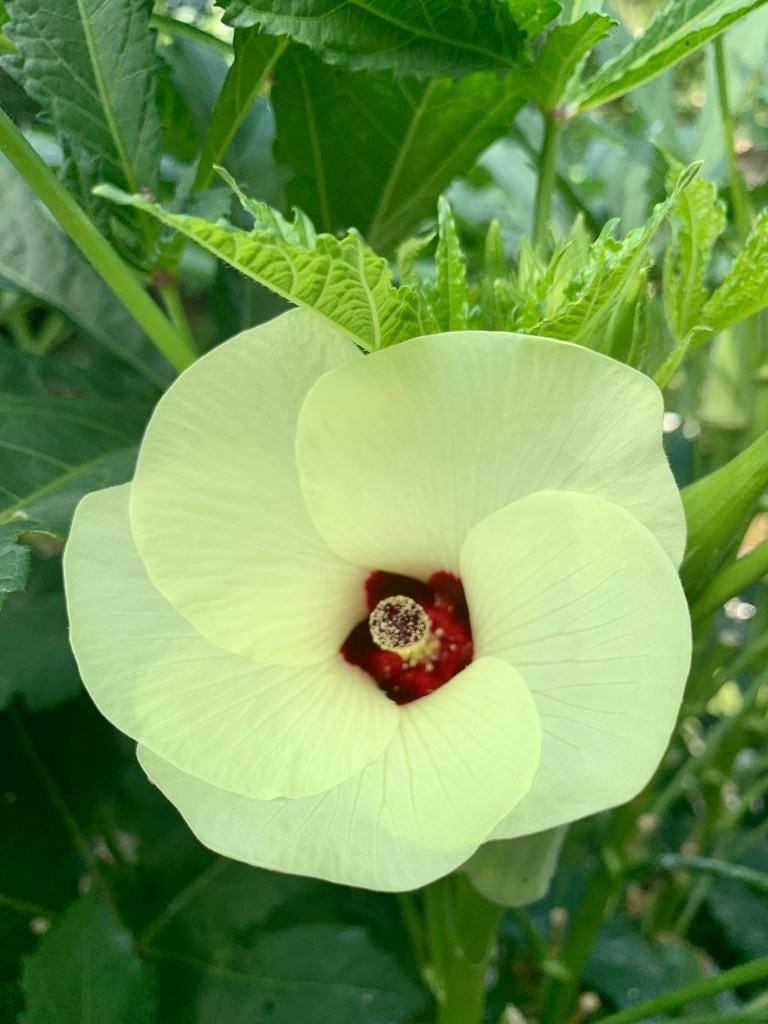
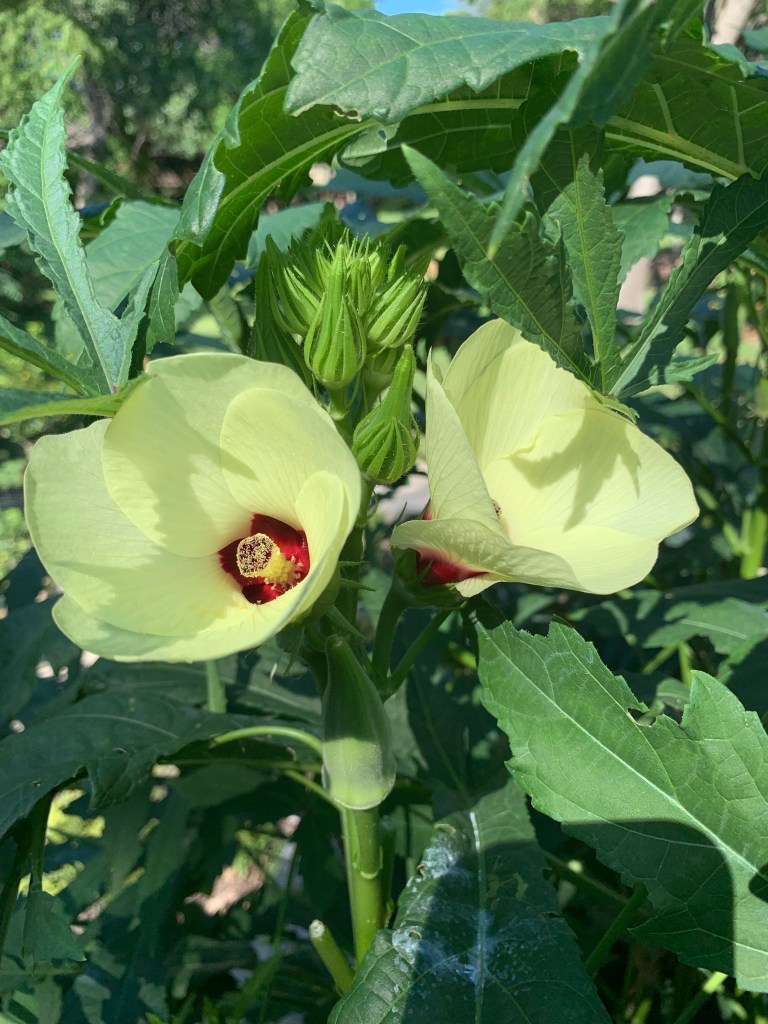
It’s one of the easiest plants to grow, and it makes an interesting addition to your garden. The yellow blossoms with their deep red centers reveal the plant’s place in the mallow family, a relative of the hibiscus. A little water, lots of sun, and you’re rewarded with hardy, heat-loving stalks and enough okra pods to share with your friends and family. Okra is best right after it is picked. The stuff you see in a grocery store most likely will be soft and wilted. If you don’t have a spot to grow it yourself, pick it up at a Farmers Market. Okra is delicious roasted. Boiled it makes a tasty thickener for stews and gumbo. My favorite way to cook it is to bread it in either corn meal or flour and fry it.
Okra
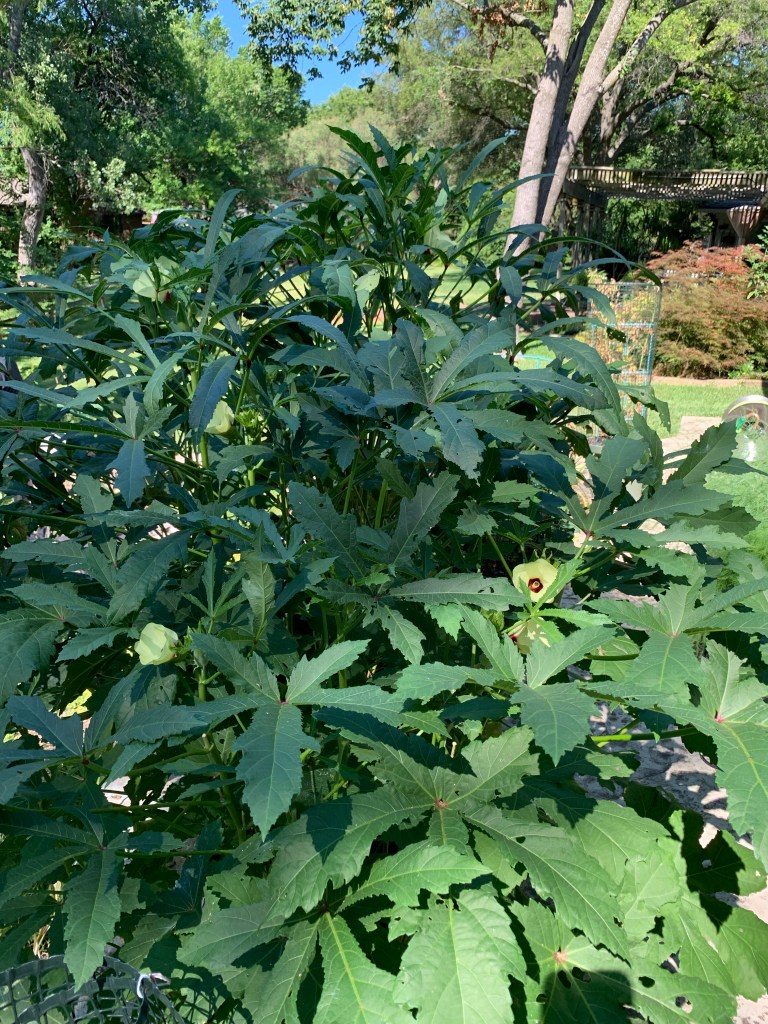
The blooms open in the early morning sun, around the time I set aside for harvesting the pods. Bees circle the plants, landing and picking up their fill of pollen while I brush aside the broad leaves and search for the tasty green okra. I’m growing Clemson Spineless – a kinder variety from the one I picked as a child in my mother’s garden. Those plants and their pods were covered in prickly spines that raised red welts on the tender flesh of my arms. The rash, however, was payment for the reward – plates of crunchy, cornmeal breaded and fried okra.
Okra plants in my garden
As I pick the pods, I can imagine the taste of the crispy chunks. Okra has a flavor that reminds me of cool green grass. It tastes like summer. I remember my mother, setting the table with fried okra and red slices of tomato. She pan-fried her okra in shortening with a little bacon grease mixed in for flavor. I cook mine in canola oil and skip the bacon grease. Like my mom, I use a cast iron skillet. Each bite I take I taste the past.
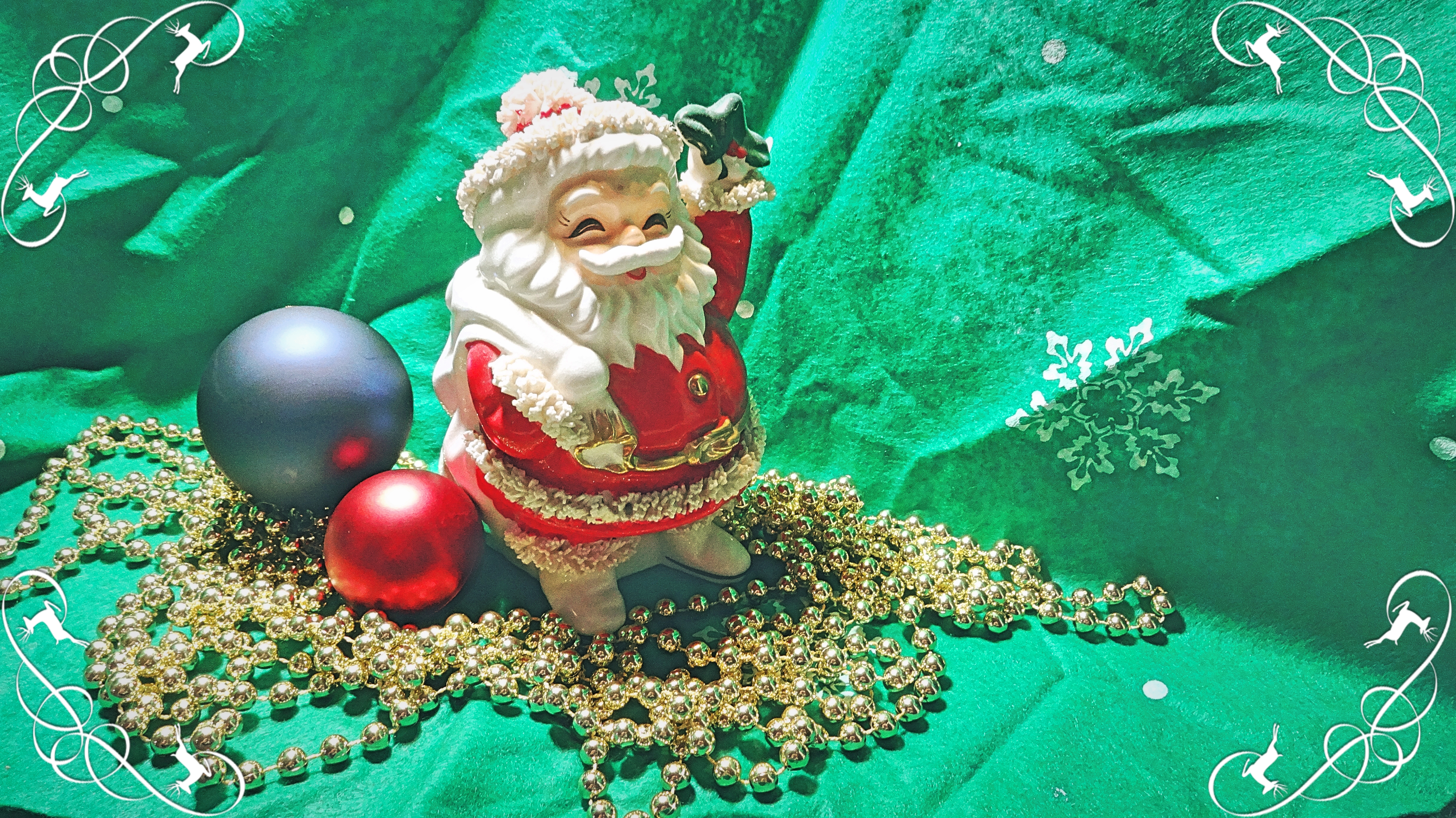
It’s Christmas Eve, and I’m looking for Santa. Not the jolly elf in red pajamas, my Santa is a six-inch tall ceramic bank. He’s just like the one my mom had, the one she saved quarters in all year to have money for Christmas. Mine doesn’t have quarters. It came without the rubber stopper at the bottom, and any money I stashed there would fall out like it does from my wallet when Bath and Body Works has their 2-for-1 sale.
Birthday presents were purchased with S&H Green Stamps. We did all our grocery shopping on Wednesdays, double stamp day at the Piggly Wiggly grocery store. The cashier would hand out a strip of the little green trading stamps, the number of stamps calculated based on the dollar amount of groceries purchased. I got to keep and redeem at the Green Stamp store any books where I had licked and stuck the stamps on the pages. I remember them tasting like spearmint, this may or may not be true.
I bought my Santa bank at an antique store in Jefferson, Texas, spurred on by a desire to replace each iconic artifact from my childhood. You know you’ve reached a certain age when every toy you ever owned is now “vintage” and “collectible.”
Every year in December my mom would bring out the bank, and I’d help her drop the coins into dusty paper wrappers. She’d pull out the stopper and pour out the quarters, a pile of clinking silver on the tabletop. Always quarters, and never dimes, nickels, or those useless bitter pennies.
I knew my parents bought my presents, but I also believed in Santa – the one with the flying reindeer. How can you believe in something and yet know it isn’t true? Have you ever looked at a triple chocolate cake and said to yourself, “I’ll just have one bite?”
I had a stocking every Christmas, and Santa always left one orange, one apple, several peppermint canes, and a handful of nuts. I’d have presents too, bought with those carefully wrapped quarters. The years went by, the name “Santa” on the gift tag replaced by “Mom” or “Dad”. We still stayed up late to watch the television newscasters predict the path of the jolly elf’s journey.
My mother loved stories, she’d act out the tales of Br’er Rabbit and recite what she remembered of Tom Sawyer’s adventures. She loved Santa and the Tooth Fairy equally. I believe she got as much of a thrill placing the gifts under the tree and the quarters under my pillow as I got joy in receiving them.
I finally located my Santa bank on top of the book shelf in our dining room. His face is familiar, and when I pick him up, I can imagine the heft he’d have filled with coins. My parents filled my childhood with the wonder of a magic elf who’d visit the good boys and girls on Christmas Eve. I wasn’t disappointed to learn the truth, because the best gift they gave me was the gift of imagination.
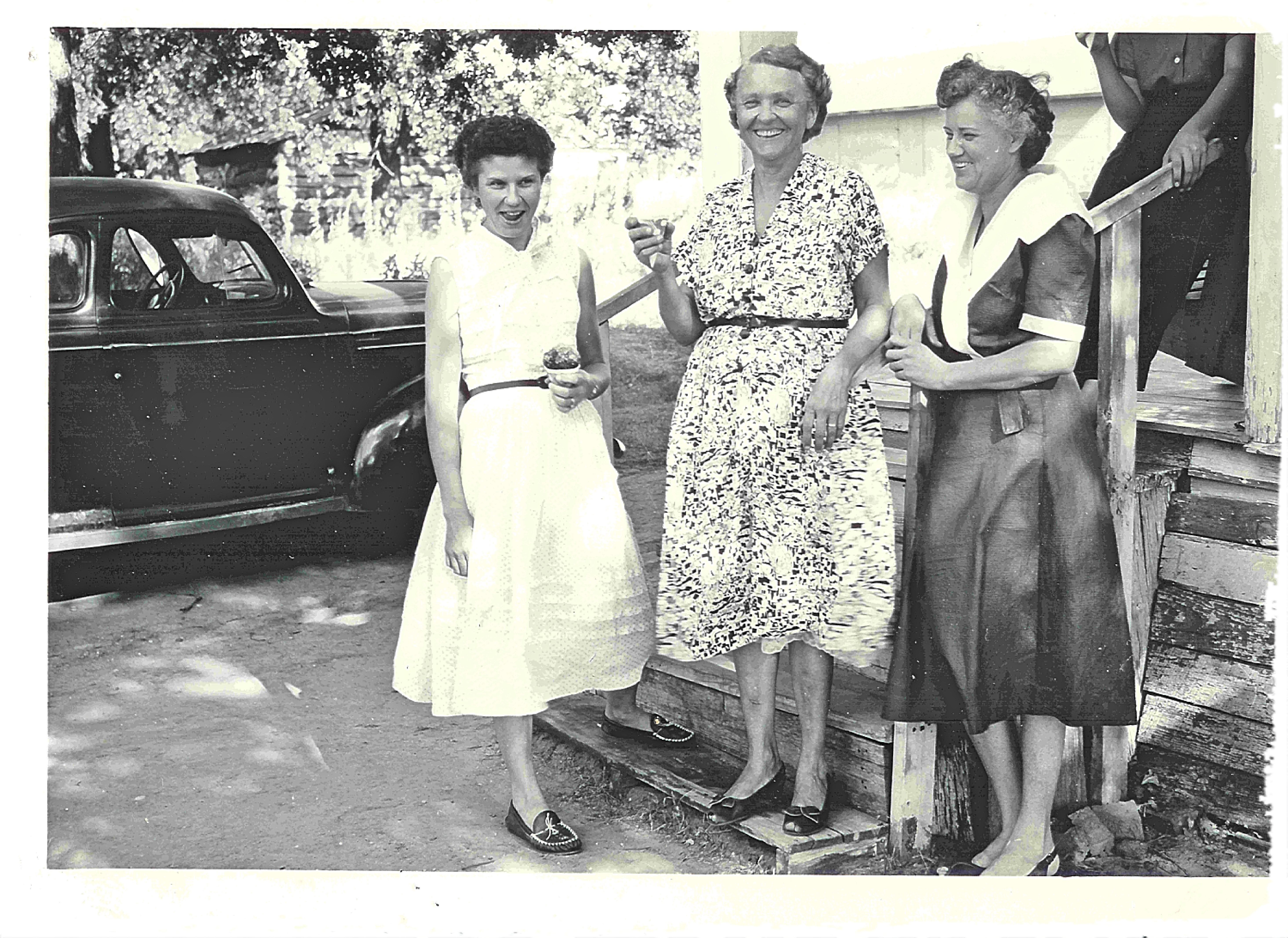
My mother, grandmother, and aunt in Farmersville in the 1950s
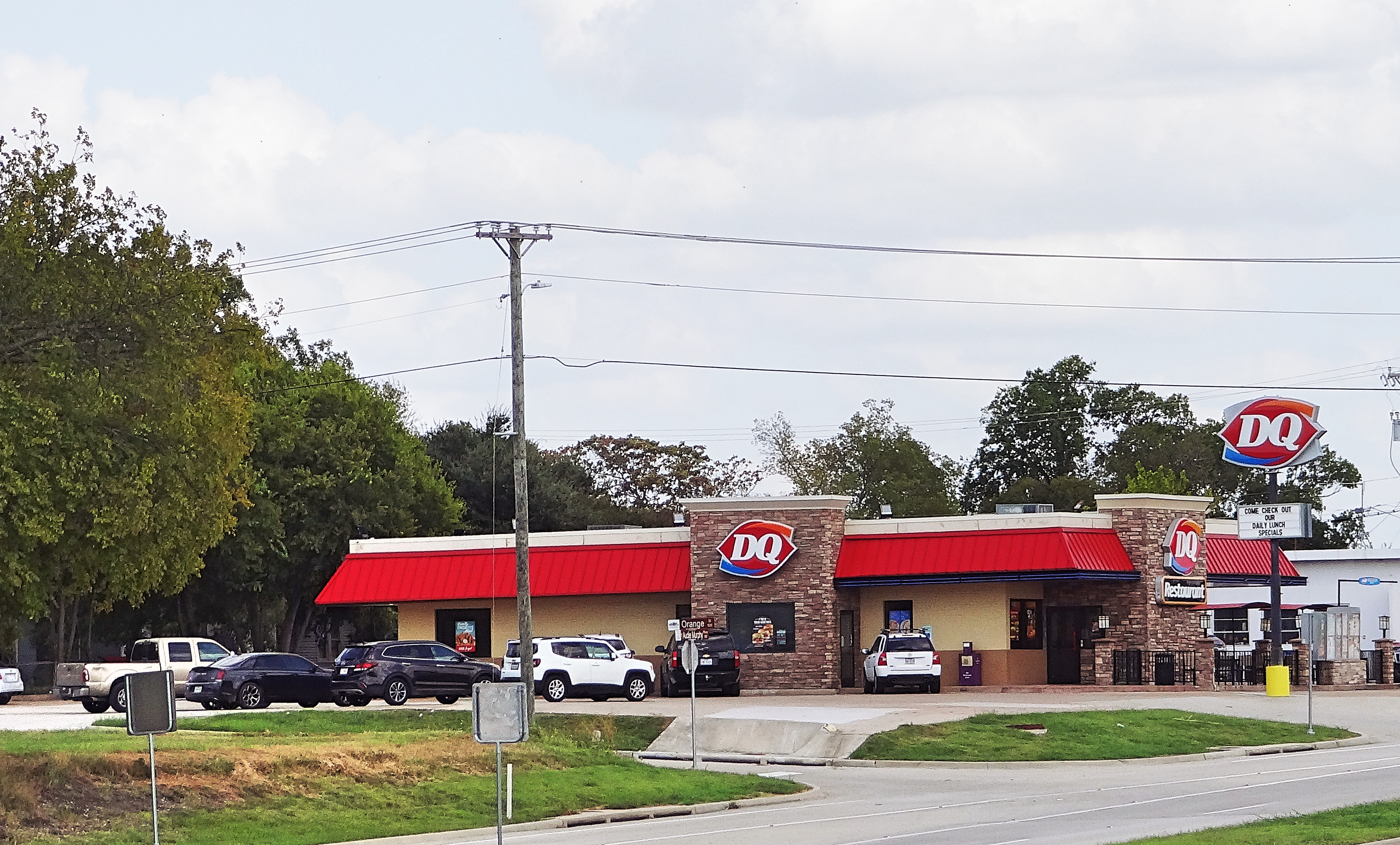
The places we visit are never as perfect as they are in our memory. My grandmother’s house in Farmersville, Texas no longer exists. A remodeled version of the Dairy Queen I visited as a barefoot child sits beside the highway and still serves up chocolate dipped cones and cheeseburgers. You can see the Dairy Queen from the overpass where I used to stand with my cousin and spit on the cars passing below.
Dairy Queen – Photo by the author
My husband and I drove up to Farmersville on the weekend, a short day trip from our home. Over bridges spanning the lake, past trailer parks and fireworks stands to the little town that was once the Onion Capitol of North Texas.
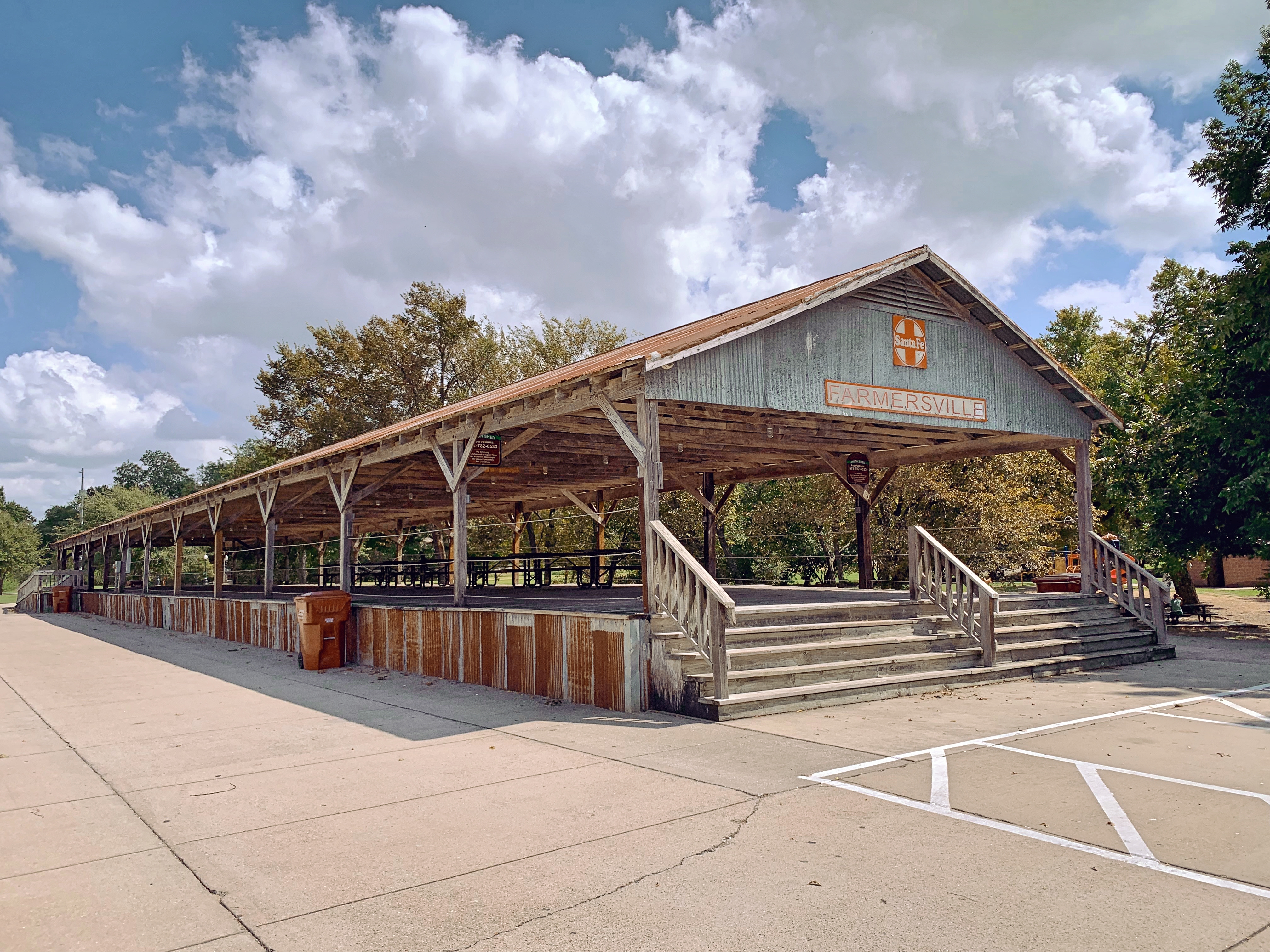
The Onion Shed in Farmersville, Texas – Photo by the author
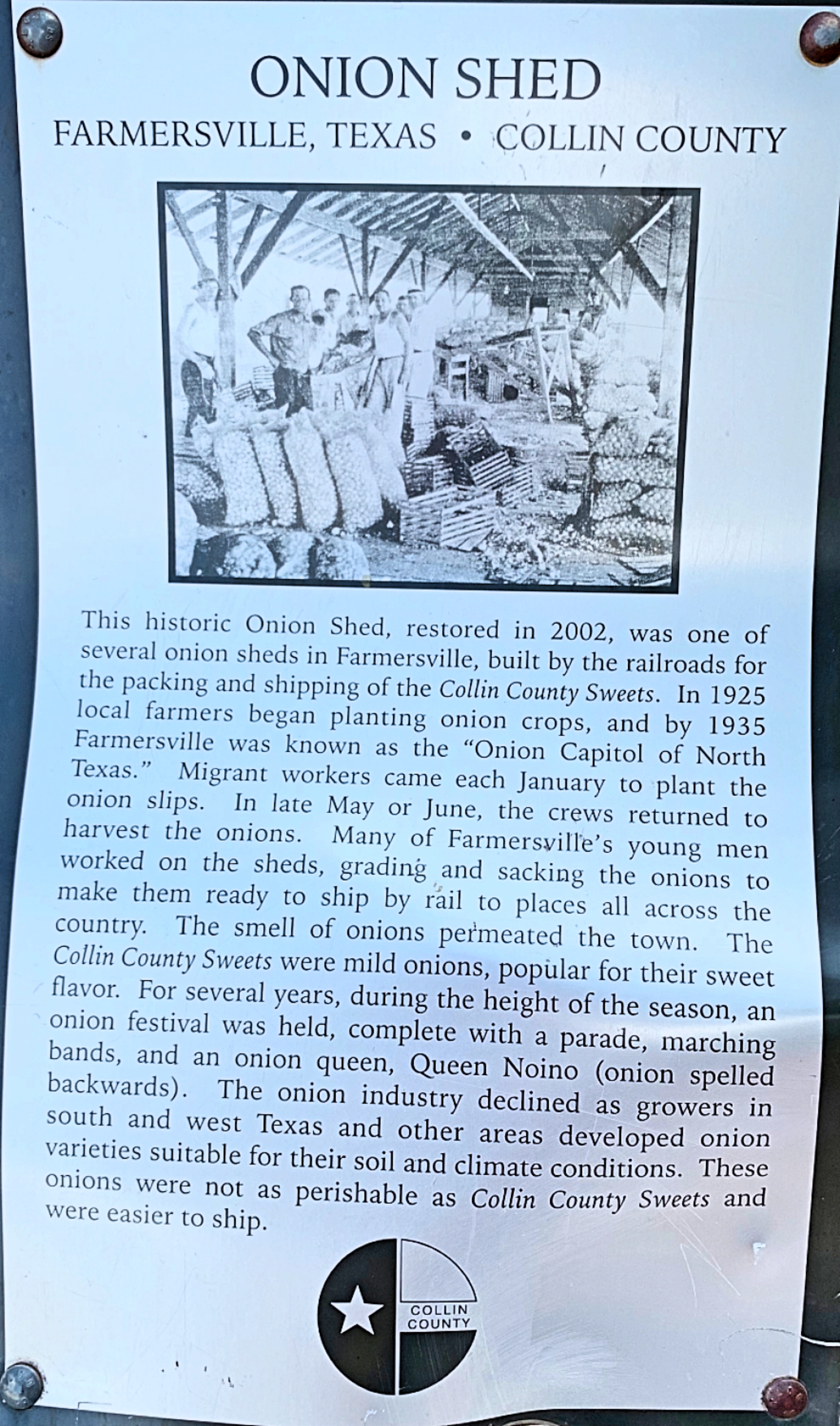
The Onion Shed sits near the town square. In the 1960s I helped my mother and grandmother fill burlap sacks with discarded onions, the rejects spilled and tossed onto the grass from the railway cars where the Collin County Sweets were loaded for shipment. No longer filled with the round yellow bulbs, you can find a flea market there on the first Saturday of each month.
The plaque at the Onion Shed
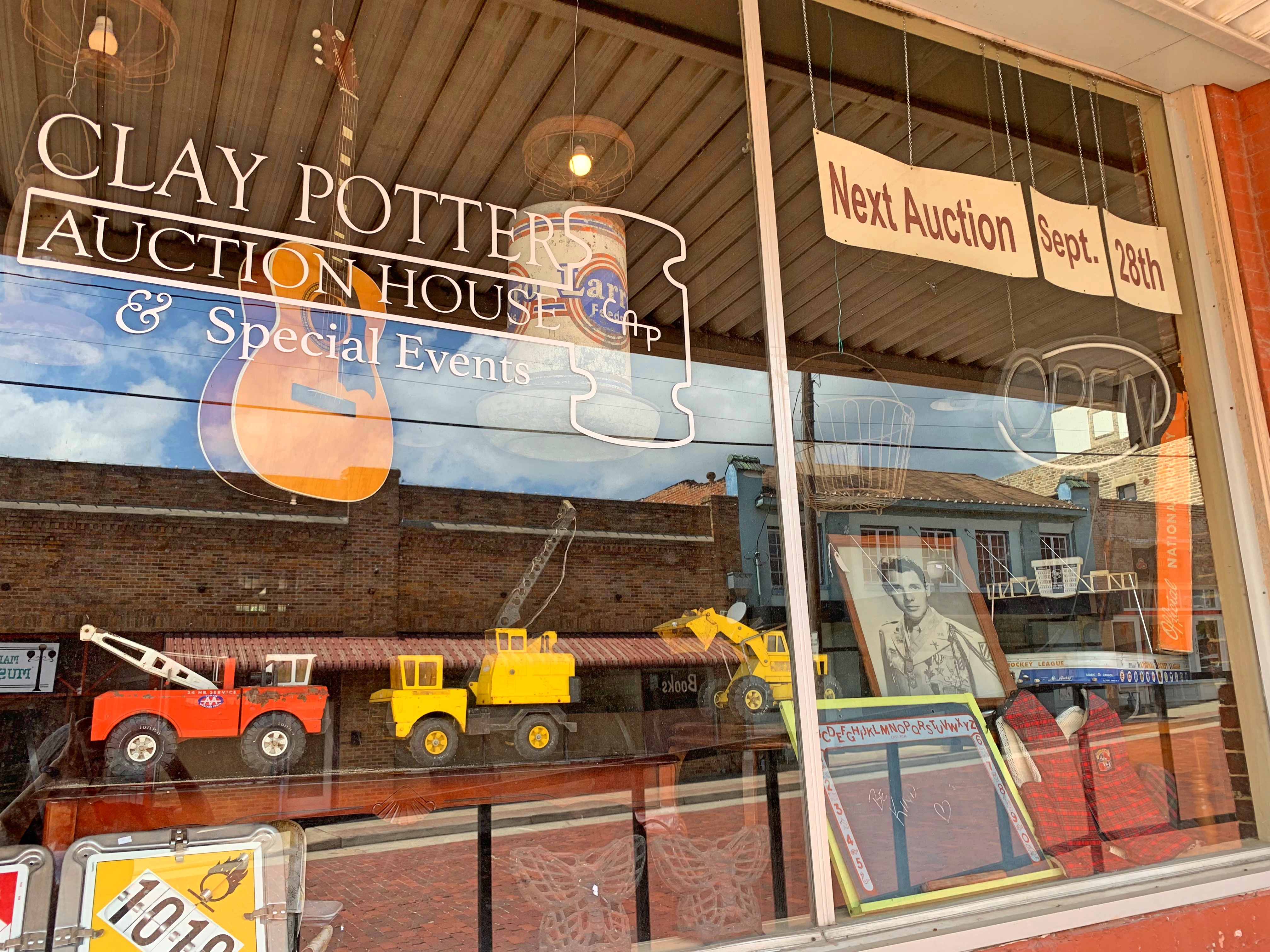
A portrait of Audie Murphy among the items for sale at the Clay Potter Auction House
We wandered through antique stores on the town square. I am always surprised to find the toys like those from my own childhood, stacked on dusty shelves and labeled “vintage.”
There were no toys in my grandmother Mattie’s wood frame house. A print of Jesus knocking at the door and a framed copy of the TV Guide with Johnny Carson on the cover decorated her living room wall. If I slipped from my mother’s view I would have just enough time to explore Mattie’s bedroom. I could hide under the fuzzy chenille bedspread and peak out through the fringe skirting the bottom where it brushed the floor. Visiting children were turned out into the yard, chased from the house by apron-wearing women too busy with cooking and serving to put up with our foolishness.
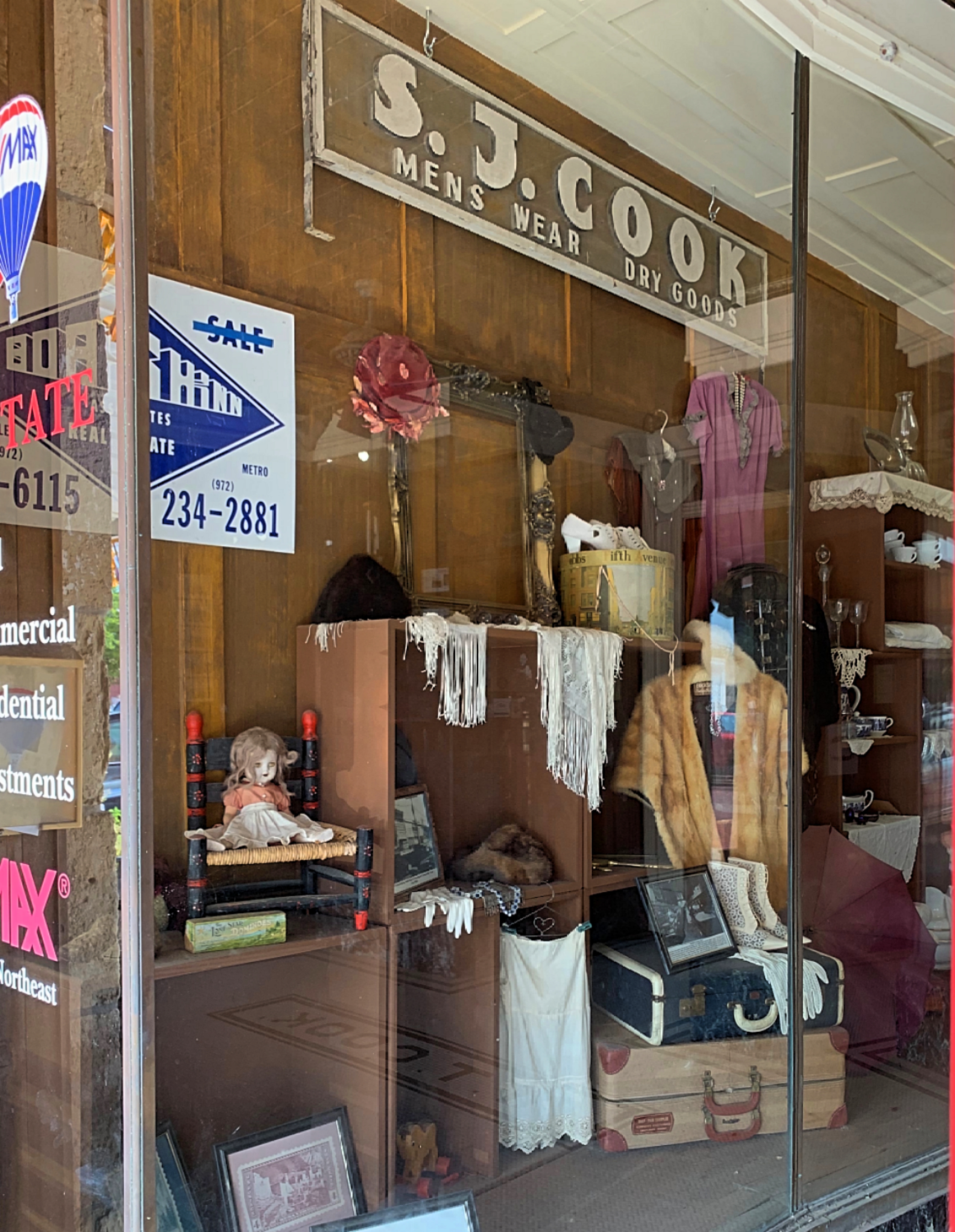
Window display – Photo by the author
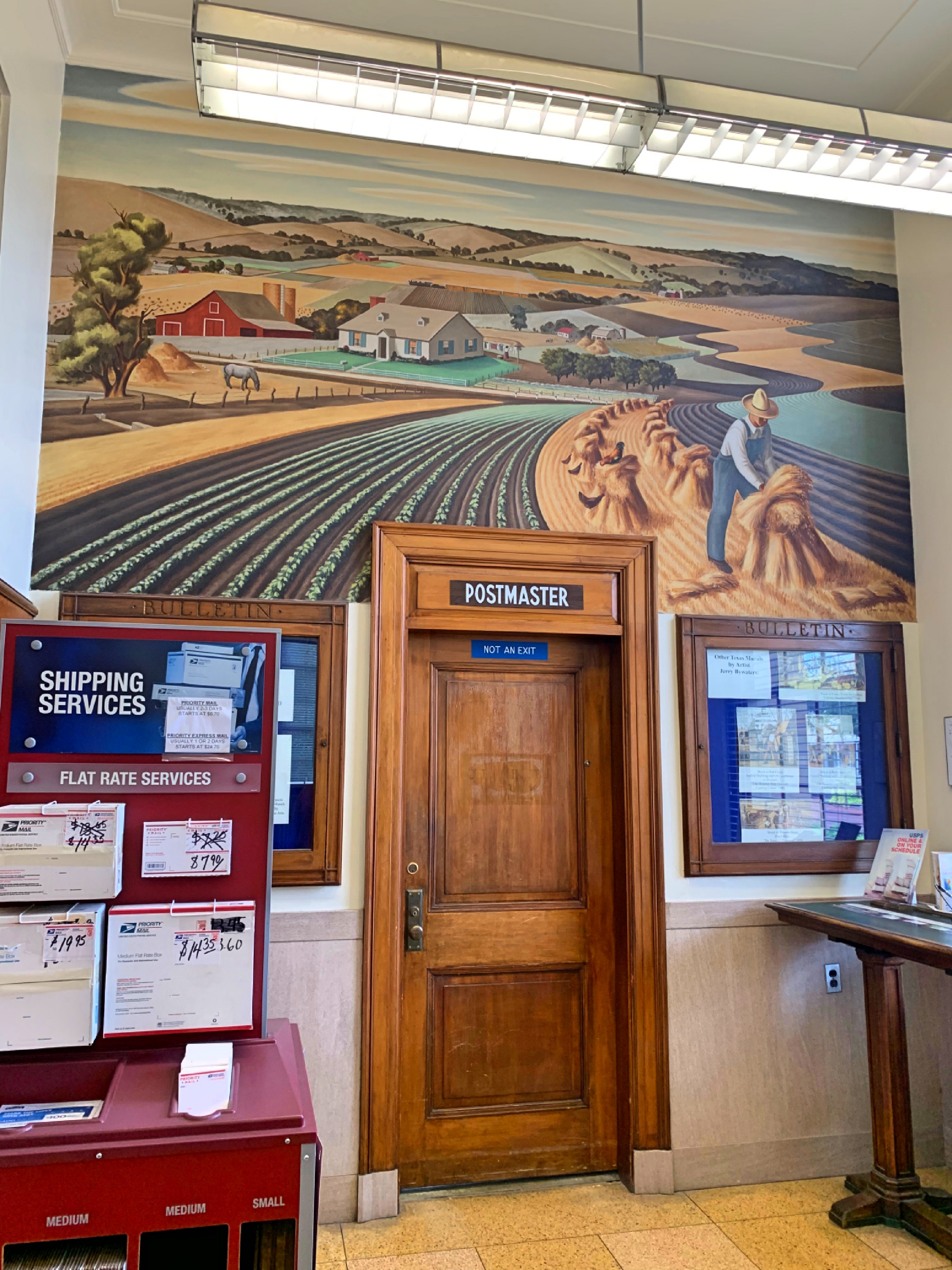
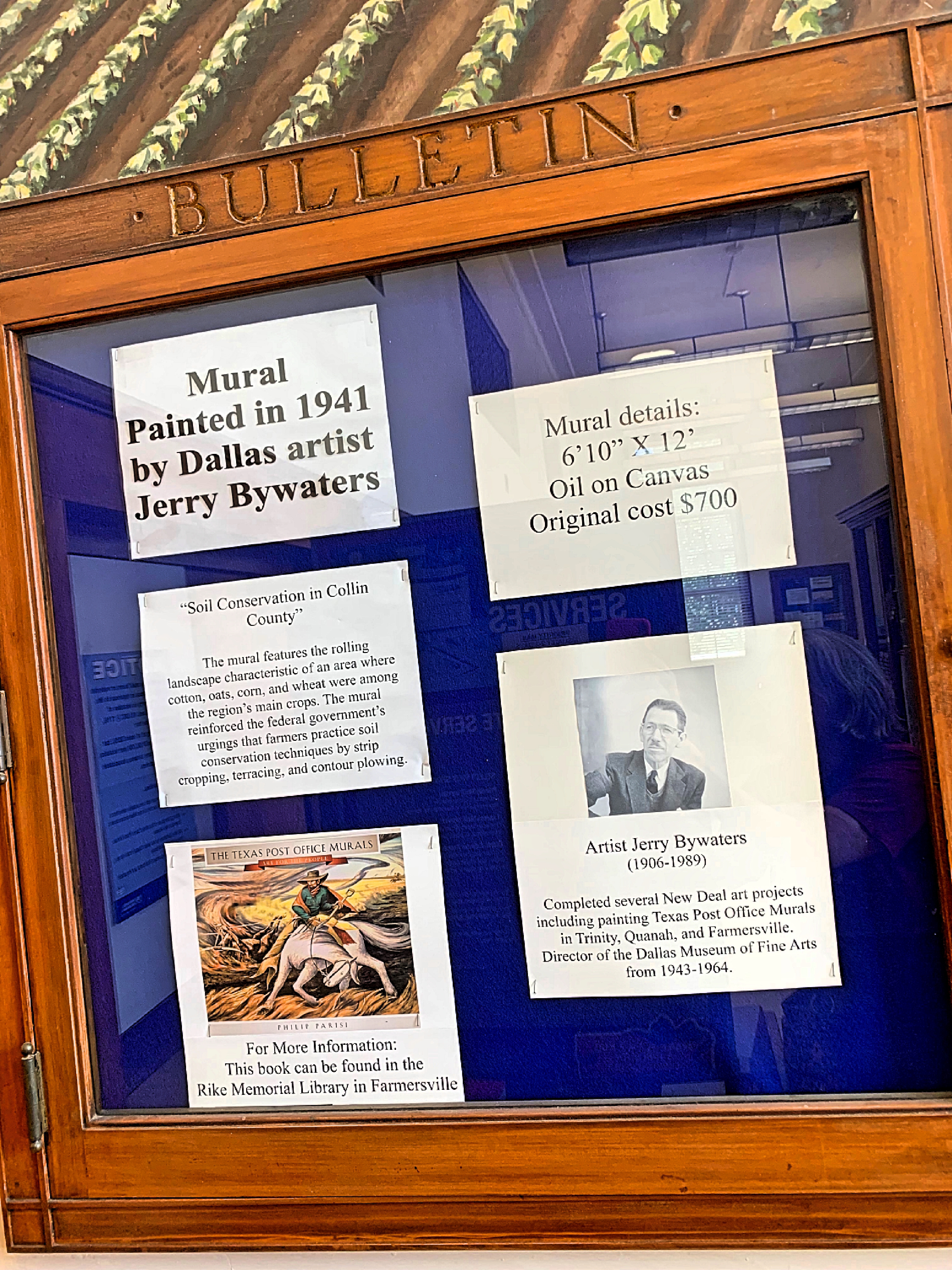
Small towns often have treasures tucked away, to be uncovered by those with time and patience to wander. The post office sports a mural painted in 1941 as part of the Works Progress Administration (WPA).
WPA mural in the Farmersville Post Office – Photo by the author
A short walk to downtown from Mattie’s house, over the railroad tracks and to the pecan tree shaded park, and I could find the snow cone stand there in summer. Crushed ice in a paper cone that dissolved as the treat itself melted to slush in the heat. But I could drink the last of it, my hands, lips, clothes stained red, purple, blue, green.
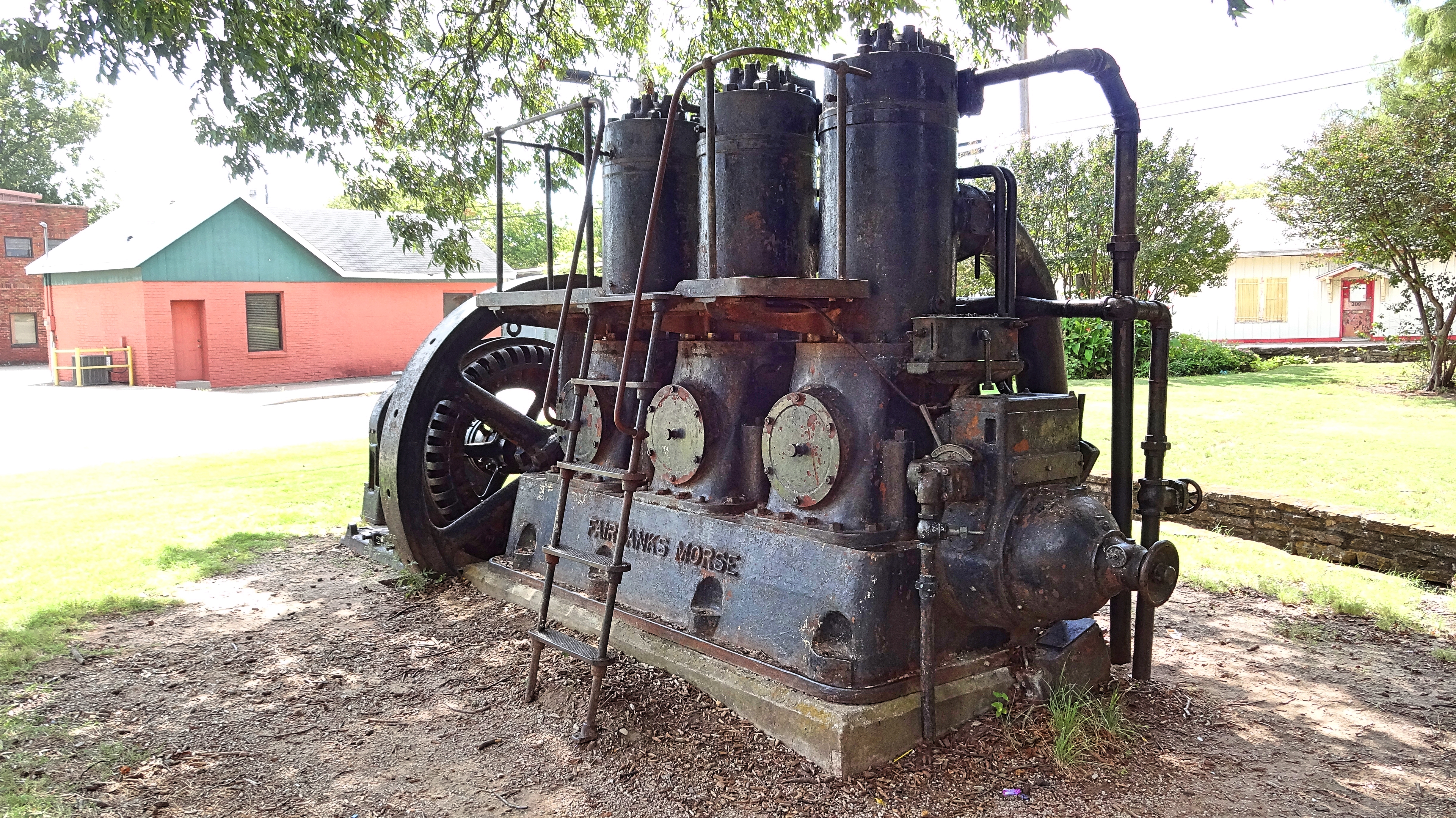
Old Electricity Generator in the city park – Photo by the author
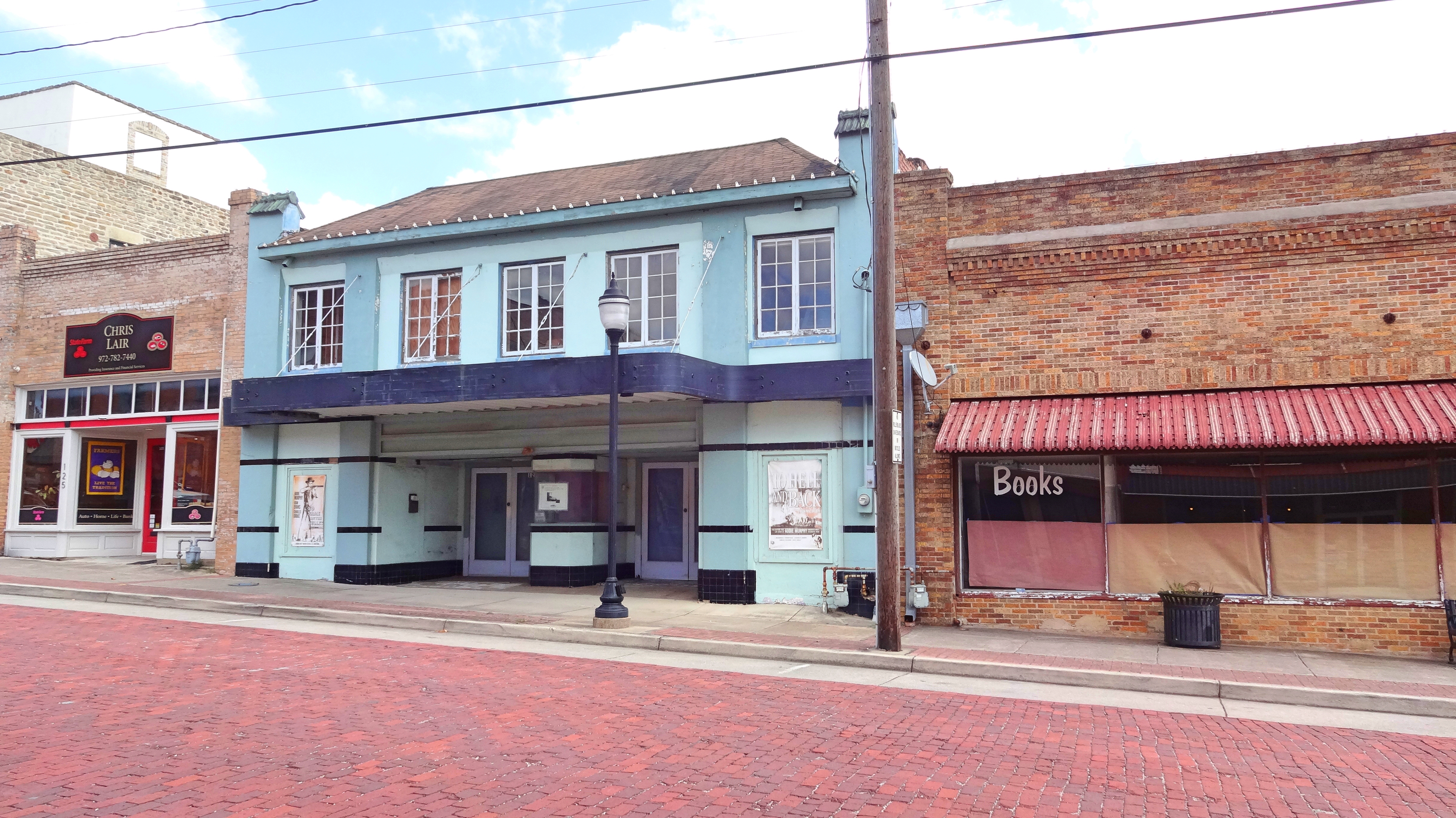
There were no snow cones for sale on the day we visited, but I bought a Dr. Pepper from one of the stores. Andrew and I sat and shared the drink on a bench near the old movie theater downtown.
The movie theater in downtown Farmersville, Texas – Photo by the author
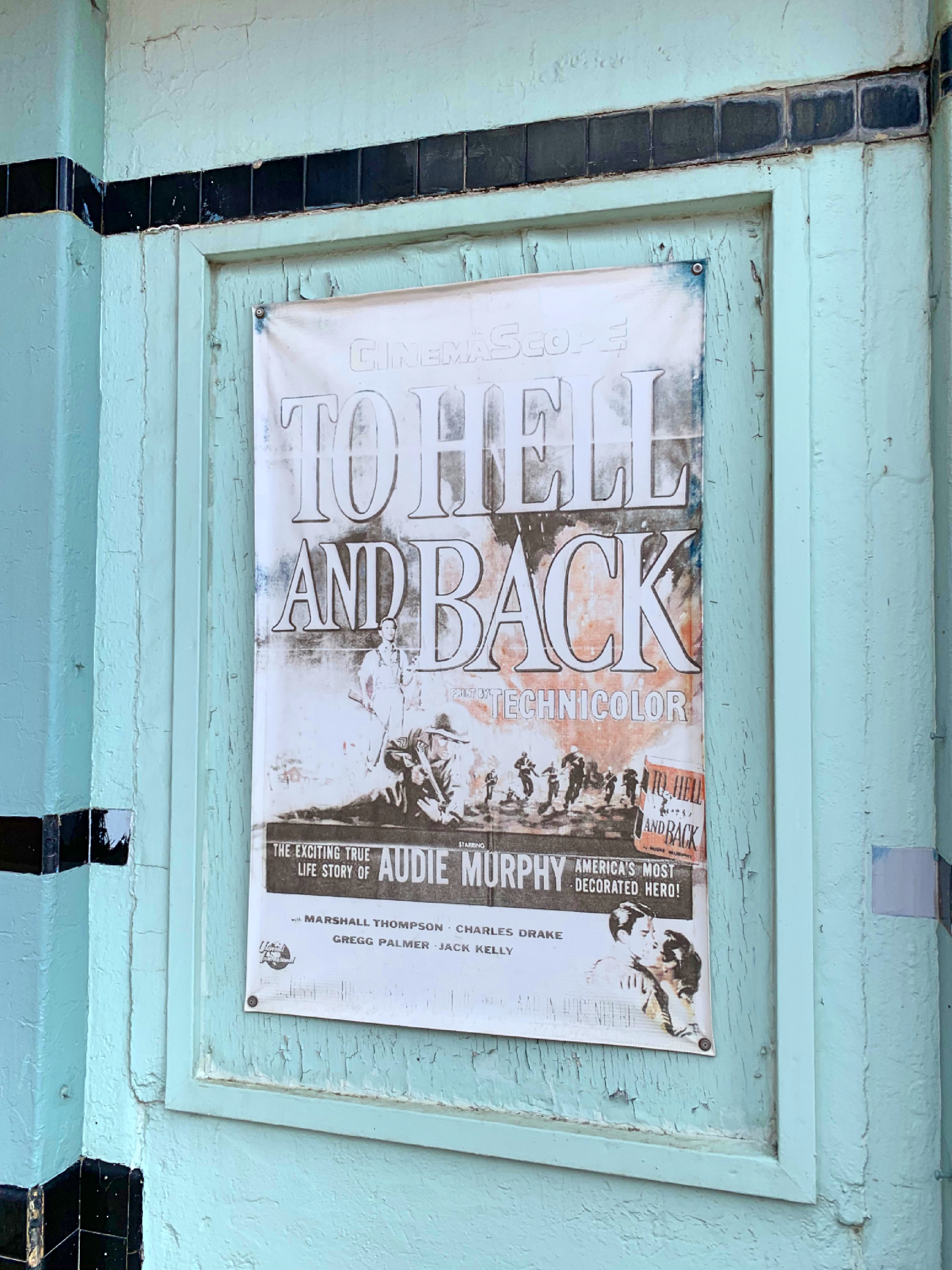
Closed for years, posters from films starring the hometown hero, Audie Murphy, hang on the front. I imagine my mother there on a Saturday night, palms slick with butter from the popcorn.
We ended our visit with a stop at the Odd Fellows Cemetery. My grandparents, Grover Cleveland Cullum and Mattie Elizabeth Watson Cullum, are buried there, as are their parents. We searched for their graves but couldn’t locate them. I hadn’t been there in years and the day was too hot for much effort. The one place in town that hadn’t changed but I couldn’t rely on my memory to find the family plot.
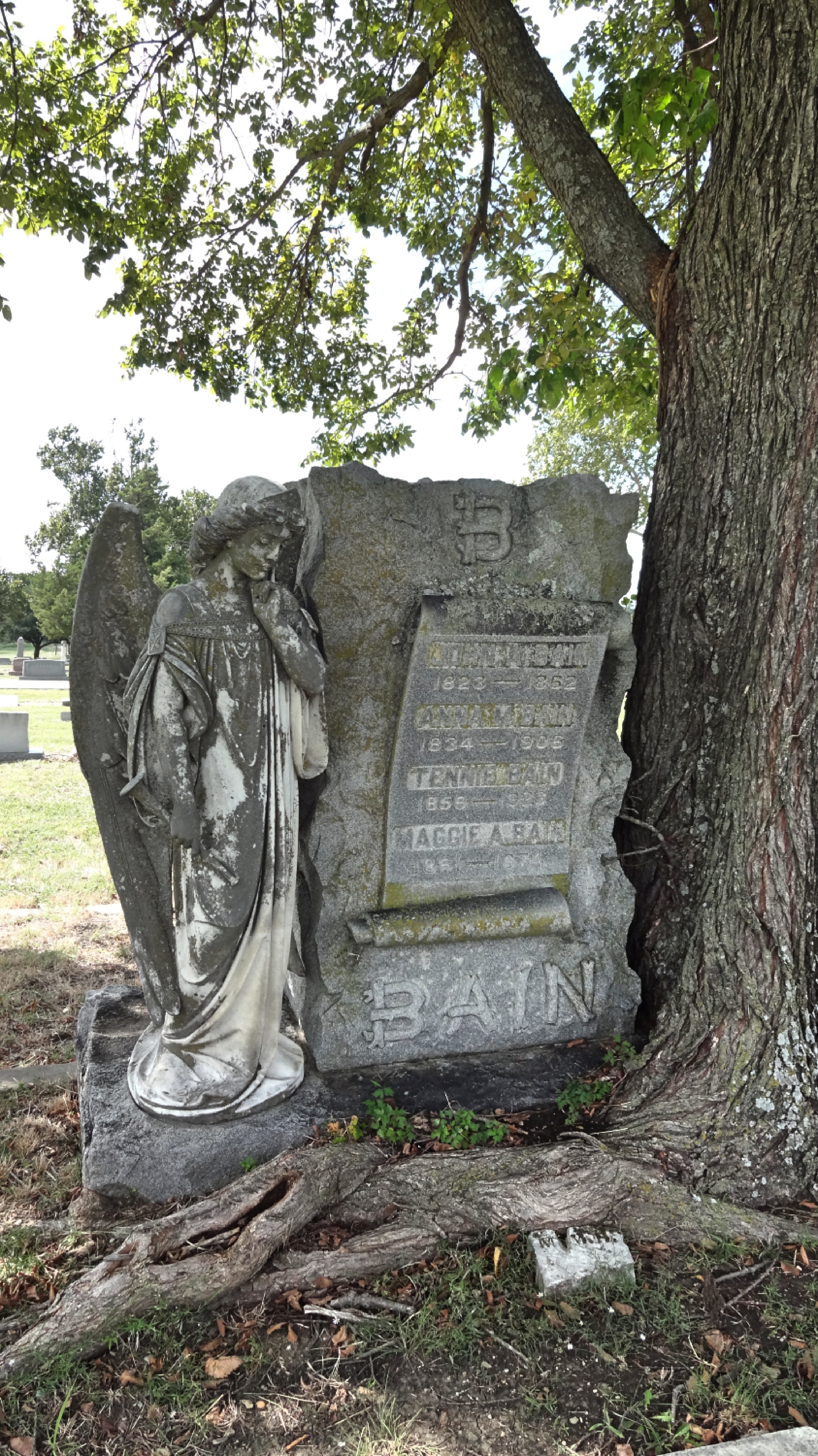
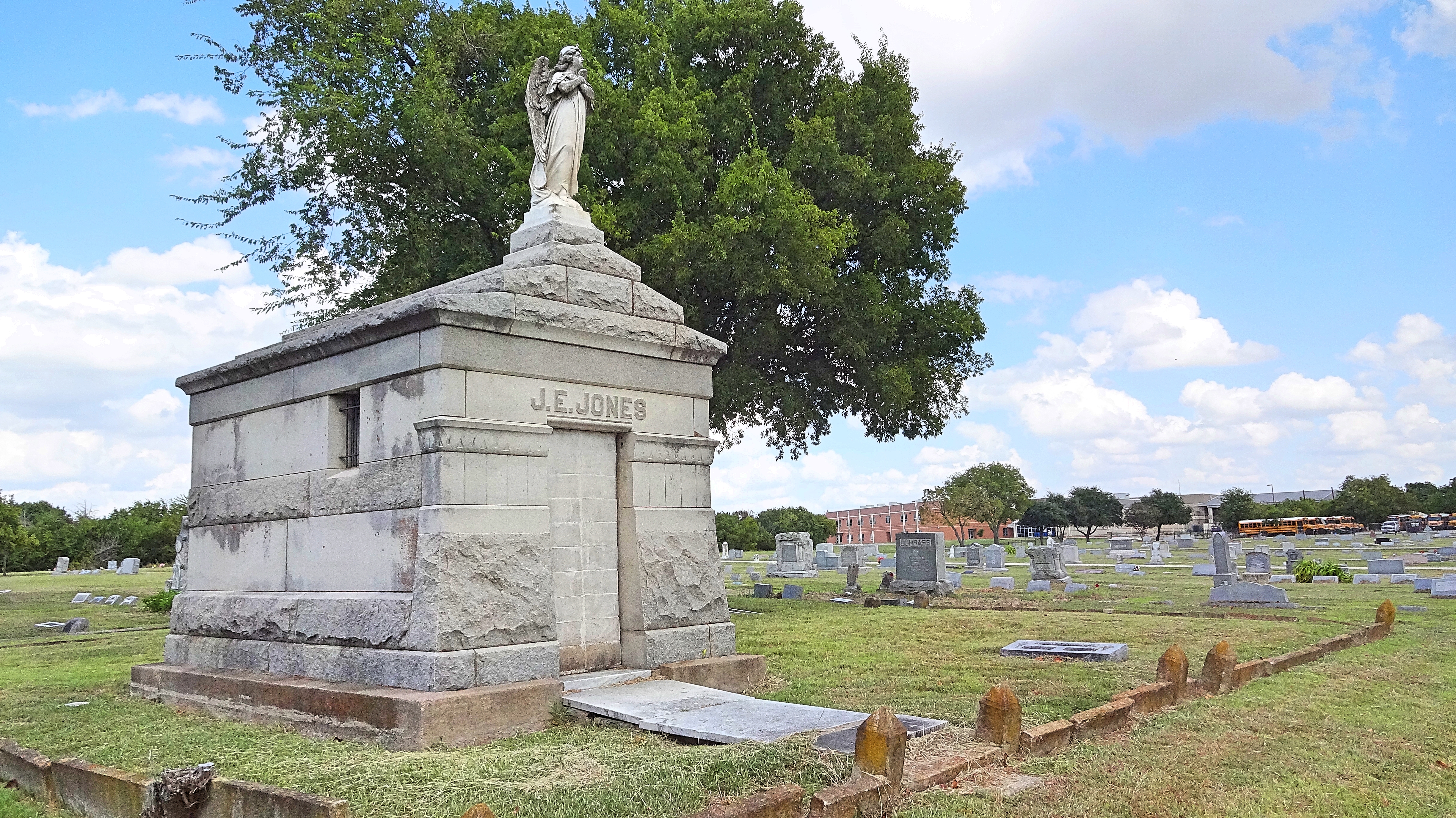
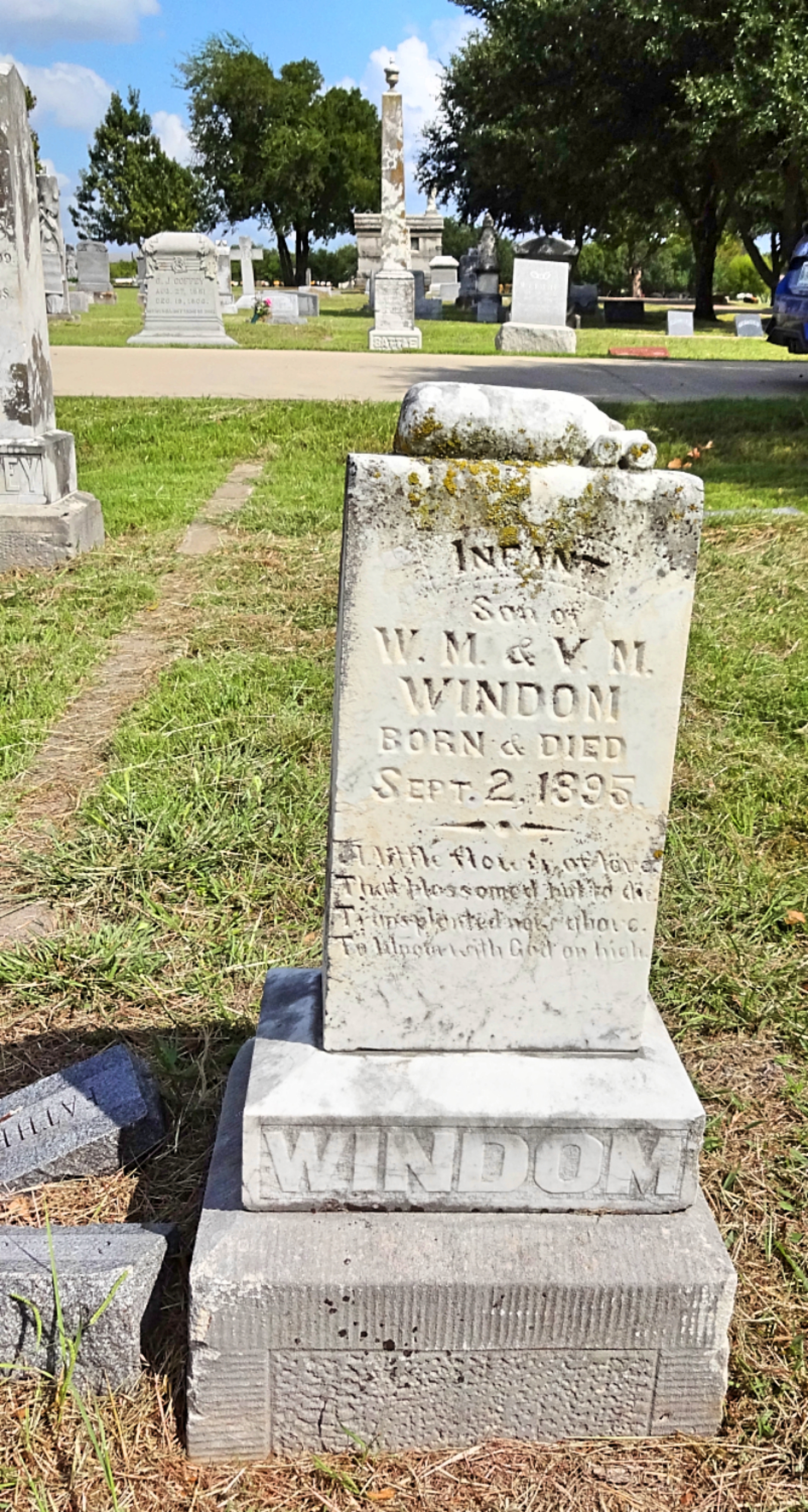
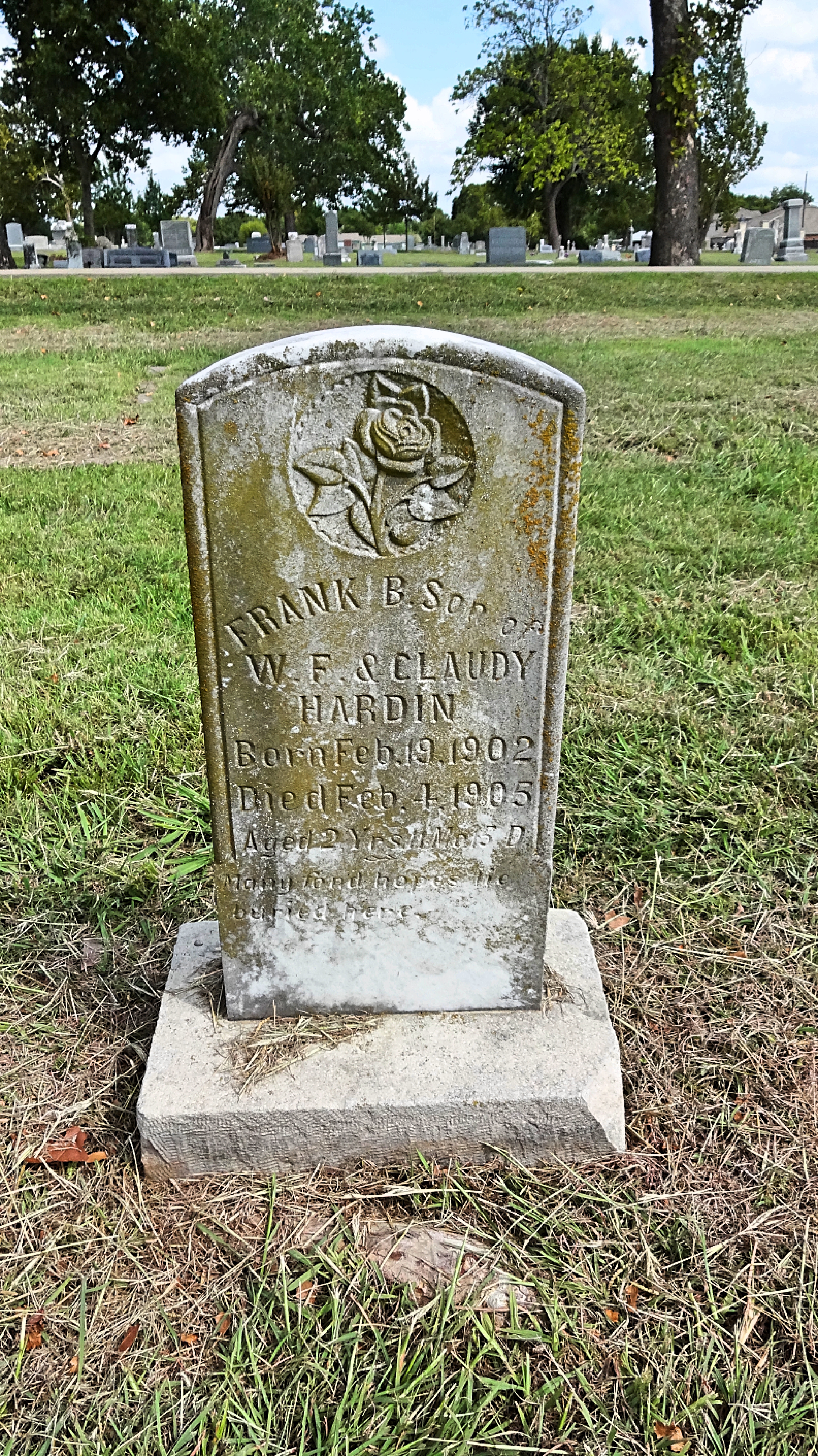
We did see some interesting gravestones.
Farmersville 100F Cemetery/Odd Fellows Cemetary
“Some of these people were alive during the Civil War,” Andrew commented.
“Yes,” I said.
Tired and sweaty, we climbed into our air conditioned Honda and headed home. Past the shops downtown, the onion shed, the park, the railroad crossing, stopping at last near the overpass so I could hop out and snap a photo of the Dairy Queen. Then onto the highway and home, leaving behind the layers of memory. My mouth, dust dry as I lean over a metal guardrail, the low mournful train whistle in the dusk, the sharp scrape of sidewalk on bare feet, the candy syrup from a grape snow cone, icy cold contrast to a dog summer day. The scent of sweet onions, yellow and round as baseballs, hidden like Easter Eggs in the soft green grass.
This showed up in my Facebook feed the other night. Of course I clicked on the link and checked them out on the Walmart website. The back of the package states “Potatoes to die for” but I hope they don’t mean that literally.
You can buy a casket online from Walmart and opt for overnight delivery. I clicked and sorted them from low to high price and Walmart helpfully produced this sponsored product:
It looks sturdy but I think I’ll go for cremation. I wanted to donate my body to science but Andrew worries that he’ll encounter me somewhere as an exhibit.
“I don’t want to see you encased in plastic and displayed at the State Fair,” he said.
The funeral potatoes are listed as emergency supplies and they have an 18 month shelf life. They might be useful for camping but I’m a little on the frugal side. I’m afraid I’d start counting down friends and family as the package gets closer to the expiration date.
I’m grateful for the Southern tradition of bringing food to comfort loss.
My own memories of grief are soothed by recalling those offerings carried in heavy Pyrex dishes, wrapped in aluminum foil and often still warm from the oven. What meals those lovely church ladies brought – pork chops marinated and baked in mushroom soup, banana pudding with soft vanilla wafers, fried chicken with a crispy golden crust only a cast iron skillet and love can deliver.
One thing I know for sure, no self respecting Southern Baptist would bring reconstituted potato casserole to a funeral.
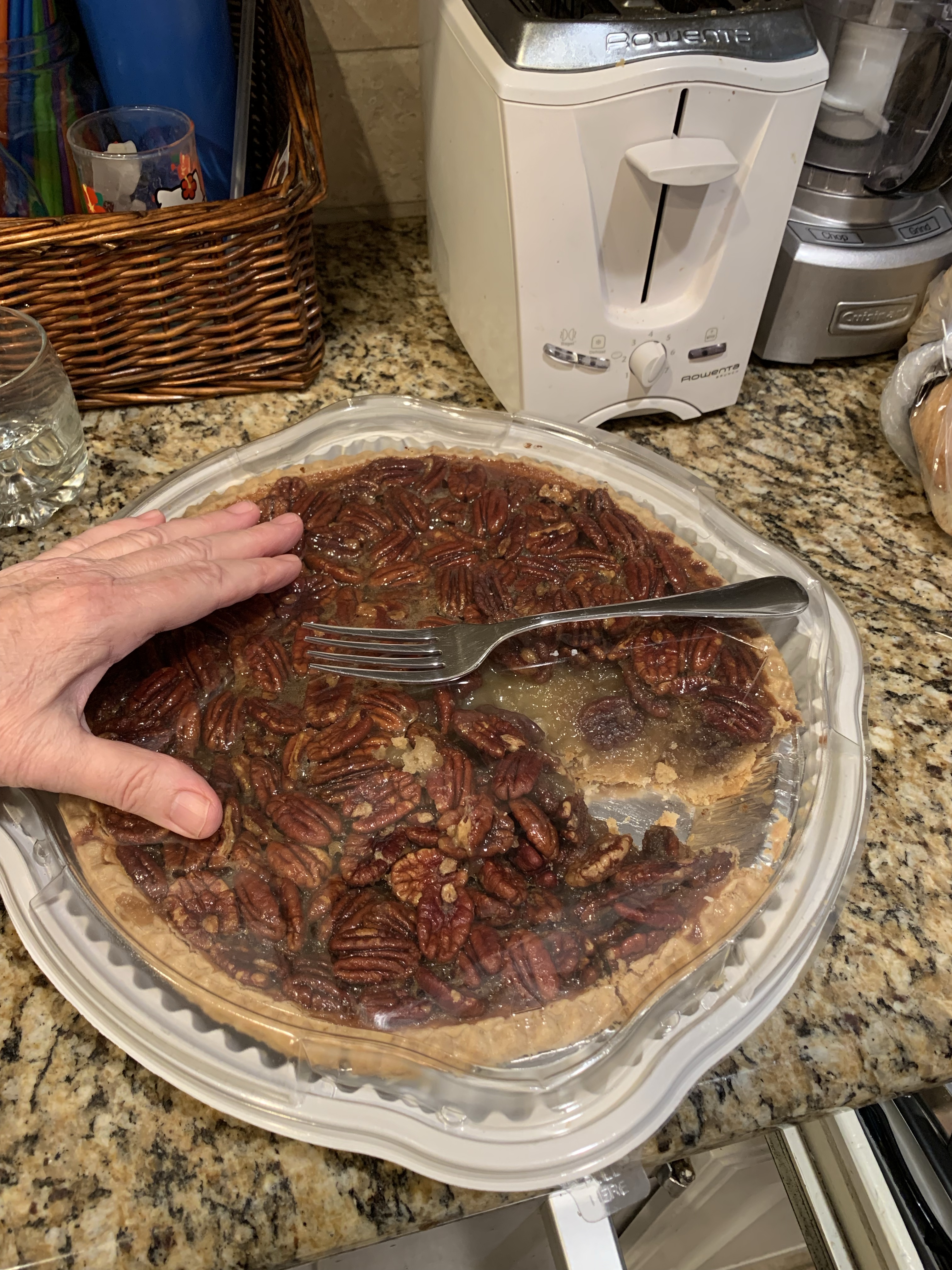
I love pecan pie. Yesterday, our realtor gifted his clients with Thanksgiving pies. We bought our house two years ago, in the middle of a crazy market, when investors were slinging cash like the Monopoly banker. Without his expertise, we wouldn’t have been able to find a place to call home. For that, we are grateful to Kreg Hall. The pie is a bonus. A large bonus as I am the only one in our household who likes or can eat pecan pie. To make it last I’ll freeze portions and enjoy it during the winter months. Each time I sit down with coffee and a slice of pecan pie, warm from the microwave, I’ll lift a fork in gratitude for the blessings we have and the good people in our life.
I lived through two decades before I discovered that there were people in the world who made dressing with stale bread cubes instead of fresh cornbread. My oldest sister’s second husband, the nice one, was from somewhere up North, New York I think. He had dark, pomaded hair swept up and back and he smiled and spoke with an accent I had only ever heard on television. He made a bread stuffing with oysters. I forgave him because it was delicious, each mouthful a feast of earthy black pepper mixed with the salty ocean taste of oysters. I was home from college, and my mother volunteered me to drive the two of us up to Malakoff, Texas, where my sister and her new husband had retired to life by the lake. In those days before GPS, I got lost following my sister’s handwritten directions because I didn’t know that “LBJ” was also Interstate 635. We arrived late, but to a feast laid out on their Formica topped kitchen island and still warm. I wish I had asked him for the recipe for that oyster dressing.
My mother made her dish the Southern way, with cornbread. She used white corn meal, soft as sand, with a bit of flour, scooped up and sprinkled in like snow. Baking soda and baking powder for leavening, for we all need incentive to rise. Buttermilk to mix, salt and bacon drippings for flavor, then all poured into her largest cast iron skillet, warmed on the stove so the crust will brown first. It came out like a pale yellow moon and filled the kitchen with the warm, sweet scent of corn. For the dressing she mixed in celery, onions, broth, and enough sage to repel evil spirits.
When I was young, we traveled to my grandmother’s house for Thanksgiving. Not over the river or through the woods, but past the lake and along Highway 380 the 15 miles or so to the town of Farmersville. My mother brought her cornbread dressing and a pie or two as her contribution to the meal. I held the warm pan of dressing on my lap where I sat in the slick vinyl backseat of our 1970 Oldsmobile, and tried not to drool on the foil covering the pan. My grandmother’s wood frame house had a tiny living room decorated with an autographed photograph of a famous televangelist, before the fall. She sent him money and prayed for healing by laying her hands on her Chroma color television while he preached. The children, including anyone under the age of 18, were banished to the back porch. We fought over metal folding chairs and balanced our plates of food on our knees while we fended off the horde of feral cats living in my grandmother’s yard. The cats were only slightly outnumbered by my cousins.
Some years we visited my father’s family, where my aunts made their dressing and gravy seasoned with the chunks of turkey heart, liver, and gizzard that came packaged and concealed inside a store bought turkey. The first time I cooked a turkey I didn’t realize there was this hidden prize inside. I found them after, steamed and tucked under the skin at the front of the turkey, where his neck would have been if it weren’t shoved up into the body cavity. The neck was roasted too, because I didn’t know there was a second, secret scrap part buried inside my turkey.
My first husband was from Missouri, and the bread stuffing his mother made was moist, but thick, and had to be scooped out in chunks. My father-in-law, an honest, hard-working mechanic and assistant Boy Scout leader, led the prayer each year, insisting that we all stand before the table and join hands. You haven’t really experienced Thanksgiving gratitude until you’ve had to convince a squirming toddler to stay still during a ten minute blessing, while the aroma of food wafts over you in a moist cloud of steam you can taste.
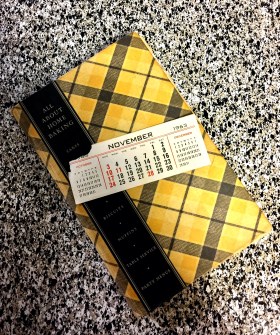
My mother stopped cooking a turkey for Thanksgiving after my parents divorced, when it was just the two of us left at home. She would roast a chicken instead, and make her cornbread dressing. I never saw her consult a cookbook, she cooked from memory mostly, measuring out ingredients to taste except when she was making a pie or cake. After she moved into a nursing home, I found a cookbook tucked away in a box she had stored in her laundry room. The book, All About Home Baking, had penciled notes in the margins and, tucked inside the front cover, scraps of lined paper with recipes written in her delicate, looping cursive. Brittle, yellowed pages from a 1963 calendar fluttered out like falling leaves when I turned the pages of the book.
I roast a turkey every year, even when there are just one or two guests and my vegetarian fiancé at the table. This year I’m cooking both turkey and a ham. I’ll make cranberry relish from fresh cranberries and oranges, and add so much sugar that it passes for jam. We’ll have pumpkin pie and a minced meat pie like my mother used to make, even though no one but me will eat it. It is a deliberate luxury on my part to have a whole pie to myself. My fiancé, Andrew, will mash potatoes so they come out just the way he likes them, a little bit creamy and with a few tiny lumps. When he leaves the kitchen I will sneak in more butter and salt to the dish.
I don’t cook my mother’s cornbread dressing, I’ve fallen from grace and into the boxed, instant variety, but at least it’s the cornbread version. I’ll make traditional green bean casserole with crispy fried onions on top and a spinach rice casserole from a recipe my aunt gave to me. I don’t put marshmallows on the yams, instead I’ll serve them with a pecan streusel topping like my ex-husband’s mother, my first mother-in-law, made.
The guests at the table, the cooks in the kitchen, and the fellowship changes, just as the feast stays the same. I touch my past as my hand stirs the pot, preps the bird, and kneads the bread. I bow my head in silent thanks and join hands with all, even those who are absent from the table. Join hands, bow heads and give thanks, give thanks for the love we are all about to receive.
My boyfriend Andrew plays this little trick on me. The prank is funny, because I fall for it every time. And it’s irritating, because I fall for it every time.
We were having pizza at Cane Rosso when Andrew pointed over my shoulder and said “Hey! Is that Robert?” I immediately spun around and tried to spot my oldest son among the people coming in and out of the dining room. I considered and rejected the elderly gentleman leaning on a cane, and the young mother wrestling her toddler into a high chair.
“What? That guy!” The only person who might resemble Robert also outweighed him by about eighty pounds. Mentally I scrolled through images of Robert. There’s Robert as he looked in college, the Christmas I drove out to Lubbock to pick him up. It was snowing, and he came out of the dorm wearing flip flops and a short sleeved t-shirt, a large drawstring bag of laundry slung over his back. He had a scraggly beard and as he walked through the snow to my car, I thought he resembled a homeless Santa Claus. There’s the Robert wearing a ball cap and a plumbing company uniform, his name handily embroidered on the front. Or maybe it’s the Robert with silvery hair from Facebook photos.
I turned back around to Andrew and frowned, but not because I missed the pizza that he robbed from my plate while my back was turned. I was disappointed that the words “Is that Robert?” failed to conjure up my son. After a moment Andrew confessed and returned the pizza. Because what good is a practical joke if no one notices?
Robert and my younger son, Andy live nearby and are busy, grown men with their own lives. I’ll see them on holidays and birthdays, but sometimes I feel I’m more likely to encounter them shopping at Half Price Books or IKEA than sitting across the dinner table. It’s not unreasonable to feel that little thrill of excitement at the prospect of encountering one of them somewhere unexpected. It’s like when someone stops by your cubicle at work and tells you there’s birthday cake in the breakroom.
All it takes is a suggestion from Andrew that Robert might be walking in the door of the restaurant, or strolling through the park, and I immediately scan the faces nearby. We can be close to home, or hundreds of miles away, it doesn’t matter. I’ll feel that small disappointment, a failure on my part because I can’t find my own son in a sea of strangers.
When Robert was an infant I dreamt that I lost him, and I was forced to search through dozens of identical babies, trying to figure out which one belonged to me. Ironically it was his younger brother Andy that wandered off once in a mall. I spent a hellish fifteen minutes imagining him gone forever before I found him. I have never misplaced Robert.
One time I drove past the park where Robert’s first grade class was enjoying a field trip, and I watched from my car as he tossed sand on another child. I hesitated, and wondered if I should intervene, but then remembered that this particular misbehavior was not under my authority, it belonged to his teacher. This was the first time I realized that I would not always have to answer for my offspring, eventually they would find their own way in the world, and others would hold them accountable.
They are my family, but no longer my responsibility. They are my sons, but no longer my children. It is this freedom that makes every chance meeting a joy. Back when they were teenagers and I spotted them somewhere unexpected, it resulted in a series of intense questioning, and not a happy reunion.
I told Andrew that it’s okay if he continues to play the joke on me, as long as he returns the pizza he takes from my plate. But next time, I suggest, maybe he can say “Look! There’s Elvis!” instead.



 Let's Get Out of Here