Freaks at the Fair

DSC03128_Fotor
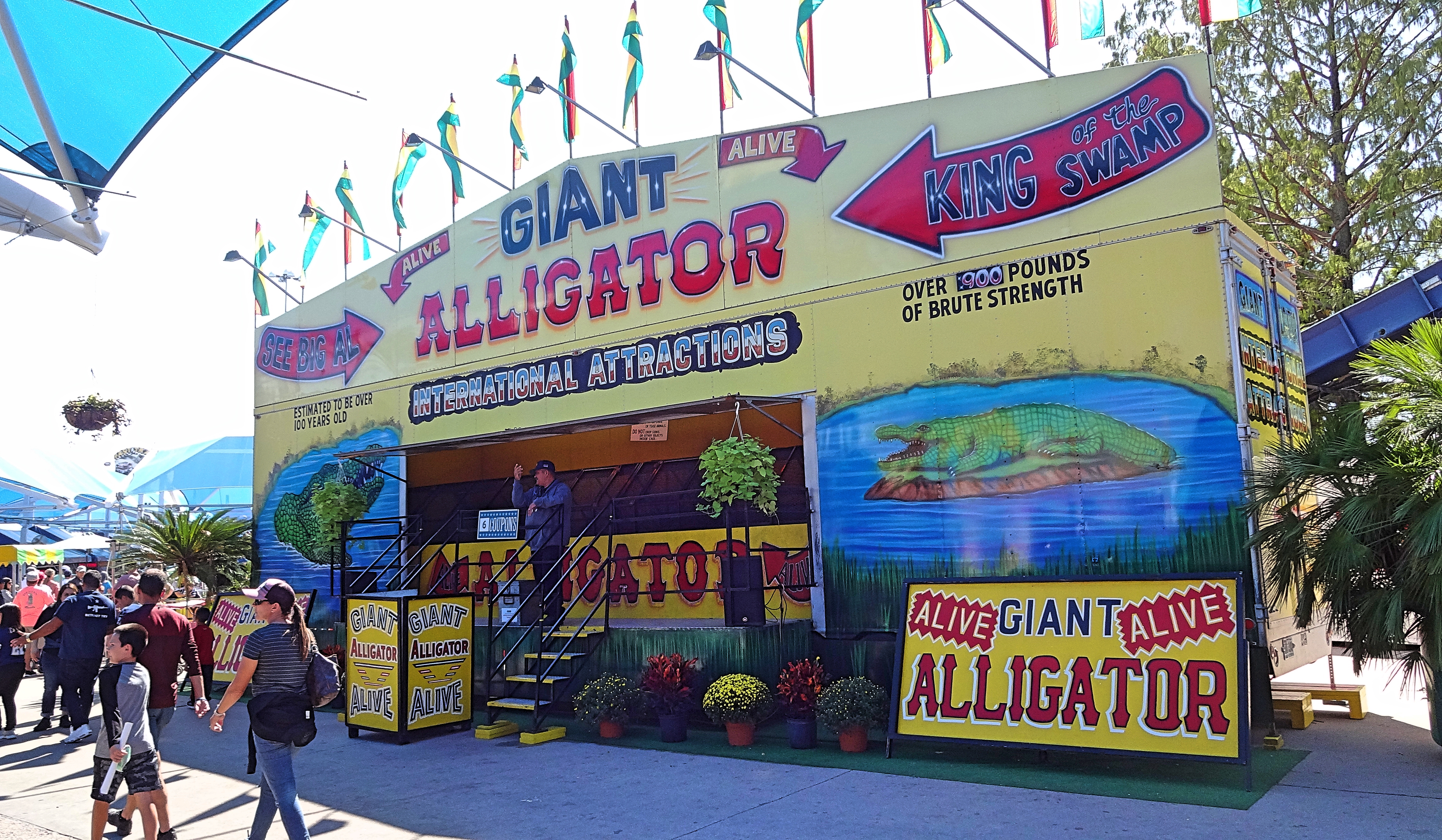
Photo by the author

When I was seven years old, my parents lost me at the State Fair of Texas. Their last sight of me, I’d slipped into a crowd of folks shuffling into a garish tent on the midway. I imagine them watching as I stood in line, my hair done up in twin pony-tails in the style we called “dog ears” and my sweaty little fist clutching the ticket to the freak show.

You’d be hard pressed to find a decent freak show now. This was 1967, when no one thought it unusual or awkward to put people on display. We have the internet for that now, but in the 60s you had to show up in person. I didn’t know what to expect from the sideshow. A bright splash of colored posters flapped against the outside of the tent and promised many miracles. An alligator boy, a sword swallower, the pincushion man, the world’s ugliest woman—they all waited inside.

The last one on this list drew me in. I’d started wearing glasses, a homely set in thick tan plastic that magnified my eyes to the size of saucers. Coupled with the elastic waisted pants and polyester tops mom dressed me in, from a distance I resembled a short, middle-aged housewife. Add in my under-bite, square jaw, and the nose I grew into, and you’ll get the picture. I couldn’t wait to spot the world’s ugliest woman.

Once inside the tent I fidgeted through the first part of the show. The only audience member shorter than five feet, I faced a solid fence of adult backsides. I hopped up and down, afraid I’d miss the one act I’d wanted to see. I caught the flash of metal as the sword swallower flourished his props, and from the collective sighs and gasps as the other performers took the stage, I understood they had displayed wonderful things.

At last the slick sideshow barker announced we could all move into a curtained off area to the side of the stage. “Only one additional dollar, folks,” he said, “and you will witness a site certain to frighten children!” The barkers gaze skimmed the crowd, measuring the size of our wallets. “Any patrons with weak hearts might want to skip the act.” I dug the last of my allowance from my pocket.

Half the crowd jostled through the curtains to arrive in a roped off space the size of my living room at home. I pushed my way to the front, determined not to miss a bit of the show. We faced a wooden platform, taller than I was, and barely large enough to support the plain kitchen chair placed in the center. Another set of curtains covered the back of this makeshift stage.

“Presenting the world famous…”

I don’t remember the woman’s name, the color or length of her hair, I couldn’t guess her age. The curtains at the back of the platform parted to allow her passage onto the platform where she settled on the little chair and dropped the robe that covered her body.

There must be some mistake, I remember thinking. This was not the World’s Ugliest Woman. Extraordinary designs—red dragons, blue and yellow birds, circles and flowers and bright flourishes covered every inch of her. I supposed the parts hidden behind her bikini top and shorts were also inked. When she smiled the tattoos moved along her face, as though they held a separate life from hers. She perched on the chair, smiling down at us, her supplicants. I wondered what she thought of me, so plain, so ordinary, without a single story drawn upon my skin.

I didn’t notice the others slipping out from the tent as I stood there, entranced until the sideshow barker, with a gentle nudge, told us, “Thanks for visiting folks.”

Released onto the fairgrounds, I wandered out into the sunlight to find my mother and father standing on either side of a uniformed policeman.

“Where were you?” My mother snatched my arm, dragging me away from the dark shadow of the sideshow tent as though it might suck me back in.

For answer I waved behind us, as a new stream of fair goers exited from the front of the tent. This was where most of the group I’d been a part of had left the show, strolling out past my waiting parents. I’d appeared almost twenty minutes later, from the back of the tent.

“Never again!” My mother vowed.

That was my first, last, and only visit to the freak show. Years passed and they replaced the freak show with exhibits of bizarre animals. The two-headed turtle, the world’s largest snake, the sheep with six legs—none of them had the alluring charm of the World’s Ugliest Woman. There was a brief time when the midway claimed to have a girl without a body, but we all knew that floating head trick was done with mirrors.

I went to the fair this year with my husband, Andrew, on a Sunday, a day when the crowds shuffled shoulder to shoulder past booths selling sheets, candles, cookware, and beef jerky. The air smelled of cotton candy, stale beer, and manure from the livestock barn. We left the carnival music of the midway fading and ducked behind a row of food stalls. With Andrew’s help I perched atop a concrete retaining wall, above the crowd as they streamed past. I wore a t-shirt with the smiling face of Big-Tex, the 55-foot statue greeting the crowd at the fairgrounds. His cheeks stuffed with fair food matched mine as I enjoyed my meal. I nodded to those passersby who met my gaze, and waved to the onlookers, the audience at the show.

5A48BB6C-83DC-426D-BDE3-1A86C3A7832C
The author and Big Tex


The Onion Capitol

Snowcones_Fotor
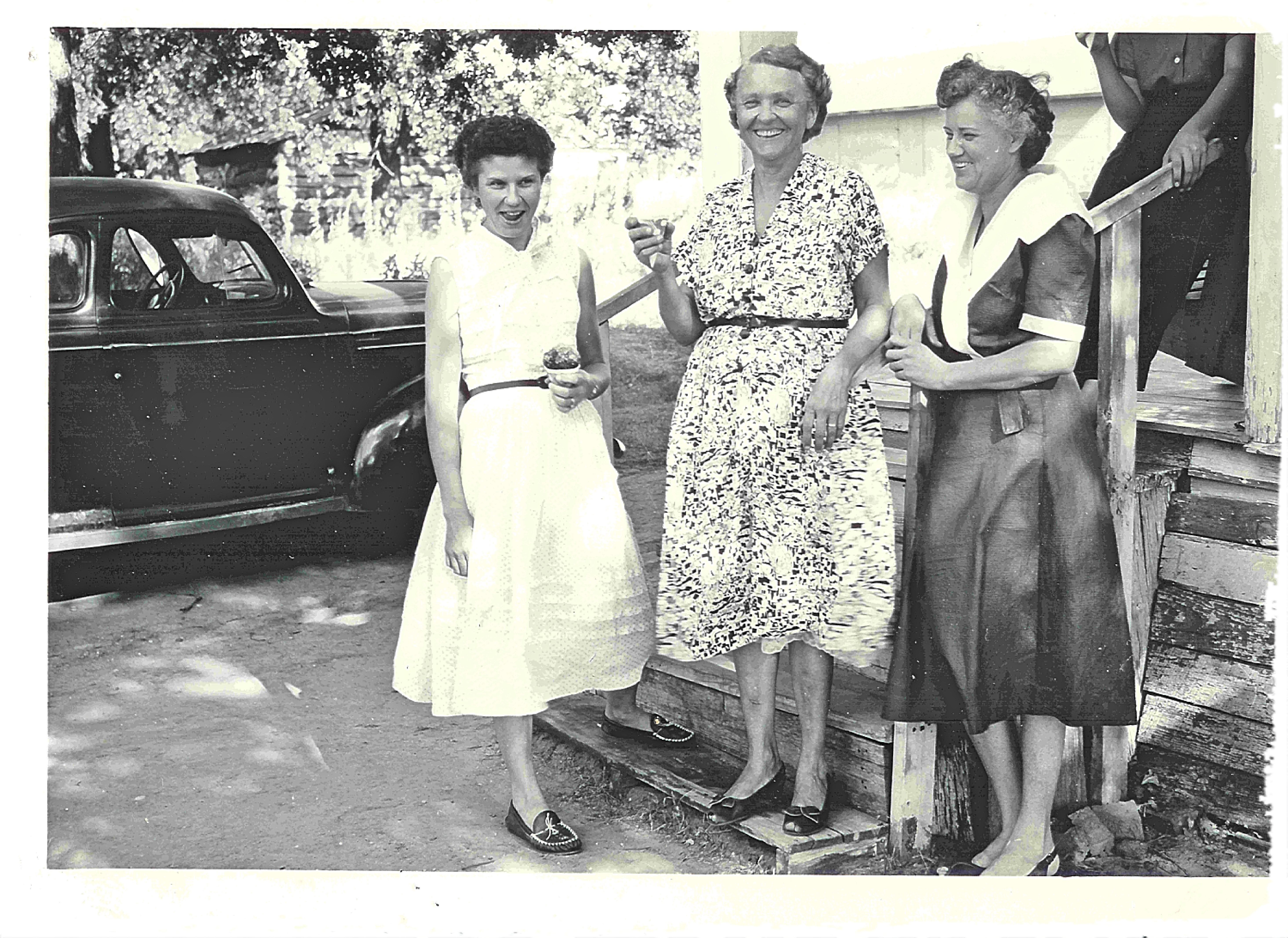
My mother, grandmother, and aunt in Farmersville in the 1950s 

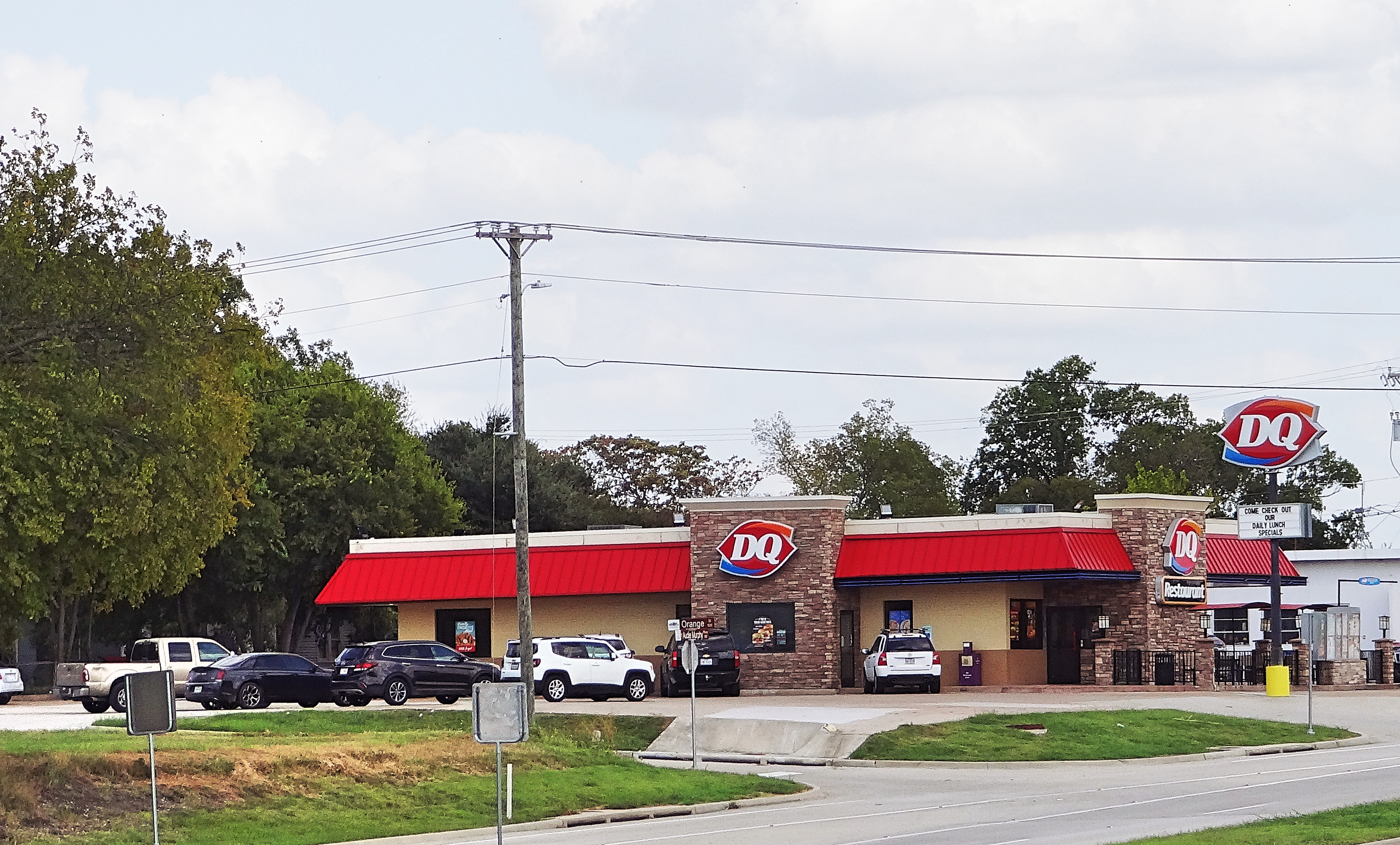
The places we visit are never as perfect as they are in our memory. My grandmother’s house in Farmersville, Texas no longer exists. A remodeled version of the Dairy Queen I visited as a barefoot child sits beside the highway and still serves up chocolate dipped cones and cheeseburgers. You can see the Dairy Queen from the overpass where I used to stand with my cousin and spit on the cars passing below. 

DSC03124_Fotor
Dairy Queen – Photo by the author


My husband and I drove up to Farmersville on the weekend, a short day trip from our home. Over bridges spanning the lake, past trailer parks and fireworks stands to the little town that was once the Onion Capitol of North Texas.

IMG-0718_Fotor
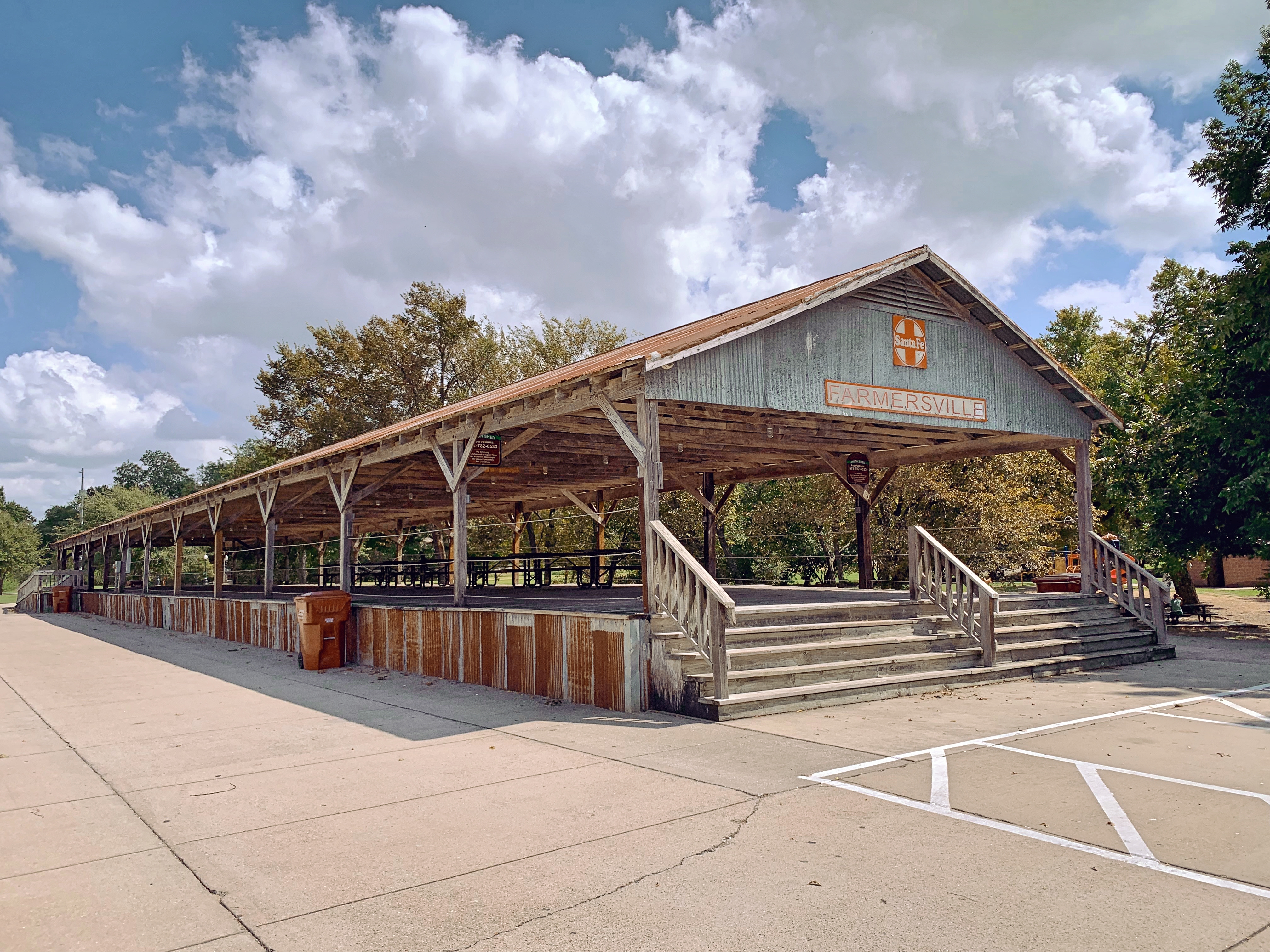
The Onion Shed in Farmersville, Texas – Photo by the author

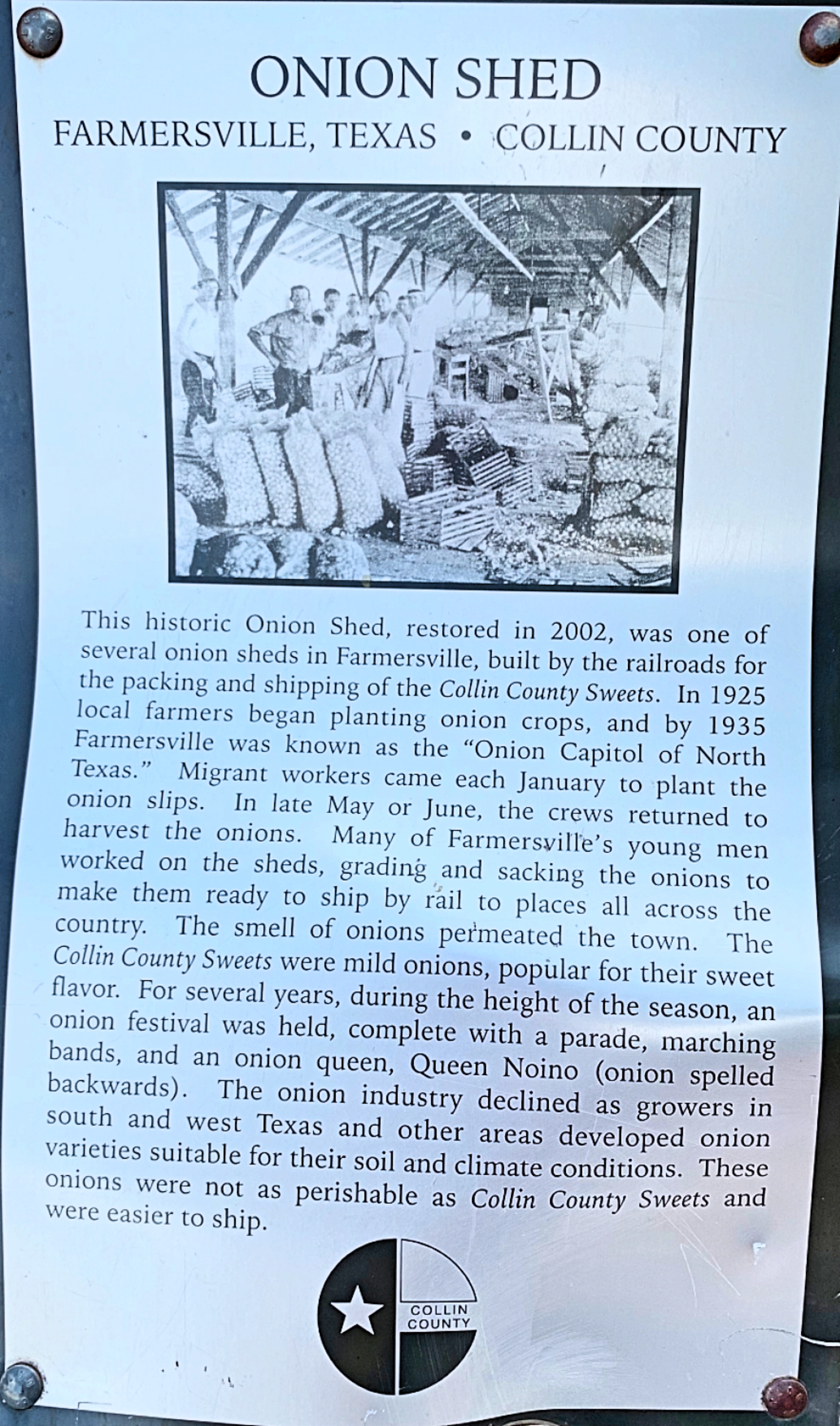
The Onion Shed sits near the town square. In the 1960s I helped my mother and grandmother fill burlap sacks with discarded onions, the rejects spilled and tossed onto the grass from the railway cars where the Collin County Sweets were loaded for shipment. No longer filled with the round yellow bulbs, you can find a flea market there on the first Saturday of each month. 

IMG-0719_Fotor
The plaque at the Onion Shed


Clay Potter Auction_Fotor
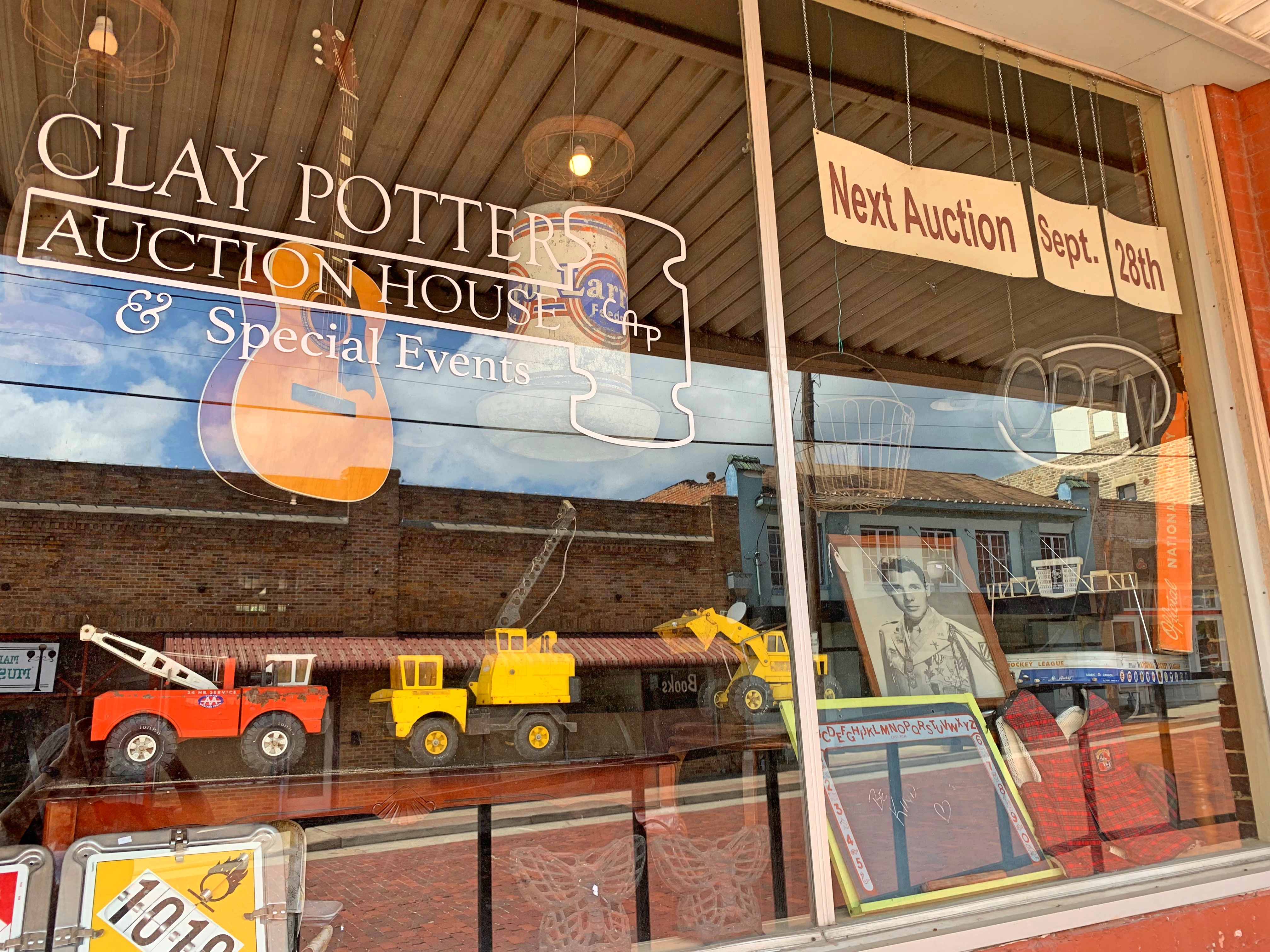
A portrait of Audie Murphy among the items for sale at the Clay Potter Auction House

We wandered through antique stores on the town square. I am always surprised to find the toys like those from my own childhood, stacked on dusty shelves and labeled “vintage.”

There were no toys in my grandmother Mattie’s wood frame house. A print of Jesus knocking at the door and a framed copy of the TV Guide with Johnny Carson on the cover decorated her living room wall. If I slipped from my mother’s view I would have just enough time to explore Mattie’s bedroom. I could hide under the fuzzy chenille bedspread and peak out through the fringe skirting the bottom where it brushed the floor.  Visiting children were turned out into the yard, chased from the house by apron-wearing women too busy with cooking and serving to put up with our foolishness.

IMG-0723_Fotor
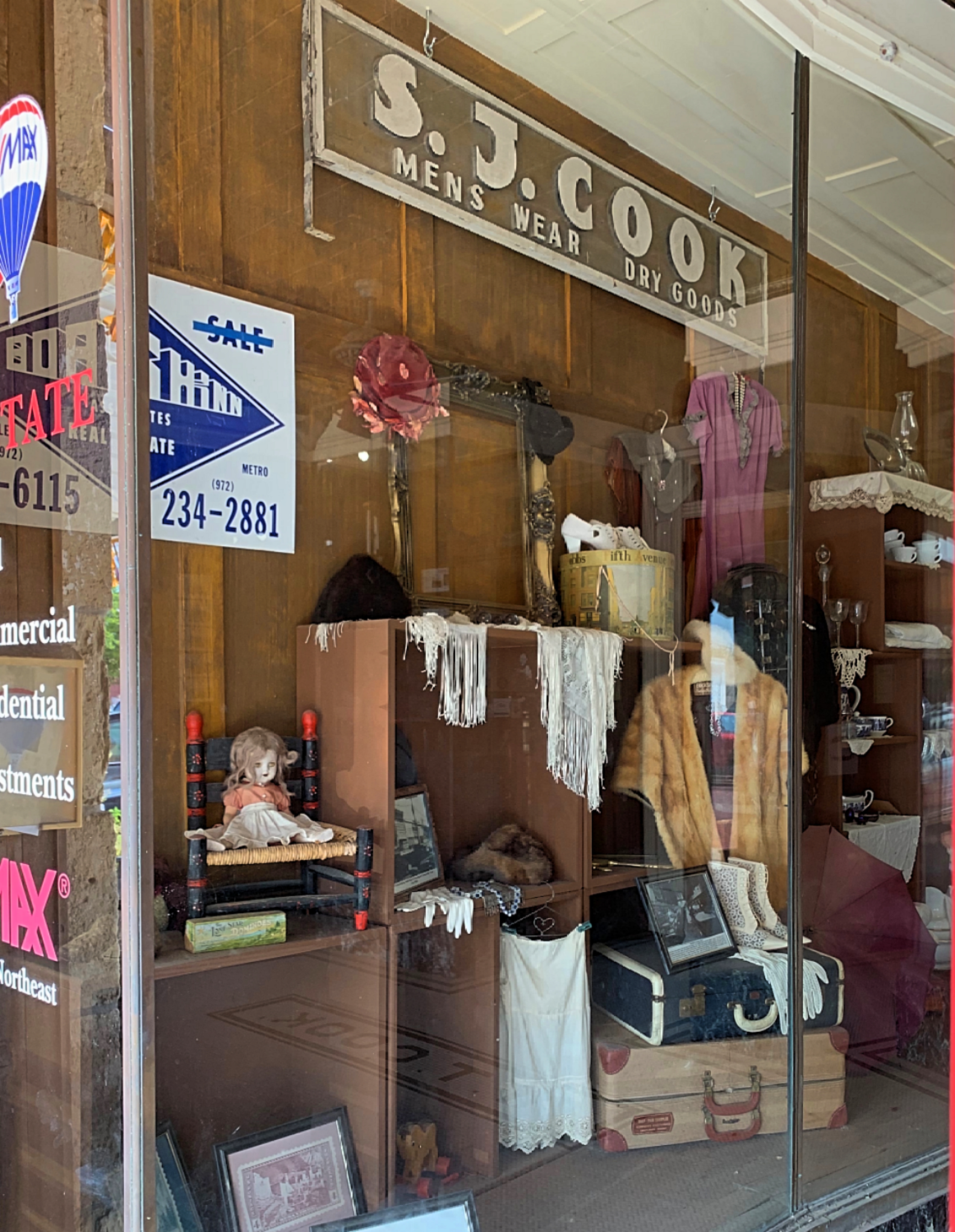
Window display – Photo by the author

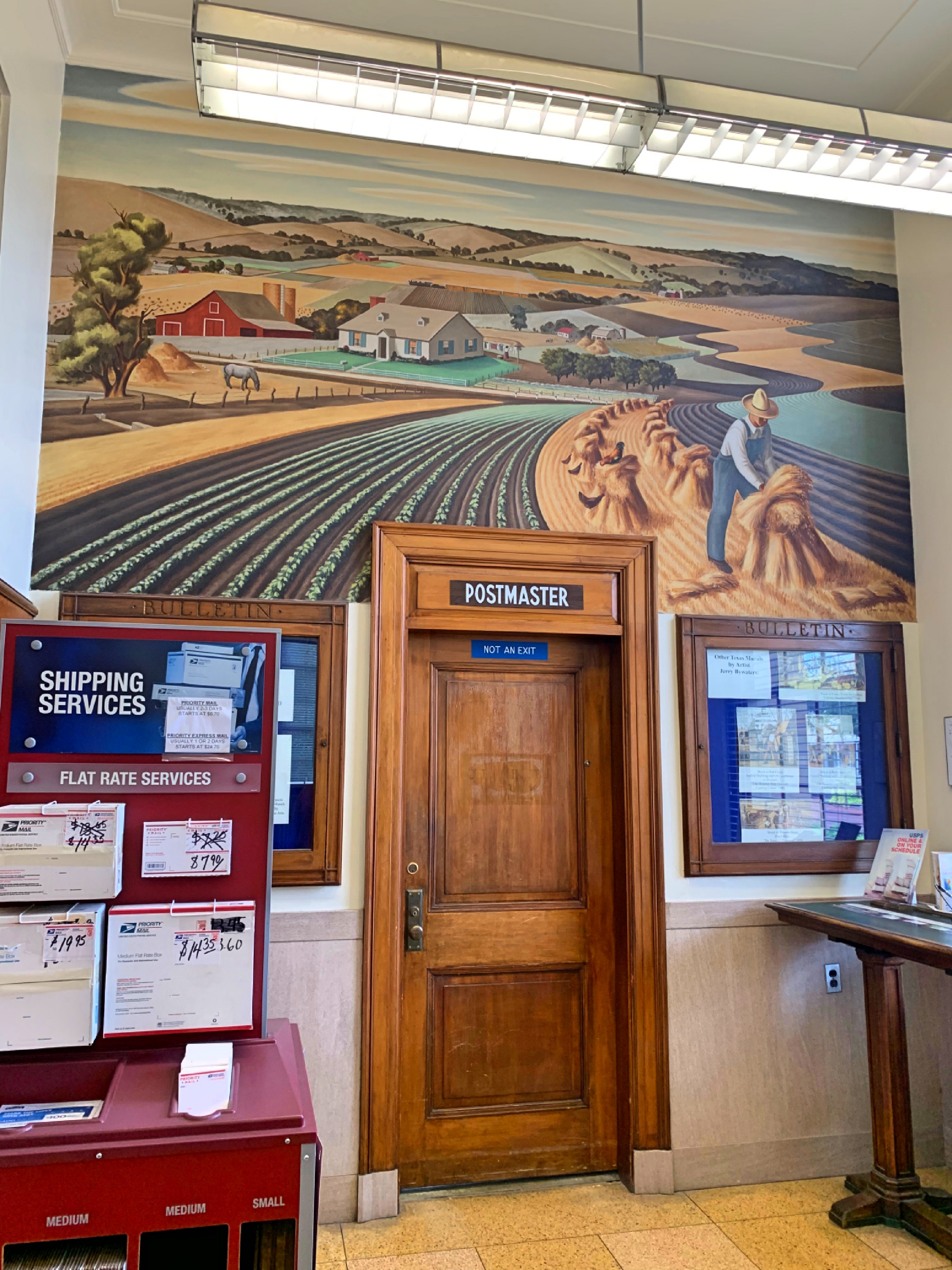
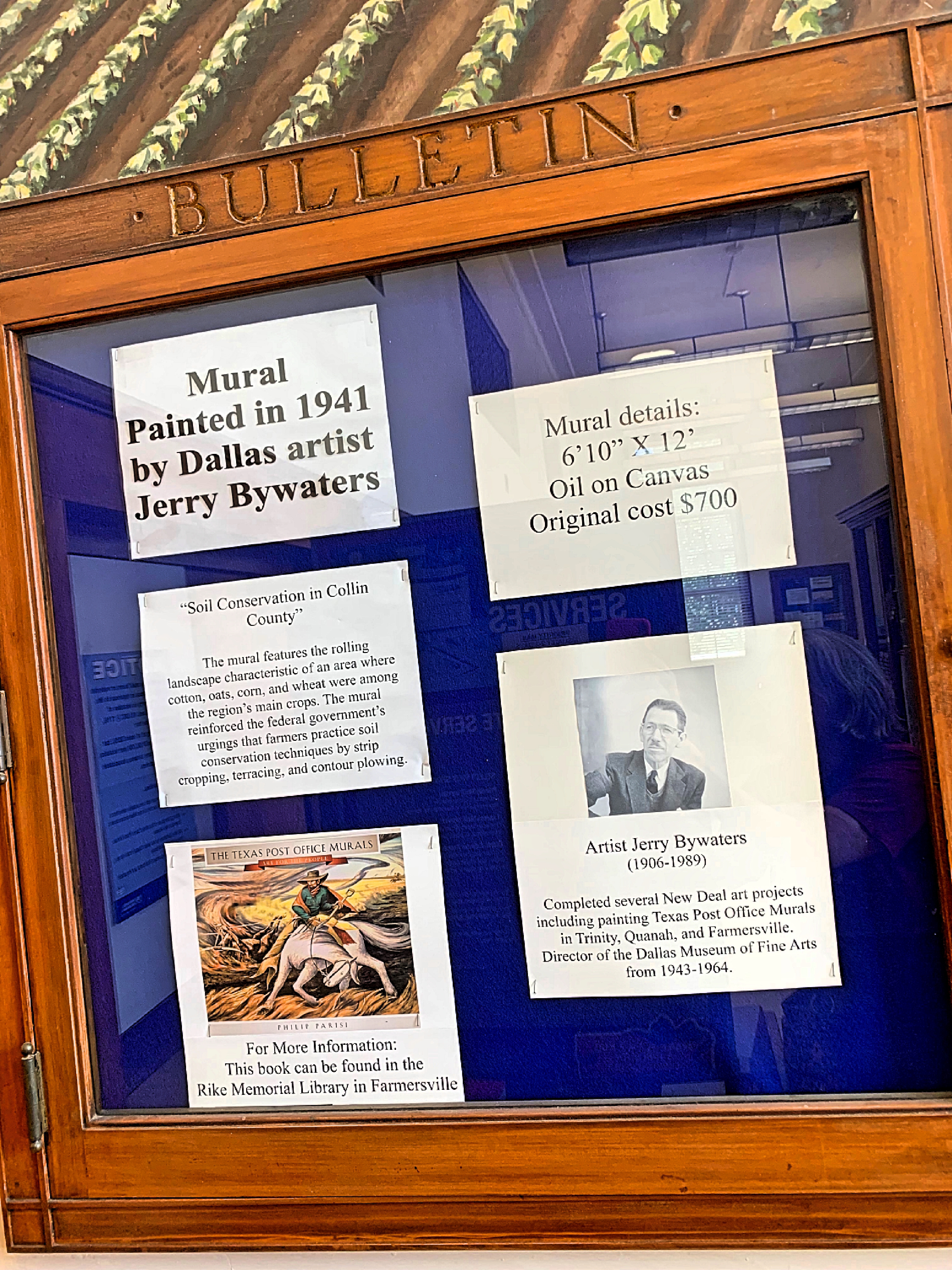
Small towns often have treasures tucked away, to be uncovered by those with time and patience to wander. The post office sports a mural painted in 1941 as part of the Works Progress Administration (WPA).

Mual_Fotor
WPA mural in the Farmersville Post Office – Photo by the author

IMG-0714_Fotor


A short walk to downtown from Mattie’s house, over the railroad tracks and to the pecan tree shaded park, and I could find the snow cone stand there in summer. Crushed ice in a paper cone that dissolved as the treat itself melted to slush in the heat. But I could drink the last of it, my hands, lips, clothes stained red, purple, blue, green.

DSC03111_Fotor
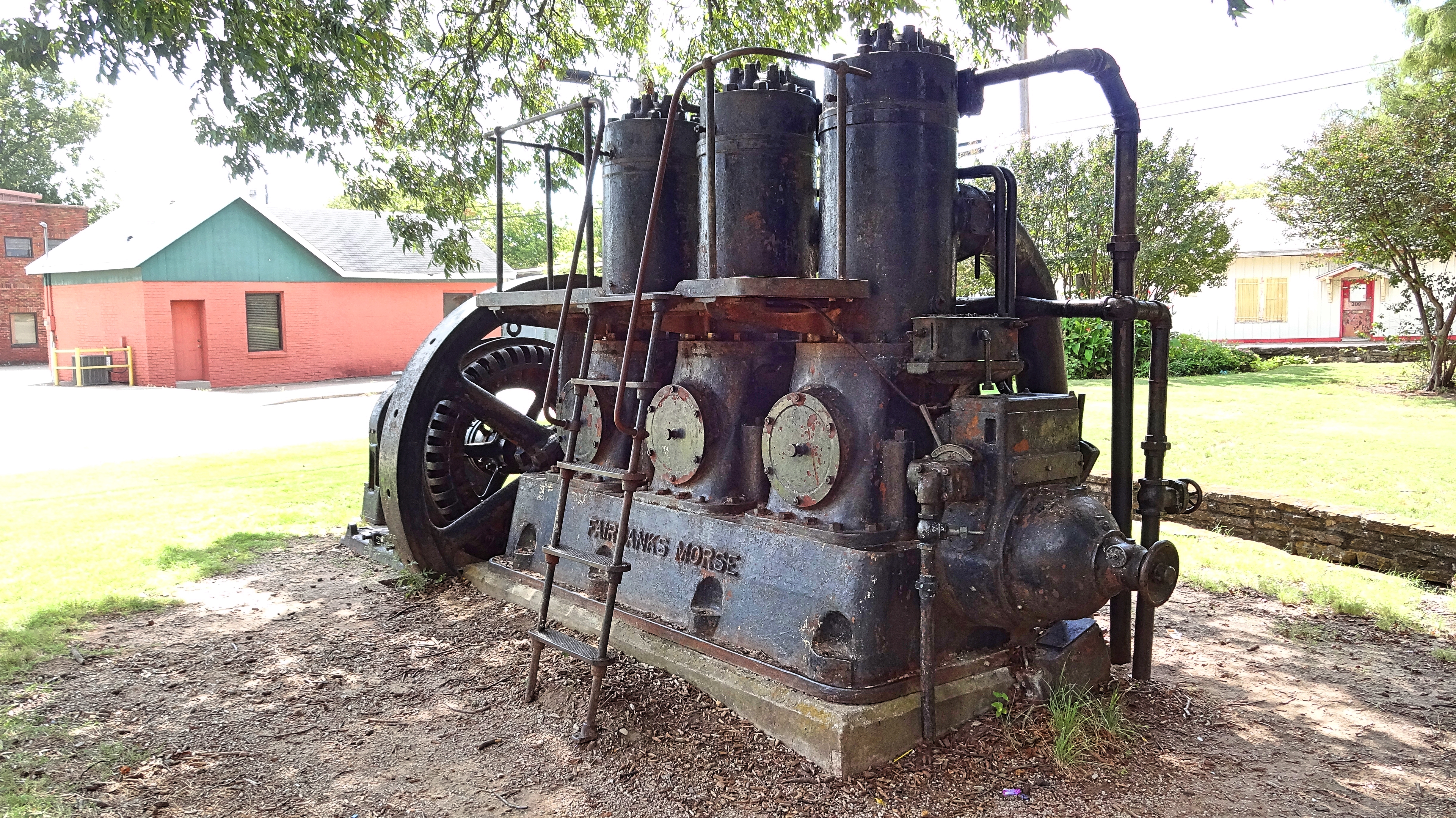
Old Electricity Generator in the city park – Photo by the author


There were no snow cones for sale on the day we visited, but I bought a Dr. Pepper from one of the stores. Andrew and I sat and shared the drink on a bench near the old movie theater downtown.

DSC03105_Fotor
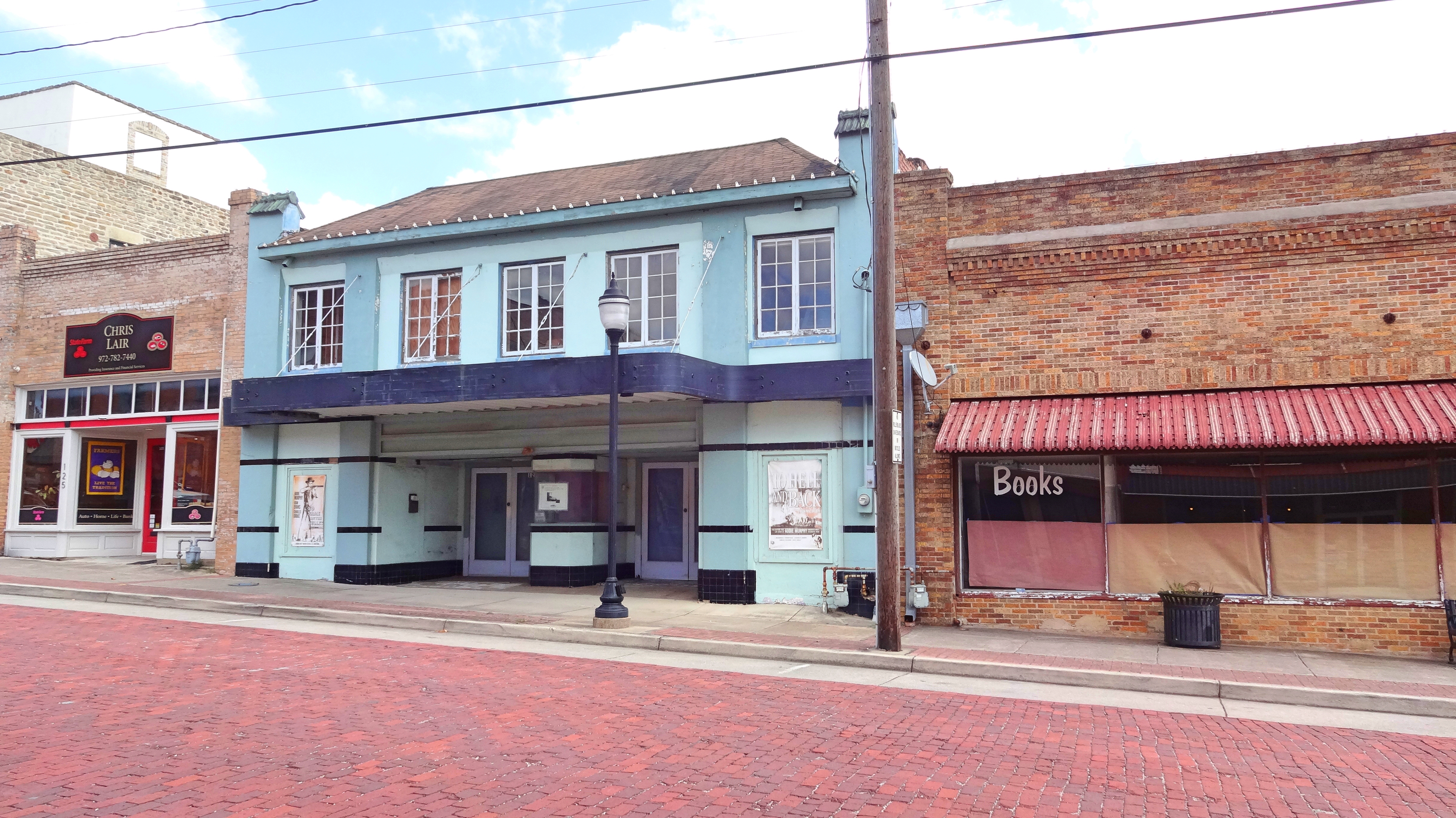
The movie theater in downtown Farmersville, Texas – Photo by the author

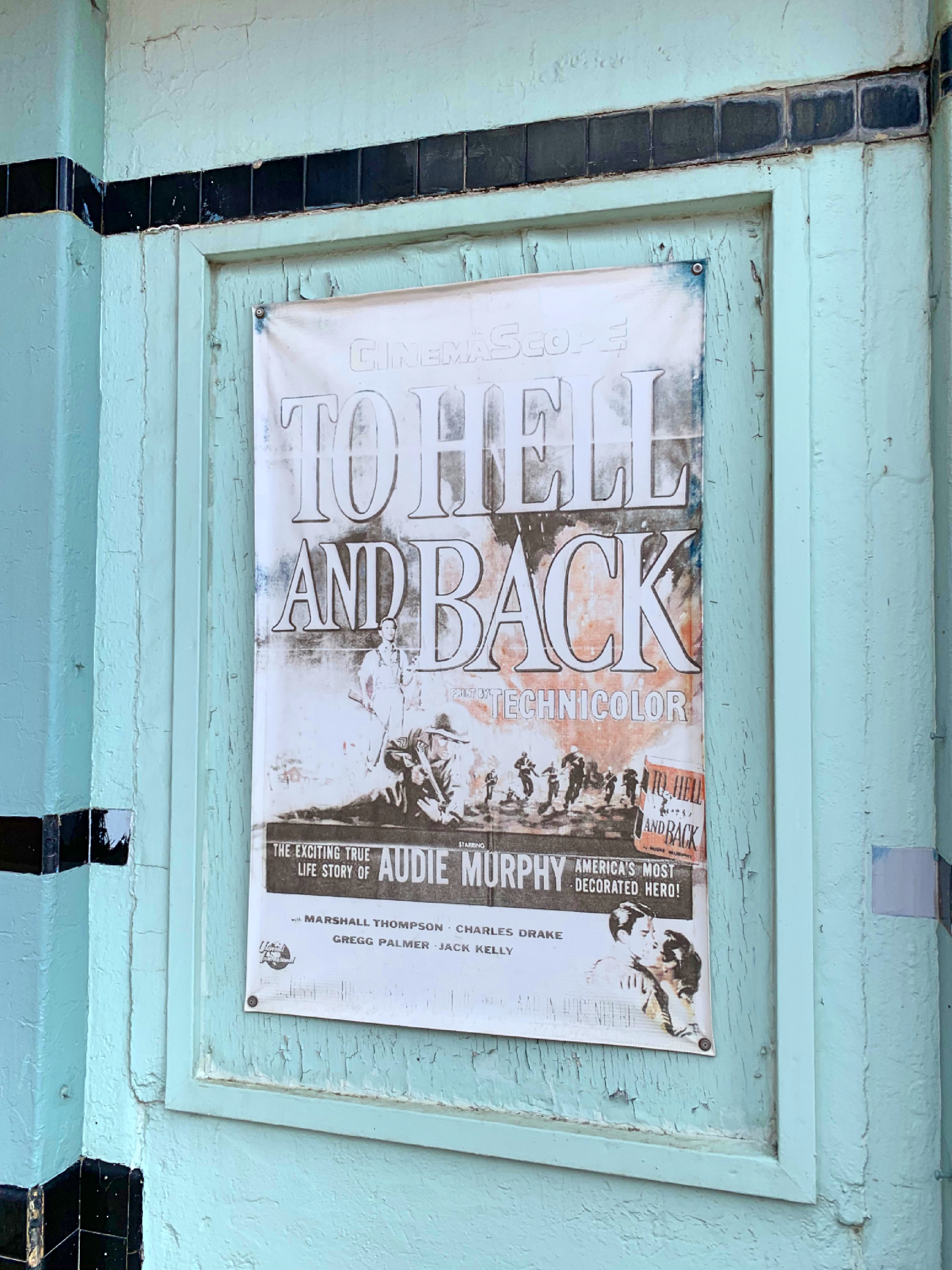
Closed for years, posters from films starring the hometown hero, Audie Murphy, hang on the front. I imagine my mother there on a Saturday night, palms slick with butter from the popcorn.

IMG-0720_Fotor


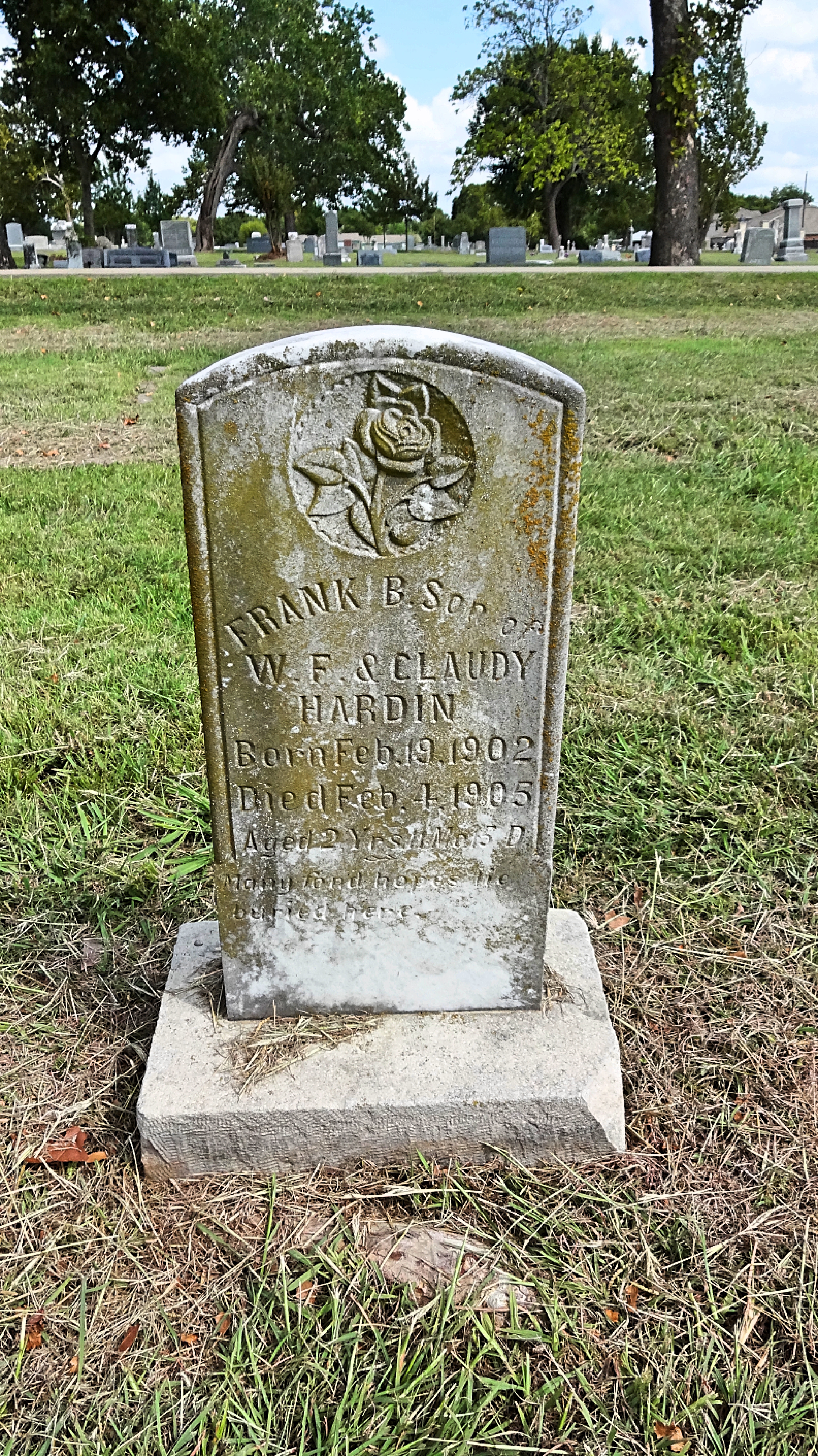
We ended our visit with a stop at the Odd Fellows Cemetery. My grandparents, Grover Cleveland Cullum and Mattie Elizabeth Watson Cullum, are buried there, as are their parents. We searched for their graves but couldn’t locate them. I hadn’t been there in years and the day was too hot for much effort. The one place in town that hadn’t changed but I couldn’t rely on my memory to find the family plot.

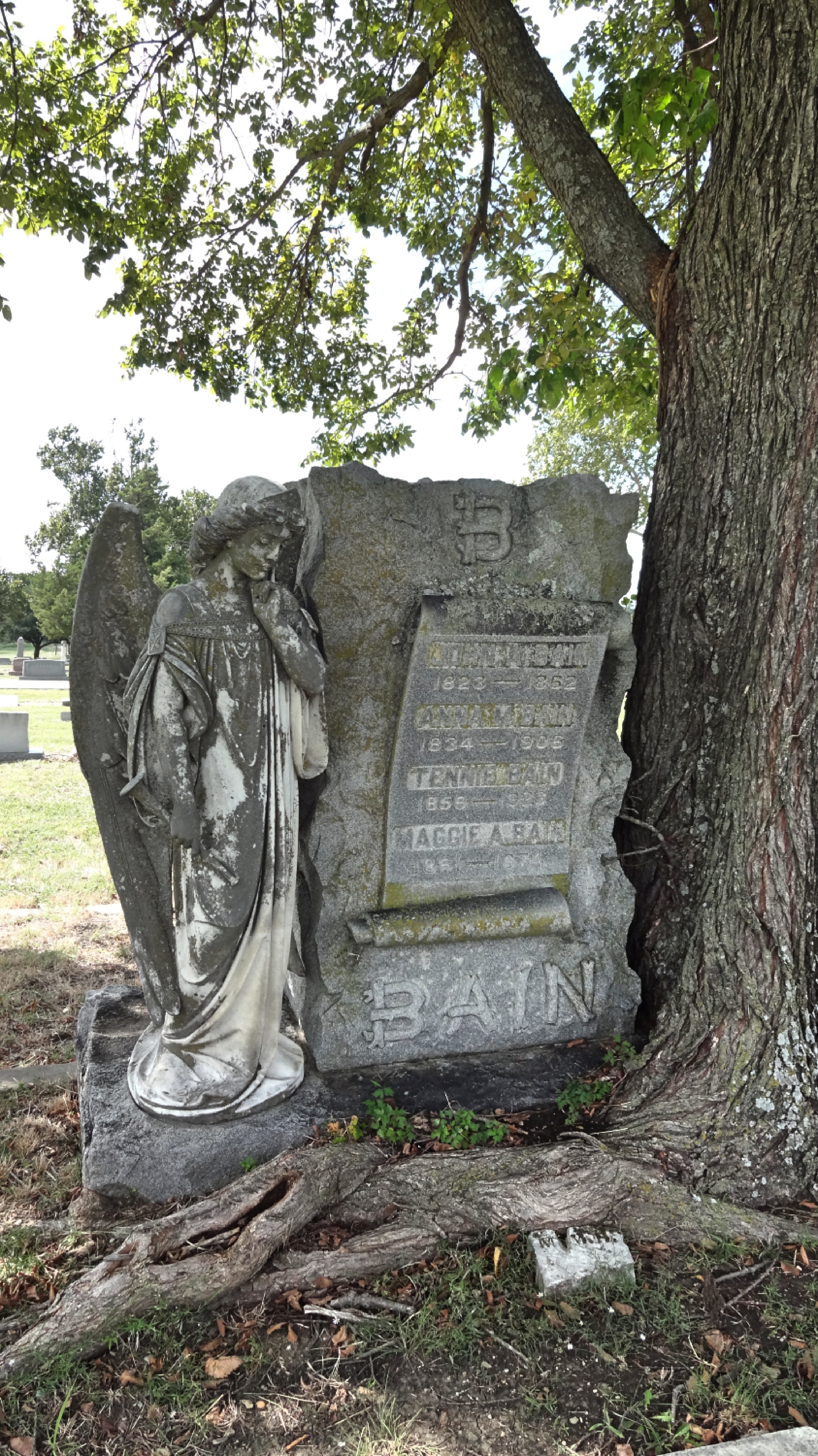
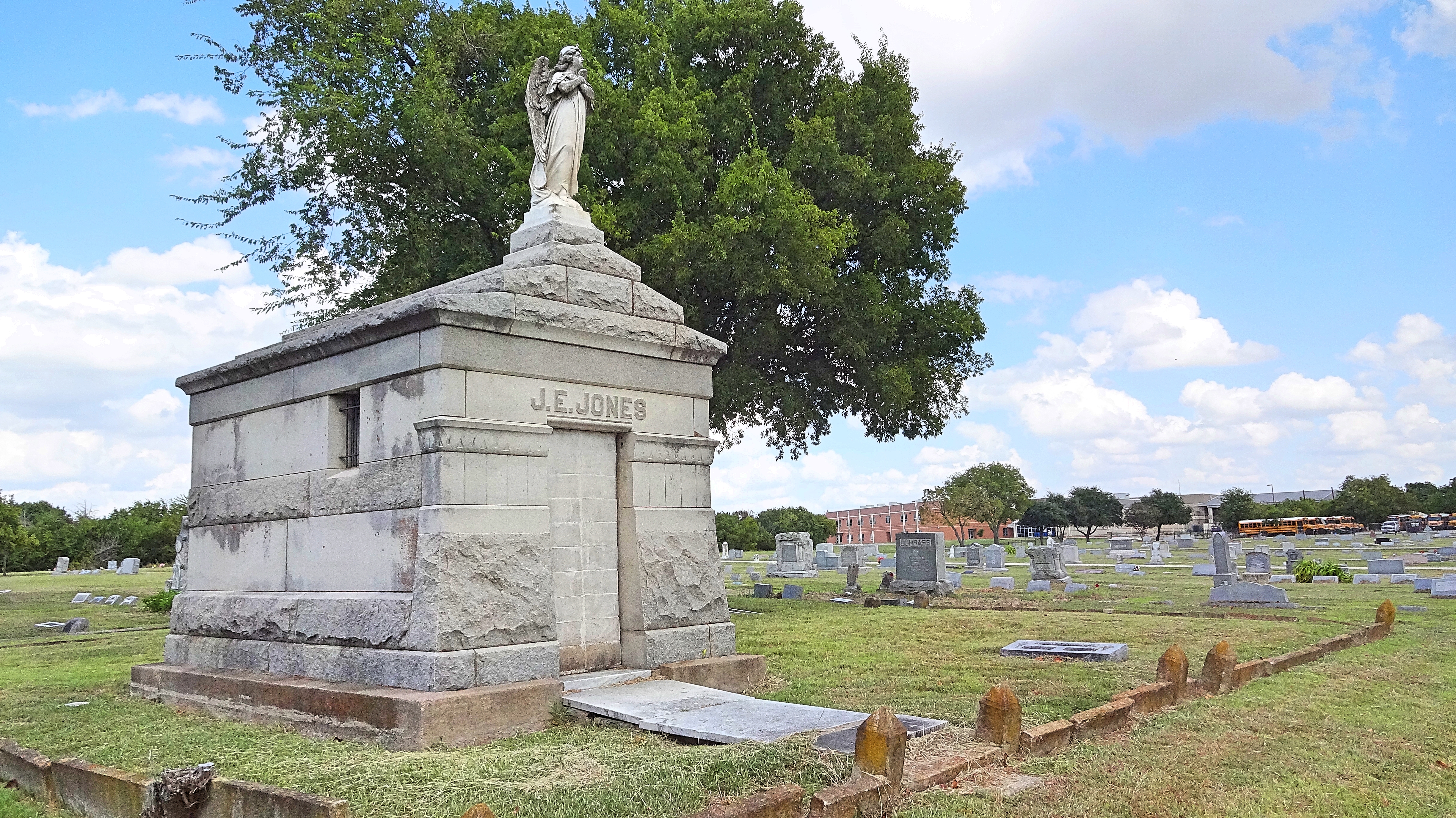
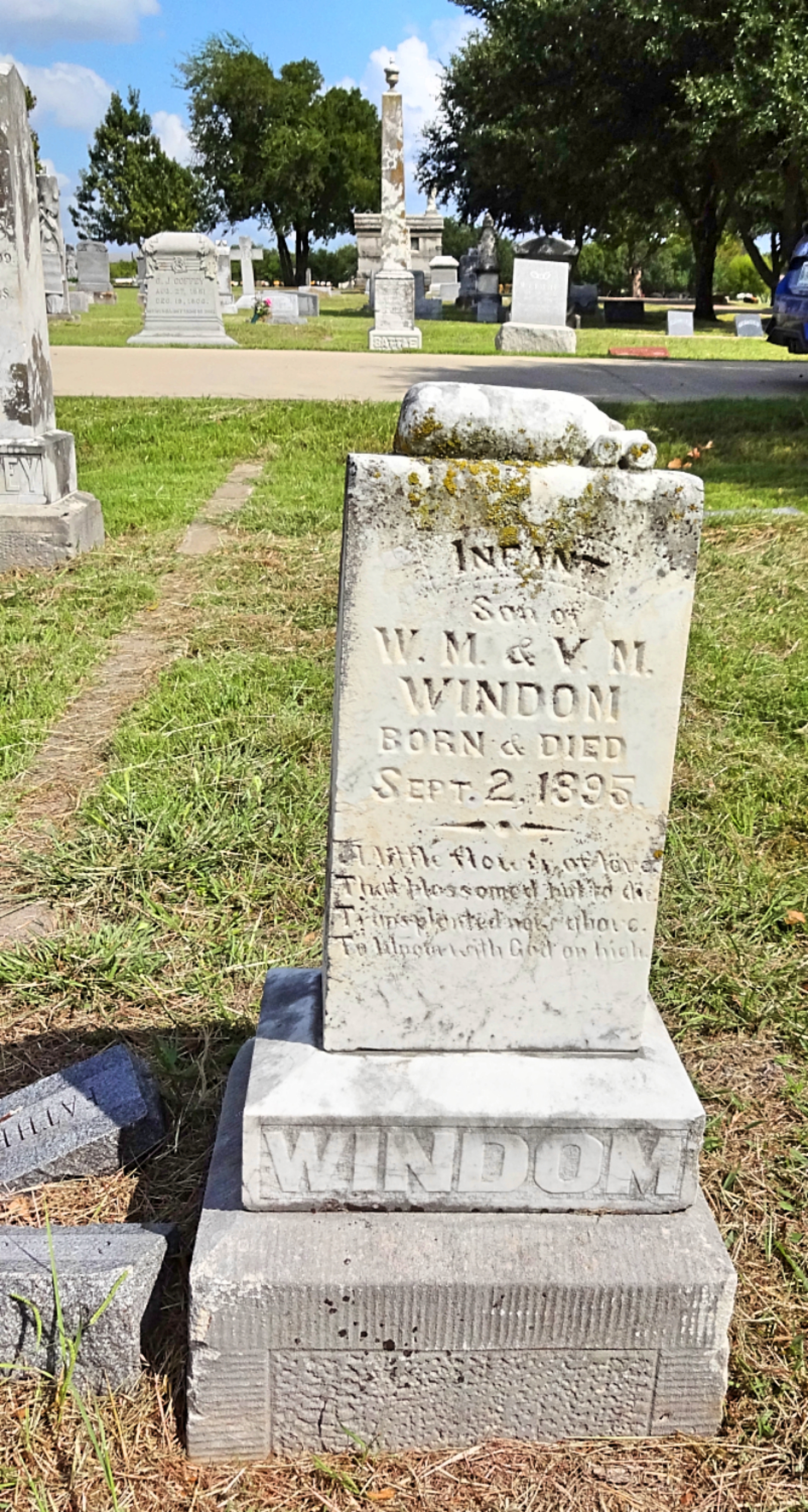
We did see some interesting gravestones.

DSC03115_Fotor
Farmersville 100F Cemetery/Odd Fellows Cemetary

DSC03121_FotorDSC03113_Fotor

DSC03119_Fotor

“Some of these people were alive during the Civil War,” Andrew commented.

“Yes,” I said.

Tired and sweaty, we climbed into our air conditioned Honda and headed home. Past the shops downtown, the onion shed, the park, the railroad crossing, stopping at last near the overpass so I could hop out and snap a photo of the Dairy Queen. Then onto the highway and home, leaving behind the layers of memory. My mouth, dust dry as I lean over a metal guardrail, the low mournful train whistle in the dusk, the sharp scrape of sidewalk on bare feet, the candy syrup from a grape snow cone, icy cold contrast to a dog summer day. The scent of sweet onions, yellow and round as baseballs, hidden like Easter Eggs in the soft green grass.


How Sweet It Is

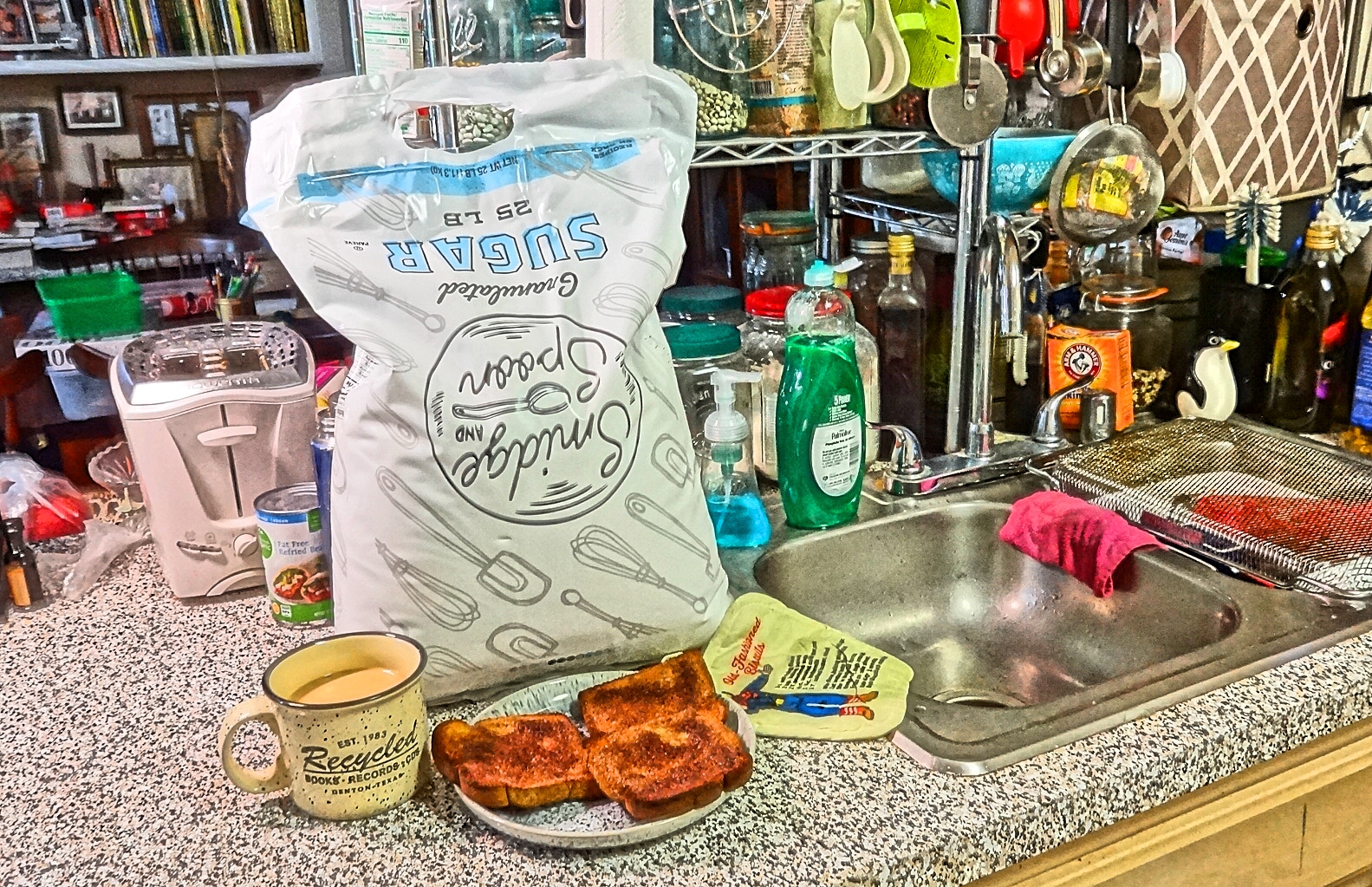
Sugar 1Photo by the Author

We didn’t need twenty-five pounds of sugar, but I felt a small thrill of satisfaction as I lifted the plastic bag onto my cart. The sensation could have been a stab of pain from hefting the heavy sack.

“What will we do with that much sugar?” My husband, Andrew asked.

“I’ll use it for my tea and coffee,” I answered. “It won’t spoil,” I added, after calculating how long the hoard would last if I drew out my usual ½ cup per week. I pointed to the back of the bag. “And here’s a recipe for sugar cookies.”

When I first spotted the shiny white package in the clearance aisle at Kroger, I thought it contained pool chemicals. I stepped over the bag where it lay on the floor, snugged against the lowest shelf as though someone had lost the strength to lift it back into place.

“Twenty-five pounds for $4.89! That’s…” My accountant brain calculated the price per pound—“a great bargain.”

If asked to list the features of their dream home, most people would include a lovely kitchen, a spacious backyard, a sparkling pool. My perfect house would contain lots of closets. Closets with shelves, racks, walk-in closets, storage spaces tucked under stairs, coat closets so wide and deep you’d think there’s a door to Narnia in the back. I need space for my stuff.

“It’s not hoarding if it’s something we will eventually use,” I told Andrew as I crammed twelve skeins of mulberry hued yarn into a cardboard box, to stash under the bed. Buy-one-get-one, how could you refuse?

When I was a child, my mother paid for our family groceries with food stamps. We stood in line for government commodities—five pounds of cheese, flour, canned vegetables, and sometimes sugar. Having survived the Great Depression, my folks were certain that economic ruin lay just around the corner. My dad held onto a booklet of sugar rationing stamps from World War II until the 1970s, when he passed them on to me.

I’ve inherited my parents’ insecurity, as sure as I’ve inherited my dad’s under bite and my mother’s nose. Like them, I ease my anxiety over the future with a full pantry. I consider my Costco membership as thrilling as a ticket to an amusement park. There’s a cult of clutter-clearing going around, but I wonder if any of them have experienced the life-changing magic of buying in bulk.

At home, I transferred five pounds of rice into several smaller jars, dumped a pound of beans into a pot to cook for dinner, and repurposed a plastic tub I had reserved for the ten-pound bag of cornmeal forgotten in the back of the pantry. The twenty-five pounds of sugar had landed on the clearance aisle because of a small hole in the package’s top. I discovered this at the store when I lifted the bag onto the register to scan the price tag.

“No problem,” I reassured Andrew while I swept grains of sugar off my clothes. “I’ll put it up in something when we get home.”

“The ants will love it,” he said, as he knocked sugar from the bottom of his shoes.

Safely secured in large tubs, glass jars, plastic totes, and the china bowl next to the coffee maker, I sighed with relief knowing my sugar future was secure. If we find ourselves in an apocalypse before my hoard runs out, drop by. We will have cookies.

*Originally published on Medium at https://medium.com/@TurpinTerrye/how-sweet-it-is-351b7df85876?source=friends_link&sk=08d4c1eb2f285f01bbffa7f28b0c65f3


This is a War Machine

IMG-0339

The USS Cavalla rests at Seawolf Park in Galveston, Texas. On June 19, 1944 she sank the Japanese carrier Shokaku, one of the warships responsible for the attack on Pearl Harbor.

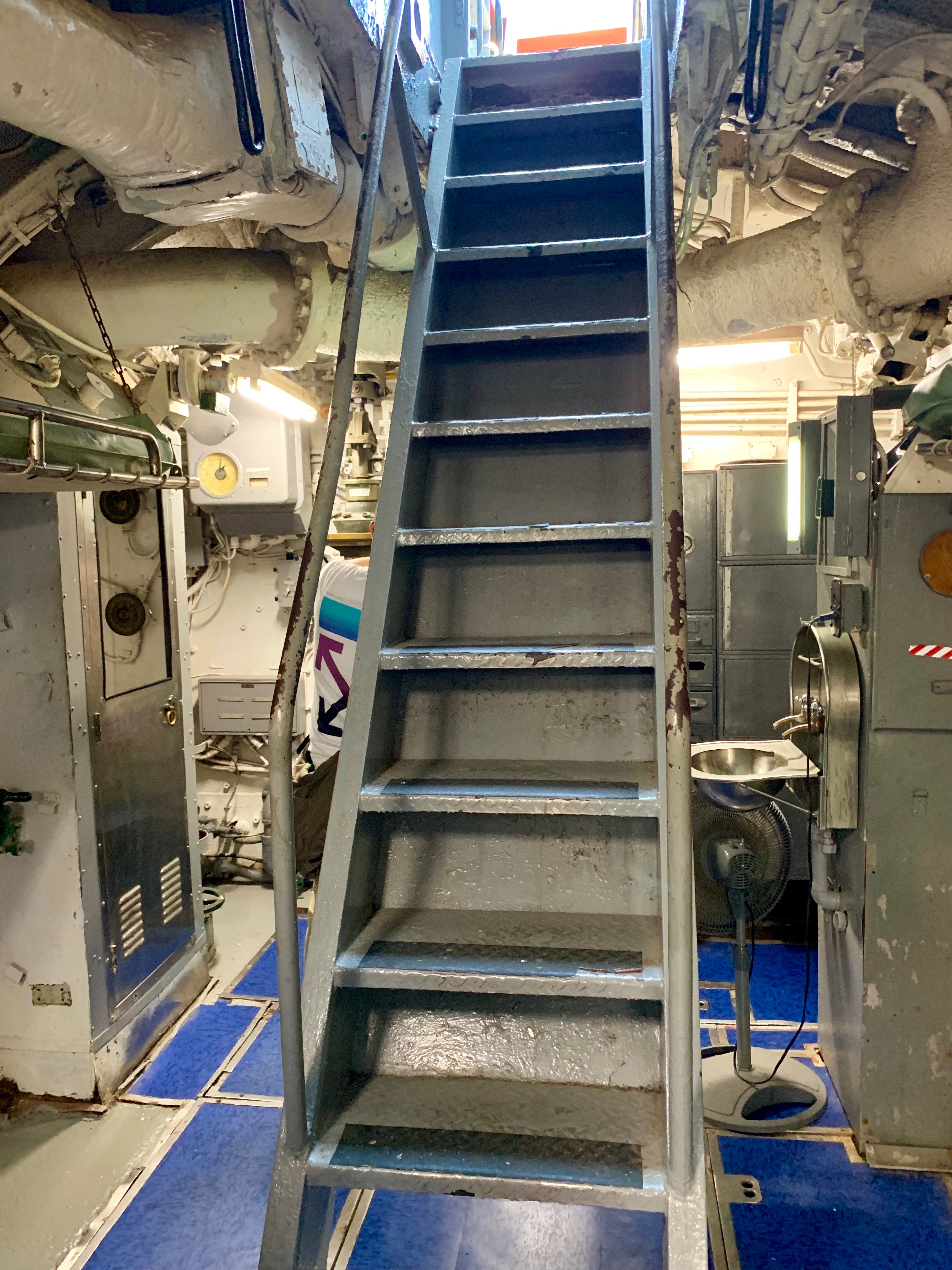
Andrew and I climbed down the ladder into the sub, a giggling group of teenage girls behind us.

IMG-0345IMG-0347

The Cavalla, decommissioned in 1946, was retrofitted as a “hunter/killer” sub in 1952 during the Soviet threat. She specialized in attacking other submarines.

In 1971 the USS Cavalla was moved to Seawolf Park. The park is named for the USS Seawolf, a submarine lost at sea during WW II.

IMG-0349

The sign at the entrance to the park reminds visitors the sub is a war machine. Not much has been changed inside the Cavalla, but they did add air-conditioning for the tourists.

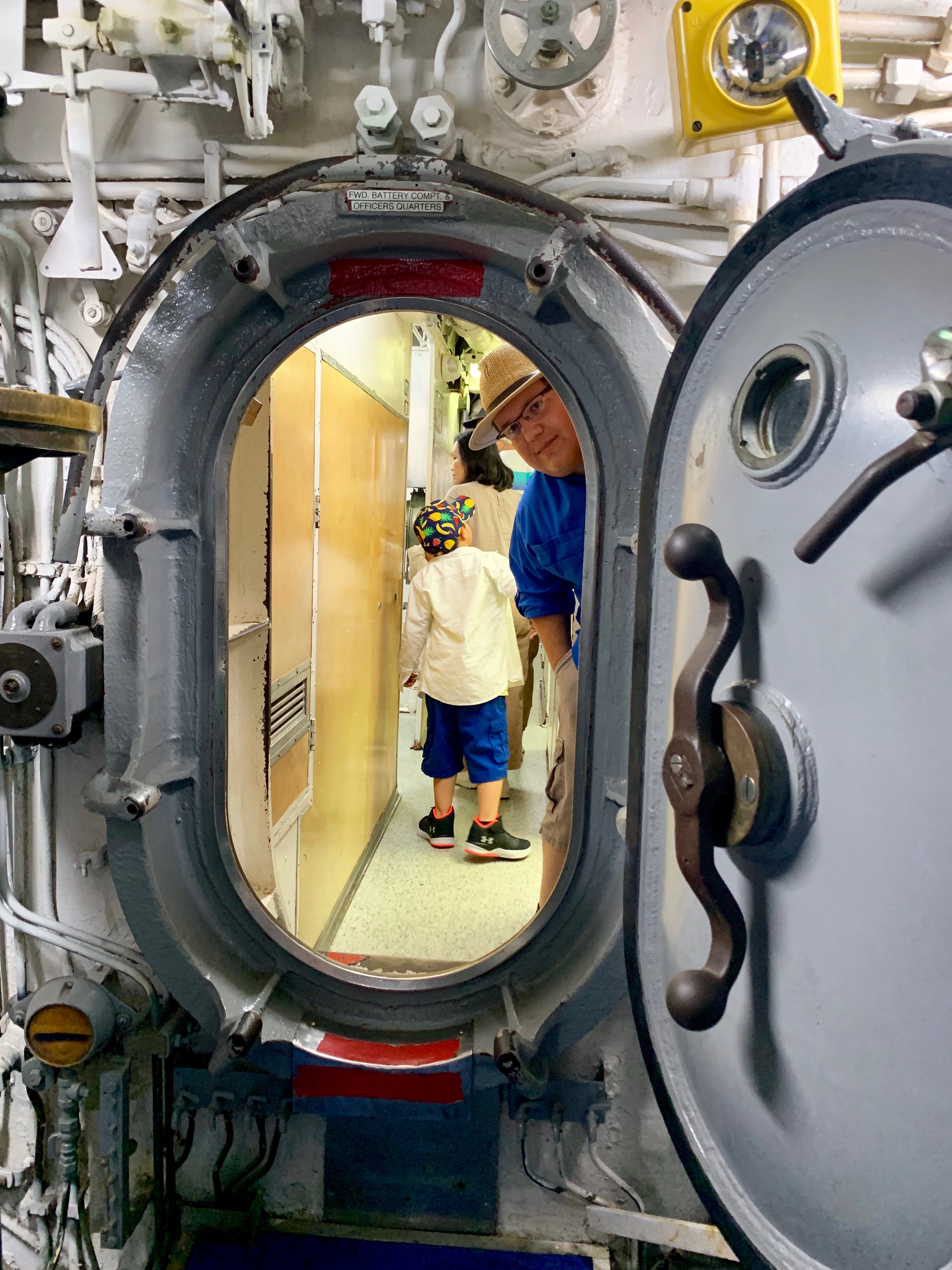
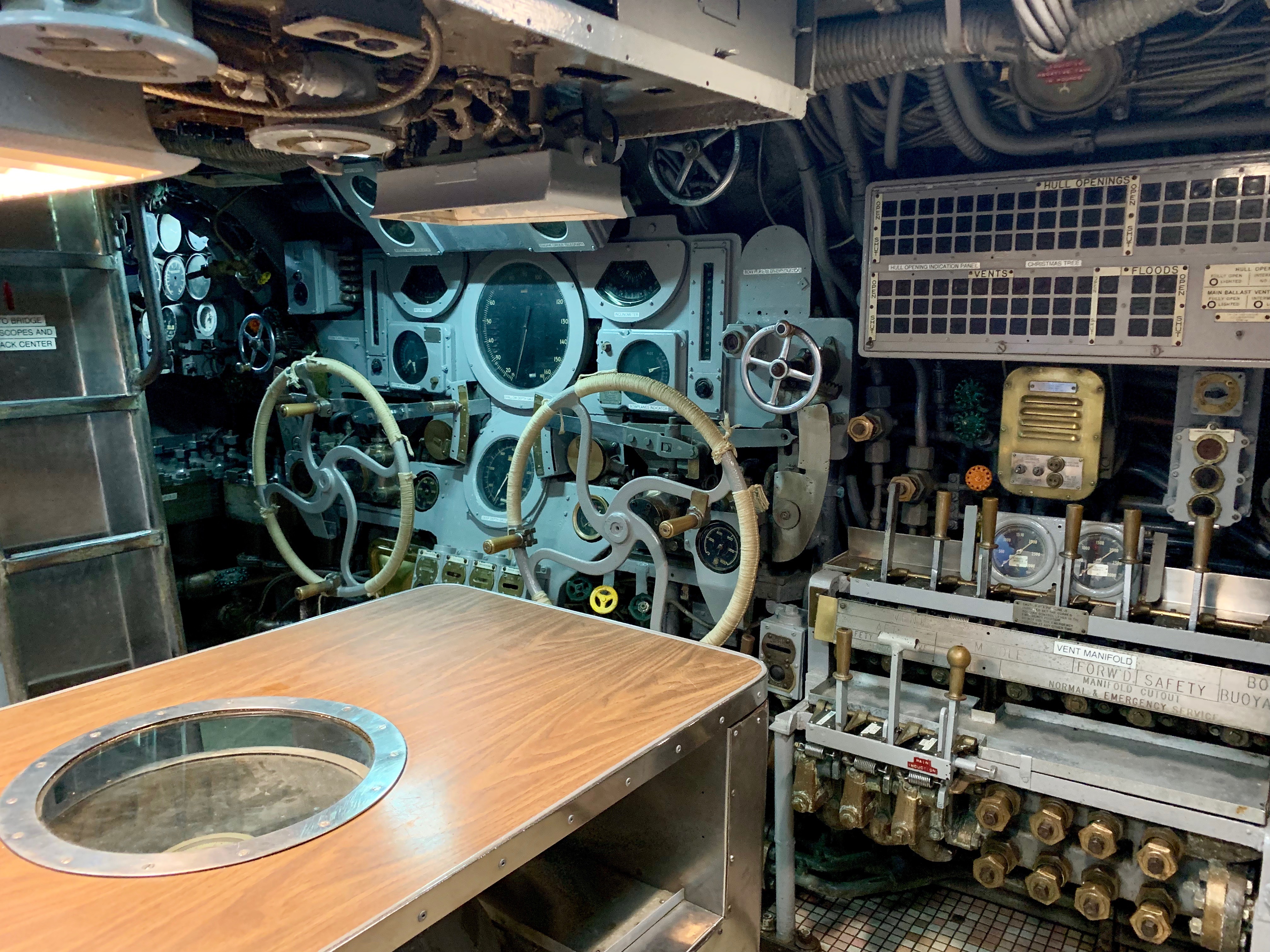
The boat sits on dry land, but I did not want to linger below. I whispered “This is a War Machine” as we bent and twisted through the cramped quarters. I prayed everything was indeed decommissioned as the young ladies behind us touched dials and jostled us as we journeyed through the tour.

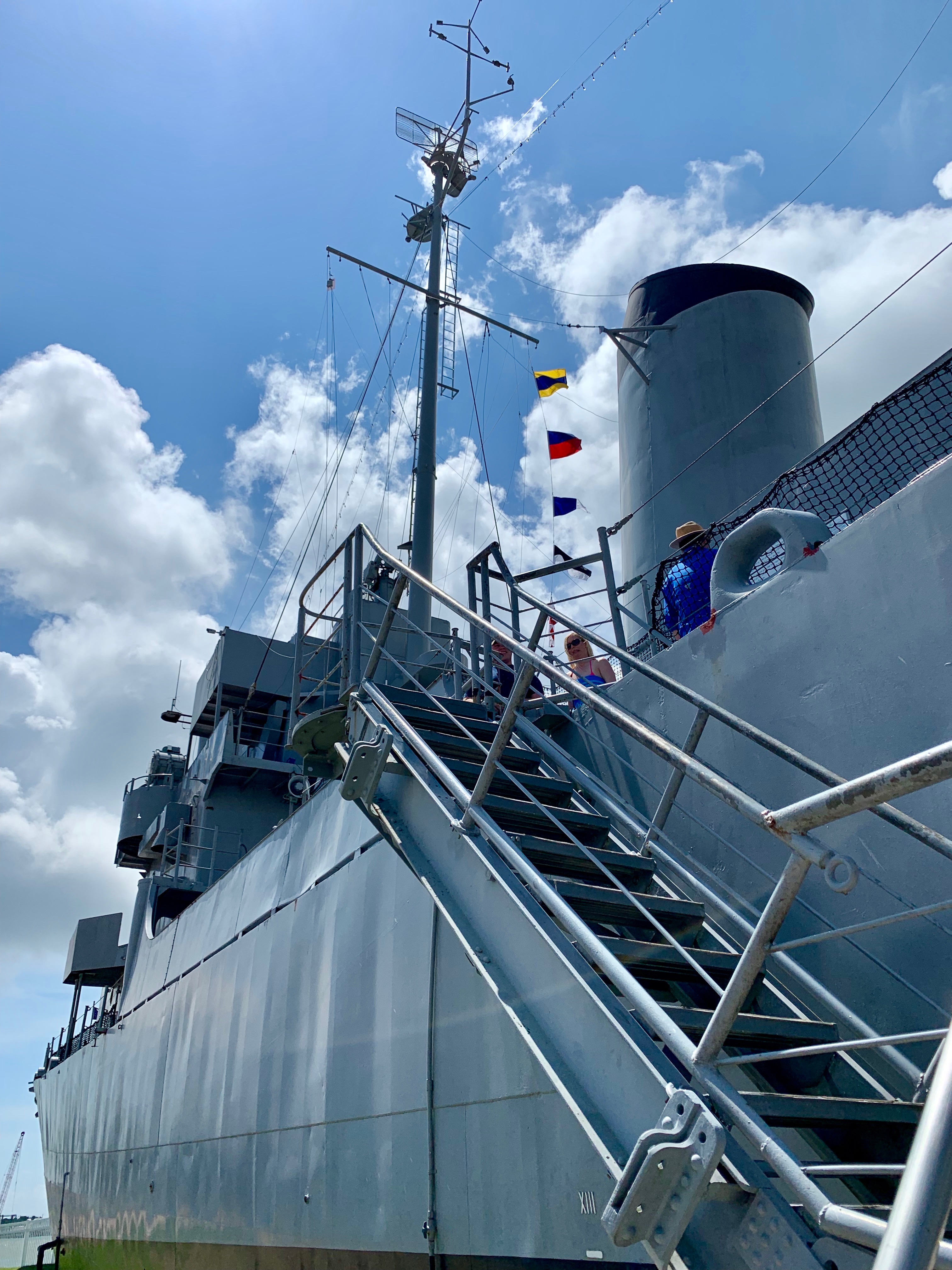
The destroyer escort USS Stewart sits beside the USS Cavalla. Predator and Protector.

IMG-0343

We toured the ship, climbing up the stairs at the side, rising into the cloud puffed sky.

IMG-0351

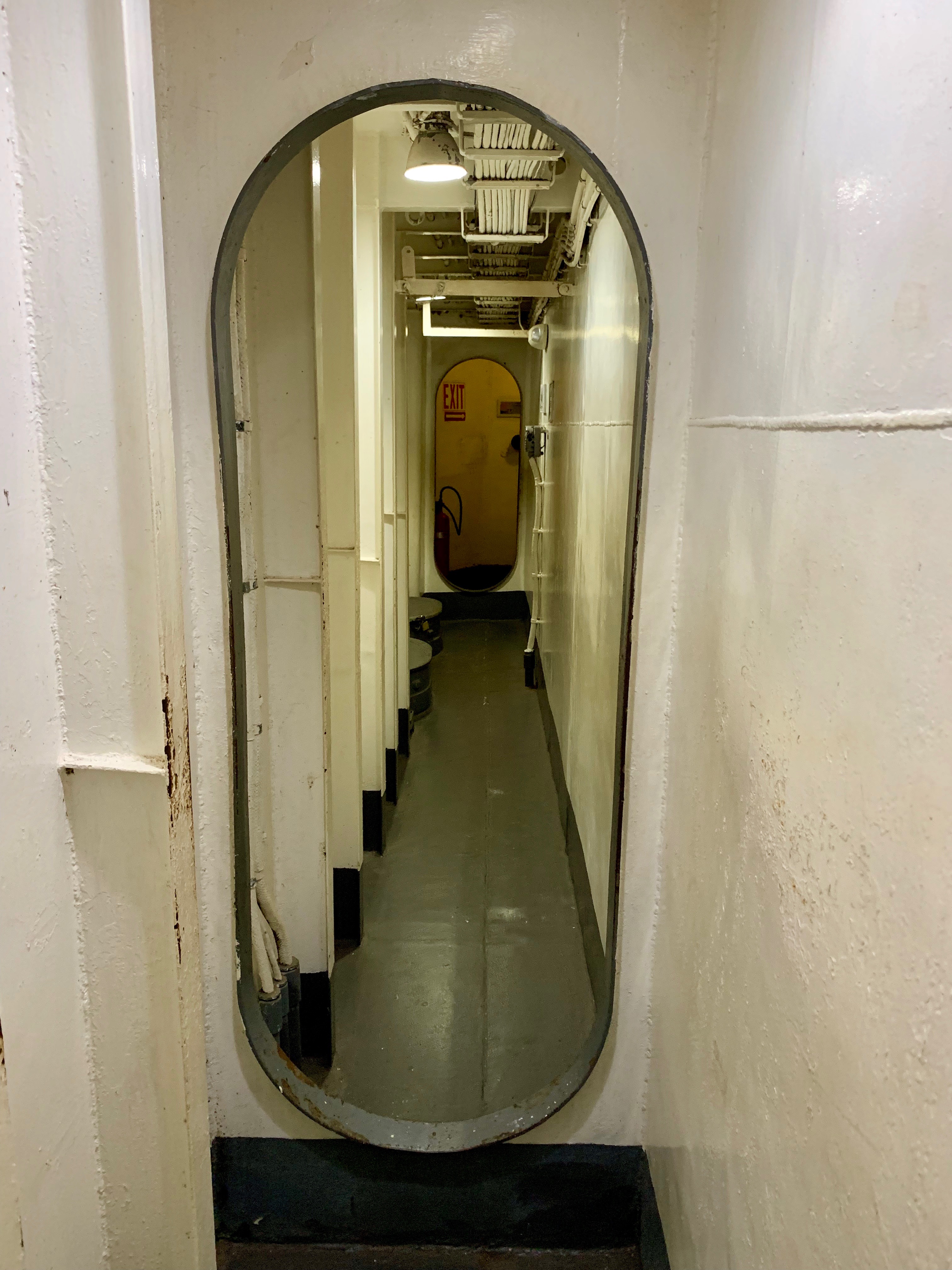
We went below, into the eerie quiet that seemed spacious after the submarine. There was no air-conditioning and the teenage girls did not follow us.

IMG-0363

There were no ghosts there, and if not exactly haunted, the place compelled us to silence, remembering the souls lost on the boat the park was named after, the USS Seawolf.

This is not a toy, this is a war machine.


What Falls From the Sky Does Not Strike Me

The author — Photo by her patient husband, Andrew

Our rented Buick rocked as the tractor trailers and rock haulers zipped past on the highway. I gripped the door handle, certain a homicidal maniac steered each truck rushing by, intent on racking up another victim on their way to the West Texas oil fields.

We had selected the Buick from a fleet of options. We assumed the larger car would be safer and more comfortable than my ten-year-old Honda. The rental car’s bucket seats fit anorexic teenagers, not late middle-aged women, and my butt had grown numb over the miles since we left Dallas. If not for the thrill of certain death in a fiery car crash, the rest of me would have fallen asleep staring at the flat scenery on our way to Carlsbad, New Mexico to tour the caverns.

One arm draped over the console, my husband Andrew stared through the windshield, judging how much room he needed before he could squeeze the Buick in between the cement truck and the oil tanker in the next lane.

“Would you like to stop and see the Odessa Meteor Crater?” Andrew asked.

Everything I know about meteors I learned from movies, television, and comic books. They don’t have a good reputation. Anything tied to the phrase “extinction event” is something to avoid. Another semi rocketed past, blowing sand and gravel across us. As Andrew steered the car back into our lane, I answered “Sure.”

I’m a big fan of bizarre roadside exhibits. I imagined a meteor crater would be a giant hole in the earth, similar to the Grand Canyon, but smaller, less grand. Maybe they would have a viewing station and tiny plastic meteorites for souvenirs. I got out my camera and checked the battery, to be sure I was ready to take pictures of the stunning vista.

Andrew turned off the main highway and bumped along a rough road paved in potholed asphalt. We arrived at a gated entrance in front of a metal-roofed, tan brick building. A sign on the side proclaimed we had reached the Meteor Crater Museum. The place could have been any other standard government building- a place to renew your driver’s license or pay your water bill.

I pulled myself from the tight embrace of the bucket seat and climbed from the car, camera at the ready. Leaning against the Buick, I turned around and searched for a glimpse of the crater. I didn’t want to fall into some crevice and break a hip right at the start of our vacation. The landscape stretched out to the horizon, broken only by scraggly desert plants and medium-sized chunks of limestone. In the distance, oil field pump jacks bobbed up and down like dinosaurs.

“How much further is the crater?” I asked. When I shielded my eyes and squinted through the swirling dust in the parking lot, the most interesting thing I noticed was a concrete picnic table.

“It’s right there,” Andrew answered, pointing. “That dip in the ground.”

The sandy soil past the parking lot sloped down in a shallow bowl. If I held my head just right, I could make out a circular shape to the area. We strolled along the little path that wound through the crater and read the educational signs that told about the history of the site, until I grew tired of the heat. Andrew stopped to admire an anthill, and I walked on ahead to the museum, hoping for a water fountain and air conditioning.

The exhibit area was slightly larger than my living room, and staffed with three people, two men and one woman, sitting on rolling chairs behind a glass counter. They all turned to greet me as I strolled in. I picked up a brochure explaining the history of the crater. It must have been larger when they discovered it in 1892. The crater was formed 63,000 years ago, so I forgave it for being filled in with West Texas silt. I know how fast dust can accumulate if you aren’t diligent. If only we had visited sooner.

I looked over the small pieces of meteorites on display and glanced at the scientific charts and graphs. At last I stopped in front of a framed photo of a woman reclining on a hospital bed. This was Ann Hodges, a woman struck by a meteor in 1954 when it crashed through the roof of her house. I imagined her stretched out on her couch, relaxing with a book maybe, or watching television, her face illuminated with the blue glow from the screen. Maybe the accident happened after a commercial for Geritol or the new RCA Victor Portable Radio, her peaceful night shattered by a huge rock falling through her ceiling. Did she know what hit her? Or did she suppose Fidel Castro had targeted her, a housewife in rural Alabama, with a missile meant for Miami?

I turned from the display as Andrew walked over to stand by my side.

“I found the t-shirts!” he said.

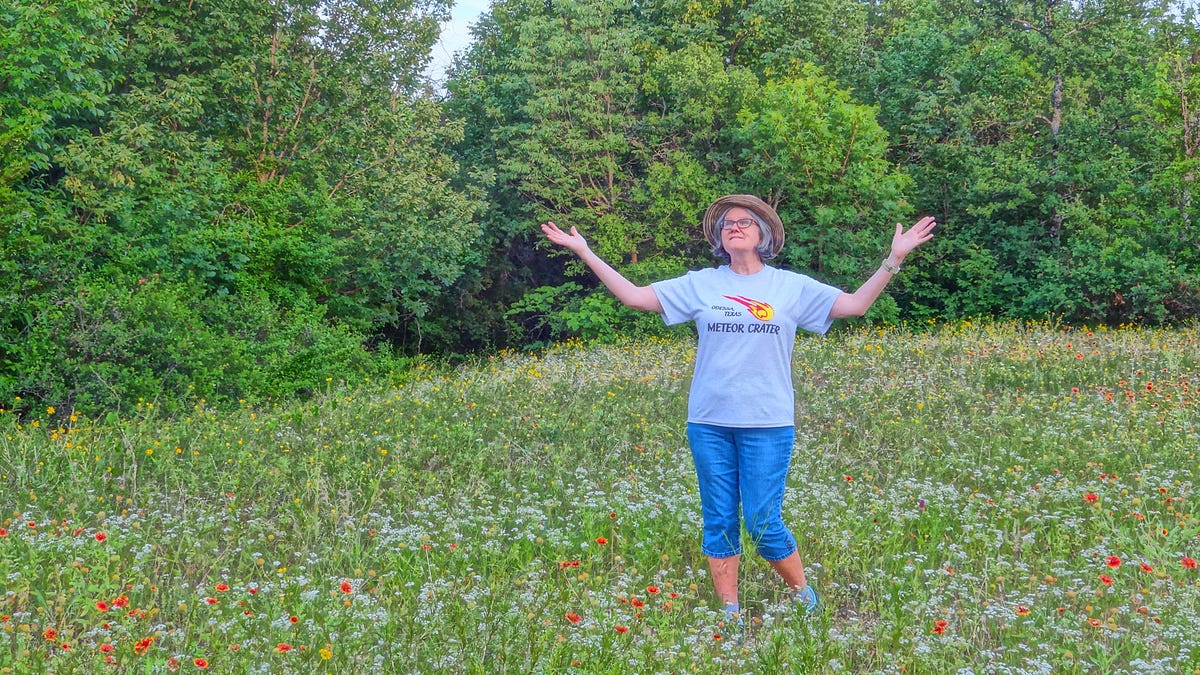
He held up a gray shirt with “Odessa Texas Meteor Crater” printed on the front. A yellow and red meteor streaked down toward an innocent cartoon superhero, or a reclining woman.

All three staff members assisted me as I purchased the shirt. We left the cool air conditioning and stepped out into the bright sunlight of a West Texas summer. The blue sky overhead held no threat of hail, lightening, or flaming rocks. As we strolled across the parking lot toward the Buick, I decided the risk of venturing out on the highway was worth the reward of finding new places to explore. I was just as likely to be struck by a meteor at home while I lounged on my couch.

At the Odessa Meteor Crater

Terrye is a native Texan who enjoys writing stories set in her home state and other strange places. In her free time Terrye enjoys exploring antique, junk, and thrift stores for inspiration and bargains. She’s had stories published in small print and online journals, and writes short, humorous essays for her blog — https://terryeturpin.com/. Sign up below to follow her.


Meet Me at the Vanishing Point

Another version of me has dirt under her fingernails

Photo: Geri Lavrov/Photographer’s Choice/Getty Images Plus

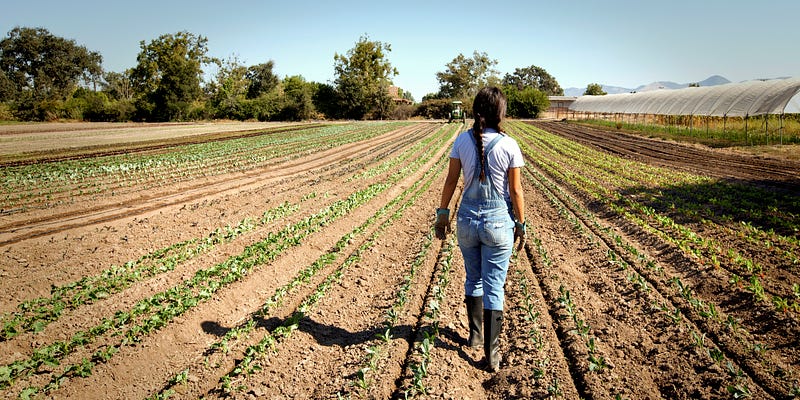
If another me exists in another universe, I picture her clad in a red gingham dress or blue denim overalls. She toils on a farm surrounded by corn and cows. This is the life I might have lived, had I followed the advice of a career aptitude test from my high school days. My life’s work decided by the 17-year-old me, while I sat hunched in a high school auditorium coloring in ovals on a Scantron sheet.

The test, sponsored by a branch of the armed services, revealed I should go into agriculture. Growing up in town, pulling weeds in our family garden was the closest I came to life on a farm. I imagined the work would be the same, only on a much larger scale. Mechanical aptitude came in second place, suggesting the possibility of a career in helicopter repair. I am certain my doppelgänger can both plow a field and fix a broken tractor.

They taught neither farming nor tractor repair at the school I attended. Girls were shuffled into Home Economics and handed a spatula while boys were enrolled in carpentry courses and awarded a hammer. Young ladies learned to bake a cake, sew a skirt, and type a note — all the useful skills we needed in the 1970s. What would I be when I grew up? I wanted to be a doctor, an author, an actress, a missionary, a teacher, or a scientist. Not a farmer.

I fumbled along as a waitress, telemarketer, stay-at-home-mom, carpenter, bookkeeper, and accountant — as though I were working my way backward through the alphabet. The alternate-universe me took the advice from the aptitude test and ran with it. She moved to sunny California and joined a commune. Far from the capitalist demands of a 9-to-5 job, she rises with the sun and feeds the chickens. She bakes her bread, sews her clothes, and types poetry on her Royal typewriter.

This woman exists on a different plane from me, but the older I grow the closer I feel to her. As my husband and I look at houses we might buy and towns where we might retire, I judge each option on whether there might be a spot for a garden. The places earn bonus points if there’s room for a small shed where I can set up a typewriter. Multiverse me would approve, I’m certain. Like parallel lines in a drawing, we’ll meet at the vanishing point.


This story was published in response to Human Parts’ Weekend Writing Prompt, “Give us a snapshot, a moment, an experience from a life you could’ve had. What are you up to out there in the multiverse? What would Multiverse You think of the life you have right now?” To receive prompts like this one every weekend, subscribe to our newsletter by following Human Parts.

A Bird in the Basket

Photo by Alvaro Daimiel on Unsplash

I hadn’t planned on sharing the 650 square feet of space I called home. Andrew and I had reached the point in our dating life where he kept a spare toothbrush at my place and I had cleared out a shelf in my closet for him. I could barely fit all my shoes in the closet, so this was a sacrifice on my part.

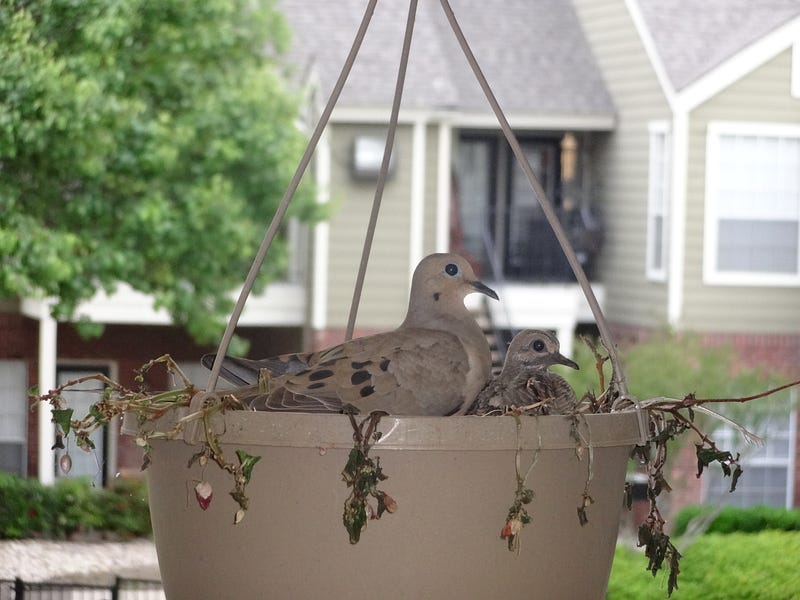
Dovey didn’t move into the apartment. She and her mate Lovey took over the hanging basket on the balcony. When they first showed up, they strutted around cooing at the potted plants. They reminded me of an old married couple scouting out real estate, sashaying around wing to wing, nodding their little bird heads and inspecting the soffit for dry rot.

“They’re looking for a spot to nest,” Andrew warned me as I commented on how sweet they were.

“If they’re moving in, I guess I should name them,” I replied.

When I first settled in my apartment, I decided against owning a dog or a cat. The complex required one fourth of my salary for a pet deposit. And the additional pet fee with each rent payment would mean I might have to give up bathing, since I wouldn’t be able to afford the water bill while paying for a pet. I didn’t plan on adding any animals to my household, but a pair of mourning doves decided my place fit them just fine.

I discovered my home had passed the mourning dove inspection and Dovey had moved in when I went to water my petunias the next day. Even standing on tiptoe I couldn’t see past the flowers blooming in the pot, but with the first stream of cold water she burst forth, scattering blooms and whistling bird curses.

She perched on the gutter above my landing to shake off the water droplets, then roosted there to fix me with the stink eye. I took this opportunity to peek in the basket. A single white egg lay cushioned in a mashed down mat of limp petunias. Two twigs tossed to the side of the egg and some dried grass blades stuck on the edge of the basket made up what passed for a nest.

When I described the nest to Andrew, he told me that doves are bad builders. Dove are the trailer trash of the feathered world, living in what amounts to a tornado-ravaged mobile home.

“They’ll set up anywhere, and patch together the bare minimum for a nest. Most of the eggs drop right out.”

I was horrified, and glad Dovey had chosen the hanging basket for a nursery. After I apologized to the petunias for sacrificing them, I stopped watering the flowers.

Mornings I eased open the back door and announced my presence before I stepped out, so as not to startle the little bird.

“Okay, it’s just me. No reason to get scared, I’m coming out now.”

Sometimes a neighbor would pass by walking their dog, and give me a curious look as I stood there, poking my head out the door and warning the plants of my approach. I must have made an even odder sight a few days later, standing on a chair on the back porch and talking baby talk to the dead, wilted flowers in the hanging basket.

“Oh, what’s you got there? Is you got a baby?”

I would lean forward, toward the basket but not too close to the edge of the railing, since I am not known for my sense of balance.

Dovey puffed up and glared at me while trying to stuff the hatched chick back under her wing. I could understand why she tried to hide him. Every parent is proud of their child, but Baby looked like he was missing feathers from his scrawny neck. I did what most people do when confronted by someone else’s homely offspring — I lied and told Dovey what a cute chick she had hatched.

The first hatchling grew up and left the nest while I was out of town on a business trip. My neighbor Lisa kept me informed by text message. “B is out of the nest?! OMG! Cute!”

I was sad to have missed this baby’s first steps until Andrew reminded me most likely Dovey would be back. She returned, even though by this time the basket was bare dirt, with brown, withered stalks dropping off the sides. Dovey felt this was adequate, without adding twigs or grass to the nest inside.

Photo by Andrew Shaw

This time there were two eggs, and I got to watch them from hatching to when they left the nest and spent three days stumbling around on my balcony like drunken sorority sisters. I read on the internet that dove fledglings “stay around hedges and bird feeders, begging for food from adults.” Sort of like human teenagers, I thought, hanging out in front of an open refrigerator and asking “What’s there to eat in here?”

After the second set of chicks moved on, I took down the hanging basket. I thought I had had enough of running a rookery, but Dovey had other plans. She and Lovey returned and placed a few dried blades of grass on top of an empty ceramic planter balanced at the top of a rickety wooden shelf on the corner of my porch and called it their new home.

“You will need to put that basket back up,” Andrew said.

Since I had already thrown away the old pot, there was only one thing to do. I went shopping, and returned with one of those coconut husk liners and an assortment of bright orange, artificial hibiscus flowers. Andrew and I lined the new basket with trimmings from the coconut fibers, carefully arranged the large fake flowers, and transferred the new nest to the balcony. This arrangement suited the happy couple, and soon after Dovey was raising another pair of chicks in the tropical atmosphere of the new pot.

Dovey left now and then, but she always came back to my balcony. She appeared to be satisfied sharing my porch. I was content too, living in a place where the fake flowers bloomed and I had room for most of my shoes, even if I had to share my closet space. At the end of summer Dovey took off for vacation. While she was gone, I planted a tiny American flag in the basket and added a small wooden plaque to welcome her return — one that read, “Home Sweet Home.”

Photo by Terrye Turpin

Goodbye Old Friend

CRV_Fotor
Photo by Terrye Turpin

My new car is a spaceship. The dash has more buttons and dials than Doc’s DeLorean did in Back to the Future. It runs on premium gas, though, and not recycled garbage. My brand-new Honda Civic Sport Touring might be the last car I ever buy.

“What are you going to name your new car?” Andrew asked me as I scribbled my name in blood on the finance agreement.

Unlike my husband, who has had a Marilyn, Penelope, Zephyr, and Lexi in his driving life, I’ve never named my cars. At least not with anything I’d repeat in polite company.

I bought my first car forty years ago – a 1974 Subaru sedan. A short in the electrical system caused the headlights to go out after 15 minutes of driving. This didn’t stop me from traveling at night, I’d drive as far as I could, then I’d pull over and wait for the car to cool down and the lights to come back on. When the brakes went out, I drove for two weeks using only the parking brake because I was between paychecks and couldn’t afford the repair.

A sensible four door, it was not the first car I wanted, but according to my mother- the co-signer on the loan, it was the first car I deserved. She took one look at the green and white 1976 Shelby Mustang Cobra I lusted after and imagined my mangled body entombed in twisted metal.

I’ve had trucks, SUVs and sedans. Some of them came to dramatic ends. When my kids were small, I hauled them around in a silver two-door, 1979 Buick Riviera. It caught on fire one day, the paint bubbling up on the hood when we parked. “Mom! Is that smoke?” must be one of the scariest phrases ever heard.

Another car, one my then father-in-law bought for us for $50, shot flames from the exhaust every time the engine backfired. That car could clear traffic. When it looks like you’re driving a Mad Maxx rocket powered vehicle folks get out of your way.

I drove the car I traded in, a 2009 Honda CRV, for ten years. We took our last family vacation in that SUV, four of us on a road trip from Texas to the Grand Canyon in Arizona. My twenty-one-year-old son took most of the driving duty because my ex-husband felt I drove too slowly and my older son drove too recklessly.

By 2011 I was divorced. I folded the seats down in the CRV and used it to carry most of my belongings out of the house I’d shared with my husband, and into my new apartment and new life. When I paid off that car, I stood in line at the tax office to remove his name from the title.

Last year, in October 2019, my new husband and I drove to our wedding in the 2009 Honda.

I’ve never been sentimental over a car, but the sight of my gold CRV sitting on the dealer’s back lot felt like I was dumping the family pet on the side of the road. “We’ll send it over to auction,” the salesperson told me as he pointed out the trade-in value.

Auction, I imagined, would be the automobile equivalent of working in a 19th Century coal mine. I handed over the keys and gave the car a little wave, hoping to inspire the SUV with enough confidence it would last another 157,000 miles.

We tie so much of our identity to the car we drive. The SUV with room for kids, dogs, and sports equipment. The trucks for hauling, whether it’s farm supplies or groceries from Central Market. Smug hybrids and cushioned land yachts on either end of the mileage spectrum. Like my husband, the true believers among us opt for manual transmissions.

I’d hoped to drive the ’09 another hundred thousand miles. The worn shocks bounced like a Conestoga Wagon on the Oregon Trail, and a mysterious clicking emerged from under the hood, like a time-bomb for engine failure.

“I guess I need to look for a new car,” I told Andrew. “If I buy one now, I can pay it off before I retire.”  Spending a large sum is always best when justified under cover of fiscal responsibility.

We narrowed the field down to a Honda model, and like Goldilocks I discarded several models as too large or too small before declaring the Civic as just right. Thinking of grandkids and sticky fingers, I wanted leather seats. The hatchback option gave us room for camping equipment. During the test drive I appreciated the 1.5L Turbo engine.

“Do you have one in blue?” I asked.

This last car, unlike the first car, is one I picked for myself. As I make the payments, I remind myself this is the car I deserve. In ten years, we might all be riding around in flying vehicles, leaving earth and asphalt behind.

I’ve named the car Hollis—pronounced “Haul-Ass.”


Hollis
Hollis – Photo by Terrye Turpin


Whistle Britches

Andrew and I were wandering through the clearance section in men’s clothing at Macy’s when we spotted them. A row of corduroy pants in vivid orange and royal blue.

“No one wants the whistle britches,” Andrew commented.

“Do you think they have my size?” I asked. I love a bargain.

“Please, no.”

Andrew does not like to draw attention, and it’s hard to be discreet when you’re dressed in colors loud as caution flags. Plus, everyone would hear the swish-swish of your legs, making it impossible to sneak up on anyone.

I had an entire corduroy outfit in Ninth Grade. The brown pants and matching tunic were hand sewn by a seamstress my mother worked for, cleaning her house. They worked out an exchange, my mother scrubbed and in return the seamstress fashioned my freshman year wardrobe. I don’t remember the rest of the clothing from that year, but the brown corduroy set was extraordinary. I must have resembled a large teddy bear swooshing down the hallways of my high school. Either that, or a giant, rustling paper bag.

I bought a purse at the mall, from one of those pop-up kiosks. An unusual transaction for me, as I usually race-walk past those shops before I’m attacked with a salt scrub or an offer to clean my glasses.

img_0015

The purses, however, caught my eye with their loveliness. Handwoven by women of the Wayuu tribe in Columbia, each bag resembled more a work of art than a place to stash your lip balm and that paperback you’ve been carrying around for six months. Dazzled by the dozens of bags, I pulled out my credit card (not an easy task as it was buried in the IKEA backpack I tote when I visit the mall).

The saleswoman couldn’t get her payment processing software to work with the mall’s lousy internet service. She tried standing in the doorway of a nearby shop and leeching off their connection, while I wondered if dozens of strange purchases would pop up on my Capital One account. I offered to scoot down to the ATM and bring back cash. At the last minute I remembered the purse, wrapped and tucked in my IKEA backpack. I handed it back to the saleswoman with a teary-eyed promise to return, like Odysseus at the start of his journey to Troy.

You can find out more about the purses here, and even buy one if you have a good internet connection.

https://tamboraexchange.com/wayuu-people

The purse I took home –


If you enjoy reading about my adventures click the Follow button at the top of the page on my website and I’ll send you my newsletter, with updates on what I’ve published and the collection of stories I’m working on.

You can unsubscribe at any time – but I hope you’ll stick around. 


The Enchanted Rock and the Little Hill

Image by GeorgeB2 from Pixabay

“We should visit Enchanted Rock,” Andrew suggested one evening, not long after we started dating.

I pictured a place shrouded in a sparkling mist and peopled with tiny fairies peeking from behind evergreens. I worried whether the rock, enchanted or not, would provide shade. I’m a great fan of shade, especially when the temperature gets above eighty degrees. When I hike in the summer, I stuff my hydration pack full of ice. I’d carry an electric fan if I could, and string out a bright orange extension cord behind me as I tramp along the trail. Our visit to the Enchanted Rock Natural Area in the Hill Country of Texas was to take place in the unseasonably warm month of May.

I had discovered that Andrew got along quite well outdoors. He always carried one of those multi-function pocketknives and a small, intense flashlight, in case he needed to defend himself against orcs or cut up an apple in the dark.

“What’s enchanted about the rock? Are there trees?” I asked.

“The rock makes noise at night, as the granite cools off, and there are a few trees,” Andrew assured me. “We can climb to the top!”

“Climb?”

I wondered about those rock noises. I pictured myself strapped into a leather harness and dangling from the side of a cliff. I was willing to explore exciting experiences with Andrew, but I didn’t think plunging to my death would make a good impression.

“Oh, it’s really more like hiking. It’s not that steep.”

I was not reassured. Andrew’s legs were shorter than mine, so his center of gravity was closer to the ground. His sturdy legs were built for inclines.

I searched the internet for a picture of the place and found an image on the state park website. It showed a dull pinkish grey, rounded hill of granite set against a backdrop of bright blue sky. Stunted mesquite trees in sparse blotches of green dotted the bottom of the hill. The sides and top of the rock, however, resembled the balding head of a middle-aged man who declined the comb over but wasn’t ready to give up all his hair. Another website suggested the area might once have been the location for human sacrifices. As I wondered aloud if we might still see bloodstains on the granite, Andrew made our camping reservations.

When arrived at the Enchanted Rock Natural Area, we stopped to check in at the ranger station and pick up a map of the area. The helpful ranger, a rosy complexioned, blond young man in a pressed tan uniform shirt and a hat like Smoky the Bear might wear, pointed out the camping spots on the map. Off we went to explore before hiking to our campground. Beyond the parking area the focus of the state park, the Enchanted Rock itself, rose into the sky. Clouds hovered some distance above the summit of the hill, and the pink granite sides shimmered in the afternoon sun. Boulders the size of small sheds clung to the surface. I didn’t see many trees on the slope, or places that looked to afford either shade or an easy stroll to the top.

“We could hike up the Little Hill this afternoon and save the larger one for tomorrow.”

Andrew pointed across from the Enchanted Rock. The Little Hill was shorter than the larger granite hill that gave the park its name. There were however, a few small trees clinging to the granite slopes. The guidebook, “On Your Way Up, a Guide to the Top of Enchanted Rock” cautioned “if you are unsteady on your feet or have trouble with your footing, please consider your physical condition before attempting the climb.” I have trouble keeping my footing when I step in and out of my bathtub, so I agreed with Andrew that we should postpone our adventure on the Enchanted Rock, and warm up with a climb up the Little Hill.

We walked past the brave hikers headed up the main path toward the Enchanted Rock. They were an interesting assortment of age and ability. Many of them had on sneakers instead of hiking boots. I noticed several people leading dogs. A tiny brown Chihuahua scrambled alongside an older woman with white hair held back in a visor. When I pointed out the little dog to Andrew, he reminded me he had once climbed to the summit while accompanied by a Chihuahua. The dog belonged to an old friend, a girl he knew before we met. I had seen a photo of Andrew posed on a barren, rocky, landscape, holding a tiny tan and white dog with a pink jeweled collar, but I hadn’t realized the picture captured the top of the granite mountain.

“Did the dog enjoy the climb?” I wanted to know.

“Yes, she did!” Andrew replied as we started up the side of the Little Hill.

As I shuffled over piles of loose pebbles and searched for the path with the least slope, I thought about that picture of Andrew and the little dog. He posted it on his online dating profile, where I saw it when we first chatted. The dog’s owner was absent from the picture, but in my imagination, she looked something like Scarlett Johansen, Andrew’s favorite movie star.

We had trudged about halfway up the incline when I realized the slope was getting steeper. The outcroppings where I might gain a handhold were getting further apart. I squinted into the sun and wiped the sweat from my face, trying to gauge how much farther along we had to go. I regretted leaving my ice filled water bottle behind in the car.

“Let’s stop here for a minute.” I panted and clung to a large rock the size of a Volkswagen, poised to slide down the side of the granite slope, with or without me still clinging to it.

“Are you tired?” Andrew asked as he stepped closer to the edge of an outcropping, where he would have a good view of my body as it tumbled unhindered down the hard, rocky ground.

I thought Andrew and I had reached the point in our relationship where I should disclose one of my shortcomings.

“No,” I replied. “I’m afraid of heights.”

“Oh! Are you okay? Should we go back down?”

Andrew walked toward me, sending a shower of loose rocks cascading past my feet and bouncing along to the concrete parking lot below. I risked a glance behind. The gentle incline we had traveled transformed into a forty-five-degree slant covered with sharp bits of gravel.

“No, let’s keep moving.” As I said this, a dark shadow floated across the rock. I glanced up to spot a turkey buzzard, circling in for a closer view.

“How about we aim for that rock up there?” Andrew gestured up the hill, toward a grouping of boulders the size of cattle cars. They did not appear to have anything holding them onto the side of the mountain.

“There are a lot of rocks up there, which one are you talking about?” I leaned out past the boulder to get a better glimpse up the hill.

“The penis shaped one,” Andrew answered.

“That doesn’t look like a penis.”

No matter how much I squinted the rock did not seem the least bit phallic shaped. Maybe he meant a different rock, and I had a moment of panic, picturing Andrew wandering up and out of view while I trekked from one tall pointy rock to another.

“You can do it! Let’s get a little closer.” Andrew marched up toward the summit, and out of view around yet another large boulder.

I realized the mysterious noises heard at night were most likely not ghosts, or some reasonably explained natural phenomenon. They must be instead the cries of abandoned hikers, afraid to venture away from the rocks they anchored behind.

We worked our way to the top, with Andrew stopping now and then to wait for me to scrabble along behind. We made our way from one vaguely penile column of granite to the next. I resisted the urge to crawl, afraid even that might prove too frightening, and I would be forced to push myself up the slope on my belly like a snake.

When we reached the top of the hill, I found a patch of green moss growing in a weathered depression in the rock. This was not the Enchanted Rock, but it looked as though we might find fairies. Birds chirped and flitted about a stunted oak tree as though they were down at ground level. I hurried over to the tree, eager to take hold in case it was a heat induced mirage. If I clung to the tree, I hoped I could convince myself I wasn’t on top of a hill I would have to climb back down. I should plant a flag, if only the surface beneath me weren’t solid granite.

I posed on the summit of the Little Hill and loosened my hold on the scrubby tree. To a casual observer, including the boyfriend I wanted to impress, I would appear to be leaning my hand against the bark, and not clinging for dear life to the nearest object that didn’t move when I touched it.

Andrew positioned himself at the edge of a drop-off and gazed off toward the Main Dome next to us while he snapped pictures with his camera. The pink granite of the Enchanted Rock glowed in the late afternoon sun. If I squinted a little, I might make out a small, determined form on the top of that neighboring rock. I closed my eyes and I could see her clearly, her little snout raised up to smell the fresh wind off the moss, and her four feet planted firmly in triumph on that solid ground.

Photo by Terrye Turpin