You Don’t Have to Step on My Feet


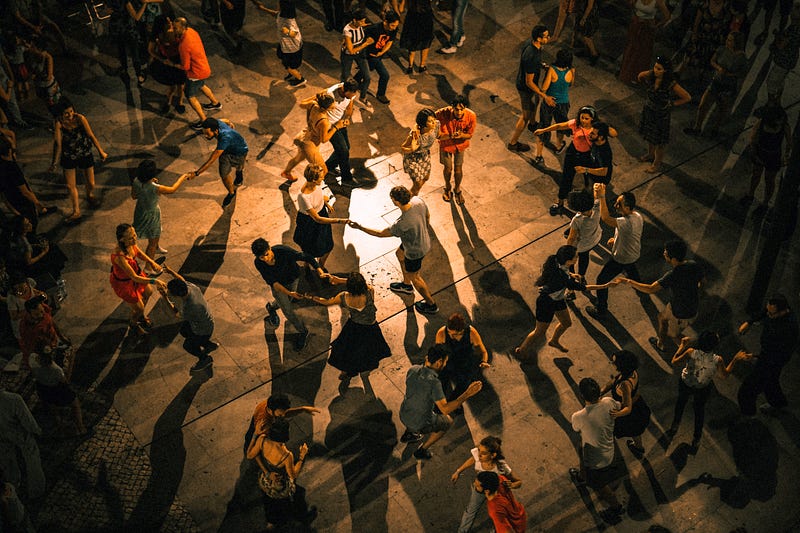
As part of a pledge to try new things, I signed up for a night of dance lessons, and for good measure I talked my friend Kristy into accompanying me. Kristy was in her early 30’s, and still young enough to be excused for a lapse in judgement, but I was old enough to know better. The lesson was supposed to last three hours, from 8:00 pm until 11:00 pm, and I thought it a good value for the ten dollar admission charge. I filled in the online registration form and pictured myself back in junior high school, lined up in a gymnasium while I listened to a scratchy record player broadcasting the hokey pokey.

The night of the class Kristy and I were greeted at the door by a woman wearing a floor length, strapless black dress and high heels. This did not look like an outfit you would wear to dance the hokey pokey. Her hair was piled on top of her head in the sort of style that I could never manage without using buckets of gel and pins that insert directly into my scalp.

She held out a perfectly manicured hand as she introduced herself, “I’ll be your instructor tonight, you can call me Miss Cindy.”

I glanced past her at the dance floor. The dim lights reflected off the polished surface, and there were full length mirrors along three of the walls, the better to magnify your embarrassment. Miss Cindy took our money for the class, and told us to fill out name badges. I looked over the lesson plan for the evening. It turned out we had enrolled in a ballroom dancing class, and I regretted my clothing choice of comfortable blue jeans and flat soled loafers.

As I peeled off the paper backing and stuck the name tag to my t-shirt, Miss Cindy pointed out that I had my name tag on the wrong side, and she told me to move it over to my right shoulder. She mentioned she had an etiquette book we could look at if we wanted. I glanced at Karen. She quickly switched her name tag to the correct shoulder. I knew I was in trouble. I couldn’t even manage to attach a sticky paper name tag without violating some rule of proper conduct, how would I ever navigate a dance floor?

We headed over to a safe spot at a table pushed against the far wall and near the exit. The bright red exit sign would be a handy landmark in case there was a disaster like a fire or someone asking me to dance. Several couples twirled along effortlessly on the floor, smiling as they watched their reflections.

I pointed out the happy couples to Kristy. “Do you think smiling is a requirement in ballroom dancing?” I asked.

“You better practice a pleasant expression,” she replied.

Miss Cindy had the women line up on one side of the room, as though we were preparing for a firing squad. She matched each of us up to an unattached man. My partner was an older gentlemen with a military haircut and sharply pressed pants. He must have wandered into the dance class by mistake, and thought he would be leading boot camp exercises. Our first conflict came when he informed me that dancing the waltz involved more than just stepping in place. You are expected to move around the dance floor, without forging through the other dancers like a snow plow. Apparently I am not a good follower. I tend to lose focus and wander off on my own.

The lesson ended and Miss Cindy ordered us back to the main ballroom. I was glad to leave my drill instructor behind. I haven’t heard the words “No, no, no” so many times since I was the one saying them to my son, who was trying to eat a cricket at the time.

I found my familiar seat against the wall and beneath the exit sign. Just as Kristy joined me, Miss Cindy announced that she wanted to show us something new, and told the group that we would learn the “Merengue.” This sounded suspiciously to me like “Meringue”, a complicated pie thingy that I have never been able to make. I looked wistfully at the exit sign.

“What if we left early?” I asked Kristy.

“No! I paid ten dollars for this class, I’m not missing any of it,” she answered.

My next dance partner’s cologne arrived thirty seconds before he did. It wasn’t bad once my nose became numb. He held me so close during the dance that I felt he at least owed me a cigarette afterwards. The steps to the Merengue were complicated and Miss Cindy had to break the lesson down into sections. We went back to the beginning and repeated each section once we learned the next one. This resulted in a never ending dance circle of hell. My partner was more intent on getting my phone number than he was in learning the steps to the dance, and I wound up twirling off into the other dancers as I tried to both count and distract him with idle conversation. Maybe he thought my phone number started with “1, 2, 3…”

Finally Miss Cindy paused to take a breath, and I took that opportunity to escape. I raced across the floor to gather up Kristy, who was dancing with a man who had more in common with her grandmother. He had a weak grip, and she was able to detach herself quickly. Once we were safely outside I mentioned that maybe next time we should try something less exciting, perhaps skydiving.

The Glue That Binds Us


When my boyfriend, Andrew, told me he had ordered something special for my birthday, I didn’t know what to expect. We started dating in October, and for Christmas he gave me a television. He won it in a drawing at his company holiday party so it didn’t cost him anything, but still, it was a brand new flat screen TV.

My birthday was in February, just before Valentine’s Day, and after intense questioning Andrew finally admitted that he purchased my gift on eBay. This didn’t narrow the field much, but at least gave me comfort that the gift was not a puppy.

“Is it bigger than a breadbox?” I asked Andrew.

“That depends,” he answered, “how much bread are you planning on storing?”

The box arrived just before my birthday, and it was slightly larger than a box that might hold a loaf of bread. We sliced open the tape that held it together and looked inside. I pulled back the wrapping paper that cushioned the object and saw a flash of bright yellow and orange. Looking up at me from the box was a duck’s head.

“It’s a cookie jar,” Andrew said.

“Oh,” I said, as I looked the ceramic duck in its beady little eyes. Whoever painted this duck had an unsteady hand. The eyes were wide and startled but the orange bill appeared expressionless, giving the impression that this particular duck didn’t care much about anything. I reached into the box to pick up the lid of the cookie jar, and discovered that the head was detached. Tiny shards of ceramic littered the inside of the box.

“What a shame, it’s broken,” I said with what I hoped was a proper amount of sadness.

“Oh no! We’ll have to fix it!”

I got up and stepped into the kitchen to rummage around in the drawer where I kept spare packets of ketchup, loose toothpicks, and those little twist tie things.

“I’ve got some super glue in here somewhere,” I said.

“That won’t do. We’ve got to pick up some epoxy,” Andrew replied. He went on to explain in detail the importance of bonding strength and application style. “Epoxy will fill in the small cracks and create a smooth surface. It will bond better with the ceramic surface.” A trip to the home improvement store was required, to get the special two part epoxy that would mend the duck.

Andrew and I met online. I marked the days off on the calendar until we could meet in person, thinking all the time that I wasn’t getting any younger. Starting over after a divorce in my 50’s was challenging and I never expected that I would find anyone I could tolerate for more than a few hours. I liked Andrew well enough to step up and give him a kiss at the start of our second date. And now we had progressed to shopping together for hardware.

We purchased the epoxy and Andrew spent nights at the kitchen table with newspaper spread out under the broken cookie jar. He picked up bits of ceramic duck with tweezers and slowly fit the pieces together. He mixed epoxy until we were giddy with the fumes, and filled in the cracks on the surface.

When Andrew finished the mending I announced that the duck should retire to a life of leisure and give up the work of holding cookies. There was a brownish faded photograph included in the package with the cookie jar. The snapshot shows the jar cradled by slender feminine hands, the woman’s face cut off from the frame. The date 1977 is printed in ink on the back of the picture. I wondered how the duck wound up at auction, bought and shipped to end up shattered but then restored.

“Well, it’s not perfect but I guess it’s okay,” Andrew said. We placed the duck on a shelf and we were pleased with the repair. The cracks were noticeable only if you peered closely, and even the original owners might overlook the imperfections.

“It’s wonderful,” I said, “just the right birthday present.”

If love is the glue that binds us, then patience is what sets the bound and fills the missing bits from our damage, smoothing the surface to make us good as new.

Just Where We Belong

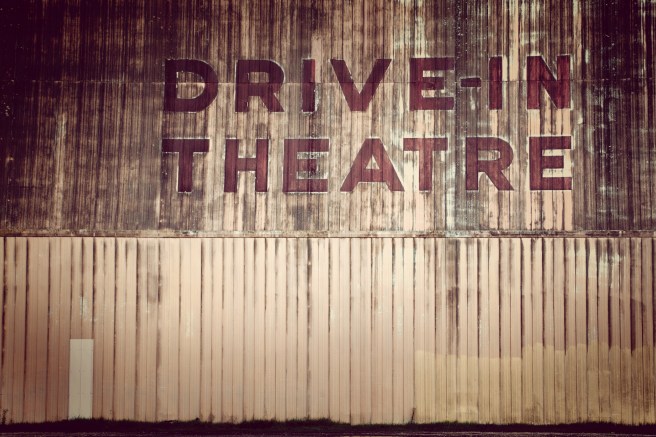
Drive in
Photo by Tim Mossholder on Unsplash


I hesitated when I saw the invitation in my email because I am not a fan of scary movies. I tolerate them because they are one of Andrew’s favorite genres. When he watches Alien Death Camp Holiday or Haunted Mental Institution Massacre, I sit beside him on the couch and mutter comments.

“Did they go in the basement? Is that a hatchet?” I’ll say, my voice muffled by the blanket covering my face.

I clicked on the link in the email and signed up for two free passes for a screening of Strangers: Prey at Night. The summary I read said the film is a sequel to the first movie, Strangers. There were enough survivors for part two, this one to take place in an abandoned mobile home park, where the victims were threatened with murderous psychopaths instead of tornadoes.

I was sure Andrew would enjoy the movie, and I was willing to go along because the screening was to take place at our local drive in theater. I have fond memories of going to the drive in with my parents in the 1960s. There was a playground at the front, and I swung from monkey bars and climbed to the top of the rocket shaped slide to look up to the giant characters on the screen. When I was older, I went to the drive in on dates, but those times I stayed in the car.
We arrived early the night of the screening. I handed over my pass to the cashier in the little booth at the entrance and he told us, “Just follow the drive around to the back. It’s the last screen.”

“That one?” I asked, pointing to our left.

“There’ll be someone there to help you park,” he replied.

We swung around past the concession stand and drove to the last screen where Andrew spotted a young man dressed in fluorescent yellow, waving cars over into compact rows on the gravel lot. We settled in where he directed us.

After a trip to the concession stand for popcorn and a soft drink, we walked back in the dark to our parked car. I glanced over to the screen next to ours where a large group of people arranged themselves in chairs in front of the screen.

“What are those people doing over there?” I asked as I pointed to two men wearing suits, which seemed strange attire for an evening at the drive in.

“I don’t know,” Andrew replied, “but I think the movie is about to start.”

Andrew tuned in the car radio to the channel that would broadcast sound for our movie, and we watched the screen light up with previews for coming attractions. The first preview was a Claymation Cartoon.

“This is an odd preview for a horror movie,” I said. I swiveled around in the car seat and peered over at the lot next to ours. The screen there had a static display that said “Strangers.”

“I think we are at the wrong screen.”

Andrew turned to look behind us. “Oh well, at least we get to watch a free movie.”

I pulled up the drive in website on my phone as the next preview, an animated cartoon featuring a talking baby, started.

“The movies tonight are Death Wish, Black Panther, and…” I paused. “Peter Rabbit.”

Andrew does not appreciate children’s movies like I do. As a parent, I learned to be grateful for any entertainment that will encourage small children to sit still for an hour and a half. I looked around at the rows of cars that surrounded us. There were no lights marking the exit, and the only illumination came from the movie playing in front of us. A chorus of singing animals appeared on the screen. Andrew does not care for musicals either.

“Do you want to leave?” I asked.

“I don’t see how we can get out,” Andrew replied. After some discussion about the all-terrain capabilities of our Honda SUV, we decided to stay.

“At least it won’t last long,” Andrew said. This philosophy could apply equally to root canals, but I agreed and then complained about the size of the screen.

“Just pretend we are sitting on our couch at home, watching the movie on your phone, from across the room.”
The plot of the movie developed as we expected. There was action and romance between a female character named “Bea” and the handsome nephew of Farmer McGregor.

“I think this is based on true events,” I remarked, as a hedgehog wearing an apron ambled through the McGregor’s garden.

I flipped up my armrest and leaned over the center console so I could take Andrew’s hand and he grabbed the popcorn box just as it was about to spill onto the floorboards. What strange circumstances brought us here, to a place neither one imagined they would ever go, but both somehow certain that this is where they belong.


Peter Rabbit

Lost Not Missing

Photo by Sandis Helvigs on Unsplash

When my younger son, Andy, was 19 years old he was so thin the vertebrae in his back looked like rungs on a knobby ladder. Our nights were interrupted by Andy stumbling through the dark into the bathroom to throw up. His primary care doctor pronounced him “a little underweight.” This was like calling the Donner Party a little hungry. He gave us a referral to a gastrointestinal specialist and handed me a sample pack of antacids.

When Andy went for his checkup, his dentist suggested that he might be diabetic. The dentist took one look inside Andy’s parched mouth and then took a second glance at the 20 ounce bottle of water my son had at his side. When we met the next day with the specialist, I mentioned the dentist’s suggestion and Dr. P. ordered fasting lab work.

When the lab results came back, Dr. P. called me and told me to go find my son. The rest of the story included a trip to the emergency room where a nurse who wasn’t much older than Andy met us at the door with a wheelchair. I jogged along behind her bouncing pony tail as she pushed my son down a tiled hallway that echoed with the moans coming from the curtained rooms we passed. We did not stop to fill out paperwork or answer billing questions.

When Andy was three years old, I lost him while Christmas shopping. One moment I had his damp, sticky hand clenched in mine, the next I let him go so I could flip through a display of clearance sale clothing. It was enough time for him to slip from the store and vanish, swept along by the current of holiday shoppers. I grabbed my older son, Robert, and demanded, “Where’s Andy?” as though he had stashed him away like a toy he didn’t want to share.

Just as I found a security guard, we spotted two older women walking toward us. Grey haired bookends in sensible shoes, they each had a firm grip on my son. Andy did not look concerned at all. I thanked them over and over, and despite their quiet reassurances, I felt I should explain that I was a good mother, and I had at least managed to keep one child in sight.

During his hospital stay Andy mastered the art of insulin injections and glucose level testing. Soon after his release, he found a job at the local ice cream distribution center. He came home at night and told us “You can eat all the ice cream you want!”

“That doesn’t seem like the best job for a diabetic,” I remarked.

He worked in a refrigerated warehouse, tossing pallets of ice cream into the back of a waiting truck, an activity that required a heavy parka and protective gloves to guard against frostbite.

His career at the ice cream warehouse came to an unfortunate end after the plant manager locked him in the company parking lot one evening. Andy called to let me know he would be late for dinner, and might spend the night in his truck. I made the twenty minute drive to rescue him in less than fifteen minutes, and managed not to damage any property, run over any animals, or become the focus of a helicopter police chase.

As I pulled up to the padlocked gate at the parking lot, I saw Andy leaning against his bright red truck on the other side of the ten foot tall, wrought iron fence. We met at the padlocked gate and discussed options.

“I could throw a rock through the office window and set off the alarm,” he offered.

“I believe a more reasonable alternative is calling 911,” I replied. When the dispatcher answered I asked her to call the emergency contact person listed for the ice cream company. While my voice shook as I mentioned that Andy was diabetic, hers remained quiet and calm, and she assured me she would keep trying the contact number until someone answered.

I left Andy abandoned at the junior high school one night after band practice. My work schedule changed, and I thought my mother-in-law would pick him up, but she forgot I had asked. By the time I arrived home from work the street lights were clicking on in the dusk. I realized that Andy had been waiting for a ride home since four that afternoon. When I got to the school and pulled into the parking lot, there was enough light left to see Andy waiting outside the band hall, sitting on the ground and leaning against the brick building. When I asked him why he didn’t call someone to come get him, he replied, “I knew you’d miss me and come get me.”

While we were waiting for the 911 operator to call back with good news, a patrol car arrived. The policeman, a young man with perfectly clipped dark hair, rolled down his window as he pulled up behind my car. At first I wondered if his appearance had something to do with my 911 call, but when I asked the officer he said no. We must have made a curious pair of vandals, a middle aged woman in baggy shorts and house shoes, and a skinny, long haired boy in faded jeans loitering on the other side of the fence.

“How did you get in there?” The police officer strolled up to stand beside me at the gate.

“I stopped to check my oil and everybody left,” Andy replied.

I noticed the officer kept his hand near the cuffs on his belt, and I mentally went through the list of people who might provide bail money.

“My son is diabetic,” I said. I hoped the policeman would look at us less like criminals he might need to arrest.

The officer squinted in at Andy.

“Are you okay in there?” the cop asked, and glanced back toward his idling patrol car, outfitted with a crash bar. I imagined scenes from action movies where the hero busts through the gates and escapes. The officer seemed disappointed when Andy replied he was okay, but he was a little thirsty.

When the plant manager arrived he rushed up to the gate with his keys in hand and asked my son, “How did you get in there?”

Andy rolled his eyes and replied, “You locked me in,” and I realized that his future in ice cream distribution was over.

We headed home and I followed along down the highway behind Andy’s bright red truck. He changed lanes and passed cars and vanished over the crest of a rise in the road. I knew we would eventually arrive at the same destination, so I lifted my foot some from the gas pedal and sang along with the car radio. My son went on without me, lost from sight, but not missing.

Join Hands, Give Thanks

For the love we are to receive

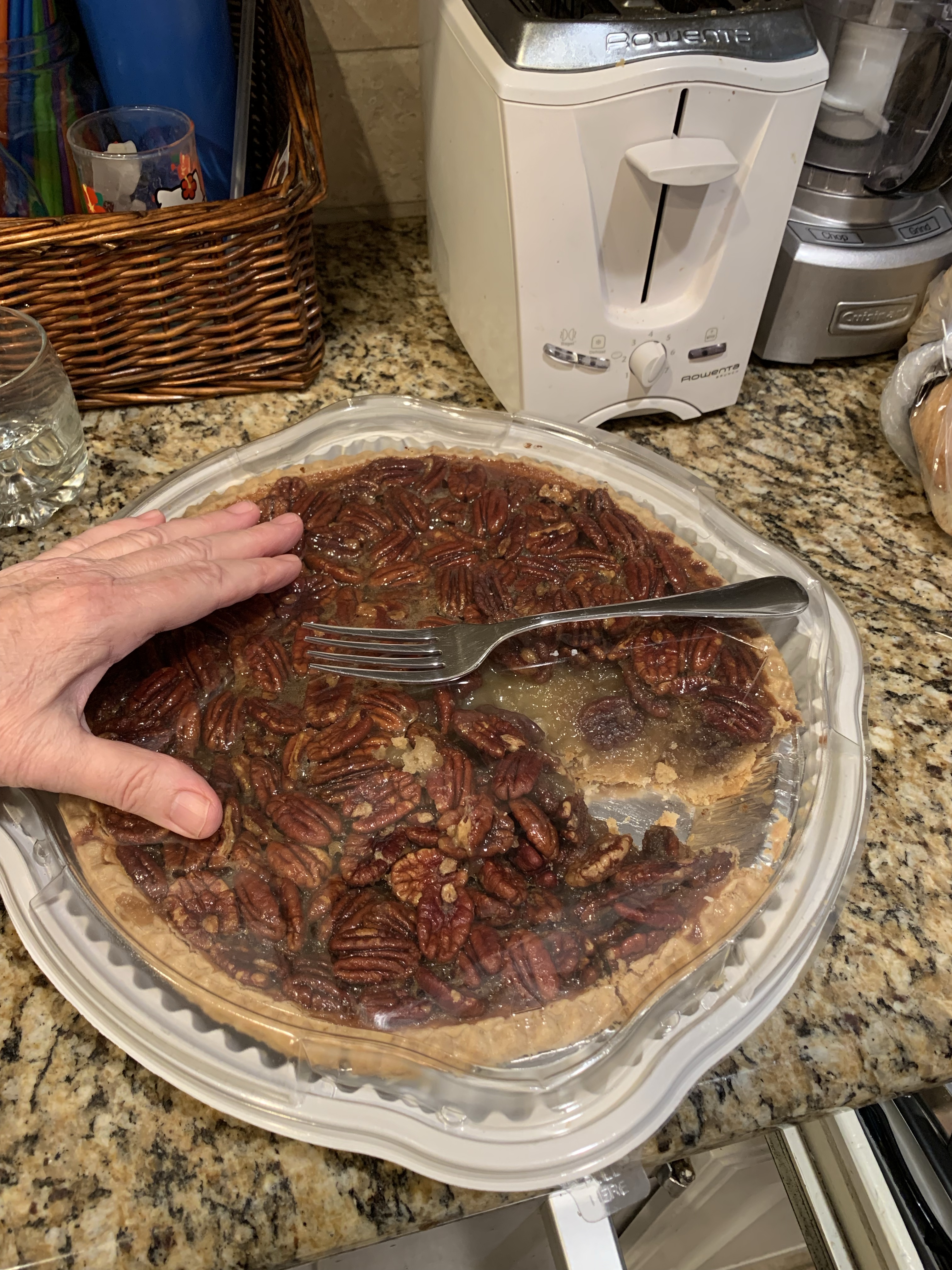
I love pecan pie. Yesterday, our realtor gifted his clients with Thanksgiving pies. We bought our house two years ago, in the middle of a crazy market, when investors were slinging cash like the Monopoly banker. Without his expertise, we wouldn’t have been able to find a place to call home. For that, we are grateful to Kreg Hall. The pie is a bonus. A large bonus as I am the only one in our household who likes or can eat pecan pie. To make it last I’ll freeze portions and enjoy it during the winter months. Each time I sit down with coffee and a slice of pecan pie, warm from the microwave, I’ll lift a fork in gratitude for the blessings we have and the good people in our life. 


Home Baking.jpg

I lived through two decades before I discovered that there were people in the world who made dressing with stale bread cubes instead of fresh cornbread. My oldest sister’s second husband, the nice one, was from somewhere up North, New York I think. He had dark, pomaded hair swept up and back and he smiled and spoke with an accent I had only ever heard on television. He made a bread stuffing with oysters. I forgave him because it was delicious, each mouthful a feast of earthy black pepper mixed with the salty ocean taste of oysters. I was home from college, and my mother volunteered me to drive the two of us up to Malakoff, Texas, where my sister and her new husband had retired to life by the lake. In those days before GPS, I got lost following my sister’s handwritten directions because I didn’t know that “LBJ” was also Interstate 635. We arrived late, but to a feast laid out on their Formica topped kitchen island and still warm. I wish I had asked him for the recipe for that oyster dressing.

My mother made her dish the Southern way, with cornbread. She used white corn meal, soft as sand, with a bit of flour, scooped up and sprinkled in like snow. Baking soda and baking powder for leavening, for we all need incentive to rise. Buttermilk to mix, salt and bacon drippings for flavor, then all poured into her largest cast iron skillet, warmed on the stove so the crust will brown first. It came out like a pale yellow moon and filled the kitchen with the warm, sweet scent of corn. For the dressing she mixed in celery, onions, broth, and enough sage to repel evil spirits.

When I was young, we traveled to my grandmother’s house for Thanksgiving. Not over the river or through the woods, but past the lake and along Highway 380 the 15 miles or so to the town of Farmersville. My mother brought her cornbread dressing and a pie or two as her contribution to the meal. I held the warm pan of dressing on my lap where I sat in the slick vinyl backseat of our 1970 Oldsmobile, and tried not to drool on the foil covering the pan. My grandmother’s wood frame house had a tiny living room decorated with an autographed photograph of a famous televangelist, before the fall. She sent him money and prayed for healing by laying her hands on her Chroma color television while he preached. The children, including anyone under the age of 18, were banished to the back porch. We fought over metal folding chairs and balanced our plates of food on our knees while we fended off the horde of feral cats living in my grandmother’s yard. The cats were only slightly outnumbered by my cousins.

Some years we visited my father’s family, where my aunts made their dressing and gravy seasoned with the chunks of turkey heart, liver, and gizzard that came packaged and concealed inside a store bought turkey. The first time I cooked a turkey I didn’t realize there was this hidden prize inside. I found them after, steamed and tucked under the skin at the front of the turkey, where his neck would have been if it weren’t shoved up into the body cavity. The neck was roasted too, because I didn’t know there was a second, secret scrap part buried inside my turkey.

My first husband was from Missouri, and the bread stuffing his mother made was moist, but thick, and had to be scooped out in chunks. My father-in-law, an honest, hard-working mechanic and assistant Boy Scout leader, led the prayer each year, insisting that we all stand before the table and join hands. You haven’t really experienced Thanksgiving gratitude until you’ve had to convince a squirming toddler to stay still during a ten minute blessing, while the aroma of food wafts over you in a moist cloud of steam you can taste.

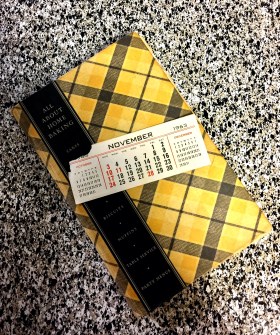
My mother stopped cooking a turkey for Thanksgiving after my parents divorced, when it was just the two of us left at home. She would roast a chicken instead, and make her cornbread dressing. I never saw her consult a cookbook, she cooked from memory mostly, measuring out ingredients to taste except when she was making a pie or cake. After she moved into a nursing home, I found a cookbook tucked away in a box she had stored in her laundry room. The book, All About Home Baking, had penciled notes in the margins and, tucked inside the front cover, scraps of lined paper with recipes written in her delicate, looping cursive. Brittle, yellowed pages from a 1963 calendar fluttered out like falling leaves when I turned the pages of the book.

I roast a turkey every year, even when there are just one or two guests and my vegetarian fiancé at the table. This year I’m cooking both turkey and a ham. I’ll make cranberry relish from fresh cranberries and oranges, and add so much sugar that it passes for jam. We’ll have pumpkin pie and a minced meat pie like my mother used to make, even though no one but me will eat it. It is a deliberate luxury on my part to have a whole pie to myself. My fiancé, Andrew, will mash potatoes so they come out just the way he likes them, a little bit creamy and with a few tiny lumps. When he leaves the kitchen I will sneak in more butter and salt to the dish.

I don’t cook my mother’s cornbread dressing, I’ve fallen from grace and into the boxed, instant variety, but at least it’s the cornbread version. I’ll make traditional green bean casserole with crispy fried onions on top and a spinach rice casserole from a recipe my aunt gave to me. I don’t put marshmallows on the yams, instead I’ll serve them with a pecan streusel topping like my ex-husband’s mother, my first mother-in-law, made.

The guests at the table, the cooks in the kitchen, and the fellowship changes, just as the feast stays the same. I touch my past as my hand stirs the pot, preps the bird, and kneads the bread. I bow my head in silent thanks and join hands with all, even those who are absent from the table. Join hands, bow heads and give thanks, give thanks for the love we are all about to receive.


The Queens of Summer Camp

Queens of Summer Camp

There were two groups of people in the small town I grew up in, those who went to church and those who didn’t. The church goers were overwhelmingly either Southern Baptist or Methodist. There were some Catholics over on the east side of town, but they mostly kept to themselves except for their annual Christmas tamale sale. I joined the Southern Baptist delegation at the Lake Lavon Baptist Encampment the summer after sixth grade. I remember gathering around a camp fire on one of the first evenings in camp, listening to a chorus of pre-teen girls singing hymns. I found myself walking forward when the counselor encouraged any who were lost to come and be found. After the twelfth or thirteenth verse of “Kumbya, My Lord”, I doubt if even Carl Sagan could have resisted the call of that sweet fellowship.

Every summer after that my best friend, Ann, and I traveled by church van the fifteen or twenty miles or so to the Lake Lavon camp, where, if we were lucky, we were assigned a dorm with air conditioning. By the end of the week the sleeping quarters would smell of a mixture of wet bathing suits, hair spray, and mildew, but we didn’t mind, as this was our week of freedom. We spent the days attending mission classes and crafts sessions, and each afternoon we were allowed one hour of swimming in the camp pool, where I was a weak swimmer but a champion dog paddler.

It was this lack of swimming skill, combined with an overwhelming fear of being singled out for attention that ultimately made me doubt my salvation. After my march down to the fireside that summer I thought my Christian duty was done, but one of the camp counselors informed me that, in order to seal the deal I would have to be baptized.

Oh, I thought regretfully, if only we were Methodists, those Christians who made their profession by merely becoming slightly dampened. But no, I had gone and hooked up with the Southern Baptists, those believers in full immersion. I might as well invest in a snorkel and wet suit, in order to establish my place in the Kingdom of Heaven.

“Do you think I could be saved without being baptized?” I asked Ann.

“I think so”, she replied, “but you should probably go ahead and do it just to be sure.”

“What if I choke on the water when the preacher dips me under?” I wasn’t so much afraid of drowning, but that I might start coughing and embarrass myself. I’d seen those awful white robes they made you wear, and I imagined water dripping down my face while the preacher called for others to come down and be saved. My luck no one else would be moved and we would have to float there through eight or nine choruses of “Just as I Am.”

Eventually I was able to forget about my lack of baptism, except once a quarter, when the Baptists would extend the Sunday morning worship to include communion. I would agonize on whether I should accept the tiny, flat cracker they passed around, but since it was so close to lunch time I would give in, washing down the inadequate snack with a swallow of unsweetened grape juice that represented the blood of Christ. Even though we were symbolically consuming his flesh, I felt that surely Jesus would have approved a larger portion.

To prove myself a loyal church member I devoted myself to bible study and Sunday School attendance. Our church hosted a twelve week session on the disciples, and each week they gave out a prize, a small charm with the image of each of the twelve apostles. I was home with strep throat the week they gave out James, and despite trying to convince my mother that a 102 degree fever was no big deal, I missed collecting the entire set.

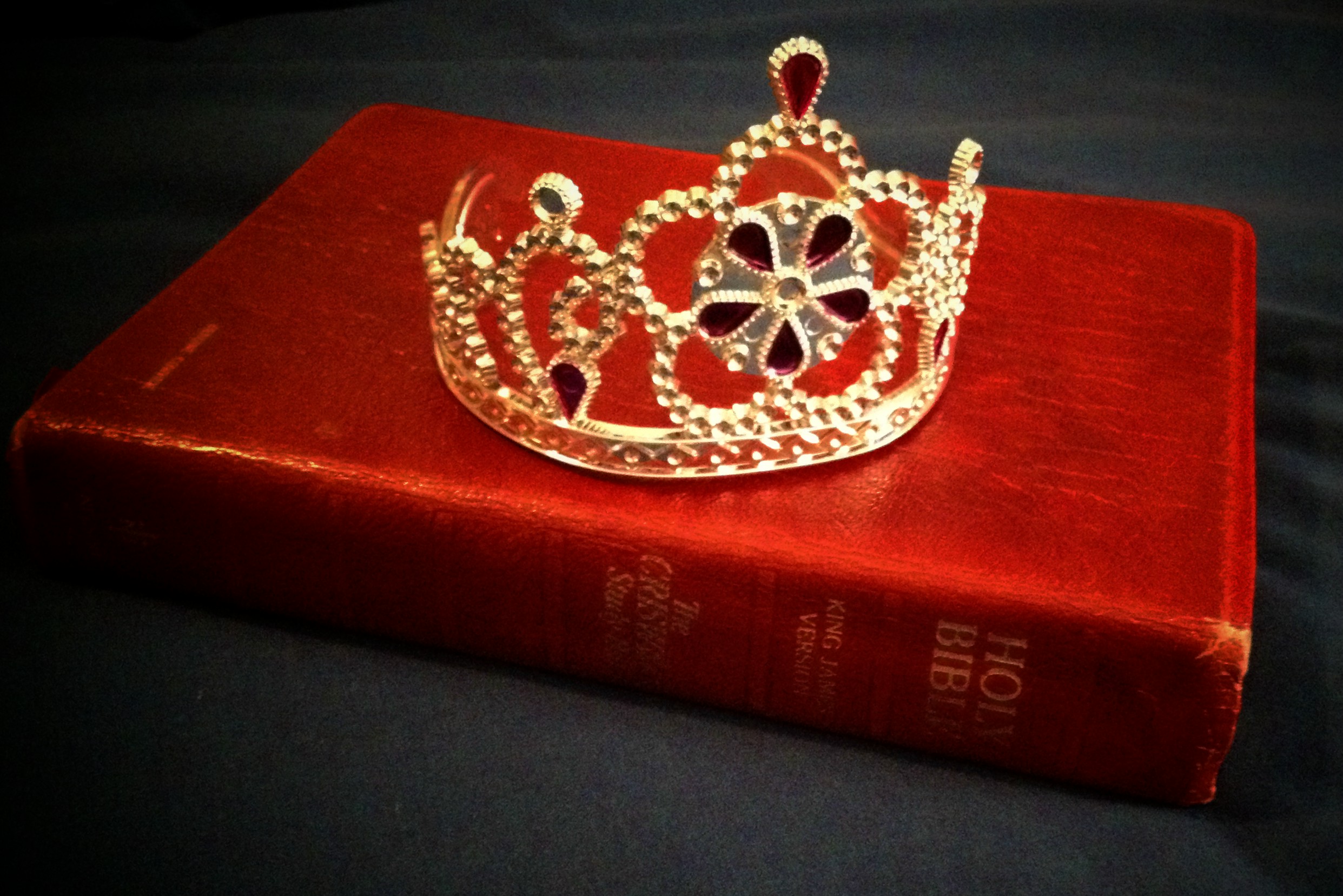
Along with Ann, I joined Acteens, the young girls’ mission study group. We met once a week to learn about missions, and this program included an opportunity to advance to “Queen of Mission Studies”, or some such other title that I can’t remember. Besides earning a nifty scepter and tiara; any young lady who reached the title of “Queen” would be invited to a special missionary tea at summer camp, and, most importantly, the Queens would be allowed an extra hour of swimming at midnight on the last day of camp.

Ann and I threw ourselves into this competition that was not meant to be a competition. We cooked special recipes from foreign lands and walked the three miles to church carrying a large cooler filled with curried rice the week we were studying India. We organized and put on a splendid Christmas pageant, refusing to allow the boy’s mission study group – the Royal Ambassadors, to participate. They spent too much time playing basketball, in our opinion, to be of any help. We progressed through the steps, I can’t remember now what they were, but something like maid, handmaiden, duchess, princess, and finally – Queen. There was a ceremony that surely was more embarrassing than any baptism would have been, except there was no water and I got to wear a long dress and makeup, and put my hair up under the crown.

We made it to Queen status just in time, as that summer would be our final trip to the Lake Lavon Baptist encampment. When our special day arrived at last, Ann and I dressed in our long gowns and put on our tiaras, and walked across the campgrounds to the place where the missionary tea was to be held. Unfortunately for us it was unusually hot that summer, and the meeting room was not air conditioned. I sat there and drank lukewarm Kool Aid while the sweat dripped off my face and the long dress stuck to the back of my legs. I don’t remember much more of the event, except feeling a great disappointment that the missionaries did not share stories of life threatening danger. They were stationed in Canada as school teachers, and the greatest threat they faced was a shortage of chalk.

When the midnight swimming hour arrived Ann and I dressed in our damp swim suits, gathered up our towels, and made our way with the other lucky girls to the swimming pool. We carried flashlights that looked like fireflies twinkling across grass. When we got there my summer friends jumped into the dark blue water, and I stood there on the edge, watching their heads bob up and down, drops sparkling on their brows like jewels.

“Come on in, jump!” Ann encouraged, and I curled my toes under the rough cement ledge and pushed off, jumping off into the deep end of the pool. Down, down I went until my toes barely scraped the slick tile on the bottom, and then I kicked my legs and shot up toward the surface, bursting up and spreading my hands out above into the cool night air. I looked up and saw the face of the Man in the Moon, soft and bright as God’s love, shining down on us, the Queens of Summer Camp.