A Hike Through the Uncanny Valley

Nothing here is real

Photo by the author

The cat arrived courtesy of Fedex delivery. This newest addition to our household was meant as a companion for my mother-in-law, Roby. She has dementia, and the robotic cat was designed to bring comfort to folks who would benefit from having a pet but who also no longer have the ability to care for one.

Kitty – Photo by the author

My husband Andrew and I had seen the description and photos of the cat, but nothing came close to preparing me for the unboxing. When I pulled back the last flap of cardboard, it revealed a creature not quite life-like, but also not quite resembling the toy we thought we had ordered. I lifted him from the box and set him on our dining room table. Not exactly the best place for a cat to perch, but this one wouldn’t shed or leave bits of litter scattered across the placemats.

Roby gathered him up, christened him “Kitty” and placed him on the dresser beside her bed.

Kitty – Photo by the author

The term “Uncanny Valley” was coined to describe the eerie feeling we get when something appears too close to human. Kitty in no way resembled a person, but he did share that characteristic of being too close to a living thing. In a dim light, from across the room, he reminded me of Church, the reanimated cat from the Stephen King novel, Pet Sematary. I know Kitty isn’t real, but I wonder if he might attempt to murder me in my sleep some night.

Kitty on his pillow

When Roby brushes his fur or pets his little mechanical head, Kitty unleashes a loud purr that sounds like gravel rolling in a tin can. If you rub him long enough, this noise is followed by his turning over for belly rubs. You can hear the gears grinding as he lifts a paw and rotates. His meow doesn’t sound exactly feline. Instead, the noise Kitty produces resembles the cry of a serial killer trying to lure us with an unsuccessful cat imitation.

Life with someone suffering from dementia has its challenges, but up until several months ago we had dodged one of the most difficult. Roby had never tried to wander from our home. Then, one evening while I was in a book club Zoom meeting, I heard the distinct click of someone unlocking our front door. I glanced out the window beside my desk in time to view my mother-in-law striding from our porch and toward the street. She didn’t seem confused about the journey – she moved like someone with an agenda.

“I’ve got to go,” I told the book club.

Outside, I rushed to get in front of Roby. “Hey, where are you headed?”

She gave me a suspicious squint and replied, “Anyplace but here.”

At that moment I couldn’t have agreed with her more. I imagined the neighbors watching and wondering why we had tossed our elderly parent out the door.
“You need to go back inside. It’s not safe out here.” If I thought a reasonable request would do the trick I was soon proven wrong. Roby tried to dodge around me. I threw up my arms and waved as I swayed back and forth like someone trying to divert a bear attack. This wouldn’t work for long. Although I outweighed her by at least seventy pounds, I couldn’t imagine picking up my five foot two mother-in-law and toting her back inside. Almost certainly there would be kicking and screaming, possibly from both of us. It was still daylight, the better to give everyone a good view of the tussle.
“I’m leaving and I’m not coming back,” she said.

By this time we had made it halfway down the drive. I considered letting her go. I could follow along behind her and pretend we were out for a nice stroll. My husband, her son Andrew, would be home soon. Perhaps he could pick us up if we made it to the interstate. Then I remembered the cat. “If you leave, Kitty will miss you.”

Roby frowned, but she stopped trying to get past me. She seemed to be trying to work out the connection between me, Kitty, and the awful place she had abandoned. We stood there, at an impasse. I decided to try going back inside. Maybe Roby would follow me, to make sure I didn’t bother the cat.

I made it to the front door. Roby didn’t move from her position at the end of the drive. She glanced back and forth between the sidewalk to freedom and the house. More encouragement was needed to lure her back inside. I went to her room and brought out Kitty.

“Here he is.” I held the cat by the scruff of its neck – no easy feat considering the creature was not soft and pliable but was instead polyester fur over a metal frame. Opening the lid to our plastic garbage bin, I said, “If you leave, Kitty goes in the trash!” This was an empty threat. At worst we’d sell him on Ebay. I shook the cat, and Kitty, interpreting this as a petting, began to meow and purr. Before he could twist in an attempt to roll over for belly rubs, I backed into the house. Roby, all thoughts of freedom now vanished, advanced on us like General Sherman marching on Atlanta. I dumped the cat on the dining room table and hid behind my office door until I was sure Roby was safe inside.

While Roby picked up Kitty and consoled him on his near brush with extinction, I locked and deadbolted the front door. My mother-in-law carried the cat back to his perch, and she settled on her bed beside him.

Roby hasn’t tried to leave since that day. Maybe her concern for Kitty keeps her grounded, or maybe she doesn’t remember what stirred her to escape. Thankfully, she forgot my part in the encounter. However, every time I see the cat I feel like I must apologize to him for my rough treatment. I know Kitty’s reactions are not governed by emotion – instead they are limited to his battery power. He isn’t a living animal, but in the dim light of the uncanny valley all it takes to make something real is our belief that it is.

Everyone’s Taste is Not Your Own

Photo by the author

The past has flavor. It tastes like cherry popsicles melting red down your arm on a hot summer day. It might taste like Saturday night at home, watching the movie of the week and eating pepperoni pizza. The kind from a box kit, with tiny circles of spicy pepperoni swirled into the sauce. Sometimes it tastes like love and joy, like Friday night dinner out with your family – tacos and enchiladas and queso and salsa and chips hot from the fryer.

Photo by the author

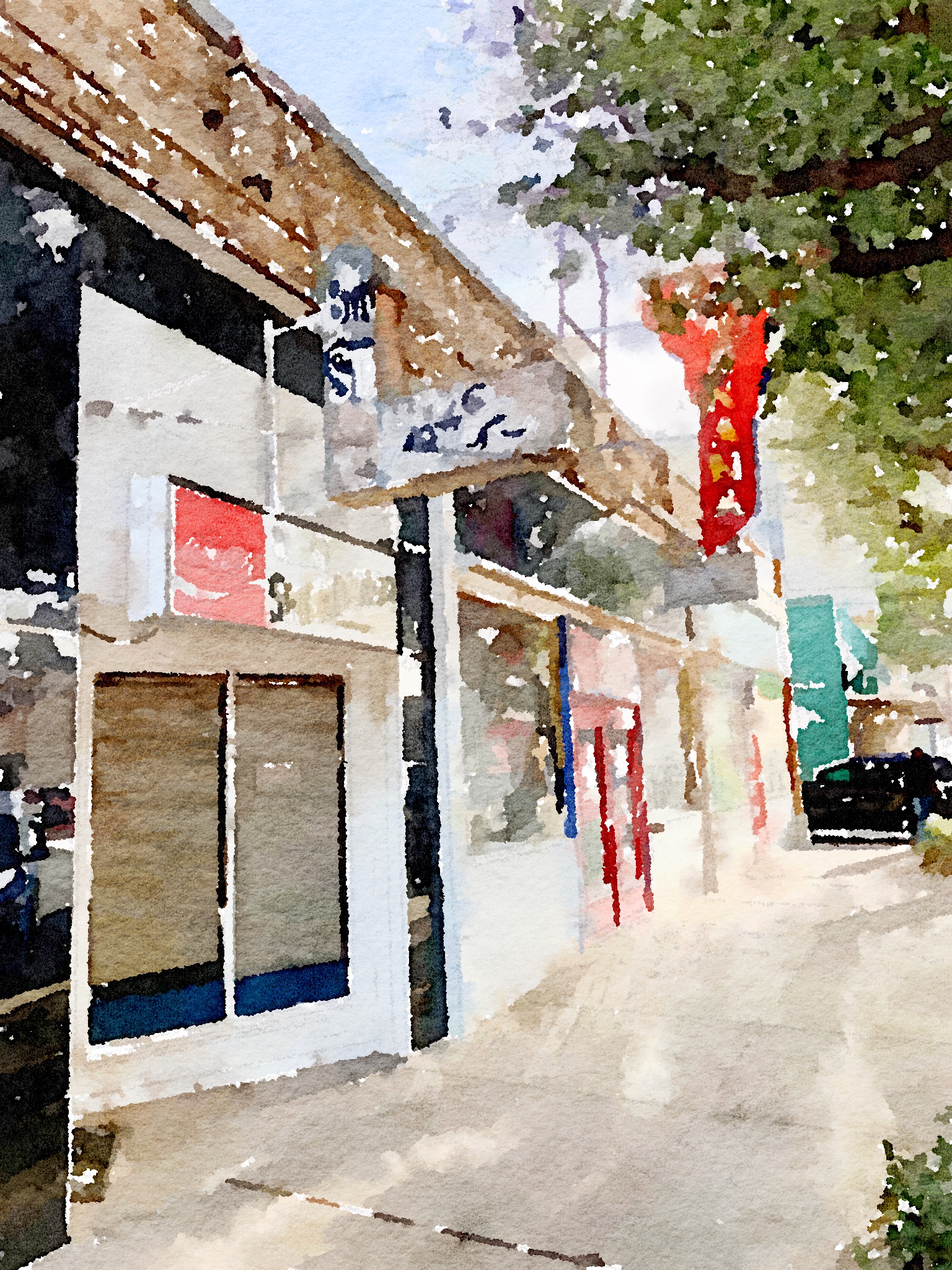
We drove up to Wichita Falls one Saturday, to explore the downtown and see if we could find something interesting in the antique shops. Along the way we stopped in Muenster at Fischer’s, a small grocery stocked with local products inspired by the town’s German heritage. I bought spaetzle and pickles and chow-chow relish. My mouth watered in anticipation of the tang of vinegar. Then, as we made our way to the cashiers at the front of the store, I spotted a box of Chef Boyardee pepperoni pizza mix. I hadn’t seen this product in the Dallas area in ages. I scooped up the last two boxes. This pizza had been a staple of my childhood and teenage years.

Photo by the author – Downtown Wichita Falls

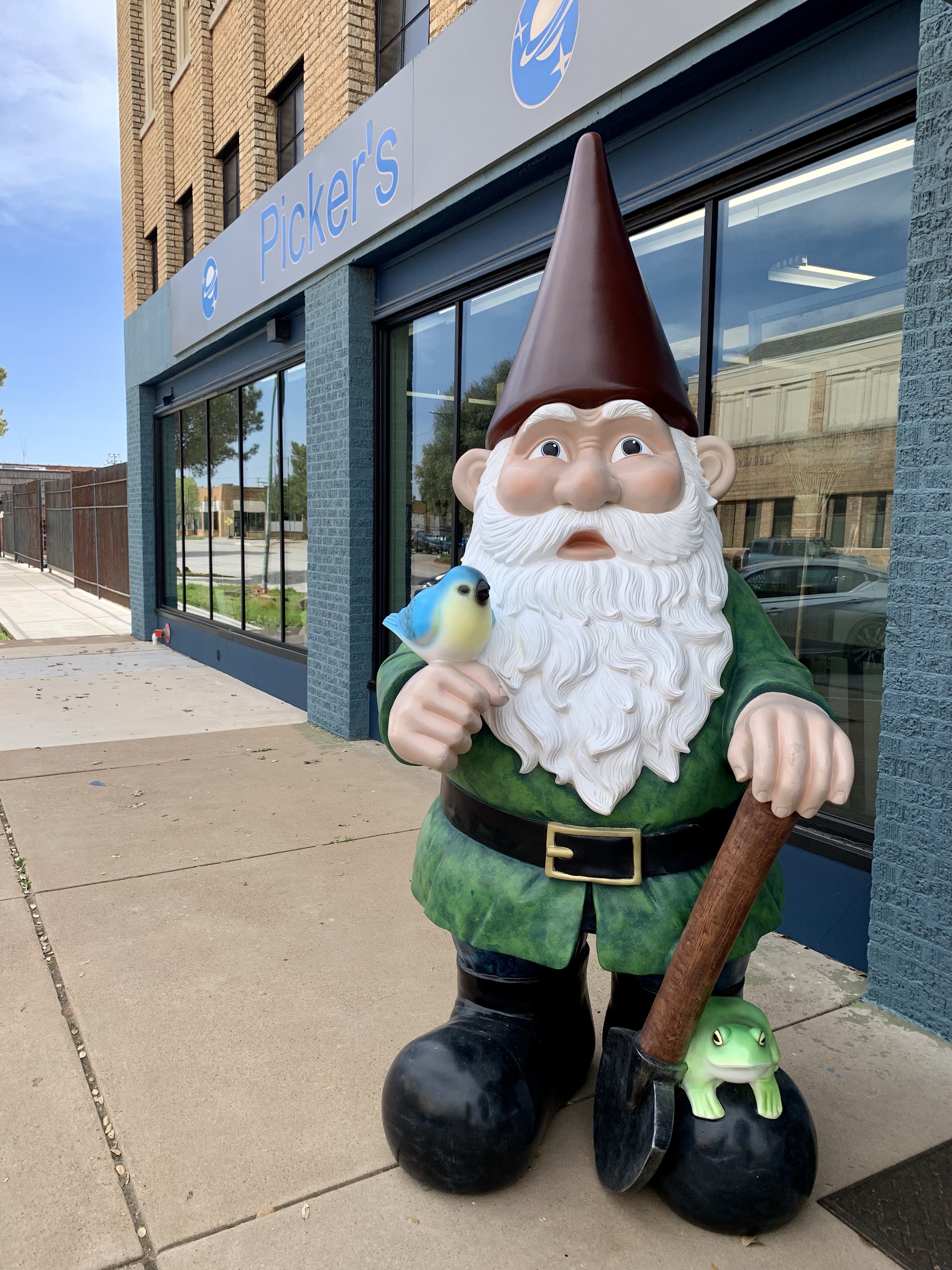
In Wichita Falls, we trooped through dusty shops and searched for bargains, climbed creaking stairs in hopes of discovering treasure. We had left our drinks in the car, parked two blocks away. As the hot afternoon wore on, I dreamed of a cold glass of iced tea. After wandering through a maze of shelves stocked with foggy glassware, yellowed magazines, and toys with missing parts – Andrew and I decided it was time for an early dinner.

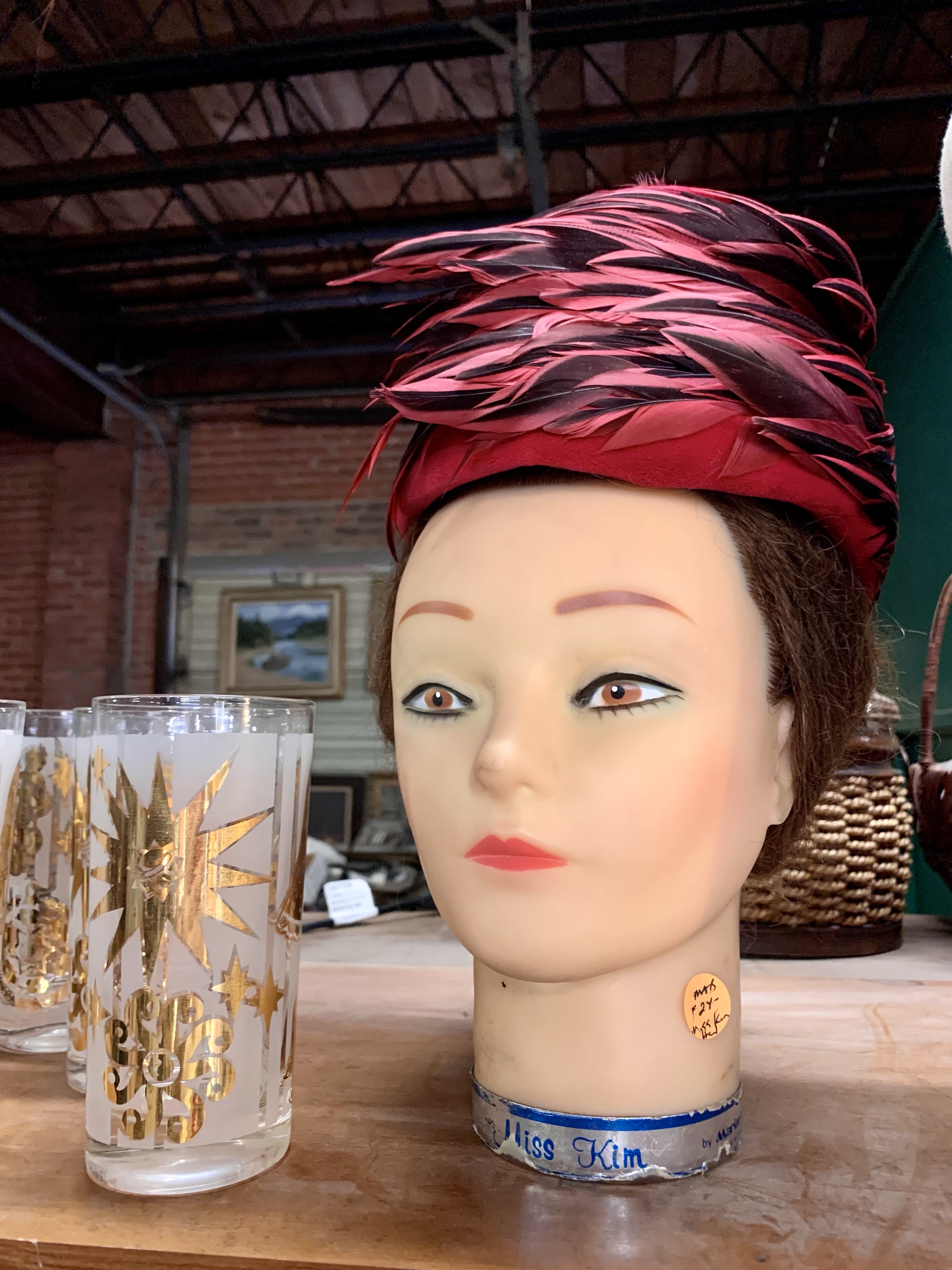
Photo by the author – Miss Kim judges your taste

Photo by the author – the seamstress

I had picked the restaurant based on the Yelp reviews. The place had been in business for decades and had racked up a reassuring 4.5 stars out of 5. Their specialty was something called a “red taco.” I couldn’t wait to try it.

“I don’t know,” Andrew said. “It might be too busy. If there’s a wait we can come back later.”

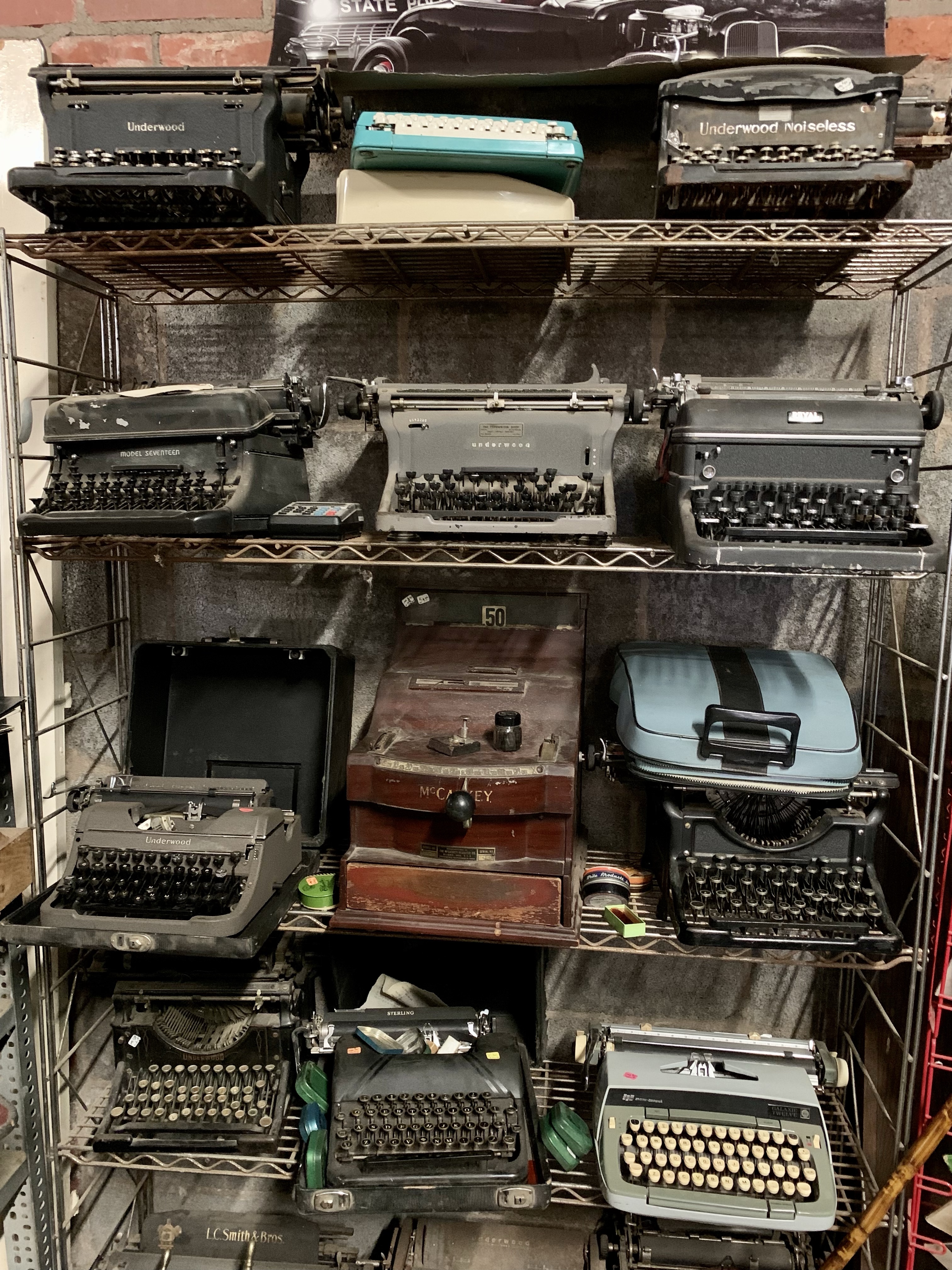
I agreed, but secretly vowed to suffer the wait. I’d dreamed of that taco the whole time we circled through stacks of broken typewriters and piles of musty books.

Photo by the author

When we arrived at the restaurant, I was thrilled when the smiling cashier told us to sit wherever we wanted. We squeezed into a narrow booth. A waitress popped by to take our order. Andrew decided on enchiladas and asked for queso in place of chili. I had a combination plate – a cheese enchilada and the long anticipated red taco. We added a bowl of queso to start.

When the waitress dropped off our chips and queso, I thought there had been some mistake and we’d been served biscuits instead. Each piece was at least a quarter inch thick and weighed enough to raise a decent welt if I chunked it at someone. The queso sported a suspicious pink tinge, as though the antacid were already blended into the sauce. A pudding-like consistency, it clung to the chips and quivered.

Andrew gave me a stricken look. “I added queso to my enchiladas.”

“Maybe they will mess up the order.”

However, our main meal arrived quickly and was just as we had requested. The famous taco was certainly red. A vivid, siren screaming red that could only come from a lifetime allotment of red dye number 40. The taco shell was thick like the chips, and possibly made from the same tortillas. Where had they come from? I’d never seen anything like that, unless you count the time I attempted to roll out my own corn tortillas at home. The refried beans were lumpy and unseasoned. My cheese enchilada was good, but there wasn’t nearly enough of it to justify the price on the menu.

I pulled up the Yelp app and read through the reviews. Had we stumbled into some alternate universe, one where everyone else thought this tasted fine? Like that Twilight Zone episode where everyone has a pig face except this one girl who believes she’s the ugliest person alive?

This time, I searched for the 1 star opinions. As I read through the ratings, one theme appeared throughout – puzzlement. Then I sorted the positive reviews. Most had one thing in common – memory.

“I’ve been going here since I was a child.”

“I always stop in Wichita Falls for a red taco.”

All around us there were smiling people dining on the chips, dipping into the queso. It must be tradition. So many restaurants closed during Covid. I can count on one hand the stores that are still open that also existed when I was young. How reassuring it must be to have one constant in your life, one place you can go and say you’ve been there for years? The food must taste better when flavored by memory.

Photo by the author

New Year New Goals

Unlike my friend here, I don’t have an excuse for not writing more.

The past year has been a series of “if only” – If only I didn’t have to work full time, if only I had more time, if only I had a dedicated writing space, and on and on and on.

It’s the end of the year and I’m still working a full time job. We have bills to pay, just like most people I know. Whenever I begin to feel sorry for myself and wish for more time, I remember reading about Ray Bradbury toiling away each night, writing short stories after he worked to support his family. He wrote Fahrenheit 451 on a rented typewriter, in the basement of the UCLA library. I have a laptop I could take anywhere to write – including my office in the house we bought this year.

I’m grateful to the group of writing friends I’ve made. I wouldn’t have completed the works I have done this year if it hadn’t been for their support and encouragement.

With 2022 upon us, I’m wishing for a more productive year for everyone. In the meantime, here’s a link below to an older short story of mine that I think turned out well.

Old Long Since

Happy New Year!

Thankful for Small Steps

I turned 60 this year, and for the first time in my life I’ve realized I have far fewer days ahead of me than behind. It’s a startling revelation, one that leads me to portion out my days like a miser hoarding gold. A very small stack of gold. One that I should have appreciated much sooner.

There is no good time to live through a pandemic. I wonder if I would have felt the theft of days as acutely if Covid had happened when I was 50, 40, 30. Be thankful, I tell myself, you don’t have small children at home. I’m fortunate that I have a job that can be done remotely. The only health damage my husband and I have sustained is the extra pounds that have crept up on us. I’m not replacing the batteries on our digital scale. When it dies we’ll stop monitoring our gains. That, at least, will have a finite ending.

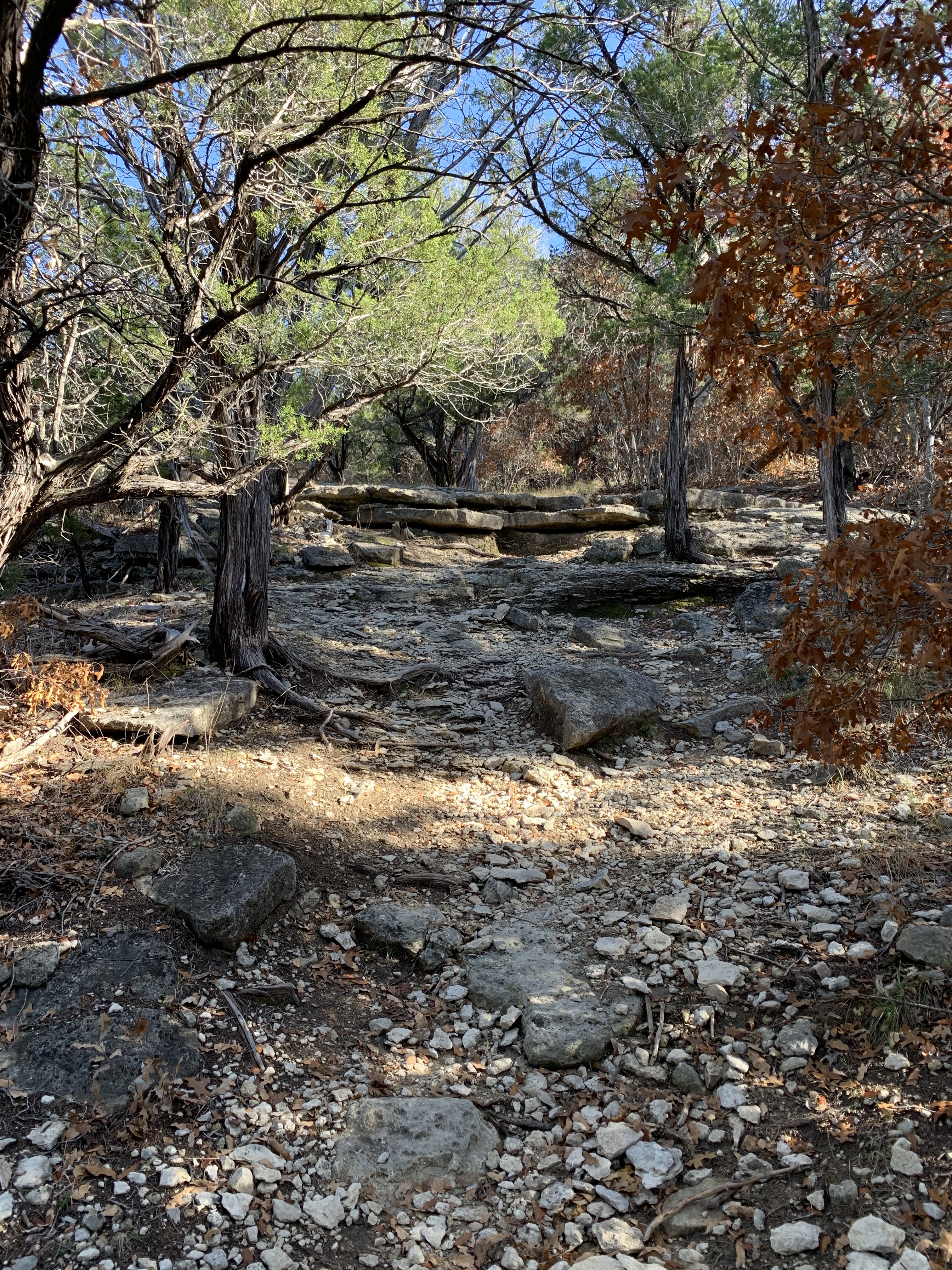
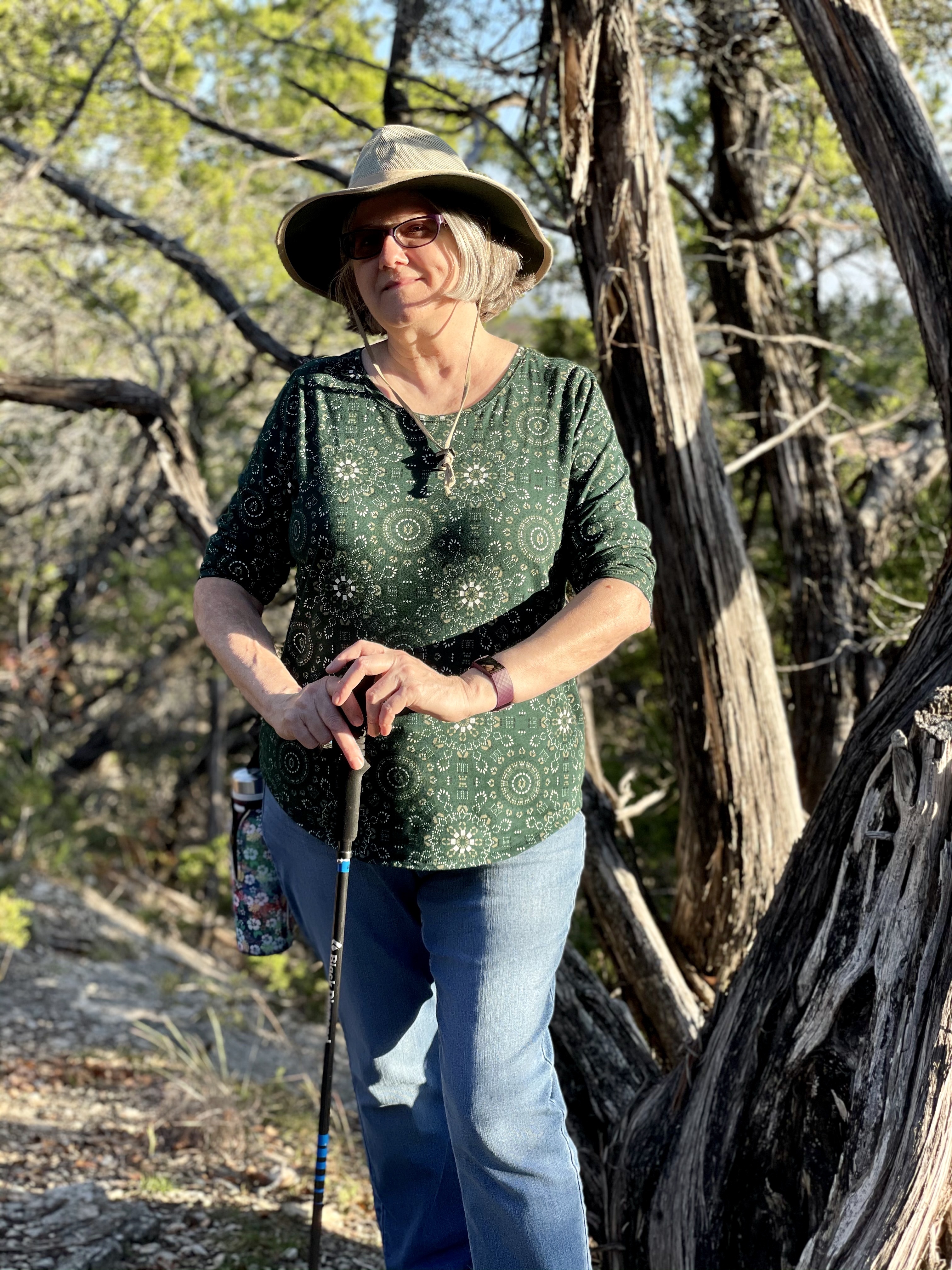
We decided to forego any gathering of friends and family for Thanksgiving and instead reserved admission to Dinosaur Valley State Park in Glen Rose, Texas. It seemed safer to spend the time outdoors, passing strangers on trails.

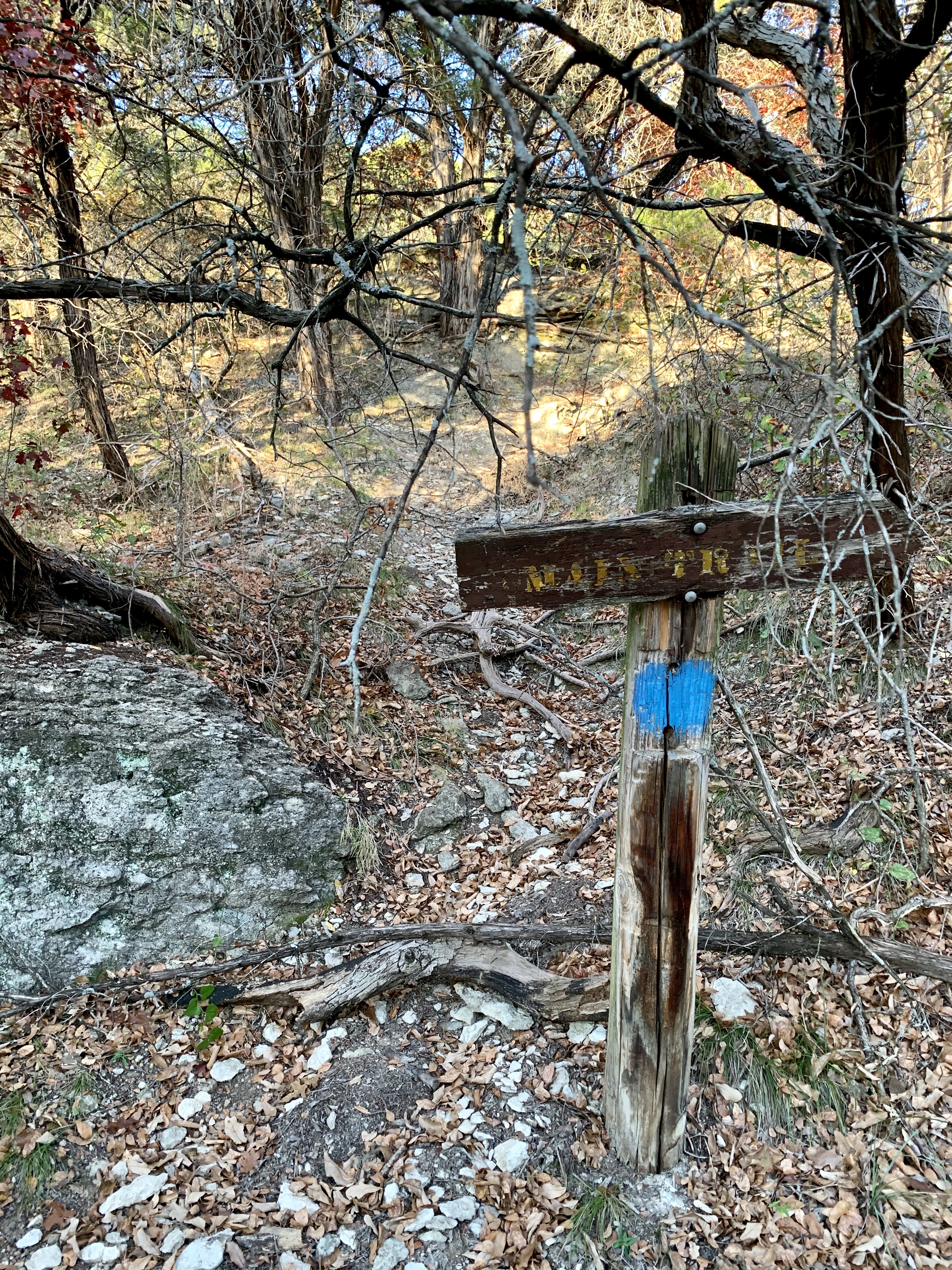
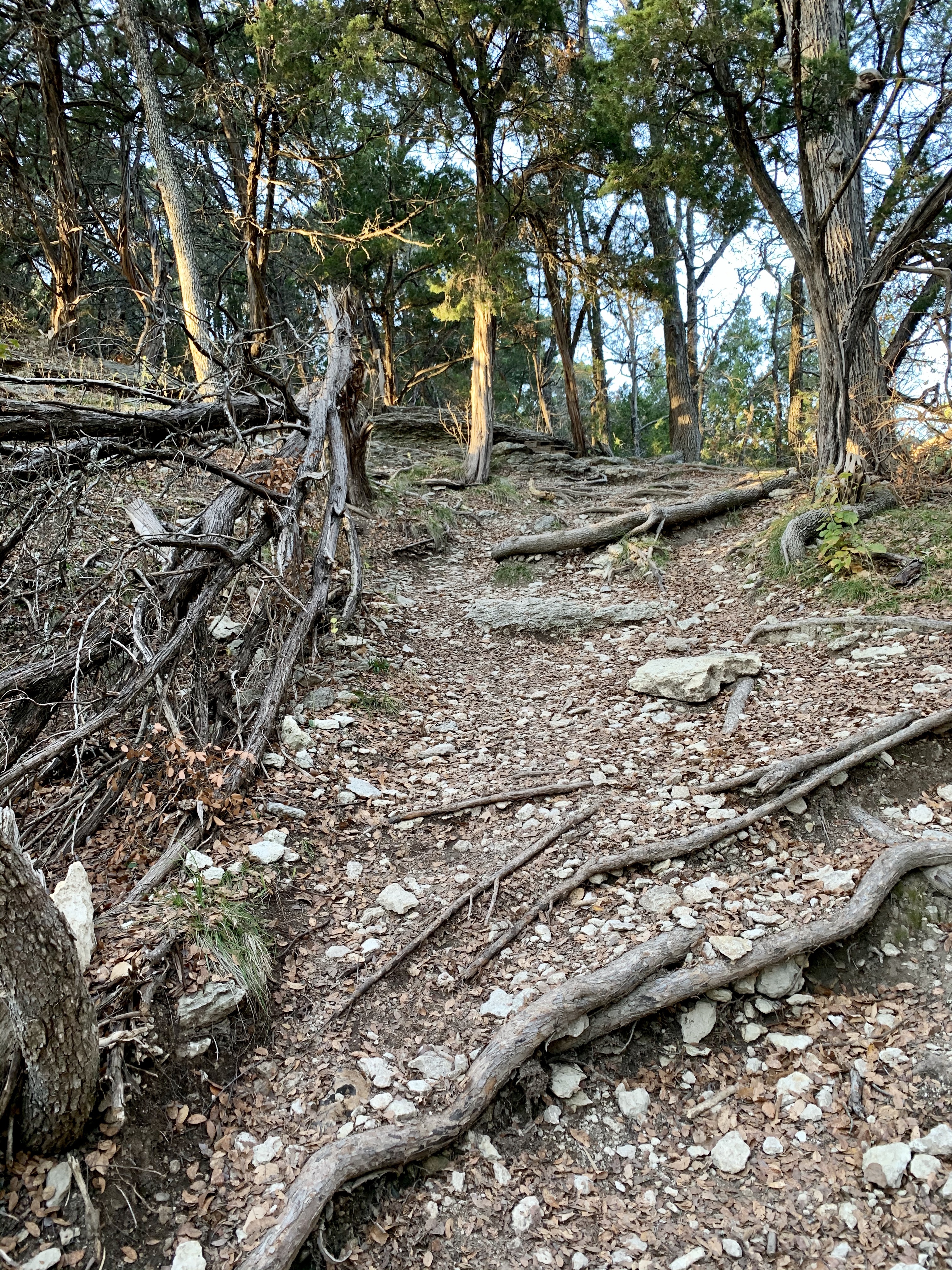
Outside, with the clean scent of juniper and cedar surrounding us, it was simple to tie my shortness of breath to the steepness of our hike, and not to the irrational fear of illness. Worry dissolved with each step over tangled roots, each rustle of leaves blanketing the trails.

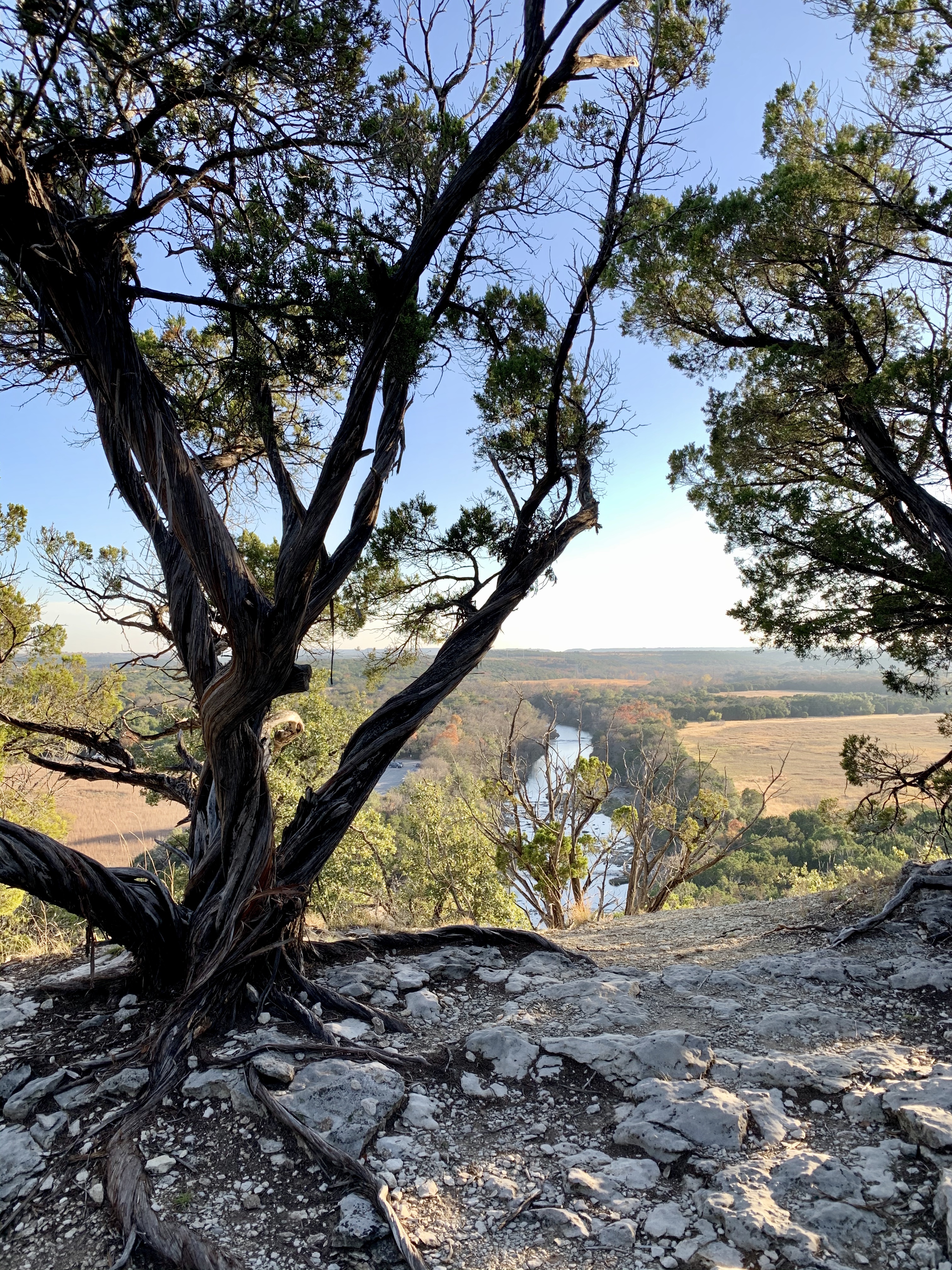
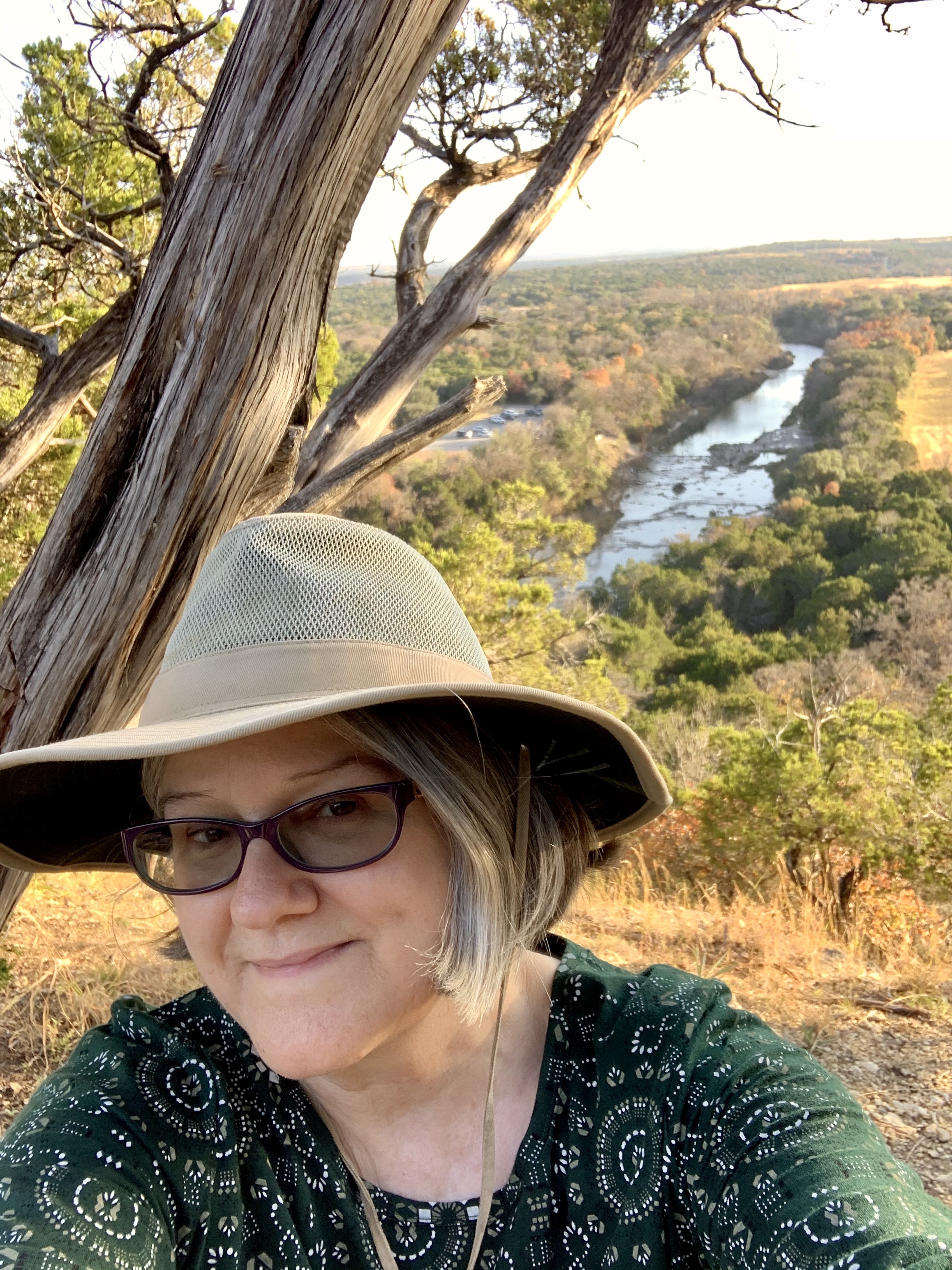
We stopped at an overlook to admire how high we’d climbed and I ate an orange, impossibly sweet, from my pack.

I snapped a picture at a spot I’d stopped at a few years back, intending to look up that photo and compare it to the present, but I decided I’d rather keep the current image in my mind without regret for the changes brought by time.

The trek downhill was harder, perhaps because it marked the winding down of the day. My knees complained and my ankles, not to be outdone, insisted on wobbling with each step. Someone had installed a small wooden step at a particularly steep portion of the trail. As I tested the sturdiness of the steps I clutched the trunk of a cedar tree leaning over the path. The usually shaggy bark was worn smooth, polished by the thousands of hands that had gone this way before me.

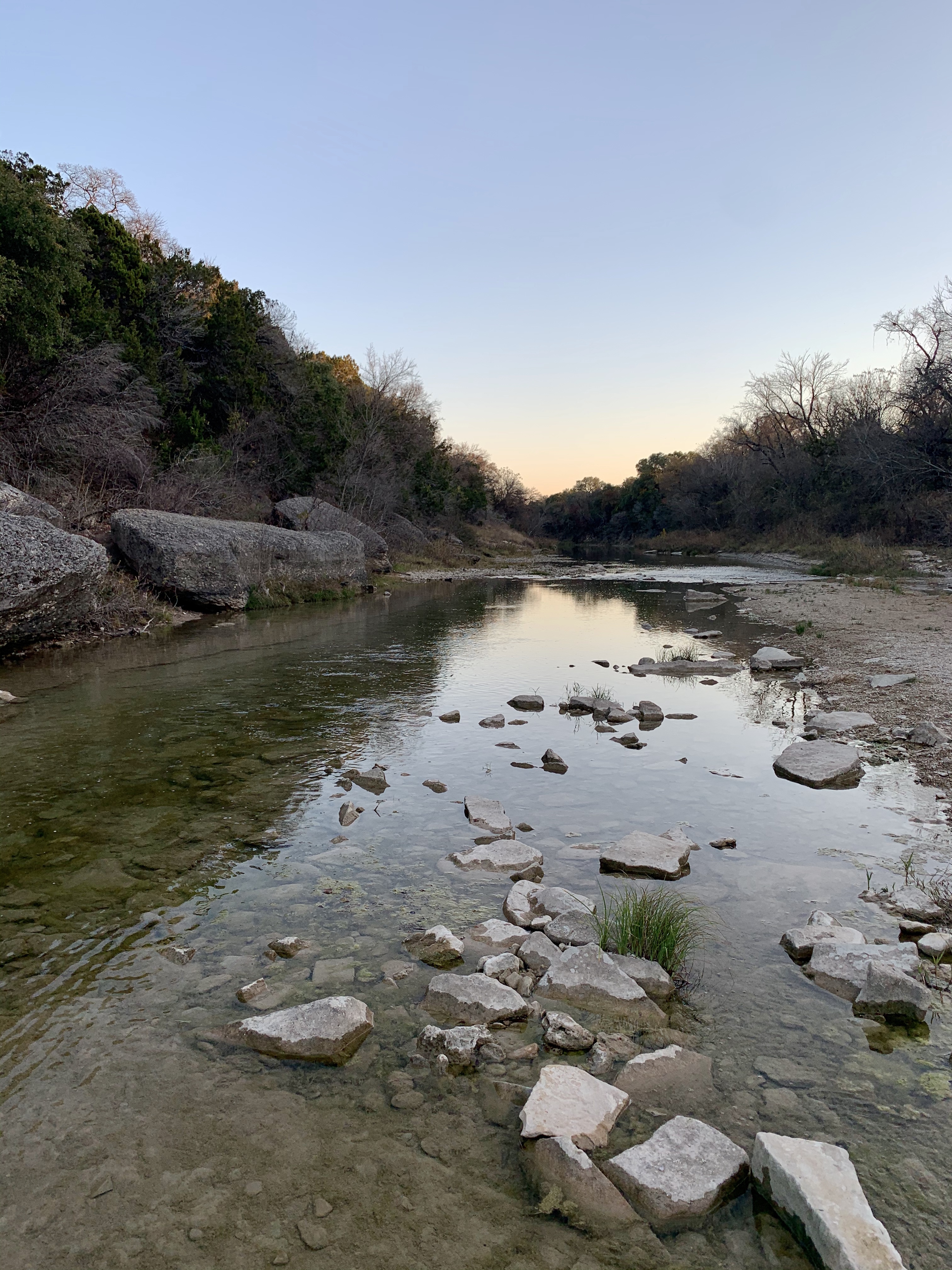
At the end of the trail, as at the beginning, we had to cross the slow-moving Paluxy River. Andrew hopped across the stones laid in rows in the shallow water while I, not trusting my balance, decided to take off my boots and go barefoot through the crossing.

I tested each step, carefully navigating over slick, moss-covered stones worn smooth. Cold water up to my knees, I felt both a child-like joy and the very adult fear of falling. If I made it back to dry land safely, I decided I would devote time each day to the yoga tree-pose.

I find gratitude in nature, for the ability to set out on larger journeys with small steps. I forgive myself for the ennui that has gripped me this past year and I realize that instead of wasting time I’ve been healing. So that when this pandemic is over I can go out and face the world like the bad-ass, mature woman that I am.

“There are always flowers for those who want to see them.” Henri Matisse

Finding Fossils in Ladonia, Texas

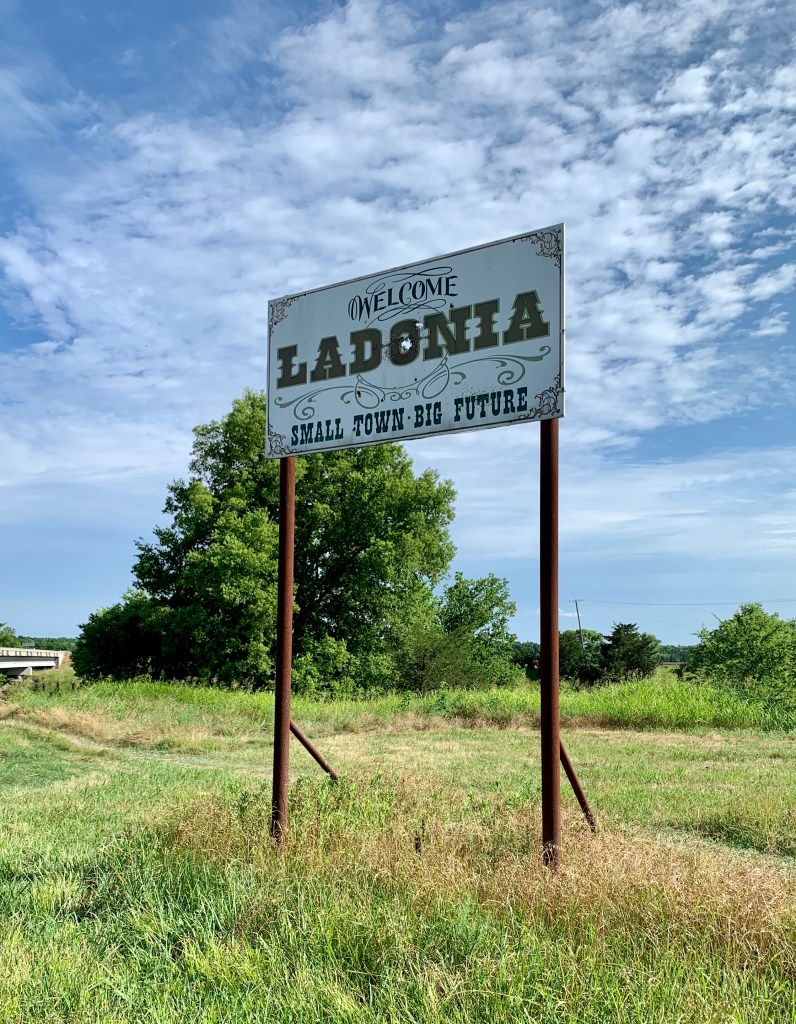
Sign outside Ladonia Fossil Park in Ladonia, Texas, Small Town Big Future
Ladonia Fossil Park – Photo by the author

On a sunny Sunday afternoon Andrew and I drove to Ladonia, Texas to look for fossils.  They’d been waiting for discovery some eighty million years, so we were in no particular hurry to arrive. Small towns with quaint names peppered the map along the path we traveled – White Shed, Honey Grove, Allens Chapel, Pecan Gap, Wolfe City, Birthright, Ben Franklin, and Flat Prairie. I ignored the blacktop road beneath our tires and focused on the fields flashing past. I imagined we were retracing the route of an Old West stagecoach.

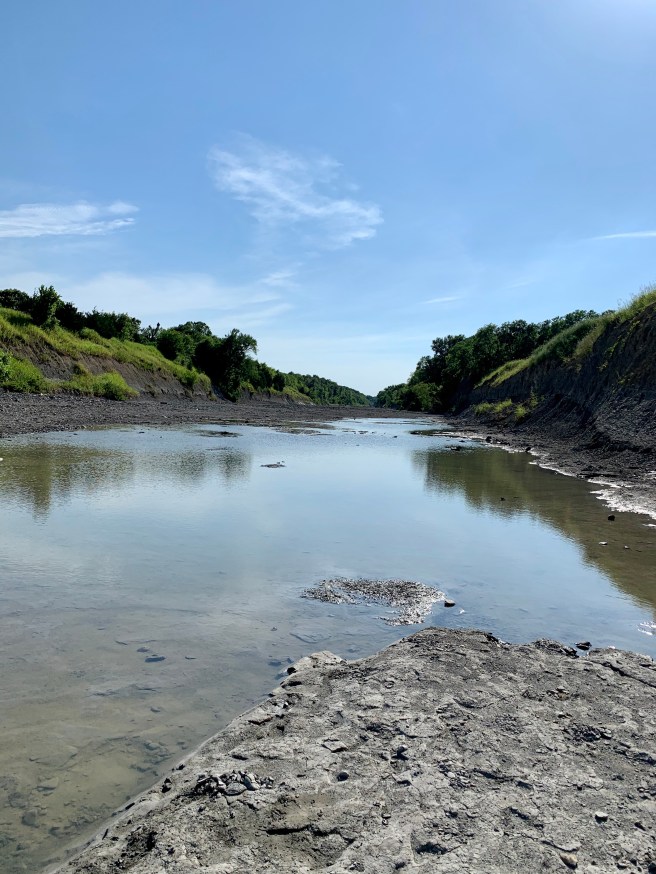
The North Sulphur River

We turned off Highway 34 and into the gravel parking lot at the entrance to the park. There were no facilities – no restrooms, no ranger station, and most important – no ticket booth and no admission charge.

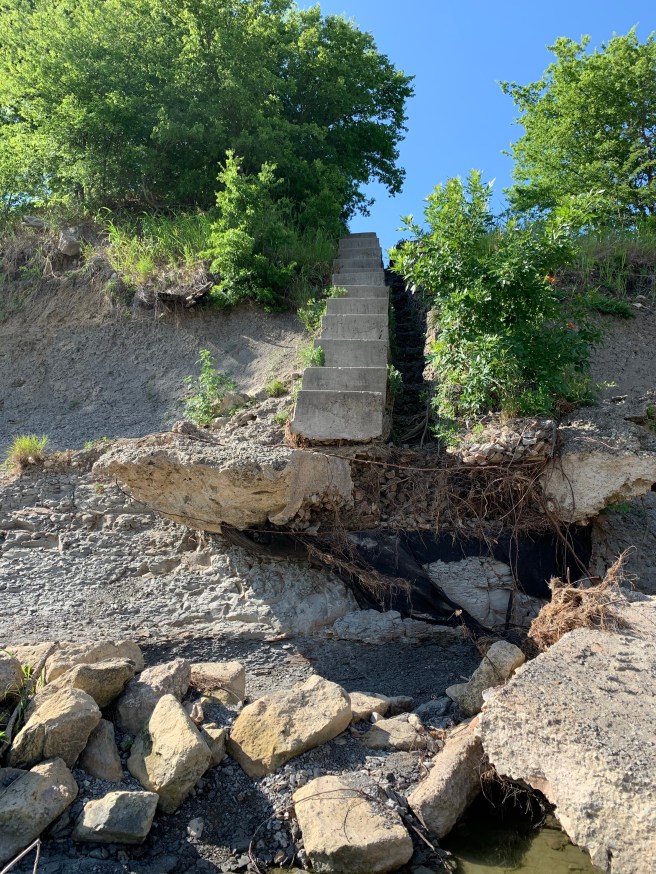
To reach the riverbed we clambered down a steep concrete staircase, more suited to goats than late-middle-aged women.

“I can hold your hand,” Andrew offered.

“I’m afraid I’d just pull you down with me, and we’d tumble off together,” I said.

The steep stairs descending to the riverbed
The “Stairs”

Erosion had carried away the bottom portion of the staircase. We were able to sidle along the side of the embankment and reach the riverbed. The buzz of passing cars and trucks sounded beside us, on the bridge spanning the river. Once we reached the bottom the noise filtered away.

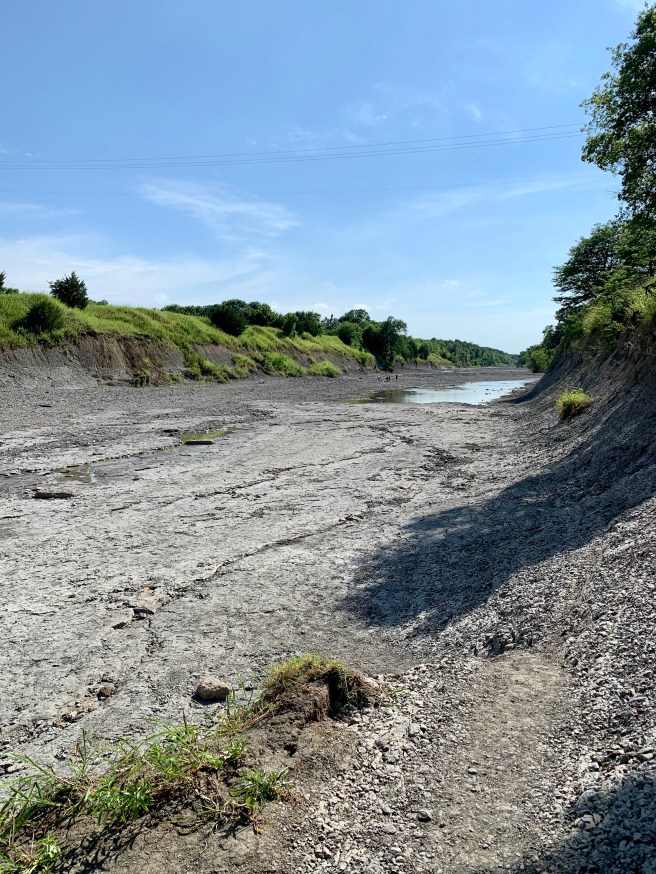
Partially dry riverbed of the North Sulphur River
The View from the Bottom of the Stairs – North Sulphur River

We brought a garden trowel and a plastic grocery bag to carry away any treasure we unearthed. Visitors are allowed to collect anything they find along the banks or in the riverbed. While Andrew sifted through the loose shale that lined the bank, I strolled along beside the shallow water.

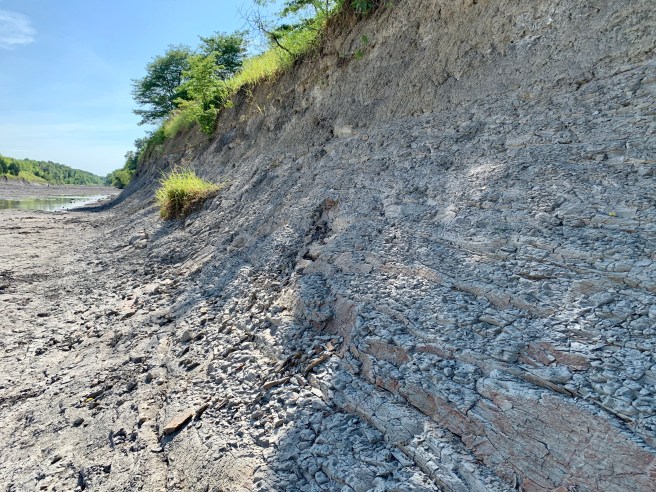
Shale banks of the North Sulphur RIver
Shale Banks of the North Sulphur River

The clear water carried the boiled-egg stink of sulphur, so I resisted the urge to wade in the river. We found fossilized oyster shells and imprints of pre-historic plants, immortalized in the soft, grey rock. The shale crumbled, like cake too soon from the oven.

“We’ll have to come back, and bring more tools,” Andrew said.

I imagined the trek down those stairs, while weighted with shovels, trowels, buckets and brushes. “Maybe,” I said.

Right before we left, a group of people – three adults and a dizzying clutch of children – stopped to chat. One of the men told us he’d heard the park would soon be closed. “They’re going to open the dam upriver,” he said, “and this place will be underwater.”

Pausing at the top of the staircase, I gazed back the way I’d climbed and imagined, instead of the thin stream of water below, a vast spread of sea.

Where Do You Go When You Can’t Go Out?

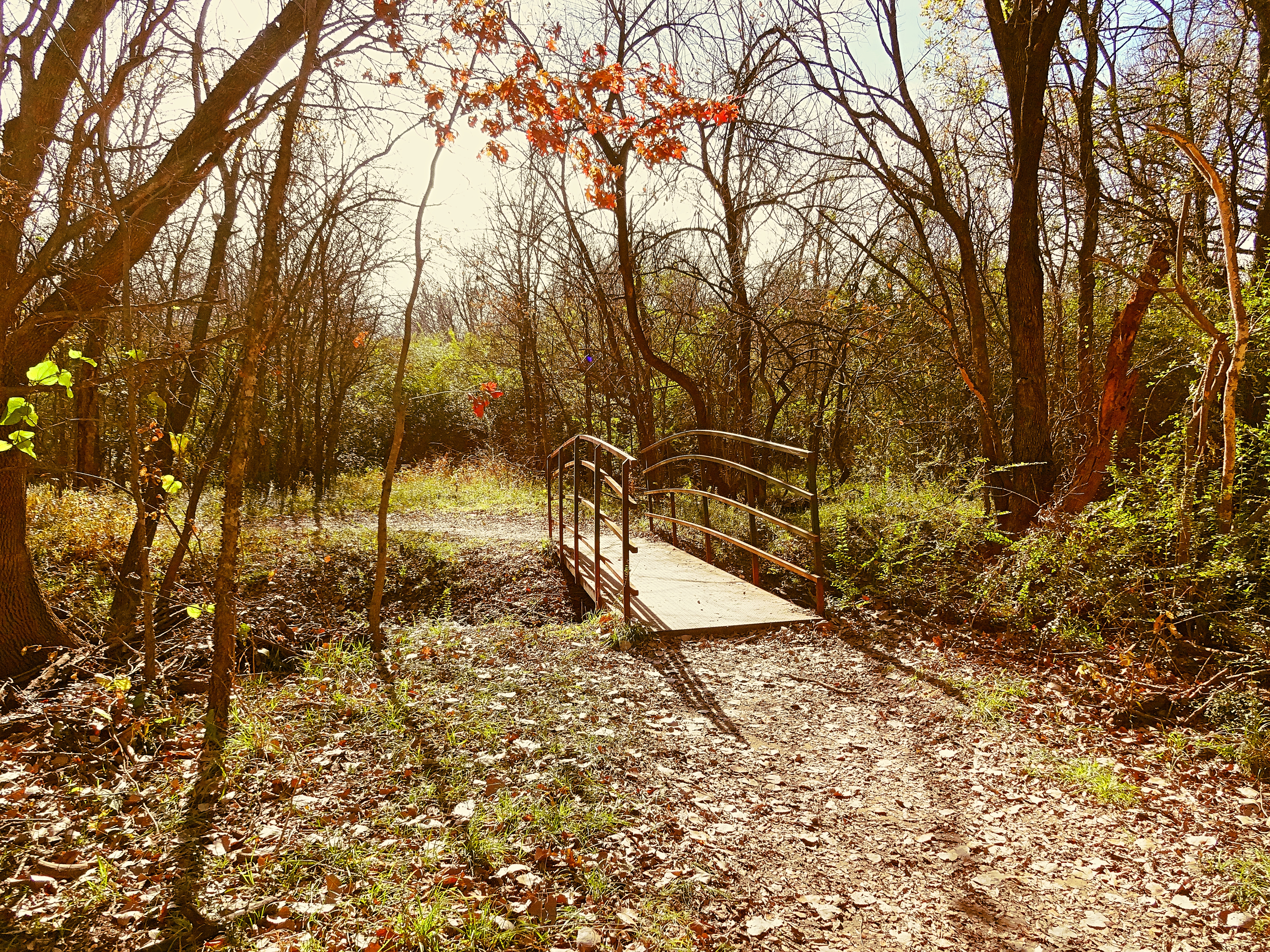
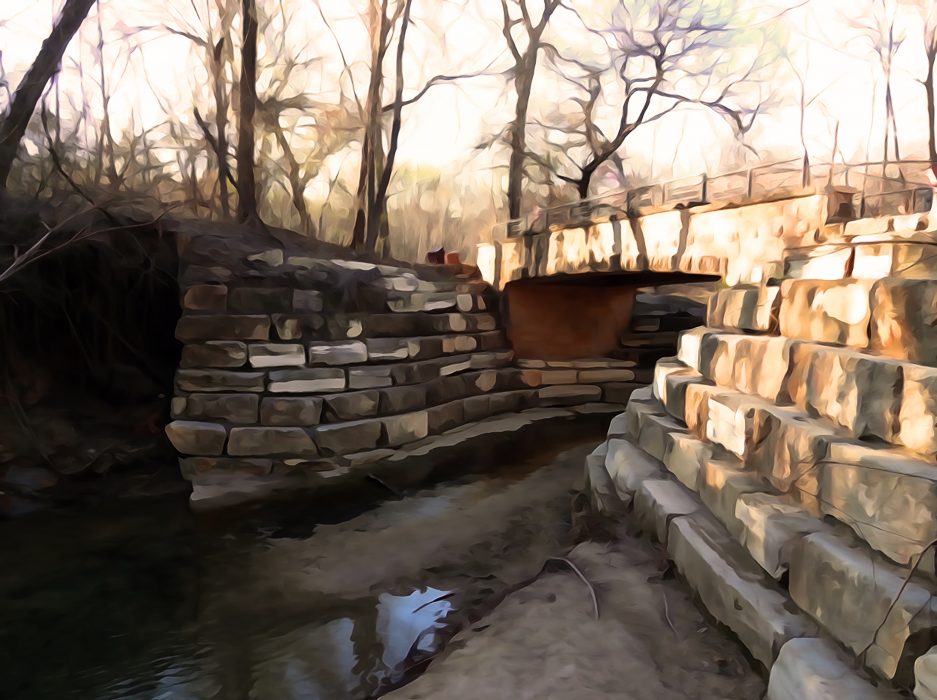
bridge
Photo by Terrye Turpin

I hope everyone is safe and snug at home. I’ve given up the search for toilet paper. Instead I hear my mother’s ghost warning me each time I approach the bathroom. Toilet paper must have cost more in the 70s.

“Don’t use so much! Stop spinning that roll!”

Mom grew up in the Great Depression. She told me they used the Sears Roebuck catalog, but not the slick pages. Also they’d save corn cobs after they ate the corn, then stock the outhouse with the dried cobs. She claimed they burned them later, for fuel.

We aren’t quite there yet, my husband Andrew and I are well provisioned with most things, except eggs and bananas. I’ve found a local 7-11 that stocks bananas so all that is left is for me to adopt a chicken and we will be ready for any apocalypse.

So what do you do all day when you shouldn’t go out?

Books

Better World Books – Purchase a used book here to help support worldwide literacy programs.

Thrift Books – Another cool site for used books. Free shipping on orders of $10 or more. They also support a prison literacy program.

Nowhere Bookshop – If you’re a fan of author Jenny Lawson you’ll be excited to shop her store before it officially opens. Order a book online and support a great independent bookseller.

Any independent bookstore in your area. Amazon will survive the pandemic but small, local stores will struggle. These places also employ staff and contribute to your local economy. Consider shopping local online before you send your money to Amazon.

Food

Farmbox – If you’re in the Dallas Fort Worth Area they deliver a selection of local organic produce. I was able to order a good variety of fruits and vegetables. If you’re outside DFW, search for local produce delivery. Chances are they will have a decent selection available and can restock faster because they are buying from area producers. There’s always 7-11 for bananas.

Imperfect Foods – I’ve just started with this service. Their first box had a very limited amount of produce available, but I was able to add yogurt, ground beef, and ground turkey at a reasonable price. Higher than my local grocery store, but I won’t have to go fight infected crowds. If you’re interested in checking them out, here’s a link for $10 off your first box – http://imprfct.us/v/terrye_3

Minimus.biz – They sell tiny travel size products. They’re out of hand sanitizer, but take a look at all the other products. I love ordering the individually packaged salad dressings for when I take my lunch to work. These will come in handy when we are allowed back in the office.

Entertainment

Louvre Museum Virtual Tour – Visit the Louvre in Paris without getting on a plane.

Future Learn – Take a class for free. You can purchase unlimited access or view the courses for free for their duration plus 14 days.

The Great Courses – They have a 14 Day Free Trial. Or check out your public library. Mine offers access to the Great Courses for free, through the Rb Digitial app.

Kanopy – If you run out of things to binge on Netflix, check out Kanopy. If your public library or university is a member (most are) you can stream free movies.

Audible – They’re offering free stories for children for as long as schools are closed.

Drive-in theaters – If you’re not under a stay-at-home order, you can visit an old-fashioned drive-in theater. Many are open now, but they might not be able to offer a snack bar and probably will have limited restrooms open. If you’re willing to travel and stay put in your car, you can bring your own snacks and have an adventure.

Social

Zoom – Hang out with your bookclub, writer’s group, study partners, friends and family for free video conferencing.

Postcrossing – Connect with the world the old-fashioned way, through the mail. Join here for free and they’ll give you addresses around the world. Send a postcard and you’ll be added to the list to receive one. Don’t have postcards at home? Make your own. Use up those fancy notecards, index cards, or stacks of Christmas cards you never used. Make sure anything you send meets the postal regulations for size. Order stamps here without leaving your house – USPS.com

Good luck friends in isolation, drop me a comment below and share your favorite way to spend time during the pandemic.

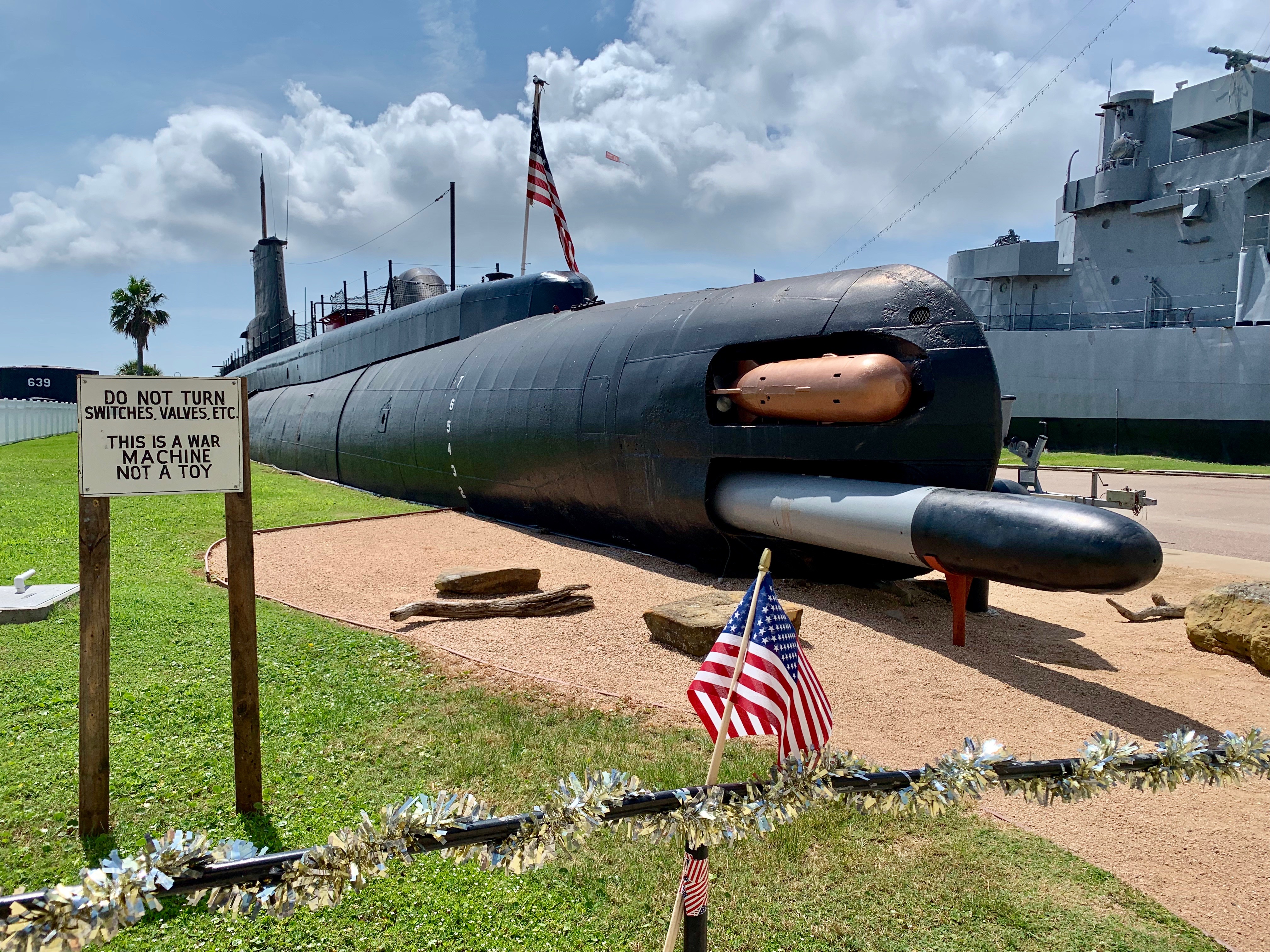
This is a War Machine

IMG-0339

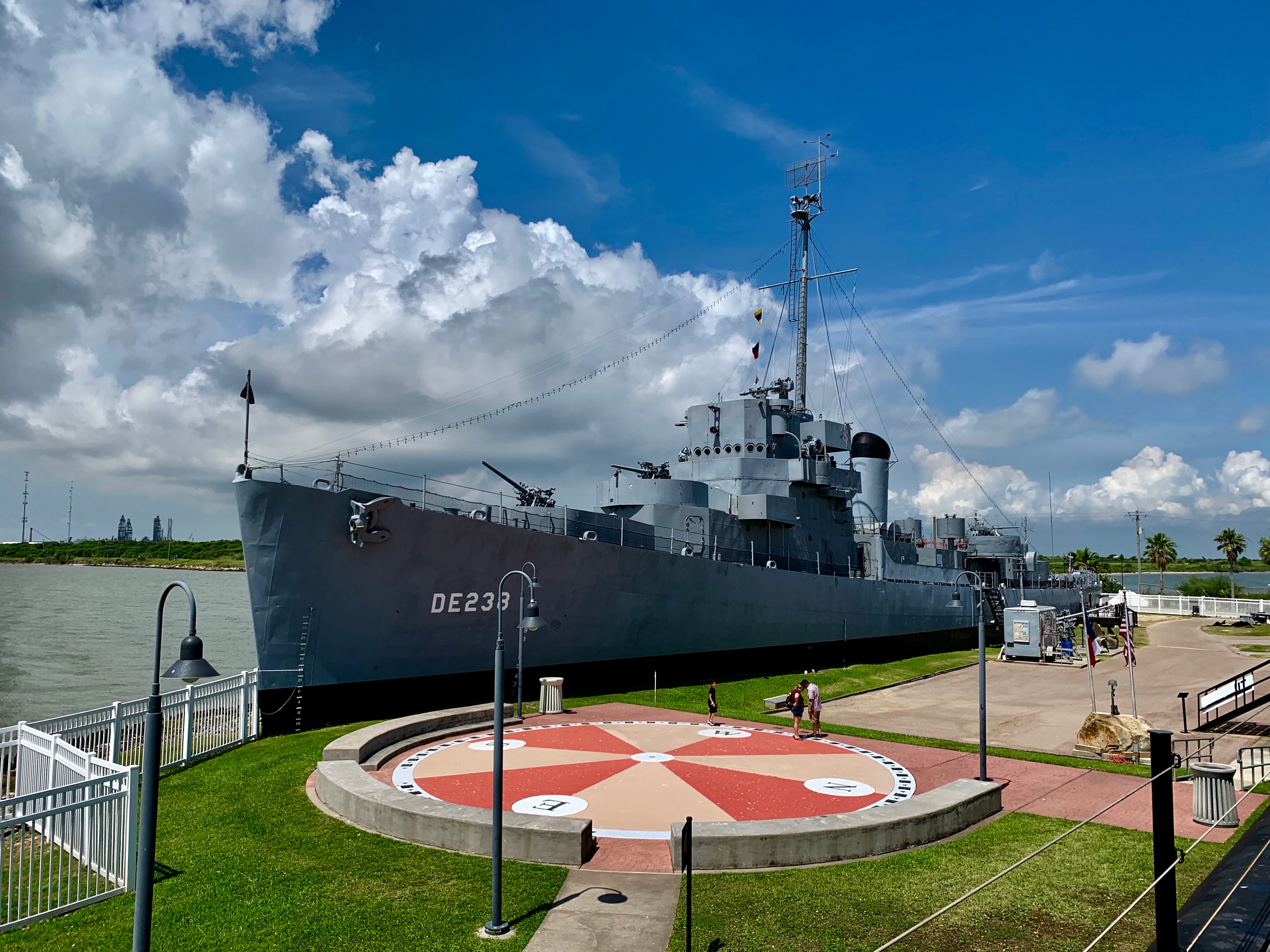
The USS Cavalla rests at Seawolf Park in Galveston, Texas. On June 19, 1944 she sank the Japanese carrier Shokaku, one of the warships responsible for the attack on Pearl Harbor.

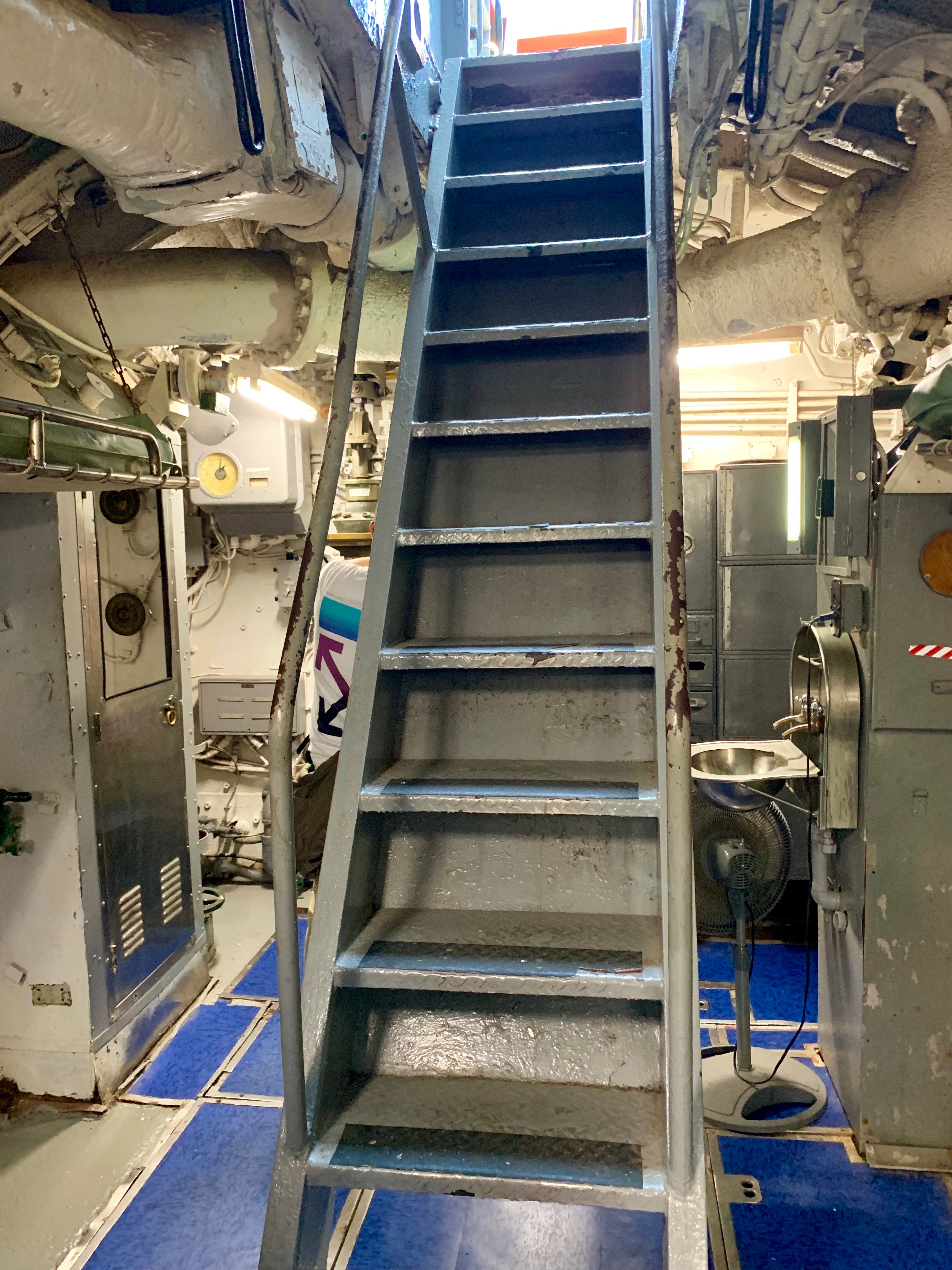
Andrew and I climbed down the ladder into the sub, a giggling group of teenage girls behind us.

IMG-0345IMG-0347

The Cavalla, decommissioned in 1946, was retrofitted as a “hunter/killer” sub in 1952 during the Soviet threat. She specialized in attacking other submarines.

In 1971 the USS Cavalla was moved to Seawolf Park. The park is named for the USS Seawolf, a submarine lost at sea during WW II.

IMG-0349

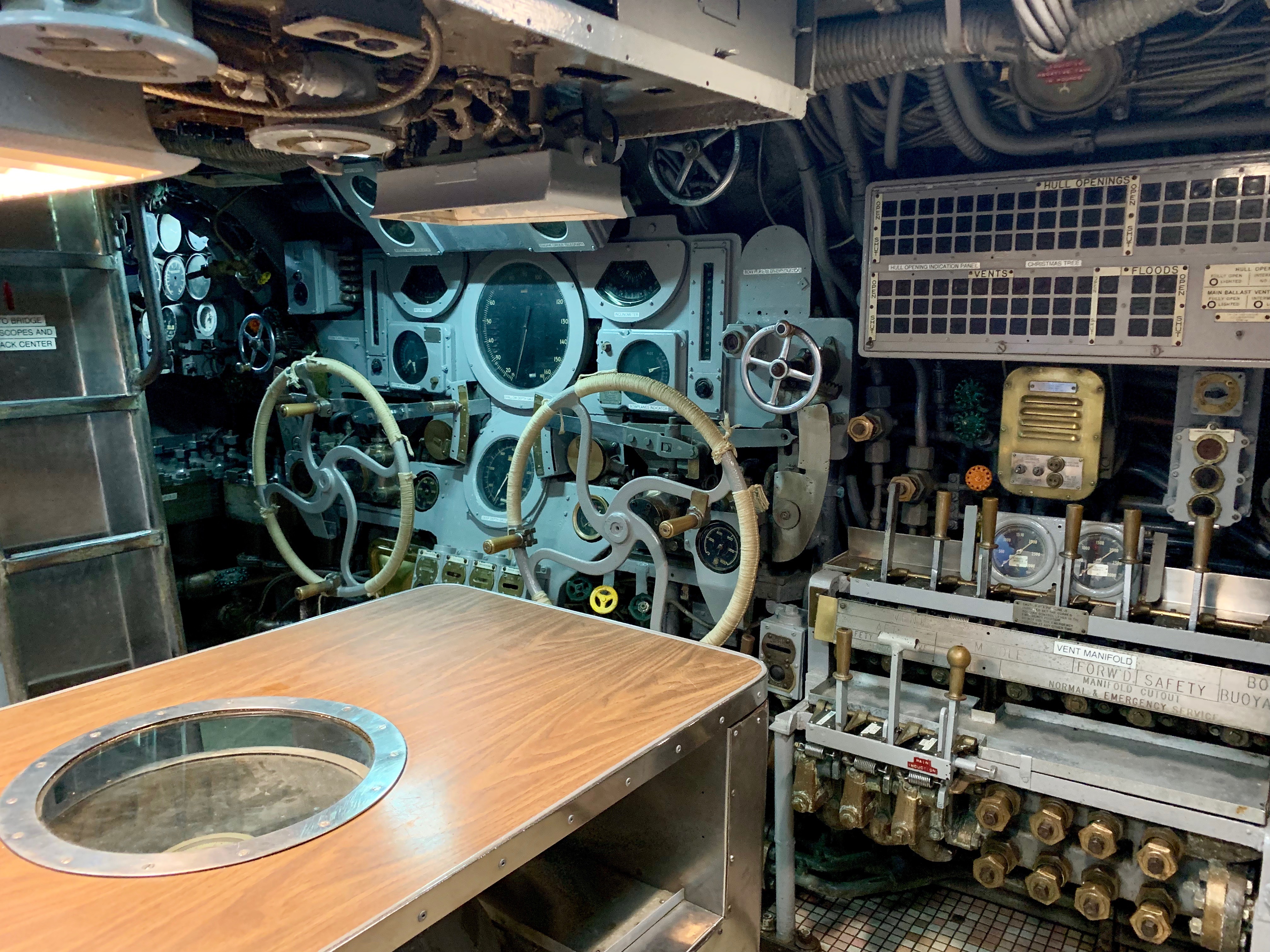
The sign at the entrance to the park reminds visitors the sub is a war machine. Not much has been changed inside the Cavalla, but they did add air-conditioning for the tourists.

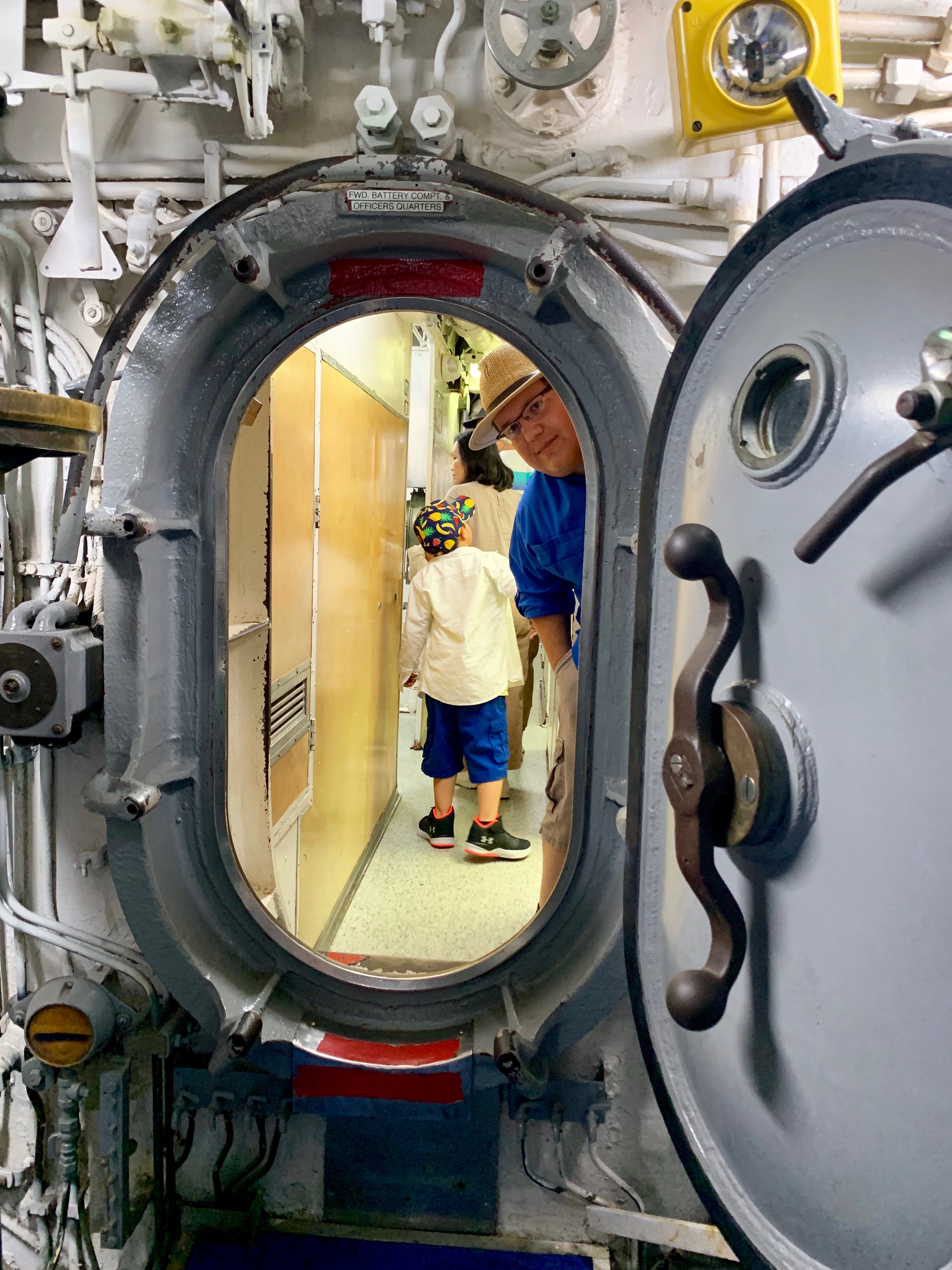
The boat sits on dry land, but I did not want to linger below. I whispered “This is a War Machine” as we bent and twisted through the cramped quarters. I prayed everything was indeed decommissioned as the young ladies behind us touched dials and jostled us as we journeyed through the tour.

The destroyer escort USS Stewart sits beside the USS Cavalla. Predator and Protector.

IMG-0343

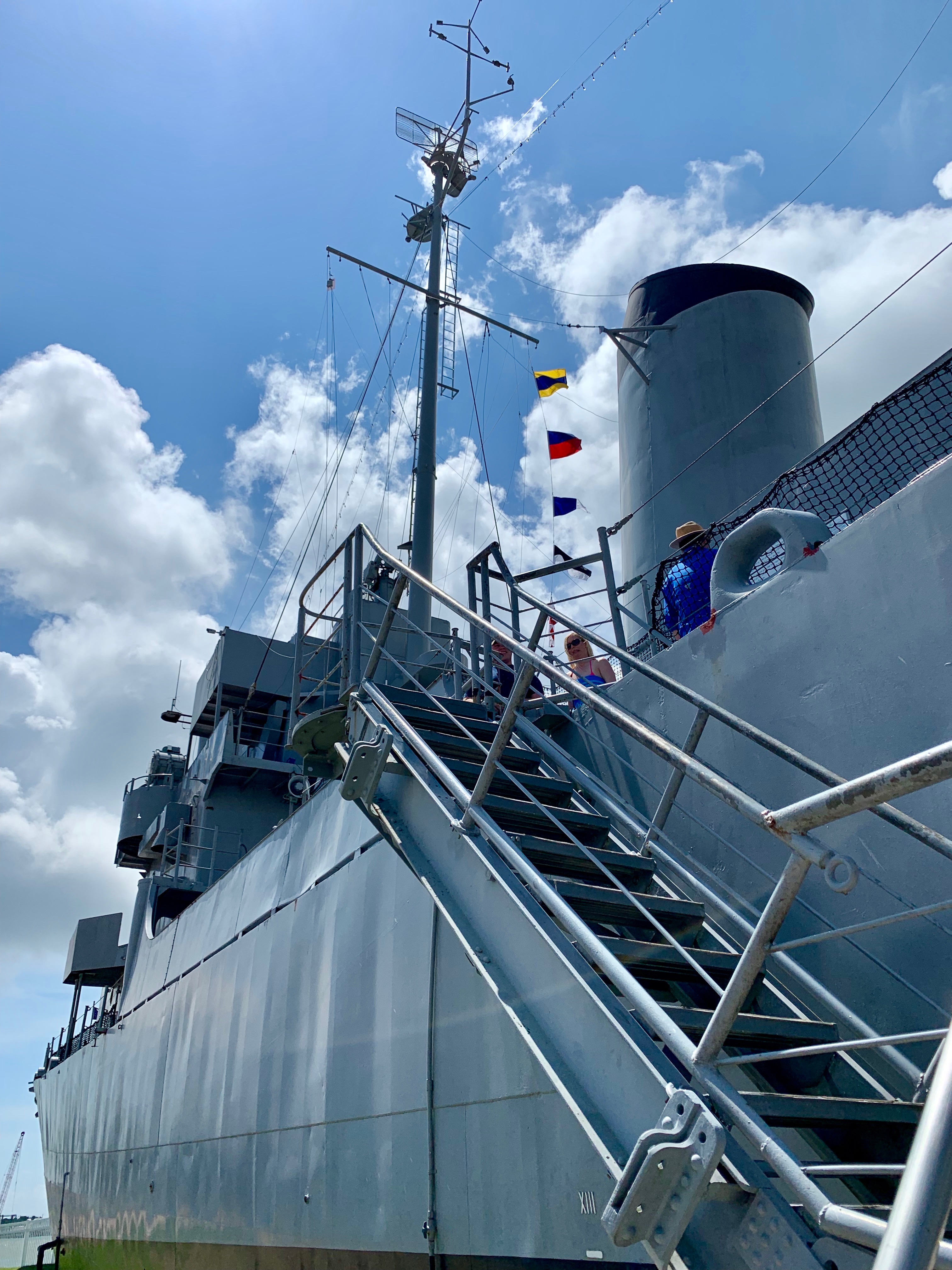
We toured the ship, climbing up the stairs at the side, rising into the cloud puffed sky.

IMG-0351

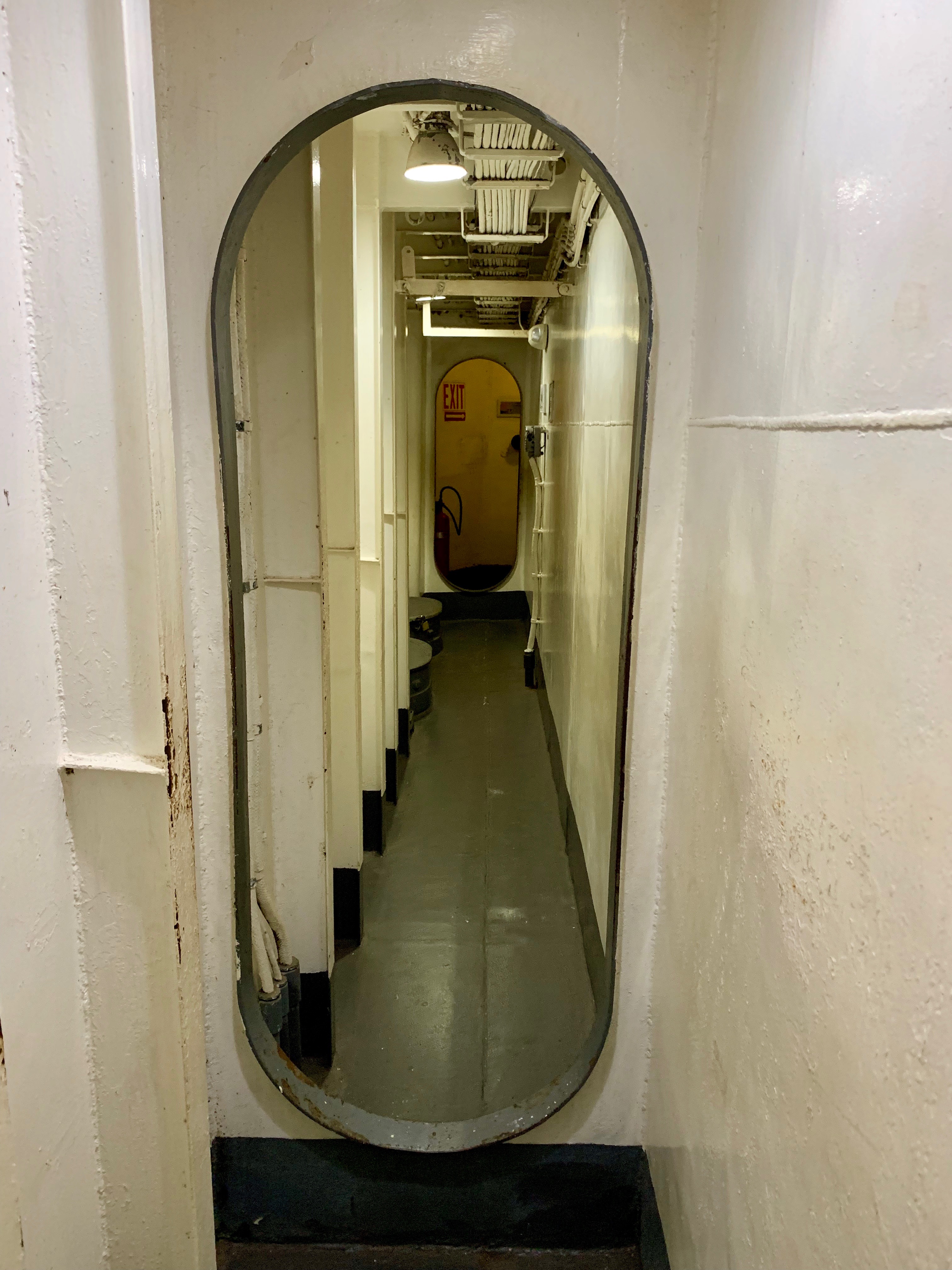
We went below, into the eerie quiet that seemed spacious after the submarine. There was no air-conditioning and the teenage girls did not follow us.

IMG-0363

There were no ghosts there, and if not exactly haunted, the place compelled us to silence, remembering the souls lost on the boat the park was named after, the USS Seawolf.

This is not a toy, this is a war machine.


What Falls From the Sky Does Not Strike Me

The author — Photo by her patient husband, Andrew

Our rented Buick rocked as the tractor trailers and rock haulers zipped past on the highway. I gripped the door handle, certain a homicidal maniac steered each truck rushing by, intent on racking up another victim on their way to the West Texas oil fields.

We had selected the Buick from a fleet of options. We assumed the larger car would be safer and more comfortable than my ten-year-old Honda. The rental car’s bucket seats fit anorexic teenagers, not late middle-aged women, and my butt had grown numb over the miles since we left Dallas. If not for the thrill of certain death in a fiery car crash, the rest of me would have fallen asleep staring at the flat scenery on our way to Carlsbad, New Mexico to tour the caverns.

One arm draped over the console, my husband Andrew stared through the windshield, judging how much room he needed before he could squeeze the Buick in between the cement truck and the oil tanker in the next lane.

“Would you like to stop and see the Odessa Meteor Crater?” Andrew asked.

Everything I know about meteors I learned from movies, television, and comic books. They don’t have a good reputation. Anything tied to the phrase “extinction event” is something to avoid. Another semi rocketed past, blowing sand and gravel across us. As Andrew steered the car back into our lane, I answered “Sure.”

I’m a big fan of bizarre roadside exhibits. I imagined a meteor crater would be a giant hole in the earth, similar to the Grand Canyon, but smaller, less grand. Maybe they would have a viewing station and tiny plastic meteorites for souvenirs. I got out my camera and checked the battery, to be sure I was ready to take pictures of the stunning vista.

Andrew turned off the main highway and bumped along a rough road paved in potholed asphalt. We arrived at a gated entrance in front of a metal-roofed, tan brick building. A sign on the side proclaimed we had reached the Meteor Crater Museum. The place could have been any other standard government building- a place to renew your driver’s license or pay your water bill.

I pulled myself from the tight embrace of the bucket seat and climbed from the car, camera at the ready. Leaning against the Buick, I turned around and searched for a glimpse of the crater. I didn’t want to fall into some crevice and break a hip right at the start of our vacation. The landscape stretched out to the horizon, broken only by scraggly desert plants and medium-sized chunks of limestone. In the distance, oil field pump jacks bobbed up and down like dinosaurs.

“How much further is the crater?” I asked. When I shielded my eyes and squinted through the swirling dust in the parking lot, the most interesting thing I noticed was a concrete picnic table.

“It’s right there,” Andrew answered, pointing. “That dip in the ground.”

The sandy soil past the parking lot sloped down in a shallow bowl. If I held my head just right, I could make out a circular shape to the area. We strolled along the little path that wound through the crater and read the educational signs that told about the history of the site, until I grew tired of the heat. Andrew stopped to admire an anthill, and I walked on ahead to the museum, hoping for a water fountain and air conditioning.

The exhibit area was slightly larger than my living room, and staffed with three people, two men and one woman, sitting on rolling chairs behind a glass counter. They all turned to greet me as I strolled in. I picked up a brochure explaining the history of the crater. It must have been larger when they discovered it in 1892. The crater was formed 63,000 years ago, so I forgave it for being filled in with West Texas silt. I know how fast dust can accumulate if you aren’t diligent. If only we had visited sooner.

I looked over the small pieces of meteorites on display and glanced at the scientific charts and graphs. At last I stopped in front of a framed photo of a woman reclining on a hospital bed. This was Ann Hodges, a woman struck by a meteor in 1954 when it crashed through the roof of her house. I imagined her stretched out on her couch, relaxing with a book maybe, or watching television, her face illuminated with the blue glow from the screen. Maybe the accident happened after a commercial for Geritol or the new RCA Victor Portable Radio, her peaceful night shattered by a huge rock falling through her ceiling. Did she know what hit her? Or did she suppose Fidel Castro had targeted her, a housewife in rural Alabama, with a missile meant for Miami?

I turned from the display as Andrew walked over to stand by my side.

“I found the t-shirts!” he said.

He held up a gray shirt with “Odessa Texas Meteor Crater” printed on the front. A yellow and red meteor streaked down toward an innocent cartoon superhero, or a reclining woman.

All three staff members assisted me as I purchased the shirt. We left the cool air conditioning and stepped out into the bright sunlight of a West Texas summer. The blue sky overhead held no threat of hail, lightening, or flaming rocks. As we strolled across the parking lot toward the Buick, I decided the risk of venturing out on the highway was worth the reward of finding new places to explore. I was just as likely to be struck by a meteor at home while I lounged on my couch.

At the Odessa Meteor Crater

Terrye is a native Texan who enjoys writing stories set in her home state and other strange places. In her free time Terrye enjoys exploring antique, junk, and thrift stores for inspiration and bargains. She’s had stories published in small print and online journals, and writes short, humorous essays for her blog — https://terryeturpin.com/. Sign up below to follow her.


Meet Me at the Vanishing Point

Another version of me has dirt under her fingernails

Photo: Geri Lavrov/Photographer’s Choice/Getty Images Plus

If another me exists in another universe, I picture her clad in a red gingham dress or blue denim overalls. She toils on a farm surrounded by corn and cows. This is the life I might have lived, had I followed the advice of a career aptitude test from my high school days. My life’s work decided by the 17-year-old me, while I sat hunched in a high school auditorium coloring in ovals on a Scantron sheet.

The test, sponsored by a branch of the armed services, revealed I should go into agriculture. Growing up in town, pulling weeds in our family garden was the closest I came to life on a farm. I imagined the work would be the same, only on a much larger scale. Mechanical aptitude came in second place, suggesting the possibility of a career in helicopter repair. I am certain my doppelgänger can both plow a field and fix a broken tractor.

They taught neither farming nor tractor repair at the school I attended. Girls were shuffled into Home Economics and handed a spatula while boys were enrolled in carpentry courses and awarded a hammer. Young ladies learned to bake a cake, sew a skirt, and type a note — all the useful skills we needed in the 1970s. What would I be when I grew up? I wanted to be a doctor, an author, an actress, a missionary, a teacher, or a scientist. Not a farmer.

I fumbled along as a waitress, telemarketer, stay-at-home-mom, carpenter, bookkeeper, and accountant — as though I were working my way backward through the alphabet. The alternate-universe me took the advice from the aptitude test and ran with it. She moved to sunny California and joined a commune. Far from the capitalist demands of a 9-to-5 job, she rises with the sun and feeds the chickens. She bakes her bread, sews her clothes, and types poetry on her Royal typewriter.

This woman exists on a different plane from me, but the older I grow the closer I feel to her. As my husband and I look at houses we might buy and towns where we might retire, I judge each option on whether there might be a spot for a garden. The places earn bonus points if there’s room for a small shed where I can set up a typewriter. Multiverse me would approve, I’m certain. Like parallel lines in a drawing, we’ll meet at the vanishing point.


This story was published in response to Human Parts’ Weekend Writing Prompt, “Give us a snapshot, a moment, an experience from a life you could’ve had. What are you up to out there in the multiverse? What would Multiverse You think of the life you have right now?” To receive prompts like this one every weekend, subscribe to our newsletter by following Human Parts.

A Bird in the Basket

Photo by Alvaro Daimiel on Unsplash

I hadn’t planned on sharing the 650 square feet of space I called home. Andrew and I had reached the point in our dating life where he kept a spare toothbrush at my place and I had cleared out a shelf in my closet for him. I could barely fit all my shoes in the closet, so this was a sacrifice on my part.

Dovey didn’t move into the apartment. She and her mate Lovey took over the hanging basket on the balcony. When they first showed up, they strutted around cooing at the potted plants. They reminded me of an old married couple scouting out real estate, sashaying around wing to wing, nodding their little bird heads and inspecting the soffit for dry rot.

“They’re looking for a spot to nest,” Andrew warned me as I commented on how sweet they were.

“If they’re moving in, I guess I should name them,” I replied.

When I first settled in my apartment, I decided against owning a dog or a cat. The complex required one fourth of my salary for a pet deposit. And the additional pet fee with each rent payment would mean I might have to give up bathing, since I wouldn’t be able to afford the water bill while paying for a pet. I didn’t plan on adding any animals to my household, but a pair of mourning doves decided my place fit them just fine.

I discovered my home had passed the mourning dove inspection and Dovey had moved in when I went to water my petunias the next day. Even standing on tiptoe I couldn’t see past the flowers blooming in the pot, but with the first stream of cold water she burst forth, scattering blooms and whistling bird curses.

She perched on the gutter above my landing to shake off the water droplets, then roosted there to fix me with the stink eye. I took this opportunity to peek in the basket. A single white egg lay cushioned in a mashed down mat of limp petunias. Two twigs tossed to the side of the egg and some dried grass blades stuck on the edge of the basket made up what passed for a nest.

When I described the nest to Andrew, he told me that doves are bad builders. Dove are the trailer trash of the feathered world, living in what amounts to a tornado-ravaged mobile home.

“They’ll set up anywhere, and patch together the bare minimum for a nest. Most of the eggs drop right out.”

I was horrified, and glad Dovey had chosen the hanging basket for a nursery. After I apologized to the petunias for sacrificing them, I stopped watering the flowers.

Mornings I eased open the back door and announced my presence before I stepped out, so as not to startle the little bird.

“Okay, it’s just me. No reason to get scared, I’m coming out now.”

Sometimes a neighbor would pass by walking their dog, and give me a curious look as I stood there, poking my head out the door and warning the plants of my approach. I must have made an even odder sight a few days later, standing on a chair on the back porch and talking baby talk to the dead, wilted flowers in the hanging basket.

“Oh, what’s you got there? Is you got a baby?”

I would lean forward, toward the basket but not too close to the edge of the railing, since I am not known for my sense of balance.

Dovey puffed up and glared at me while trying to stuff the hatched chick back under her wing. I could understand why she tried to hide him. Every parent is proud of their child, but Baby looked like he was missing feathers from his scrawny neck. I did what most people do when confronted by someone else’s homely offspring — I lied and told Dovey what a cute chick she had hatched.

The first hatchling grew up and left the nest while I was out of town on a business trip. My neighbor Lisa kept me informed by text message. “B is out of the nest?! OMG! Cute!”

I was sad to have missed this baby’s first steps until Andrew reminded me most likely Dovey would be back. She returned, even though by this time the basket was bare dirt, with brown, withered stalks dropping off the sides. Dovey felt this was adequate, without adding twigs or grass to the nest inside.

Photo by Andrew Shaw

This time there were two eggs, and I got to watch them from hatching to when they left the nest and spent three days stumbling around on my balcony like drunken sorority sisters. I read on the internet that dove fledglings “stay around hedges and bird feeders, begging for food from adults.” Sort of like human teenagers, I thought, hanging out in front of an open refrigerator and asking “What’s there to eat in here?”

After the second set of chicks moved on, I took down the hanging basket. I thought I had had enough of running a rookery, but Dovey had other plans. She and Lovey returned and placed a few dried blades of grass on top of an empty ceramic planter balanced at the top of a rickety wooden shelf on the corner of my porch and called it their new home.

“You will need to put that basket back up,” Andrew said.

Since I had already thrown away the old pot, there was only one thing to do. I went shopping, and returned with one of those coconut husk liners and an assortment of bright orange, artificial hibiscus flowers. Andrew and I lined the new basket with trimmings from the coconut fibers, carefully arranged the large fake flowers, and transferred the new nest to the balcony. This arrangement suited the happy couple, and soon after Dovey was raising another pair of chicks in the tropical atmosphere of the new pot.

Dovey left now and then, but she always came back to my balcony. She appeared to be satisfied sharing my porch. I was content too, living in a place where the fake flowers bloomed and I had room for most of my shoes, even if I had to share my closet space. At the end of summer Dovey took off for vacation. While she was gone, I planted a tiny American flag in the basket and added a small wooden plaque to welcome her return — one that read, “Home Sweet Home.”

Photo by Terrye Turpin