Smoke Rings Like Halos

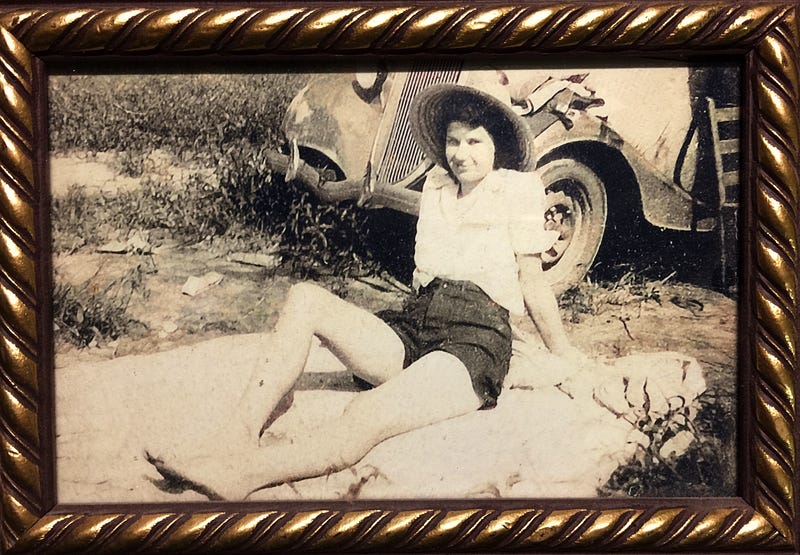
My mother, Christine, as a teenager

Sometimes I’ll strike a match, and the sulfur scent brings back that sweet tobacco taste from the first draw on a fresh cigarette. I remember the blue-white smoke curling in tendrils and the hot orange glow of embers illuminating a dark room like secrets shared. Cigarettes were a secret I kept hidden from my mother.

I picked up smoking in college. Away from home on the first lap toward adulthood, I embraced every bad habit I had once railed against. My mother didn’t smoke, but my father did. He wasn’t allowed to smoke in the house, and during my childhood, before their divorce, he sat in a metal glider in the backyard while I lectured him on the evils of nicotine. I accepted, however, the little brown and cream colored coupons from the packs of his Raleigh smokes. You could exchange them for prizes in a catalog, and I was saving up for a transistor radio.

My cigarettes were Benson and Hedges Deluxe Ultra Lights — menthol. Inhaling one of those was like smoking a breath mint. My path through higher education started while the legal drinking age was eighteen. Cigarettes were cheaper than alcohol back then so I exchanged my bottle thick glasses for contact lens and imagined myself in an old black and white movie. I played at cool and sophisticated while I tried and failed to produce a perfect smoke ring.

I balanced painful shyness with a desire to separate from my mother and went away to school a mere 52 miles from what I left behind. When I gazed at the view from my dorm room balcony, I saw the highway that led back to my hometown, a straight asphalt line like an arrow over the horizon.

College was an escape from my mother’s obsessive compulsive disorder. In my mother’s house each daily routine magnified into a complex ritual. Simple tasks like dusting became chores that lasted half a day because every ceramic bird or glass vase had to be removed then placed back in the same position. If they were moved even one quarter of an inch I would have to start the whole task over again.

Home on weekends and holidays it was easy to hide the smoke odor on my clothes. Each time I entered the house I had to stop, strip naked in the laundry room, and drop my clothes in the washer. I walked naked to the bathroom where I showered and scrubbed off the outside world. The whole process would have come in handy at a nuclear power plant.

One weekend my mother announced that she would come visit me on campus. I broke the news the day before her arrival to Ann, my best friend since elementary school, and now, roommate. Ann glanced around our dorm and asked, “Does this mean we need to dust?”

“No,” I replied, then suggested we open the windows and turn off the lights. Books, papers, food wrappers, and discarded clothing covered the surfaces in our room. There was a noticeable coating of dust on our bookcase, which held not books but an assortment of empty liquor bottles.

My mother showed up wearing a light blue polyester pant suit she’d had at least six years. That pantsuit, with easy to wash material and elastic waist pants, was her uniform of choice whenever she left the house. She had other clothes, but she chose the comfort of the familiar over style. I led my mom on a speedy tour of the campus, avoiding any place where I might be recognized. We picked up a pizza to share with Ann back at the dorm.

After we ate we all leaned back, drowsy the way you are after a large meal. The room smelled of pepperoni and as I pushed aside the empty cardboard pizza box, I thought about how much I would like a cigarette. My mother opened her bag, the size and shape of a small black leather suitcase, and bent over to fish around inside it. She set things aside, not looking at them as she searched through her purse. Out came a lipstick, a coin purse, her wallet, and right before she found the tissue she was searching for, she pulled out and set down a pack of cigarettes.

“When did you start smoking?” I asked. I wondered how she got around washing the packs before she opened them.

“Oh, it’s a bad habit I used to have, I’ll quit again soon.”

I wouldn’t have been more surprised if she had confessed to being a serial killer. I laughed and brought out my own pack, then asked if she wanted to step out onto the balcony.

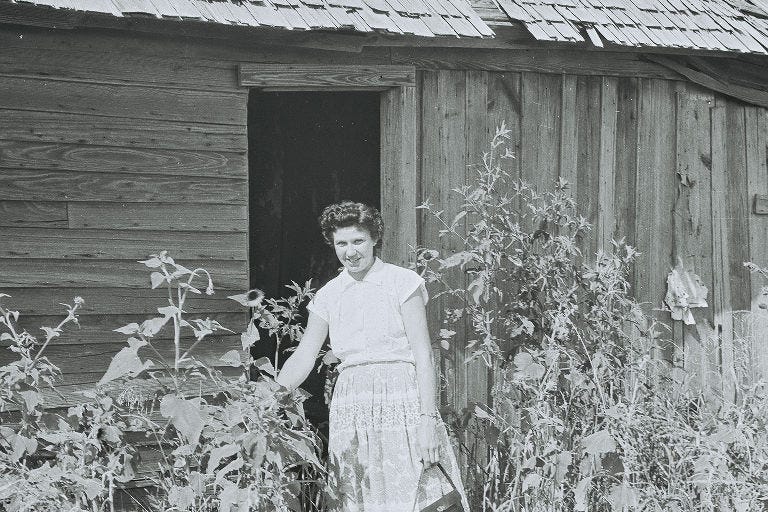
From left to right — my father, mother and my Uncle Buddy

Years later I would discover old photographs, tucked away in albums and stashed hidden in a desk drawer, and in them my mother posed in high heels and dresses. It was hard for me to reconcile the woman she had become, the one who had to wash every grocery item before she stored it away in the pantry, with the smiling woman in the sepia tinted photos.

My mom eloped and got married at fifteen, worked as a cook on a farm cooperative, had seven children, and divorced my dad when I was thirteen. Back then I feared that I would become my mother. As though genetics would dictate I inherit not only her nose and her eyes, but her personality, her failings, her mental illness.

My mother

We drew on our cigarettes and stared out over the silent courtyard below. The lights from passing cars flashed along the stretch of dark highway that led back toward my hometown. I glanced over at my mother, dressed in her familiar pant suit as she stood beside me, the smoke from our cigarettes curling over our heads like wispy halos.

The Care of Cast Iron

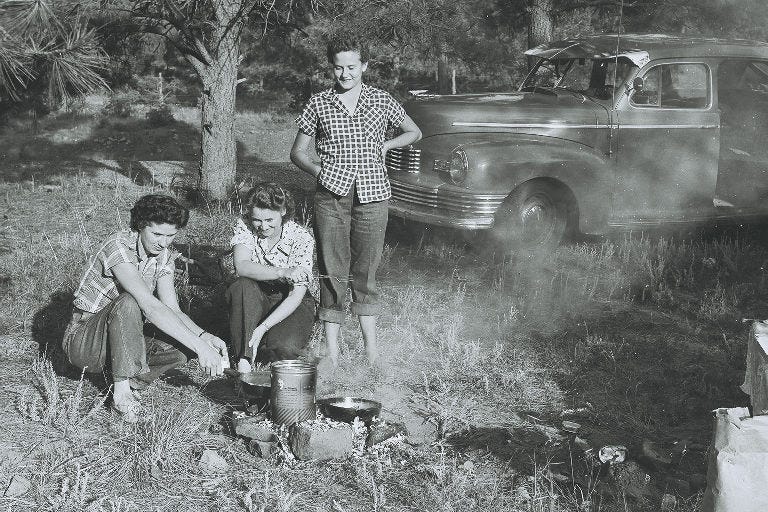
My mother on the far left, cooking over an open fire.

I cannot find my mother’s frying pan. The one she gave me before she moved into the nursing home, before she died, and after she stopped cooking for herself.

Her hands were rough, large and knotted with arthritis. They shook as she held out the frying pan. “You want this?” she asked as she picked up the heavy skillet from the inside of the oven where she stored her pots and pans. I took it because it was one of the few things in her apartment that didn’t smell like pine cleaner.

Other people hold on to things. They remember birthdays and anniversaries, and know exactly who inherited their grandmother’s silver. I misplace my scissors and the remote to the television but you would think something large and useful like a frying pan wouldn’t just float off out of sight.

My parents started their married life as farmworkers. My father drove a combine, and my mother cooked for the field hands in the 1930’s. She didn’t speak of it much. I am left to picture her aproned and bending to tend to a wood fired stove and stooping to wipe the sweat from her forehead with the back of her hand. After the farm job she cooked for her husband and children and then just for herself and me, the last in the line of seven offspring.

Her cast iron skillet had a surface polished mirror smooth and jet black from years of fried potatoes, scrambled eggs, pork chops, and scratch made pancakes with golden brown circles dotted with pale spots where the butter melted. I was in high school when my parents divorced and our meals changed to things barely recognizable as food.

My mom, with her eighth grade education, found work as a housekeeper. She spent long days cleaning and cooking for other people, so at home we had frozen pizzas, chili and soup from a can. Evenings we settled in front of the television and suffered through boil-in-bag meals, little plastic packets pulled from the freezer and dunked into boiling water to cook. We dumped the contents out and spooned up Chicken a la King or Salisbury steak over instant potatoes. The boil-in-bag meals had an unpleasant aftertaste, like you had licked a plastic bucket and decided to melt it and serve it for dinner.

Married with two children, I had a frying pan when my mother gave me hers. My cast iron skillet was new and not well seasoned, the surface still pitted with small imperfections.

I didn’t notice when my mother stopped eating. She didn’t trust food prepared by others. She quit attending holiday meals, refusing even the plates brought to her by family. She liked hamburgers from Wendy’s so I often picked up a burger and fries to drop off on my way home. I have worked in fast food restaurants, but I never mentioned that her meal had most likely been prepared by someone with tattoos and a nose ring.

The microwave confused her, and she never learned how to use the one in her apartment. On our weekly trips to the grocery store she bought whatever frozen meal she could cook in her toaster oven. I carried her groceries in and stood in the entryway while she took off her shoes. One by one she ferried the items to the kitchen counter where she washed each box and bottle in harsh cleaner before putting them away.

My mother’s mental illness went untreated for most of her life. The obsessive compulsive disorder that locked her into rituals of cleaning didn’t appear until most of my brothers and sisters had grown up and left her house. I guess it might have been worse for me, growing up in a home with easy to mop vinyl floors in every room. At least she wasn’t a hoarder. I had to strip my clothes off and toss them into the washer before I walked through the living room but I didn’t have to wonder if there was a dead cat hidden under the couch.

She lived alone, in an apartment complex for senior citizens. They had a concierge to carry off the trash, so I didn’t notice the empty peanut butter jars that stuffed the bags of garbage while unused dinners filled the freezer. She began phoning 911, certain she was having a heart attack. I made the twenty minute drive from my house, arriving in time to find her sitting up and flirting with the young, attractive emergency medical technicians. When I mentioned the dizziness and confusion to her doctor, he suggested that it might be caused by malnutrition.

My mother’s frying pan stayed stashed in the cupboard. I don’t remember packing it up when I moved out of our house after my divorce, but I must have. There’s a vague memory of giving it to one of my grown children, but when I asked they both could not remember anything about it.

“I have a skillet, but it’s not that old,” said one.

“I think I got mine at Goodwill,” the other replied to my text.

To properly season a new cast iron skillet you must first scrub it with hot, soapy water to remove the grime from manufacturing. You dry the pan, rub the surface with oil and bake it for one hour at 375 degrees. I wish I remembered what I did with my mother’s frying pan. If I made a gift of it, I wish I had given it with the ceremony and pomp it deserved. Perhaps then one of us would recollect where they’d last seen it. A seasoned cast iron skillet will last a lifetime, and heat and use will wear the surface smooth and brilliant and precious.

You Don’t Have to Step on My Feet


As part of a pledge to try new things, I signed up for a night of dance lessons, and for good measure I talked my friend Kristy into accompanying me. Kristy was in her early 30’s, and still young enough to be excused for a lapse in judgement, but I was old enough to know better. The lesson was supposed to last three hours, from 8:00 pm until 11:00 pm, and I thought it a good value for the ten dollar admission charge. I filled in the online registration form and pictured myself back in junior high school, lined up in a gymnasium while I listened to a scratchy record player broadcasting the hokey pokey.

The night of the class Kristy and I were greeted at the door by a woman wearing a floor length, strapless black dress and high heels. This did not look like an outfit you would wear to dance the hokey pokey. Her hair was piled on top of her head in the sort of style that I could never manage without using buckets of gel and pins that insert directly into my scalp.

She held out a perfectly manicured hand as she introduced herself, “I’ll be your instructor tonight, you can call me Miss Cindy.”

I glanced past her at the dance floor. The dim lights reflected off the polished surface, and there were full length mirrors along three of the walls, the better to magnify your embarrassment. Miss Cindy took our money for the class, and told us to fill out name badges. I looked over the lesson plan for the evening. It turned out we had enrolled in a ballroom dancing class, and I regretted my clothing choice of comfortable blue jeans and flat soled loafers.

As I peeled off the paper backing and stuck the name tag to my t-shirt, Miss Cindy pointed out that I had my name tag on the wrong side, and she told me to move it over to my right shoulder. She mentioned she had an etiquette book we could look at if we wanted. I glanced at Karen. She quickly switched her name tag to the correct shoulder. I knew I was in trouble. I couldn’t even manage to attach a sticky paper name tag without violating some rule of proper conduct, how would I ever navigate a dance floor?

We headed over to a safe spot at a table pushed against the far wall and near the exit. The bright red exit sign would be a handy landmark in case there was a disaster like a fire or someone asking me to dance. Several couples twirled along effortlessly on the floor, smiling as they watched their reflections.

I pointed out the happy couples to Kristy. “Do you think smiling is a requirement in ballroom dancing?” I asked.

“You better practice a pleasant expression,” she replied.

Miss Cindy had the women line up on one side of the room, as though we were preparing for a firing squad. She matched each of us up to an unattached man. My partner was an older gentlemen with a military haircut and sharply pressed pants. He must have wandered into the dance class by mistake, and thought he would be leading boot camp exercises. Our first conflict came when he informed me that dancing the waltz involved more than just stepping in place. You are expected to move around the dance floor, without forging through the other dancers like a snow plow. Apparently I am not a good follower. I tend to lose focus and wander off on my own.

The lesson ended and Miss Cindy ordered us back to the main ballroom. I was glad to leave my drill instructor behind. I haven’t heard the words “No, no, no” so many times since I was the one saying them to my son, who was trying to eat a cricket at the time.

I found my familiar seat against the wall and beneath the exit sign. Just as Kristy joined me, Miss Cindy announced that she wanted to show us something new, and told the group that we would learn the “Merengue.” This sounded suspiciously to me like “Meringue”, a complicated pie thingy that I have never been able to make. I looked wistfully at the exit sign.

“What if we left early?” I asked Kristy.

“No! I paid ten dollars for this class, I’m not missing any of it,” she answered.

My next dance partner’s cologne arrived thirty seconds before he did. It wasn’t bad once my nose became numb. He held me so close during the dance that I felt he at least owed me a cigarette afterwards. The steps to the Merengue were complicated and Miss Cindy had to break the lesson down into sections. We went back to the beginning and repeated each section once we learned the next one. This resulted in a never ending dance circle of hell. My partner was more intent on getting my phone number than he was in learning the steps to the dance, and I wound up twirling off into the other dancers as I tried to both count and distract him with idle conversation. Maybe he thought my phone number started with “1, 2, 3…”

Finally Miss Cindy paused to take a breath, and I took that opportunity to escape. I raced across the floor to gather up Kristy, who was dancing with a man who had more in common with her grandmother. He had a weak grip, and she was able to detach herself quickly. Once we were safely outside I mentioned that maybe next time we should try something less exciting, perhaps skydiving.

I Can’t See You Because the Light is On

Source

Dear Gables Residential Services:

Thank you for installing the security light across the courtyard from my apartment. I feel so much more safe now, especially when I get up in the night to go to the bathroom or get a drink of water. The 1 million candle watt bulb you placed in the device illuminates my apartment so well that not only do I not have to turn on a lamp when I get up, I have to be sure to apply sunscreen before I go to bed.

I tried installing black out curtains in my bedroom, and they mostly work, except when the fabric gets pushed to the side. Then I’m awakened by a bright shaft of light hitting me square on the face, usually about the same time the late night freight train comes wailing past our complex.

When the light was first installed, I had a moment of disorientation when the timer kicked it on around 2:00 a.m. I woke up and thought I was somehow in the middle of a prison break, and expected to hear the clanging of alarm bells. I swear I saw my downstairs neighbor hop over the fence around the pool and take cover in the landscaping.

But I can rest assured that no one scaling the wall outside my apartment will go unnoticed, since the light shines directly vertical onto my building, leaving the ground below in comforting darkness.

If anyone did manage to break into my living room, the light is bright enough that they will see how to disconnect my television without a flashlight; which I won’t notice anyway, since I have taken to sleeping in my closet.

The Glue That Binds Us


When my boyfriend, Andrew, told me he had ordered something special for my birthday, I didn’t know what to expect. We started dating in October, and for Christmas he gave me a television. He won it in a drawing at his company holiday party so it didn’t cost him anything, but still, it was a brand new flat screen TV.

My birthday was in February, just before Valentine’s Day, and after intense questioning Andrew finally admitted that he purchased my gift on eBay. This didn’t narrow the field much, but at least gave me comfort that the gift was not a puppy.

“Is it bigger than a breadbox?” I asked Andrew.

“That depends,” he answered, “how much bread are you planning on storing?”

The box arrived just before my birthday, and it was slightly larger than a box that might hold a loaf of bread. We sliced open the tape that held it together and looked inside. I pulled back the wrapping paper that cushioned the object and saw a flash of bright yellow and orange. Looking up at me from the box was a duck’s head.

“It’s a cookie jar,” Andrew said.

“Oh,” I said, as I looked the ceramic duck in its beady little eyes. Whoever painted this duck had an unsteady hand. The eyes were wide and startled but the orange bill appeared expressionless, giving the impression that this particular duck didn’t care much about anything. I reached into the box to pick up the lid of the cookie jar, and discovered that the head was detached. Tiny shards of ceramic littered the inside of the box.

“What a shame, it’s broken,” I said with what I hoped was a proper amount of sadness.

“Oh no! We’ll have to fix it!”

I got up and stepped into the kitchen to rummage around in the drawer where I kept spare packets of ketchup, loose toothpicks, and those little twist tie things.

“I’ve got some super glue in here somewhere,” I said.

“That won’t do. We’ve got to pick up some epoxy,” Andrew replied. He went on to explain in detail the importance of bonding strength and application style. “Epoxy will fill in the small cracks and create a smooth surface. It will bond better with the ceramic surface.” A trip to the home improvement store was required, to get the special two part epoxy that would mend the duck.

Andrew and I met online. I marked the days off on the calendar until we could meet in person, thinking all the time that I wasn’t getting any younger. Starting over after a divorce in my 50’s was challenging and I never expected that I would find anyone I could tolerate for more than a few hours. I liked Andrew well enough to step up and give him a kiss at the start of our second date. And now we had progressed to shopping together for hardware.

We purchased the epoxy and Andrew spent nights at the kitchen table with newspaper spread out under the broken cookie jar. He picked up bits of ceramic duck with tweezers and slowly fit the pieces together. He mixed epoxy until we were giddy with the fumes, and filled in the cracks on the surface.

When Andrew finished the mending I announced that the duck should retire to a life of leisure and give up the work of holding cookies. There was a brownish faded photograph included in the package with the cookie jar. The snapshot shows the jar cradled by slender feminine hands, the woman’s face cut off from the frame. The date 1977 is printed in ink on the back of the picture. I wondered how the duck wound up at auction, bought and shipped to end up shattered but then restored.

“Well, it’s not perfect but I guess it’s okay,” Andrew said. We placed the duck on a shelf and we were pleased with the repair. The cracks were noticeable only if you peered closely, and even the original owners might overlook the imperfections.

“It’s wonderful,” I said, “just the right birthday present.”

If love is the glue that binds us, then patience is what sets the bound and fills the missing bits from our damage, smoothing the surface to make us good as new.

Lost Not Missing

Photo by Sandis Helvigs on Unsplash

When my younger son, Andy, was 19 years old he was so thin the vertebrae in his back looked like rungs on a knobby ladder. Our nights were interrupted by Andy stumbling through the dark into the bathroom to throw up. His primary care doctor pronounced him “a little underweight.” This was like calling the Donner Party a little hungry. He gave us a referral to a gastrointestinal specialist and handed me a sample pack of antacids.

When Andy went for his checkup, his dentist suggested that he might be diabetic. The dentist took one look inside Andy’s parched mouth and then took a second glance at the 20 ounce bottle of water my son had at his side. When we met the next day with the specialist, I mentioned the dentist’s suggestion and Dr. P. ordered fasting lab work.

When the lab results came back, Dr. P. called me and told me to go find my son. The rest of the story included a trip to the emergency room where a nurse who wasn’t much older than Andy met us at the door with a wheelchair. I jogged along behind her bouncing pony tail as she pushed my son down a tiled hallway that echoed with the moans coming from the curtained rooms we passed. We did not stop to fill out paperwork or answer billing questions.

When Andy was three years old, I lost him while Christmas shopping. One moment I had his damp, sticky hand clenched in mine, the next I let him go so I could flip through a display of clearance sale clothing. It was enough time for him to slip from the store and vanish, swept along by the current of holiday shoppers. I grabbed my older son, Robert, and demanded, “Where’s Andy?” as though he had stashed him away like a toy he didn’t want to share.

Just as I found a security guard, we spotted two older women walking toward us. Grey haired bookends in sensible shoes, they each had a firm grip on my son. Andy did not look concerned at all. I thanked them over and over, and despite their quiet reassurances, I felt I should explain that I was a good mother, and I had at least managed to keep one child in sight.

During his hospital stay Andy mastered the art of insulin injections and glucose level testing. Soon after his release, he found a job at the local ice cream distribution center. He came home at night and told us “You can eat all the ice cream you want!”

“That doesn’t seem like the best job for a diabetic,” I remarked.

He worked in a refrigerated warehouse, tossing pallets of ice cream into the back of a waiting truck, an activity that required a heavy parka and protective gloves to guard against frostbite.

His career at the ice cream warehouse came to an unfortunate end after the plant manager locked him in the company parking lot one evening. Andy called to let me know he would be late for dinner, and might spend the night in his truck. I made the twenty minute drive to rescue him in less than fifteen minutes, and managed not to damage any property, run over any animals, or become the focus of a helicopter police chase.

As I pulled up to the padlocked gate at the parking lot, I saw Andy leaning against his bright red truck on the other side of the ten foot tall, wrought iron fence. We met at the padlocked gate and discussed options.

“I could throw a rock through the office window and set off the alarm,” he offered.

“I believe a more reasonable alternative is calling 911,” I replied. When the dispatcher answered I asked her to call the emergency contact person listed for the ice cream company. While my voice shook as I mentioned that Andy was diabetic, hers remained quiet and calm, and she assured me she would keep trying the contact number until someone answered.

I left Andy abandoned at the junior high school one night after band practice. My work schedule changed, and I thought my mother-in-law would pick him up, but she forgot I had asked. By the time I arrived home from work the street lights were clicking on in the dusk. I realized that Andy had been waiting for a ride home since four that afternoon. When I got to the school and pulled into the parking lot, there was enough light left to see Andy waiting outside the band hall, sitting on the ground and leaning against the brick building. When I asked him why he didn’t call someone to come get him, he replied, “I knew you’d miss me and come get me.”

While we were waiting for the 911 operator to call back with good news, a patrol car arrived. The policeman, a young man with perfectly clipped dark hair, rolled down his window as he pulled up behind my car. At first I wondered if his appearance had something to do with my 911 call, but when I asked the officer he said no. We must have made a curious pair of vandals, a middle aged woman in baggy shorts and house shoes, and a skinny, long haired boy in faded jeans loitering on the other side of the fence.

“How did you get in there?” The police officer strolled up to stand beside me at the gate.

“I stopped to check my oil and everybody left,” Andy replied.

I noticed the officer kept his hand near the cuffs on his belt, and I mentally went through the list of people who might provide bail money.

“My son is diabetic,” I said. I hoped the policeman would look at us less like criminals he might need to arrest.

The officer squinted in at Andy.

“Are you okay in there?” the cop asked, and glanced back toward his idling patrol car, outfitted with a crash bar. I imagined scenes from action movies where the hero busts through the gates and escapes. The officer seemed disappointed when Andy replied he was okay, but he was a little thirsty.

When the plant manager arrived he rushed up to the gate with his keys in hand and asked my son, “How did you get in there?”

Andy rolled his eyes and replied, “You locked me in,” and I realized that his future in ice cream distribution was over.

We headed home and I followed along down the highway behind Andy’s bright red truck. He changed lanes and passed cars and vanished over the crest of a rise in the road. I knew we would eventually arrive at the same destination, so I lifted my foot some from the gas pedal and sang along with the car radio. My son went on without me, lost from sight, but not missing.

All Our Wishes Granted

Photo by Andrew Shaw

My oldest son, Robert, is an adult, but he has always been my challenging child. His youth brought parent teacher conferences because he could not sit still in class. In his teenage years he dressed in black and listened to music that screamed pain in lyrics only the young could tolerate. Not loved any less, or more, than his calm, quiet brother, but the child, and now the adult, always at the front of my worries. When my fiancé, Andrew, and I started dating, he understood that to love me was to also love my sons.

When Robert called me up and asked “Could we go look at the stars in Albany?” I asked Andrew if he would bring his telescope. We drove three hours to Fort Griffin State Historic Site, the closest dark sky location, far from the pollution of neon signs and city streetlights. We arrived just as the visitor center was closing, and picked up the keys to the small metal shed where we would all sleep, huddled under blankets on cots, and lulled to slumber by the rattle of the window unit heater.

Photo by Andrew Shaw

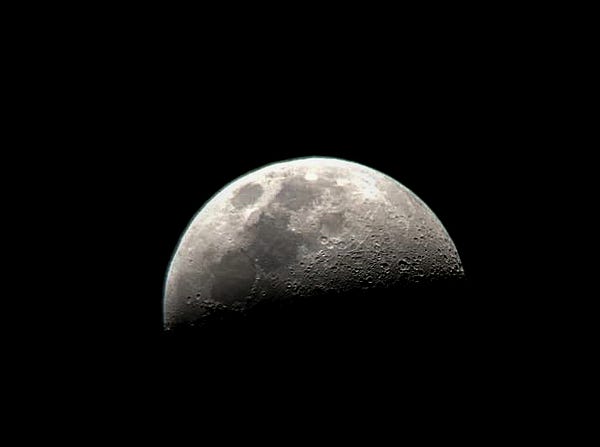
That night the sky was a jewelers’ black velvet coverlet, tossed with millions of diamond stars. We set up the telescope and peered at the moon, a half full round of blue white cheese. Celestial Venus, the bright goddess, graced us with her image. We hoped for shooting stars to tag with our wishes, but the stars refused to drop.

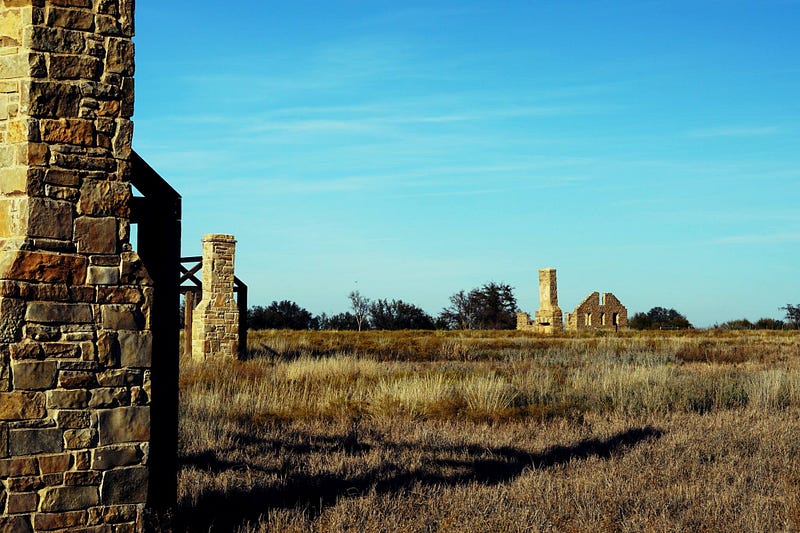
The next day we hiked across the dry brown prairie through the ruins of the fort. We imagined lonely soldiers stationed there, rising and retiring to the bugle call of reveille and taps, waiting out their service on the West Texas plains. We thought of them fishing on the banks of the Clear Fork of the Brazos River, while longhorn cattle grazed nearby among the tumbleweeds. The soldiers are long gone, but the official State of Texas longhorn herd remains, patient guardians of their outpost.

Photo by Andrew Shaw

We took pictures. While I stood at a distance and admired the cattle and their horns, Andrew weaved through the cactus and risked impalement to get a better shot. Robert pulled a black knit beanie onto his head to counter the cold wind, and leaned against the ruins of a stone shelter, alone in shadow under a cloudless sky. Andrew caught this unlikely portrait of Robert standing still, waiting for us to come back around and collect him.

Photo by Terrye Turpin

We left without a shooting star. Filled with the moon, soothed by the prairie, and cheered by the stars, we headed home content, as though nature herself had granted all our wishes.

I recently wrote a Shadorma poem as part of a writing challenge from The Creative Cafe. The poem was inspired by the photo I describe in this piece, and this story is the story behind the photograph behind the poem. You can read the poem, “Alone Not Adrift” here:

https://thecreative.cafe/alone-not-adrift-3c310d4becc1

The Personal Touch

Photo by Matthew Henry on Unsplash

Before my divorce, I hadn’t thought much about underwear, other than the need to replace it if the elastic no longer held up or if the underwire in my bra decided to turn homicidal. I did stumble into buying something from one of those specialty stores, and to my surprise I discovered that you cannot actually die from embarrassment.

I can barely work up the nerve to purchase a single zucchini or cucumber at the grocery store. I always feel like I should carry around a recipe card to show to the cashier.

“See, there’s just me, and I do intend to EAT this produce.” I’ll never understand, with all the hoopla about genetically modified plants, why we can’t have squash that’s not phallic shaped.

I went into the shop with a friend, lured in by the slightly adventurous and trashy look of the mannequins in the window. Once inside I made the mistake of calling some of the merchandise by the wrong name, and the sales girl informed me that what I was looking at was a “personal massager”. There was one, artfully arranged and spotlighted on a glass shelf; that seemed even more personal than all the others. I felt like I should go up and introduce myself.

Others in this line more closely resembled power tools than something you would want to have a romantic interlude with, but to each his or her own I suppose. I finally had to look away, and my glance found the display of clothing items.

One piece in particular caught my eye, a royal purple bustier with lace at the bottom and a leopard print ribbon running up both sides. The savvy sales woman, who undoubtedly worked on commission, came up beside me as I was looking at it.

“This would look lovely on you, why don’t you try it on. Are you a small?”

After I stopped laughing I agreed to a size medium, and the clerk was shepherding me toward the dressing room.

“Your friend will have to wait out here,” she said as she opened the door to the small cubicle in the back of the sales floor. “We don’t allow two people in the dressing rooms.”

This made me wonder for a moment if three people would be okay. Then I wondered what two people would be doing in the dressing room and from there I decided I would keep my shoes on.

Putting on the bustier was an interesting exercise requiring both strength and flexibility. There were no buttons, zippers, or other fasteners. It was designed to just slip over your head, or up over your hips if you were stout of heart and slim of butt. I took the over your head route, not wanting to take any chances on getting caught halfway and having to ask for help. Once I had it on, I realized that I would have to purchase the thing, not because it was so wonderful, but because I didn’t have a clue how to take it off without removing a layer of skin.

As I stood there in the dressing room contemplating my reflection I decided that the bustier was something that I should add to my wardrobe. At the very least I could get a good workout once or twice a week just putting it on and taking it off.

Password Questions I Might Remember


Who comes up with those password security questions? I recently had to update the ones on my bank account, and I had a devil of a time finding five that I knew the answer to. Really, questions about the middle name of my oldest female cousin on my father’s side? Does anyone ever answer that question? (Not counting people whose hobbies include genealogy; or the members of the Church of Latter Day Saints).

The original questions were bad enough; I could never answer the one about my favorite ice cream because there wasn’t enough room to write “Whatever is in the freezer right now.”

I can’t possibly pick a favorite color. Won’t the other colors feel left out? Does anyone ever pick grey?

I have trouble remembering where I was last week, let alone where I spent New Year’s Eve 1999. Just because Prince wrote a song about it doesn’t necessarily mean most of us will remember what we were doing that evening, unless you were arrested and spent the night in jail.

And the question about my first prom date? What if I didn’t ever go to prom? I never expected my financial institution to bring up unpleasant memories of teenage angst. These questions seem to belong to some bizarre trivia challenge designed to point out my failings in personal relationships.

If you really are bent on selecting questions that would be difficult for a hacker to guess the answers, I would like to suggest including the following five questions:

1. What is your favorite spider?

2. If you were in a Starbucks and they were out of the Venti Caramel Macchiato with soy milk, what would you order instead?

3. If you were invisible, where would you be most likely to walk around naked?

4. Which zoo animal can you most closely impersonate? (Do not pick lion, anyone can produce a passable “Roar!”).

5. What color underwear were you wearing on Super Bowl Sunday, 2001?

Feel free to leave your answers in the comments. By the way, my favorite spider is the Bird Dropping Spider (Celaenia excavata).

Ghosts in Mineral Wells


When the opportunity arose to plan a place to visit for my boyfriend Andrew’s birthday I chose the town of Mineral Wells. I am fortunate to have a boyfriend who shares my interest in obscure and cheap destinations. Mineral Wells seemed like the perfect place to spend a relaxed weekend: it boasted a haunted hotel, a historic mineral water well, and a Fossil Park where you could actually take home anything you found. Andrew was very excited about the Fossil Park, while I was happy to see that they did not have an admission charge.

The night before we left Andrew looked through the brochure from the Fossil Park while I studied one on the Baker Hotel.

“Look here,” I pointed out to Andrew, “It says that the hotel is haunted!”

“Oh! Do you think we’ll see the ghost?” Andrew replied. “Is it someone famous?”

I explained that, although famous people had stayed at The Baker during its heyday in the 1920’s, I seriously doubted that Will Rogers and Judy Garland were still hanging around the pool.

“And besides, the whole building is condemned; we won’t be able to go inside.” Andrew wondered if we might be able to sneak in under the fence, but I decided we would stand at a safe distance and snap photos, as I did not want the opportunity to see if the Palo Pinto County jail was also haunted.

As soon as we arrived and stashed our belongings in the hotel room, we left to explore the downtown sights. The Baker hotel was an impressive sight, even with yellow caution tape draped across her front, and a plain metal chain link fence surrounding the grounds.

“Look!” Andrew motioned toward an overgrown hedge. “There’s the pool that Clark Gable could have peed in.”

We left the Baker and made our way to the outskirts of town, to the abandoned landfill borrow pit that was now the Fossil Park. We stopped in the gravel parking area, and I pointed out a sign that said the place closed at dusk. There was also a warning to beware of dangerous animals and insects. Andrew unloaded our gear while I dowsed the both of us with mosquito repellant and wondered out loud if there were bears in West Texas.

“No, just snakes I imagine,” Andrew answered, as though this would console me. We made our way into the sandy gully where we could dig for fossils.

Andrew arranged his tools — a small shovel, a brush, and a colander for sifting, and sat down in the dirt while I cautiously walked around, kicking at the dirt and looking for anything that might resemble either a fossil or a snake. We found several pieces of ancient sea lilies — little wheels of rock with perfect lines radiating out like spokes. I imagined them waving underwater in an ocean 300 million years ago. As it grew dark I began to worry about mosquitoes and then about marauding coyotes, so I suggested that we start packing up.

“Oh no! I’d like to stay just a little longer. I might find a trilobite, or maybe a shark tooth,” Andrew protested.

I reluctantly agreed to linger a bit, and as a cloud of hungry insects began to settle on my arms and legs I decided that I would wait in the car. I settled in and kept an eye on the glow from the light that Andrew had strapped to his hat. As long as the glow stayed in one place I could be assured that Andrew had not been carried off by coyotes or bears. The longer I sat there, and the darker it grew, the more I became convinced that the faint howls and yips I heard were not from stray dogs or coyotes, but from some other worldly creatures, perhaps werewolves. Just when I wondered if we had reached the point in our relationship where I might be willing to face off a herd of starving zombies for my sweetie, I saw the little light rise up and start its way toward the car.

“At last!” I said when Andrew opened the door and climbed in. “I thought you were going to spend the night out there.”

“I just hate to leave,” he said. “I might get up very early tomorrow and come back out. You can stay asleep at the hotel,” he added when he saw my expression.

The next morning we woke to the sound of pouring rain and I tried to console Andrew over the lost opportunity.

“I know it’s not as exciting as sitting in the hot sun all morning digging up little fossilized plant wheels,” I offered, “but we could stop by the Washing Machine Museum.”

I’d seen the sign for this improbable destination the previous day as we were heading downtown. The museum was located in an actual working Laundromat, “The Laumdronat”, and the words “Free Admission” were included on the front of the building.

We got there just as a light drizzle started, and I got ready to dash inside, but Andrew stopped me as I reached for the door handle.
 “Look at that man there,” he said. “He’s looking at us.” I glanced over to the front window of the Laumdronat, where a rather large fellow was standing, staring morosely out into the rain.

“Oh it’s okay,” I said, “He’s just doing his laundry.”

“He looks angry, like he doesn’t want us to come inside and bother him. He could be a serial killer!” Andrew replied. While I allowed that even serial killers must wash their undies, I didn’t think that the man posed any threat to us, and eventually Andrew agreed that we would risk venturing into the Washing Machine Museum. I wondered if they had a gift store, postcards for sale, or a place to pose for a photograph.

The place was indeed a working Laundromat, and the antique machines included manual scrub boards, and some of the very first electric and gasoline powered machines with wringers. I asked the laundry room attendant, a busy middle aged woman dressed in blue jeans and an apron, if it was okay to take photographs.

“Oh sure,” she said, “Just help yourself.”


There were some machines lined up against the back wall of the place, but most of them hung, securely I hoped, from the ceiling. They hovered over the actual, working machines and as the sounds of swishing washers and tumbling dryers filled the room, I could imagine the machines above us thrumming and bumping through the wash cycles.

“My grandmother had a machine like this one.” I pointed to a model with a hand wringer on the side. “She made her own lye soap to wash with,” I said. “It smelled like ashes and animal fat.” I pictured my grandmother wringing out the week’s wash, her long gray hair in a bun and her hands red and chapped from the fierce work of laundry.

“I don’t think that would be a popular combination now,” Andrew said, and I agreed as I inhaled the warm, flowery scent of modern detergent.

We finished our tour of the museum and held the door for the large man who had been watching us when we walked in. He did not look nearly as threatening while carrying a pink plastic basket filled with freshly folded clothes.

We drove past the Baker hotel on our way out of town, and I glanced up to see a sheet of plastic waving, like an ethereal hand, from the broken casement of a window on one of the upper floors.

“It’s too bad we didn’t see any ghosts.” Andrew said.

“Yes.” I replied, as I thought to myself that ghosts are often found in the most unlikely places, and we are often haunted, not by the unknown, but by things that are instead very familiar.

The Baker Hotel in Mineral Wells, Texas