All Our Wishes Granted

Photo by Andrew Shaw

My oldest son, Robert, is an adult, but he has always been my challenging child. His youth brought parent teacher conferences because he could not sit still in class. In his teenage years he dressed in black and listened to music that screamed pain in lyrics only the young could tolerate. Not loved any less, or more, than his calm, quiet brother, but the child, and now the adult, always at the front of my worries. When my fiancé, Andrew, and I started dating, he understood that to love me was to also love my sons.

When Robert called me up and asked “Could we go look at the stars in Albany?” I asked Andrew if he would bring his telescope. We drove three hours to Fort Griffin State Historic Site, the closest dark sky location, far from the pollution of neon signs and city streetlights. We arrived just as the visitor center was closing, and picked up the keys to the small metal shed where we would all sleep, huddled under blankets on cots, and lulled to slumber by the rattle of the window unit heater.

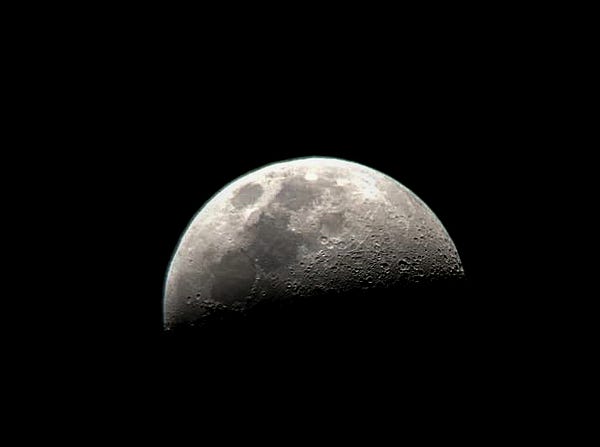
Photo by Andrew Shaw

That night the sky was a jewelers’ black velvet coverlet, tossed with millions of diamond stars. We set up the telescope and peered at the moon, a half full round of blue white cheese. Celestial Venus, the bright goddess, graced us with her image. We hoped for shooting stars to tag with our wishes, but the stars refused to drop.

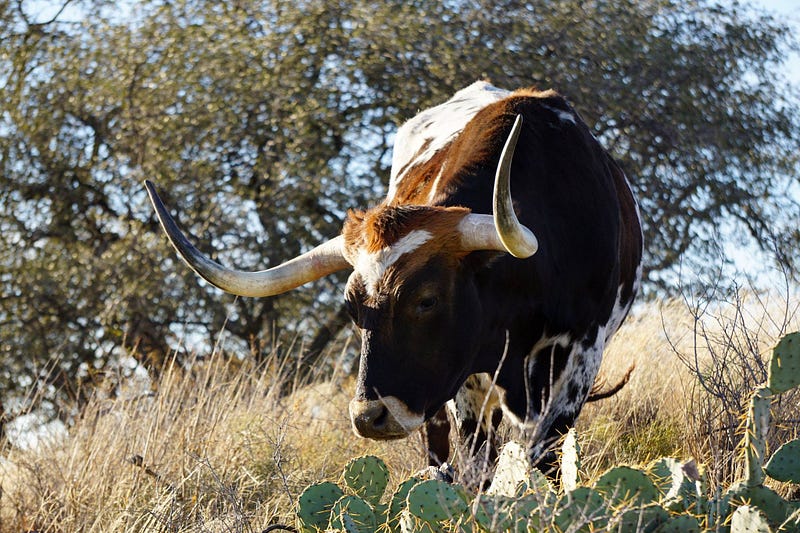
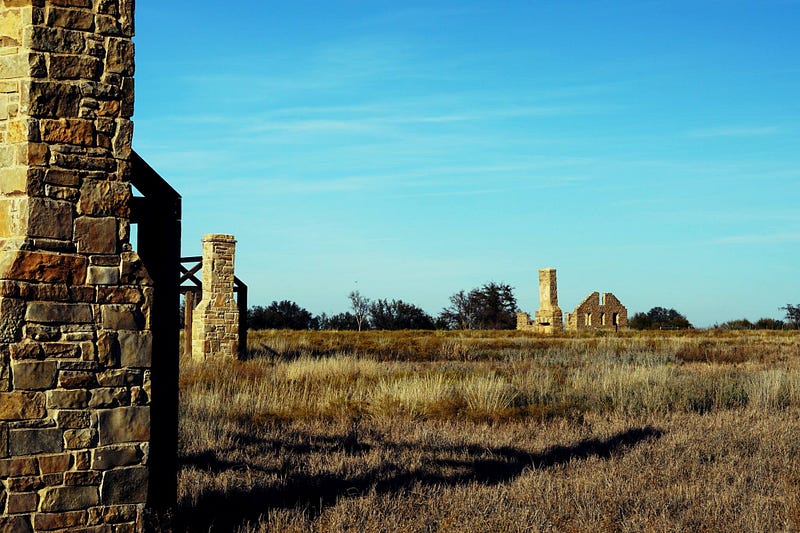
The next day we hiked across the dry brown prairie through the ruins of the fort. We imagined lonely soldiers stationed there, rising and retiring to the bugle call of reveille and taps, waiting out their service on the West Texas plains. We thought of them fishing on the banks of the Clear Fork of the Brazos River, while longhorn cattle grazed nearby among the tumbleweeds. The soldiers are long gone, but the official State of Texas longhorn herd remains, patient guardians of their outpost.

Photo by Andrew Shaw

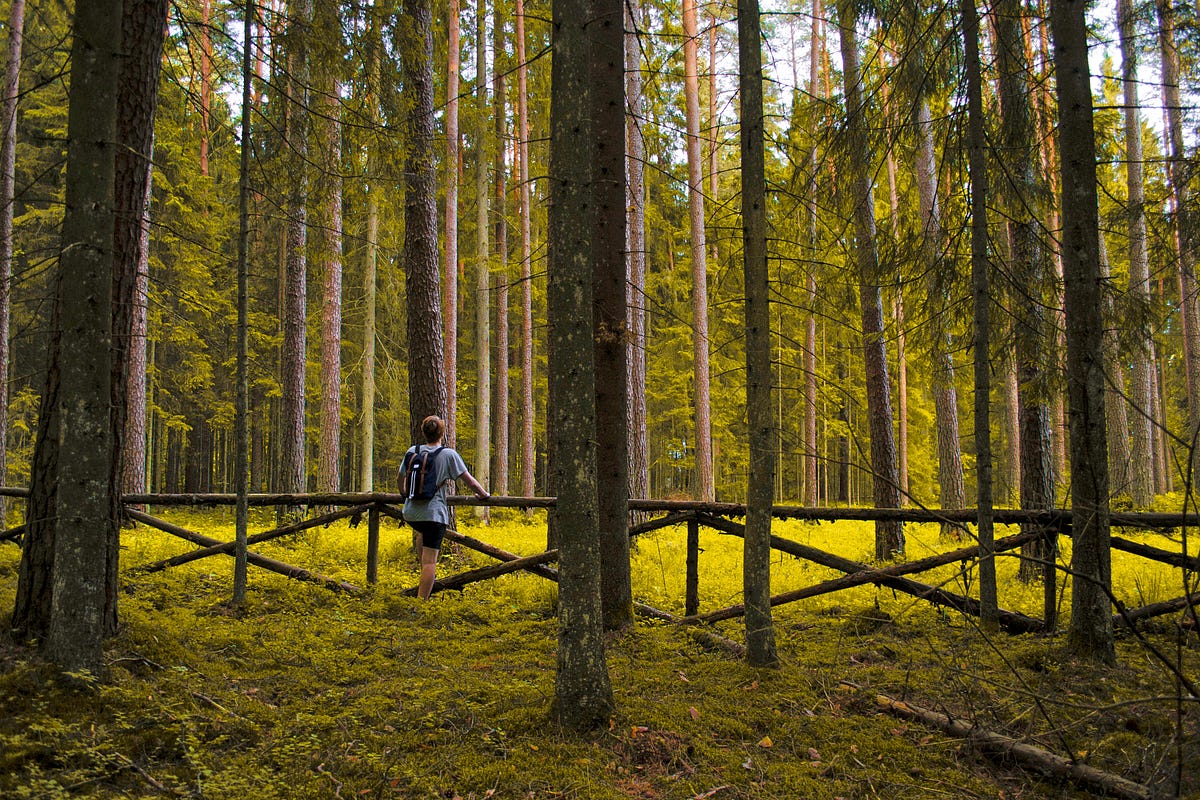
We took pictures. While I stood at a distance and admired the cattle and their horns, Andrew weaved through the cactus and risked impalement to get a better shot. Robert pulled a black knit beanie onto his head to counter the cold wind, and leaned against the ruins of a stone shelter, alone in shadow under a cloudless sky. Andrew caught this unlikely portrait of Robert standing still, waiting for us to come back around and collect him.

Photo by Terrye Turpin

We left without a shooting star. Filled with the moon, soothed by the prairie, and cheered by the stars, we headed home content, as though nature herself had granted all our wishes.

I recently wrote a Shadorma poem as part of a writing challenge from The Creative Cafe. The poem was inspired by the photo I describe in this piece, and this story is the story behind the photograph behind the poem. You can read the poem, “Alone Not Adrift” here:

https://thecreative.cafe/alone-not-adrift-3c310d4becc1

The Personal Touch

Photo by Matthew Henry on Unsplash

Before my divorce, I hadn’t thought much about underwear, other than the need to replace it if the elastic no longer held up or if the underwire in my bra decided to turn homicidal. I did stumble into buying something from one of those specialty stores, and to my surprise I discovered that you cannot actually die from embarrassment.

I can barely work up the nerve to purchase a single zucchini or cucumber at the grocery store. I always feel like I should carry around a recipe card to show to the cashier.

“See, there’s just me, and I do intend to EAT this produce.” I’ll never understand, with all the hoopla about genetically modified plants, why we can’t have squash that’s not phallic shaped.

I went into the shop with a friend, lured in by the slightly adventurous and trashy look of the mannequins in the window. Once inside I made the mistake of calling some of the merchandise by the wrong name, and the sales girl informed me that what I was looking at was a “personal massager”. There was one, artfully arranged and spotlighted on a glass shelf; that seemed even more personal than all the others. I felt like I should go up and introduce myself.

Others in this line more closely resembled power tools than something you would want to have a romantic interlude with, but to each his or her own I suppose. I finally had to look away, and my glance found the display of clothing items.

One piece in particular caught my eye, a royal purple bustier with lace at the bottom and a leopard print ribbon running up both sides. The savvy sales woman, who undoubtedly worked on commission, came up beside me as I was looking at it.

“This would look lovely on you, why don’t you try it on. Are you a small?”

After I stopped laughing I agreed to a size medium, and the clerk was shepherding me toward the dressing room.

“Your friend will have to wait out here,” she said as she opened the door to the small cubicle in the back of the sales floor. “We don’t allow two people in the dressing rooms.”

This made me wonder for a moment if three people would be okay. Then I wondered what two people would be doing in the dressing room and from there I decided I would keep my shoes on.

Putting on the bustier was an interesting exercise requiring both strength and flexibility. There were no buttons, zippers, or other fasteners. It was designed to just slip over your head, or up over your hips if you were stout of heart and slim of butt. I took the over your head route, not wanting to take any chances on getting caught halfway and having to ask for help. Once I had it on, I realized that I would have to purchase the thing, not because it was so wonderful, but because I didn’t have a clue how to take it off without removing a layer of skin.

As I stood there in the dressing room contemplating my reflection I decided that the bustier was something that I should add to my wardrobe. At the very least I could get a good workout once or twice a week just putting it on and taking it off.

Password Questions I Might Remember


Who comes up with those password security questions? I recently had to update the ones on my bank account, and I had a devil of a time finding five that I knew the answer to. Really, questions about the middle name of my oldest female cousin on my father’s side? Does anyone ever answer that question? (Not counting people whose hobbies include genealogy; or the members of the Church of Latter Day Saints).

The original questions were bad enough; I could never answer the one about my favorite ice cream because there wasn’t enough room to write “Whatever is in the freezer right now.”

I can’t possibly pick a favorite color. Won’t the other colors feel left out? Does anyone ever pick grey?

I have trouble remembering where I was last week, let alone where I spent New Year’s Eve 1999. Just because Prince wrote a song about it doesn’t necessarily mean most of us will remember what we were doing that evening, unless you were arrested and spent the night in jail.

And the question about my first prom date? What if I didn’t ever go to prom? I never expected my financial institution to bring up unpleasant memories of teenage angst. These questions seem to belong to some bizarre trivia challenge designed to point out my failings in personal relationships.

If you really are bent on selecting questions that would be difficult for a hacker to guess the answers, I would like to suggest including the following five questions:

1. What is your favorite spider?

2. If you were in a Starbucks and they were out of the Venti Caramel Macchiato with soy milk, what would you order instead?

3. If you were invisible, where would you be most likely to walk around naked?

4. Which zoo animal can you most closely impersonate? (Do not pick lion, anyone can produce a passable “Roar!”).

5. What color underwear were you wearing on Super Bowl Sunday, 2001?

Feel free to leave your answers in the comments. By the way, my favorite spider is the Bird Dropping Spider (Celaenia excavata).

Ghosts in Mineral Wells


When the opportunity arose to plan a place to visit for my boyfriend Andrew’s birthday I chose the town of Mineral Wells. I am fortunate to have a boyfriend who shares my interest in obscure and cheap destinations. Mineral Wells seemed like the perfect place to spend a relaxed weekend: it boasted a haunted hotel, a historic mineral water well, and a Fossil Park where you could actually take home anything you found. Andrew was very excited about the Fossil Park, while I was happy to see that they did not have an admission charge.

The night before we left Andrew looked through the brochure from the Fossil Park while I studied one on the Baker Hotel.

“Look here,” I pointed out to Andrew, “It says that the hotel is haunted!”

“Oh! Do you think we’ll see the ghost?” Andrew replied. “Is it someone famous?”

I explained that, although famous people had stayed at The Baker during its heyday in the 1920’s, I seriously doubted that Will Rogers and Judy Garland were still hanging around the pool.

“And besides, the whole building is condemned; we won’t be able to go inside.” Andrew wondered if we might be able to sneak in under the fence, but I decided we would stand at a safe distance and snap photos, as I did not want the opportunity to see if the Palo Pinto County jail was also haunted.

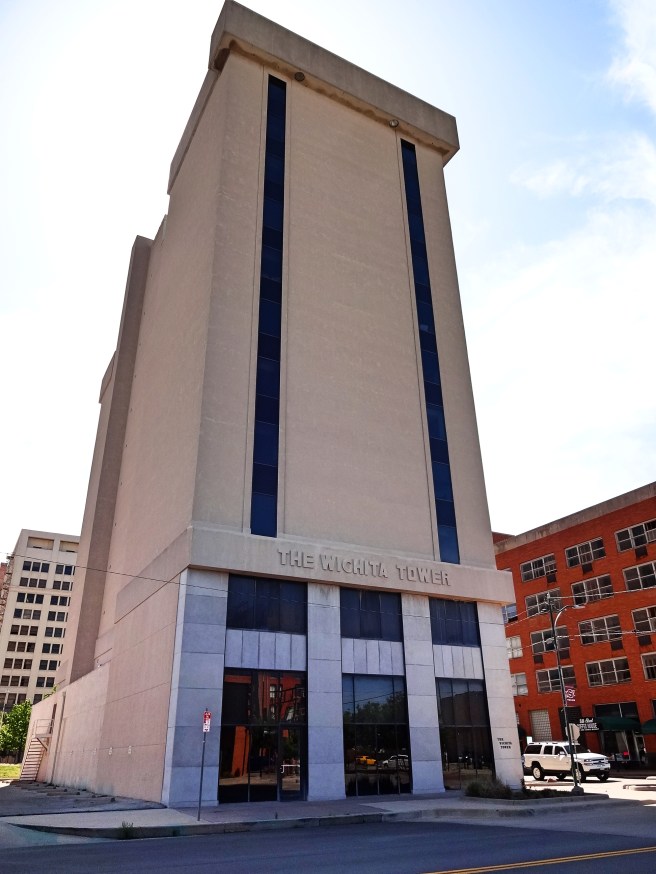
As soon as we arrived and stashed our belongings in the hotel room, we left to explore the downtown sights. The Baker hotel was an impressive sight, even with yellow caution tape draped across her front, and a plain metal chain link fence surrounding the grounds.

“Look!” Andrew motioned toward an overgrown hedge. “There’s the pool that Clark Gable could have peed in.”

We left the Baker and made our way to the outskirts of town, to the abandoned landfill borrow pit that was now the Fossil Park. We stopped in the gravel parking area, and I pointed out a sign that said the place closed at dusk. There was also a warning to beware of dangerous animals and insects. Andrew unloaded our gear while I dowsed the both of us with mosquito repellant and wondered out loud if there were bears in West Texas.

“No, just snakes I imagine,” Andrew answered, as though this would console me. We made our way into the sandy gully where we could dig for fossils.

Andrew arranged his tools — a small shovel, a brush, and a colander for sifting, and sat down in the dirt while I cautiously walked around, kicking at the dirt and looking for anything that might resemble either a fossil or a snake. We found several pieces of ancient sea lilies — little wheels of rock with perfect lines radiating out like spokes. I imagined them waving underwater in an ocean 300 million years ago. As it grew dark I began to worry about mosquitoes and then about marauding coyotes, so I suggested that we start packing up.

“Oh no! I’d like to stay just a little longer. I might find a trilobite, or maybe a shark tooth,” Andrew protested.

I reluctantly agreed to linger a bit, and as a cloud of hungry insects began to settle on my arms and legs I decided that I would wait in the car. I settled in and kept an eye on the glow from the light that Andrew had strapped to his hat. As long as the glow stayed in one place I could be assured that Andrew had not been carried off by coyotes or bears. The longer I sat there, and the darker it grew, the more I became convinced that the faint howls and yips I heard were not from stray dogs or coyotes, but from some other worldly creatures, perhaps werewolves. Just when I wondered if we had reached the point in our relationship where I might be willing to face off a herd of starving zombies for my sweetie, I saw the little light rise up and start its way toward the car.

“At last!” I said when Andrew opened the door and climbed in. “I thought you were going to spend the night out there.”

“I just hate to leave,” he said. “I might get up very early tomorrow and come back out. You can stay asleep at the hotel,” he added when he saw my expression.

The next morning we woke to the sound of pouring rain and I tried to console Andrew over the lost opportunity.

“I know it’s not as exciting as sitting in the hot sun all morning digging up little fossilized plant wheels,” I offered, “but we could stop by the Washing Machine Museum.”

I’d seen the sign for this improbable destination the previous day as we were heading downtown. The museum was located in an actual working Laundromat, “The Laumdronat”, and the words “Free Admission” were included on the front of the building.

We got there just as a light drizzle started, and I got ready to dash inside, but Andrew stopped me as I reached for the door handle.
 “Look at that man there,” he said. “He’s looking at us.” I glanced over to the front window of the Laumdronat, where a rather large fellow was standing, staring morosely out into the rain.

“Oh it’s okay,” I said, “He’s just doing his laundry.”

“He looks angry, like he doesn’t want us to come inside and bother him. He could be a serial killer!” Andrew replied. While I allowed that even serial killers must wash their undies, I didn’t think that the man posed any threat to us, and eventually Andrew agreed that we would risk venturing into the Washing Machine Museum. I wondered if they had a gift store, postcards for sale, or a place to pose for a photograph.

The place was indeed a working Laundromat, and the antique machines included manual scrub boards, and some of the very first electric and gasoline powered machines with wringers. I asked the laundry room attendant, a busy middle aged woman dressed in blue jeans and an apron, if it was okay to take photographs.

“Oh sure,” she said, “Just help yourself.”


There were some machines lined up against the back wall of the place, but most of them hung, securely I hoped, from the ceiling. They hovered over the actual, working machines and as the sounds of swishing washers and tumbling dryers filled the room, I could imagine the machines above us thrumming and bumping through the wash cycles.

“My grandmother had a machine like this one.” I pointed to a model with a hand wringer on the side. “She made her own lye soap to wash with,” I said. “It smelled like ashes and animal fat.” I pictured my grandmother wringing out the week’s wash, her long gray hair in a bun and her hands red and chapped from the fierce work of laundry.

“I don’t think that would be a popular combination now,” Andrew said, and I agreed as I inhaled the warm, flowery scent of modern detergent.

We finished our tour of the museum and held the door for the large man who had been watching us when we walked in. He did not look nearly as threatening while carrying a pink plastic basket filled with freshly folded clothes.

We drove past the Baker hotel on our way out of town, and I glanced up to see a sheet of plastic waving, like an ethereal hand, from the broken casement of a window on one of the upper floors.

“It’s too bad we didn’t see any ghosts.” Andrew said.

“Yes.” I replied, as I thought to myself that ghosts are often found in the most unlikely places, and we are often haunted, not by the unknown, but by things that are instead very familiar.

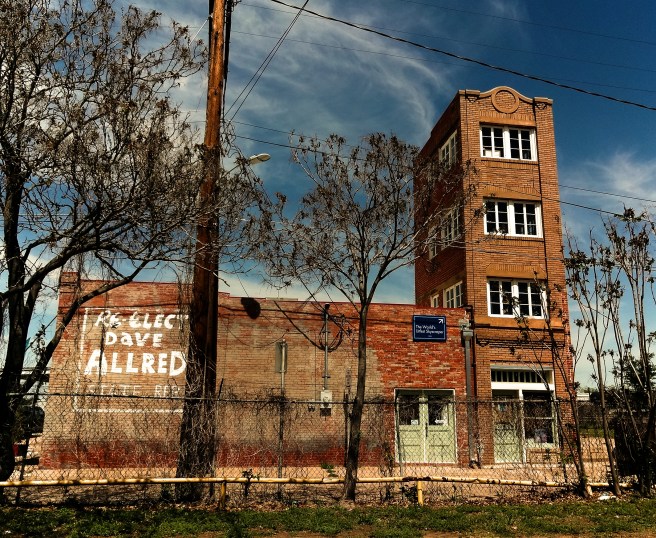
The Baker Hotel in Mineral Wells, Texas

Riding with Prince Charming

Photo by Terrye Turpin on the Waterlogue app

My first steady boyfriend drove a 1978 Chevrolet Monte Carlo Sport Coupe. The official name for the car’s color was Camel Brown, an unfortunate tag that suggests a lumpish, disagreeable animal. The license plate number was UAB711. I remember the license plate number because I spent most of the next summer, after we broke up, stalking him.

I met Mark through his best friend Johnny, who was dating my best friend, Ann. When he dressed up for a date Mark wore a velour pullover top, corduroy pants, and a splash of Jovan Musk. We started dating during my freshman year at Texas Woman’s University, where I found a strong fellowship of sisterhood but also a shortage of eligible young men.

Most of our dates we cruised around our home town in the Monte Carlo. Sometimes we would drive to Finch Park and make out in the parking lot in front of the Collin McKinney Cabin, a historical structure famous for hosting tours for elementary school children.

After we broke up, I still spent Saturday nights cruising the streets of McKinney, Texas, but I rode around with my best friend. Ann had a 1976 Datsun. It didn’t have a moon roof or wire spoke wheels, but it did have an eight track player, and I had a subscription to the Columbia House Tape of the Month Club.

There was an energy crisis in 1979, but that didn’t stop us from filling up the tank in the Datsun and tossing a suitcase filled with eight tracks into the back seat. On a typical Saturday night we stopped at Dairy Queen for ice cream, popped some REO Speedwagon in the tape deck and drove around crying out loud to “Time for Me to Fly.” I would search the streets for Mark’s Monte Carlo. I could recognize those headlights in the dark, and I perfected the ability to look long enough to see if the plate number was his, but not so long that he could see I was looking at him.

One weekend, dizzy with unrequited love and reruns of Love Boat, I came up with an idea. “Hey”, I said to Ann, “What if we took the For Sale sign from the house next door and put it in front of a different house?” I went on to explain that this prank would be funny, easy to pull off, and most importantly, untraceable back to us, the perpetrators.

“Oh, wow! Sure! Let’s do it!” Ann was loyal and easily persuaded, which made her both the ideal best friend and perfect accomplice in petty crime.

We headed out in the Datsun, not the most inconspicuous car with its bright yellow paint job, but it had a hatch back, which made it easier to load up the signs. We circled the block, gathering up and replacing signs throughout the neighborhood. We placed the last one in front of the Collin McKinney Cabin.

The next several days I alternated between guilt and worry that our crime would be found out. I imagined a crowd of angry, bouffant haired real estate agents. But we remained undiscovered. The next weekend Ann called me. “Hey! Guess what! I talked to Johnny!” I considered this.

“Did he mention Mark?” I asked.

“Yeah, and guess what!” Ann paused to laugh into the phone. “He tried to buy the Collin McKinney Cabin! Isn’t that crazy?”

I realized that my former boyfriend would never forgive me for this practical joke, and the sign that our relationship was really over had come from Century 21.

The rest of that summer we spent as Ladies in Waiting as we leaned casually on the hoods of our cars and pretended that the heat from the car engine wasn’t searing the flesh from the back of our thighs. We drank Boones Farm Strawberry wine from plastic straws in Styrofoam cups and kept Visine and peppermint candies in the glove box. While the late summer sun set and the street lights flickered on, we kept watch from grocery store parking lots and drive in burger joints while Prince Charming rode by in pick up trucks or silver Mustangs, black Firebirds, and sometimes a Camel Brown Monte Carlo, license plate number UAB711.

The Forbidden is the Sweetest


I’m cheating on my fiancé. I’d feel bad about it, but I suspect he’s cheating too. The little foil wrappers are evidence of his infidelity. I’m smarter than that, mine are stashed in my trash can at work.

Andrew and I met online, matched up by our interest in hiking and our affection for cheese. His profile listed his food preference as “Vegetarian”. I envisioned cozy evenings at home, where I would prepare eggplant parmesan and Indian curries. I soon learned that his idea of vegetarian does not include many actual vegetables. He likes beans and potatoes, and sometimes expands his menu to include a salad. And cheese, of course.

I grew up with the ideal of the happy homemaker in the kitchen, nourishing her family with love and meat filled casseroles. There are only so many ways you can cook a bean. Eventually I gave up cooking for Andrew. We prepare our own meals and buy our own snacks.

The real problem, the forbidden love for both of us, is chocolate. The five month gap between Easter and Halloween barely gives us time to lose the weight we gain from discounted chocolate bunnies. Each holiday we vow to ignore the seasonal candy aisle, but I cannot resist a bargain and Andrew cannot resist the sweets.

When I mention to friends that my fiancé is a vegetarian, they give me a pitying look. What they don’t understand and what they don’t know, is that my loving a vegetarian means I get all the bacon, but I better hide the chocolate.

Precious Seconds and Past Regrets

Photo by German Eduardo Jaber De Lima on Unsplash

“Often when we realize how precious those seconds are, it’s too late for them to be captured because the moment has passed. We realize too late.” — Cecilia Ahern

I never thought I would miss you. We met at just the right time in my life, but too late in hers. After my divorce I took up disc golf, a silly pastime for a late middle aged woman for sure, but it led me to you. I should have realized that a man whose every Facebook photo included a “Rock On!” hand gesture would not be disposed toward a long term relationship. You introduced me to “Prog Rock”, a genre of music adored by men dressed in leather kilts. Your own wardrobe choices led my son to ask “Dude, do you even own a shirt with sleeves?”

You had two cats. The younger cat was an aloof Russian Blue and Tortoiseshell mix. You named her after some Egyptian goddess with an unpronounceable name. I always felt intimidated by that cat. Precious was older, a shy solid black sweetheart that snuggled up to me at every visit. I could feel her bones shift underneath her skin as I carefully stroked her fur. She rumbled her approval while Younger hid, jealous and sly.

One time you accidentally shut Precious in the pantry, where she survived a day and a half in silence. I would have noted her absence.

We broke up in modern fashion, by text message.

“I just want to stay home with my cat”, you said, and I knew which one you meant.

I stayed friends with you on Facebook for a while, and saw when you posted that Precious had died. A short while later there was another post. You adopted a cat, a black Tortoiseshell. I understood your need but it saddened me to see her so soon replaced in your affections.

I never thought I would miss you, and I don’t. But sometimes I really miss that cat.

Our Proof of Devotion

Image courtesy of Shutterdemon at FreeDigitalPhotos.net

I am not a dog person. In fact, I think the perfect pet for me might just be a raccoon — one of those animals that are able to open trash cans and get their own dinner. Despite this, I agreed to watch over my friend’s pet while she was out of town for a week. Misty is the kind of friend who doesn’t ask for a favor, instead she presents the thing she wants you to do as a unique opportunity, one you’d be foolish to turn down. She pitched the dog watching as sort of a mini vacation, one in which I would share her apartment space with Clara, a bull dog with body odor and an allergy to grass. I spent the week with the dog because Misty is also the kind of friend who would gladly assist you with digging out a sewer line.

Her work space in the cubicle we share is decorated with an assortment of stuffed bull dogs and pictures of Clara. Here is adorable Clara holding a ball in her mouth, tiny Clara as a puppy under a Christmas tree, and contemplative Clara in sepia, posed in an old fashioned wash tub. How do you tell someone that you don’t care for their dog? It’s like admitting that you don’t like sunshine, or oxygen.

“I want you to come over this evening, so Clara can get used to you”, Misty told me the week before I was scheduled to stay. When I arrived at her apartment, Misty decided that Clara and I needed some alone time together, so my friend left to do some shopping. The dog and I were supposed to play together, to bond, but we wound up spending time doing what I often did with my children when they were young — we watched television. I brushed the dog hair off to clear a spot on the couch, and sat down. Clara settled next to me and fell asleep snoring.

When Misty returned Clara greeted her happily, jumping up and panting. “Did you have a good time?” I started to answer, but then realized that Misty was asking the dog for her opinion.

“Let me show you how to walk her.” My friend brought out a special harness and a retractable leash. The leash was one of those designed to give your animal the illusion of freedom, while guaranteeing that the dog owner will find herself wrapped around a tree or light pole at some point. Attached to the leash was a container that dispensed little bright blue plastic bags. “I want you to watch when Clara poops, that way you’ll know how much to expect, and how to know when she’s finished.” I tried to picture myself staring at the dog’s back end and gauging the size of the deposits while Misty continued talking. “And don’t let her eat any acorns or she’ll upchuck on the carpet, she’s allergic.”

“How many times does she poop?” I asked. There seemed to be an awful lot of those little blue bags loaded in the holder. Misty explained that Clara went at least two or three times during each walk. She offered to let me try the bagging after the first stop, but I told her that I thought I could figure it out later.

“You’ll be walking Clara first thing in the morning, and you’ll need to be home right after work, by six at least, to walk her again. Then wait thirty minutes for her stomach to settle, feed her two cups of food, and walk her once more before bedtime.” A quick calculation on my part estimated that was 16 or 18 little bags a day. I planned on double bagging. “All right, here’s the list of instructions, don’t forget the after dinner treat for her teeth. Her allergy medicine is in the pantry, if she gets in too much grass she’ll start scratching. The medicine knocks her out, so just give it at bedtime. You can sleep in my bed if you want, and Clara will probably sleep with you. If she whines that means she wants under the covers.” As Misty handed me the page filled with notes on the care and feeding of her dog, it occurred to me that I would have gotten off easier taking care of someone’s elderly grandparent or small child.

On our first day of walking I nervously tried to steer Clara away from the acorns that she wanted to slurp up like a furry Hoover. I did allow her to eat all the dried bugs she found, as Misty had not specified that these were forbidden. We stayed on the sidewalk, avoiding the grass until it was time for scooping. I hoped that the dog wouldn’t suffer an allergic reaction, since I couldn’t imagine how I would get her to swallow the sedative. I would have to take one myself first.

The second day of my visit with Clara, she met me at the door, tongue hanging out and what passed for a dog smile on her face. On the third day, I could see her watching me from the front window as I parked my car. Her flat doggie face, pressed to the glass, reminded me of those wives of long ago ship captains, pacing along the widow’s walks and searching for signs of their loved ones to return from the sea.

We passed other dog owners on our evening strolls. They stood and watched their pets drop the by-products of digestion, and then like good citizens they stooped to pick up the mess. We smiled and nodded as we passed, recognizing in each other that common bond — love for family, pets and friends. And waving a happy goodbye, we each went on our own way, carrying the proof of our devotion with us in those little plastic bags.

*This story previously published as “Devotion” in the Texas Writers Journal Q1 January 2014 issue.

Always the Last Place You Look

I spent a good part of the morning on Christmas Eve searching our apartment for a book. The missing book was a collection of fairy tales that I received for Christmas in 1968, when I was eight years old. The book was a present from my parents, and I first saw it while it was still wrapped in a Treasure City shopping bag and lying on the floorboard of our Oldsmobile. I remember teasing it carefully from the brown paper sack while I kept an eye out to make sure my mother, in her place in the front passenger seat, didn’t spot me. After I flipped the book over and traced the outline of Little Red Riding Hood and the wolf on the back cover, I stuffed it back under the car seat. On Christmas morning I pretended that it had been placed there by a generous elf, but I knew the truth. I convinced myself that my parents were in direct communication with Santa, and were merely helping him out by picking up a few things on their own.

Now, half a century later, I couldn’t find it. It sounds odd to consider the loss of a fifty year old book unusual, especially from someone who regularly misplaces her wallet, but this book had followed me from childhood. My fiancé Andrew and I searched every book case and every stack of books in our 1200 square foot apartment. “Where could it have got to?” I asked as I bent over to look under the couch.

“Did you put it up here with the children’s books?” Andrew pulled out and glanced behind Richard Scarry’s “Best Word Book EVER” before sliding it back on the shelf in our dining room. I walked back to our bedroom, to look once more at the small bookcase there. I hoped that the book had somehow found its way back to the last place where I had seen it. It seems we are often falling into this, some version of “Have you seen my…” The older I get, the more things seem to go missing. I am either growing more forgetful or my possessions have decided to free themselves before the inevitable estate sale.

“No, it’s gone, I don’t think we’ll find it.” I continued to drift from room to room, including the bathrooms, in case I had tucked the book away amongst the collection of toilet paper I had stashed under the sink. Andrew followed along behind me, a terry cloth sweatband stretched across his forehead as though he were about to go for a jog. He is good like that, he often puts aside whatever he is working on to help me look for my phone, my purse, that book I was reading. He has adjusted very well to the responsibility of looking after another person’s possessions, while I drag along, resenting the imposition of caring for anything that can’t look after itself. I’m often setting down my phone next to a sink full of water, or leaving a plastic cup too close to the hot stove top.

I pictured the worn green and white cardboard cover of the misplaced collection, patched with clear tape. As I described the book to Andrew, he mentioned that I could probably buy a replacement on eBay. “But it won’t be the same!” I protested as I recalled the black and white illustrations that I colored in with crayons. I prepared to gather myself into a ball of self-pity, moaning something about lost childhood treasures, when Andrew asked where I had last seen the book.

“I think I put it with my photo albums,” I answered from under the bed. A moment passed and then Andrew called out.

“Here it is!” He found the book tucked away in a cardboard box in our spare closet. He handed it to me, and I flipped through the pages. Just as I remembered, every story began with “Once Upon a Time”, and generally each had a happy ending, but in between there was danger, often in the form of wolves or a wicked sorceress. Most had a handsome prince, trying to win the love of a beautiful princess. Sometimes the hero wandered lost in a dark forest, in need of enchantment to discover the magic castle. I put the fairy tale book back on the shelf and thought that this is what love really is, just two people, helping each other find things.

img_1576


Join Hands, Give Thanks

For the love we are to receive

I love pecan pie. Yesterday, our realtor gifted his clients with Thanksgiving pies. We bought our house two years ago, in the middle of a crazy market, when investors were slinging cash like the Monopoly banker. Without his expertise, we wouldn’t have been able to find a place to call home. For that, we are grateful to Kreg Hall. The pie is a bonus. A large bonus as I am the only one in our household who likes or can eat pecan pie. To make it last I’ll freeze portions and enjoy it during the winter months. Each time I sit down with coffee and a slice of pecan pie, warm from the microwave, I’ll lift a fork in gratitude for the blessings we have and the good people in our life. 


Home Baking.jpg

I lived through two decades before I discovered that there were people in the world who made dressing with stale bread cubes instead of fresh cornbread. My oldest sister’s second husband, the nice one, was from somewhere up North, New York I think. He had dark, pomaded hair swept up and back and he smiled and spoke with an accent I had only ever heard on television. He made a bread stuffing with oysters. I forgave him because it was delicious, each mouthful a feast of earthy black pepper mixed with the salty ocean taste of oysters. I was home from college, and my mother volunteered me to drive the two of us up to Malakoff, Texas, where my sister and her new husband had retired to life by the lake. In those days before GPS, I got lost following my sister’s handwritten directions because I didn’t know that “LBJ” was also Interstate 635. We arrived late, but to a feast laid out on their Formica topped kitchen island and still warm. I wish I had asked him for the recipe for that oyster dressing.

My mother made her dish the Southern way, with cornbread. She used white corn meal, soft as sand, with a bit of flour, scooped up and sprinkled in like snow. Baking soda and baking powder for leavening, for we all need incentive to rise. Buttermilk to mix, salt and bacon drippings for flavor, then all poured into her largest cast iron skillet, warmed on the stove so the crust will brown first. It came out like a pale yellow moon and filled the kitchen with the warm, sweet scent of corn. For the dressing she mixed in celery, onions, broth, and enough sage to repel evil spirits.

When I was young, we traveled to my grandmother’s house for Thanksgiving. Not over the river or through the woods, but past the lake and along Highway 380 the 15 miles or so to the town of Farmersville. My mother brought her cornbread dressing and a pie or two as her contribution to the meal. I held the warm pan of dressing on my lap where I sat in the slick vinyl backseat of our 1970 Oldsmobile, and tried not to drool on the foil covering the pan. My grandmother’s wood frame house had a tiny living room decorated with an autographed photograph of a famous televangelist, before the fall. She sent him money and prayed for healing by laying her hands on her Chroma color television while he preached. The children, including anyone under the age of 18, were banished to the back porch. We fought over metal folding chairs and balanced our plates of food on our knees while we fended off the horde of feral cats living in my grandmother’s yard. The cats were only slightly outnumbered by my cousins.

Some years we visited my father’s family, where my aunts made their dressing and gravy seasoned with the chunks of turkey heart, liver, and gizzard that came packaged and concealed inside a store bought turkey. The first time I cooked a turkey I didn’t realize there was this hidden prize inside. I found them after, steamed and tucked under the skin at the front of the turkey, where his neck would have been if it weren’t shoved up into the body cavity. The neck was roasted too, because I didn’t know there was a second, secret scrap part buried inside my turkey.

My first husband was from Missouri, and the bread stuffing his mother made was moist, but thick, and had to be scooped out in chunks. My father-in-law, an honest, hard-working mechanic and assistant Boy Scout leader, led the prayer each year, insisting that we all stand before the table and join hands. You haven’t really experienced Thanksgiving gratitude until you’ve had to convince a squirming toddler to stay still during a ten minute blessing, while the aroma of food wafts over you in a moist cloud of steam you can taste.

My mother stopped cooking a turkey for Thanksgiving after my parents divorced, when it was just the two of us left at home. She would roast a chicken instead, and make her cornbread dressing. I never saw her consult a cookbook, she cooked from memory mostly, measuring out ingredients to taste except when she was making a pie or cake. After she moved into a nursing home, I found a cookbook tucked away in a box she had stored in her laundry room. The book, All About Home Baking, had penciled notes in the margins and, tucked inside the front cover, scraps of lined paper with recipes written in her delicate, looping cursive. Brittle, yellowed pages from a 1963 calendar fluttered out like falling leaves when I turned the pages of the book.

I roast a turkey every year, even when there are just one or two guests and my vegetarian fiancé at the table. This year I’m cooking both turkey and a ham. I’ll make cranberry relish from fresh cranberries and oranges, and add so much sugar that it passes for jam. We’ll have pumpkin pie and a minced meat pie like my mother used to make, even though no one but me will eat it. It is a deliberate luxury on my part to have a whole pie to myself. My fiancé, Andrew, will mash potatoes so they come out just the way he likes them, a little bit creamy and with a few tiny lumps. When he leaves the kitchen I will sneak in more butter and salt to the dish.

I don’t cook my mother’s cornbread dressing, I’ve fallen from grace and into the boxed, instant variety, but at least it’s the cornbread version. I’ll make traditional green bean casserole with crispy fried onions on top and a spinach rice casserole from a recipe my aunt gave to me. I don’t put marshmallows on the yams, instead I’ll serve them with a pecan streusel topping like my ex-husband’s mother, my first mother-in-law, made.

The guests at the table, the cooks in the kitchen, and the fellowship changes, just as the feast stays the same. I touch my past as my hand stirs the pot, preps the bird, and kneads the bread. I bow my head in silent thanks and join hands with all, even those who are absent from the table. Join hands, bow heads and give thanks, give thanks for the love we are all about to receive.