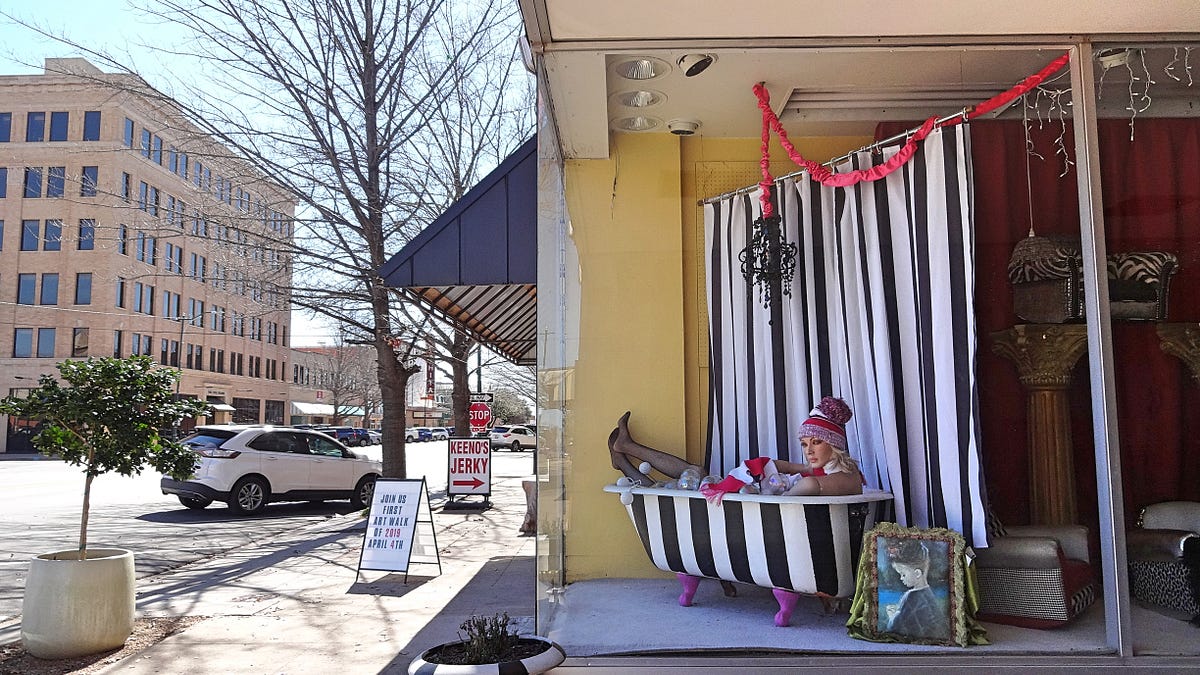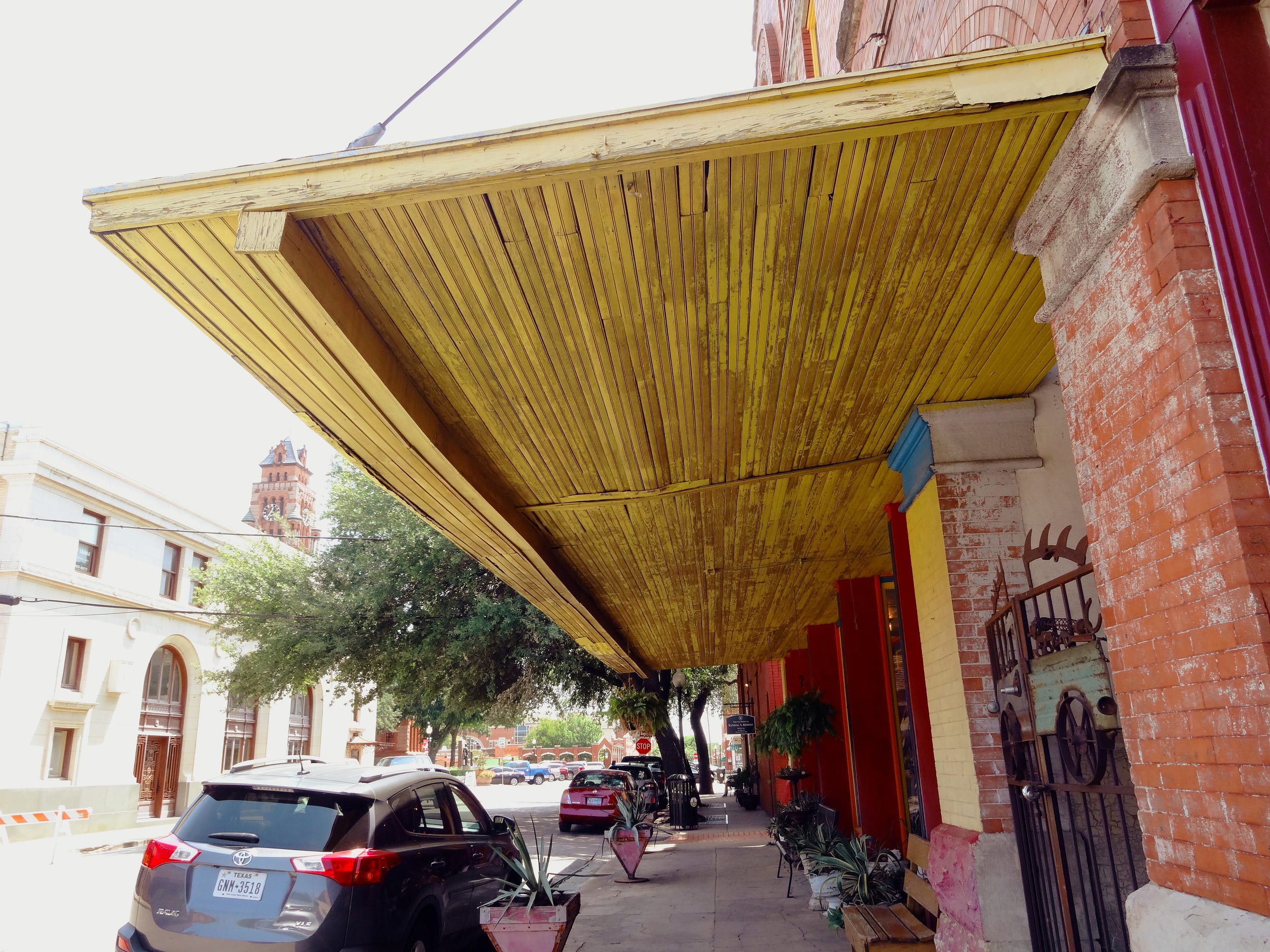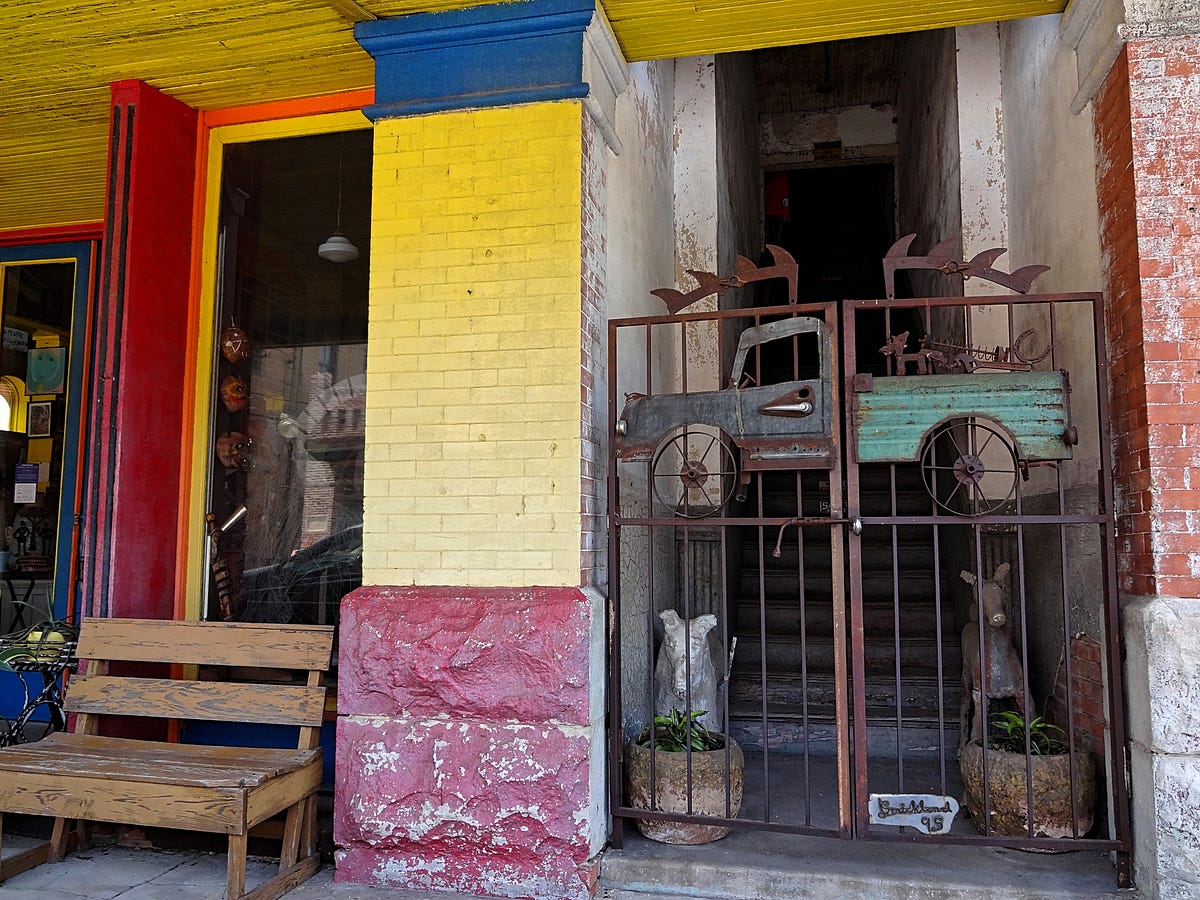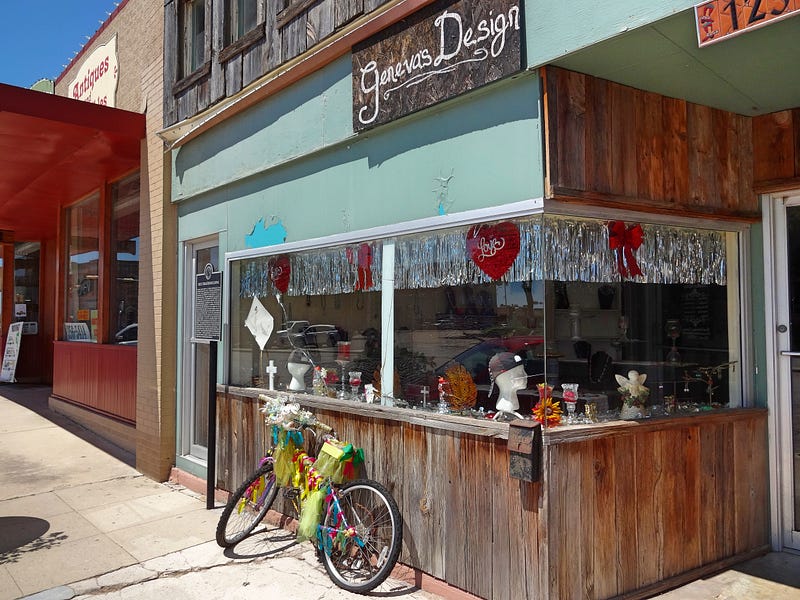
Antiques Shop Window Display in Downtown Wichita Falls, Texas
Street Photography Challenge
My husband and I love to travel on the weekends to visit the small towns near our home. Each place has a unique character that reminds me of the diversity within our state. Downtown Wichita Falls, Texas is experiencing a revival of sorts with small shops, breweries, and theaters opening in what were empty buildings. Our overall economy is thriving, but there are reminders everywhere of past financial booms and busts.
Empty Space in Downtown Wichita Falls, Texas— Former Home of Tru-Value
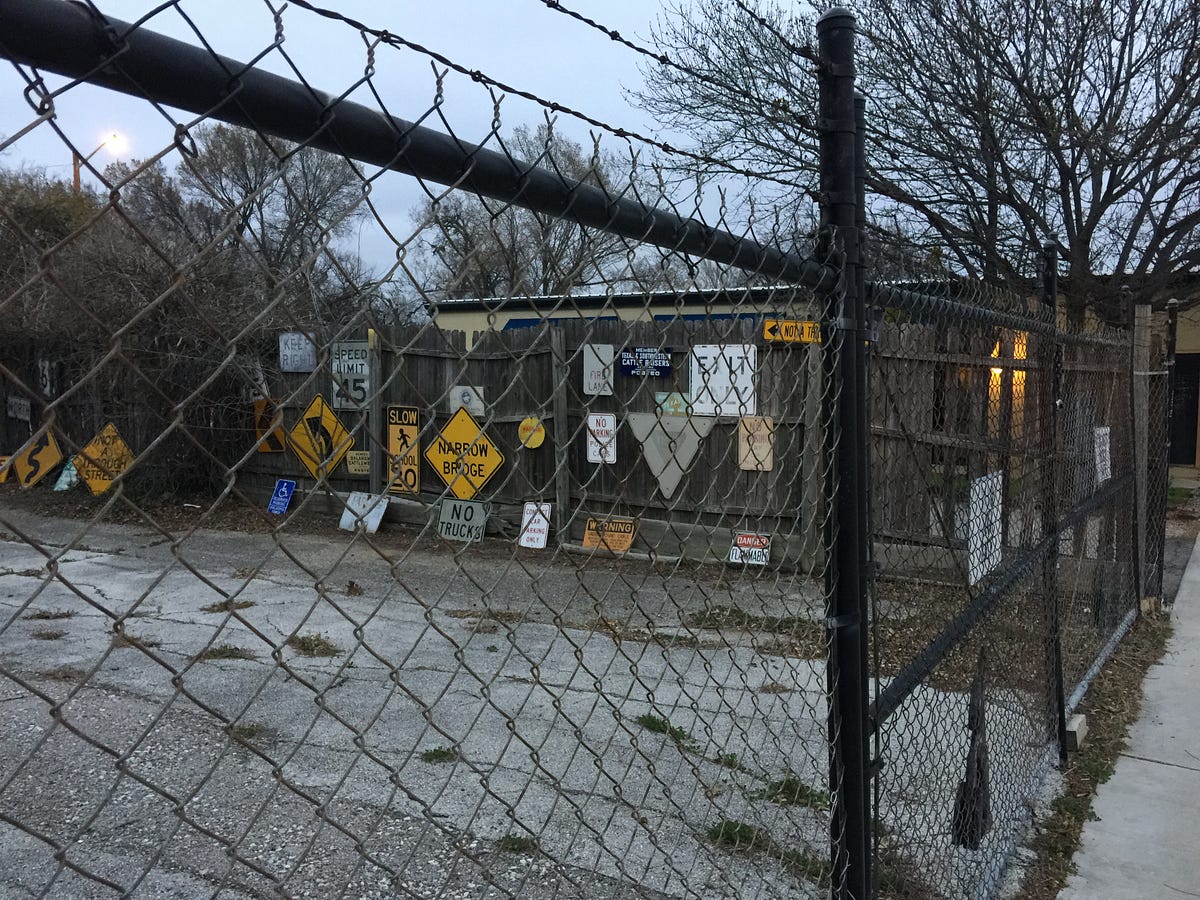
Nearby Denton, Texas is one of our favorite destinations. I snapped the photo below near dusk as we walked from one of our favorite eateries in downtown Denton.
Fenced off Construction Area in Denton, Texas
Classic Car Museum in Nocona, Texas
Three Heads are Better Than One in Waxahachie, Texas
Street scene in Waxahachie, Texas — Photo by Terrye Turpin
Street Photography Challenge
My husband and I live near Dallas, Texas and we are fortunate to have many interesting small towns within driving distance for weekend jaunts. We browse through antique stores and thrift shops and I always bring my camera along, looking for inspiration and hoping for a photo or two that will inspire a story.
Waxahachie, Texas
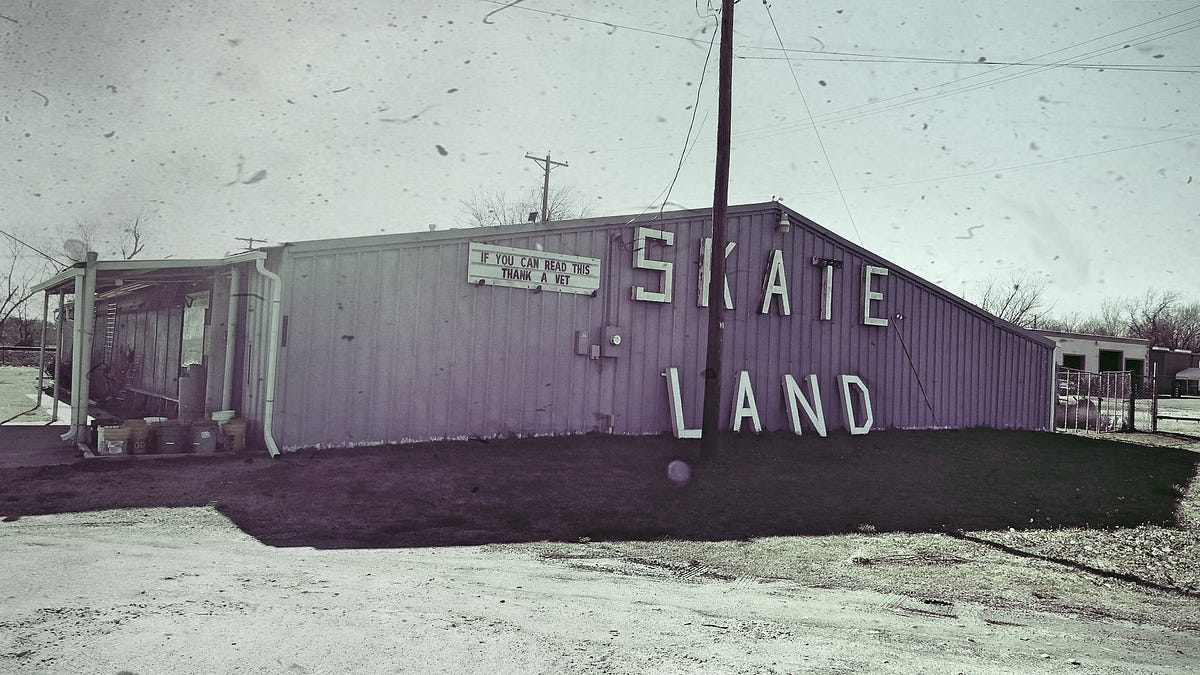
Skate Land in Terrell, Texas
Sometimes we’ll drive by an interesting place and I’ll beg Andrew to pull over so I can hop out and get a picture. The building above is definitely going to inspire a scary short story.
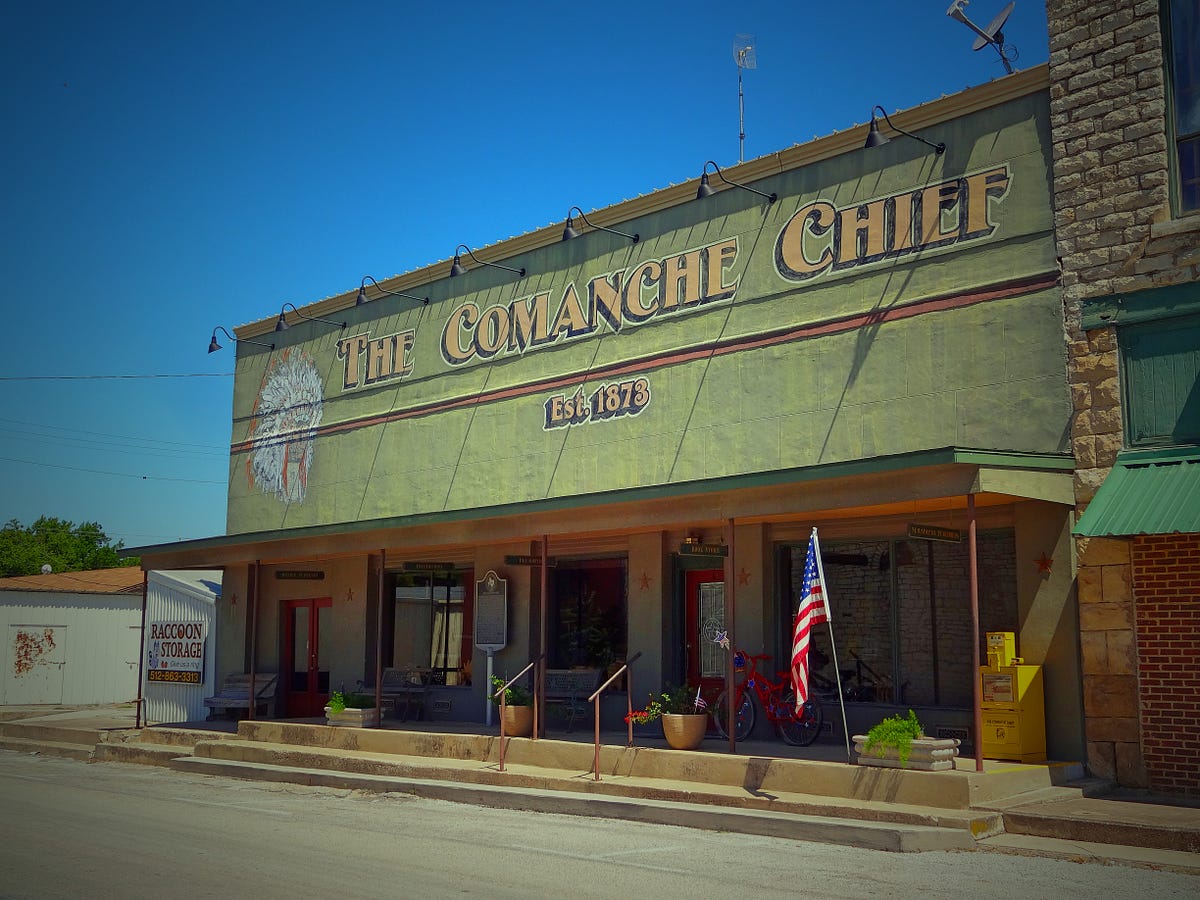
Comanche, Texas — The Comanche Chief Newspaper office, still publishing the news
Comanche, Texas
Denison, Texas
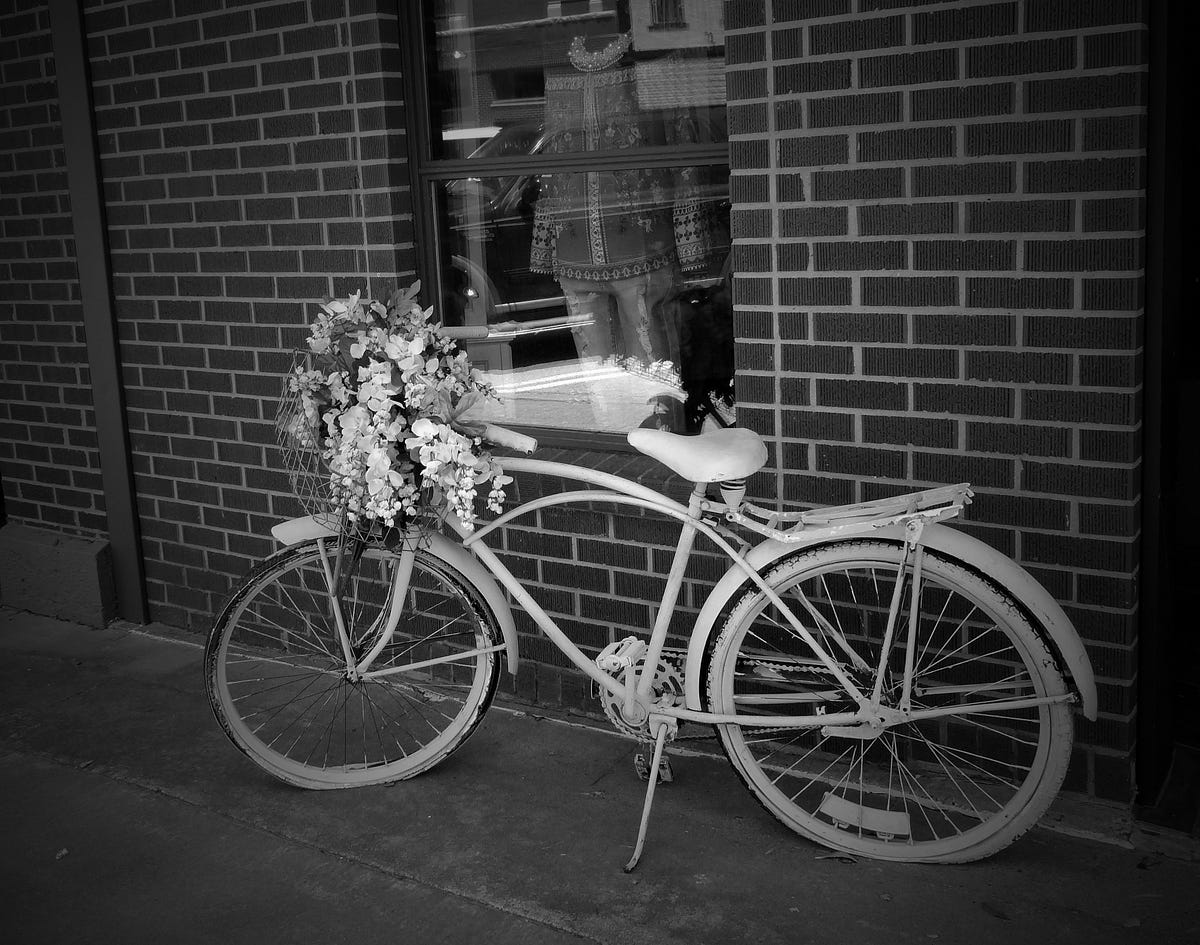
I love finding these old bicycles propped up outside shops.
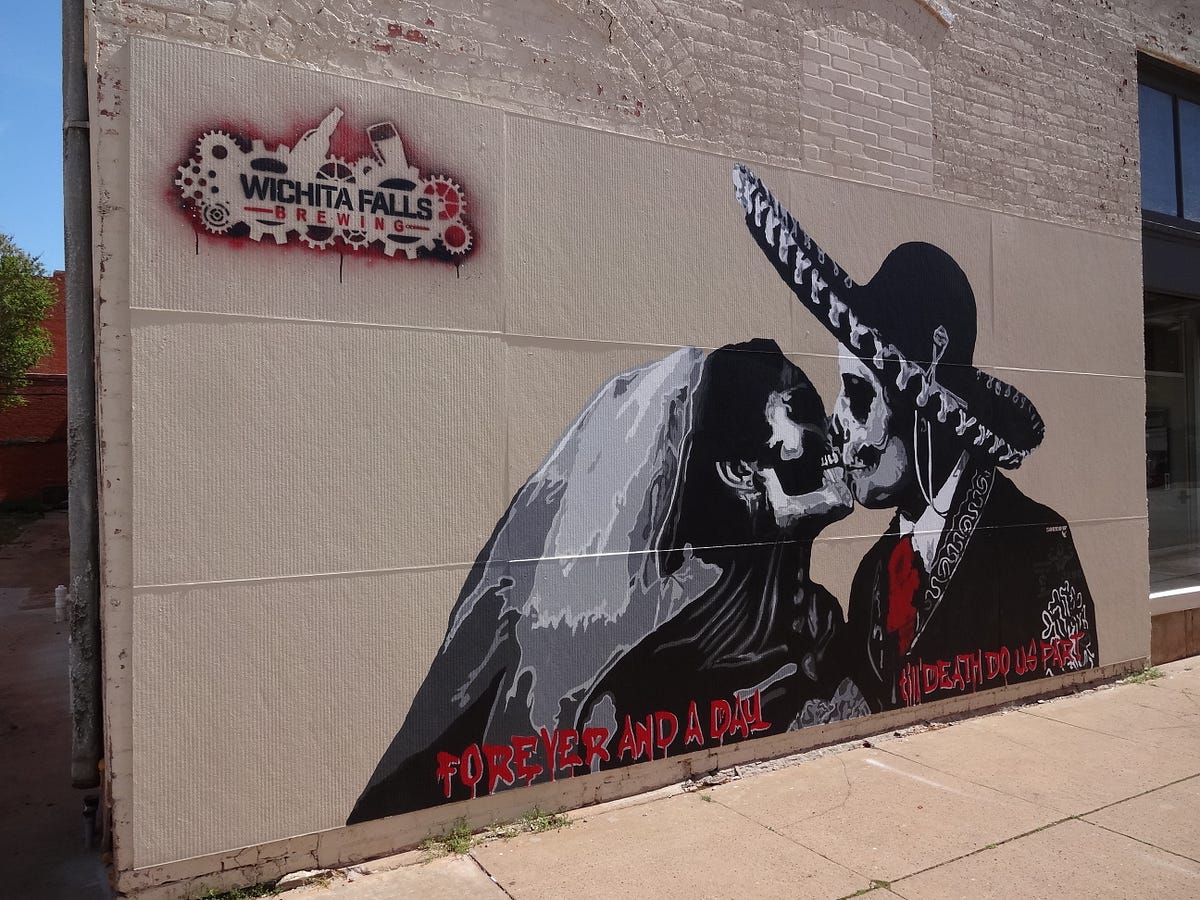
Wichita Falls
Wichita Falls — The World’s Smallest Skyscraper
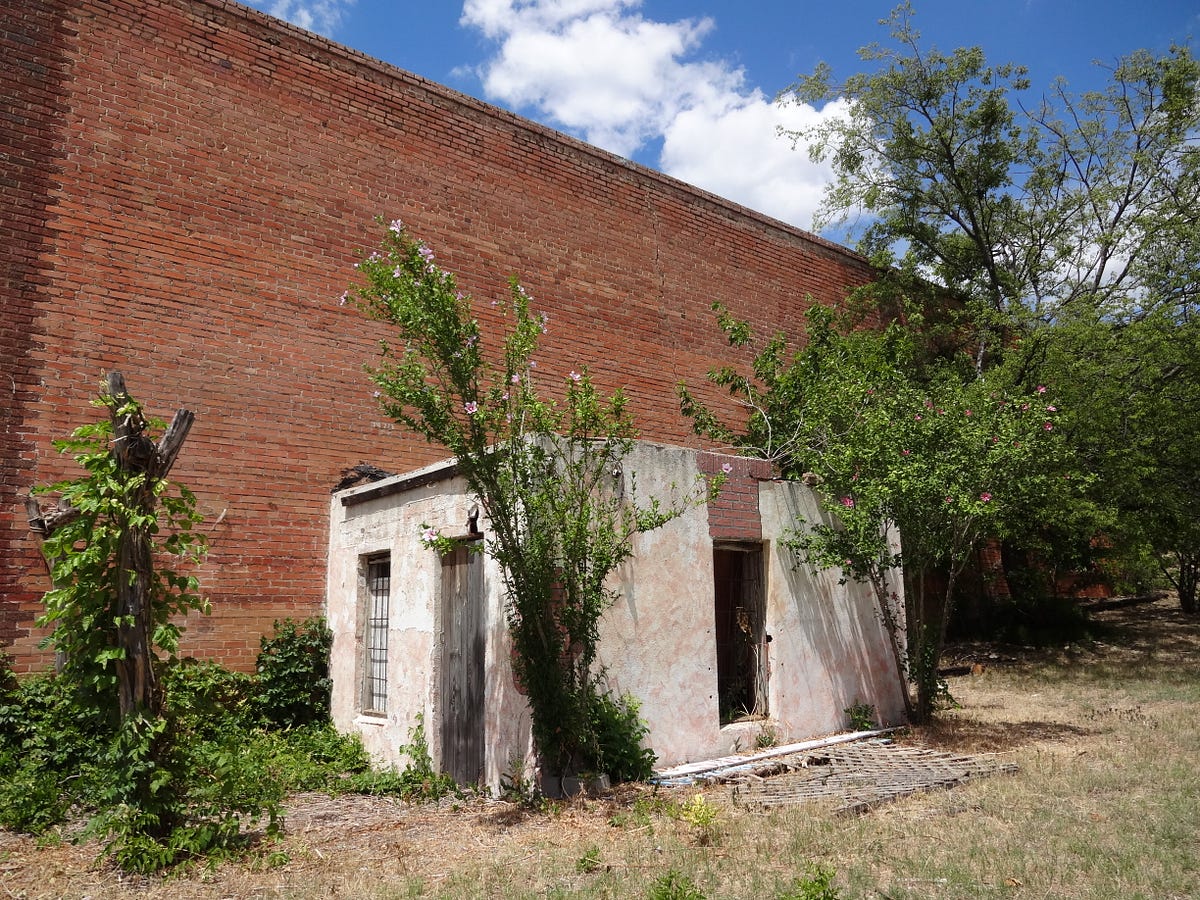
Abandoned Building in Mineral Wells
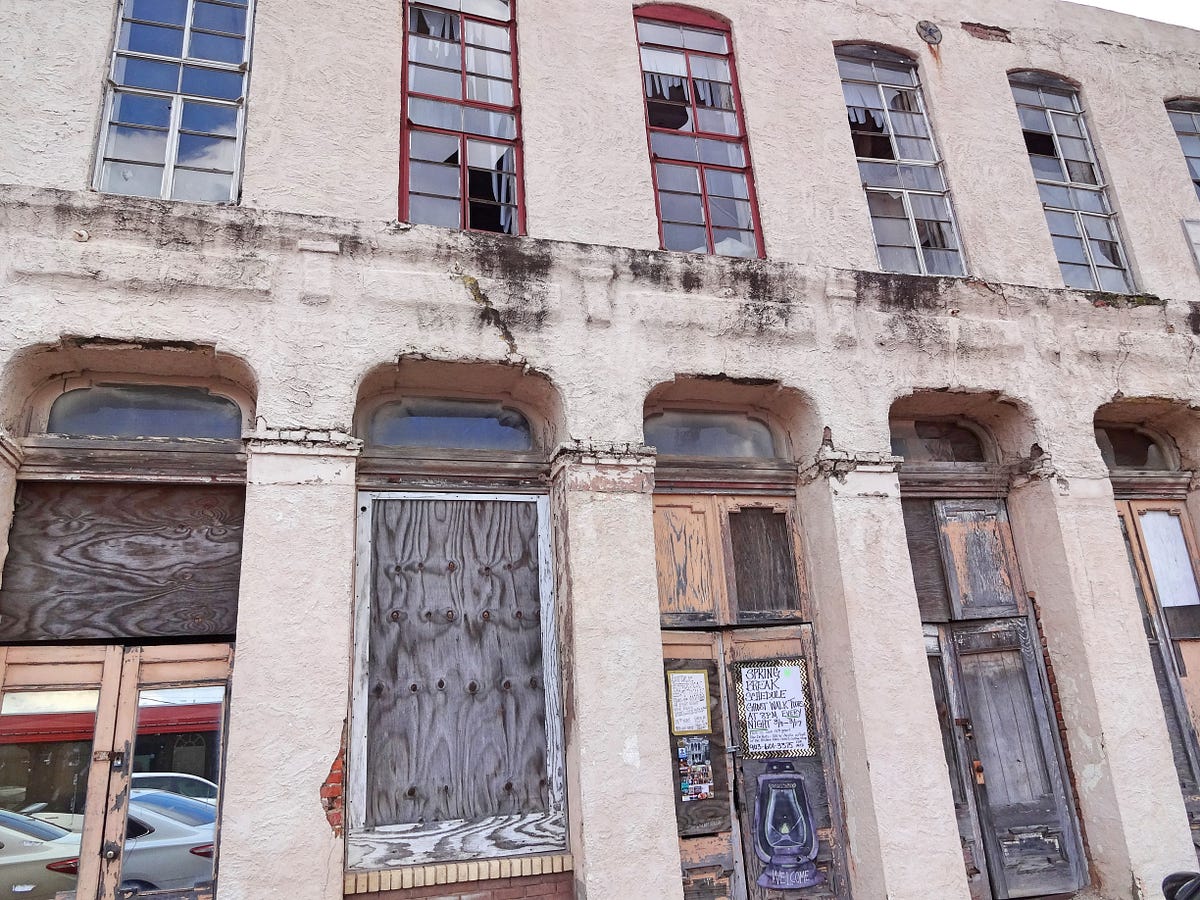
Haunted Building in Jefferson
I like to use my own photographs whenever possible in my stories, so you might see these pictures again someday.
In 1980, after my sophomore year in college at Texas Woman’s University, I waited for the letter that would lead to a pivot point in my life. Some months before, I had applied through the Baptist Student Union to be a summer missionary. I signed up, not out of deep religious conviction but because I did not want to spend the months between semesters living in my mother’s house.
Other students testified they had received God’s call, but I would have hung up in a panic, sure the almighty had a wrong number. I hoped to be sent to some distant exotic location. The recruitment flyer posted in the Baptist Student Union featured pictures of happy, smiling young people wearing shorts and working in places like Brazil or Hawaii. I pictured myself returning from summer vacation with a tan and a suitcase full of coconuts. Instead, I landed in West Texas, at a town called Big Spring. My assignment was to work in the chaplaincy department at the state psychiatric hospital located there.
“I’ll be spending my summer in the state hospital,” I told my friends. The joke always got a laugh as long as I explained that I wouldn’t be going as a patient.
My family never talked about mental illness. The youngest of seven children, I was born on my mother’s 42nd birthday. My older brothers and sisters had all escaped from the house by the time I started school. I remember my amazement that my childhood friends could come in and out of their houses at will.
In our house, when I came inside, I had to stop in the laundry room and take off all my clothes and toss them in the washer. Naked, I walked through the house to the bathroom to shower and then dress in clean clothes. We did not have carpet, instead my mother insisted on covering all the floors with vinyl, so she could mop with the pine cleaner she favored.
Everyday activities, like getting ready to leave to go shopping, involved a complex set of steps that ended with my mother putting on her shoes at the back door. Any interruption, like a ringing phone, required her to start the process over from the beginning. I fell on a piece of metal once, slicing my thumb down to the bone. My mother left me sitting on the front porch clutching a bloody washcloth, for almost an hour, while she went through the compulsive rituals that would allow her to leave and drive me to the emergency room.
“Oh, mom just likes things clean.” This was the closest the other family members came to admitting something was wrong with my mother. I never had a birthday party, never had friends overnight, and rarely invited anyone to come play in my yard—they might ask to come in and use the bathroom, and that would require explaining the whole undressing part. My mother’s obsessive-compulsive disorder required hand washing at the minimum after any physical contact. A hug would have required a scrub down like what might occur at a biological warfare lab with a leaky air filter.
My routine at the chapel in Big Spring did not include leading any prayer sessions or bible studies. Instead of torturing the residents with my singing or praying, I handed out hymnals at the Sunday and Wednesday night services, helped lead a puppet group, and visited with the residents. I would often wonder at the ordinary people who were patients at the hospital.
Until that summer I had been taught that mental illness should be hidden away, like something shameful. On a bookcase in our house there was a bowl made up of ceramic tiles. I dusted that shelf and that bowl for years before I learned my mother put it together during a stay at Terrell State Hospital when I was a toddler. Like her anxiety, depression, and OCD, it was there all the time, in plain sight but disregarded as though it were invisible.
One of my duties as a summer missionary was to give speeches at various churches, summer camps, and bible study groups. I abandoned any traditional speech and instead told about the strange guiding force that must have led me to the place I had denied all my life — an understanding of my mother’s mental illness. It wasn’t too far a stretch to speak of forgiveness and acceptance, and of following those with love.
Terrye is a native Texan who enjoys writing stories set in her home state and other strange places. In her free time Terrye enjoys exploring antique, junk, and thrift stores for inspiration and bargains. She’s had stories published in small print and online journals, and writes short, humorous essays for her blog — https://terryeturpin.com/. Sign up with the link below to follow her newsletter.
Despite the crying during our last visit, we took our grandson, Will, back to the Heard Museum to see the robotic dinosaur display. When you are shorter than three feet tall anything larger than a cat is intimidating, especially if it has sharp teeth and looks like it might eat you.
“He’s had a whole year, surely he’s recovered by now,” I remarked to my husband, Andrew.
Soon after Andrew and I began dating I warned him that, although we were past the risk of producing children, if he stuck around he would be in danger of exposure to grandchildren. I have been preparing for grandmother status half my life. I picked out my grandma name, “Mimi”, right after my son and his girlfriend announced their engagement.
Andrew’s grandpa name is “Hoppy”, the unfortunate result of letting a toddler select the name. I warned Andrew, but he began by trying out grand-père. A French accent proved too difficult for an 18-month-old who wasn’t born in France, so it left us with Hoppy and Mimi.
My grandmother was old before I was born. We visited her on holidays where I sat in her living room long enough to absorb the smell of mothballs and mentholated back rub into my clothes. Her third or fourth husband, Mac, was my step-grandfather. He wore striped overalls and had a glass eye he popped out to frighten children. I was determined we would be a different sort of grandparents.
That afternoon at the museum we began with a brisk walk through the lobby crowded with young parents and knee high children and wove our way in a quick jog past the toys in the gift shop. As I pushed open the glass door that led outside, I held onto Will’s hand as I explained, “The dinosaurs on the outdoor trail aren’t alive, they’re just robots.”
This was not as reassuring as I intended. I realized with some irony we expect our young ones to believe in Santa Claus and the Tooth Fairy, but then discourage their fear of evil robotic monsters.
We stopped at the first dinosaur on the trail. It appeared to be strolling out of the wooded area behind it, brandishing sharp claws and grinning at us with impressive rows of teeth in its gaping mouth. Bright purple and blue vinyl covered the dinosaur in a pattern that would look smashing on a pair of boots. A nearby sign announced the design was chosen by children. Will stood just above waist high beside me and gripped my hand. “I’m just small,” he announced.
“Yes,” I agreed, “but you are also brave.” Will squinted at the robotic animal and then looked back up at me as though he were about to question my judgement.
“Was it this color last year?” I asked Andrew.
“I don’t think so, and I seem to remember it was carrying a Halloween pumpkin.”
“I’m getting bigger, but right now I’m small,” Will repeated as we stood there. The dinosaur roared and nodded his head up and down as though he agreed that Will was indeed, bite-sized.
We trudged on to the next display, a Triceratops. It was the size of a small car, but I felt encouraged, as this specimen was a plant eater. However, this particular herbivore roared just like the meat eaters. It also shook its giant horned head from side to side and moved its mouth as though chewing a tasty, boy-shaped morsel.
Photo by Terrye Turpin
“Why can’t they have at least one dinosaur that chirps, or sings a little song?” I complained to Andrew as Will huddled behind me.
We continued our stroll down the trail, stopping for a moment to enjoy each exhibit, at least until the roaring started up. Will hiked along bravely. When Hoppy pointed out a huge, ancient oak tree, Will said “That’s a scary tree,” but he roared back at some of the dinosaurs.
We approached the final dinosaur, a forty-six foot tall T-Rex, and Will stopped and held up his arms. “Carry me Mimi! I’m small!” I scooped him up, and he watched over my shoulder as we marched past the overgrown lizard.
Will wrapped his arms about my neck and we followed along behind Hoppy down the trail and past the T-Rex. From the moment your children are born, they are just looking for some way to prove you wrong, but to your grandchildren you are infallible. There are people who never experience this level of unconditional love unless they own a dog.
Once we were past the dinosaurs Will spotted a play area of child-sized wooden houses meant to resemble a pioneer village. Andrew and I settled in and watched him pour rocks into a metal bucket. I tried to snap Will’s picture, but freed from the pressing danger of robotic dinosaurs, he spent his playtime rushing off to explore the little houses at the frontier town. Every shot I took was of his back as he ran away from us.
I won’t always be able to pick him up, but he won’t always need to be carried. How reassuring it must be, however, to know there will always be someone who trails behind, watching over us, and ready with strong arms to lift us when we can’t go on. When we turn to them and plead, “Please carry me, for I am just small.”
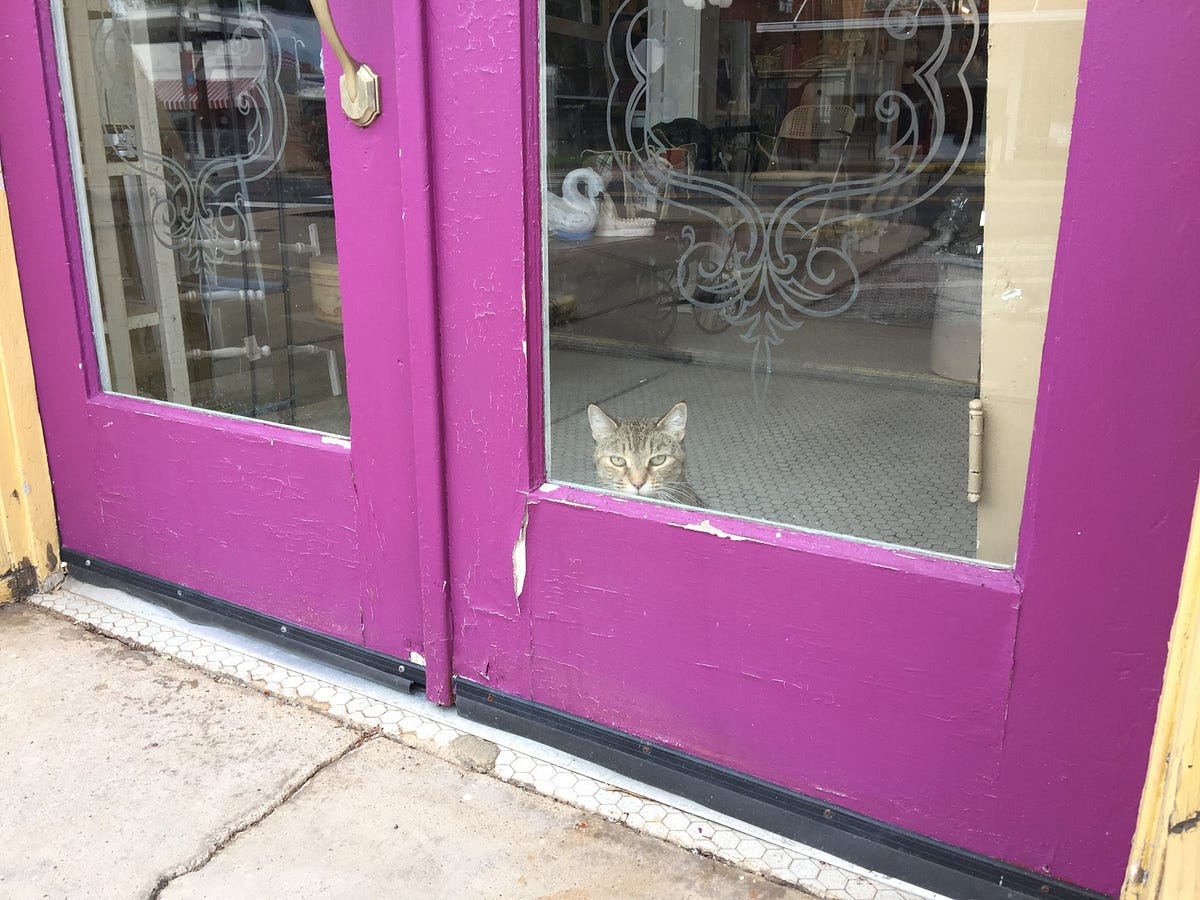
Distrustful Cat wonders who is at the door — Photo by Terrye Turpin
I’ve legally changed my name one time. When I married my first husband, I took his last name, and it has stuck through a divorce and a second marriage. Turpin is unusual enough, but my first name is the one that strikes fear in the heart of coffee shop baristas and medical office receptionists.
“Is that with an ‘I’ or a ‘Y’? they ask.
“Just spell it like a normal person would and then add a crazy ‘e’ on the end.”
I’ve heard them try to pronounce my name as two separate words — ’Ter’ and ‘Rye’, like the disembodied electronic voice that calls out directions on my phone. After I correct their spelling or pronunciation, the person asking will remark something like, “Oh! How did you come up with that?”
“You can blame my mother,” I’ll reply.
She’s the one who tagged me with that name, and it never occurred to me I could change it.
Besides confusing grocery store cashiers, fast food clerks, and telemarketers, my name kept me from purchasing a variety of mass-produced personalized mugs, pens, pencils, bracelets, and plastic souvenir license plates. They mocked me with every alternative spelling of my name — there were Terri’s and Terry’s galore, but not a single one ever spelled my name like my mother had. If every parent had been like her, a whole generation of Chinese factory workers would have been out of work, with no one to buy all the cheap plastic goods emblazoned with names that ended without unnecessary letters.
I was in junior high school when I asked my mom how she came up with the spelling. She got a smug look on her face as she explained.
“Back before you were born, I told your Aunt Judy I would name you Terrye, and she told me that was a boy’s name. But I spelled your name with an ‘e’ on the end, and that’s a girl’s name.”
I pointed out to my mother there were four others in my school, three girls and a boy, with my name. None of them ended with ‘e’, two of the girls ended their name with an ‘I’ and the boy and one girl were Terrys.
“Exactly,” my mother answered as though I’d proven her point. “Then when Judy had her youngest boy, she named your cousin Terry without the ‘e’!”
“Wait, who are you talking about?”
Until that moment I hadn’t known my cousin and I shared the same name. My cousin Bun had the misfortune to have two older sisters, who spoiled their baby brother and awarded him the nickname Honey Bun. They shortened that to Bun before his second birthday. No one in our family called him anything else. He even went through the Marine Corps as Bun.
Disappointed Self Portrait of the Author
The day I finalized my divorce I decided to pick up a copy of my birth certificate while I was at the courthouse. I wanted a passport, in case I might need to flee the country or take a cruise. I filled out the form to request the copy and handed it to the clerk behind the counter. She glanced at me over the top of her gold framed bifocals and asked if I had identification. I handed her my driver’s license, and she glanced up at me and said, “Oh, that’s an unusual spelling, how do you say your name?”
“It’s just Terrye,” I answered. She turned and tapped on her computer keyboard, then turned with a frown.
“I found a birth certificate with your parents’ names, and on your birth date, but the child’s name is different.”
Did I have a twin somewhere that I didn’t know about? Had they switched me at birth with some other child?
“Do you still want the birth certificate?” The clerk waited for my answer.
“What name is on it?” I found my voice to ask.
The clerk paused as she squinted at her computer screen. “The name is the same as yours, but there’s no ‘e’ on the end.”
I stood there dazed as I handed the clerk my payment and waited while she printed out an official copy of the birth certificate for this unknown person, this girl child who had not been burdened with an extra ‘e’. Visions of long lines of personalized gadgets and doodads marched through my vision when she placed the document in my hands. There, on the first line — my name, Terry, with no ‘e’. Where had it gone? Had some misguided or careless clerk dropped it? I looked further on the form, and there was the missing ‘e’, stuck on the end of my middle name! Renee with two ‘e’s!
I haven’t finished the passport application. I’m afraid to show up with a birth certificate with my name misspelled. They’ll shuffle me off to some bare room to be questioned by a branch of the secret service dedicated to grilling people who misuse the alphabet. I picture men in suits with square, solid names like Mark and Fred who would glare down at me and ask how I wound up with someone else’s birth certificate.
“Blame my mother!” I will cry out in vain while I hope they don’t notice the extra ‘e’ on the end of my middle name.
I didn’t miss having a dryer until I bought my washing machine. For the two years after my divorce I made do with the community laundry room at the apartment complex where I lived. It seemed a little self-indulgent to complain about the lack of a washer and dryer when there were women dodging land mines instead of worrying whether they would lose a sock to one of their neighbors. Carrying my laundry up and down the stairs and back and forth the fifty yards to the laundry room was good exercise. If it was a cold and rainy day, at least I didn’t have to carry my clothes down to the river to beat them on a rock.
In the middle of my life, when I thought my laundry future set, divorce thrust me back to a college dorm room status. I left a bad marriage with what I could carry in my arms, plus the futon from the upstairs game room. Possibly the last person over 50 to sleep on a futon, I tried to keep my material possessions down to the bare minimum, in case I ever needed to make another quick escape. Back then, I envied the homeless people standing on the corner, tied down to nothing but a backpack and a small, brown paper bag of booze.
“You need a dryer,” my boyfriend, Andrew, said one Sunday morning. We lounged in bed, by this time I had replaced the futon with a full-sized mattress supported on a wooden frame. When Andrew spent the night, we would wake tangled in the middle of the covers, each of us fighting for our share of the space.
Andrew and I met online, matched up by a mutual affection for cheese, Scrabble, and hiking. On our second date I asked him to assemble an IKEA dresser for me, and to my surprise he returned for a third date after that.
“I’ll get a dryer soon,” I replied. The new washer was less than one week old, and I was still adjusting to the idea that my belongings would no longer fit in the back of my car.
“Look, here’s one on Craig’s list, and it has a picture,” Andrew persisted as he held out his phone toward me. “You deserve clean, dry laundry,” he said. He seemed earnest, but I wondered if he’d grown tired of dodging the damp clothes slung over the shower rod.
The dryer in the picture looked functional, and the price was right. Andrew read the phone number off, and I called about the dryer. A man answered the phone in a drowsy Sunday morning voice, accepted my offer of $50 for the dryer, and gave me directions to his house.
When we arrived at the address, I noticed a large storage pod, the size and shape of a railroad boxcar, stacked on the drive way. I wondered if the dryer came from some abandoned unit. Were the people in the house divorcing and dividing up their possessions? I hoped not. I didn’t want to wind up with a vengeful dryer, one that would burst into flames from spite, or chew up my underwear and spit them out like a cat hacking up hairballs.
We made our way past several rusty metal filing cabinets lined up on the sidewalk and toward the open garage door. As Andrew texted that we had arrived, a tall man in flip flops walked out to meet us. A barefoot woman I guessed to be his wife, stepped up behind him.
“Sorry about the mess, we’re moving,” the man said. He motioned at stacks of boxes in the garage. “The dryer’s right in here, if you want to look at it.”
I followed the woman inside to the laundry room. “I can turn it on,” she said as she moved towels to a laundry basket on the floor. She turned the dial on the top of the machine and the dryer responded with a quiet hum and a little quiver as the drum inside tumbled around. I smiled and nodded that she could turn off the machine. As I counted out the money, and her husband and Andrew got ready to load up the dryer, a young girl with the same brown hair as the woman strolled over to us. A small black cat huddled in her arms, a cast on one of its legs.
“What happened?” I said, as I reached out and touched the kitty.
“We don’t know. My husband found her one night on his way home from work. Someone had run over her, or thrown her out of a car I guess.”
“Does she have a name?” I asked.
“That’s Maybe,” the woman told me. “As in, ‘Maybe we can afford the vet bills!’”
This must be a happy dryer, taking care of the clothing for a family that took in and cared for stray cats with broken legs. I imagined the machine tossing my clothes in its warm embrace as Andrew shut the hatch on my SUV, and dryer loaded, we headed back to my apartment.
Later that night I washed a load of clothes, put the wet items in the dryer, and went to the living room. I settled down on my futon with the book I had been reading and listened to the gentle thump of the dryer. The scent of lavender fabric softener drifted through the apartment, a reminder this was what we all deserve- a comfortable place to sit, clean, dry clothes, and someone to help us carry it all upstairs.
I’d been sick with a cold, and in case I didn’t recover in time for the weekend, Andrew and I cancelled the camping trip we had planned. Back then we were still in the early stages of dating when broken plans required a spectacular replacement. He asked me what I wanted to do instead of spending the night shivering in the woods, and I offered up a polka band.
“Brave Combo!” I said, as I hooked my thumbs in my armpits and flapped my arms up and down.
“What is that?” he asked. “Do you still have a fever?”
“Chicken dance!” I said. “Don’t tell me you’ve never done the chicken dance?”
“I’m afraid I’m not much of a dancer,” he answered.
I explained that the famous polka band Brave Combo would be performing in a nearby town, Grand Prairie, during the street festival that weekend. When I added “You can sit out the dancing if you want,” Andrew agreed the festival would be a fine alternative.
We arrived at the main street and located the stage where the band would perform later that evening. Drawn by the drowsily rotating Ferris Wheel and the sugar scent of cotton candy we ambled over to the carnival games. We stopped at one game that offered the chance to win a goldfish or a hermit crab. Dozens of glass bowls and cups sparkled on a plywood tabletop while the game operator, a grandmotherly looking woman wearing a canvas apron, bounced a white ping pong ball on the railing surrounding the playing area. Occasionally she flipped the ball over the table where it bounced through the bowls until, with a last jitter, it came to rest like a round egg in a crystal nest.
“Hermit crabs!” Andrew leaned over the tank on display at the front of the game booth where dozens of the crustaceans, housed in neon bright painted shells, crawled over each other. Several of them seemed to be waving at us, their tiny claws raised in a happy salute, so I put down five dollars for a basket of ping pong balls and we went to work. Five dollars later we had landed one ball in a glass bowl, earning us a coupon we could redeem for a plastic baggie of water with a live goldfish.
“If you want to keep trying, you can trade four goldfish for a hermit crab,” the helpful operator of this game suggested.
“Should we try for a hermit crab?” Andrew asked.
“I should probably tell you about my history with hermit crabs,” I replied.
Photo by Andrew Shaw
When I was twelve years old, my family spent a long summer weekend in Corpus Christi. The three of us, my mom, my dad, and me — spent those lazy days strolling the beach, picking up shells and storing them in a five-gallon bucket, the sort you could pick up at the hardware store and might have once held paint. At the end of the weekend we snapped on the lid and the five-gallon bucket rode home to Dallas in the trunk of the car where it stayed throughout the four hundred and fifty-mile, seven hour drive in hot summer heat. At home at the end of our journey my dad opened the trunk, and we discovered the shells were inhabited by hermit crabs. Once alive, they were now well steamed.
We had to air out the trunk of that car for weeks, and it took me ten years to be able to look at a plate of seafood. I still feel a twinge of guilt whenever I walk past the lobster tank at Central Market.
When I finished the story, Andrew sighed, and we gave our goldfish coupon to an excited child and her not so enthusiastic mother. As we walked away, I hummed my own version of the chicken dance song–“I don’t wanna be a chicken, I don’t wanna be a duck. Please don’t lock me in the trunk, nana nana nana na.”
We shared a snack of popcorn and made our way toward a booth with rows of multi-colored balloons arranged as a backdrop behind a low wooden counter.
“Darts!” I stepped up, eager to play. I love a game where there might be a risk of physical injury in exchange for the chance to win something.
“A guaranteed prize every time!” The man behind the counter shouted as we arrived. One of his eyes tilted downward, and I wondered if this could be a dart related injury. But he held out to us soft vinyl balls, not sharp pointy darts.
“No darts?” I asked.
“No,” the man replied, “But we got this nail behind the balloon, so all’s you got to do is hit it.”
He stepped over and slapped the nearest balloon, which obligingly popped and revealed the sharp, rusty nail behind it. Rusty nails made a fine trade-off for darts, so I nudged Andrew and he offered up a five-dollar bill to the operator.
“Oh! You don’t pay until you win.” The man shook his head and stepped back as though Andrew were handing him a snake. Two throws later we had popped one balloon and scored a toy stuffed goldfish the size of my palm. I shrugged and turned to walk away.
“Wait!” The operator held out another three balls to Andrew. “Keep throwing, and if you don’t hit anything you don’t have to pay.” The man shrugged, his wayward eye winking. “You only pay if you win.”
While I counted on my fingers the cost of the balls so far, Andrew tossed and hit two more balloons. The carnival operator held up his hand. He looked around as though about to impart a government secret.
“Okay, you hit one more balloon and you win the medium sized prize.”
I clapped until the man continued, “And you’ll owe me twenty dollars.”
I tried to decide whether to take my stuffed goldfish and run, and while I hesitated Andrew threw the last ball, popped a balloon, and earned himself the prize of handing over a $20 bill for a stuffed toy made by third world child labor.
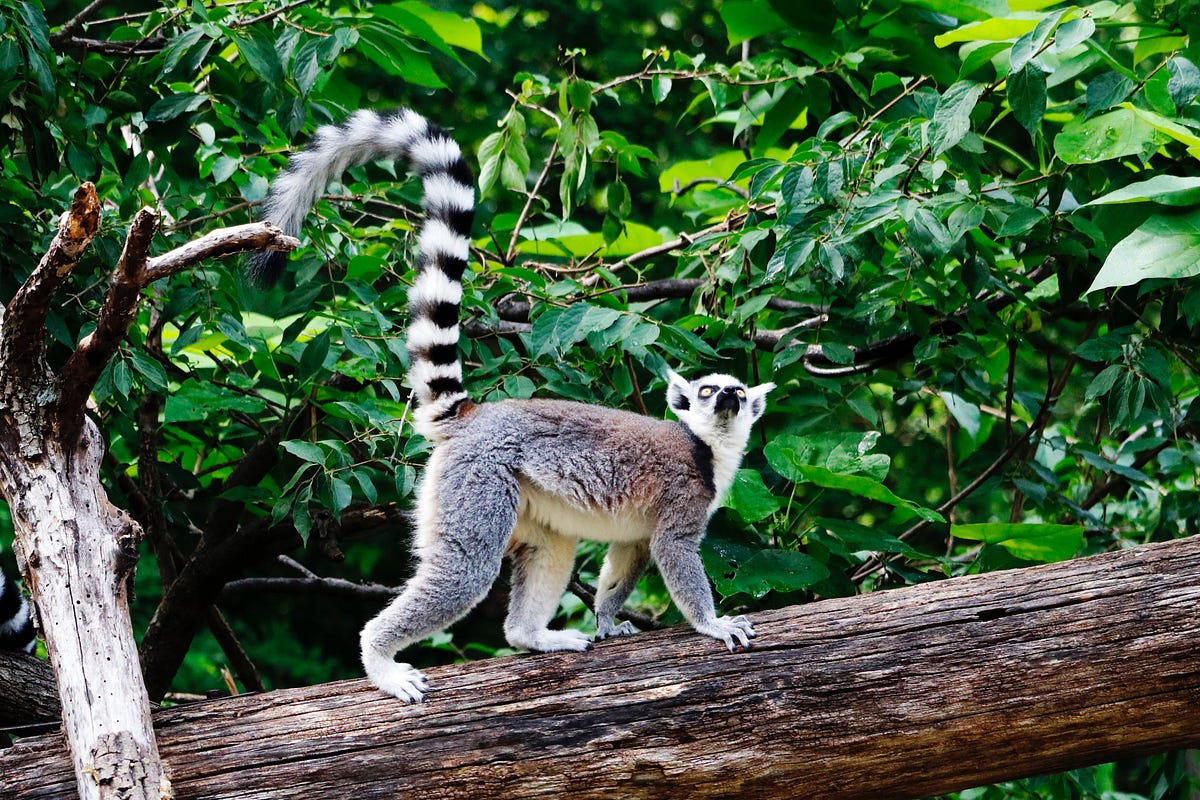
Andrew, a good sport, just looked slightly pained while he paid the man and I picked out my prize. The giant fluorescent yellow bananas required a forty-dollar commitment. I wavered between the glittery cobra with jiggly eyes, and the stuffed toy lemurs with bright, fuzzy tails.
“I’ll take the white lemur with the orange striped tail,” I said.
Over the calliope of carnival music, I could hear the strums and toots that signaled the band warming up, so I suggested we go by the car and put the lemur up for safe keeping. His little stuffed paws seemed to grasp my hand in trust and the black stitching making up his mouth smiled up at me like Mona Lisa. I patted his soft fluffy tail and settled him onto the back seat of the car. The glimmer of carnival lights reflected in his big orange plastic eyes as they twinkled back at me.
“I really like this lemur,” I told Andrew.
“I should hope so,” he replied.
“You think he’ll be okay here in the car?”
“Oh, I don’t know, I’d hate for someone to see him and break a window to get in. Better put him down on the floorboard.”
“But not in the trunk,” I replied.
“Oh no, never in the trunk.”
I moved the overpriced but not undervalued lemur to the floorboard. Andrew and I held hands as we joined the revelry near the stage. The saxophone called, and the trumpets joined in while Andrew took a seat at the picnic tables set up around one edge of the parking lot. I smiled and waved as I joined a ring of strangers and danced the chicken dance under the lights from the Ferris wheel.
I’d been thinking about adopting a cat. I wanted a soft, purring companion, one that wouldn’t demand I hand over the remote as they snuggled up next to me on the couch. My vision didn’t include dumping out the litter box. Despite numerous calculations, my bank accounts refused to yield the proper amounts for the large pet deposit required. Was I even ready to share my 650 square feet of space with another living being, one that wouldn’t get its own dinner or tend to its own toilet needs?
I mentioned to my boyfriend, Andrew, “Maybe we should get a fish.”
“Oh! Let’s pick up some pill bugs,” he said, “they can live up to three years in captivity!”
I doubted this, as I used to collect them as a child. I called them “Roly Polys”. They tended to last about two weeks, or until my mother spotted the jar I kept them in and made me dump them out.
At least the pill bugs would not require a big investment in dollars. I knew they wouldn’t be cuddly, but I expected them at least to be entertaining.
“What do you feed them?” I wondered.
“They eat their own poop,” Andrew informed me. “And fish flakes,” he added.
We set off to Petco to get a suitable habitat and other supplies. When we got there, I stopped to admire the cats and kittens up for adoption at the front of the store. I sighed over a particularly sweet gray tabby as a store employee came up to me.
“Are you thinking of adopting a cat?” she asked.
“Oh no, I’m just looking at them,” I quickly replied, before I could include “Cat” on my list of impulse purchases.
“What kind of pet do you have?” she continued, a pleasant smile on her face. I froze, looking at this nice gray-haired lady in a Petco t-shirt. I realized if I answered “pill bugs” this might result in a longer conversation than I wanted to have at that moment.
“We have a fish,” I blurted out and then rushed over to join Andrew by the aquarium supplies.
“You denied the pill bugs!” he accused.
“Well, yes, but technically I wasn’t too far off, you remember you told me they were crustaceans.”
Supplies in hand, we managed to check out. Once we got back to the apartment, we assembled our purchases — a medium sized glass terrarium, sand, a small water dish, and a container of fish food. I insisted on putting two plastic plants in the habitat. Andrew tried to talk me out of the tan resin statue of Mount Rushmore, but I wanted to watch a pill bug climbing up the sides like a tiny Cary Grant.
Later that night we went for a walk in the park next to our apartment complex, and gathered up a nice variety of pill bugs. They looked like little armored tanks with antennae. When we set them loose in the terrarium, they scurried around for a few minutes on the plants, but none of them were inclined to scale Mount Rushmore. When we touched them, they rolled up into little balls. They seemed to enjoy the fish flakes and after they ate, they burrowed under the sand and disappeared.
Over the next few days we looked for the pill bugs, but they remained stubbornly out of sight. Apparently pill bugs do not live exciting lives. They are perfectly happy to stay covered in dirt all day and night, venturing out briefly to nibble some fish flakes and possibly some of their own poop before returning to the soil.
Eventually we noticed that the only thing moving in the terrarium was a large colony of gnats. Every time I spritzed some water in for the hibernating pill bugs the gnats rose up in a small dark cloud and zipped toward my nose and ears like kamikaze pilots. Andrew tried vacuuming them up, and he did manage to eliminate some of them, along with one of the plastic plants. He insisted this was not intentional, and swore that he saw pill bugs scrambling for safety after the poor plant was dislodged. By the time I came over to look they were out of sight again.
We had company over, and my friend Susan swatted at the gnats circling her head and suggested we set up a trap for them.
“Use a plastic bottle and some apple cider vinegar as bait,” she said.
Andrew rigged up a device, and before I could protest, he poured in some of my gourmet pomegranate vinegar. They deserved, I allowed, to drown in the best.
I monitored the vinegar trap, but the gnats preferred the warm, moist terrarium and the fish flakes. The pill bugs continued to hide, offering neither amusement nor companionship. Those little crustaceans were poor pets after all.
The gnats ventured out whenever I sat down in front of the television or my computer, drawn by the warm glow of the electronic light. I heard them buzzing around my ears, as though they were whispering secrets. Maybe they wanted to tell me what those pill bugs were up to all night. When I finally gave up swatting away the gnats, several of them settled on my arms and nuzzled against my neck. We sat there in the dark together, their wings light as whiskers and their feet soft as kitten paws.
A trail suitable for walking — Photo by Terrye Turpin
Until I met Andrew, the man who would eventually become my husband, I was blissfully unaware that there were socks designed for specific activities. I purchased my socks in bulk and in solid colors that eliminated the need to make sure I had on a matching pair.
When I started dating Andrew, we spent weekends hiking along the shady trails near our home. I used to call this activity ‘taking a walk’ and it didn’t require specialized equipment. Andrew suggested that my feet would feel better if I were wearing a pair of socks with extra cushioning, and I agreed while we were limping to the car after a five-mile hike over terrain so scattered with sharp rocks and tree roots it resembled a trek through Mordor.
I didn’t realize that there were special socks for hiking, but a trip to REI (Recreational Equipment Insanity) set me straight on that right away. While I puzzled over the price tag on a pair woven from tan and green striped wool, Andrew handed me a flimsy bit of white cloth I held up and realized was actually a pair of socks.
“You should get liners. They’ll help to prevent blisters,” he said.
“You’re telling me my socks need socks?”
I left the store without purchasing anything when Andrew mentioned that REI had an outlet and if I weren’t picky on style, I could find suitable socks at a discount online. I ordered one set in a lovely shade of hot pink, just shy of rose and a little darker than blush, and I figured the color must be what landed them on the clearance section. Surely hiking socks would tend toward more solid, understated colors, like beige or olive green. I imagined that in a pinch I could take them off and use them as an emergency signal since the color could be seen by passing planes.
When the socks arrived, I opened the package to discover they came with instructions in five different languages and a 30 day no risk trial. They were made from a material called Thorlon, which sounded like a character from a fantasy novel.
“By the shield of Thorlon I command you!” I told Andrew.
The packaging described how this material magically prevented blisters. No liners required. A disclaimer on the tag mentioned the socks should not be ironed or dry-cleaned. While I pondered the type of person who would iron their socks and wondered just how this could be accomplished, I was relieved to notice the instructions included illustrations, captioned in English, of how the socks were fitted and cushioned. I worried I would have to learn German to get dressed for hiking.
The colorful tag also mentioned the socks protected against shock, impact, and shear. For a moment I thought I had mistakenly ordered a parachute. I reassured myself by trying them on and walking around my apartment. Although they seemed to have a nice amount of cushioning I didn’t think I would jump out of an airplane wearing them.
I wore the socks the next evening to walk down to the local library with Andrew to return some books. It was a chilly evening, so I put on the bright pink socks with a pair of matronly sandals that had elastic bands at the back, to hold them on my feet.
“My feet are cold,” I explained as I put on the socks and slipped into my sandals.
“Those socks should help.”
“If we get separated, just look for the pink glow,” I told him.
We made our way to and from the library, and Andrew not only walked beside me he carried my books and held my hand for most of the trip. It was dark out, which made it difficult for anyone to spot us I suppose, but the Thorlon material seemed to reflect the streetlights in a rosy glow around my feet. It occurred to me the packaging for these socks ought to include the disclaimer you shouldn’t judge someone until you had walked a mile in their socks. And while they are often found together, a warm heart doesn’t have to be accompanied by cold feet.